Hong Kong on a budget — realistic costs and what to skip
Hong Kong: Victoria Peak Tram & Sky Terrace 428 ticket
Can you visit Hong Kong on a budget and how much does it cost?
Yes, but it requires strategy. The main budget killer is hotels — a basic private room costs HKD 500–800 per night (USD 65–102) at minimum. Food is very manageable if you eat local (HKD 40–80 per meal). Transport is cheap. Attractions are mostly free or under HKD 100. A realistic budget travel daily spend is HKD 500–700 (USD 65–90) including accommodation, if you use dorms.
What a realistic budget in Hong Kong looks like
Hong Kong has a reputation as expensive. This is partially justified and partially misleading. Hotels are expensive. Premium experiences (rooftop bars, observation decks, harbour cruises) are expensive. But the city’s food — if you eat where locals eat — is genuinely cheap, the transport system is very affordable, and many of the best experiences cost nothing.
A solo traveller using dorm accommodation, eating local, and using public transport can realistically spend HKD 500–700 per day (USD 65–90). A couple using the cheapest private rooms, eating local, and selecting free attractions can manage HKD 800–1,000 per day total (USD 103–128), or HKD 400–500 per person.
This guide breaks down where the money actually goes and where you can cut without sacrificing the core Hong Kong experience.
| Daily spend (backpacker) | Around HKD 400–480 (USD 51–62) incl. dorm |
| Daily spend (mid-budget) | Around HKD 1,376–1,576 (USD 176–202) incl. private room |
| Biggest cost | Accommodation — food and transport are genuinely cheap |
| Cheapest meal type | Cha chaan teng or cooked food centre, HKD 35–65 |
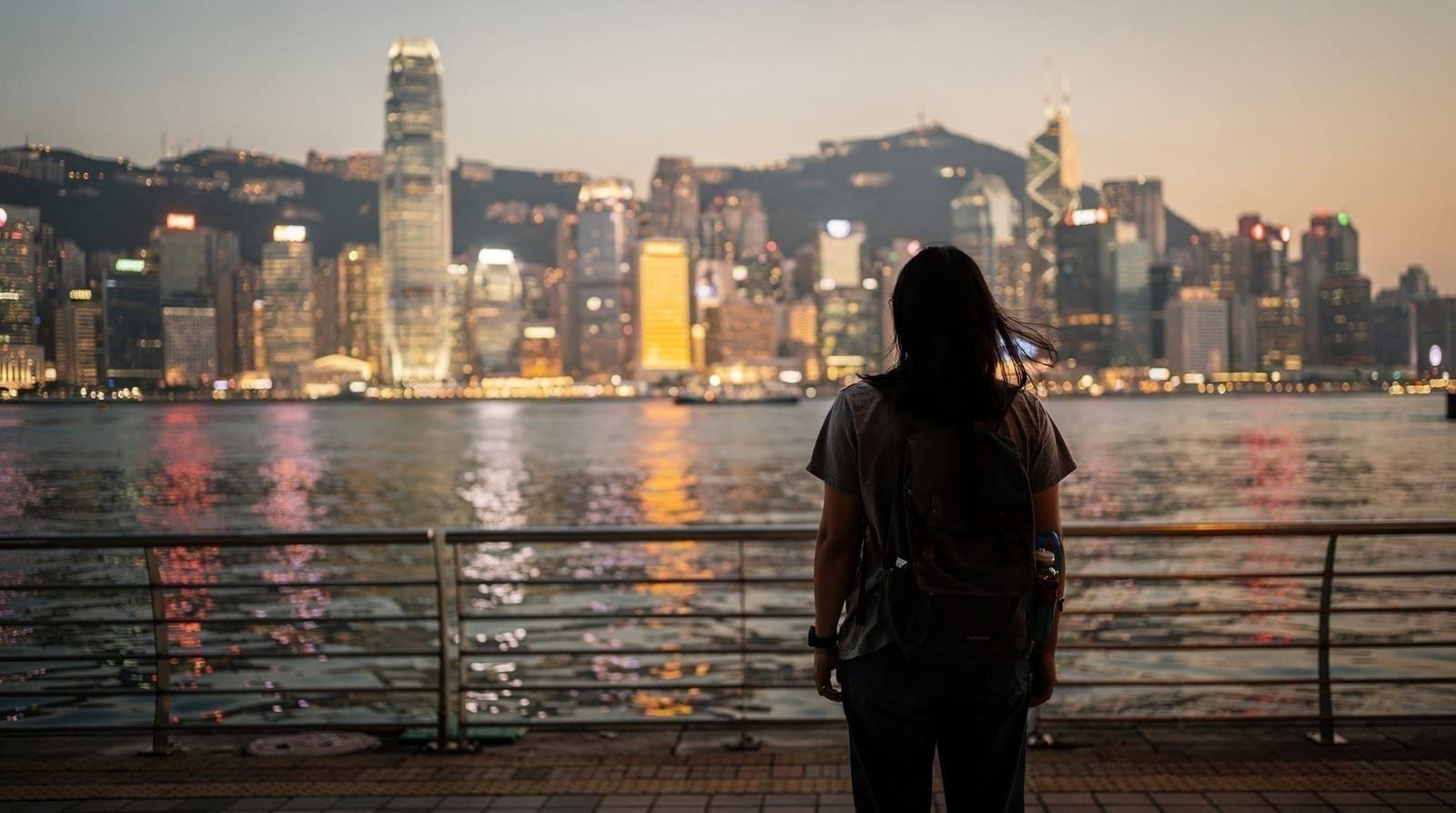
| Free highlight | Symphony of Lights, nightly 20:00, Tsim Sha Tsui waterfront |
Budget levels compared
| Level | Accommodation | Food per day | Transport | Total per day |
|---|---|---|---|---|
| Backpacker | Dorm bed, HKD 200–280 | HKD 170–200 | HKD 25–40 | HKD 400–480 |
| Budget private room | Guesthouse, HKD 400–600 | HKD 200–250 | HKD 30–50 | HKD 650–900 |
| Mid-budget | Basic hotel, HKD 600–800 | HKD 325–400 | HKD 40–60 | HKD 1,376–1,576 |
Accommodation: the main budget challenge
This is where Hong Kong imposes the most serious budget pressure.
Dorm beds: Guesthouses and hostels in Kowloon (primarily Mong Kok and Tsim Sha Tsui) offer dorm beds from HKD 180–280 per night. Quality varies significantly — check recent reviews. Chungking Mansions in TST has famously cheap guesthouses (private rooms from HKD 350–500) with a chaotic atmosphere; rooms are small and facilities basic, but the location is excellent.
Basic private rooms: Budget guesthouses on Nathan Road in Mong Kok or Yau Ma Tei offer basic private rooms from HKD 400–600 per night. These are real rooms, not serviced apartments — small, dated, adequate.
Budget hotels: Clean, modern budget hotels (ibis, various local chains) in Kowloon start around HKD 700–900 per night. Hong Kong Island equivalents start higher.
What you cannot avoid: Hong Kong does not have the USD 20 guesthouse rooms that exist in Bangkok or Hanoi. The minimum viable private room is HKD 400 per night; anything below HKD 300 is either a dormitory or has serious compromises.
See the budget accommodation guide for specific recommendations.
Food: where Hong Kong is genuinely cheap
Eating local is the budget traveller’s main tool in Hong Kong. The gap between local and tourist restaurant prices is substantial.
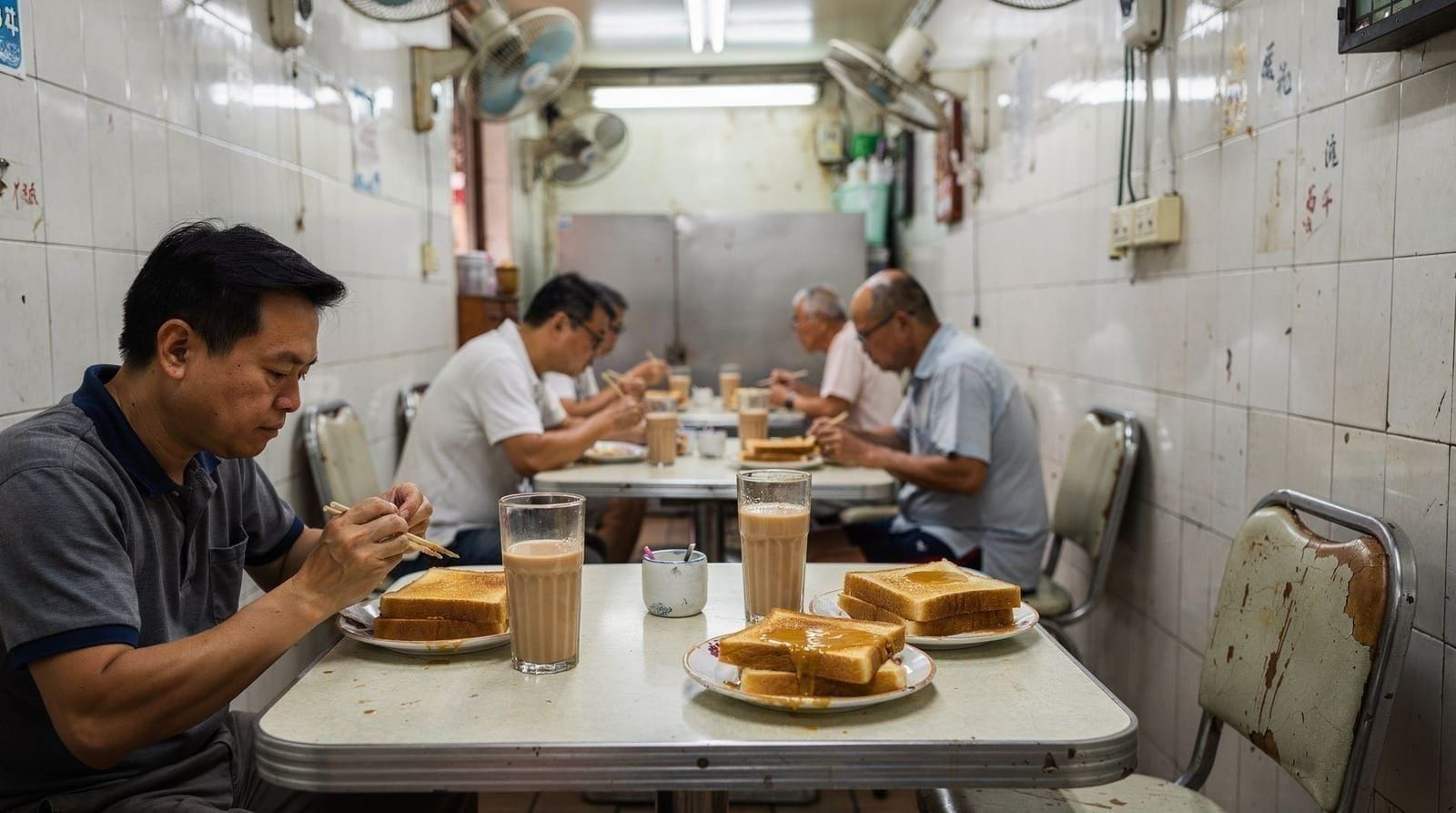
Cha chaan teng breakfast: HKD 40–65 for a full meal (milk tea, toast with butter and condensed milk, scrambled eggs, sometimes congee). See the cha chaan teng guide for what to order. This is the most characteristically Hong Kong meal and one of the cheapest.
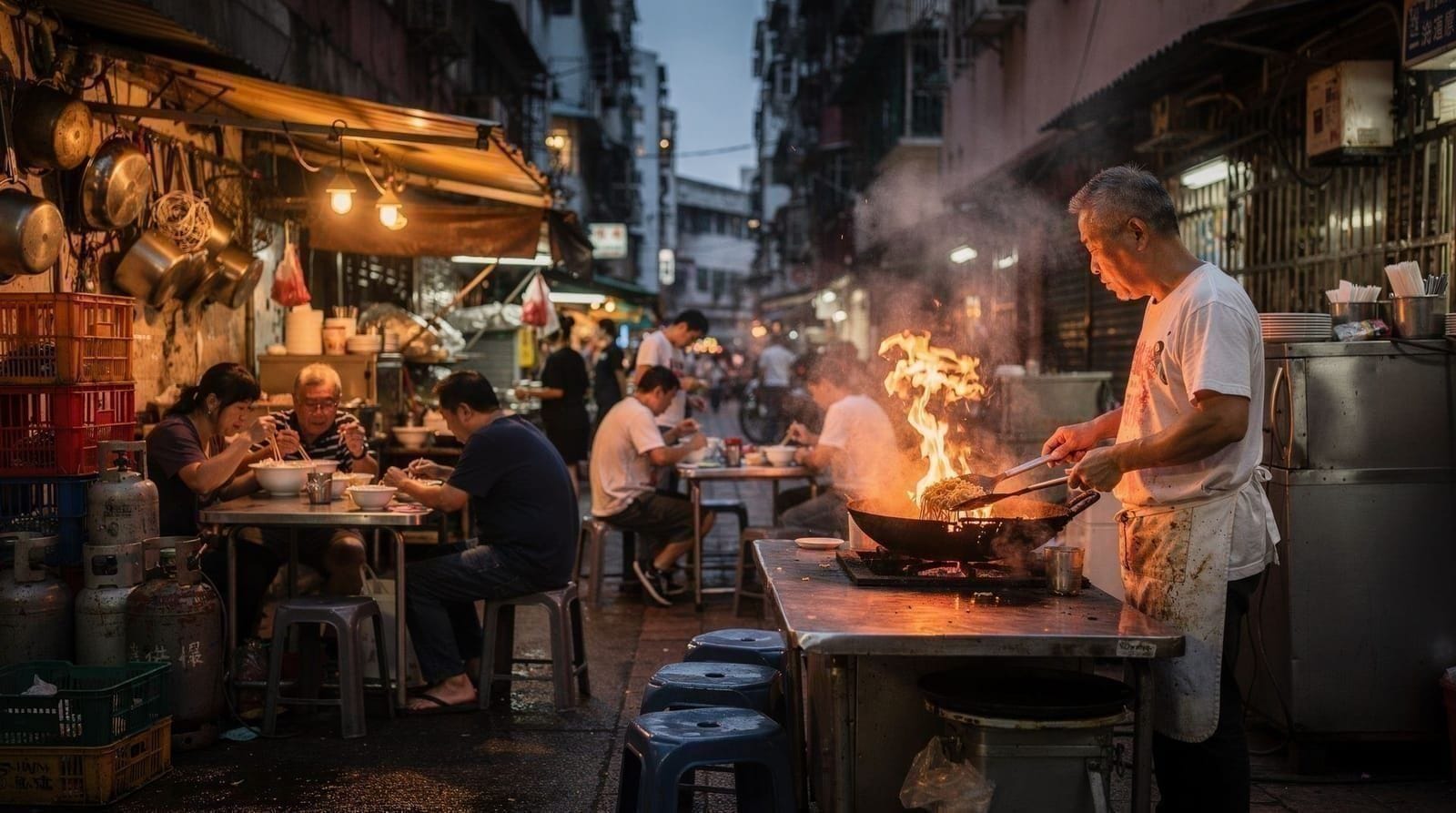
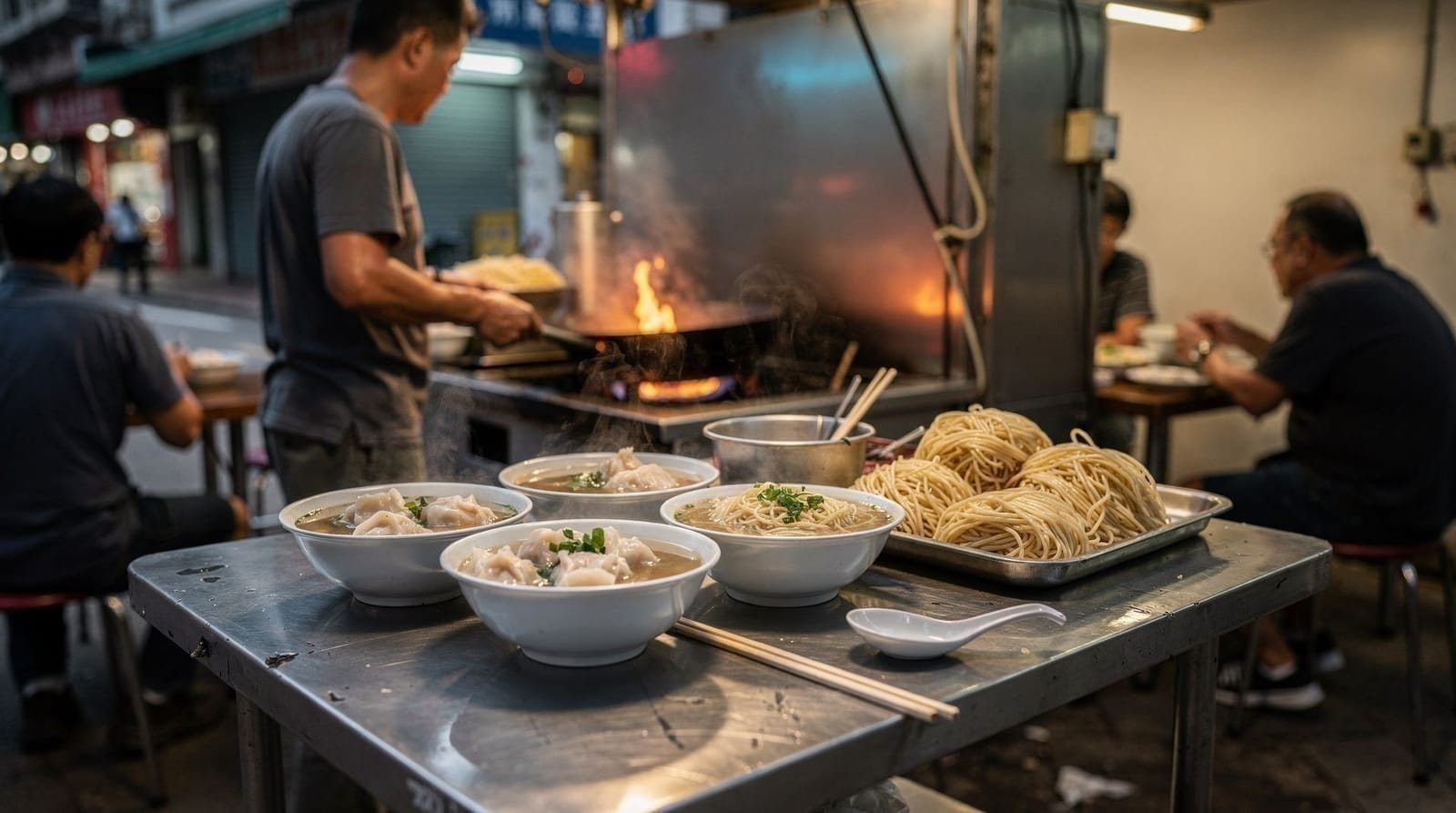
Noodle soups: Wonton noodle soup at a local noodle shop: HKD 38–55. Beef brisket noodles: HKD 55–75. These are complete meals at neighbourhood shops, not tourist restaurants.
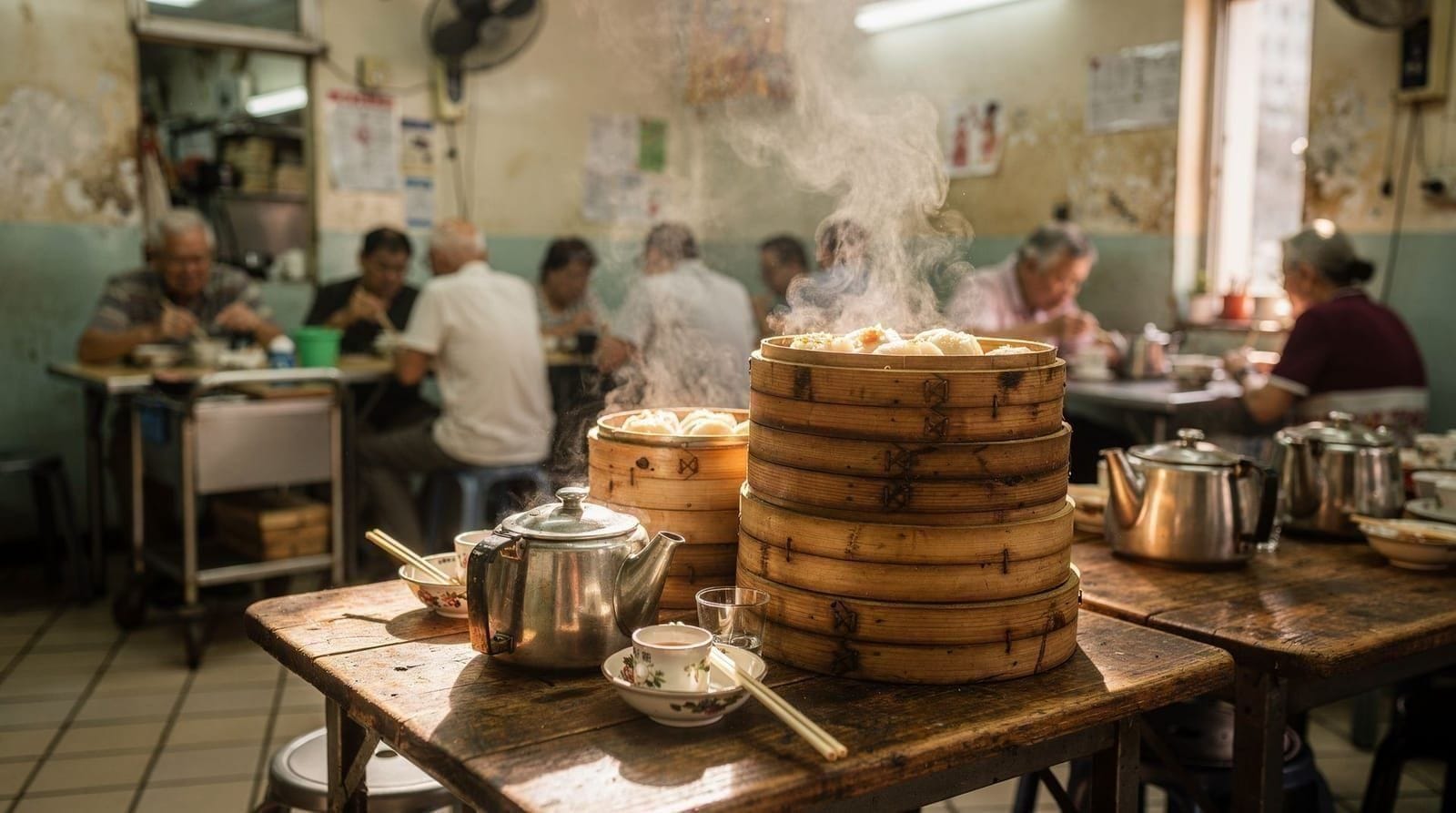
Dim sum at a local teahouse: A full dim sum brunch with tea for one costs HKD 80–130 at a local teahouse. Not the tourist version — the real teahouse version with paper checklists, loud atmosphere, and proper yum cha culture. See the dim sum guide for specific venues.
Cooked food centres: Every major housing estate has a cooked food centre — an indoor market of small stalls serving rice, noodles, congee, and local dishes for HKD 35–60 per meal. These are for residents rather than tourists and are essentially invisible if you don’t know to look.
7-Eleven and Circle K: Convenience stores serve hot food (fish balls, siu mai, onigiri, sandwiches) for HKD 8–30. Not exciting, but functional for a cheap snack or light breakfast.
Avoid: Restaurants visible from major tourist areas (TST waterfront, directly adjacent to the Star Ferry pier, Peak Tower). These charge two to three times the prices of nearby alternatives without a corresponding quality increase. See the tourist traps guide.
The Michelin cheap eats guide covers Michelin Bib Gourmand restaurants — the guide’s “good food at reasonable prices” category — where meals run HKD 100–180 per person. These are excellent value for the quality.
Transport: very manageable
The MTR charges by distance, ranging from HKD 4.00 for a short hop (Central to Tsim Sha Tsui is HKD 10.60 with Octopus). A day of reasonable tourist movement (hotel to attractions to restaurant to market to waterfront) costs HKD 30–60.
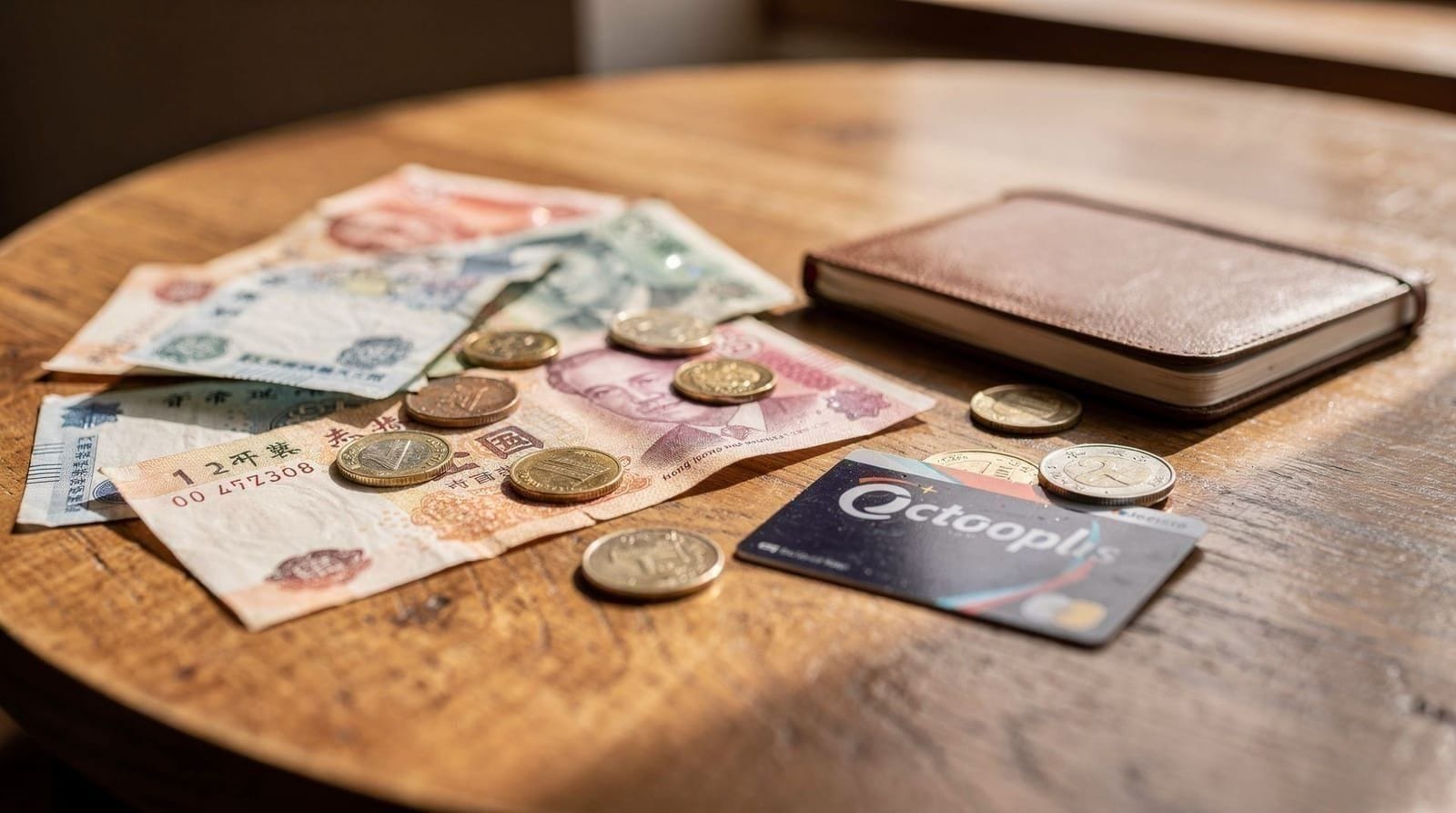
The Octopus card gives you a small discount versus cash payment. See the Octopus card guide for setup. Trams (HKD 3.30 flat) and buses are cheaper than the MTR for some routes. The Star Ferry (HKD 4.00–6.50 one way) is both transport and an attraction.
Taxis are affordable by international standards — a 10-minute ride costs HKD 50–80. Useful late at night when the MTR closes.
Airport Express: HKD 120 with Octopus (HKD 130 for a ticket) from the airport to Central. This is the most efficient option — the cheapest is the Airport Bus (A11, A21, and others: HKD 35–50 to various Kowloon/Island destinations, but 60–80 minutes journey). See the airport guide for the trade-off.
The best free experiences
A significant portion of Hong Kong’s genuine highlights cost nothing:
The Symphony of Lights (nightly, 20:00, Tsim Sha Tsui waterfront): completely free. The light show on Victoria Harbour using 46 buildings is arguably the most impressive free attraction in any Asian city. See the Symphony of Lights guide.
The Tsim Sha Tsui waterfront promenade: Free walk along the best view of Hong Kong Island.
Hong Kong trams (ding ding): HKD 3.30 flat fare — nominally paid but effectively a free attraction as a mode of transport. The upper deck from Kennedy Town to Shau Kei Wan is 90 minutes of close-up urban Hong Kong.
Wong Tai Sin Temple: Free entry (small donation suggested). One of the most actively used temples in Hong Kong.
Man Mo Temple (Sheung Wan): Free entry. One of the oldest temples in Hong Kong.
Mong Kok markets: The Flower Market, Goldfish Market, Ladies’ Market, and Sneaker Street are free to explore.
Stanley Market: Free to browse; items cost money.
Hiking trails: Dragon’s Back, Lion Rock, the Peak Circle Walk, and dozens of Country Park trails are all free. The hiking guide covers the main options with access details.
Mid-Levels Escalator: The world’s longest covered outdoor escalator is free to use and takes you up through SOHO to Mid-Levels.
Wan Chai and Sham Shui Po neighbourhoods: Free to walk. Some of the best urban texture in Hong Kong is in the back streets of these areas.
Low-cost paid experiences
Not everything requires full price:
Star Ferry (HKD 4.00–6.50 one way): The harbour crossing that most people pay much more to replicate from observation decks.
Peak Tram (HKD 116 return): Worth the money; book ahead to skip the queue.
Travellers who do want the tram plus the viewing terrace can book a Peak Tram and Sky Terrace 428 ticket in advance. The Peak Tram guide and the Peak Tram versus bus comparison help you decide whether it is worth it for your budget.
Bus 15 to the Peak (cheap; check the operator’s site for the current fare): Avoids the tram queue and cost entirely. Same view, no tram ride.
Ngong Ping 360 and Big Buddha: This costs HKD 295–365 return for the cable car (standard to crystal cabin). Worth doing once; the Big Buddha itself is free once you are at the top.
If you would rather skip the cable car queue on a day when time matters more than a few dollars, a skip-the-line cable car ticket is one way to do it. See the Ngong Ping and Big Buddha guide for how to plan the day.
Local cooking class: Several operators run 3-hour hands-on dim sum or egg tart classes for HKD 300–450. See the food tours guide for options.
Guided local food walk: For travellers who want the authentic cheap-eats experience without the guesswork of finding the right stalls themselves, a guided walk through a genuinely local neighbourhood can be worth the modest cost — you get several tastings at working-class prices plus context that a solo wander wouldn’t give you.
Sham Shui Po food tour — local stalls and neighbourhood eatingA realistic budget day
Budget day (backpacker-level):
- Breakfast at cha chaan teng: HKD 50
- MTR and tram transport: HKD 25
- Lunch at cooked food centre: HKD 45
- Star Ferry return: HKD 8
- Free: Tsim Sha Tsui waterfront, Symphony of Lights, temple
- Dinner at noodle shop: HKD 60
- Snack at 7-Eleven: HKD 15
- Total food and transport: HKD 203 (about USD 26)
Add dorm bed (HKD 200–280) and the day costs approximately HKD 400–480 (USD 51–62).
Mid-budget day:
- Breakfast cha chaan teng: HKD 65
- Peak Tram return: HKD 116
- MTR and bus: HKD 40
- Lunch at Tim Ho Wan: HKD 140
- Ngong Ping 360 cable car: HKD 295
- Dinner at local restaurant: HKD 120
- Total: HKD 776 (USD 99)
Add a basic private room (HKD 600–800) and the day is HKD 1,376–1,576 (USD 176–202).
What to skip to stay on budget
Observation decks beyond the Peak: Sky100 has been closed for renovation since May 2025, with no reopening date announced. The Peak Galleria rooftop is free and nearly equivalent.
Harbour dinner cruises: HKD 350–600 per person for a view you get for HKD 4.00–6.50 on the Star Ferry. The Symphony of Lights from the TST waterfront is free.
Taxi everywhere: Budget HKD 20–40 for the MTR instead.
Tourist restaurants: The price premium on Nathan Road’s tourist-facing restaurants is 100–200% versus the identical dish two streets inland.
Madame Tussauds: Generic tourist attraction.
Frequently asked questions about Hong Kong on a budget
What is the cheapest meal in Hong Kong?
A bowl of congee at a local cha chaan teng costs HKD 25–35 — complete, filling, and genuinely Hong Kong. A fish ball skewer at a street stall costs HKD 10–15. A wonton noodle soup at a neighbourhood noodle shop: HKD 38–48.
Is Hong Kong cheaper than Singapore for tourists?
Similar in overall cost structure. Both cities have expensive hotels and cheap local food. Hong Kong has marginally cheaper street food at the lowest level; Singapore has more budget hotels in the USD 60–80 range. Transport is similarly affordable in both.
Can I visit Hong Kong on USD 50 per day?
Possible with a dorm bed, two local meals per day, and public transport only. USD 50 is approximately HKD 390. Dorm (HKD 200) + two meals (HKD 120) + transport (HKD 30) = HKD 350. Leaves HKD 40 for incidentals. Achievable if you are disciplined.
Is street food in Hong Kong really cheap?
Yes — if you mean cooked food stalls, cha chaan tengs, and local noodle shops. Many night market stalls in tourist areas (Temple Street, some Mong Kok spots) charge inflated prices for the tourist version of the same food. Ask for the menu price before ordering and compare to what locals around you are being charged.
Is it worth getting a Tourist Day Pass?
Only if you’re doing five or more MTR trips in a single day, which is more common on a sightseeing-heavy first day than on later, slower days. For most budget travellers moving between two or three neighbourhoods a day, paying per-trip on Octopus works out cheaper than the pass.
Budget accommodation: what to look for and avoid
Chungking Mansions (重慶大廈), Nathan Road, TST: The famous budget accommodation tower in the heart of Tsim Sha Tsui. Guesthouses inside range from very basic (shared bathrooms, no window, rooms that function as large cupboards) to acceptable (en suite, small but usable). Prices: HKD 300–600 for a private room. The building itself is chaotic, busy, and has an atmosphere that some travellers love and others find overwhelming. It is safe — there are security guards and police know the building well — but it is not for everyone.
Mong Kok guesthouses: The blocks around Nathan Road between Mong Kok and Yau Ma Tei have multiple budget guesthouses at HKD 350–550 for a private room. Location is excellent (great local food nearby, MTR access). Rooms are typically small.
Online booking platforms versus walk-in: Booking online in advance (Booking.com, Agoda) often gives better rates than walk-in at budget guesthouses. A few guesthouses prefer walk-in cash payment and offer better deals in person, but this requires arriving without a confirmed room — a risk during busy periods.
What “budget hotel” means in Hong Kong: A clean room with private bathroom, air conditioning, and basic facilities starts at HKD 600–800 per night. For under HKD 500 per night, you are in guesthouse territory — rooms are small, building facilities are shared (sometimes), and location may require a 20-minute walk or MTR journey to tourist areas.
Using the Octopus card to save money
The Octopus card saves money over cash in several ways:
- MTR fares: Octopus is slightly cheaper than single journey tickets for the same route
- Bus and tram: Octopus for the tram (HKD 3.30 flat) and most buses; cash on buses requires exact change, meaning you often overpay
- 7-Eleven and Circle K: Octopus payment for convenience store purchases (beer, snacks, sandwiches) — same price as cash but avoids fumbling
- Airport Express: Buying an Airport Express ticket via the Octopus card on the MTR app sometimes gives a small discount versus the gate price
Load HKD 200–300 on arrival at the airport counter. Top up at any MTR Customer Service Centre, convenience store, or via the MTR mobile app.
Day trips on a budget
Budget day trips add variety to a Hong Kong visit without adding to accommodation costs.
Cheung Chau by ferry: HKD 33.40 return Monday to Saturday (HKD 49.60 on Sundays and holidays) on the ordinary ferry from Central Pier 5. A full day on a car-free island with beaches, seafood, and a village atmosphere costs almost nothing beyond transport and a meal. The ferry ride itself is pleasant.
Lamma Island: Similar proximity — HKD 49.80 return Monday to Saturday (HKD 69.40 on Sundays and holidays) from Central to Yung Shue Wan. Seafood lunch at one of the waterfront restaurants is the main cost (HKD 100–200 per person for seafood) — budget versions at HKD 60–80 are possible at the smaller local spots.
Sha Tin and the Ten Thousand Buddhas Monastery: MTR fare approximately HKD 12–15 from Kowloon. The Che Kung Temple, the Sha Tin Racecourse, and the hike to the Ten Thousand Buddhas Monastery are all free or very cheap.
Dragon’s Back hike: Bus fares to the trailhead are low (check the operator’s site). The hike is free. The beach at Shek O afterward is free. A seafood meal at Shek O village is HKD 80–150 per person. Total day cost: under HKD 200 per person.
The budget mindset for Hong Kong
The key shift for budget travel in Hong Kong: stop thinking about what you are “supposed” to visit based on tourist brochures, and start asking where local office workers and families eat, shop, and spend their weekends.
The places that make Hong Kong memorable for budget-conscious travellers are not the peak observation decks or the harbour cruises. They are: the cha chaan teng at 7am, the cooked food centre at lunch, the Octopus card tap as you board the tram, the HKD 4.00–6.50 Star Ferry crossing at sunset, the free Symphony of Lights from the Tsim Sha Tsui waterfront at 8pm, and the walk through Sham Shui Po market streets on a Tuesday afternoon.
None of these cost significant money. Together, they constitute a version of Hong Kong that is more interesting than the tourist track at any price.
Seasonal cost swings
Prices in Hong Kong shift more with demand than with weather. Chinese New Year (typically late January or February) and major public holidays push hotel rates up 30–50% and fill budget guesthouses first — book well ahead if your trip lands on one of these dates. Summer (June to September) is hot and humid but not more expensive; if anything, hotel rates soften slightly outside the peak autumn (October–November) season, which is Hong Kong’s most popular travel window for good weather. Typhoon season doesn’t affect prices directly, but a cancelled ferry or delayed flight during a signal-8 warning can add unplanned accommodation nights — worth a small buffer in your budget if you’re travelling June through October.
Stretching a longer trip on a fixed budget
Travellers staying five days or more often find their spending naturally drops after the first couple of days, once the novelty of “trying everything” settles into a routine of favourite cheap eats and free activities repeated.
If you’re planning a longer stay, front-load the paid attractions (Peak Tram, Ngong Ping 360) into the first two or three days when energy and enthusiasm are highest, then shift toward free neighbourhood exploring — Sham Shui Po, Sai Kung, or a hiking trail — for the back half of the trip. This also spreads your accommodation cost more evenly if you’re weighing a slightly pricier central location for the first nights against a cheaper, less central one later once you’re comfortable navigating the MTR.
Group travel changes the maths meaningfully. A private room split between two or three people often beats the per-person cost of dorm beds, and taxis become competitive with MTR fares once you’re splitting a HKD 60–80 fare four ways for a short hop. If you’re travelling as a family, the Hong Kong with kids guide has budget-specific notes on which paid attractions are worth it for children and which free alternatives (public pools, playgrounds, the Star Ferry itself as an “attraction”) work just as well.
Where to go next when planning on a budget
Once you know roughly what a day costs, the next job is to fit the numbers into a real trip. The Hong Kong budget breakdown and the wider trip cost guide put the same spending categories side by side, which helps if you are comparing your own plan against a fixed total. If you want the days laid out for you, the budget itinerary strings together free sights and cheap meals in a sensible order, and the weekend itinerary works for a shorter stay.
Deciding how long to stay matters as much as how much to spend each day. Because accommodation is the cost that does not shrink, a short trip packs the same hotel expense into fewer days. The how many days in Hong Kong guide helps you judge the trade-off, and the first-time guide covers the basics you will want settled before you arrive.
Timing also shapes what you spend. The best time to visit guide explains the seasons, while the summer and winter pages show what each is like on the ground. Anyone travelling in the wet months should read the typhoon season guide so a disrupted day does not catch the budget off guard.
Eating well for little money is the core of this approach, so it is worth going deeper than a single section can. The street food guide and the cheap eats in Mong Kok post point you towards stalls and shops where the food is the draw, not the view. For something sit-down but still modest, the dai pai dong guide explains how open-air cooked-food stalls work, and the best egg tarts are a cheap treat worth building into a walking day.
Neighbourhood choice affects both your food and your transport bill. Sham Shui Po and Mong Kok both reward slow, inexpensive wandering, and the Temple Street night market guide is useful for knowing what to expect before you hand over any money. For getting around, the MTR guide and the Star Ferry guide cover the two cheapest ways to feel the city.
Finally, spending less does not mean seeing less. The Hong Kong outlying islands guide shows how a ferry ride opens up a full day for very little, and the what to skip and scams to avoid pages help you keep money for the things that are actually worth it.