Getting from Hong Kong airport to the city — every option compared
Hong Kong: Airport Express e-ticket Kowloon/HK/Tsing Yi
What is the fastest way from Hong Kong airport to the city?
The Airport Express train takes about 24 minutes to Hong Kong station (Central) and costs HKD 120 with an Octopus card (HKD 130 for a single ticket). Check the MTR website for current Kowloon station fares and train times; it is by far the most reliable option regardless of traffic.
Five ways to reach the city from HKIA — and which one suits you
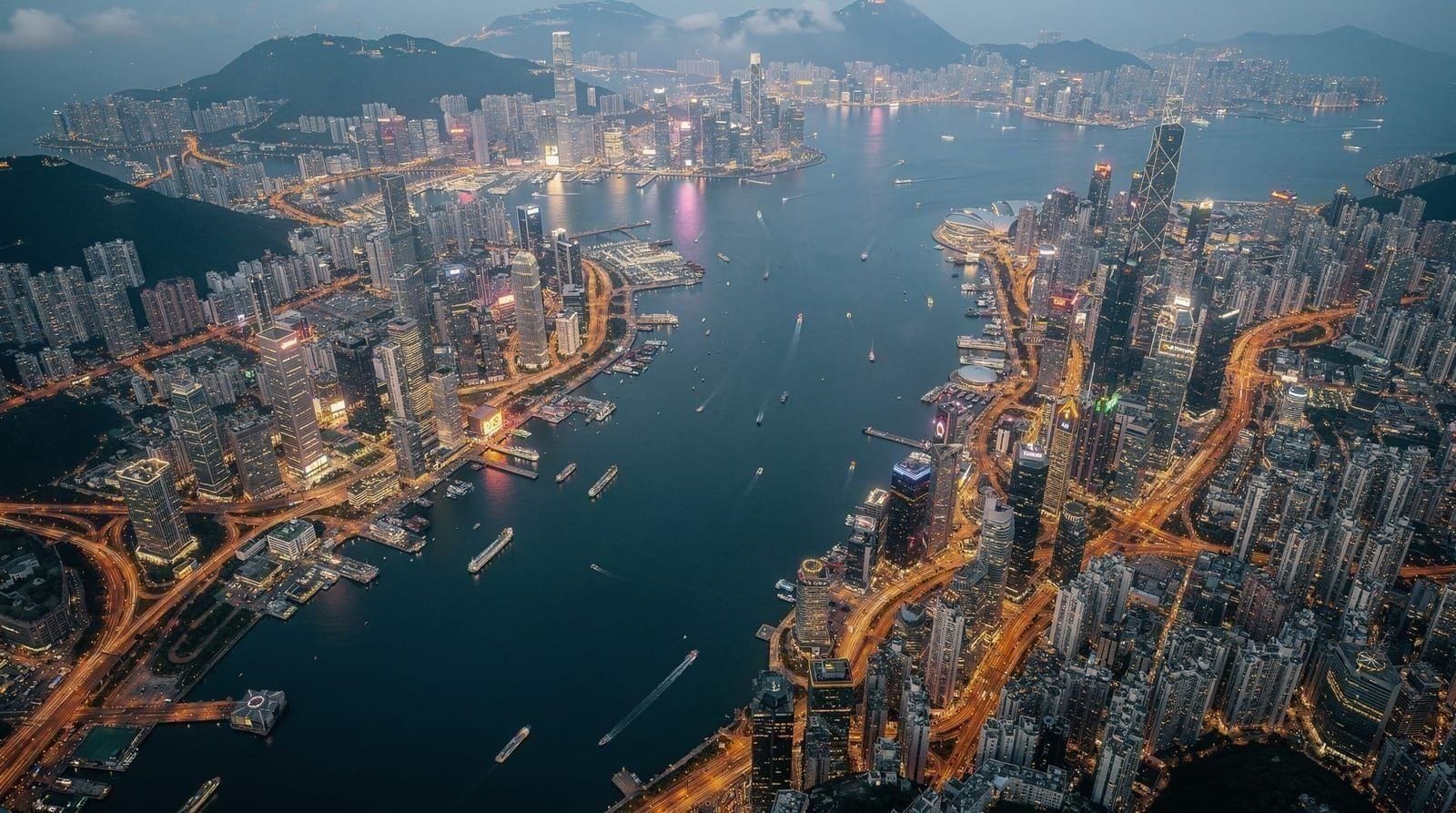
Hong Kong International Airport sits on Lantau Island, about 35 kilometres west of Central and 30 kilometres from Tsim Sha Tsui. That distance sounds manageable, but the options available to you vary significantly in speed, cost, comfort, and reliability — and choosing the wrong one, especially during peak hours, can turn a 24-minute train ride into a 90-minute crawl through tunnel traffic.
| Where | HKIA, Lantau Island (~35km from Central) |
| Fastest option | Airport Express, around 24 minutes |
| Cheapest option | Public bus or MTR via Tung Chung (see operators for current fares) |
| Cost range | Airport Express HKD 120, taxis from about HKD 350, private transfers up to HKD 1,200 |
| Best for luggage | Airport Express or a private transfer |
| Booking | Airport Express e-ticket and transfers can be pre-booked |
The five realistic options are the Airport Express, public buses, taxis, pre-booked private transfers, and the MTR via Tung Chung (which is cheap but not recommended for travellers with luggage). There is also the Airport Skypier for passengers connecting directly to Macau or mainland China, which is covered at the end of this guide.
Here is an honest breakdown of each.
Airport Express — the one most travellers should use
Journey time: 24 minutes to Hong Kong station (Central), 25 minutes to Kowloon station
Cost: HKD 120 to Hong Kong station with Octopus (HKD 130 for a single ticket; return ticket HKD 215, valid 30 days). Kowloon station fare: see the MTR website
Operating hours and frequency: see the MTR website
Good for: nearly everyone arriving with moderate luggage
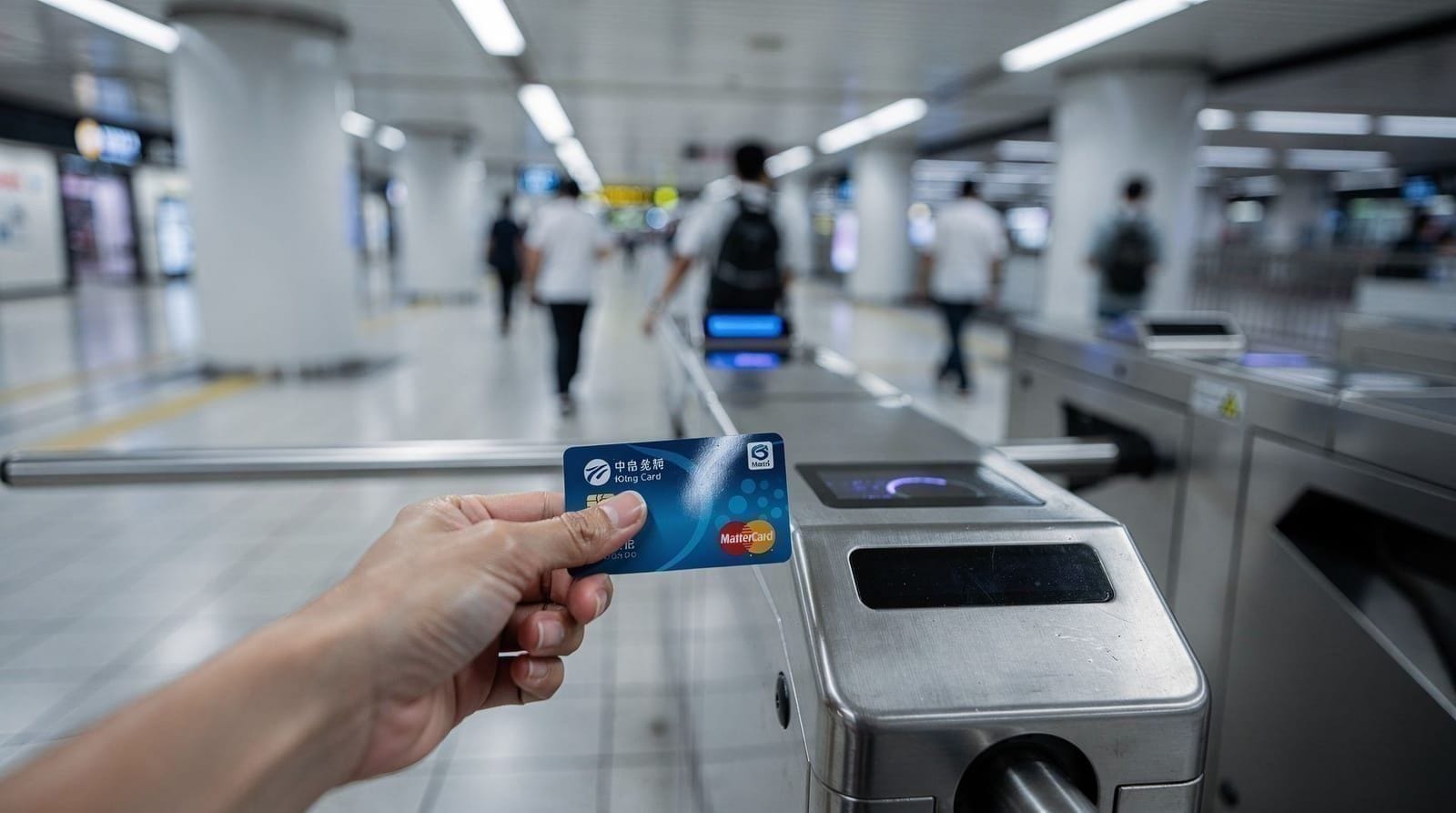
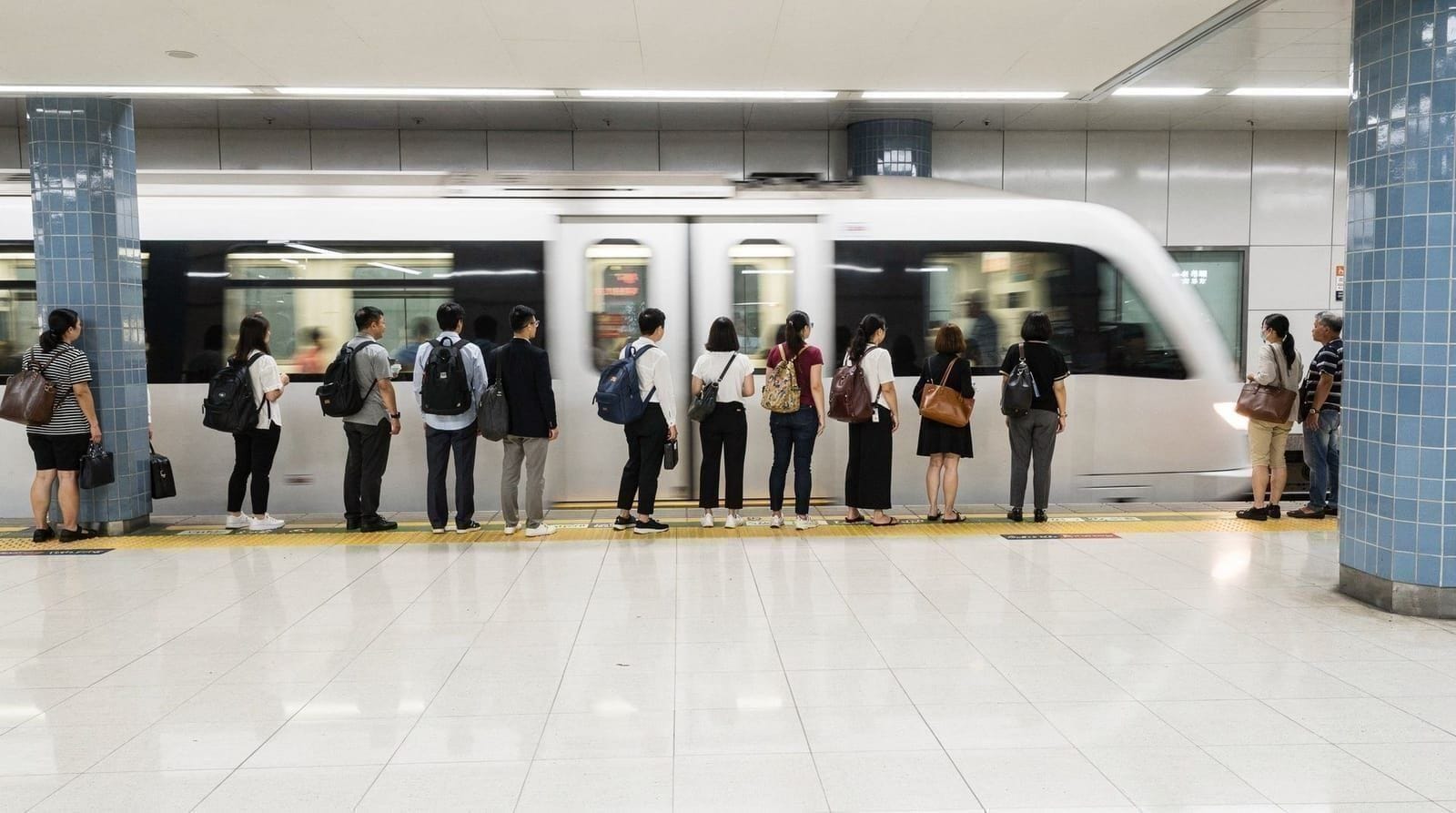
The Airport Express is purpose-built for this journey and it shows. Trains are fast, frequent, clean, air-conditioned, and equipped with dedicated luggage racks. There is no traffic, no uncertainty, and no interaction required beyond tapping your Octopus card or collecting a ticket from the machine at the airport station. The route calls at Tsing Yi before reaching Kowloon, then continues to Hong Kong station under Central.
The fare seems steep compared to a bus, but when you factor in the time saved — and the fact that Hong Kong’s roads are genuinely unpredictable during morning and evening peaks — the train is simply the better choice for almost everyone.
Pre-booking your Airport Express e-ticket saves queuing at the machine when you land — tap your confirmation and walk straight to the platform.Check availabilityIn-town check-in: one of Hong Kong’s best travel perks
If you are departing Hong Kong rather than arriving, the Airport Express offers something most airports in the world cannot: in-town check-in at Hong Kong station and Kowloon station. On the day of your flight (or the day before for some airlines), you can check your bags and collect your boarding pass at the city-centre station, then travel to the airport unencumbered. Airlines participating include Cathay Pacific, Hong Kong Airlines, and most major carriers operating through HKIA. Check your airline’s specific eligibility when you book.
This means your last morning in Hong Kong can be spent exploring rather than wrestling luggage through crowds. It is an underrated feature that frequent travellers to Hong Kong rave about.
Getting from the Airport Express to your hotel
From Hong Kong station, you are already in the heart of Central. The station connects directly to the Central MTR interchange, giving you access to the Island Line, the Tung Chung Line, and the Tuen Ma Line. Most hotels in Central, Sheung Wan, Admiralty, and Wan Chai are within a short taxi or bus ride. For more detail on navigating the MTR from here, see the Hong Kong MTR guide.
From Kowloon station, you are in West Kowloon, which is convenient for hotels in the Tsim Sha Tsui area — the main tourist district on the Kowloon side. A short taxi ride or a walk to the Nam Cheong MTR station gets you to most Kowloon hotels within 10-15 minutes. If you are deciding between staying in Central or Tsim Sha Tsui, the Central vs Tsim Sha Tsui guide covers the tradeoffs in detail.
Public buses — the budget option that actually works
Journey time: 45-75 minutes (longer during peak hours)
Cost: see the operator’s website for current fares
Operating hours: various routes run 24 hours
Good for: budget travellers, solo travellers with manageable luggage, late-night arrivals
Hong Kong’s airport buses are clean, air-conditioned double-deckers. They are significantly slower than the Airport Express but cost a fraction of the price, and the routes cover destinations the train does not — including stops along Nathan Road in Kowloon and various points on Hong Kong Island beyond Central.
The two most useful routes for tourists are:
A11 — Runs from HKIA to Central and onwards to Causeway Bay, stopping at key points along the northern shore of Hong Kong Island. Fare: see the operator’s website. This is the bus for travellers staying on the Island who do not want to change trains from Kowloon station.
A21 — Runs from HKIA to Tsim Sha Tsui, Jordan, Mong Kok, and Kowloon City. Fare: see the operator’s website. If you are staying anywhere along the main Nathan Road spine in Kowloon, this bus stops closer to your hotel than the train does.
Both routes operate 24 hours, which makes them particularly useful for late-night arrivals when the Airport Express has finished for the day (check the last train time on the MTR website). Buses pick up outside the arrivals hall — follow the signs to the bus station, which is clearly marked. Pay with your Octopus card by tapping on board. The Octopus card guide explains how to get and top up a card if you do not already have one.
The honest caveat: Hong Kong’s road network between Lantau and the urban core involves a series of bridges and tunnels that funnel traffic into bottlenecks. During the morning rush (roughly 7:30-9:30am) and evening rush (5:00-8:00pm), journeys that take 45 minutes at off-peak can stretch to 75-90 minutes. If you land during these windows and your time is tight, pay for the Airport Express.
Taxis from Hong Kong airport
Journey time: 35-55 minutes depending on destination and traffic
Cost: HKD 350-500 to Kowloon, HKD 400-550 to Hong Kong Island
Operating hours: 24 hours
Good for: small groups, travellers with lots of luggage, late-night arrivals
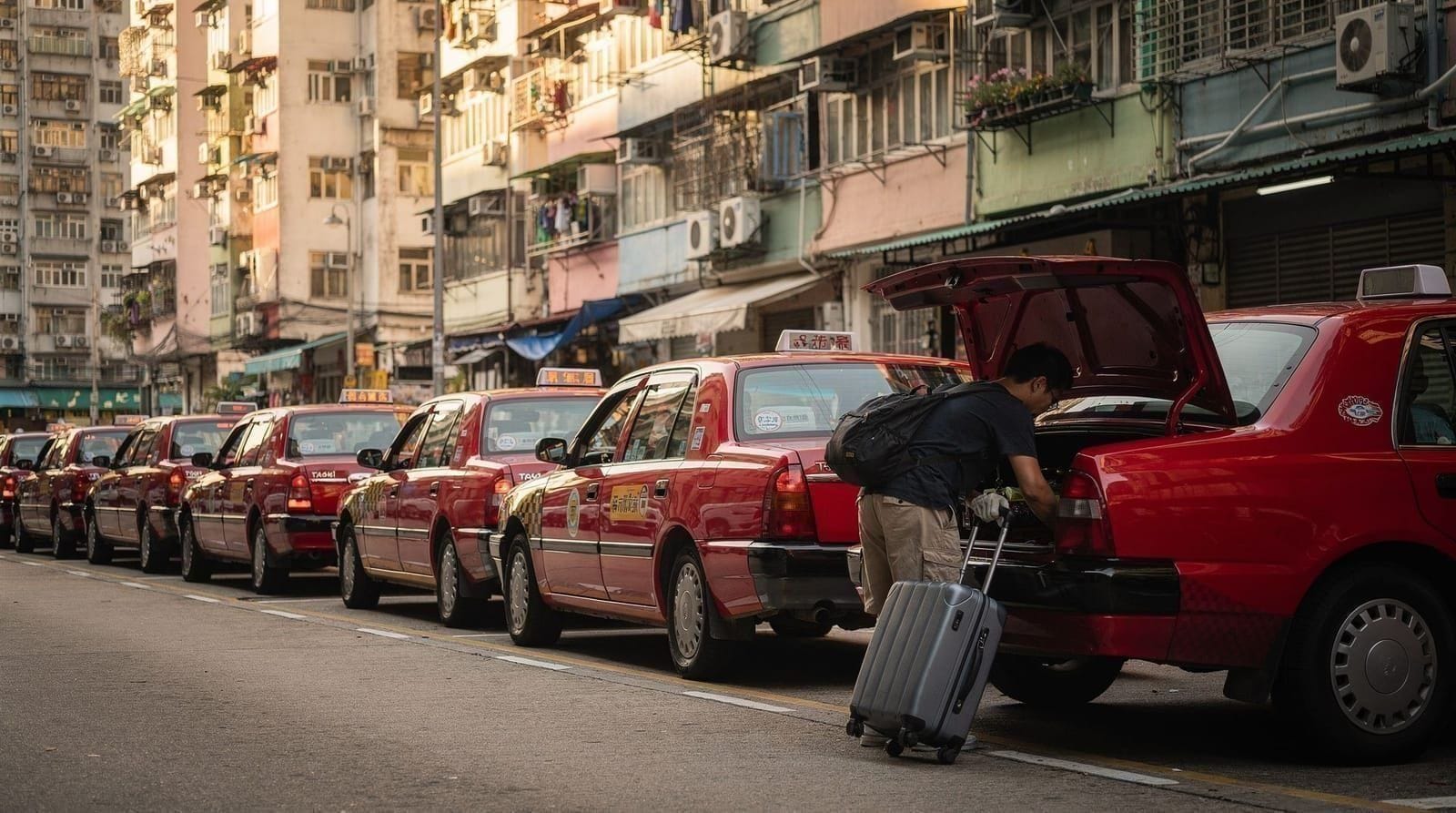
Airport taxis are metered and operate from a dedicated rank outside the arrivals hall. The colour tells you the zone:
Red urban taxis serve Hong Kong Island and Kowloon — these are what you want for virtually all hotel destinations. A typical metered fare to Tsim Sha Tsui is HKD 350-420; to Central or Causeway Bay on Hong Kong Island expect HKD 400-500. Harbour tunnel surcharges and baggage fees are added to the meter and are entirely legitimate.
Green New Territories taxis serve the New Territories zone only — not your destination unless you are staying in an area like Tsuen Wan or Sha Tin.
The most important rule at Hong Kong airport: use only the official taxi rank and never follow touts who approach you in the arrivals hall. Legitimate taxis are metered; any driver offering a fixed price before you get in the car should be declined. The official rank has a queuing system that moves quickly.
Taxis accept cash only — HKD. There is an ATM in the arrivals hall if you need to withdraw cash before joining the queue. For the full picture on how taxis work across Hong Kong, including tips on avoiding common problems, see the Hong Kong taxis guide.
Private transfers — worth it for families and groups
Journey time: 35-55 minutes depending on destination and traffic
Cost: HKD 500-1,200 depending on vehicle type and operator
Operating hours: 24 hours (pre-book required)
Good for: families with children, groups of 3 or more, first-time visitors who want zero stress
A pre-booked private transfer differs from a taxi in one important way: your driver is waiting in arrivals with your name on a sign before you exit customs, and the price is fixed regardless of traffic or route. There is no meter anxiety, no cash scramble, no language barrier at the rank, and no uncertainty about whether you are getting into a legitimate vehicle.
For a solo traveller or a couple travelling light, the premium over a taxi may not feel worth it. For a family of four with a pushchair and multiple bags arriving jet-lagged after a long-haul flight, it can genuinely make the first hour in Hong Kong much calmer.
This pre-booked private transfer covers the journey from HKIA to your hotel with a fixed price and a driver waiting at arrivals.Check availabilityFor groups of 5 or more, or for travellers with large amounts of luggage, an MPV transfer gives extra space without the cost of two separate vehicles.
An MPV private transfer from the airport accommodates larger groups and families with substantial luggage in a single vehicle.Check availabilityMTR via Tung Chung — cheapest but not recommended for arrivals
Journey time: 45-60 minutes including wait and transfer
Cost: see the MTR website for current fares
Operating hours: MTR standard hours
Good for: residents and budget travellers with minimal luggage who know the system
The Tung Chung MTR line serves the town of Tung Chung on Lantau Island, and the airport station is actually the same building as the Airport Express station. The catch: the MTR trains stop at Tung Chung rather than continuing into the urban core, so you must transfer to a different line to reach Kowloon or Hong Kong Island. On the Tung Chung Line, Tsing Yi gives a connection to the Tsuen Wan Line; otherwise you continue to Tung Chung station and change there.
The fare savings compared to the Airport Express are real. But the Tung Chung Line runs less frequently, the transfer adds time and navigation complexity, and managing luggage through two train changes is significantly less comfortable than sitting in the spacious Airport Express carriage. For returning visitors or residents who know exactly where they are going and are travelling light, this option makes sense. For first-time arrivals, the Airport Express is simply the better experience.
Airport Skypier — for connecting directly to Macau or the mainland
If your final destination is Macau or a city in the Pearl River Delta, you may not need to enter Hong Kong at all. The Airport Skypier operates from within the restricted zone of HKIA — meaning you clear Macau (or mainland) immigration at the airport before boarding. The ferry then takes you directly to Macau’s Taipa Ferry Terminal or Outer Harbour.
This is particularly useful if you are flying into Hong Kong and heading straight to Macau for the first night of your trip. You collect your bags, proceed to the Skypier check-in area rather than through Hong Kong immigration, and board a ferry that connects to Macau in around 55-60 minutes.
If you plan to see both Hong Kong and Macau during your trip, the getting to Macau guide covers all crossing options in detail, including ferries from the city centre and the Hong Kong-Zhuhai-Macau Bridge.
Summary comparison table
Here is a quick reference for deciding which option suits your situation:
Airport Express
- Time to Central: 24 minutes
- Cost: HKD 120 with Octopus
- Best for: most travellers; fastest and most reliable
Airport Express to Kowloon
- Time: 25 minutes
- Cost: see the MTR website
- Best for: hotels in Tsim Sha Tsui or West Kowloon
Bus (A11 or A21)
- Time: 45-75 minutes
- Cost: see the operator’s website
- Best for: budget travellers; late-night arrivals; destinations along bus routes
Taxi
- Time: 35-55 minutes
- Cost: HKD 350-550
- Best for: small groups; heavy luggage; late nights
Private transfer
- Time: 35-55 minutes
- Cost: HKD 500-1,200
- Best for: families; groups; first-time visitors wanting a stress-free arrival
MTR via Tung Chung
- Time: 45-60 minutes
- Cost: see the MTR website
- Best for: light-luggage residents and returning visitors only
Practical tips for a smooth arrival
Immigration queues: HKIA can have long immigration queues at peak arrival times — particularly when multiple long-haul flights land together in the early morning. Factor in 20-40 minutes for immigration before you reach the transport options. If you have a connecting need (Skypier ferry, early hotel check-in), build in buffer time.
Getting an Octopus card at the airport: Pick up an Octopus card before leaving the arrivals hall — there are machines at the MTR concourse near the Airport Express ticket gates. Load HKD 150-200 and you will have enough for your first few days of transport. The Octopus card guide explains everything including how to get a refund when you leave.
SIM cards: Pick up a local SIM or top up a travel eSIM in arrivals — this makes navigation and ride-hailing apps work immediately, which helps if you decide to supplement taxi journeys with Uber or DiDi.
Currency: ATMs are available throughout the arrivals hall. While many places in Hong Kong now accept cards, taxis take cash only, so withdraw at least HKD 300-500 before leaving the airport. You will also need HKD cash for some buses and market purchases.
Kowloon vs Hong Kong Island: if you are undecided about where to base yourself, the where to stay in Hong Kong guide breaks down the main hotel districts, and Central vs Tsim Sha Tsui gives a direct comparison of the two most popular areas. This choice also affects which Airport Express station is most useful to you.
Late arrivals: both the A11 and A21 buses run through the night, making them the fallback when the Airport Express has stopped for the night. Taxis at that hour are reliable but can be in short supply if multiple late flights arrive simultaneously — a pre-booked private transfer avoids that uncertainty.
Where to go from the city — day trips and connections
Once you are in Hong Kong, the city is an exceptional base for getting further afield. Macau is 55-65 minutes by ferry from Sheung Wan or Tsim Sha Tsui — see the getting to Macau guide for full details on both the ferry crossing and the Hong Kong-Zhuhai-Macau Bridge option.
The outlying islands — Lantau, Lamma, and Cheung Chau — are all accessible by ferry from Central Pier. The MTR reaches Tsim Sha Tsui in minutes from Kowloon station, and from there the famous Star Ferry crosses the harbour to Central in 7 minutes. The MTR guide is your best companion for getting around once you have cleared the airport journey.
For the best day trips from Hong Kong see the complete day trip overview, which covers Macau, Lantau, Lamma Island, Cheung Chau, and Shenzhen with real transport details for each.
Ride-hailing apps from the airport
Uber and DiDi both operate at HKIA, with a designated pickup zone in the arrivals area separate from the taxi rank — follow the signage or ask an airport staff member, as the pickup point does change periodically. Prices are broadly comparable to a metered red taxi, sometimes slightly cheaper off-peak and sometimes more expensive during surge periods around late-night flight banks.
The advantage over a taxi is the fixed quoted fare and the ability to pay by card without a language barrier. The disadvantage is that surge pricing after a wave of long-haul arrivals can make a ride-hailing fare more expensive than simply queuing for the official taxi rank. For most first-time visitors without a local SIM already active, joining the taxi queue or pre-booking a private transfer remains simpler than trying to summon a ride-hailing car in an unfamiliar arrivals hall.
Connecting onward: trains, buses, and the wider network
Once you have reached Hong Kong or Kowloon station, the city’s transport network takes over. Hong Kong station connects directly into the Island Line and Tung Chung Line without leaving the MTR system, while Kowloon station links to the Tuen Ma Line and, via a short walk or shuttle, to Nam Cheong for onward Kowloon connections. Both interchange points are covered in depth in the Hong Kong MTR guide, which explains fare structures, line colours, and how to change trains without doubling back.
If your itinerary includes an early day trip — Macau via the Sheung Wan ferry terminal, or Lantau via Tung Chung — the airport transfer you choose on day one can shape how easily you reach these connections later. Travellers staying near Hong Kong station have a shorter run to the Macau ferries; those in Kowloon are closer to the Tung Chung Line for Lantau. The best day trips from Hong Kong guide has the full transport breakdown for each.
Frequently asked questions about Getting from Hong Kong airport to the city — every option compared
How long does it take to get from Hong Kong airport to Central?
How much does a taxi from Hong Kong airport cost?
Can I use an Octopus card on the Airport Express?
What is in-town check-in at Hong Kong and Kowloon stations?
Is there a bus from the airport to Kowloon?
Are there private transfers from Hong Kong airport?
Can I get to Macau directly from the airport without going through Hong Kong city?
Which airport transport option is best for families with young children?
Can I use Uber or DiDi from Hong Kong airport?
How do I get from Hong Kong airport to Macau without entering the city?
Top experiences
Bookable activities with verified prices and instant confirmation on GetYourGuide.