Best day trips from Hong Kong — 7 escapes worth the journey
Hong Kong: Macau day tour with round-trip ferry lunch and pickup
Duration: 10 hours
What are the best day trips from Hong Kong?
Macau is the most popular (55-min ferry, no China visa needed). Lantau Island with the Big Buddha suits families. Lamma and Cheung Chau offer car-free island life within 30-55 minutes by ferry. Shenzhen requires a China mainland visa but rewards shoppers and food lovers with dramatically lower prices.
Why Hong Kong makes such a good base for day trips
Hong Kong sits at the centre of a remarkable cluster of destinations that most cities can only envy. In under an hour you can be wandering Portuguese cobblestones in Macau, standing at the feet of a 34-metre bronze Buddha on a mist-wrapped mountain, swimming off a beach with no car noise anywhere on the island, or shopping for custom-tailored clothing in a Shenzhen mall the size of a small town.
The infrastructure makes it easy. Hong Kong’s MTR connects you to border crossings and ferry terminals with almost no friction, fares are cheap when you pay by Octopus card, and most destinations need no advance planning beyond checking the ferry schedule. A good day trip from Hong Kong feels effortless in a way that day trips from most major cities simply do not.
This guide covers every realistic option — with real transport times, real prices, and an honest take on what each destination is actually like — so you can match the right escape to your interests and the time you have available.
| Best overall | Macau — 55-65 min ferry, no China visa needed |
| Best for families | Lantau Island — Big Buddha, cable car, Tai O |
| Best budget escape | Cheung Chau or Lamma Island — HKD 200-400/day |
| No border crossing | Sai Kung — country parks and beaches, ~50 min |
| Needs a China visa | Shenzhen and Guangzhou |
| Rule of thumb | Leave before 10am, pick one destination per day |
Macau — the most rewarding day trip by far
Distance from Hong Kong: 60 km west across the Pearl River Estuary
Ferry time: 55-65 minutes (TurboJet or Cotai Jet)
Visa: separate from China mainland — no China visa needed for most Western nationals
Budget: HKD 500-800 for a full day including ferry, food, and sightseeing
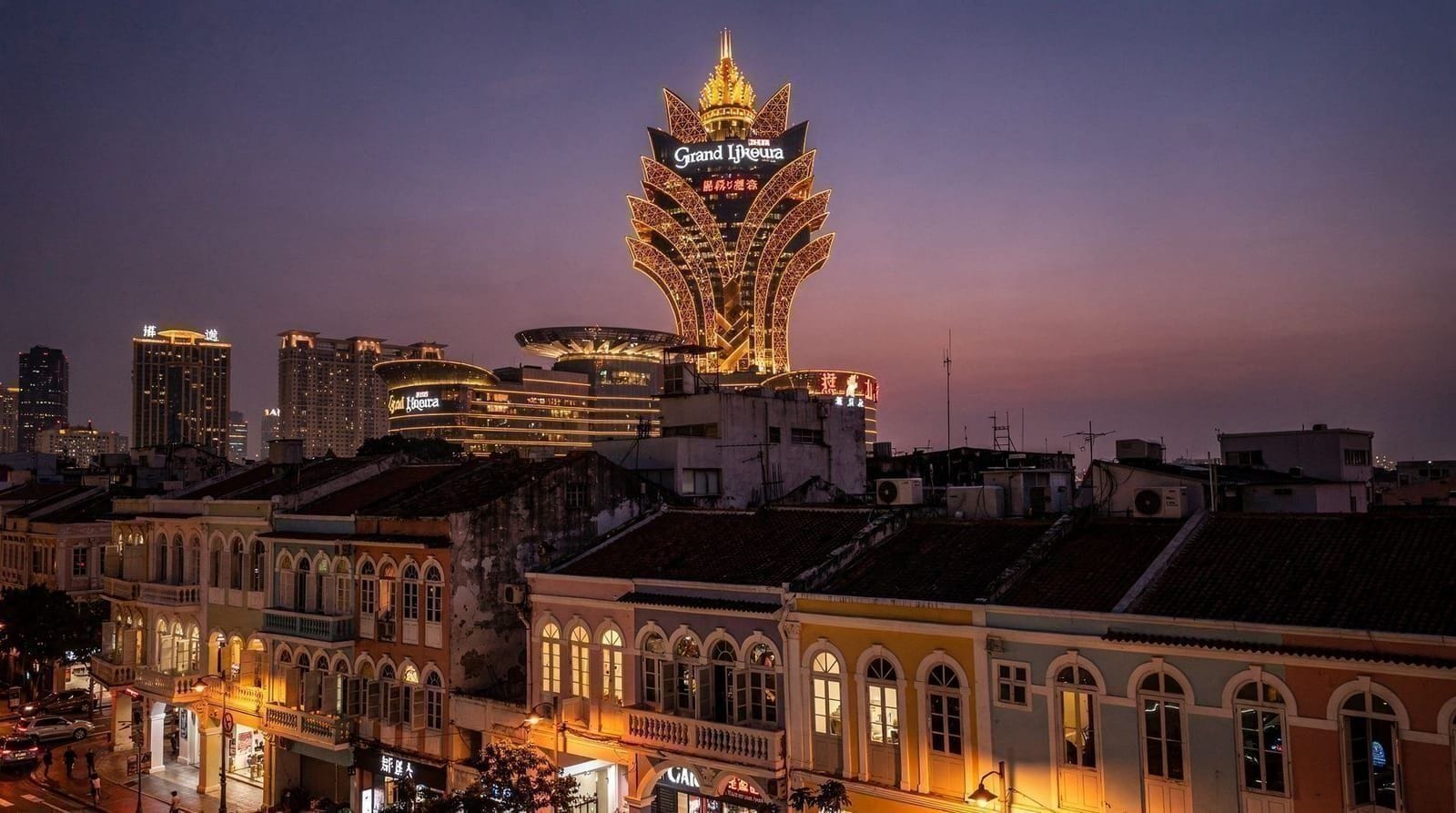
Macau is the standout day trip. In a single day you can walk through a UNESCO-listed historic centre that blends Portuguese colonial architecture with Cantonese street life, eat some of Southeast Asia’s most interesting food, and still have time to gawk at the Venetian Cotai Strip before catching the evening ferry home.
The fastest and most popular crossing is TurboJet from the Sheung Wan Macau Ferry Terminal, with departures roughly every 15-30 minutes around the clock. Economy class costs around HKD 194 on weekdays and HKD 212 at weekends one way (prices vary by time of day and day of week — weekend and evening sailings cost more). The journey takes 55-65 minutes depending on conditions. You can also cross via the Hong Kong-Zhuhai-Macao Bridge bus in around 45 minutes for about HKD 65 each way, with shuttle buses connecting to the border gate on both sides.
What to prioritise: the Ruins of St Paul, Senado Square, Taipa Village, and at least one proper Macanese meal. The casinos are worth a look for the spectacle, but do not let them eat your day.
This full-day Macau tour includes ferry transfers and lunch, taking care of the logistics so you can focus on the sightseeing.Check availabilityFor everything you need to plan the Macau crossing, see the full Macau day trip guide.
Lantau Island and the Big Buddha — best for families
MTR to Tung Chung: 35 minutes from Central
Ngong Ping 360 cable car: 20 minutes, HKD 295 standard return / HKD 365 crystal cabin
Full day budget: HKD 350-600 per adult
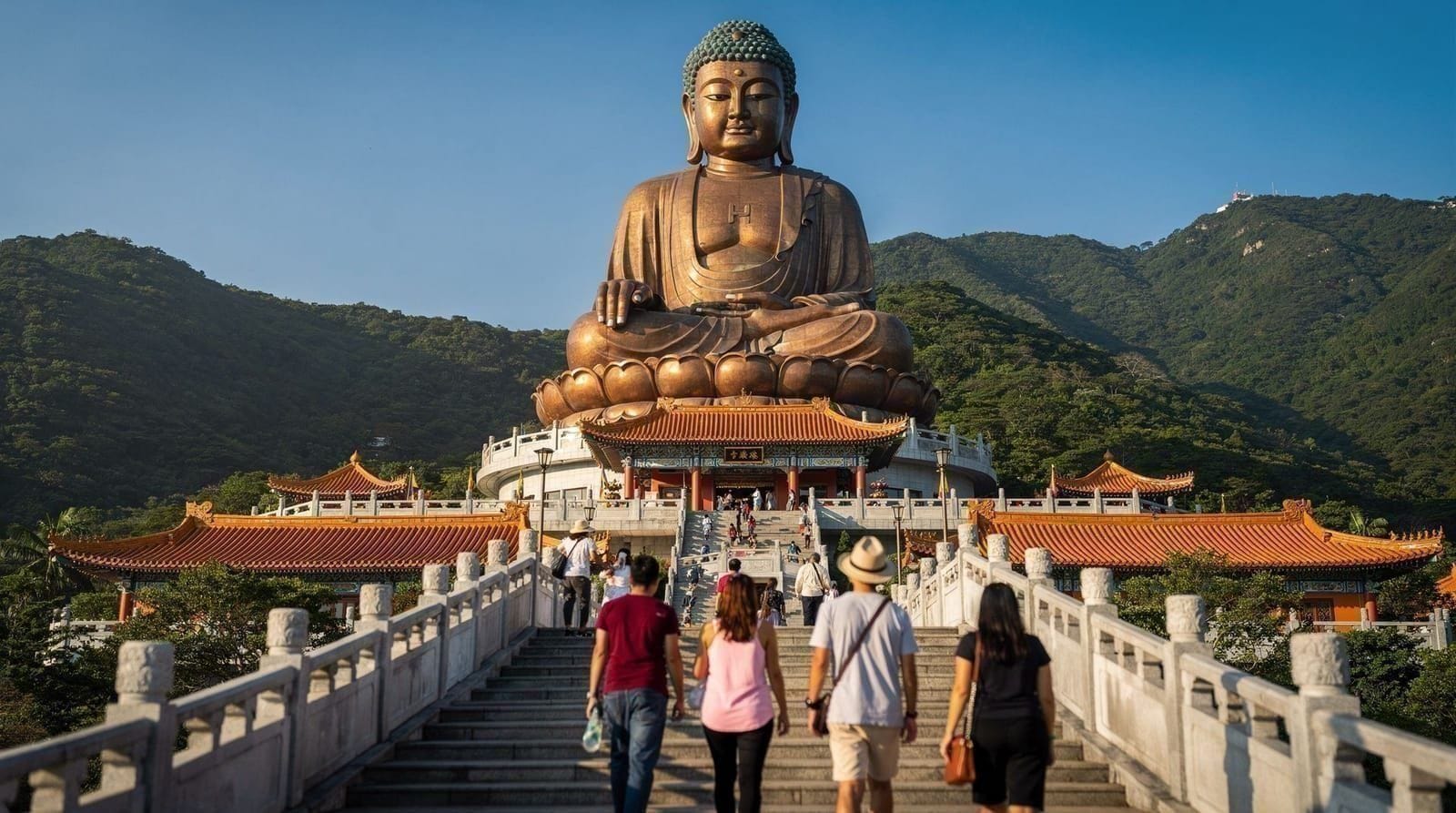
Lantau is Hong Kong’s largest island and the one with the most concentrated sightseeing. The centrepiece is the Tian Tan Buddha at Ngong Ping — at 34 metres tall, the world’s largest seated outdoor bronze Buddha when it was completed in 1993, and still visually overwhelming even after the cable car ride that delivers you almost to its base.
The journey is half the experience. The Ngong Ping 360 cable car climbs for 20 minutes over Tung Chung Bay and across forested hillsides before depositing you in Ngong Ping village. On clear days the views across the South China Sea are exceptional. On foggy days or in strong winds, the cable car closes — call ahead or check the website if the weather looks uncertain, because the alternative is a 45-minute bus journey up winding mountain roads.
Beside the Buddha, Po Lin Monastery is a working Buddhist monastery with free entry. The vegetarian lunch served at the monastery canteen is worth experiencing even if you are not vegetarian. After the Buddha, bus 21 runs the 30 minutes from Ngong Ping down to Tai O, the old fishing village built on stilts over tidal channels — one of the most photogenic places in Hong Kong and often overlooked by visitors who head straight back to Tung Chung.
This guided Big Buddha tour includes skip-the-line Ngong Ping 360 cable car access, saving you the 45-90 minute queue on busy weekends.Check availabilityRead the complete Lantau Big Buddha day trip guide for cable car booking tips and the Tai O fishing village detour.
Lamma Island — seafood, hiking, and expat village life
Ferry from Central Pier 4: 30 minutes to Yung Shue Wan, HKD 25-35
No cars, no high-rises, no rush
Full day budget: HKD 300-500 including a seafood lunch
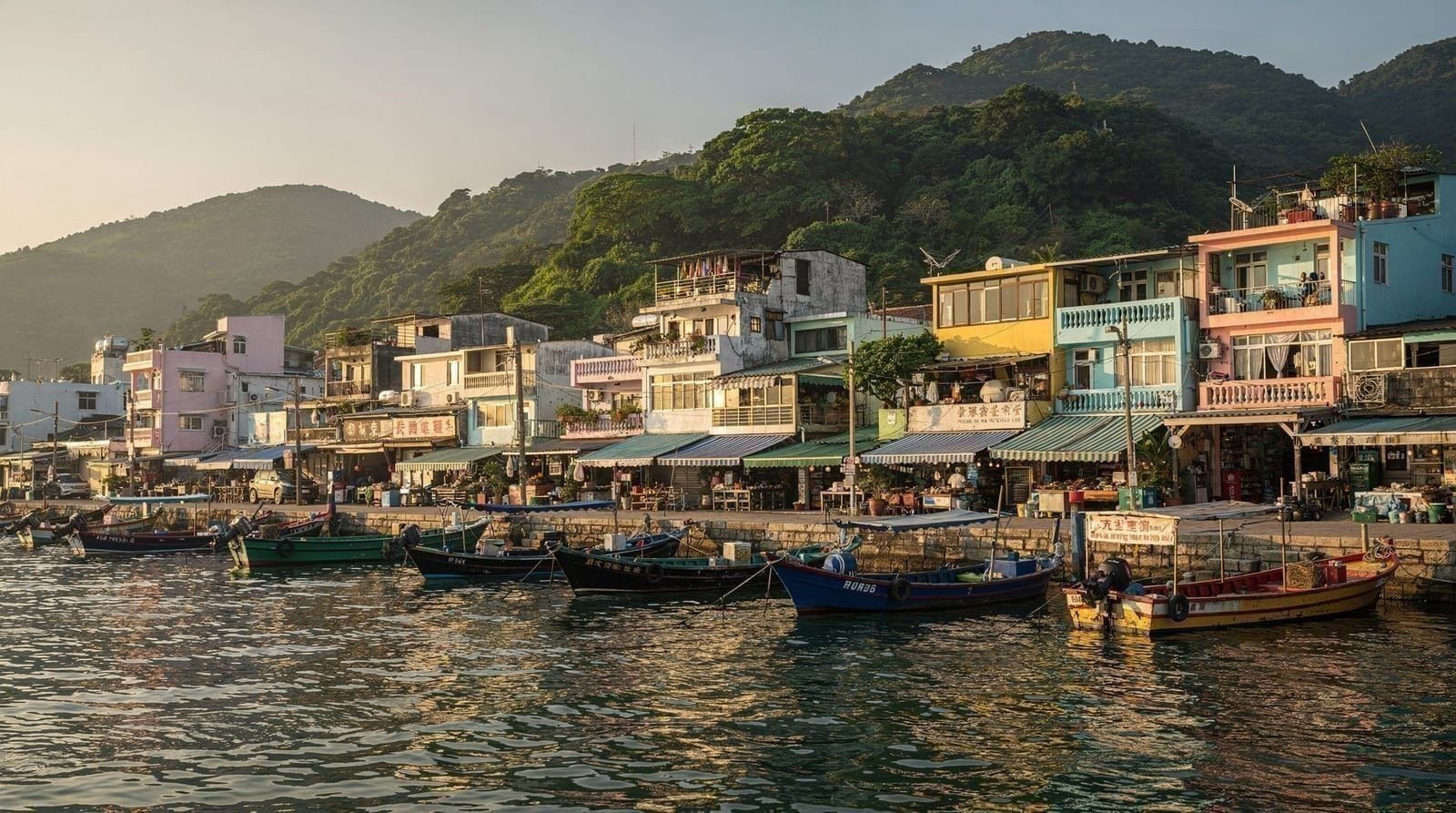
Lamma is where Hong Kong goes to decompress. The island has two main villages — Yung Shue Wan on the northern tip and Sok Kwu Wan on the eastern coast — connected by a family-friendly 3km trail through hills, past beaches, and through the village of Mo Tat. The hike takes around 1.5 hours at an easy pace and ends at Sok Kwu Wan’s famous row of seafood restaurants.
The seafood lunch is the main event. Rainbow Seafood Restaurant and the Lamma Hilton (yes, really) are the well-known names, but any of the restaurants along the Sok Kwu Wan waterfront will serve live seafood at prices significantly below what you would pay in the city. Budget HKD 300-600 per person for a proper feast of mantis prawns, steamed garoupa, and stir-fried clams with black bean sauce.
The island has no proper beaches on the main hiking circuit, but Lo So Shing Beach on the western flank is quiet, clean, and uncrowded on weekdays — a worthwhile detour if you are visiting in summer.
This guided Lamma Island tour covers the highlights of both villages with a seafood lunch included.Check availabilityFor the full guide including ferry schedules and the Aberdeen alternative route, see the Lamma Island guide.
Cheung Chau — the car-free island that surprises everyone
Ferry from Central Pier 5: 55 minutes slow / 35 minutes fast
Fare: HKD 17-25 slow / HKD 33-48 fast
Full day budget: HKD 200-400
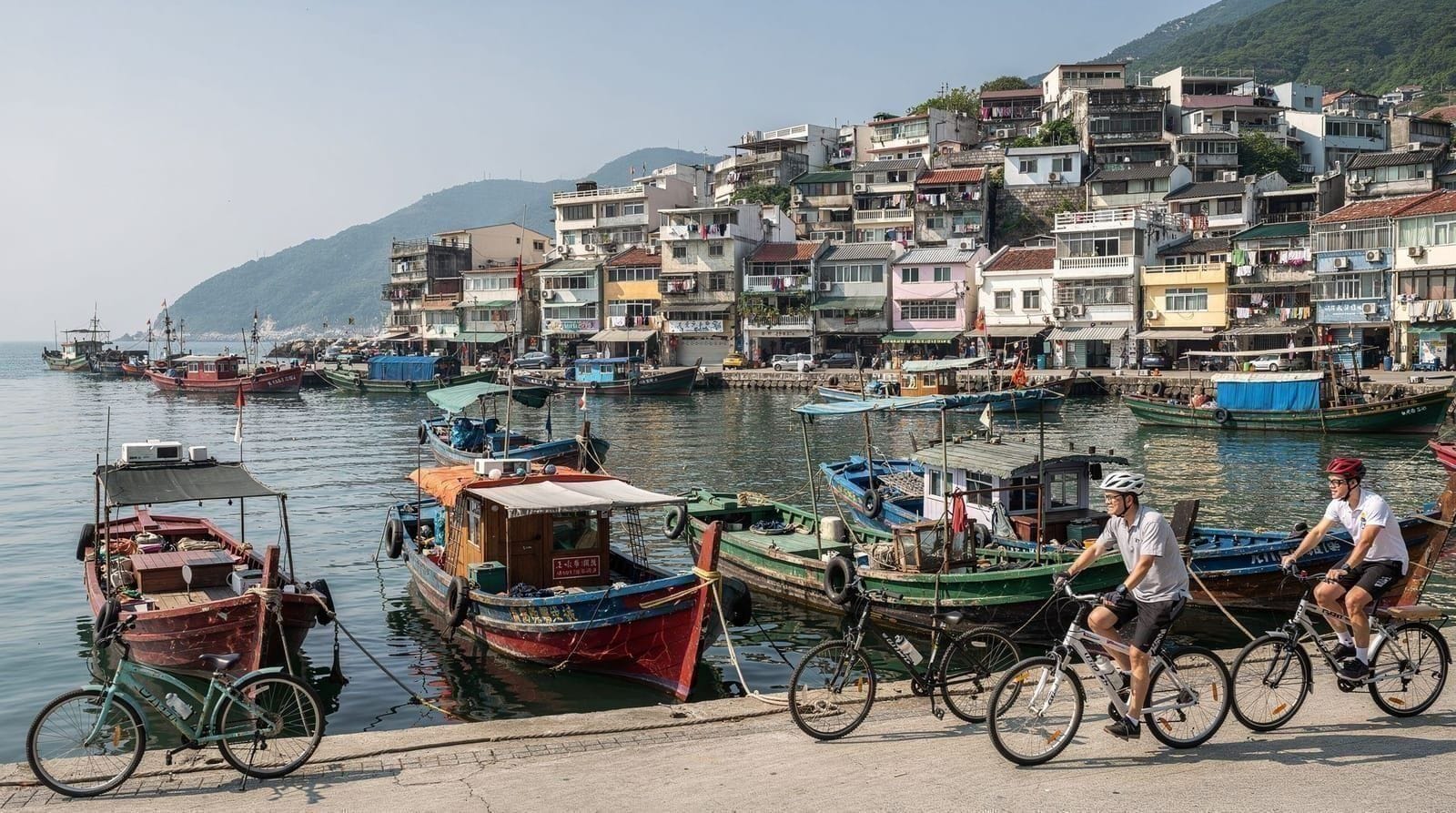
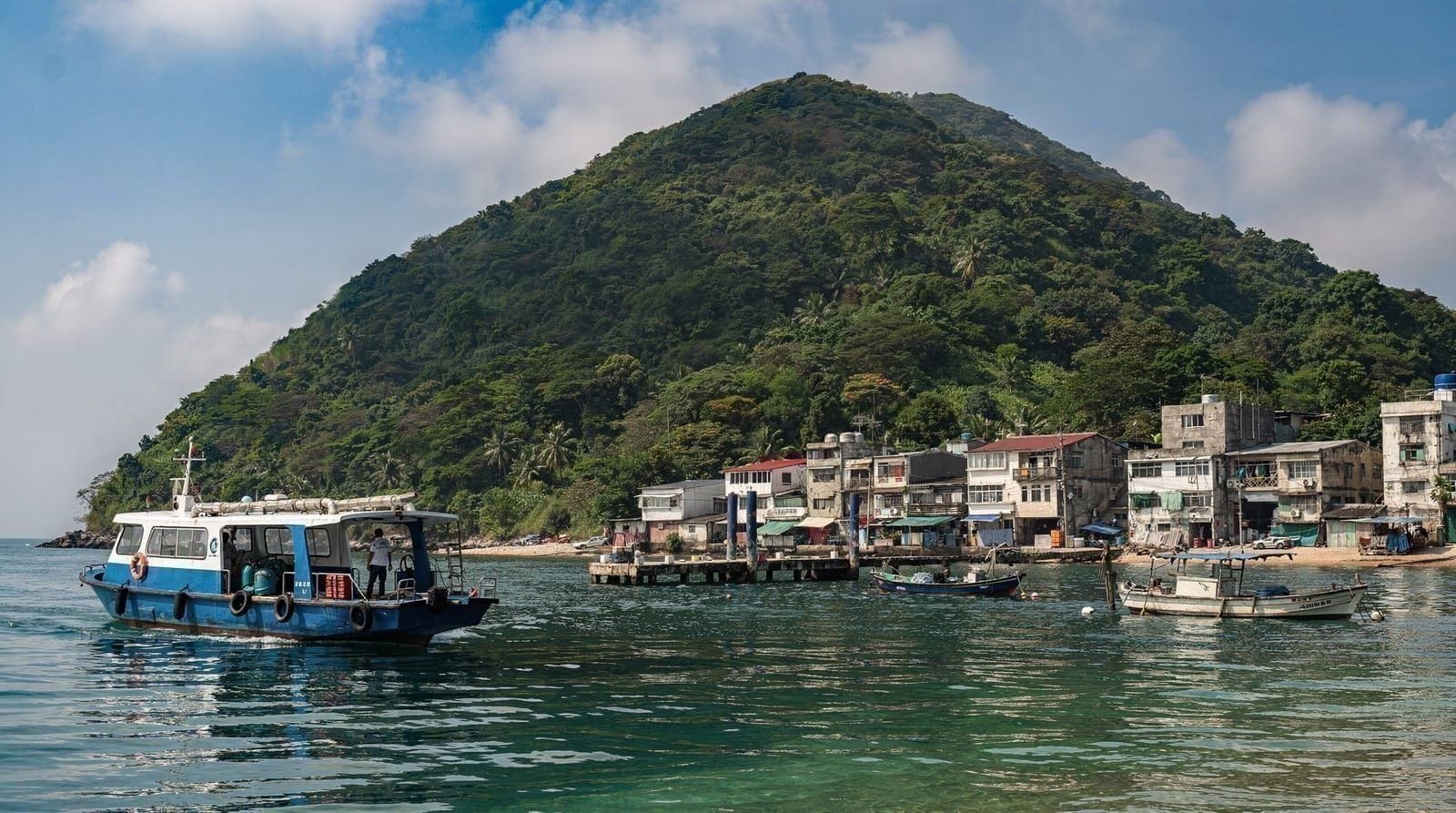
Cheung Chau is shaped like a dumbbell — a narrow strip of land connecting two hills, with the main village, beaches, and temples spread across the waist. There are no private cars on the island; transport is on foot, by hired bicycle, or by hand-pulled trolley. The quietude hits you almost immediately after stepping off the ferry.
The main sights are compact and walkable. Pak Tai Temple is an active Taoist temple where you might catch the smell of incense and the sound of live music on festival days. Cheung Po Tsai Cave on the southwest headland marks the supposed hiding spot of the 19th-century pirate whose fleet reportedly ranged from 1,800 vessels at its peak. The Cheung Chau Windsurfing Centre near Tung Wan Beach is where Lee Lai Shan trained before winning Hong Kong’s only Olympic gold medal at the 1996 Atlanta Games — a big deal locally.
Tung Wan is the main beach: wide, well-maintained, and busy on summer weekends. For quieter swimming try Kwun Yam Wan on the western side or Italian Beach to the south.
Food is a highlight. The street stalls along Tung Wan Road sell fish balls, siu mai, and shaved mango ice at prices that feel almost from a different era. The Bun Festival in April or May (date varies by lunar calendar) is one of Hong Kong’s most spectacular annual events, with towering bamboo towers covered in lucky buns — worth planning a trip around if your visit coincides.
This walking tour of Cheung Chau covers the pirate cave, the temples, and the beach with a local guide who knows the island well.Check availabilitySee the Cheung Chau guide for beach recommendations and the Bun Festival schedule.
Shenzhen — shopping and skyscrapers across the border
MTR East Rail Line to Lo Wu: 45 minutes from Hung Hom
Visa: China mainland visa required for most nationalities
Full day budget: CNY 300-600 (approximately HKD 330-660)
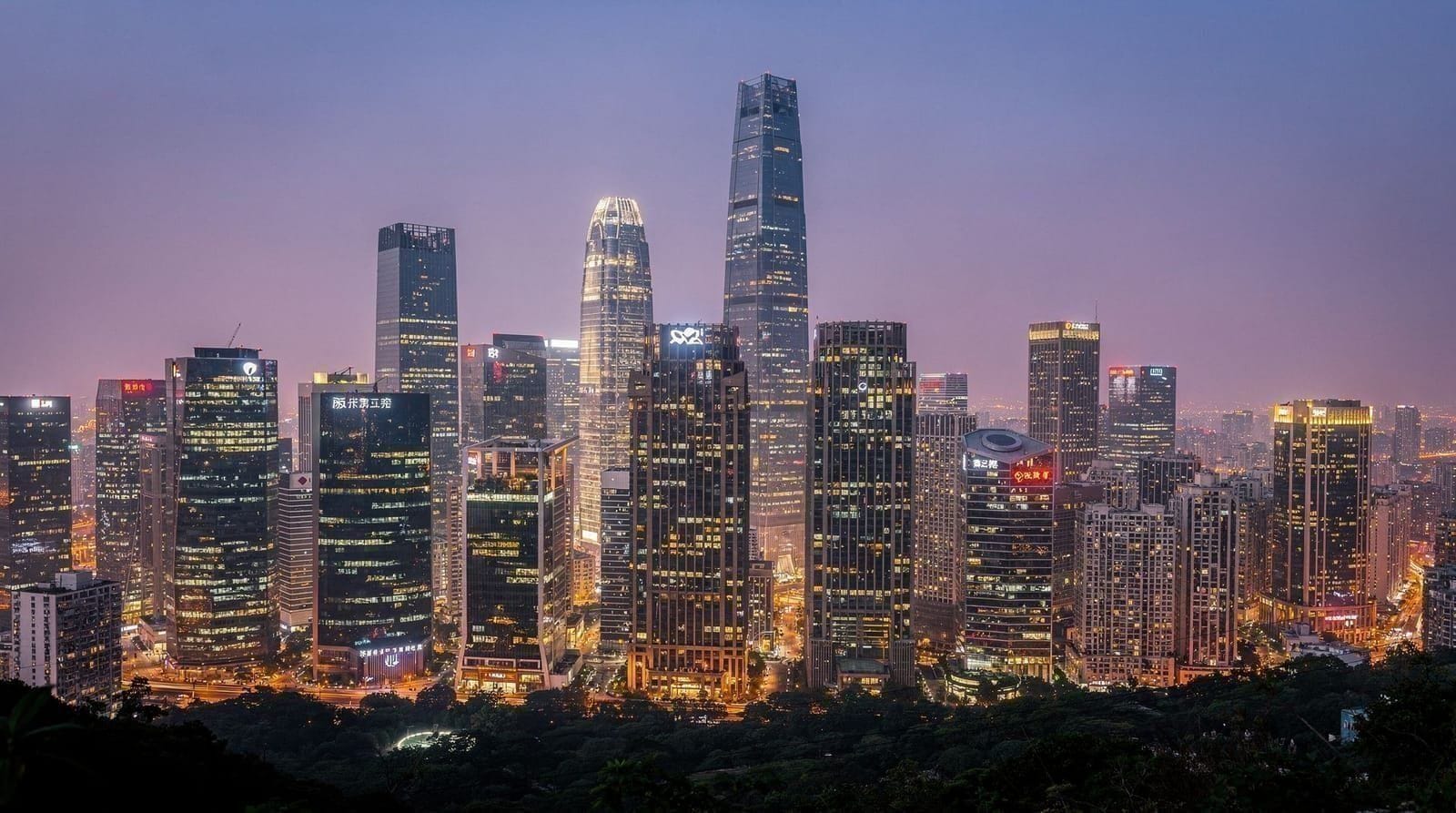
Shenzhen was a fishing village in 1979. It is now a city of 17 million people and one of the most dynamic urban environments in Asia. From Hong Kong it takes under an hour to reach by MTR, yet crossing into Shenzhen feels like stepping into a genuinely different world — bigger portions, lower prices, Mandarin instead of Cantonese, and a skyline of glass towers that went up in what feels like the past decade.
The important caveat: Shenzhen requires a China mainland visa for most foreign nationals. Some nationalities qualify for a Shenzhen-only visa-on-arrival (a 5-day permit), but the list of eligible nationalities changes and the process is not guaranteed — check with the Chinese consulate in Hong Kong well before your visit. Do not cross on speculation.
For those who have the visa, Luohu Commercial City (the massive mall directly above the Lo Wu border crossing) is the classic first stop — tailoring, electronics, massage, and the kind of dense sensory overload that either thrills or overwhelms within the first 15 minutes. Bargain hard: initial prices in tourist-facing stalls are often four to five times the expected final price. Further afield, the OCT Loft creative district in Nanshan is a more relaxed option with galleries, coffee shops, and street art. Window of the World theme park is worth knowing about if you are travelling with children.
Food is the real bargain. Cantonese dim sum, roast goose, and hand-pulled noodles in Shenzhen cost a fraction of Hong Kong prices. Payment is dominated by Alipay and WeChat Pay — foreign visitors can now link international Visa and Mastercard to both apps, which has made cashless payment genuinely accessible for tourists.
For the full border crossing logistics and what to actually do once you arrive, read the Shenzhen day trip guide.
Sai Kung — Hong Kong’s outdoor escape
Travel time: MTR to Diamond Hill, then minibus 1A to Sai Kung Town, ~50 minutes total
Full day budget: HKD 200-400
Sai Kung is not a single destination but a region — the southeastern corner of the New Territories that holds most of Hong Kong’s country parks, its clearest beaches, and the extraordinary volcanic hexagonal columns of High Island Reservoir. For anyone who wants a day outdoors without leaving Hong Kong or crossing any border, Sai Kung is the answer.
Sai Kung Town is the gateway: a working fishing port with a waterfront lined with seafood tanks where you can choose your fish and have it cooked on the spot. From the town pier, kaidos (small sampan water taxis) run to beaches across the Sai Kung peninsula — Sharp Island, Kiu Tsui Beach, and Hap Mun Bay (Sharp Island) are all reachable for around HKD 50-80 return per person.
For hikers, the MacLehose Trail begins at Pak Tam Chung and runs west across the New Territories in ten stages. Even doing just Stage 1 (from Pak Tam Chung to Sai Kung Town, about 10km) gives a full and rewarding day in genuine countryside.
What to skip for a day trip
Guangzhou: The high-speed train from West Kowloon reaches Guangzhou South in 47 minutes, but Guangzhou rewards a proper overnight visit rather than a rushed day trip. The city is large, the interesting neighbourhoods (Shamian Island, Liwan, Tianhe) are spread out, and you need a China visa. Save it for a longer trip.
Zhuhai: Adjacent to Macau across the border, but there is no compelling reason to visit Zhuhai instead of spending that time deeper in Macau. Most visitors crossing via HZMB stay within Macau.
Ocean Park on its own as a “day trip”: Ocean Park is technically in Aberdeen on Hong Kong Island — not really a day trip destination but a full-day Hong Kong attraction. Worth knowing about for families but it is not an excursion out of the city.
How to plan your day trip days
Two practical principles make day trips from Hong Kong work well.
Leave early. For Macau, Lantau, and Shenzhen, being at your destination before 10am transforms the experience. Queues at the cable car, ferry terminal, and border crossings all build significantly between 10am and noon, especially on weekends. Early arrivals get the light, the space, and the energy of a destination before the crowds arrive.
Use Octopus card for everything. The Octopus card works on the MTR, most ferries to the outlying islands, buses in Lantau, and countless other transport links. Load HKD 200-300 and you will barely need to think about payment. For Macau, you will need cash or card at the ferry terminal ticket window (some online platforms let you book ahead).
For getting around once you are in Hong Kong between day trips, the MTR guide covers routes, fares, and the logic of the network clearly.
Combining day trips into a longer itinerary
Travellers with three or more days in Hong Kong often ask whether day trips can be stacked back to back. They can, but the honest advice is to alternate a big excursion day with a lighter city day rather than running two full day trips in a row — the early starts and border-crossing logistics (real for Macau and essential for Shenzhen) add up.
A common and workable pattern for a five-day trip is: two days in the city, one day trip to Macau, one day trip to Lantau, and a final relaxed day split between the harbour and a museum. The Hong Kong 5-day itinerary lays out a version of this pacing in full, and the Hong Kong islands itinerary is built specifically for travellers who want to prioritise Lamma, Cheung Chau, and Lantau over city sightseeing.
What to pack for a day trip
Whichever destination you choose, a few items make the day noticeably easier. A charged Octopus card covers the MTR, most ferries, and Lantau buses without a second thought. Cash in small HKD denominations matters for Macau ferry terminal counters and for vendors on Cheung Chau and Lamma who do not always take cards. Sunscreen and a hat are worth carrying even on overcast days, since Lantau’s cable car and Cheung Chau’s beaches offer little shade. For Macau specifically, carry your passport — it is a separate immigration jurisdiction even though no visa is required for most Western nationalities.
Frequently asked questions about Best day trips from Hong Kong — 7 escapes worth the journey
Do I need a visa for Macau from Hong Kong?
Which day trip from Hong Kong is best for families with children?
Can I do Macau and an outlying island on the same day?
Do I need a visa to visit Shenzhen?
How early should I leave Hong Kong for a day trip to Macau?
What is the cheapest day trip from Hong Kong?
Is Guangzhou worth a day trip from Hong Kong?
Can I visit Sai Kung without any border crossing or visa?
How many day trips can I fit into a one-week Hong Kong trip?
Top experiences
Bookable activities with verified prices and instant confirmation on GetYourGuide.