Macau day trip guide — historic centre, food, and how to get there
Hong Kong: Macau day tour with round-trip ferry lunch and pickup
Duration: 10 hours
How do I do a day trip to Macau from Hong Kong?
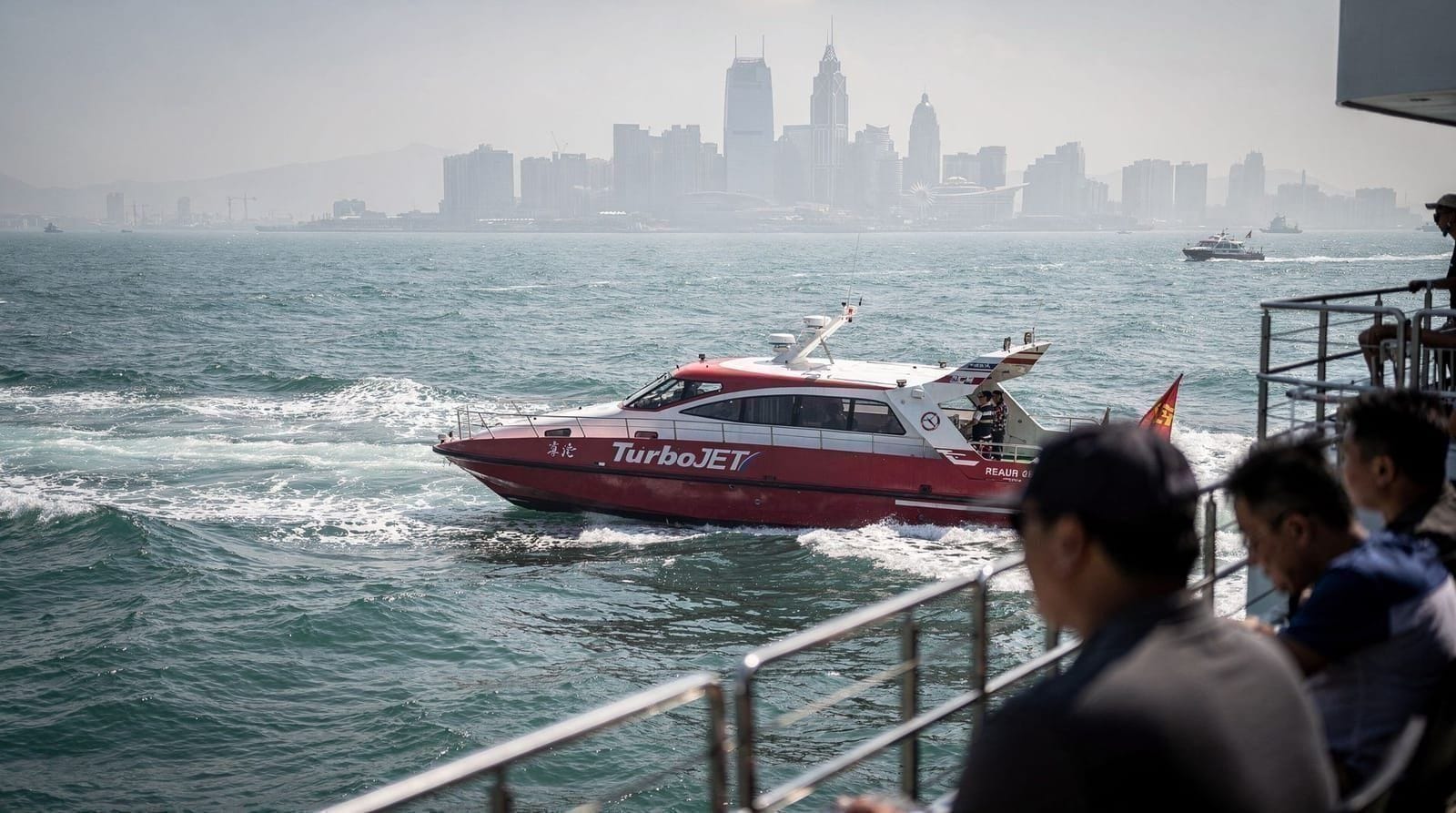
Take the TurboJet ferry from Sheung Wan or Tsim Sha Tsui Ferry Terminal — 55-65 minutes, HKD 194–212 one way. No China visa needed for most Western nationals. Arrive early, see the Ruins of St Paul and Senado Square in the morning, lunch in Taipa Village, and catch an evening ferry back. Budget HKD 673–984 for the full day.
What makes Macau worth crossing the Pearl River for
Macau is the most popular day trip from Hong Kong and, if you have not been, probably the most surprising. Most people arrive expecting a casino strip. What they find is a layered, walkable city where 16th-century Portuguese churches sit next to Cantonese temples, where the best egg tart you will eat in your life comes from a small bakery in a village that feels entirely Portuguese, and where the food bill for lunch is sometimes lower than dinner at a mid-range restaurant in Tsim Sha Tsui.
The casinos are there, they are enormous, and they are worth passing through for the spectacle — the Macau casinos guide covers which ones repay a visit even if you never gamble. But they take nothing away from the historic centre, which UNESCO recognised in 2005 as a World Heritage Site. Macau packs more architectural and culinary surprise into a single walkable day than almost anywhere else reachable from Hong Kong.
| Where | Macau, across the Pearl River Estuary |
| Cost | Around HKD 673–984 for the full day, ferry included |
| Time needed | A full day, roughly 9am to 8pm |
| Getting there | TurboJet ferry (~1hr) or HZMB bridge bus (~45min) |
| Best time | Weekday mornings; avoid Chinese public holidays |
Getting to Macau from Hong Kong
TurboJet ferry (recommended)
The TurboJet hydrofoil is how most visitors cross. Two departure points in Hong Kong:
Sheung Wan Macau Ferry Terminal (also called the Outer Harbour or Shun Tak Centre terminal) — located above Sheung Wan MTR station, making it the most convenient option for travellers staying on Hong Kong Island. Ferries run roughly every 15-30 minutes, 24 hours a day. Economy class is HKD 194 one way on weekdays and HKD 212 at weekends and public holidays; for first-class fares see the TurboJet website. Weekend and evening sailings are priced higher than weekday mornings. The journey takes 55-65 minutes depending on sea conditions.
China Ferry Terminal, Tsim Sha Tsui — the Kowloon departure point, useful for those staying in Tsim Sha Tsui or Kowloon. Same TurboJet service, similar fares and journey time. Access via a short taxi or 15-minute walk from Tsim Sha Tsui MTR.
You arrive at Macau’s Outer Harbour Terminal (Porto Exterior), which is about 2km west of the historic centre. Ferries also run from Hong Kong to the Taipa Ferry Terminal (inner harbour, closer to Cotai Strip), operated by Cotai Jet. If your priority is the casinos and Taipa, Cotai Jet saves you a taxi.
This organised ferry crossing from Hong Kong to Macau takes care of the ticket booking and terminal logistics, with a meet service on both ends.Check availabilityHong Kong-Zhuhai-Macao Bridge (HZMB) bus
The bridge option is cheaper — HKD 65 each way by day (HKD 70 at night) — and the bus journey takes about 45 minutes. But the total door-to-door time is often longer than the ferry because of the process: you travel to the Hong Kong Boundary Crossing Facility on Lantau Island (accessible by Airport Express or dedicated buses), clear Hong Kong immigration, take the shuttle to the bus, cross the 55km bridge, then clear Macau immigration at the Macau border gate near the Cotai Strip.
For travellers staying near the airport or in Tung Chung, the bridge makes sense. For everyone else, the ferry terminal is more convenient. See the ferry vs bridge guide for a full side-by-side comparison of cost, time, and convenience.
Macau immigration
At the terminal, join the Macau immigration queue. For most Western passport holders (US, EU, UK, Canada, Australia, New Zealand) the queue is short and the process is fast — stamp in, no visa fee. You receive a paper entry slip; keep it, as you hand it back on departure. The allowed stay varies by nationality: 30 days for some, 90 days for EU nationals. Check the Macau Immigration Department website for your specific passport.
Getting from the ferry terminal to the city
Free shuttle buses run from the Outer Harbour Terminal to most major casino hotels. This is the quickest and cheapest way into the city — grab a shuttle to the Hotel Lisboa or Grand Lisboa, both of which drop you within 10-15 minutes’ walk of Senado Square and the historic centre. Casino shuttle buses operate purely as a service for their hotels; you do not need to gamble or even enter the casino.
Taxis from the terminal are inexpensive: HKD 25-35 to Senado Square, HKD 35-50 to Taipa Village. Drivers may not speak English fluently, but most can read a destination written on your phone. The Macau Metro (Light Rail Transit) connects Taipa to the Barra terminal near the Macau Tower but does not currently serve the Outer Harbour Terminal or the historic centre directly.
What to see: the historic centre
The UNESCO Historic Centre of Macau is a walk-friendly cluster of 30 monuments and public spaces spread across about 2km of the peninsula. You do not need a map to start — just follow the crowds from the Lisboa area uphill toward the ruins.
Senado Square and the surrounding lanes
Senado Square (Largo do Senado) is the civic heart of the old city — a mosaic-paved plaza surrounded by colonial-era government buildings in faded pastel yellows and whites. The square itself is free, always open, and busy at every hour. It is particularly atmospheric early in the morning before the tour groups arrive.
From the square, the narrow lanes climbing uphill toward St Paul are lined with shops selling Macanese sweets and dried goods — pork jerky (bakkwa), almond biscuits, and egg rolls. These lanes are worth wandering slowly; the architecture changes every 20 metres from Cantonese shophouse to Portuguese tile-fronted townhouse.
Ruins of St Paul
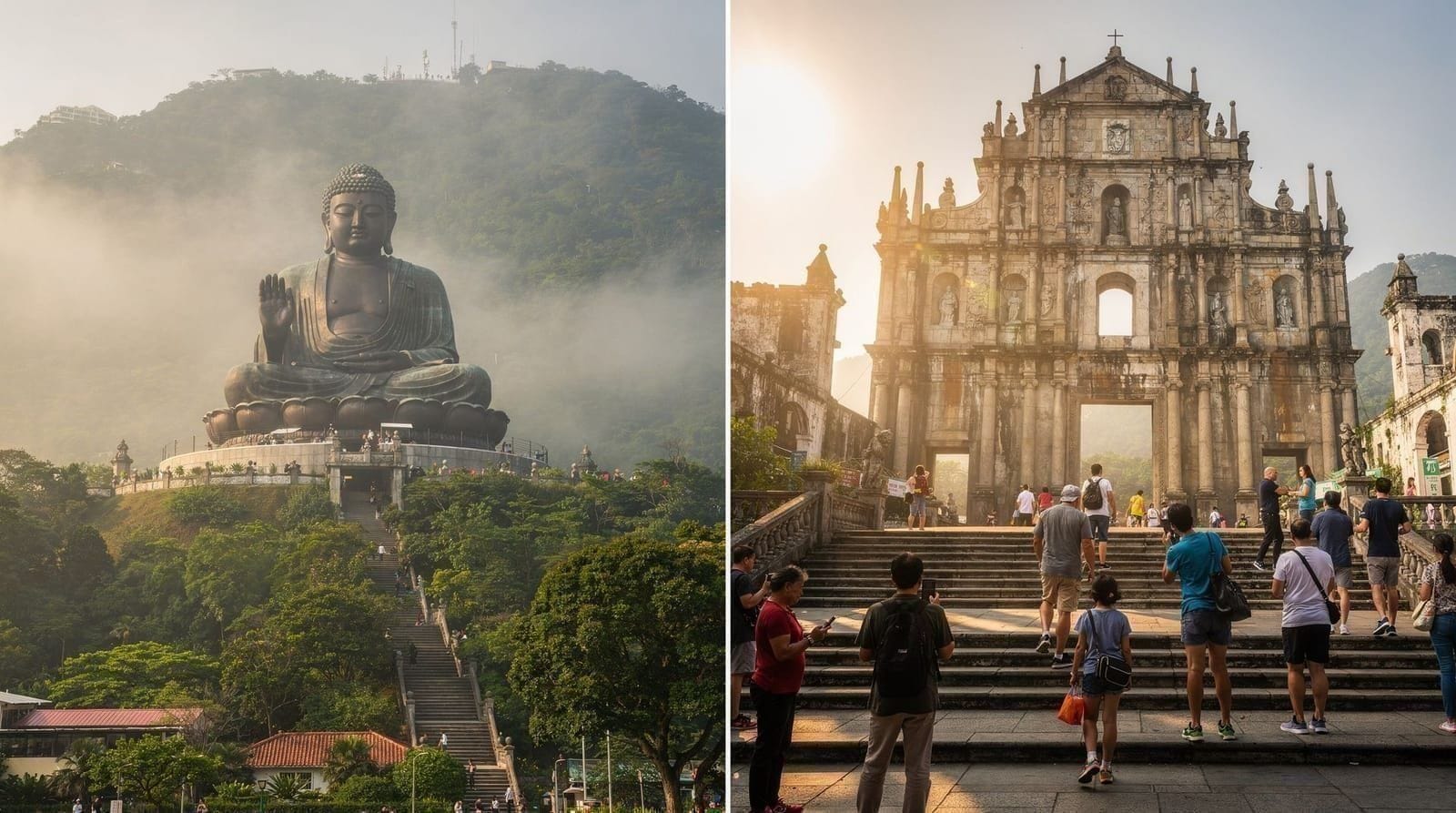
The facade of St Paul’s Church is the defining image of Macau. What looks like the front of a church is in fact only the facade and the grand staircase — the church burned down in 1835, leaving only the ornate stonefront standing. The facade is carved with religious imagery, Catholic saints, and — notably — a Chinese dragon fighting a Western ship, a symbol of the city’s hybrid identity.
Entry to the ruins area is free. There is an underground crypt and museum beneath the staircase (also free) with archaeological findings from the site. The view from the top of the staircase looking back down toward Senado Square is one of Macau’s best urban perspectives. Arrive before 10am to see it without the crowds.
This guided tour of the Ruins of St Paul and the historic centre gives the full architectural and historical context, covering sights most self-guided visitors miss.Check availabilityMount Fortress and Macau Museum
Adjacent to the ruins, the old Monte Fort has cannon placements dating to the 17th century and a panoramic view over the peninsula. The Macau Museum inside the fort (HKD 15, closed Monday) covers Macanese history with a clear and well-curated permanent exhibition — worth an hour if you want context for what you are seeing in the streets below.
A-Ma Temple
At the opposite end of the peninsula from St Paul, the A-Ma Temple is Macau’s oldest — dating to before the Portuguese arrived in the 16th century, dedicated to the sea goddess Mazu. Entry is free. The temple is built into a rocky hillside with multiple halls connected by winding paths past incense coils the size of dinner plates. It gives you an immediate sense of how Macau’s Chinese religious life continued quietly alongside the Portuguese colonial layer.
Walking the historic centre in a logical loop
Rather than crisscrossing the peninsula, most first-timers do best following a rough loop: start at Senado Square, climb through the lanes to the Ruins of St Paul and Mount Fortress, drop back down through the Camões Garden area, and finish with a taxi to A-Ma Temple if time allows before heading toward Taipa. This keeps the uphill sections early in the day, before the heat and crowds build, and means you finish near the waterfront where taxis to Taipa Village and the Cotai casinos are easy to find. Budget 3–4 hours for this loop at an unrushed pace, including a coffee or egg tart stop along the way.
Taipa Village and the Cotai Strip
Taking a taxi south across the bridge (HKD 30-40) delivers you to Taipa Village, which is to Macau’s historic centre what a slightly quieter, more Portuguese version of itself would be. Taipa Village has excellent restaurants, the old Taipa Houses museum (a row of restored colonial officials’ residences), and a palpably different atmosphere from the casino zones on the Cotai Strip that surround it.
The Venetian Macao on Cotai — the largest casino in the world by floor area — is an interesting object lesson in excess. Its indoor Grand Canal, complete with gondola rides under a painted sky, is worth 30 minutes of your afternoon. You do not need to spend money to walk through. Adjacent are several other mega-casinos (Parisian, with its half-scale Eiffel Tower; MGM Cotai; Morpheus) that make the Cotai Strip a genuinely bizarre architectural spectacle unlike anything else in Asia.
What to eat in Macau
Macau has a distinct food culture shaped by four centuries of Portuguese presence and Cantonese surroundings. It rewards eating well.
Portuguese egg tarts (pasteis de nata): Lord Stow’s Bakery in Coloane Village is the original and, for most visitors, the best. The tarts are flakier and less sweet than the Hong Kong version. The Coloane branch is a 20-minute taxi ride from the historic centre — make it a deliberate detour or combine with the A-Ma Temple if you are on the peninsula side.
Pork chop bun: Tai Lei Loi Kei on Taipa Village’s Rua Correia da Silva is the famous original. A bone-in pork chop fried and tucked into a white Portuguese roll, served with a beer or Coke. Queue for it — it is worth the wait.
Macanese cuisine: This is the genuinely interesting food category — dishes that do not exist anywhere else. African chicken (galinha africana) is roasted with coconut and spiced piri piri marinade. Minchi is ground pork fried with soy sauce and potatoes, topped with a fried egg. Bacalhau (salt cod) comes in a dozen preparations. Clube Militar and Litoral Restaurant are the well-regarded names for full Macanese meals; budget around HKD 200-350 per person.
Egg tarts, almond biscuits, and beef jerky from the lane stalls near St Paul are the classic eat-while-walking options. Buy from whichever stall lets you try before you buy.
For a deeper dive into where and what to eat, see the Macau food guide, which covers Macanese restaurants, egg tart comparisons, and pork chop bun spots beyond the famous names above.
Budgeting for a Macau day trip
| Item | Approximate cost (HKD) |
|---|---|
| Return TurboJet ferry (economy weekday) | 388–424 |
| Free shuttle bus to city | 0 |
| Entry to Ruins of St Paul and Mount Fortress | 0-15 |
| Macau Museum | 15 |
| Lunch in Taipa Village | 150-300 |
| Pork chop bun and egg tart snacks | 40-80 |
| Taxi for 2-3 cross-city trips | 80-150 |
| Total estimate | 673–984 |
Organised day tours: when they make sense
Self-guided works well for most travellers — the historic centre is walkable and well-signposted. But organised tours earn their place if you want a guided narrative through the UNESCO sites, if you have limited time and want to cover more ground efficiently, or if you prefer having the ferry and transport logistics handled.
This full-day Macau tour with ferry, a guided historic centre walk, and lunch in Taipa is one of the most popular options from Hong Kong and covers the essential sights with a proper local guide.Check availability For groups or travellers who prefer a structured day with all transfers included, this full-day Macau tour with lunch handles the entire logistics from Hong Kong hotel pickup to return.Check availabilityPractical tips
Book ferry tickets in advance on busy weekends. TurboJet tickets sell out on Chinese public holidays and summer weekends. Book online 2-3 days ahead. The terminal is closed-circuit enough that missing your sailing means waiting 30-60 minutes for the next one — annoying but not catastrophic.
Currency. Hong Kong Dollars work everywhere in Macau at near-parity. Macanese Patacas are not accepted back in Hong Kong, so spend your MOP before you leave or request change in HKD at restaurants.
Return timing. The 5pm to 7pm sailings from Macau back to Hong Kong are the busiest. If you can, aim for a 7:30pm or 8pm return — the queue drops significantly. Or buy your return ticket when you arrive at the Macau terminal in the morning.
Casino shuttle buses. Every major casino runs free shuttle buses from the ferry terminals and the Macau border gate. These are open to any visitor, not just hotel guests. Use them liberally — they are faster and cheaper than taxis for getting between the historic centre and Cotai.
Day trip or overnight stay: which suits you
| Day trip | Overnight stay | |
|---|---|---|
| Best for | First-timers, tight schedules | Slower pace, night photography, Cotai shows |
| Covers comfortably | Historic centre, lunch, a look at Cotai | Historic centre by day and night, Taipa, Coloane |
| Typical cost add-on | None beyond the day-trip budget | Hotel from around HKD 600–1,500/night on Cotai |
| Ferry pressure | Must catch a return sailing | No rush, flexible return |
Most visitors do Macau as a day trip, and it works well — the historic centre and a Macanese lunch fit comfortably into a single day without feeling rushed. If you have more time in Hong Kong overall, though, an overnight stay lets you see the Ruins of St Paul and Senado Square after dark, when the crowds thin and the lit facades are genuinely beautiful, and gives you room to add Coloane’s beaches and Lord Stow’s original bakery without cramming it into a single afternoon. For a full first-visit walkthrough covering both approaches, see the Macau first-timer guide; for the historic centre in more depth, see the Macau historic centre guide.
Getting back: what the return journey looks like
The Macau Outer Harbour Terminal has a ticketing area, departure hall, and immigration on the ground and first floors. If you bought a return ticket in Hong Kong, proceed directly to check-in. If you need to buy your return ticket in Macau, the ticket windows are in the departure hall. Queues at peak hours (5pm-7pm) can run 30-40 minutes. Arriving 45 minutes before your sailing is comfortable; 30 minutes is fine midweek.
The ferry journey back to Hong Kong is identical to the outward crossing. By early evening the Pearl River Estuary is often catching the last light at a beautiful angle across the water — the ride back is a pleasant way to close the day.
For the complete logistics of the crossing including border procedures, see the getting to Macau guide. For where to stay in Hong Kong near the ferry terminals, the Sheung Wan and Central guide covers the neighbourhood in detail.
Frequently asked questions about Macau day trip guide — historic centre, food, and how to get there
Do I need a visa to visit Macau from Hong Kong?
How long is the ferry from Hong Kong to Macau?
How much does a Macau day trip cost?
What currency does Macau use?
What is the best thing to eat in Macau?
Is Macau worth visiting for a day trip if you do not gamble?
How do I get from the Macau ferry terminal to the historic centre?
When is the best time to visit Macau on a day trip?
Should I do Macau as a day trip or stay overnight?
Is Macau or Hong Kong better for a short trip if I only have time for one?
Top experiences
Bookable activities with verified prices and instant confirmation on GetYourGuide.