Macau food guide — what to eat, where to go and what to skip
Macau: Historic city walk day tour with lunch and port pickup
What should you eat in Macau?
Start with the egg tart at Lord Stow's Bakery in Coloane. Then: African chicken (galinha africana), Portuguese bacalhau (salt cod) preparations, minchi (spiced minced meat with potato), caldo verde soup, and Macau's local pork chop bun (pork chop sandwich). The casino buffets are not worth the money unless subsidised — focus on the street food and neighbourhood restaurants in the historic centre.
Why Macau’s food is worth the trip on its own
Macau’s food culture is a genuine anomaly: a 450-year colonial history that layered Portuguese cooking techniques and ingredients onto Cantonese foundations, with additional influence from Portuguese African colonies (Mozambique, Angola) and Southeast Asia (Goa, Malacca). The result is a cuisine that does not exist anywhere else and that most visitors dramatically underestimate before arriving. This guide is a companion to the Macau first-timer guide and the Macau day trip guide — read those for the wider logistics of getting there and sequencing a day.
The casino strip in Cotai has import-grade restaurants and casino buffets that are not particularly interesting. The interesting food is in the historic centre of the Macau Peninsula, in Taipa Village, and — most importantly — in Coloane, where Lord Stow’s Bakery turned a Portuguese pastry tradition into one of Asia’s most replicated foods.
| Where | Macau Peninsula historic centre, Taipa Village, Coloane |
| Cost | Street food MOP 30–80; sit-down Macanese lunch MOP 150–250 |
| Time needed | Half a day for a proper food-focused loop |
| Getting there | Ferry or HZMB bus from Hong Kong to Macau |
| Best time | Lunch (12–2pm) or an unhurried afternoon in Coloane |
The essential dishes
Lord Stow’s egg tart (pastéis de nata)
Location: 1 Rua do Tassara, Coloane Village. Also branches in Taipa Village.
The story: Andrew Stow, a British pharmacist who settled in Macau in the 1980s, adapted the Lisbon pastel de nata recipe and began selling them from a small bakery in Coloane in 1989. The custard tart spread throughout Hong Kong and China in subsequent decades; millions of imitations exist. None are quite as good as the original.
Practical details: the Coloane bakery is small — expect a short queue. Tarts are sold individually (MOP 11–13) or in boxes. Eat them warm, within minutes of leaving the oven — they are qualitatively different when hot versus cold. The custard caramelises on top during baking; the flaky pastry shell holds up briefly then softens. The Taipa Village branch is slightly larger and more accessible if you are staying on Cotai.
Galinha africana (African chicken)
African chicken is the most characteristically Macanese dish — grilled chicken (typically half-chicken) coated in a sauce of coconut cream, peanuts, bay leaves, chilli, and paprika. The combination of coconut (Southeast Asian influence), peanut (African influence), and the grilling technique (Portuguese) is specific to Macau.
Where to eat it: Henri’s Galley (4 Avenida da Republica, Macau Peninsula) has served African chicken since the 1970s and is the classic reference. Riquexó (79 Avenida de Sidonio Pais) is a smaller and more locally-oriented option. Expect MOP 130–180 for a half-chicken portion.
Pork chop bun (豬扒包)
Macau’s most street-accessible food — a deep-fried pork chop (bone-in) inside a crusty local bread roll. No sauce, no garnish. Just the pork and the bread. The quality depends on the pork chop: properly made, it has a crisp exterior, juicy interior, and the bone provides flavour during frying.
Where to eat it: Tai Lei Loi Kei in Taipa Village (35 Rua Correia da Silva) is the most famous single-site source and has been operating for decades. The wait is often 15–30 minutes during peak lunch hours — join the queue. On the peninsula, the stalls along Rua Cinco de Outubro and around the ferry terminal area sell pork chop buns from morning.
Minchi
Minchi is Macau’s version of comfort food — minced pork or beef (sometimes both combined) fried with soy sauce, Worcestershire sauce, and pepper, served over rice or with a fried egg on top. It appears on every traditional Macanese restaurant menu and varies in quality from excellent to ordinary depending on the ratio of fat to lean meat and the quality of the soy sauce used.
It is ordinary-looking but specific in flavour — the Worcestershire sauce component is distinctly Portuguese in origin and gives the dish an umami depth that plain soy sauce would not. Expect MOP 60–90 at a local restaurant.
Bacalhau preparations
Bacalhau (salt cod) is a Portuguese culinary staple, and it appears on Macau menus in multiple preparations:
- Bacalhau à Brás: shredded salt cod sautéed with potato, onion, and scrambled egg — the most accessible preparation for those new to salt cod
- Bacalhau com natas: baked salt cod in cream sauce — a heavier, winter-style dish
- Bacalhau à Gomes de Sá: baked salt cod with potato, egg, and olive oil
Salt cod needs to be properly desalted and rehydrated before cooking — the quality of Macau’s bacalhau preparations varies significantly by restaurant. The better Macanese restaurants (Riquexó, A Lorcha) handle it well.
Caldo verde
The Portuguese kale and potato soup appears on most Macanese restaurant menus and is a reliable, inexpensive starter — MOP 40–60. Often served with Portuguese corn bread (broa). On cooler days (October to February), it is genuinely warming.
What to order, by budget
| Budget | What to order | Where |
|---|---|---|
| Under MOP 50 | Pork chop bun, egg tart, almond cookies | Tai Lei Loi Kei, Lord Stow’s, Koi Kei |
| MOP 80–200 | Minchi, caldo verde, a full Macanese lunch | Riquexó |
| MOP 200–350 | Grilled seafood, full Portuguese dinner | A Lorcha |
| MOP 350+ | Michelin-starred tasting menus | Casino fine dining (Cotai/peninsula) |
Most visitors get the best experience clustering their spending in the middle two tiers — a proper Macanese sit-down meal plus street snacks — rather than saving up for one expensive casino dinner. Guided Macau historic centre walk with lunch included ---
Restaurants worth knowing
Riquexó
79 Avenida de Sidonio Pais, Macau Peninsula
One of the most authentic remaining Macanese cuisine restaurants in Macau. Not designed for tourists — the interior is simple, the menu is handwritten, and the clientele are primarily local Macanese families. The African chicken, minchi, and bacalhau à Brás are all reliably made. Lunch approximately MOP 80–160 per person.
Reservations recommended, especially for lunch on weekends.
A Lorcha
289A Rua do Almirante Sergio, Macau Peninsula (near A-Ma Temple)
One of Macau’s best-regarded Portuguese restaurants, with a stronger focus on mainland Portuguese cuisine than on the Macanese fusion side. The seafood (charcoal-grilled sardines, clams in garlic and wine, prawn preparations) is excellent. Dinner approximately MOP 200–350 per person.
Queues form on weekends — arrive at opening (12 pm for lunch, 7 pm for dinner) to avoid waiting.
Tai Lei Loi Kei (Taipa)
35 Rua Correia da Silva, Taipa Village
The iconic pork chop bun source. Also serves milk tea and other simple items. Queue, buy the pork chop bun, and eat on the spot.
The Patane Riverside Café
Near the A-Ma Temple waterfront
A casual café serving Macanese breakfasts and light meals. Good for a morning coffee and egg tart before starting the historic centre walk.
How to sequence a food-focused day
The simplest way to eat well in Macau is to let the geography decide the order. Start on the peninsula, where the breakfast cafés, the pork chop bun stalls and the sit-down Macanese restaurants sit within walking distance of each other. Take your main meal there, at lunch, when the neighbourhood restaurants are at their best and the kitchens are not yet tired. Then move south toward Taipa Village and Coloane for the slower, lighter part of the day: pastries, coffee and a walk through quiet lanes.
If you are arriving from the other side of the border, the Macau day trip guide covers the practical sequencing, and the guide to getting to Macau explains how the crossing works. The ferry versus bridge comparison is worth a look if you want to arrive early enough to catch breakfast. For a wider view of how the two cities differ at the table and beyond, Hong Kong vs Macau is a good companion read.
A few habits make the day smoother:
- Eat the pork chop bun and the egg tart as soon as you buy them. Both are at their best hot, and neither travels well in a bag.
- Share the bigger dishes. Galinha africana and bacalhau portions are generous, and ordering one dish between two lets you try more of the menu.
- Keep a little room for the afternoon. Coloane rewards an unhurried pace, and arriving stuffed from a heavy lunch takes the pleasure out of the egg tart.
- Carry some cash for the smallest stalls, and expect the friendlier family-run places to be less used to tourists than the restaurants near the big sights.
Reading a Macanese menu
Macanese menus can look like a mix of Portuguese, Cantonese and English, sometimes all in one line. A few cues help. Dishes named in Portuguese, such as galinha africana, minchi, bacalhau and caldo verde, are the ones that tell you the kitchen is serious about the cuisine. Dishes that sound like standard Cantonese restaurant fare are not wrong, but they are not the reason to be here.
Ask the staff what they recommend from the Macanese side of the menu. Most places in the historic centre are used to curious visitors and will happily point you to the house specialities. If you are unsure about salt cod, start with the bacalhau à Brás, which is the gentlest introduction. If you are unsure about spice, the African chicken sauce carries chilli, but it is rich and coconut-led rather than fiery.
Dessert is worth saving room for in Portuguese-leaning restaurants, and the egg tart is only one option among the custards and puddings you may see listed. Coffee after a heavy meal is a normal local habit, and it is a good excuse to linger.
Pairing Macau food with sightseeing
Eating is the easiest way to structure a Macau day, because the best food sits close to the best sights. The Ruins of St Paul guide shows how to see the facade and then step back a street for lunch instead of eating next to it. The historic centre guide lays out a walk that passes several of the places mentioned here, and the Macau first-timer guide is useful if this is your first visit and you want the wider picture. If your appetite for casinos is more about curiosity than gambling, the Macau casinos guide explains what is worth seeing without spending a lot.
For travellers who prefer to have someone else handle the route, a guided walk with lunch built in removes the guesswork about where to sit down. If you would rather cover the peninsula, Taipa and Coloane in one go without juggling transport between them, a full-day Macau tour with lunch and transfers keeps the logistics out of your way, and a mobile connection helps for looking up opening hours and menus, which is where an eSIM data plan covering Hong Kong and Macau comes in handy. And if Macau is only one stop on a longer trip, the Hong Kong and Macau four-day itinerary shows where a food-focused day fits.
What to avoid
Casino buffets at full price: the quality is below what the price warrants at non-subsidised rates. If a casino is actively subsidising its buffet (ask the cashier — prices are usually posted by the entrance), the cost-benefit changes. At MOP 150–200 for a decent spread, a subsidised casino buffet is acceptable. At MOP 350–450, it is not good value.
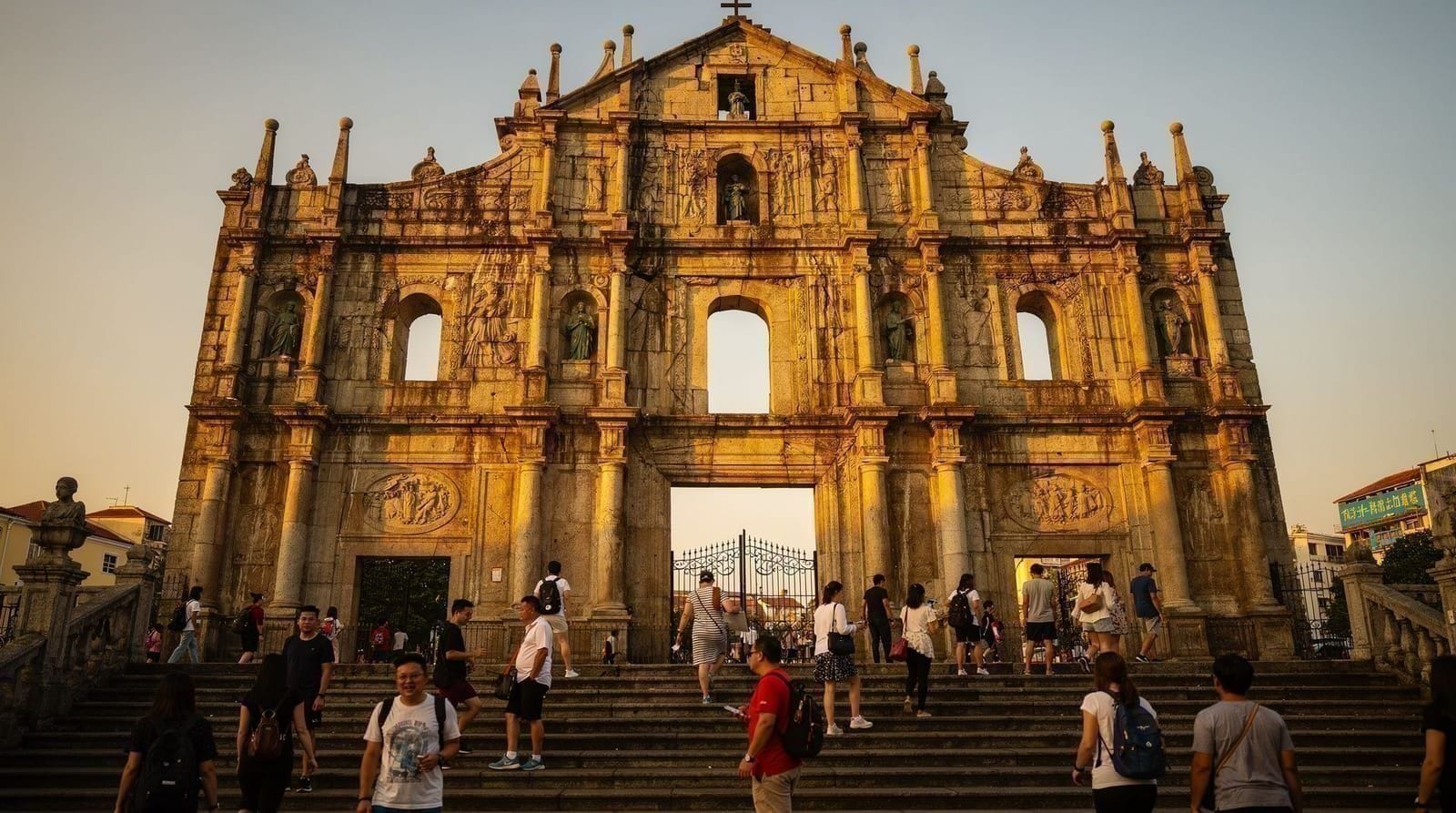
Tourist-trap restaurants near the Ruins of St Paul: the restaurants immediately adjacent to the Ruins and along the tourist shopping street (Rua de São Paulo) are targeted at tour groups with laminated menus and photos. The prices are elevated and the quality is standard. Walk one street back to find significantly better restaurants.
Fake Macanese food: some restaurants label generic Cantonese dishes as “Macanese.” Real Macanese cuisine is specific — look for galinha africana, minchi, bacalhau preparations. If the menu is mostly beef fried rice and sweet and sour pork, it is not Macanese.
Macau street food highlights
The area around Rua da Felicidade (known informally as “Happiness Street” — a former red-light district, now restaurant and café-lined) has concentrated street food options:
- Almond cookies (杏仁餅): Koi Kei Bakery at 7 Rua da Felicidade has been making these for decades. Thin, crumbly, delicately almond-flavoured. One of the best food souvenirs from Macau.
- Beef jerky (牛肉乾): the dried and grilled beef slices sold at shops throughout the historic centre. Buy freshly made from shops that grill to order rather than pre-packaged.
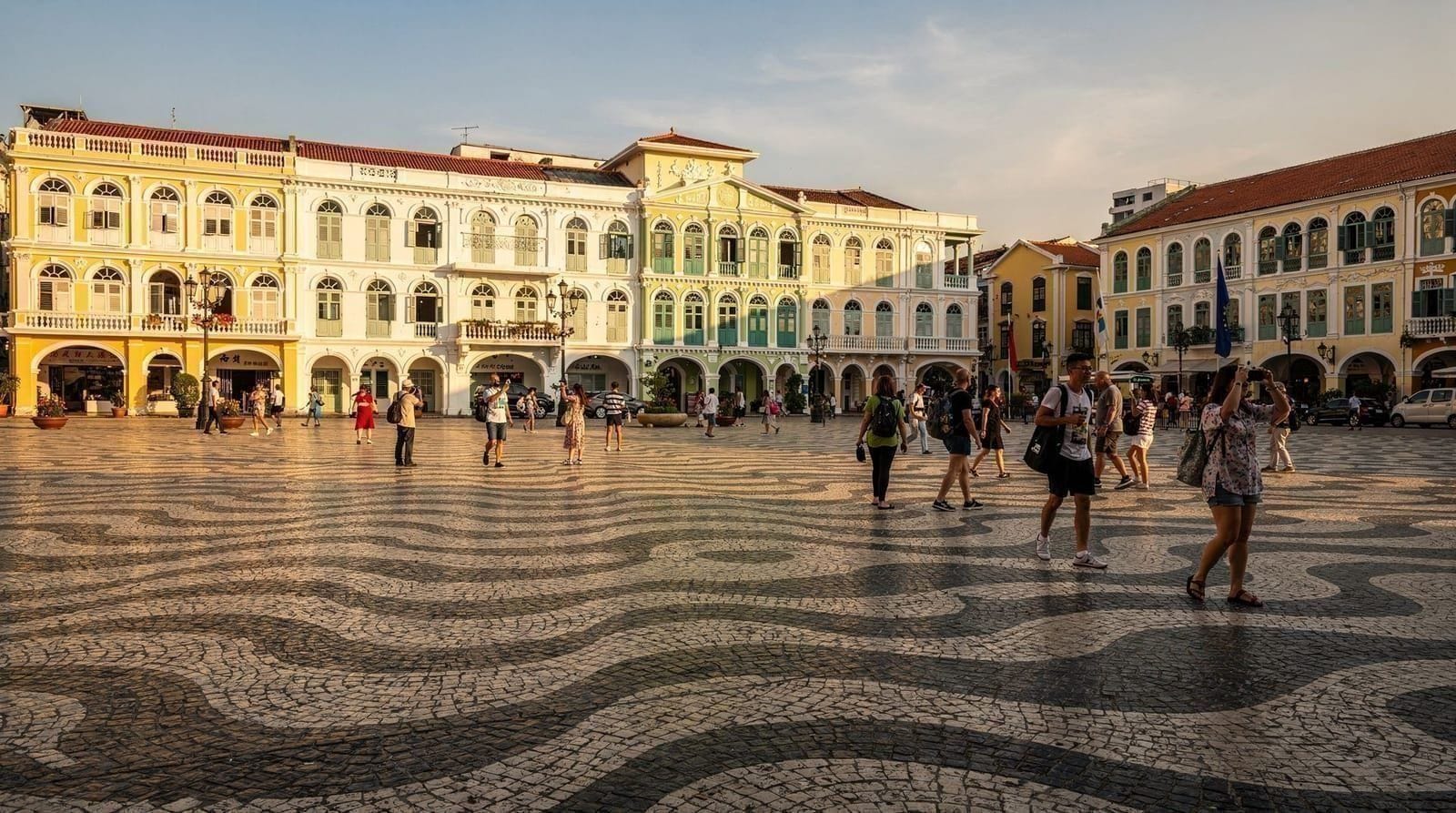
- Tofu pudding: silken tofu with ginger syrup, available from small stalls near Senado Square.
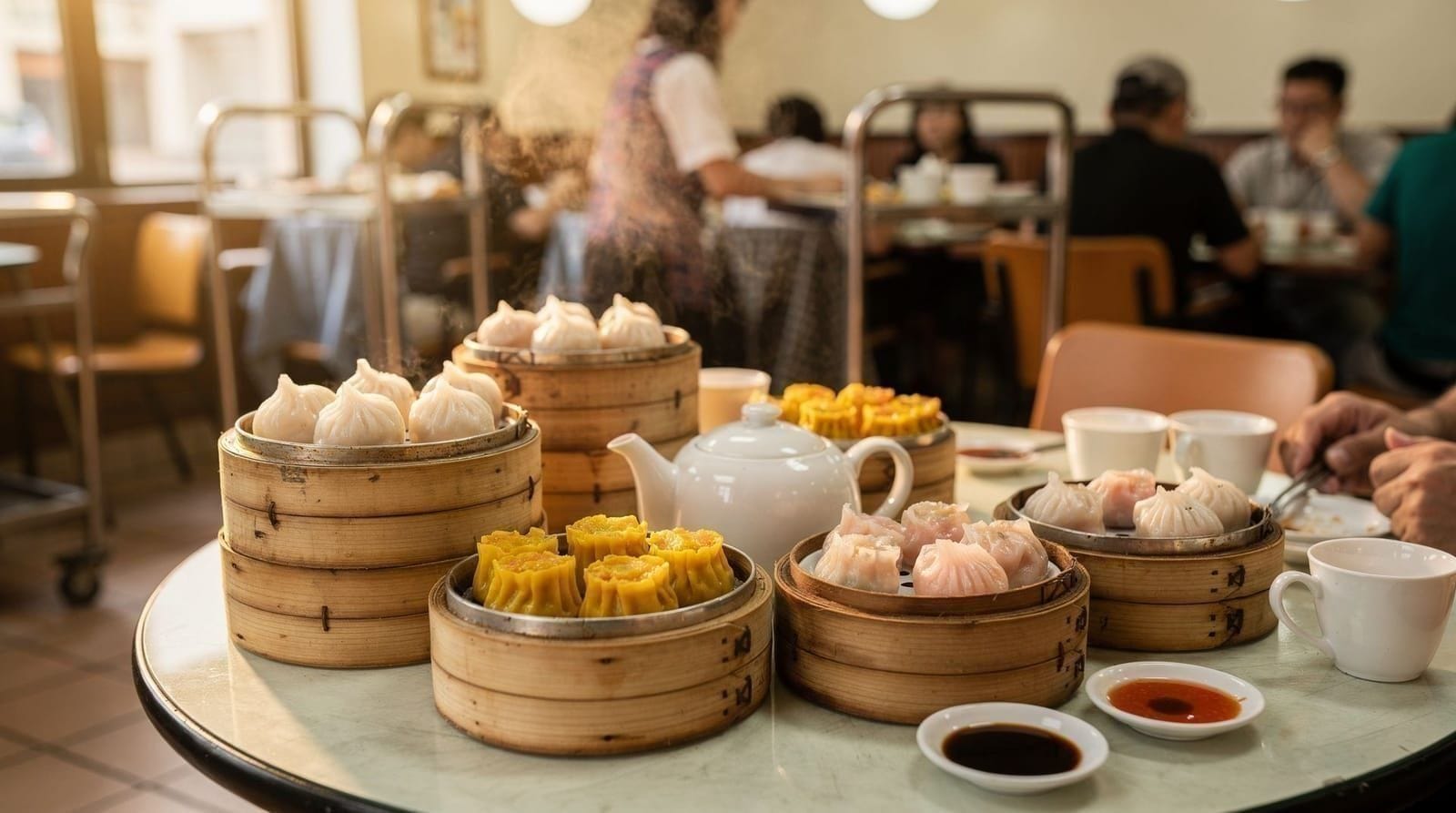
For dim sum on the Hong Kong side of the trip, see the Hong Kong dim sum guide — a useful comparison point for how differently the two cities’ Cantonese roots have evolved. And if food is the whole point of your Macau visit, pair it with a day among the historic centre’s sights so the eating has some walking built in around it.
If you are comparing food budgets across the region, the Hong Kong street food guide and the best egg tarts in Hong Kong give useful context for the Hong Kong half of the trip, so you can judge the Macau versions against what you have already eaten.
Frequently asked questions about Macau food guide — what to eat, where to go and what to skip
What is Macanese cuisine?
Where is Lord Stow's Bakery and is it really the best egg tart?
What is the pork chop bun and where should I get one?
Is Macau food expensive?
What is the difference between a Portuguese and Macanese egg tart?
Can I eat well in Macau on a tight budget?
How much time should I set aside for a Macau food crawl?
Top experiences
Bookable activities with verified prices and instant confirmation on GetYourGuide.