Macau first-timer guide — everything you need to know
Hong Kong: Macau day tour with round-trip ferry lunch and pickup
Duration: 10 hours
What is Macau and is it worth visiting from Hong Kong?
Macau is a former Portuguese colony 60 km west of Hong Kong, now a Special Administrative Region of China. It is the world's highest-revenue gambling jurisdiction and a UNESCO World Heritage historic centre with exceptional Macanese and Portuguese food. One day is enough for the historic sites and best food; two days allows the casinos and Cotai Strip. Absolutely worth doing as a day trip from Hong Kong.
Macau — the honest overview
Macau generates more gambling revenue than Las Vegas, operates some of the largest casinos in the world, and is simultaneously a UNESCO World Heritage city with one of the most interesting fusion food cultures in Asia. Most visitors arrive knowing about one of these things and are surprised by the other.
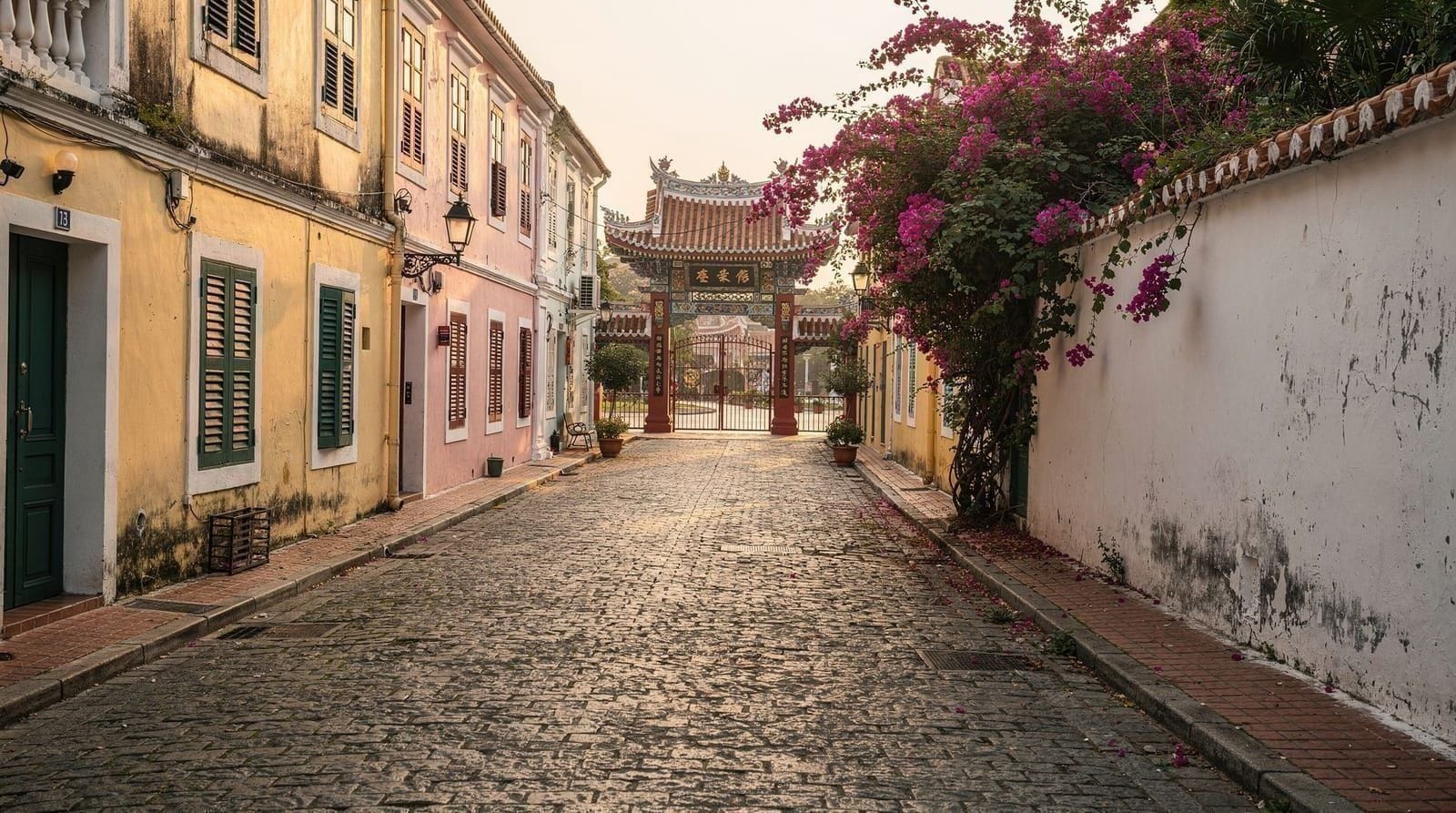
The core tension of Macau: the casino industry has transformed the Cotai Strip (the reclaimed land between the islands of Taipa and Coloane) into something between a Las Vegas tribute and a theme park, while the Macau Peninsula — the old city — retains Portuguese colonial architecture, narrow cobblestone alleys, small Chinese temples, and neighbourhood restaurants serving food that has existed since the 16th century.
For a first-time visitor coming from Hong Kong for a day or two, the optimal approach: base yourself in the historic centre, spend the morning on the UNESCO sites, eat well at lunch and dinner, and visit one major casino in the evening for the spectacle. Skip the Cotai Strip unless casinos are the specific draw. For a structured full-day plan, see the Macau day trip guide; for casino-specific detail, the Macau casinos guide.
| Where | Macau, 60km west of Hong Kong |
| Cost | Ferry HKD 388–424 round trip (economy); budget HKD 600–900 for the day |
| Time needed | One full day for the essentials, two for Cotai as well |
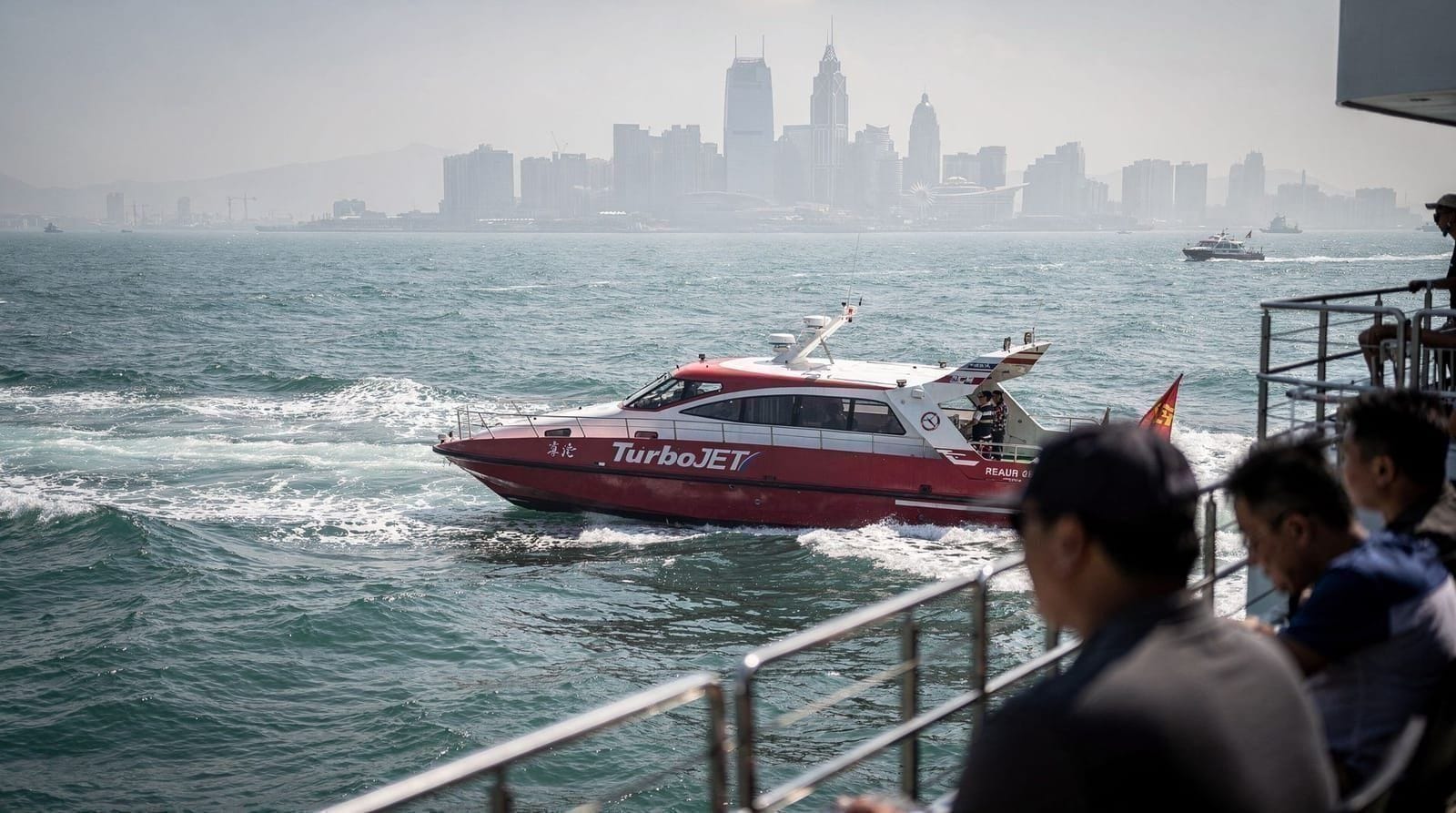
| Getting there | TurboJET/Cotai Jet ferry (60min) or HZMB bus (45–55min) |
| Best time | Weekday, arriving by mid-morning to beat the crowds |
Getting to Macau from Hong Kong
Ferry (the standard option)
High-speed ferries cross the Pearl River Delta between Hong Kong and Macau in approximately 60 minutes. Operators include TurboJET and Cotai Jet.
From Hong Kong Island: Hong Kong-Macau Ferry Terminal, Shun Tak Centre, Sheung Wan (MTR Sheung Wan, exit E3). Ferries depart approximately every 15–30 minutes throughout the day and some overnight slots.
From Kowloon: China Ferry Terminal, Canton Road, Tsim Sha Tsui (a short walk from the harbour). Fewer departures than Sheung Wan but useful for Kowloon-based visitors.
Fares: economy class HKD 194 each way on weekdays and HKD 212 at weekends and holidays; for Super Class (larger seats) see current fares on the operator’s official website. Book online in advance for popular slots — peak Friday evening and Sunday afternoon departures sell out.
HZMB bus (worth considering)
The Hong Kong-Zhuhai-Macau Bridge bus service runs from the HZMB Hong Kong Port on Lantau Island (accessible by shuttle from Tung Chung or Airport). Journey time to the Macau Border Gate is approximately 45–55 minutes across one of the most remarkable infrastructure projects in recent history — a 55 km sea-crossing bridge-and-tunnel system.
The experience of crossing the HZMB is in itself worthwhile. Bus fares are HKD 65 one way by day (06:00–23:59) and HKD 70 at night. Less convenient than the Sheung Wan ferry if you are staying in central Hong Kong, but a genuinely impressive engineering spectacle. Macau day tour with ferry, lunch and transfers ---
The UNESCO Historic Centre of Macau
The Historic Centre of Macau was inscribed on the UNESCO World Heritage List in 2005 and comprises 25 buildings and public spaces across the Macau Peninsula. The concentration of Portuguese colonial architecture, Chinese temples, and the hybrid Macanese buildings between them represents a uniquely preserved example of Portuguese colonial urban culture in Asia.
The central spine for walking the historic centre runs from the Ruins of St Paul’s (the most photographed sight in Macau) southward through several historic squares to the A-Ma Temple near the ferry terminal. This walk, with exploration of side streets, takes 2–4 hours.
The Ruins of St Paul’s (大三巴牌坊)
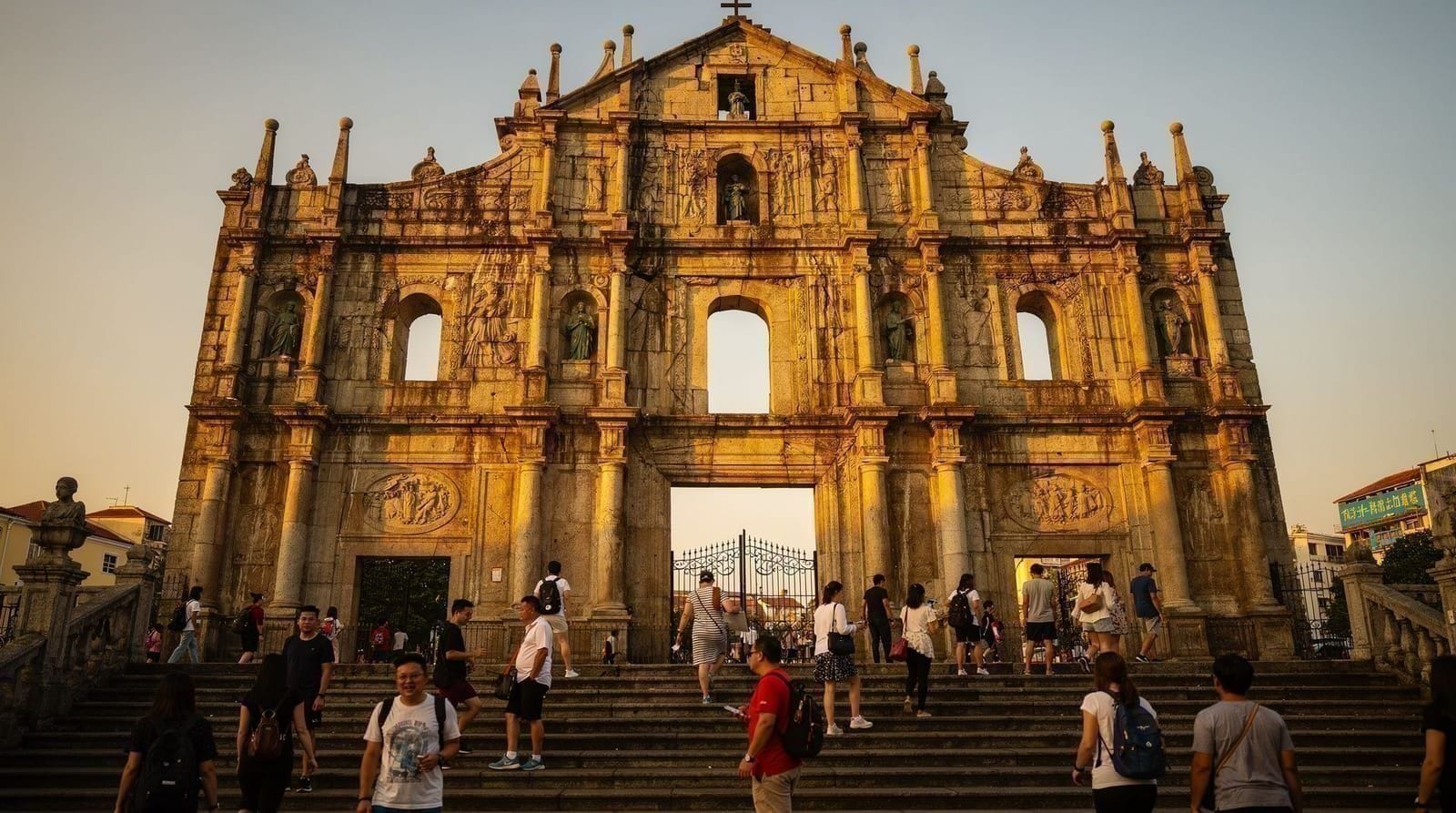
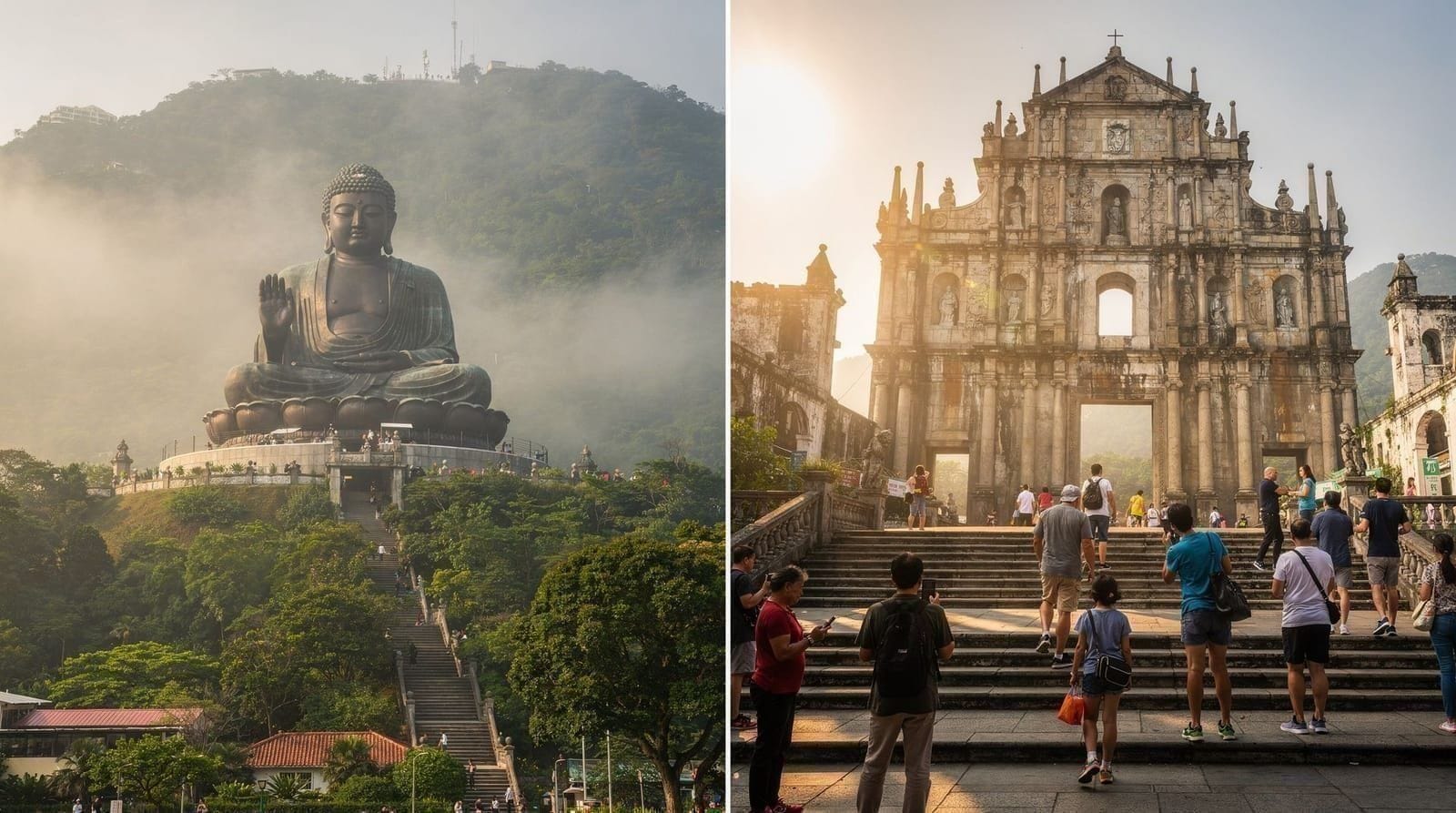
The most iconic sight in Macau — the stone façade of the Church of St Paul, which burned down in 1835. The façade survived the fire and now stands alone above a flight of steps, a 17th-century Portuguese baroque frontispiece with Buddhist and Chinese imagery worked into its detail (a uniquely Macanese synthesis).
The site is free to visit. The steps are crowded during the day; the carvings are best examined in morning light. The surrounding streets (Rua da Palha, the alleyways around Senado Square) have some of Macau’s best traditional shops and the beginnings of the egg tart trail.
For full detail on the façade’s history and iconography, see our Ruins of St Paul’s guide.
Senado Square (議事亭前地)
The central square of the historic city, paved in the characteristic wave-pattern Portuguese cobblestones (calcada). The buildings surrounding the square — the Leal Senado building (the former Senate, now a civic centre), the General Post Office, the churches — are in the Portuguese civic tradition. The square functions as Macau’s town square: local life, festivals, and markets happen here.
Senado Square is the transport hub for walking to the various historic sites. The tourist information office in the Leal Senado building provides free maps.
A-Ma Temple (媽閣廟)
The oldest temple in Macau, dedicated to the sea goddess Mazu (also known as A-Ma, from whom some believe the name “Macau” derives). The temple complex against the waterfront cliff, with incense smoke drifting through the courtyard, is the strongest atmospheric contrast to the casino atmosphere that dominates much of Macau’s image. Free to enter.
Guia Fortress and Lighthouse
The highest point on the Macau Peninsula, with a 17th-century fortress, a lighthouse (the oldest Western lighthouse on the Chinese coast), and a small chapel. Good views across the peninsula and the Delta. Accessible by cable car from Avenida de Sidonio Pais (small fee) or by foot. Less visited than the central historic sites; better for those who want to move away from the tourist concentration.
For the full walking route through all these sites with timing and a deeper history of each stop, see the Macau historic centre guide.
First-timer mistakes to avoid
New visitors tend to make the same handful of mistakes on their first Macau trip. Underestimating the ferry queue on weekends — arrive at the terminal at least 45 minutes before a Saturday or Sunday sailing, or book online in advance. Trying to see the historic centre and both Cotai and the peninsula casinos in a single rushed day — pick a focus; the historic centre and one casino make a satisfying day without exhausting yourself. Skipping Coloane because it looks far on the map — the bus ride is straightforward and Lord Stow’s original bakery is genuinely worth the detour. Not bringing a passport — a Hong Kong ID card alone will not get you through Macau immigration.
Macau’s casinos — a guide for non-gamblers
The casino experience in Macau does not require gambling to be interesting. Several of the major casinos are architecturally dramatic and open to visitors who simply want to walk through.
The Grand Lisboa: the old Lisboa Hotel’s sister property, in the distinctive lotus-shaped tower above the Macau Peninsula. The interior lobby area (with the Fabergé egg collection on display) is open to visitors without gambling. The complex houses some of Macau’s best high-end Cantonese restaurants.
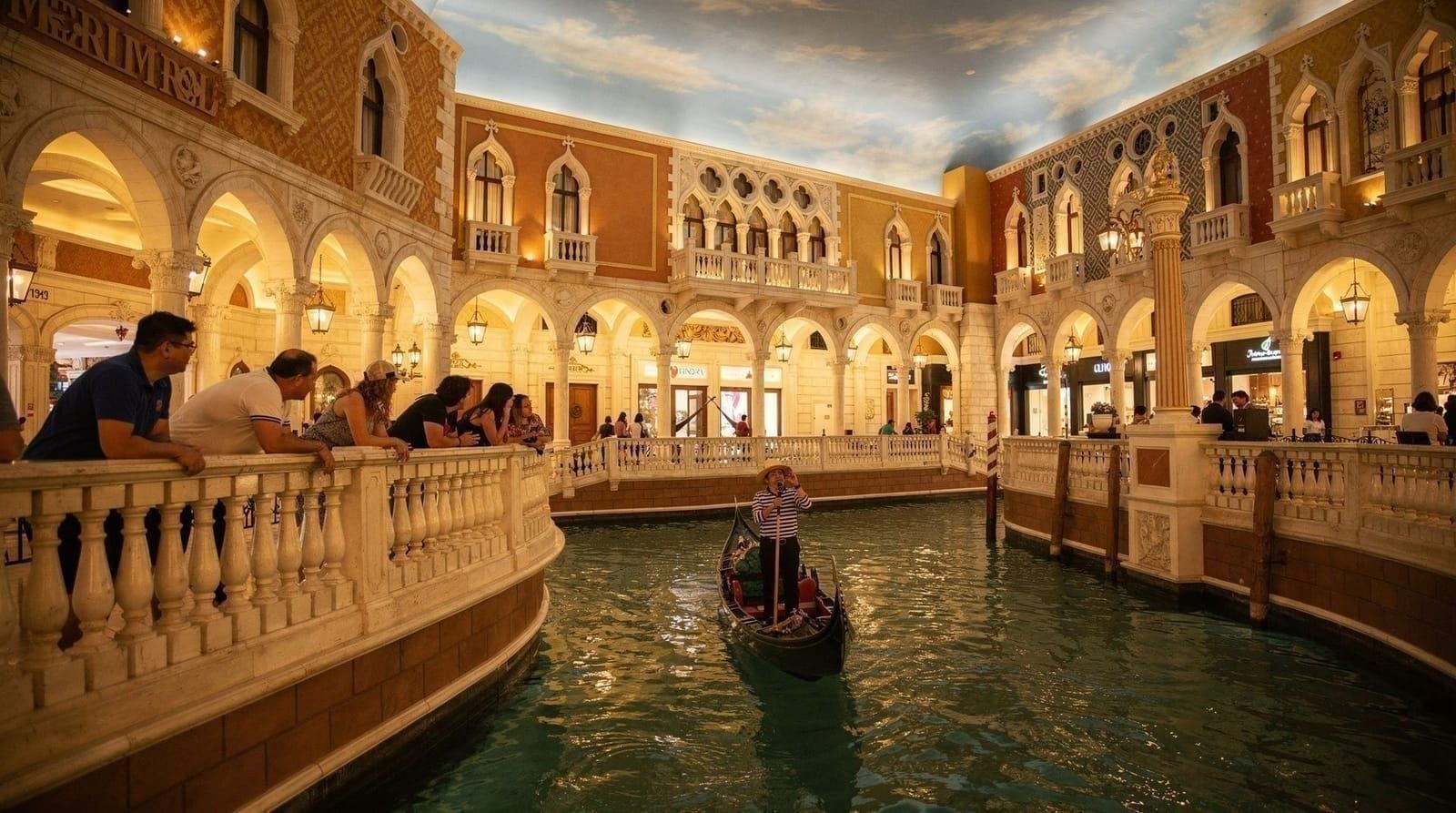
Venetian Macau (Cotai): the world’s largest casino floor, in a building modelled on Venice. The gondola rides on the indoor canal are a genuine curiosity and popular with visitors. Even for non-gamblers, walking through the Venetian’s main hall is an experience of scale that is hard to describe — the single-room gambling floor is the size of several football pitches.
Venetian Macau gondola rideFor a full guide to casino culture and what to expect inside, see our Macau casinos guide.
Macanese food — the essential eating guide
Lord Stow’s Bakery (Coloane Village)
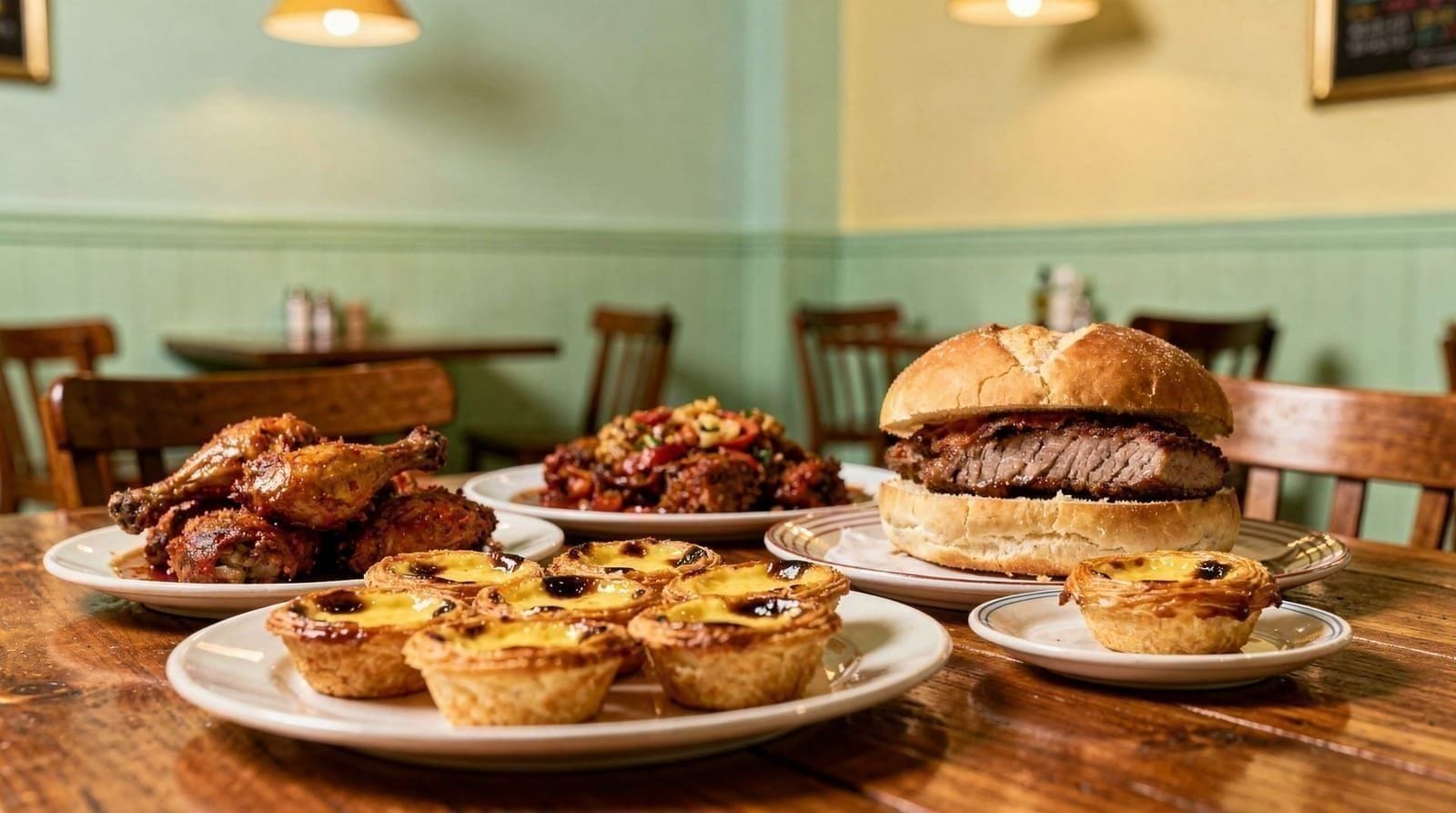
The Portuguese egg tart at Lord Stow’s Bakery in Coloane Village is the benchmark for this pastry form across Asia. Andrew Stow adapted the Portuguese pastel de nata recipe in 1989 and created something that is now replicated (with varying success) across Hong Kong, mainland China, and beyond. The original, eaten warm from the oven in Coloane Village, is dramatically better than any copy.
Getting to Coloane: about 30–40 minutes by bus from the Macau Ferry Terminal (Bus 26A), or a shared taxi from the Cotai Strip. If you are doing a full Macau day, build in the journey to Coloane for Lord Stow’s — it is worth the effort.
Egg tarts cost approximately MOP 11–13 each. Buy several.
Riquexó (traditional Macanese restaurant)
Riquexó (79 Avenida de Sidonio Pais) is one of the few restaurants in Macau serving genuinely traditional Macanese cuisine — not the tourist-oriented version, but the home-cooking style that Macanese families ate for centuries. Dishes include tacho (a meat and vegetable stew), minchi (minced meat with potatoes and soy sauce — a comfort-food staple), and bacalhau preparations.
Lunch approximately MOP 80–150 per person. Reservations recommended.
Café Koi Kei (pastelaria)
For Macau almond cookies (杏仁餅) — the most classic Macau souvenir food — Koi Kei Bakery on Rua da Felicidade is the established name. These are thin, crumbly almond biscuits specific to Macau and distinctly different from any equivalent in Hong Kong or China. Buy loose rather than the tourist-packaged sets (fresher and cheaper).
For a complete guide to eating in Macau, see our Macau food guide.
One-day Macau itinerary
This itinerary works for a day trip from Hong Kong (arriving by 10 am ferry, departing by evening):
9:30 am — Arrive Macau Ferry Terminal; take taxi to Senado Square (approximately MOP 20–30)
10:00 am — Walk from Senado Square to the Ruins of St Paul’s via the historic alleyways. Spend 30–45 minutes at the ruins and the surrounding streets.
11:00 am — Walk back toward the A-Ma Temple area via the Monte Forte and the Civic and Municipal Affairs Bureau Garden. The Monte Forte has a small museum (free) and views over the peninsula.
12:30 pm — Lunch at Riquexó or one of the Macanese restaurants on Rua do Almirante Sergio (the waterfront street near the A-Ma Temple area).
2:30 pm — Bus or taxi to Coloane Village. Lord Stow’s Bakery for egg tarts. Walk the small village.
4:30 pm — Return to Macau Peninsula. Optional: visit one major casino on the peninsula (Grand Lisboa or Wynn Macau) for the atmosphere.
6:30 pm — Dinner: Portuguese or Cantonese options near Senado Square.
8:30 pm — Ferry back to Hong Kong (book the return slot in advance).
For the complete logistics of crossing the border either way, see the getting to Macau guide.
Frequently asked questions about Macau first-timer guide — everything you need to know
How do I get from Hong Kong to Macau?
Do I need a visa to visit Macau from Hong Kong?
What currency does Macau use?
Is Macau safe to visit?
How much time do you need in Macau?
What is Macanese food?
Is one day enough for a Macau first visit, or should I stay longer?
What should first-time visitors skip in Macau?
Top experiences
Bookable activities with verified prices and instant confirmation on GetYourGuide.