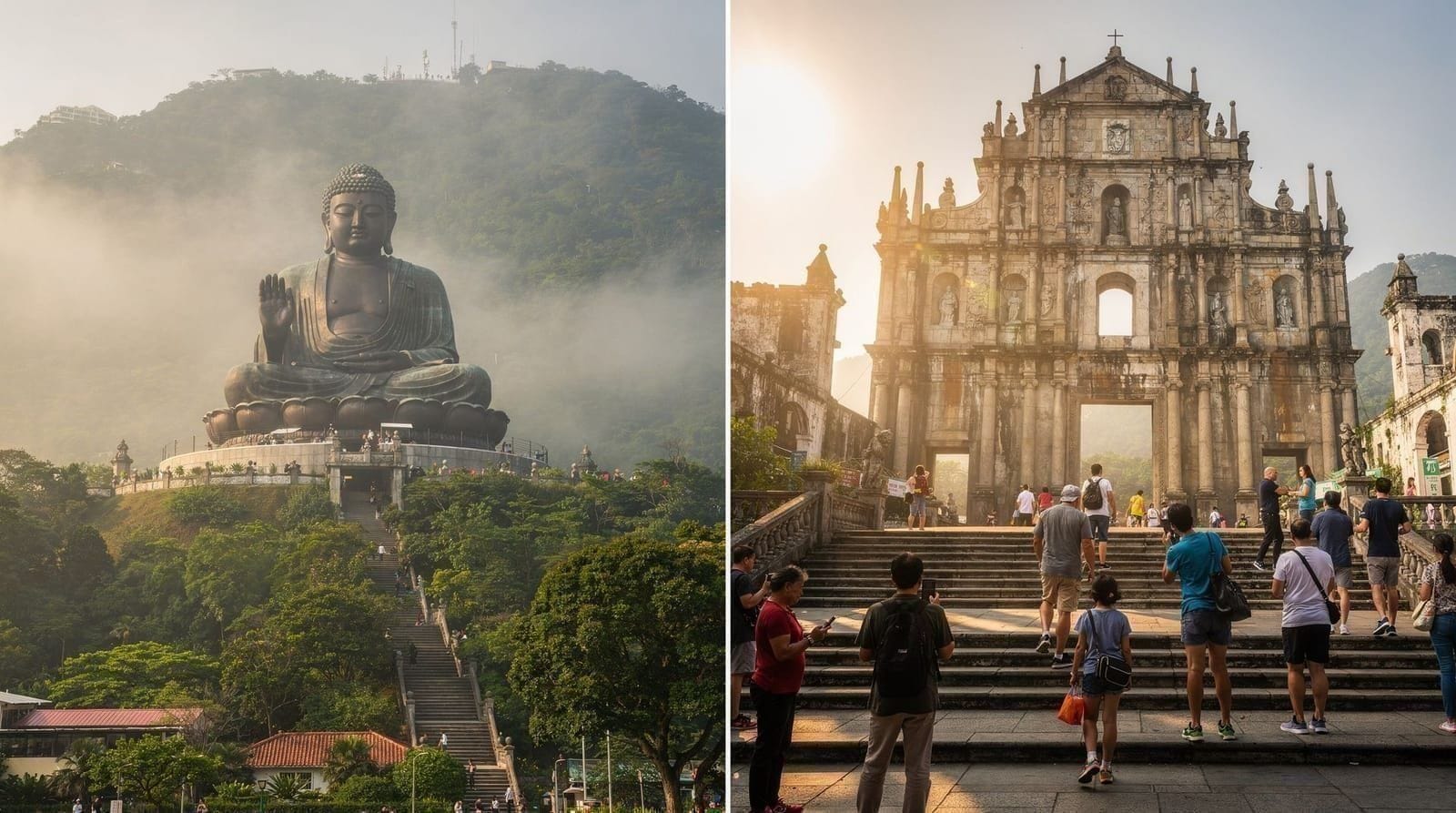
Macau historic centre guide — the UNESCO World Heritage sites
Macau: Historic city walk day tour with lunch and port pickup
What is the Historic Centre of Macau?
The Historic Centre of Macau is a UNESCO World Heritage Site (inscribed 2005) comprising 25 buildings and public spaces on the Macau Peninsula and Taipa. It documents four centuries of Portuguese colonial governance, Chinese daily life, and the cultural synthesis between them. The walking circuit from A-Ma Temple to the Ruins of St Paul's is approximately 2–3 hours and passes the most important sites.
The Historic Centre of Macau — context
The 450-year Portuguese colonial presence in Macau ended in 1999, leaving behind a city whose built environment documents that history in remarkable detail. Unlike many post-colonial cities where colonial buildings were cleared after independence, Macau’s historic structures were retained and preserved — partly through the pragmatic reality that the new Cotai Strip was being built on reclaimed land that did not require demolishing the old city, and partly through the UNESCO recognition process that formalised protection.
The UNESCO designation covers 25 properties across the Macau Peninsula: churches, civic buildings, fortifications, public squares, gardens, and one of Asia’s oldest lighthouses. The concentration is extraordinary — within a 2 km radius you can walk from a 16th-century Chinese temple to Portuguese civic baroque to a Jesuit fortress, all in genuine use or intelligible preservation. This guide is best read alongside the Macau first-timer guide for the wider trip logistics.
| Where | Macau Peninsula, from A-Ma Temple to Guia Fortress |
| Cost | Free for most sites; MOP 15 for the Macau Museum |
| Time needed | 2–3 hours for the full circuit, longer with stops |
| Getting there | Ferry or HZMB bus from Hong Kong, then taxi/walk from the terminal |
| Best time | Before 10am for the Ruins of St Paul’s without crowds |
This guide covers the key sites in walkable sequence.
The southern circuit: A-Ma Temple to Senado Square
A-Ma Temple (媽閣廟)
The starting point — oldest and most spiritually active temple in Macau.
The A-Ma Temple complex, built against the rocky waterfront cliffs at the southern tip of the Macau Peninsula, dates its founding to the 16th century (possibly earlier). It is dedicated to Mazu (A-Ma in Cantonese), the sea goddess, and was in active use by the local fishing community when the Portuguese first arrived in the 1550s.
The complex is layered against the cliff face in multiple halls connected by steep steps — the oldest parts are at the base; the upper sections were added in later centuries. The incense burning, the resident cats wandering the courtyards, the sound of prayers in early morning — the A-Ma Temple is the most atmospheric site in the historic centre for those interested in Chinese religious practice.
Practical: free entry. Open approximately 7 am to 6 pm. Located at the southwestern waterfront — a 5-minute walk from the Maritime Museum.
Lilau Square and the Mandarin’s House
Lilau Square (Largo do Lilau): a quiet corner of the city that retains the character of a Macanese residential neighbourhood — a colonial-era freshwater spring (lilau means spring), surrounding traditional houses, and the smell of baking from a nearby café. This is one of the few spots in the historic centre where you can stand without other tourists for a few minutes.
The Mandarin’s House (鄭家大屋): a 19th-century traditional Chinese residence with Portuguese architectural elements, built by the father of Lin Zexu (the Chinese official whose role in the Opium War is well-known in Chinese historical memory). The compound is open for self-guided visits — free, 10 am to 6 pm. The layered courtyard structure with carved wooden screens is one of the better-preserved examples of a Cantonese merchant-class residence in the region.
St Lawrence’s Church (聖老楞佐堂)
One of the three oldest churches on the Macau Peninsula, rebuilt in the current neoclassical form in the 1800s. The interior (accessible during opening hours) has a painted ceiling and period furnishings. The church garden is a pleasant shaded rest stop in summer.
The central circuit: Senado Square and St Dominic’s
Senado Square (議事亭前地)
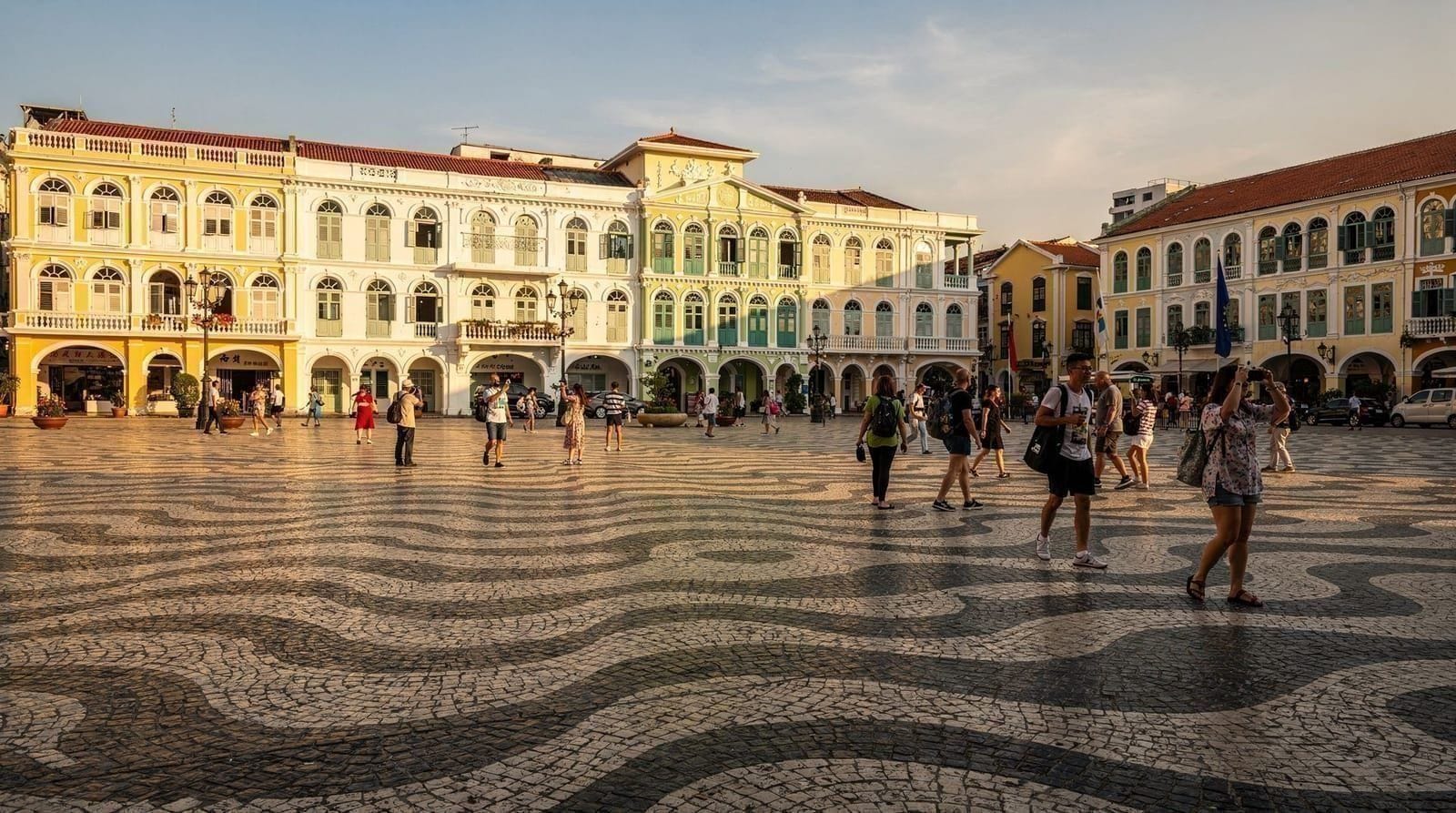
The heart of the historic city and the most European-feeling public space in Asia. The square’s undulating calcada cobblestone pavement (in wave patterns, referencing the Portuguese maritime tradition) was installed in the 1990s and is now one of Macau’s most recognisable images.
Key buildings surrounding the square:
- Leal Senado Building (now the Instituto para os Assuntos Cívicos e Municipais): the 18th-century civic senate building, open to the public for its tiled hallways and small library
- General Post Office: still operational, in the original 1929 building
- Holy House of Mercy (Santa Casa da Misericórdia): the oldest Western charitable institution in China (founded 1569), with a small museum of religious art and medical history on the upper floors (MOP 5 entry)
The Macau Government Tourist Office has an information centre at Senado Square — pick up free printed maps here.
St Dominic’s Church (玫瑰堂)
St Dominic’s Church (the Church of St Dominic) is one of the most beautiful interiors in the historic centre — baroque altar, pale yellow exterior, and the best acoustic quality of Macau’s colonial churches. The Treasury of Sacred Art in the adjacent museum holds the most significant collection of religious paintings, vestments, and liturgical objects from Macau’s Portuguese period.
Practical: free entry to church and museum. Open daily approximately 10 am to 6 pm.
The northern circuit: Ruins of St Paul’s and Monte Fortress
Ruins of St Paul’s (大三巴牌坊)
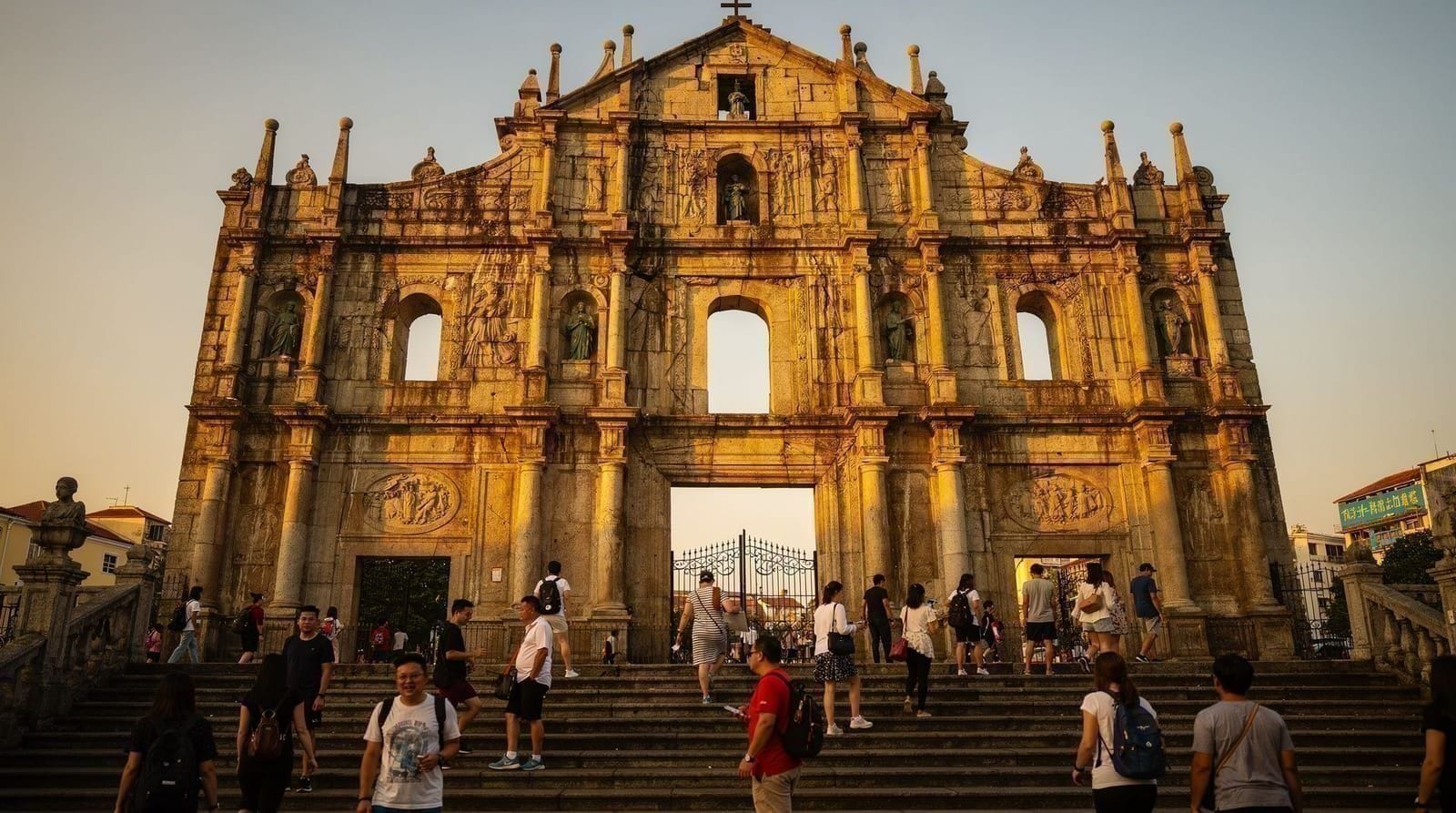
The most visited and most photographed site in Macau. The surviving stone façade of the 1640 Church of the Mother of God is a genuinely remarkable architectural object — see our dedicated Ruins of St Paul’s guide for the full story and iconographic detail.
Practical: free entry. The Museum of Sacred Art and Crypt beneath the façade is also free.
Fortaleza do Monte (炮台) and the Macau Museum
The fortress immediately adjacent to the ruins was built by the Jesuits (1617–1626) and served as the city’s primary defensive structure. The museum inside tells Macau’s story from the fishing village that preceded Portuguese arrival through the colonial period and the 1999 handover.
Practical: MOP 15 adults, MOP 8 children. Closed Monday. The ramparts offer good views over the city.
Camões Garden (賈梅士花園)
A shaded public garden northwest of the Monte Fortress, named after the Portuguese poet Luís de Camões who is traditionally (and probably apocryphally) connected to Macau. The garden is a neighbourhood amenity rather than a major tourist site — but it is pleasant and quiet, with local people playing chess and exercising in the morning.
St Anthony’s Church (聖安多尼堂)
One of the three oldest churches in Macau, rebuilt after fires in its current neoclassical form. The Parish House next to it is the main administrative office for Macau’s Catholic community and is not open to the public, but the church interior is accessible.
The eastern circuit: Guia Fortress and Lighthouse
Guia Fortress, Lighthouse and Chapel (東望洋炮台)
The Guia complex occupies the highest point on the Macau Peninsula (91 metres above sea level) and houses three distinct UNESCO-listed elements:
Guia Fortress: a 17th-century military installation with intact gun emplacements and barracks.
Guia Lighthouse: the oldest Western lighthouse on the Chinese coast (1865), still operational. The lighthouse itself is not usually accessible for internal tours, but the exterior and its position above the peninsula are impressive.
Guia Chapel: a small chapel with interior murals combining Christian and Chinese iconographic elements — a quieter example of the same cultural synthesis visible at the Ruins of St Paul’s. The murals are partially preserved and unusually personal in character.
Getting there: cable car from Avenida de Sidonio Pais (small fee) or walking path from the Flora Garden. About 20 minutes on foot from Senado Square. Macau premium city tour with English guide ---
Taipa and the historic sites outside the peninsula
The Historic Centre designation also includes sites on Taipa Island, connected to the Macau Peninsula by three bridges:
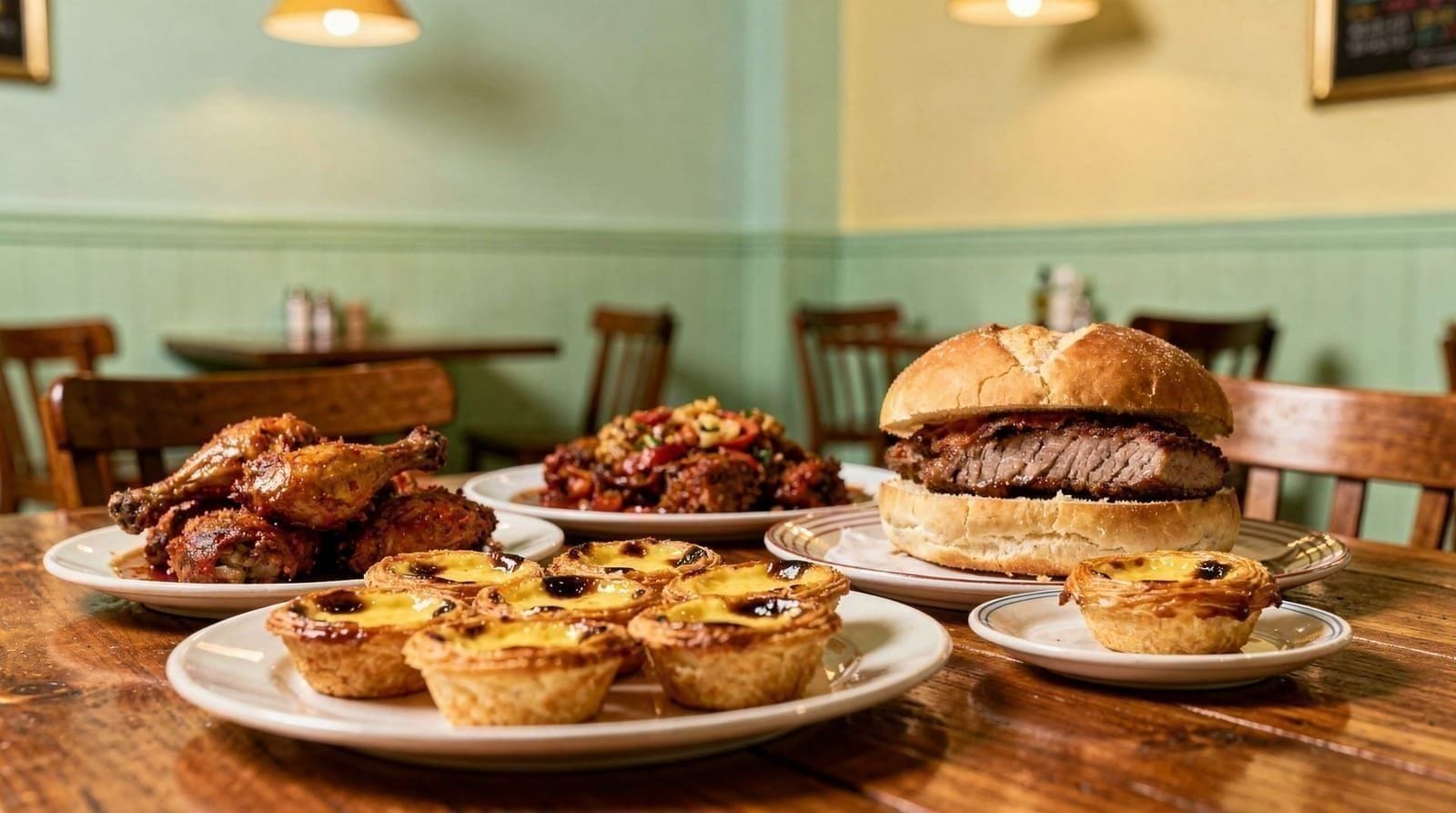
Taipa Village (舊城): a well-preserved 19th-century village with Portuguese townhouses lining the main promenade, now housing restaurants, cafes, and boutique shops. More tourist-oriented than the Macau Peninsula but genuinely pleasant. Tai Lei Loi Kei (the pork chop bun shop) is the food highlight.
House of the Mandarin Patron and the Taipa Houses: five beautifully restored early 20th-century villas on Avenida da Praia, now housing museum exhibits on Macanese domestic life. Free entry; excellent as a visual contrast to the peninsula’s civic-scale buildings.
For more on this side of Macau, including the pork chop bun stalls, see the Taipa and Coloane destination guide.
How to read the historic centre
The sites are easier to enjoy once you notice the pattern running through them. Chinese temples sit beside Portuguese churches, merchant houses borrow European details, and even the street signs carry two languages. Rather than ticking off buildings, treat the walk as a conversation between two cultures that lived side by side for centuries. A-Ma Temple shows the older, local layer; Senado Square and the churches show the colonial layer; the Mandarin’s House and the Guia Chapel show the two meeting in the middle.
If you are weighing Macau against its larger neighbour, the Hong Kong vs Macau comparison explains why the two feel so different, and the historic centre is the strongest argument for giving Macau its own time rather than treating it as an afterthought to a Hong Kong trip.
Pacing the walk
Do not rush the circuit. The best moments are usually the unplanned ones: a side street off Senado Square, a bench in a shaded garden, a church you step into only because the door is open. Build slack into your schedule, and decide in advance which one or two sites you would drop if the day runs long. Lilau Square and Camões Garden are the easiest to add or skip depending on energy, while the Ruins of St Paul’s and A-Ma Temple deserve a fixed place in any plan.
Food stops along the route
Walking this much builds an appetite, and the historic centre is one of the best places in Macau to eat. Small neighbourhood restaurants, bakeries and street-food stalls are scattered between the major sites, so you rarely need to detour. The Macau food guide lists where to eat, and the best egg tarts in Hong Kong guide is a useful companion if you want to compare the Portuguese-style tart with the Hong Kong version before you cross the water.
Weather and season
Heat, humidity and rain all change how the walk feels. In the hotter months the narrow streets hold warmth and you will want more breaks; in cooler, clearer weather the same route is far more comfortable. Check the typhoon season guide before planning a summer visit, because storm warnings can disrupt transport and close outdoor sites.
Crowd levels by site: where to expect quiet
| Site | Crowd level | Best time to go |
|---|---|---|
| Ruins of St Paul’s | Very busy 10am–4pm | Before 10am |
| Senado Square | Busy all day | Early morning |
| A-Ma Temple | Moderate | Any time |
| Lilau Square | Quiet | Any time |
| Camões Garden | Quiet | Morning |
| Guia Fortress | Quiet | Any time |
If your time is limited and you want the sites without the crowds, walk the circuit in reverse — starting at A-Ma Temple and finishing at the Ruins of St Paul’s late afternoon, after the day-tour groups have moved on to Macau’s casinos for the evening.
Practical walking advice
Distance and terrain: the full historic centre circuit is approximately 4–6 km depending on route and inclusions. The terrain is hilly — there is a consistent uphill gradient from the A-Ma Temple (south, near sea level) to the Ruins of St Paul’s and Monte Fortress (north, higher ground). Wear comfortable shoes; the cobblestone streets in the older sections are uneven.
Water: carry water, particularly in summer. The streets in the historic centre are narrower than the main avenues and trap heat.
Taxis: available throughout the historic centre for HKD/MOP 20–40 between most sites. Useful for the Guia Fortress if walking up is not desirable.
Macau historic city walk day tour with lunchFor the ferry and bridge logistics of getting to Macau in the first place, see the getting to Macau guide; for a wider list of day-trip options from Hong Kong, see best day trips from Hong Kong.
Planning the rest of the trip
If you are still choosing how to cross, the ferry vs bridge to Macau comparison helps you pick the option that suits your schedule. For a single-day plan that places this walk alongside everything else, the Macau day trip guide shows how to sequence the hours, and the Hong Kong and Macau 4-day itinerary suits travellers who want to stay longer and see the peninsula at a slower pace.
Frequently asked questions about Macau historic centre guide — the UNESCO World Heritage sites
How do I do a self-guided walking tour of the Historic Centre?
Do I need to pay to enter the historic centre?
Are the historic sites crowded?
How is the historic centre different from the Cotai Strip?
What language do signs use in the historic centre?
Can I combine the historic centre walk with food in the same day?
Is the historic centre walkable in one visit from Hong Kong?
Top experiences
Bookable activities with verified prices and instant confirmation on GetYourGuide.