Hong Kong and Macau 4-day itinerary
Hong Kong: Macau day tour with round-trip ferry lunch and pickup
Duration: 10 hours
What to expect from this four-day itinerary
This itinerary gives you three full days in Hong Kong — covering the harbour, The Peak, Wan Chai, and the neon-lit streets of Kowloon — plus one dedicated day across the water in Macau, reached by high-speed ferry in under an hour. It is designed for first-time visitors who want to understand both territories without rushing, covering the essential landmarks while leaving enough slack for meals and wandering. Total walking is roughly 7–10 km per day on the Hong Kong days; Macau is more compact.
Before you arrive, read our first-time Hong Kong guide for visa requirements, currency tips, and the basics of getting around. If you would rather avoid common first-visit missteps altogether, the first-timer mistakes guide is a useful companion — several of its points (queuing for the Peak, timing Temple Street) apply directly to Days 1 and 2 of this itinerary. Pick up an Octopus card at the airport or any MTR station — it covers all MTR journeys, buses, and the Star Ferry. Load HK$200 to start; you can top up at any station.
| Days 1–3 | Hong Kong — harbour, The Peak, Wan Chai, Temple Street, Sai Kung or Causeway Bay |
| Day 4 | Macau — Senado Square, Ruins of St Paul’s, Taipa Village |
| Passport | Required for Day 4 |
| Total budget | HK$1,700–2,200 (USD $218–282), excluding accommodation |
| Best for | History lovers, first-time visitors, couples |
| Book ahead | Macau ferry tickets on weekends |
Day 1 — Arrive, settle in, and cross the harbour
Morning: getting your bearings
Unless you arrive very early, keep Day 1 light — immigration and the city transfer eat more time than they look on paper. The Airport Express runs to Hong Kong Station in 24 minutes (HK$120 with Octopus, HK$130 for a single ticket) or to Kowloon Station in 22 minutes (see the MTR website for current fares and frequency). Taxis cost HK$300–380 (USD $38–49) and are slower.
Most hotels in Hong Kong will not allow early check-in before noon. Drop bags at left luggage if yours is not ready (hotel lobby or paid lockers, HK$50–80 per day) and head straight out.
If you are staying in Central or Sheung Wan, you are already within walking distance of the harbour piers. Have a late breakfast at a local cha chaan teng — milk tea (HK$20–28, USD $2.60–3.60) and a pineapple bun with butter (HK$18–25, USD $2.30–3.20) from any neighbourhood diner will cost under HK$60.
Afternoon: Star Ferry and the Tsim Sha Tsui waterfront
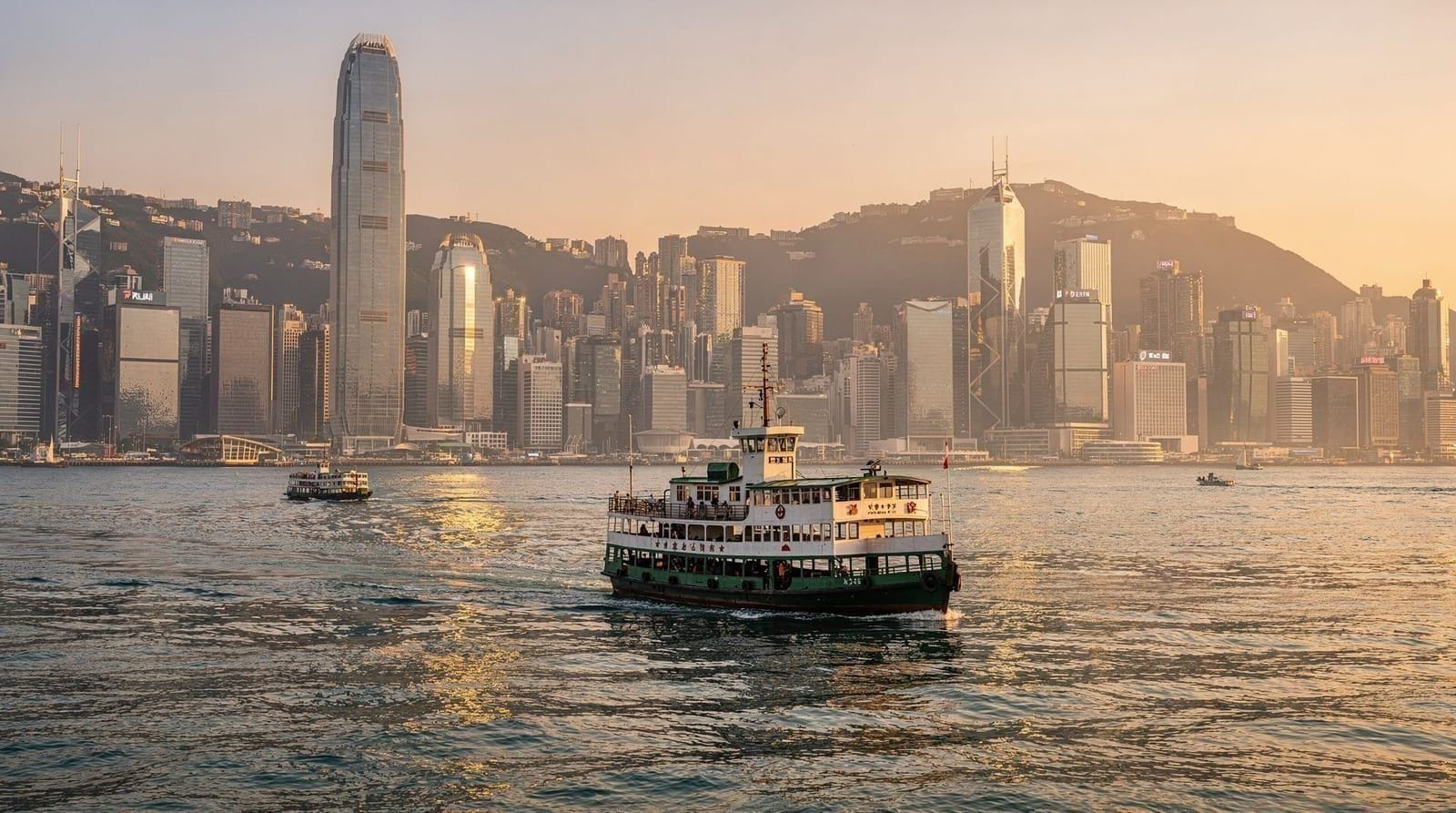
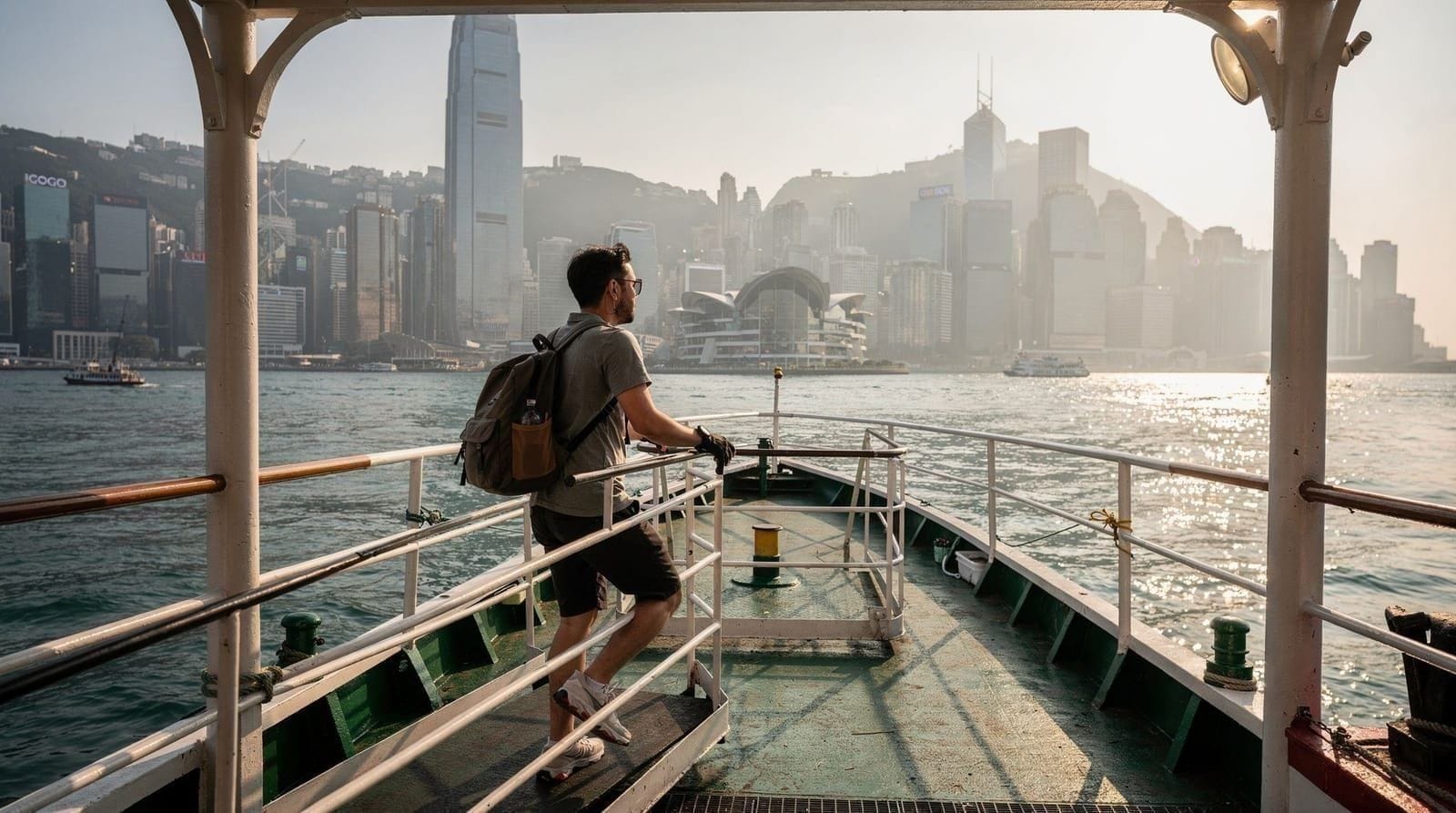
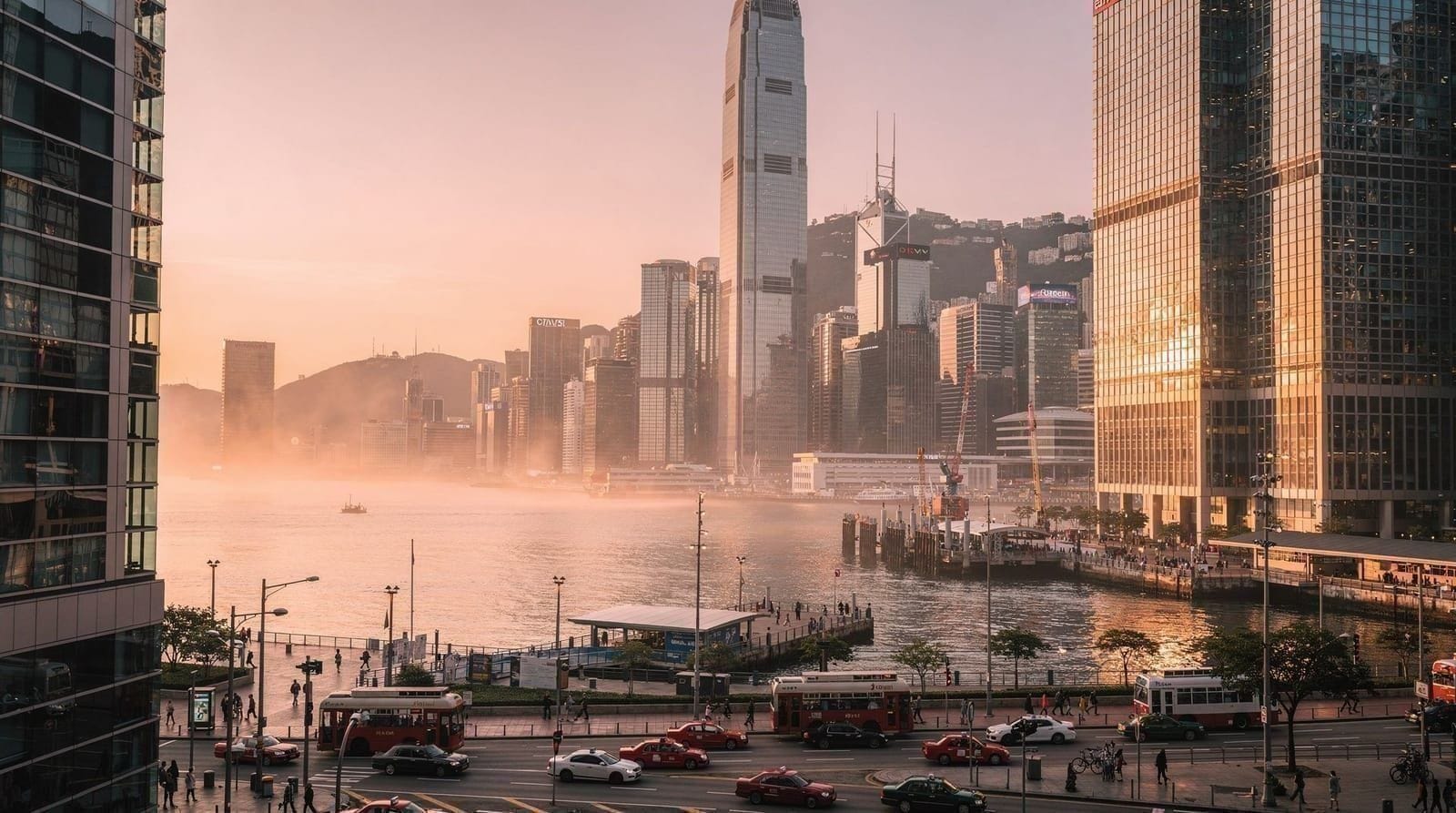
The most important thing you will do on Day 1 costs HK$5.00 on weekdays (USD $0.64; HK$6.50 at weekends). Walk to the Central Ferry Piers on Man Kwong Street — Pier 7 for the Tsim Sha Tsui crossing. The Star Ferry takes 8 minutes each way and crosses Victoria Harbour with the Central skyline rising behind you. Take the upper deck. This is Hong Kong’s defining view, and it does not get old.
Half-day city highlights tour with Peak Tram and Star Ferry — guided, no queueCheck availabilityOn the Kowloon side, walk east along the Tsim Sha Tsui Promenade (the Avenue of Stars). The 1.7 km waterfront path has unbroken views of Hong Kong Island. Carnarvon Road and the streets off Nathan Road have good Cantonese set lunches for HK$90–130 (USD $12–17). Return to Hong Kong Island via the Star Ferry before evening.
Evening: harbour at night
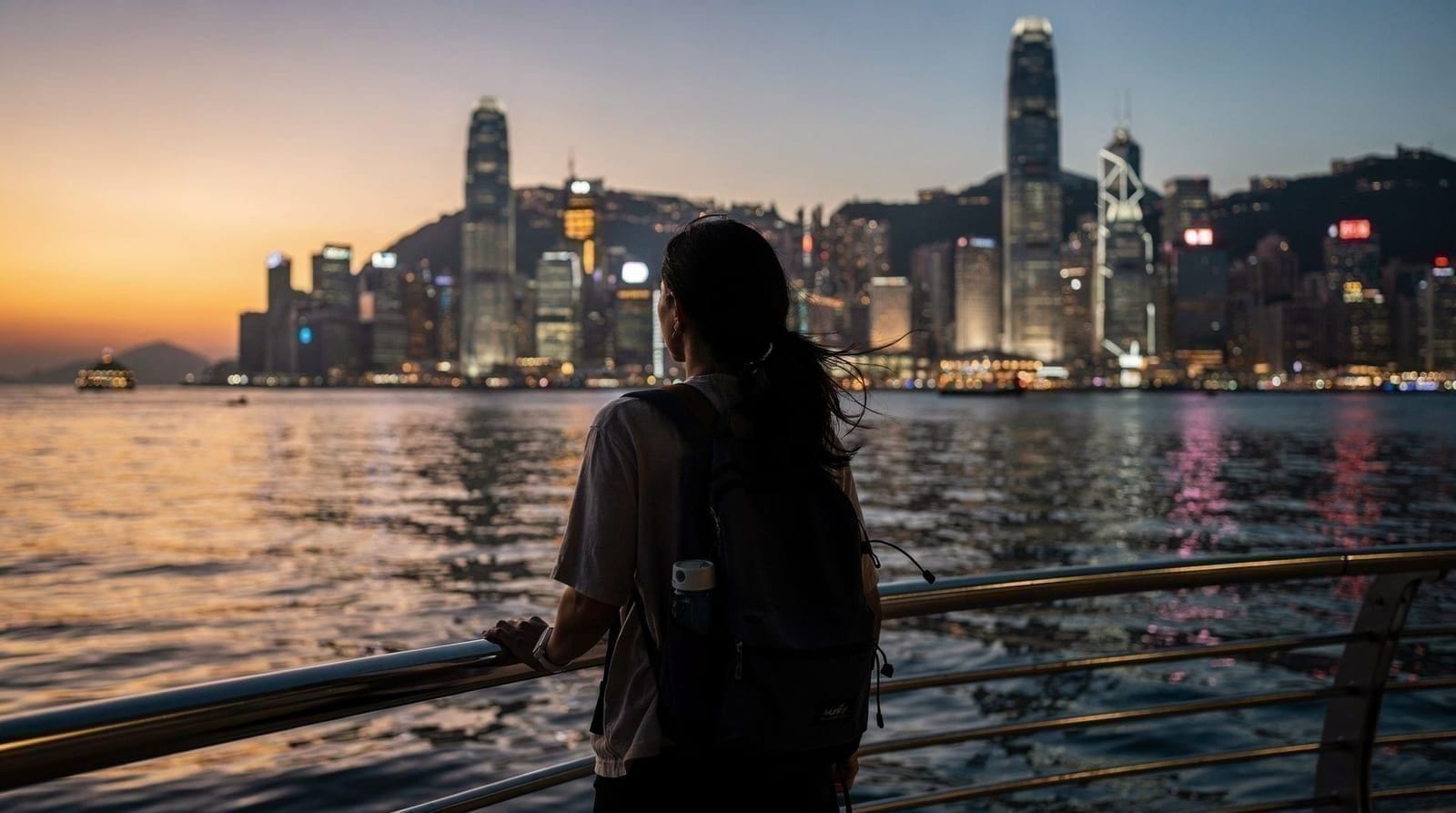
Walk along the Central Harbourfront promenade east of the Star Ferry piers. The view across to Kowloon after dark — neon signs, the lit cruise terminal, the dark ridgeline above — is worth a slow half hour. The Symphony of Lights runs nightly at 20:00 and is visible from both waterfronts for free.
Total spending today (excluding accommodation): HK$200–350 (USD $26–45).
Day 2 — The Peak, Victoria Harbour, Wan Chai, and Temple Street
Morning: Victoria Peak
This is the day’s centrepiece. The Lower Peak Tram Terminus is on Garden Road in Central — walk 12 minutes uphill from Hong Kong Station, or take Bus 12 from Des Voeux Road Central (fare on the operator’s website). The tram ride takes 8 minutes at a 27-degree incline.
At the summit, the Sky Terrace 428 on top of The Peak Tower gives you a 360-degree view at 428 metres — Hong Kong’s skyscrapers in the foreground, green hills behind, and Kowloon across the water. See thepeak.com.hk for the current entry fee. Booking online in advance avoids queues that regularly reach 60–90 minutes during weekends and summer holidays.
The Peak Circle Walk is free — a 3.5 km flat path around the summit with filtered views through the trees. Allow 45–50 minutes for the full loop. It is pleasant even in humidity, mostly shaded.
Read our complete Victoria Peak guide for tips on the best viewing times and how to avoid the worst crowds.
After the Peak, take the tram back down (HK$82 one-way, USD $10.50) or walk the Old Peak Road (45 minutes, free).
Afternoon: Central, Wan Chai, and the harbour ferry
Back in Central by around 13:00, have lunch in the neighbourhood. The area around PMQ on Aberdeen Street has good cafes and set lunches for HK$90–130 (USD $12–17). For cheaper and more local, try the congee shops on Wing Lok Street in Sheung Wan — congee with pork and preserved egg runs HK$38–50 (USD $4.90–6.40).
After lunch, take the MTR to Wan Chai (Island Line from Central, one stop east of Admiralty, HK$4.9 / USD $0.63). Wan Chai is one of Hong Kong’s most layered districts — tong lau tenements next to glass towers, herbal medicine shops next to wine bars. The area around Tai Yuen Street and the Bowrington Road wet market (until 14:00) is the most unfiltered local commerce you will find near the centre. The Convention Centre waterfront gives clear harbour views if the weather is good.
Evening: Temple Street Night Market
Take the MTR from Wan Chai to Jordan (Tsuen Wan Line from Admiralty, change at Tsim Sha Tsui, HK$10.3 / USD $1.30).
Temple Street Night Market sets up fully from 18:00 and runs until midnight, peaking between 19:00 and 21:00. The stalls sell watches, phone cases, clothing, jade, and tourist goods. Bargaining is expected and vendors typically open at two to three times the realistic price. Treat the shopping as background noise and focus on the food.
The dai pai dong cooked food stalls near the centre of the market serve typhoon shelter crab (when in season), stir-fried clams with black bean sauce, and roasted pigeon. Dinner runs HK$120–200 (USD $15–26) per person. This is the most atmospheric cheap dinner in Hong Kong.
Day 3 — Sai Kung or Causeway Bay, then the Symphony of Lights by water
Morning: pick your pace
By Day 3 you have seen the harbour and the skyline from the land. Today is flexible — choose based on energy levels.
Option A — Sai Kung (for those who want the outdoors): Take the MTR from Central to Choi Hung Station (Kwun Tong Line, 40 minutes, HK$12.5, USD $1.60), then minibus 1A from Diamond Hill to Sai Kung Town (30 minutes, HK$10). Sai Kung is a fishing village turned weekend escape on the Sai Kung Peninsula. The waterfront promenade has live seafood restaurants where you choose from tanks; lunch for two with crab, prawns, and vegetables runs HK$300–500 (USD $38–64). For beaches, take a local kaido (small ferry) from the town pier to Sharp Island or Kiu Tsui Beach (HK$50–80 return, USD $6.50–10). Clean water, no crowds on weekdays.
Option B — Causeway Bay and Victoria Park (for those who want the city): Take the MTR east from Wan Chai to Causeway Bay (Island Line, HK$4.9). Causeway Bay is where Hong Kong shops — Times Square, Sogo, and the surrounding streets are dense with local fashion, food courts, and bookshops. Lee Garden Road and Hysan Avenue are less frantic than the main drag. Victoria Park nearby is a pleasant midday stop, particularly on weekday mornings when locals use it for exercise.
For lunch, wonton noodles at a local shop run HK$40–55 (USD $5.10–7.10). Restaurants in Tin Hau and North Point (Island Line, east of Causeway Bay) are cheaper and less touristy than central areas.
Afternoon and evening: Symphony of Lights by boat
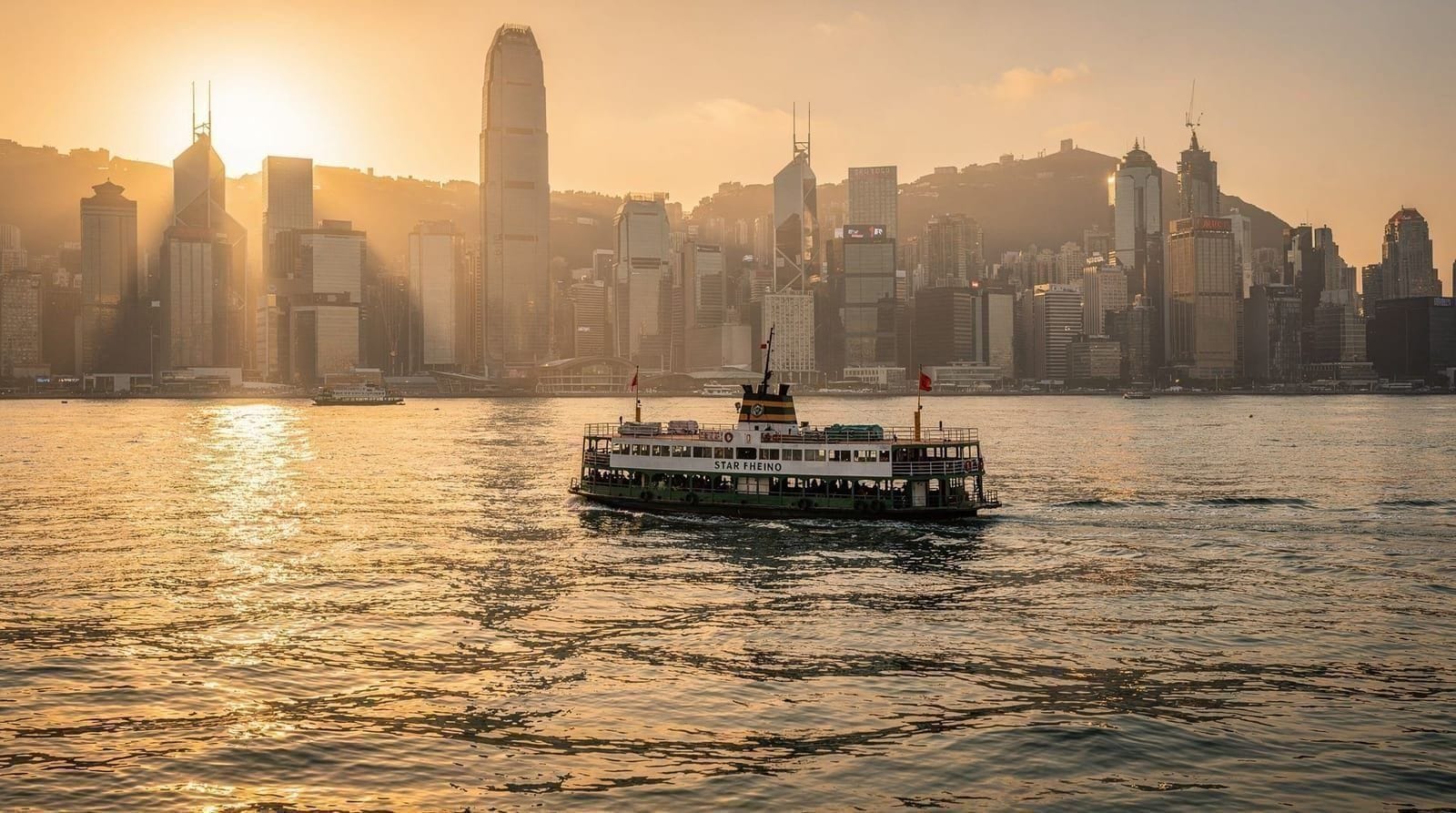
Return to the harbour by 19:00. The Symphony of Lights runs nightly at 20:00, coordinating LED lights and lasers across more than 40 buildings on both sides of Victoria Harbour. From the Tsim Sha Tsui promenade it is impressive; from the water it is something else.
Symphony of Lights harbour cruise on the Star Ferry — 45 minutes on the water during the showCheck availabilityBoard before 19:45 to get a deck position before the 20:00 show. The soundtrack plays through the cruise speakers. Watching from the Central or TST waterfront is free and still impressive — but the perspective from the middle of the harbour is genuinely better.
After the show, have a late drink in Tsim Sha Tsui (Knutsford Terrace has a row of bars and restaurants one block north of Kimberley Road) or head back to Hong Kong Island via the MTR.
Total Day 3 spending (excluding accommodation): HK$300–500 (USD $38–64) depending on whether you do Sai Kung seafood lunch.
Day 4 — Full day in Macau
Getting to Macau: ferry from Sheung Wan
Leave the hotel by 08:30. Take the MTR to Sheung Wan Station (Island Line), then walk 5 minutes to the Macau Ferry Terminal on Shun Tak Centre (200 Connaught Road Central — the same building as the Shun Tak Centre MTR Exit D). The terminal is on floors 3 and 4.
TurboJet runs high-speed ferries to Macau’s Outer Harbour Terminal every 15–30 minutes from 07:00 to midnight. The crossing is 55–60 minutes. One-way fares are HK$194–212 (USD $25–27) — weekday economy is HK$194; weekend rates are higher. Buy tickets at the counter or online; weekend morning sailings can sell out, so booking the evening before is sensible.
Bring your passport — Macau is a separate territory with its own immigration. Clearance usually takes 10–15 minutes. Our Macau day trip guide covers the immigration process and currency in more detail.
Morning in Macau: Senado Square and the Historic Centre
From the Macau Outer Harbour Ferry Terminal, take a free shuttle bus to the Lisboa Hotel or walk 20 minutes to the historic centre (free taxi voucher sometimes available at the terminal, or taxi for MOP$30–40 / HK$30–40).
Senado Square (Largo do Senado) is the most photogenic introduction to Macau — the patterned black-and-white mosaic pavement, the pastel-coloured Portuguese colonial buildings, and the 18th-century civic buildings around the square create a scene that feels genuinely unlike anywhere else in China. The square is pedestrianised and easy to walk.
From Senado Square, the main tourist street heads north uphill to the Ruins of St Paul. The street (Rua da Palha, then Rua de São Paulo) is lined with bakeries selling egg tarts and almond cookies. Try the baked egg tarts (MOP$10–12 each, HK$10–12) at any of the traditional bakeries — they are better here than in Hong Kong.
Guided walking tour of the Ruins of St Paul and Macau’s historic centre — covers the history the plaques don’t tell youCheck availabilityThe Ruins of St Paul are the façade of a 17th-century Portuguese church destroyed by fire in 1835. What remains is the carved stone frontispiece — four tiers of sculpture and reliefs depicting the Virgin Mary, Jesuit saints, and a dragon being trampled by a woman’s foot. Entry is free. The Museum of Sacred Art in the crypt (HK$0, donations welcome) has artefacts from the church and early Macau.
Allow 1.5–2 hours for the historic centre from Senado Square to St Paul’s and back.
Lunch: Macanese food in Taipa Village
Take a taxi or the free casino shuttle buses toward Taipa (MOP$15–20 / HK$15–20 by taxi). Taipa Village is a smaller and quieter version of the Macau peninsula’s historic centre, with more restaurants and fewer tourists. Macanese cuisine is a fusion of Portuguese and Chinese cooking developed over four centuries of colonial rule.
Order African chicken (galinha à africana — roasted with piri-piri and coconut paste, HK$130–160), minchi (fried minced meat with potato and a fried egg, HK$60–80), or bacalhau (salt cod gratin, HK$90–120). Lunch for two runs HK$350–500 (USD $45–64). Skip the casino-area restaurants — they cost more and cook less carefully.
Afternoon: the Monte Fort and optional Macau Tower
After lunch, return to the peninsula (taxi MOP$20 / HK$20) for the Monte Fortress (Fortaleza do Monte), which overlooks the Ruins of St Paul. Built by the Jesuits in the early 17th century, it offers the best elevated view in Macau — old town below, casinos in the distance, Zhuhai hills across the border. Entry is free. The Macau Museum inside charges MOP$15 (HK$15, USD $1.90) and is worth 30 minutes.
The Macau Tower (338 m) on the southern tip charges MOP$208 (HK$202, USD $26) for the observation deck — a worthwhile addition if you have the time, with views over the bridge-linked islands and the South China Sea.
Full-day Macau tour with ferry, lunch, and hotel pickup — takes the logistics off your hands entirelyCheck availabilityEvening: return ferry to Hong Kong
Allow 45 minutes from the historic centre or Taipa to the ferry terminal. Last boats run at midnight, but the 19:30–20:30 sailing is a sensible target — you are back in Hong Kong by 21:30 with time for a late meal. Return fare is HK$194–212 (USD $25–27); buy the ticket at the Macau terminal in the morning to avoid selling out on weekend evenings.
How this compares to the Hong Kong-only 4-day plan
This site also has a 4-day itinerary that covers the same Hong Kong ground on Days 1–3 but sends Day 4 to Lantau Island instead of Macau. Both are valid choices, and the deciding factor is usually what you have already seen or plan to see elsewhere. Choose this Macau version if you want a genuinely different cultural register — Portuguese colonial architecture, Macanese food, a second currency and border — in exchange for a longer travel day (ferry plus immigration both ways).
Choose the Lantau version if you would rather stay within Hong Kong’s own border and prioritise the Big Buddha, Tai O’s stilt houses, and hiking over a second territory. Neither is more efficient than the other; they simply serve different interests. If you cannot decide and have a fifth day available, the 5-day itinerary effectively lets you do both by building in Lantau on Day 3 before this itinerary’s Macau day, rather than forcing a choice between them.
Extending into a Macau overnight
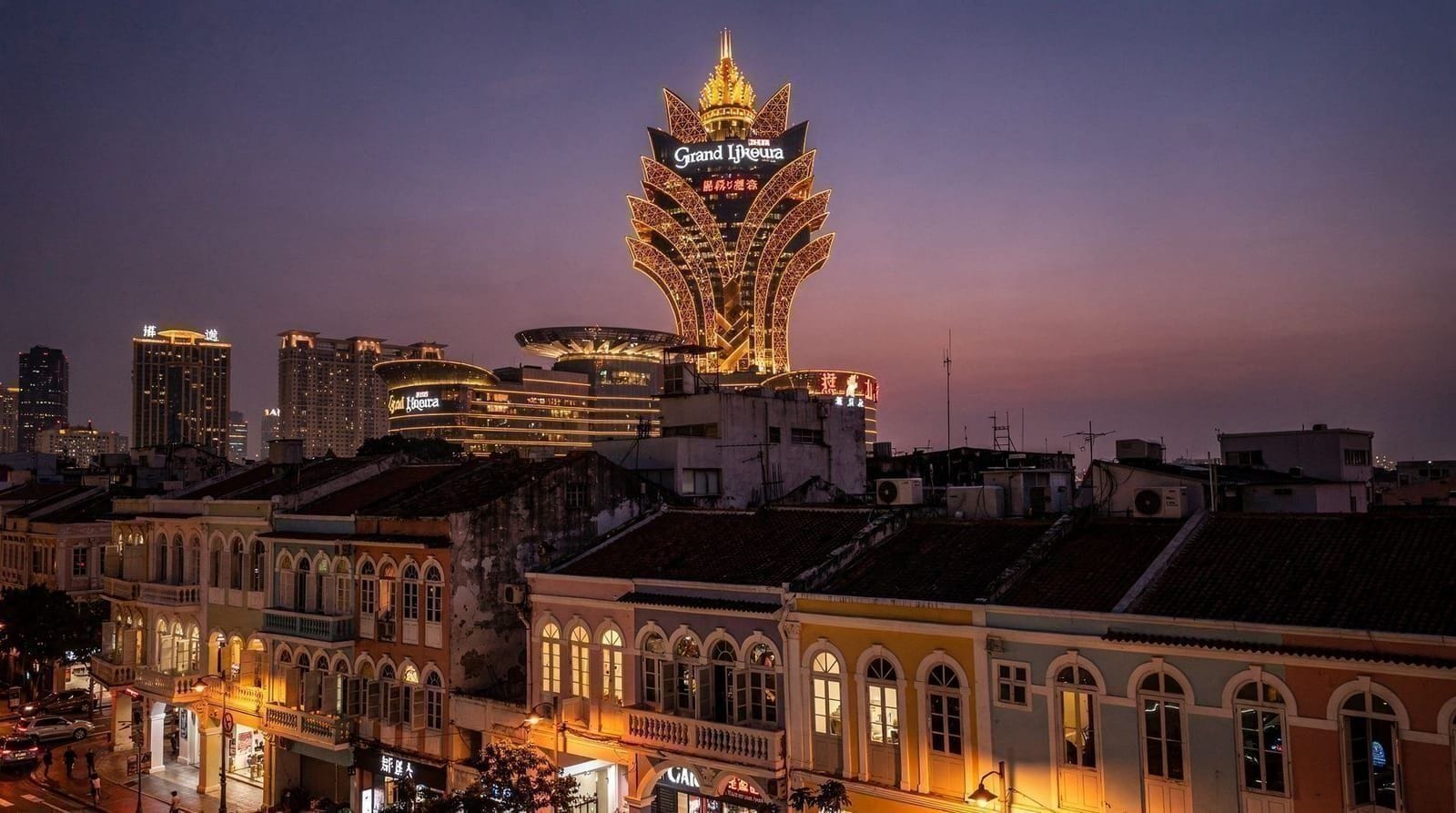
Day 4 is written as a single day trip, returning to Hong Kong by evening. If the Historic Centre and Taipa leave you wanting more, staying one night in Macau is a reasonable extension rather than a wholesale itinerary change — it lets you see the casino resorts illuminated after dark and gives Coloane village and its beaches a realistic slot the next morning before returning to Hong Kong for your flight.
The Macau first-timer guide covers what an overnight adds beyond this itinerary’s day-trip version, and the Macau historic centre guide goes deeper on the UNESCO sites than the single afternoon here allows. If you are weighing the ferry against the newer Hong Kong–Zhuhai–Macau Bridge crossing, the ferry vs bridge to Macau guide and the general getting to Macau guide both cover the trade-offs — for this itinerary’s Sheung Wan starting point, the ferry remains the simpler option in almost every case.
What this itinerary leaves for a return trip
Four days across two territories inevitably leaves things out. In Hong Kong, you will not reach Lantau Island, the outlying islands, or the New Territories — the 5-day and 7-day itineraries extend into that territory if a longer trip is on the table. In Macau, Coloane’s beaches and the House of Dancing Water show are the two most common additions for visitors who come back for a proper Macau-focused trip rather than a Hong Kong day trip.
A note on Day 3’s choice between Sai Kung and Causeway Bay
This itinerary deliberately leaves Day 3 open between an outdoor option (Sai Kung) and a city option (Causeway Bay), and it is worth thinking about which suits your Day 4 Macau plan better. If you choose Sai Kung, you will be more tired heading into an early Day 4 ferry departure — the round trip alone takes a couple of hours each way with the minibus connection. Causeway Bay is the lower-effort choice and leaves you fresher for Macau’s walking-heavy historic centre the next day. Neither choice is wrong, but if your Macau day is non-negotiable (an early ferry booking, say), Causeway Bay is the safer pairing.
Practical notes and budget
Getting around Hong Kong: The MTR covers almost every destination in this itinerary. Individual fares range from HK$4.9 to HK$16 depending on distance. Use an Octopus card for all transport — no need for cash. The Star Ferry (HK$5.00–6.50 upper deck) is a practical commute as much as a tourist experience.
Where to stay: Central, Sheung Wan, Wan Chai, or Tsim Sha Tsui all work well for this itinerary. Read our where to stay guide for an honest comparison of each area. Wan Chai is underrated — it is more local than TST, cheaper than Central, and has excellent MTR access in both directions.
Full budget breakdown:
- Ferry to Macau and back: HK$388–424 (USD $50–54)
- Peak Tram + Sky Terrace: HK$182 (USD $23)
- Star Ferry crossings (Day 1, 2, cruise): HK$8–120 (USD $1–15)
- MTR (4 days): HK$120–200 (USD $15–26)
- Meals (mid-range, 4 days): HK$800–1200 (USD $103–154)
- Entry fees (Monte Fort, Ruins of St Paul: free; Macau Museum HK$15): HK$100–200 (USD $13–26)
- Total (excluding accommodation): approximately HK$1,700–2,200 (USD $218–282)
See our Hong Kong budget breakdown for a more detailed cost guide including accommodation and activities at budget and premium levels.
How many days do you actually need? Four days is a well-paced introduction to Hong Kong and Macau. If you are considering shortening or extending, read our how many days in Hong Kong guide. For the Hong Kong portion alone, compare with our 3-day itinerary and 4-day Hong Kong only itinerary.
Frequently asked questions about this 4-day Hong Kong itinerary
Do I need a visa for Macau?
Most nationalities — British, American, Canadian, Australian, EU, and most Asian passport holders — can enter Macau visa-free for 30–90 days. Carry your actual passport, not a photocopy. Your Hong Kong and Macau entries are separate; returning from Macau re-clears Hong Kong immigration, but this rarely takes more than 10 minutes.
Can I do Macau as a day trip from Hong Kong?
Yes, and Day 4 of this itinerary is exactly that. Leaving Sheung Wan at 09:00 and returning by 20:30 gives you roughly 10 hours on the ground in Macau — enough for the historic centre, a proper lunch, and one or two additional sites. You do not need to book a hotel in Macau unless you specifically want to see the casinos at night or have more than 10 hours of content you want to cover.
Is the Star Ferry worth taking or should I just use the MTR?
Take the Star Ferry. The MTR tunnel is roughly the same transit time but offers no view, and the ferry is cheaper. The crossing is not just transport — it is one of the defining Hong Kong experiences. Do it in daylight and again at night if you can.
When is the best time to visit The Peak?
Early morning (before 10:00) and weekday visits have the shortest queues and the clearest air. The Peak is inside cloud for part of most afternoons, particularly in summer (June–September) when humidity is highest. If the cloud is sitting on the summit when you arrive, wait 30–45 minutes — it often clears. The night view is dramatic but visibility is variable; the daytime view is more reliably useful for first-time visitors.
Should I rent a Macau casino hotel shuttle or take a taxi?
The casino shuttle buses (free, running between the ferry terminals and the main casino resorts) are useful but take indirect routes and stop at every casino on the way. For the historic centre, a taxi is faster and costs MOP$20–35 (HK$20–35) from the Outer Harbour Terminal. The shuttle buses are worth using if your lunch restaurant or afternoon destination is near a casino resort — Taipa Village is near the Venetian, for example.
What currency should I carry in Macau?
Hong Kong dollars are accepted at a 1:1 rate in virtually all Macau shops and restaurants. The official rate is MOP$1.03 per HKD, so the difference is negligible. Patacas are not accepted back in Hong Kong, so avoid exchanging more than you need — just use HKD throughout. Credit cards are widely accepted.
Is four days enough to see both Hong Kong and Macau properly?
Four days gives you a genuine impression of both places rather than a rushed highlights reel. You will not cover Lantau Island, the outlying islands, or the New Territories in Hong Kong, and you will not have time for Coloane or the southern Macau coastline. But you will understand why people return. If you want more depth in Hong Kong before adding Macau, read our 3-day itinerary first — the structure there is built around the same areas and the 4-day version adds a natural next layer rather than repeating content.
Top experiences
Bookable activities with verified prices and instant confirmation on GetYourGuide.

Hong Kong: Macau day tour with round-trip ferry lunch and pickup

Macau: 1.5 hour Ruins of St. Paul's and historic center tour

Hong Kong: Heritage highlights tour with Peak Tram and Star Ferry

Hong Kong: Star Ferry A Symphony of Lights evening cruise