Hong Kong 7-day itinerary — a full week for deep exploration
Hong Kong: City highlights guided tour with entry fees and lunch
Why a full week in Hong Kong is worth it
Most first-time visitors plan three or four days in Hong Kong, treating it as a transit hub between destinations. A week is different: it lets you move through the city at human speed, revisit favourite spots, eat properly, and reach the places that require more than a day to access.
Seven days in Hong Kong covers everything in the 5-day itinerary — the urban highlights, Kowloon’s markets, Lantau, Macau, and Sai Kung — and adds two more days for the New Territories’ quieter towns and the southern side of Hong Kong Island, which most visitors never reach.
This plan is deliberately paced more slowly than the 3- or 5-day itineraries. You will start later some mornings, linger at meals, and spend evenings somewhere specific rather than rushing back to a hotel. That is the point of a week.
Daily budget (mid-range, per person, excluding accommodation): HK$600–950 most days.
Pick up an Octopus card on arrival and load HK$500 to cover the first few days of MTR travel.
| Days 1–4 | Arrival, Peak + south side, Kowloon markets, Lantau |
| Day 5 | Macau day trip |
| Day 6 | Sai Kung Geopark, Sha Tin |
| Day 7 | Tai Po, Lion Rock or Bride’s Pool, final dinner |
| Total budget | HK$3,500–5,000 (USD $449–641), excluding accommodation |
| Best for | Relaxed explorers, photographers, foodies, repeat visitors |
If a full week feels like more than you need, the 5-day itinerary covers the same core places at a brisker pace; this plan exists specifically for travellers who want the slower version.
Day 1 — Arrival and first impressions: Central and Wan Chai
Allow the first day to be slow. If you are arriving from a long-haul flight, fighting fatigue with an aggressive itinerary produces diminishing returns.
14:00 — Check in and orient yourself
Take the Airport Express from HKG to Hong Kong or Kowloon Station (about 24 minutes to Hong Kong Station, HK$120 with Octopus or HK$130 for a single ticket). The train is fast and connects directly to most hotel districts. Use the In-Town Check-In service at the airport to drop luggage if your hotel room is not ready — it allows you to move without a bag.
15:30 — Walk in Central and Sheung Wan
Central and Sheung Wan on foot for 2–3 hours covers the financial district, the Central-Mid-Levels Escalator, Hollywood Road, and the area around Sheung Wan’s dried seafood market street (Des Voeux Road West). Man Mo Temple (free, 1847) is worth 30 minutes in the afternoon.
18:30 — Dinner in Central or Sheung Wan
A quiet first evening. The streets around Staunton Street (SoHo) have international restaurants of every type at mid-range prices. For a purely local option, the wonton noodle counters and congee shops in the Sheung Wan area are open until late.
Read the where to stay in Hong Kong guide if you are still deciding on the hotel area — Central, Wan Chai, and Tsim Sha Tsui are the three most practical bases for this itinerary. For a first-timer’s overview of what to prioritise across a longer stay like this one, the first-time Hong Kong guide is a useful companion to keep alongside this day-by-day plan.
Day 2 — Victoria Peak and the south side of Hong Kong Island
09:00 — Victoria Peak
Start at the Lower Peak Tram Terminus on Garden Road. Take the tram up (HK$82 one way, HK$116 return), spend time at Sky Terrace 428 (included in the combo ticket — book in advance to skip the queue), and walk the Peak Circle Walk (3.5 km, 40–50 minutes, free). See The Peak guide for the viewing conditions and timing advice. The Victoria Peak guide covers the history and what to see beyond the terrace.
Book the Peak Tram and Sky Terrace 428 ticket online — weekday queues are manageable but weekend walk-up waits can be 60–90 minutes.Check availability12:00 — Stanley and the south side
This is where the 7-day itinerary diverges from shorter plans. Instead of heading immediately to the Star Ferry, take Bus 6 from Central Bus Terminal (near the Star Ferry Piers) over the mountains to Stanley on the southern coast. The bus journey over Wong Nai Chung Gap takes 30 minutes and crosses from the north face to the south face of Hong Kong Island — the landscape changes dramatically.
Stanley village has a waterfront market (Stanley Market, 10:00–18:00 daily) selling clothing, souvenirs, and crafts, and a compact seafront promenade with views across Stanley Bay. St Stephen’s Beach south of the town is accessible on foot (20 minutes) and is one of the better swimming beaches on the island. Stanley Military Cemetery (free, next to the market) is one of the more moving sites in Hong Kong — graves of Allied soldiers and civilians who died under Japanese occupation 1941–45.
Lunch in Stanley: the waterfront restaurants around the main plaza serve Cantonese and Western food at tourist prices (HK$120–200 per person). The local dai pai dong stalls on the market street are HK$60–90.
15:00 — Repulse Bay
Bus 6 continues from Stanley to Repulse Bay (or take a new bus, same route back towards Central then a different stop). Repulse Bay Beach is the most developed and well-maintained beach on the south side, with lifeguards, changing facilities, and a long strand of white sand. The area around the beach has the Kwun Yum Shrine and a Tin Hau temple with a distinctive bridge that is believed to add three days to your life per crossing (HK$0, and clearly the best-value life extension in the city).
17:30 — Return to Central and Star Ferry
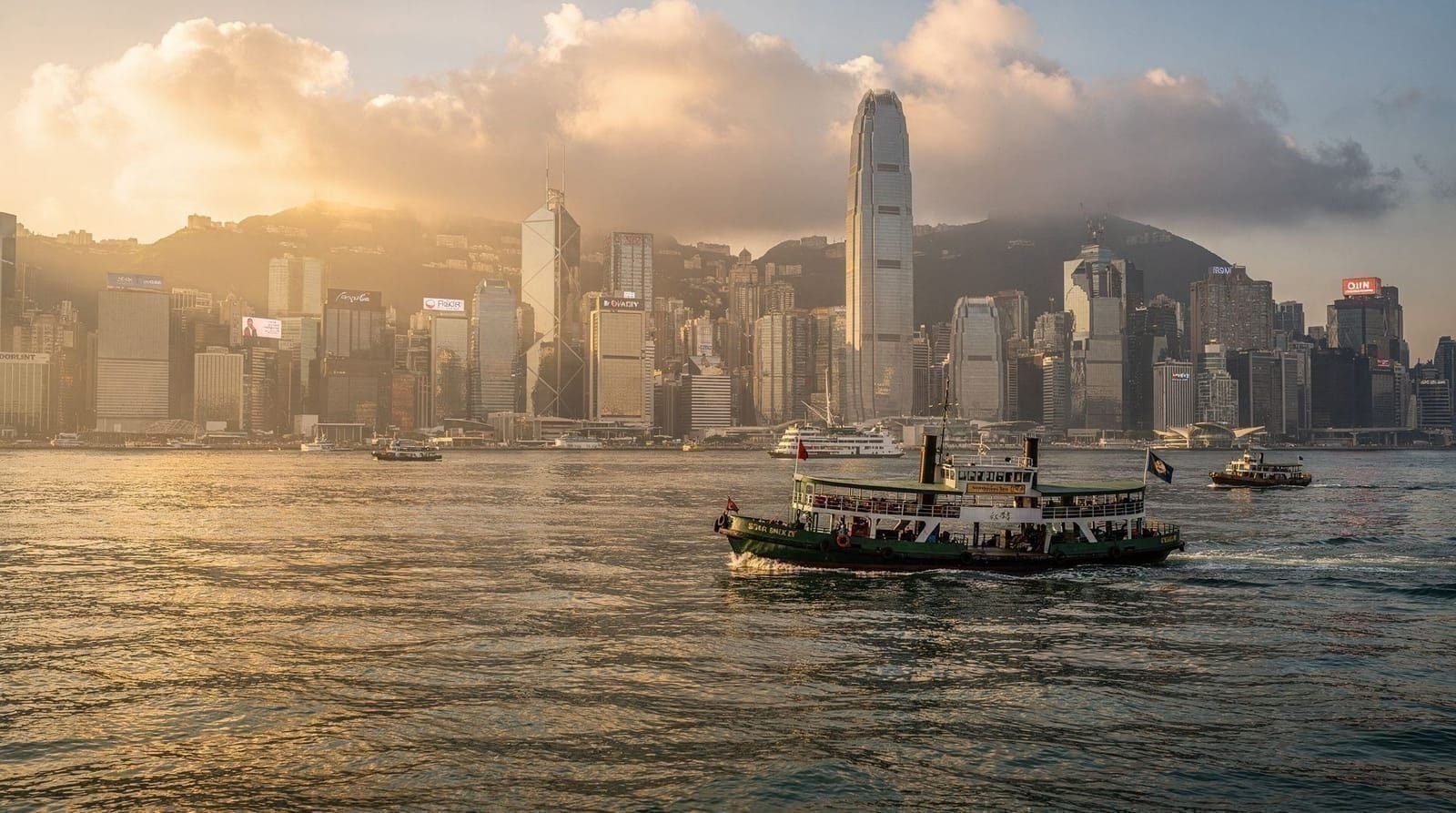
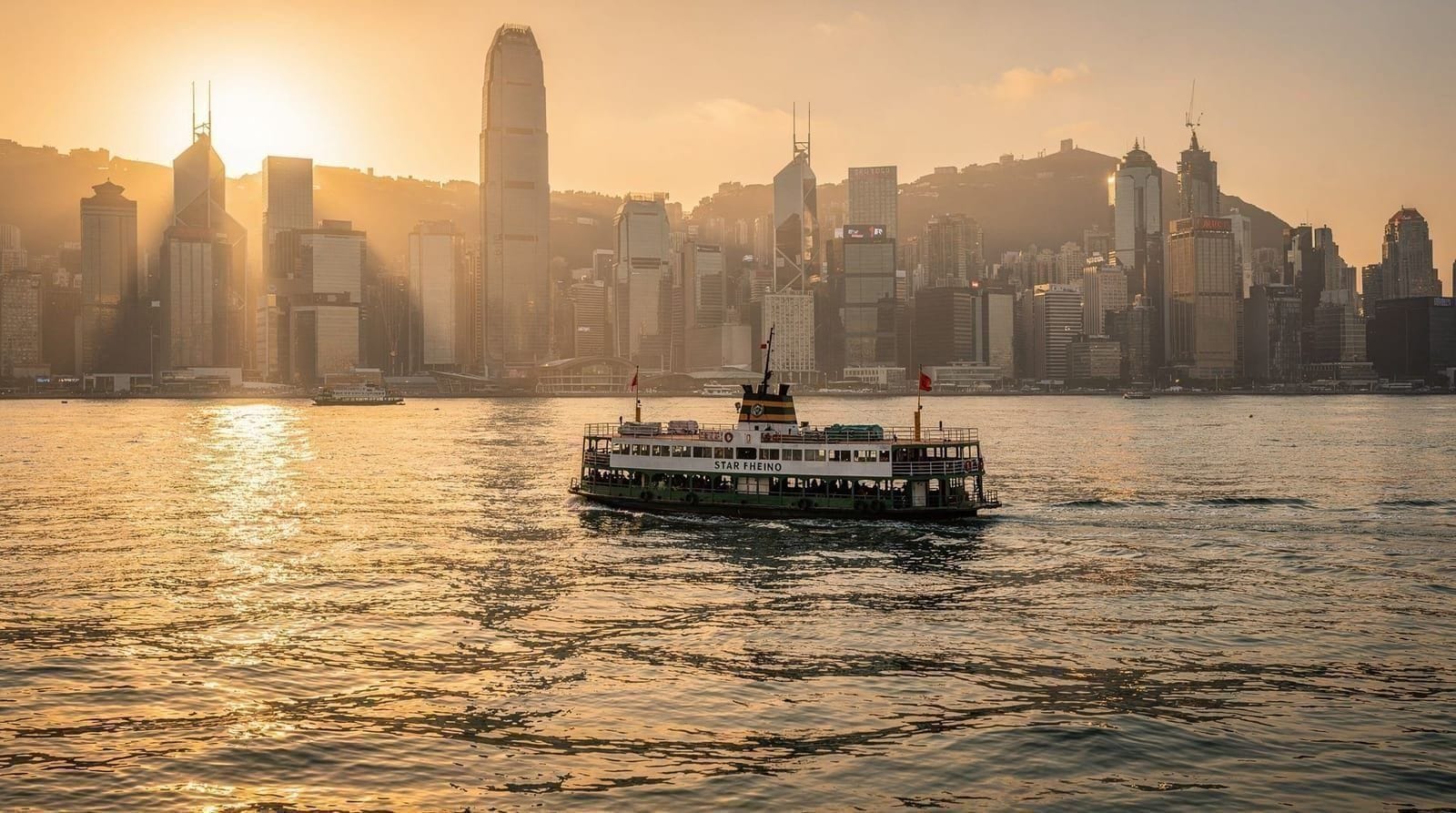
Bus 6 or 260 back to Central (30 minutes). Walk to Pier 7 and take the Star Ferry to Tsim Sha Tsui (HK$4.0–6.5 one way depending on deck and day, 8 minutes) in the late afternoon. The Star Ferry guide covers the best deck and timing for views.
20:00 — Symphony of Lights and dinner in TST
The Symphony of Lights runs at 20:00 from the TST Promenade. Dinner on Knutsford Terrace or in the Carnarvon Road restaurant area (HK$150–280 per person for Cantonese or international).
Day 3 — Kowloon: markets, temples, and night market
09:00 — Dim sum breakfast
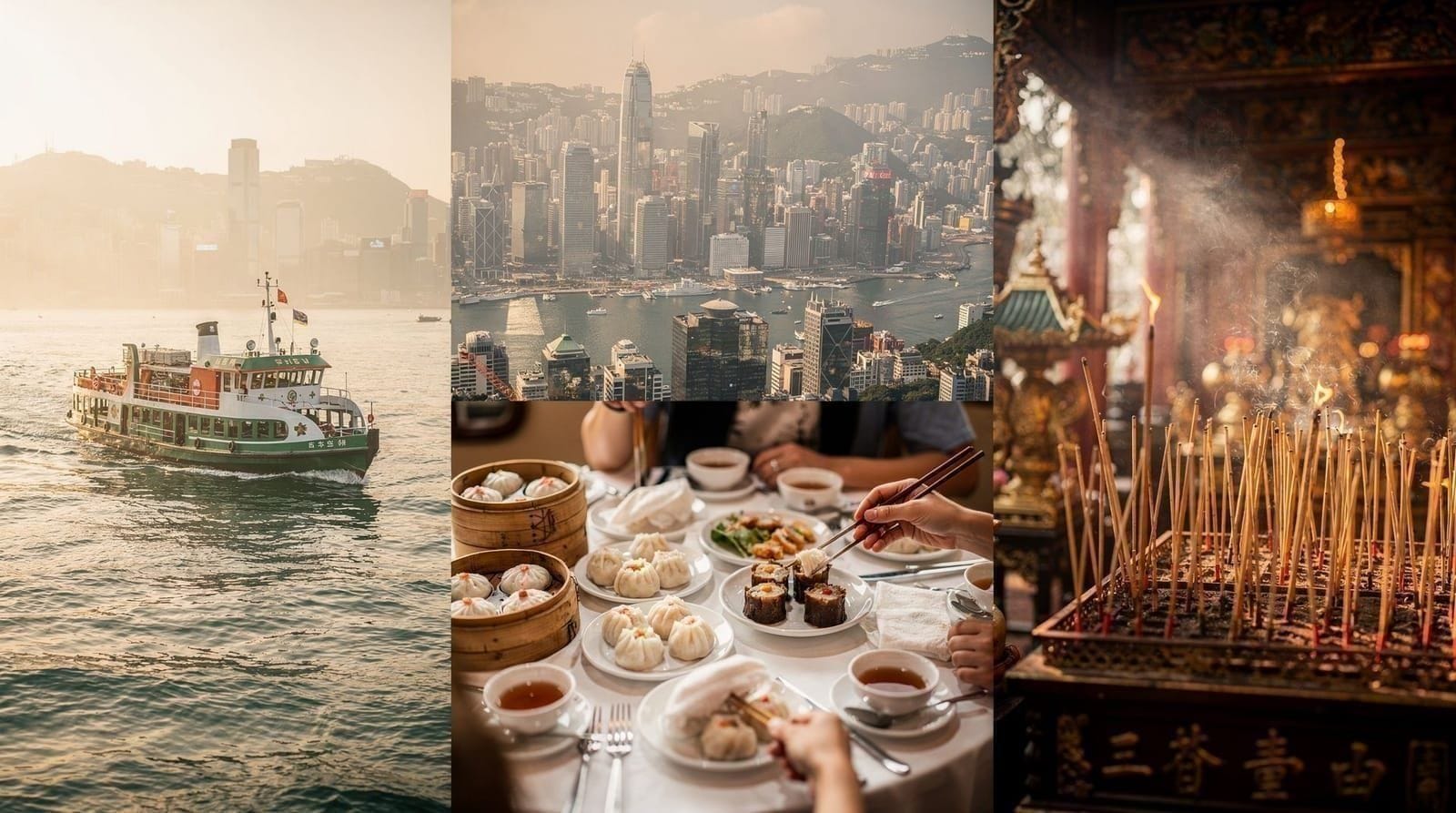
Traditional dim sum in Jordan or Yau Ma Tei — trolley service, HK$80–130 per person. See Hong Kong dim sum guide.
10:30 — Mong Kok markets
MTR to Mong Kok (Tsuen Wan Line from Jordan). Ladies’ Market (Tung Choi Street), Flower Market Road, Bird Garden, and Goldfish Market. Allow 2 hours.
Lunch: local wonton noodle shop or claypot rice restaurant near Mong Kok MTR (HK$50–80).
13:30 — Chi Lin Nunnery and Nan Lian Garden
MTR to Diamond Hill (Kwun Tong Line, 15 minutes). Chi Lin Nunnery (free, Tang Dynasty-style wooden complex) and Nan Lian Garden (free, formal Chinese garden). 60–75 minutes for both.
15:30 — Wong Tai Sin Temple
Walk 10 minutes to Wong Tai Sin Temple. Active Taoist place of worship, fortune-telling courtyard, free entry. Full details at the Wong Tai Sin Temple guide.
19:00 — Temple Street Night Market
Taxi or MTR to Jordan. Night market peaks 19:00–21:00. Outdoor cooking stalls for dinner (HK$100–180 per person).
Day 4 — Lantau Island: Big Buddha and Tai O
08:30 — MTR to Tung Chung, cable car to Ngong Ping
Tung Chung Line from hotel station to Tung Chung (20–35 minutes). Ngong Ping 360 cable car (HK$295 return standard cabin). Tian Tan Buddha (268 steps, free). Po Lin Monastery vegetarian lunch (check the monastery for current prices). Bus 21 to Tai O (fare on the operator’s website). Boat tour of stilt houses (HK$25–30). Return via bus B6 or cable car.
Day 5 — Macau day trip
08:30 — Sheung Wan Ferry Terminal
Take the MTR to Sheung Wan and walk to the Macau Ferry Terminal in Shun Tak Centre. Turbojet ferry to Macau Outer Harbour (about 60 minutes, HK$194 on weekdays or HK$212 on weekends and holidays, economy one-way). Arrive in Macau approximately 10:00.
Taxi or shuttle bus from the terminal to the Historic Centre (MOP$30–50 taxi, or free hotel shuttles to Cotai via Lisboa area).
A guided Macau day tour with ferry, hotel pickup, and guide to the Historic Centre handles the logistics — worth it for a single day where maximising time in Macau matters.Check availability10:00 — UNESCO Historic Centre
Ruins of St Paul’s (17th-century church facade, free), Fortaleza do Monte (free, cannon and city views), Macau Museum (MOP$15). Senado Square (Portuguese-mosaic pavements, free). St Dominic’s Church (free, 1587). The whole area is compact — everything within 800 metres.
Food in the Historic Centre: egg tarts (MOP$10–12 each from bakeries near the Ruins of St Paul’s — note the pastry style differs from Hong Kong, being flakier with a more custardy filling), pork chop buns (MOP$25–35), and almond cookies (sold by weight at shops on the market street).
13:00 — Lunch at a Macanese restaurant
African chicken, bacalhau (salted cod), and Portuguese wine in one of the Historic Centre’s sit-down Macanese restaurants (MOP$100–160 per person). The synthesis of Portuguese and Cantonese flavours in Macanese cooking is unique and worth experiencing properly.
14:30 — Taipa Village
Taxi from the Historic Centre to Taipa Village (MOP$35–45). This quieter neighbourhood on Taipa Island has colonial villas (free to view from outside) and a calmer atmosphere than the Historic Centre on weekends. The Rua do Cunha (Taipa Food Street) has more egg tarts, pork jerky, and local pastries.
17:00 — Return ferry to Hong Kong
Allow 30–40 minutes to reach the ferry terminal by taxi and clear immigration. Return ferry to Hong Kong (about 60 minutes). Arrive Sheung Wan approximately 19:30. Dinner near your hotel.
Day 6 — Sai Kung Geopark and New Territories coast
09:00 — MTR to Diamond Hill, bus to Sai Kung
MTR to Diamond Hill (Kwun Tong Line) then bus 92 or minibus 1A to Sai Kung town (45–60 minutes total). Breakfast at a local cafe on the Sai Kung promenade (HK$40–70).
10:30 — Geopark boat tour
Hire a kaito from the Sai Kung waterfront for a 2–3 hour tour of the outer coast — the volcanic hexagonal rock columns at High Island are the signature sight, reached by a 30-minute boat ride from the town. Most kaito operators are flexible about destinations; specify the hexagonal columns and any beach stops you want. Cost: HK$150–250 per person depending on group size.
A private geopark boat tour from Sai Kung covers the hexagonal rock formations, the sea arches, and hidden cove beaches — the highlights of Hong Kong’s UNESCO geopark by water.Check availabilitySai Kung is worth reading about before the day — the geology context makes the formations more interesting when you are standing in front of them.
13:00 — Seafood lunch at the Sai Kung waterfront
The promenade restaurants have live seafood tanks — point at what you want, pay by weight. Steamed fish, stir-fried clams, salt-and-pepper mantis shrimp, and morning glory stir-fried with garlic are all worth ordering. Lunch: HK$200–350 for two.
15:00 — Sha Tin: Ten Thousand Buddhas Monastery
Return by bus or minibus to Diamond Hill MTR, then East Rail Line to Sha Tin (10 minutes from Kowloon Tong; see the MTR website for current fares). Sha Tin is one of Hong Kong’s largest New Territories towns, and the Ten Thousand Buddhas Monastery is its most distinctive attraction.
Reach the monastery by walking 15 minutes uphill from Sha Tin MTR Station (Che Kung Temple exit) along a path lined with golden Buddha statues. The count of Buddha statues has long exceeded 12,000. The main hall has an ornate interior, and the views across Sha Tin and the Shing Mun River from the upper terraces are good. Free entry. Allow 60–75 minutes.
17:30 — Sha Tin New Town and dinner
The area around Sha Tin MTR has the Sha Tin New Town Plaza — a large modern mall — and a food court with Cantonese restaurants, noodle shops, and traditional dessert stalls at local prices (HK$60–100 for dinner). Alternatively, walk to Shatin’s riverside area for a more outdoor late afternoon.
Return to hotel via East Rail Line and interchange.
Day 7 — Tai Po, Lion Rock, and a final evening
09:30 — Tai Po Market and heritage
Take the East Rail Line north from Kowloon Tong or Sha Tin to Tai Po Market Station (20–30 minutes). Tai Po is one of the New Territories’ more traditional market towns, with the Tai Po Hui Market (a wet market and cooked food centre active from early morning) and the Railway Museum (free — Hong Kong’s oldest surviving railway station, 1913, converted to a museum with historic locomotives).
The market streets around the main bus terminus still have traditional shops — dried goods, Chinese medicine, household supplies — that have largely disappeared from the urban areas. Breakfast or late morning snack at the Tai Po Hui Market’s cooked food stalls (HK$40–70).
11:30 — Plover Cove and Bride’s Pool (optional)
Bus 75K from Tai Po Market to Bride’s Pool (30 minutes) reaches one of the most scenic waterfall areas in the New Territories. The Bride’s Pool Nature Trail (circular, 5 km, mostly flat along a stream, 1.5–2 hours) passes through secondary forest and several waterfalls. This is a genuinely peaceful contrast to the urban itinerary of the previous days. Note: the trailhead car park area is crowded on weekends with Hong Kong families.
Skip this if you prefer a rest day — the Tai Po Market exploration alone can fill a pleasant morning.
14:00 — Return to Kowloon: Lion Rock area
Return by East Rail Line to Kowloon. If energy allows, the afternoon can include the Lion Rock area. The Lion Rock Summit hike (Lion Rock Country Park, 4 hours round trip from Kam Shan Country Park bus stops, moderate gradient) provides one of the most dramatic views of Kowloon from above — the urban density from a forested summit is one of the most striking urban landscapes in the world.
For those who prefer a lighter option, the Kowloon Walled City Park (Kowloon City, free) occupies the site of the former Walled City and has a small museum about its history — one of the most extraordinary urban stories in the 20th century.
17:00 — Final afternoon by the harbour
Return to Tsim Sha Tsui waterfront for a final hour on the promenade. The Avenue of Stars and the harbour view at dusk is a good way to end a week in Hong Kong.
19:00 — Final dinner
For the last evening, consider pushing the budget slightly. A proper Cantonese restaurant in Tsim Sha Tsui or Central — roast goose, steamed grouper with ginger and spring onion, a claypot of glutinous rice — done properly in a well-regarded restaurant runs HK$300–500 per person. This is the food that Hong Kong is genuinely exceptional at, and it is worth at least one proper sit-down meal at a serious restaurant before leaving. For the final day, a guided city highlights tour with included lunch brings together context that can be hard to find independently — useful if you want someone to explain what you have been seeing all week.Check availability ---
Which days to cut if seven feels too long
Plans change, flights get moved, and not everyone finishes the week as planned. If you need to compress this itinerary to five or six days, Day 1 (arrival/orientation) and the Bride’s Pool section of Day 7 are the easiest to fold into other days without losing much — Day 1’s Central walk can merge into Day 2’s south-side loop, and Bride’s Pool is explicitly marked optional. Sai Kung, Macau, and Lantau are the three days worth protecting; they are the most distinctive and hardest to substitute. If you do end up cutting to five days, the 5-day itinerary is effectively this plan with the New Territories towns removed.
Where to base yourself for a week-long stay
A week is long enough that hotel location genuinely affects how much time you lose to commuting, more than on a 3- or 4-day trip where you can absorb a longer MTR ride. This itinerary already suggests splitting your stay between two areas, but if you would rather stay in one hotel throughout, weigh the trade-off against your daily plan: Tsim Sha Tsui is more convenient for Days 3, 4, and 7 (Kowloon-heavy), while Wan Chai or Hong Kong Station is better for Days 1, 2, and 5 (Island-heavy and the Macau ferry).
The where to stay by budget guide breaks down specific hotel areas against exactly this kind of week-long, multi-district itinerary, which is more useful for a trip this length than a general area overview.
Extending further: what a second week would add
Seven days covers an enormous amount of ground, but Hong Kong rewards repeat visits. A second week (or a return trip) would typically add: Lamma Island (see the Lamma Island guide) as a second outlying island beyond what this plan covers, the full MacLehose Trail sections beyond the taste this itinerary gives at Sai Kung, and neighbourhoods like Sham Shui Po that reward slow, unstructured wandering rather than a scheduled visit.
None of this is missing from this itinerary in any meaningful sense — a week genuinely does justice to Hong Kong — but it is worth knowing the city has more depth than even seven days can exhaust. Museums are the other category this itinerary only touches: the Hong Kong Palace Museum, the M+ Museum, and the Science Museum are all substantial enough to justify a dedicated half-day each on a future trip, but competing against outdoor days like Sai Kung and Lantau, they understandably lose out in a first full week.
A note on pacing across the week
This itinerary is written with specific timings, but the real value of seven days is the freedom to ignore them. If Day 3’s Kowloon markets run long because you found a dai pai dong you like, let Day 4’s Lantau trip start later rather than rushing dinner. The Hong Kong itinerary planning guide has more general advice on building slack into a longer trip, which matters more here than in any of the shorter itineraries on this site.
If you are travelling with a partner or friend who wants a slightly different pace, splitting off for a morning — one person doing a museum while the other extends a hike — is far more workable on a seven-day trip than on a tighter three- or four-day plan, and this itinerary’s optional sections (Bride’s Pool, the Lion Rock hike, Taipa Village) are deliberately placed to make that kind of split easy.
Practical information for the full week
Total 7-day budget estimate (mid-range, per person, excluding accommodation):
- Transport (MTR, ferries, buses): HK$600–750
- Attractions (Peak Tram, cable car, museums): HK$500–650
- Macau ferry (round trip): HK$388–424
- Sai Kung boat tour: HK$150–250
- Meals (3 per day x 7 days): HK$1,800–3,000
- Total: approximately HK$3,500–5,000 (USD $449–641)
For detailed cost breakdowns see Hong Kong budget breakdown.
Accommodation: One week justifies staying in two different areas — first half in Tsim Sha Tsui (convenient for Kowloon days and the Star Ferry), second half near Hong Kong Station or Wan Chai (convenient for Island days and Sheung Wan ferry to Macau). Or stay in one place and accept the 20-minute MTR commutes.
Best time: October to December is the optimal window — clear skies, lower humidity, temperatures of 18–25°C. Spring (March–May) is also good. Summer (June–September) is hot (33°C+) and humid with typhoon risk, but remains popular and all activities are possible outside storm days.
Frequently asked questions about this 7-day Hong Kong itinerary
Is a week in Hong Kong too long?
Not if you use it properly. The risk is spending two or three days in familiar areas out of inertia while the New Territories and outlying islands remain unseen. This itinerary deliberately pushes outward — Sai Kung, Sha Tin, Tai Po, Stanley, the south side — in ways that shorter trips cannot. A week spent this way is very different from three weeks in the same district.
Can I rearrange the day order?
Yes. The day order in this itinerary is logically sequenced to minimise backtracking but is not rigid. Swap Macau to Day 3 or 4 if the ferry weather looks better then. Move Sai Kung to a weekday (less crowded). Prioritise Lantau early if the weather forecast shows cloud building later in the week.
Should I book tours in advance for a week-long trip?
For the Ngong Ping 360 cable car on Lantau, yes — it sells out on weekends and public holidays. For the Macau ferry, yes for weekend crossings or during Chinese New Year and Golden Week. For everything else — dim sum restaurants, local kaito boat tours in Sai Kung, night market stalls — no advance booking is needed or expected.
What is the New Territories like compared to Kowloon and the Island?
The New Territories is physically larger than the urban areas and much less dense. The landscape transitions from densely-packed new town housing estates to country parks and rural villages within a few kilometres. Sha Tin, Tai Po, and Sai Kung are the most accessible towns for visitors. The experience is quieter and more overtly Chinese than the tourist-facing areas of Tsim Sha Tsui or Central.
Is Dragon’s Back hike worth including in a 7-day itinerary?
Dragon’s Back on Hong Kong Island (accessible by bus 9 from Shau Kei Wan MTR) is one of the most popular day hikes in the city — 2–3 hours, moderate gradient, with views over the sea and the southern coastline. It can replace the Bride’s Pool section of Day 7 or be added to Day 2’s south-side exploration if you have energy. The trail ends at Shek O beach, which is one of the most relaxed beach communities in Hong Kong.
How should I handle typhoon days?
Check the Hong Kong Observatory typhoon signal system before any outdoor activity or ferry trip. Signal 1 = awareness only; Signal 3 = moderate disruption (ferries often continue); Signal 8 = city effectively shuts down (ferries suspended, some businesses closed, stay inside). If a Signal 8 is raised, reschedule outdoor and ferry days and spend the time in malls, museums, or your hotel. Typhoon days are unpredictable in duration — a Signal 8 might last 6 hours or 2 days.
What should I eat that I might miss in a shorter trip?
A week allows time for: a proper clay pot rice dinner (autumn and winter specialty), typhoon shelter-style seafood (Causeway Bay), roast goose from a dedicated roast meat restaurant, a traditional dai pai dong breakfast with porridge, and an afternoon at a proper cha chaan teng for their multi-course Hong Kong milk tea set. All of these are better than any single restaurant you will find recommended in a general guide — they are categories of eating rather than specific venues.
Top experiences
Bookable activities with verified prices and instant confirmation on GetYourGuide.