Where to stay in Hong Kong — neighbourhood by neighbourhood guide
Hong Kong: Private walking city tour with a local guide
Where should I stay in Hong Kong as a first-time visitor?
Tsim Sha Tsui in Kowloon is the easiest choice for first-timers — it has excellent transport links, great harbour views, and a wide range of hotels from budget to luxury. Central on Hong Kong Island is better if you arrive by Airport Express and prefer a business-district feel.
Choosing the right base for your Hong Kong trip
Hong Kong is not a city where you can make a bad accommodation choice geographically — the MTR is so fast and so frequent that almost every neighbourhood puts you within 30 minutes of everything you want to see. But the city is divided by Victoria Harbour into two very different halves, and where you plant yourself shapes the texture of your stay in ways that go beyond mere convenience.
On the Kowloon side, the streets are denser, louder, and more obviously tourist-facing near Nathan Road, but venture five minutes off the main drag and you are in some of the most authentically local urban fabric in the world. On Hong Kong Island, the pace shifts — Central feels like Singapore crossed with London’s financial district, Causeway Bay vibrates with a commercial intensity that rivals Shibuya, and quieter pockets like Wan Chai offer a middle ground that many repeat visitors quietly prefer.
This guide works through each major neighbourhood with honest assessments of what you actually get for your money, who each area suits, and what the trade-offs are. Prices are in Hong Kong dollars and reflect typical walk-in and online rates for a standard double room per night as of mid-2026; rates climb significantly during major public holidays and events like the Rugby Sevens.
| Where | Kowloon (TST, Mong Kok, Sham Shui Po) for value; Hong Kong Island (Central, Wan Chai, Causeway Bay) for business/luxury |
| Cost | HKD 300/night (Sham Shui Po) to HKD 6,000+/night (Central luxury) |
| Best for first-timers | Tsim Sha Tsui — harbour views, easy MTR, wide price range |
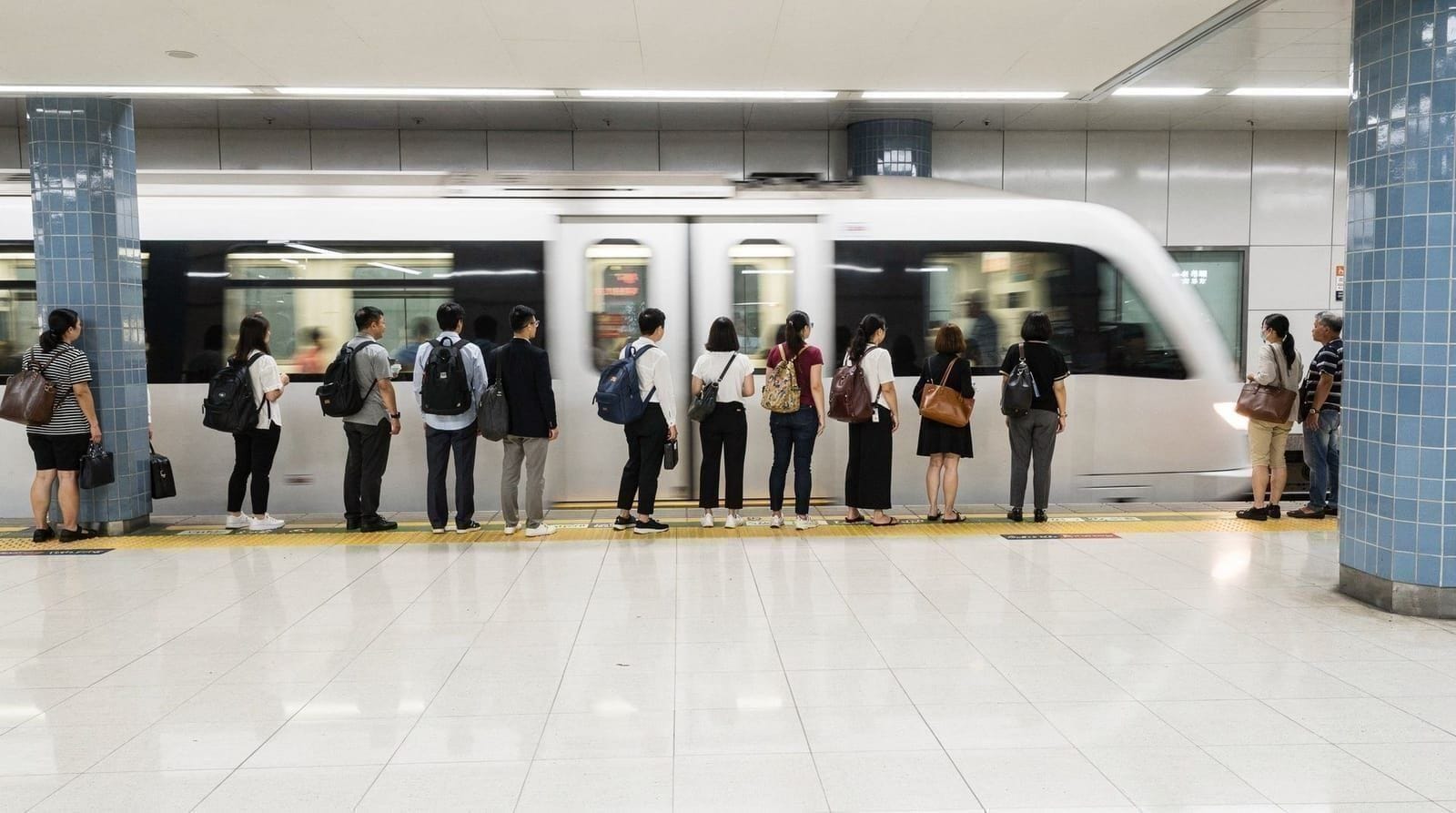
| Getting around | Octopus card + MTR from any base, journeys under 30 minutes citywide |
| Booking window | 6–8 weeks ahead for October–November and public holidays |
Neighbourhood quick comparison
| Neighbourhood | Side | Price/night (HKD) | Best for |
|---|---|---|---|
| Tsim Sha Tsui | Kowloon | 800–3,500 | First-timers, harbour views, families |
| Central & Sheung Wan | Island | 1,200–6,000 | Business travellers, luxury seekers |
| Causeway Bay | Island | 700–2,000 | Shoppers, repeat visitors |
| Wan Chai | Island | 700–1,500 | Value on the Island side, dining |
| Mong Kok | Kowloon | 400–900 | Tight budgets, markets, immersion |
| Sham Shui Po | Kowloon | 300–700 | Cheapest well-connected option |
Tsim Sha Tsui — the easiest choice for first-timers
Kowloon side · MTR: Tsim Sha Tsui station · Price range: HKD 800-3,500/night
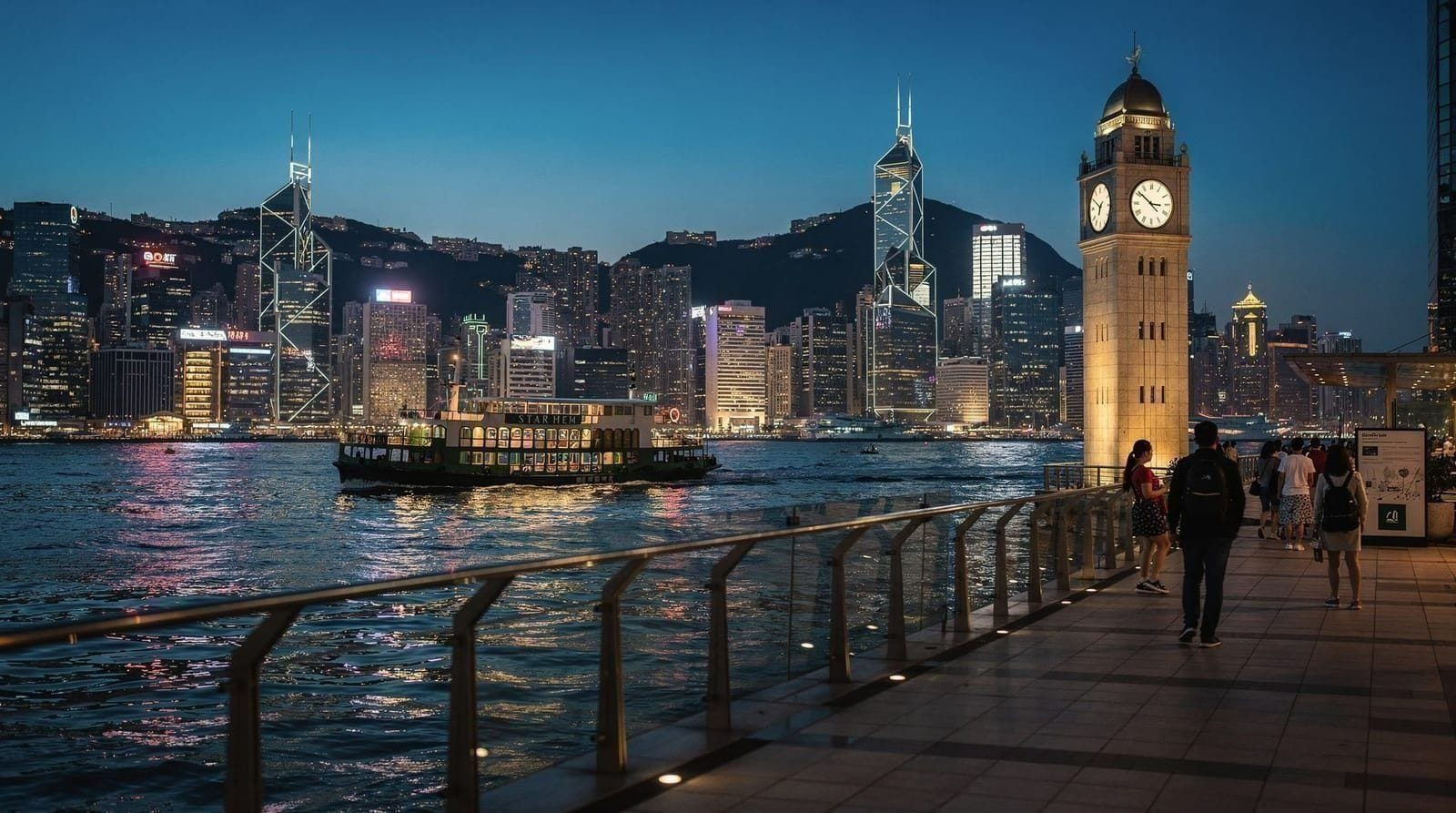
Tsim Sha Tsui — universally abbreviated to TST — is where most first-time visitors to Hong Kong end up, and for good reason. It packs more tourist infrastructure per square kilometre than any other neighbourhood: museums, shopping malls, the Star Ferry pier, the Avenue of Stars promenade, and a hotel stock that runs from budget-friendly to The Peninsula, one of Asia’s most famous grand hotels.
The harbour views are the genuine selling point. Upper-floor rooms on the Salisbury Road side of TST look directly north across Victoria Harbour toward the Hong Kong Island skyline — a panorama that genuinely rewards paying a premium for. At night the Symphony of Lights display plays out across the water, and you can watch it from your window rather than jostling for a spot on the promenade.
Transport from TST is effortless. The MTR Tsuen Wan and East Rail lines put you into Central in under 10 minutes and connect directly to Hong Kong station for the Airport Express. The Star Ferry crossing to Central costs just HKD 4-6.5 and is one of the world’s great short sea voyages — worth building into your daily rhythm rather than treating as a tourist activity.
Hotels worth knowing:
- The Peninsula Hong Kong — The flagship colonial grande dame on Salisbury Road, with a fleet of Rolls-Royces and afternoon tea that still commands a queue. Prices start around HKD 4,000-5,000 per night for standard rooms and climb sharply for harbour views.
- Hotel Icon — A design hotel connected to Hong Kong Polytechnic University, delivering genuinely good-looking rooms, above-average food, and harbour views at prices closer to HKD 1,200-1,800.
- Sheraton Hong Kong Hotel and Towers — Reliable, large, excellent location right on the waterfront. Mid-range rooms run HKD 1,000-1,800.
Who TST suits: First-timers, families, anyone who wants harbour views and easy access to everything without thinking too hard about logistics. Also strong for business travellers who need the hotel infrastructure.
For a deeper comparison between TST and Central, the central vs Tsim Sha Tsui guide breaks down the differences across transport, price, vibe, and dining in detail. A private walking tour with a local guide is one of the best ways to get your bearings in TST and Kowloon on arrival dayCheck availability ---
Central and Sheung Wan — Hong Kong Island’s business core
Hong Kong Island · MTR: Central or Sheung Wan station · Price range: HKD 1,200-6,000/night
Central is where Hong Kong does its most important financial business, and the hotels that cluster here reflect that — they are mostly luxury or upper mid-range, angled toward corporate travellers on expense accounts and high-end leisure visitors who want the best address in the city. If price is not the primary constraint, Central is genuinely the most convenient base: the MTR connections are outstanding, the Airport Express departs from Hong Kong station literally at street level, and you have immediate access to some of the island’s best restaurants.
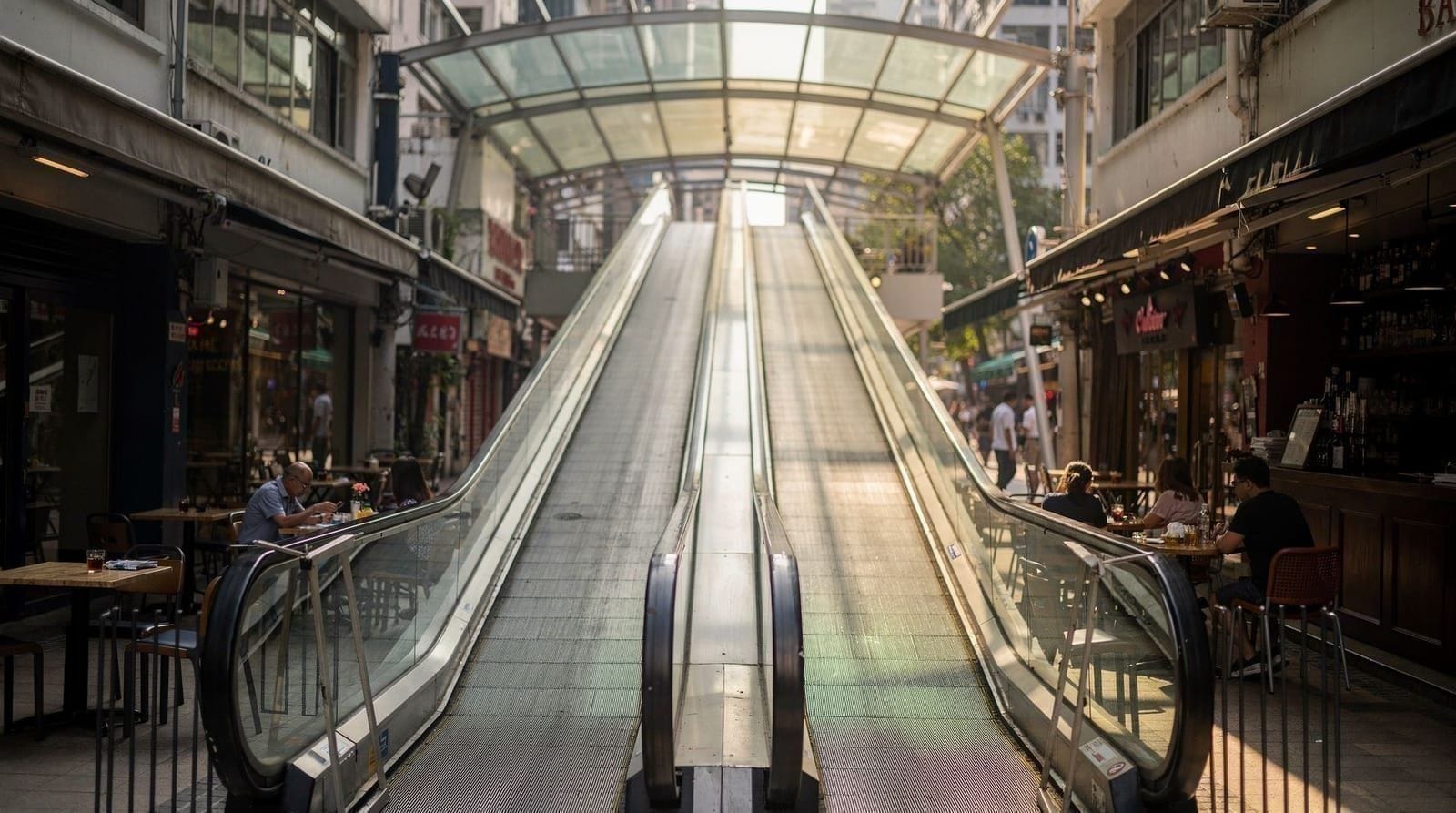
The neighbourhood around Central and Sheung Wan rewards walking at all times of day. The Central-Mid-Levels Escalator climbs through the lanes of SoHo, past independent cafes and restaurants that feel nothing like the corporate towers a few minutes’ walk below. Sheung Wan to the west has antique shops, dried seafood wholesalers perfuming entire streets, and a gallery scene that has quietly become one of Asia’s more interesting.
For the airport to city journey, staying in Central means the Airport Express deposits you almost at your hotel door — Hong Kong station is directly connected by enclosed walkway to the Four Seasons, and Mandarin Oriental is a short taxi ride. This matters if you are arriving late or leaving early.
Hotels worth knowing:
- Four Seasons Hong Kong — Right on the waterfront in the International Finance Centre complex. One of the city’s top luxury addresses. Standard rooms from HKD 4,000-5,000.
- Mandarin Oriental Hong Kong — A Central institution on Connaught Road, famous for its bar and impeccable service. Rates from around HKD 3,000 upward.
- The Upper House — Architecturally striking, calm, positioned in Pacific Place in Admiralty (the neighbourhood just east of Central). Better value than comparable Central addresses, at HKD 2,000-3,500.
Who Central suits: Business travellers, luxury seekers, visitors who plan to spend serious time in the SoHo and Central restaurant and bar scene, and anyone who wants the Airport Express practically at their door.
The main trade-off is cost — you are consistently paying more per night than you would in TST for comparable room quality, and the neighbourhood quietens sharply after office hours compared to Kowloon’s perpetual hum.
Causeway Bay — the shopper’s headquarters
Hong Kong Island · MTR: Causeway Bay station · Price range: HKD 700-2,000/night
Causeway Bay sits roughly 3 km east of Central along the tram line and operates at a different frequency entirely. This is Hong Kong at its most commercially intense: Times Square shopping mall, the Hysan Place complex, hundreds of independent boutiques stacked into narrow lanes, and pavements that stay busy until midnight even on weekdays. If your trip involves serious shopping, Causeway Bay makes more logistical sense as a base than anywhere else.
Hotel prices here are meaningfully lower than Central for comparable quality — you can find decent mid-range hotels in the HKD 900-1,500 range, and budget-friendly options exist around HKD 700 if you are not precious about room size. Room sizes in Causeway Bay tend to run small even by Hong Kong standards, where a 20 sqm room is considered acceptable and 30 sqm is genuinely spacious.
Victoria Park — one of the largest green spaces on Hong Kong Island — is a 10-minute walk from most Causeway Bay hotels, providing a useful counterweight to the shopping frenzy. The nightly typhoon shelter along the eastern edge of the bay, lined with dai pai dong seafood restaurants on boats, is one of those experiences that feels distinctly and irreplaceably Hong Kong.
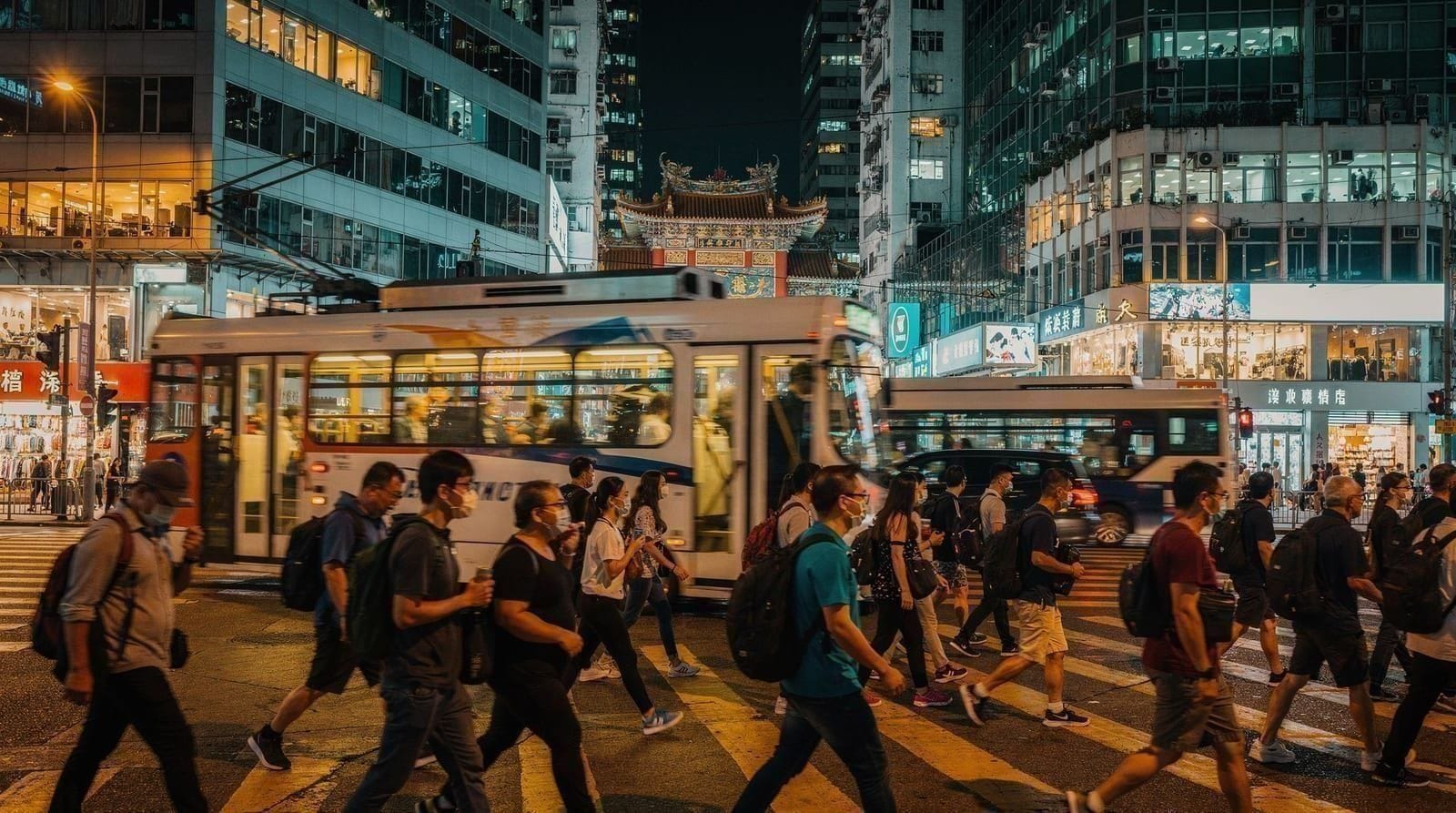
The tram runs all the way along the northern shore of Hong Kong Island, making Causeway Bay easy to reach from Central without using the MTR. A tram ride costs HKD 3.30 flat. It is slower than the MTR but far more atmospheric.
The Causeway Bay area guide covers shopping, dining, and local recommendations in greater depth.
Who Causeway Bay suits: Shoppers, repeat visitors who know the city, and Hong Kong Island loyalists who find Kowloon too chaotic. Also good for visitors attending events at the Hong Kong Stadium, which is a 15-minute walk east.
Wan Chai — the underrated middle ground
Hong Kong Island · MTR: Wan Chai station · Price range: HKD 700-1,500/night
Wan Chai occupies the stretch of Hong Kong Island between Central and Causeway Bay, and it is quietly one of the city’s most sensible bases for visitors not committed to either end of the spectrum. Hotels here run a step cheaper than Central equivalents while keeping you on the Hong Kong Island side.
Wan Chai has its own Star Ferry pier connecting to TST, which means you can cross the harbour for a few dollars rather than taking the MTR tunnel. The Wan Chai wet market on Cross Street is one of the most lively morning food markets in the city — set your alarm for 7am if you want to see it at full pace. The neighbourhood’s trams, running along Hennessy Road, give you an affordable and atmospheric connection east to Causeway Bay and west to Central.
Lockhart Road’s bar strip gives Wan Chai a reputation for nightlife that it only partly deserves today — the circuit is quieter than it was a decade ago, but there are still good drinking spots if you know where to look. The better reason to stay here is the dining: Wan Chai has a concentration of old-school Cantonese restaurants and cha chaan teng (Hong Kong-style diners) that has survived the gentrification pressure better than some other neighbourhoods.
Who Wan Chai suits: Visitors who want Hong Kong Island convenience without Central prices, restaurant-focused travellers, and people making heavy use of the Star Ferry for daily crossings to Kowloon.
Mong Kok — authentic, noisy, and genuinely cheap
Kowloon side · MTR: Mong Kok station · Price range: HKD 400-900/night
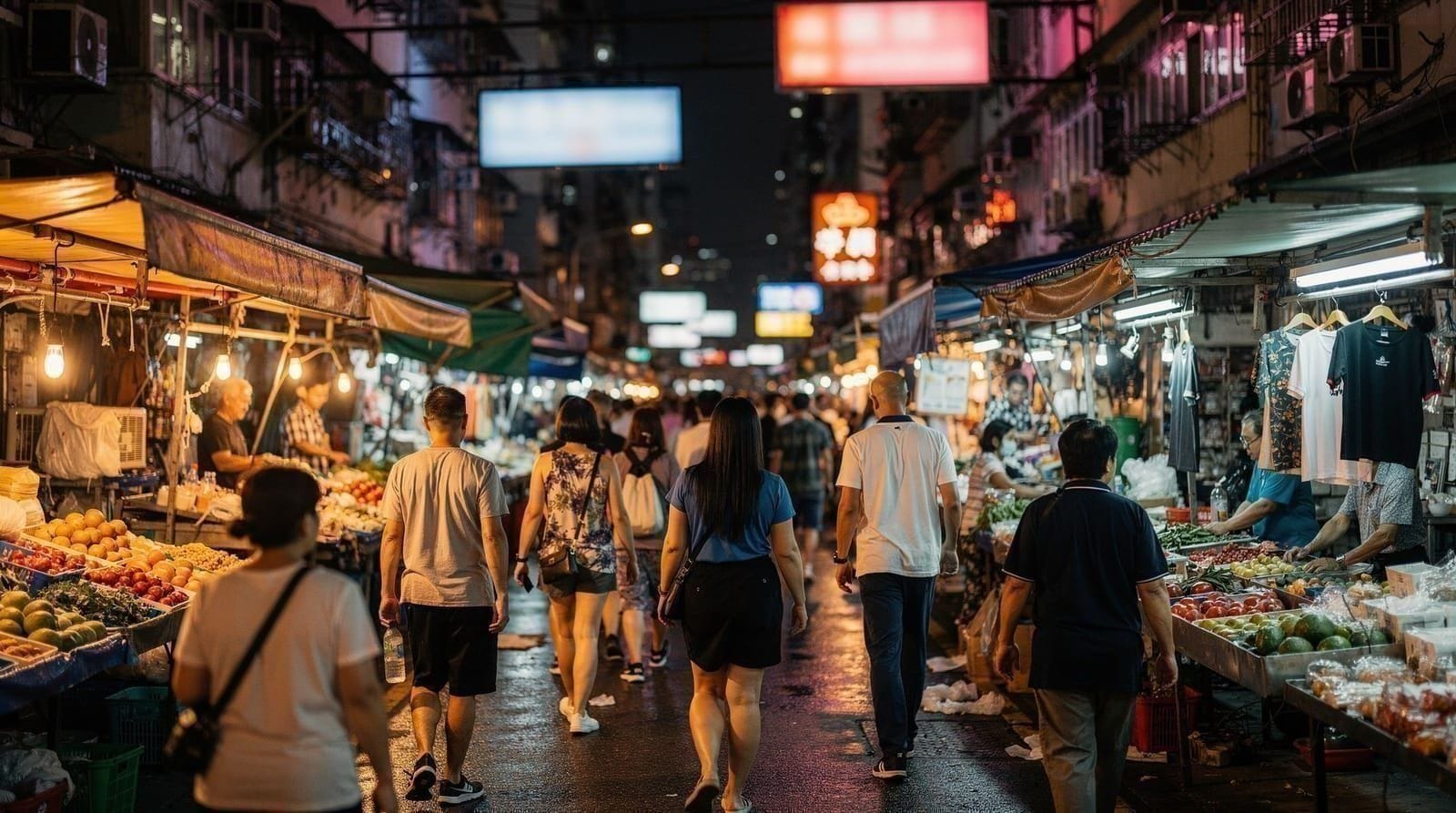
Mong Kok has one of the highest population densities of any urban area on earth, and you feel it the moment you surface from the MTR. The streets stack shops six floors high, the pavements are genuinely difficult to navigate at peak hours, and the noise level is relentless from around 10am until past midnight. For many travellers — particularly those on tight budgets — this is precisely the point.
Budget guesthouses and small hotels in Mong Kok are the cheapest legitimate accommodation options on the Kowloon Peninsula outside Sham Shui Po, with rooms regularly available in the HKD 400-700 range that are clean, functional, and safe. You sacrifice space (rooms of 12-15 sqm are common), but you gain a location that puts you among Hong Kong’s most characterful street markets.
The Ladies’ Market on Tung Choi Street, the Goldfish Market, the Flower Market, and the Sneaker Street cluster are all within walking distance of the station. The Mong Kok area guide maps out the best markets and dining spots.
The MTR connections from Mong Kok are excellent — you can reach TST in two stops and change for Hong Kong Island without difficulty. For day trips, the Octopus card makes all of this seamless.
The Chungking Mansions warning: Just south of Mong Kok, in TST, Chungking Mansions on Nathan Road is worth addressing directly. The building houses genuinely cheap guesthouses that attract budget travellers from around the world — but it also comes with documented fire safety problems in older blocks, a persistent low-level scam culture at the entrance, lifts that are chronically overcrowded, and room quality that ranges from adequate to genuinely grim. Unless you are in a genuine budget emergency, budget hotels in Mong Kok or Sham Shui Po offer better value, more safety, and greater peace of mind for similar prices.
Who Mong Kok suits: Budget travellers, those who want maximum immersion in everyday Hong Kong life, market enthusiasts, and younger travellers who can tolerate the noise.
Sham Shui Po — the city’s cheapest neighbourhood with emerging appeal
Kowloon side · MTR: Sham Shui Po station · Price range: HKD 300-700/night
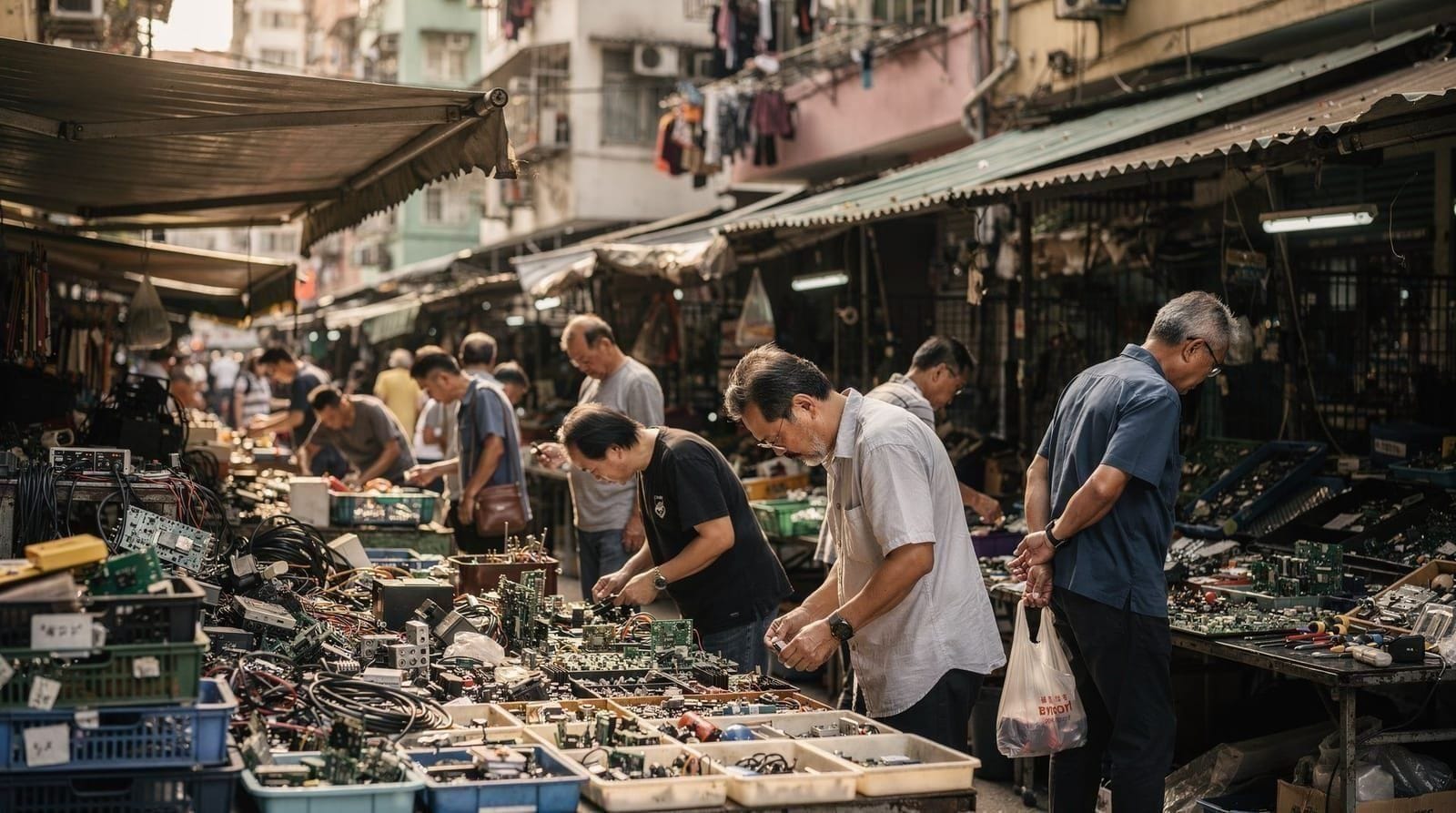
Sham Shui Po is where Hong Kong’s prices finally feel affordable by international standards. This is a working-class neighbourhood that has historically specialised in electronics components, fabric wholesale, and second-hand goods — and those trades are still very much alive on Apliu Street and Ki Lung Street. But in recent years a quiet transformation has been under way: independent coffee shops, small creative studios, and low-key restaurants have started filling in around the older trades, creating a neighbourhood that has more texture than most visitors expect.
Hotel prices in Sham Shui Po are the lowest of any well-connected area in Hong Kong. The Dorsett Sham Shui Po is the standout mid-range option, offering modern rooms at prices that would be considered budget-friendly in Central — typically HKD 500-800 per night. Below that you will find guesthouses and smaller hotels running from HKD 300-500.
The trade-off for these prices is distance. Sham Shui Po is further from the main tourist sights than TST or Mong Kok, adding a few extra MTR stops to every journey. It is also a more demanding neighbourhood for first-time visitors — the streets are not especially tourist-oriented, signage in English is patchier than in TST, and the pace is resolutely local. Treat those things as features rather than bugs if you want a stay that feels genuinely different from the hotel-district experience most cities offer.
The Sham Shui Po area guide goes deep on the markets, the food scene, and which parts of the neighbourhood reward a slow walk.
Who Sham Shui Po suits: Budget-conscious travellers, design and fabric enthusiasts, and anyone who has already done a standard Hong Kong trip and wants to see a less-visited side of the city.
Other areas worth considering
Kowloon City — authentic but less convenient
Kowloon City sits northeast of TST and offers a strongly local atmosphere anchored by one of Hong Kong’s best concentrations of Thai restaurants. Accommodation is limited and transport requires more changes than TST or Mong Kok. Worth considering for a repeat visit; less practical for a first trip.
Stanley and the south side — quiet but isolated
Stanley on the southern coast is pleasant for an afternoon — the waterfront promenade and market are genuinely charming — but there is no MTR connection, and every journey into the city centre means a 30-40 minute bus or taxi ride. The daily time tax is significant.
EAST Hong Kong, Quarry Bay — quieter alternative
EAST Hong Kong in Quarry Bay suits business travellers and those wanting a calmer Hong Kong Island base. The MTR Island Line puts Causeway Bay a few stops west. Rates run HKD 1,200-2,000. The neighbourhood has good local restaurants but minimal tourist infrastructure.
West Kowloon — the newest waterfront option
West Kowloon has changed shape in the last few years with the opening of the M+ museum and the wider West Kowloon Cultural District, and hotel stock has followed. The Rosewood Hong Kong, on the Victoria Harbour waterfront, is the standout address here — contemporary architecture rather than colonial heritage, and some of the best harbour-facing rooms in the city, from around HKD 4,000/night. The area sits a short walk or one MTR stop from TST proper, so you keep TST’s convenience while getting a quieter, more residential feel in the evenings. The M+ museum guide is worth reading before you go if contemporary art and design is part of the appeal.
How to match your budget to the right neighbourhood
Understanding Hong Kong’s accommodation tiers helps avoid expensive surprises:
Budget travellers (HKD 300-700/night): Sham Shui Po is the best bet for clean, functional rooms at the lowest prices. Mong Kok adds more location convenience for slightly higher rates. Avoid Chungking Mansions unless you have specifically researched individual guesthouses and are comfortable with the trade-offs.
Mid-range travellers (HKD 700-1,800/night): TST delivers the best combination of value and location at this tier. Wan Chai and Causeway Bay on Hong Kong Island offer comparable options at similar prices. Hotel Icon in TST is arguably the best mid-range value in the city.
Luxury travellers (HKD 2,000+/night): The Four Seasons and Mandarin Oriental in Central, and The Peninsula in TST, represent the city’s top tier. The Peninsula suits those wanting colonial grandeur; Four Seasons delivers contemporary waterfront luxury; Mandarin Oriental is a hotel that has been polished over decades into something quietly assured.
For day-to-day movement from any base, the Hong Kong MTR guide explains fare structure, line colours, and practical hacks.
Planning your first days from your base
Certain logistics apply regardless of where you stay. Getting an Octopus card on arrival is non-negotiable — it pays for the MTR, buses, trams, the Star Ferry, and most convenience stores, eliminating the need to queue for tickets every time. If you are in TST or Mong Kok, a morning walk south down Nathan Road toward the harbour sets the Kowloon geography in your head quickly. If you are based on Hong Kong Island, the tram running from Kennedy Town west to Shau Kei Wan east traces the island’s northern shore for HKD 3.30 flat and is the fastest orientation tool the city offers.
For visitors who want structured help getting oriented on the first day, a guided walk pays for itself in time saved:
A half-day Peak Tram and city walk tour with dim sum covers the essential geography of Hong Kong Island with local commentary that maps faster than a guidebookCheck availabilityFor day trips, neighbourhood choice matters less than it seems — whether you are heading to Lantau, the outlying islands, or taking the ferry to Macau, you are typically 30-60 minutes from any central area. The best day trips from Hong Kong guide covers each option with real transport details. For sequencing your sightseeing, the 3-day itinerary and 1-day condensed version are written with location trade-offs in mind.
If you’re only weighing budget vs. location
Two questions do most of the work in choosing a neighbourhood: do you want to be on the Kowloon side or the Hong Kong Island side, and how much do you want to spend per night. If you can only optimise for one thing, optimise for transport connectivity — every neighbourhood on this list sits on or very near the MTR, and that single fact matters more to how your trip actually feels than almost anything else, including the view from your window. A HKD 500/night room in Mong Kok two MTR stops from TST will serve you better than a HKD 1,500/night room in an area with a 15-minute walk to the nearest station.
For a head-to-head on the two most commonly debated choices, the Central vs Tsim Sha Tsui guide goes deeper than the summary above, comparing transport time, dining density, nightlife, and typical hotel quality at matching price points.
Repeat visitors often make a different trade-off than first-timers: once the standard sights are covered, a stay in a less touristic base like Sham Shui Po or Kowloon City rewards you with lower prices and a more textured, everyday version of the city, at the cost of a slightly longer walk or MTR ride to the harbourfront. If it’s your first trip, that trade generally isn’t worth making; if it’s your second or third, it often is.
Families weighing the same trade-off tend to prioritise differently again — proximity to the airport express connection, stroller-friendly pavements, and a hotel with enough room to spread out matter more than nightlife or gallery-hopping distance. Tsim Sha Tsui still wins for most families on this measure, but Causeway Bay’s proximity to Victoria Park is worth a second look if outdoor space for children factors into the decision, and the Hong Kong with kids guide works through the trade-offs area by area, neighbourhood by neighbourhood, in more detail than this guide has room for here.
Frequently asked questions about Where to stay in Hong Kong — neighbourhood by neighbourhood
Is it better to stay on Hong Kong Island or in Kowloon?
What is the cheapest area to stay in Hong Kong?
Is Chungking Mansions safe to stay in?
How much should I budget for accommodation in Hong Kong?
Which area has the best harbour views?
Which neighbourhood is best for families with children?
What is the best area to stay for nightlife?
Is West Kowloon a good place to stay?
How far in advance should I book a Hong Kong hotel?
Top experiences
Bookable activities with verified prices and instant confirmation on GetYourGuide.