Hong Kong MTR guide — lines, fares, and tourist tips
Hong Kong: Airport Express e-ticket Kowloon/HK/Tsing Yi
Is the Hong Kong MTR easy to use as a tourist?
Yes — it is one of the most user-friendly metros in the world. English signage is excellent throughout. Pay by Octopus card (HKD 4.0-60.8 per trip), avoid 7:30-9:30am and 5:30-7:30pm peak hours at major stations, and you can reach almost every tourist destination directly.
Why the MTR should be your default way to move
Hong Kong’s MTR is consistently ranked among the world’s best metro systems, and after a day of using it, it is easy to see why. Trains arrive every 2-4 minutes during the day. Air conditioning makes platforms and carriages cool even in the brutal August humidity. English signage is clear, consistent, and well-placed at every decision point — at station entrances, on platform edges, above carriage doors, and on the electronic displays that count down to the next train.
The network reaches almost every place a tourist needs to go. From the airport into the city, from Central across to Kowloon, from the urban core out to the border with mainland China, the MTR covers the geography of Hong Kong more completely than any road system can. Combined with an Octopus card, it is nearly frictionless.
This guide explains all 10 lines, the stations that matter most to visitors, how fares work, and the practical details that make a real difference — when to travel, where to stand, what to watch out for.
| Cost | Around HKD 4.0–60.8 per trip by Octopus card |
| Hours | Varies by line and station — see the official MTR website |
| Avoid | 7:30–9:30am and 5:30–7:30pm weekdays at major interchanges |
| Best pass | Tourist Day Pass (HKD 75) if doing 5+ trips in one day |
| Wi-Fi | Free MTR Wi-Fi on all trains and stations, no login |
The lines at a glance
| Line | Colour | Route summary | Key tourist use |
|---|---|---|---|
| Island Line | Red | Kennedy Town — Chai Wan | Hong Kong Island sightseeing |
| Tsuen Wan Line | Red | Central — Tsuen Wan | Main Island-to-Kowloon link |
| Kwun Tong Line | Green | Whampoa — Tiu Keng Leng | Yau Ma Tei, Temple Street area |
| Tung Chung Line | Orange | Hong Kong — Tung Chung | Lantau, Big Buddha access |
| East Rail Line | Blue | Hung Hom — Lo Wu / Lok Ma Chau | Shenzhen border crossing |
| South Island Line | Yellow | Admiralty — South Horizons | Ocean Park, Aberdeen |
| Disneyland Resort Line | Pink | Sunny Bay — Disneyland | Disneyland shuttle |
| Airport Express | Dark blue | Hong Kong — Airport | Fastest airport transfer |
The 10 MTR lines explained
Island Line
Colour: red on maps
Route: Kennedy Town — Chai Wan (along the north shore of Hong Kong Island)
Key stops for tourists: Kennedy Town, Sai Ying Pun, Sheung Wan, Central, Admiralty, Wan Chai, Causeway Bay, Tai Koo
The Island Line runs the length of Hong Kong Island’s north coast, which is where most of the island’s tourist sights are concentrated. Central is the financial and cultural heart of the city. Admiralty connects to the South Island Line and to several major shopping malls. Causeway Bay is one of the city’s busiest retail districts.
If you are staying on Hong Kong Island, this is the line you will use most often.
Tsuen Wan Line
Colour: red on maps (shares Central/Admiralty with Island Line)
Route: Central — Tsuen Wan (via Kowloon)
Key stops for tourists: Central, Admiralty, Tsim Sha Tsui, Jordan, Mong Kok, Prince Edward, Tsuen Wan
The Tsuen Wan Line is the primary artery connecting Hong Kong Island to Kowloon. Tsim Sha Tsui is the tourist hub on the Kowloon side — hotels, restaurants, the Avenue of Stars, the Kowloon waterfront promenade, and the Star Ferry pier are all walking distance from the station. Jordan and Mong Kok follow as you head north.
Kwun Tong Line
Colour: green
Route: Whampoa — Tiu Keng Leng (via Mong Kok East and Kowloon Bay)
Key stops for tourists: Mong Kok East, Yau Ma Tei, Jordan, Kowloon Bay, Lam Tin
The Kwun Tong Line parallels the Tsuen Wan Line through central Kowloon before veering east. For tourists, it provides access to Yau Ma Tei’s Temple Street Night Market area. Mong Kok is served by both the Tsuen Wan Line (at Mong Kok station) and the Kwun Tong Line (at Mong Kok East) — both are walkable to the same neighbourhood.
Tung Chung Line
Colour: orange
Route: Hong Kong — Tung Chung
Key stops for tourists: Hong Kong, Kowloon, Tsing Yi, Tung Chung
The Tung Chung Line runs alongside the Airport Express for most of its length but makes more stops and charges lower fares. It does not go all the way to the airport. Tung Chung station is the gateway to Lantau Island — specifically to the Ngong Ping 360 cable car, which takes you up the mountain to the Tian Tan Buddha. If you are doing the Lantau Big Buddha day trip, you take this line to Tung Chung.
Tseung Kwan O Line
Colour: purple. Runs from North Point (Island Line interchange) east to Po Lam and Lohas Park. Not on most tourist itineraries — primarily a residential commuter line serving the eastern New Territories.
East Rail Line
Colour: blue (a lighter blue than the Airport Express)
Route: Hung Hom — Lo Wu / Lok Ma Chau
Key stops for tourists: Hung Hom, Mong Kok East, Kowloon Tong, Tai Wai, Sha Tin, Lo Wu, Lok Ma Chau
The East Rail Line is the link to mainland China. Lo Wu and Lok Ma Chau are both border crossing stations with Shenzhen. The journey from Hung Hom to Lo Wu takes approximately 40 minutes. Sha Tin along the way has one of Hong Kong’s largest shopping malls and the Che Kung Temple, which some visitors stop at en route.
A China mainland visa is required for most foreign nationals to cross into Shenzhen. For everything about the crossing, see the Shenzhen day trip guide.
South Island Line
Colour: yellow
Route: Admiralty — South Horizons
Key stops for tourists: Admiralty, Ocean Park, Wong Chuk Hang, Lei Tung, South Horizons
The South Island Line opened in 2016 and finally gave the southern side of Hong Kong Island a direct MTR connection. Ocean Park station is directly adjacent to Hong Kong’s large theme park. Lei Tung and South Horizons serve Aberdeen and Ap Lei Chau — useful if you want to eat at the Aberdeen seafood restaurants without taking a taxi.
Ma On Shan Line
Colour: brown. A commuter line from Tai Wai to Wu Kai Sha in the northeastern New Territories. Most tourists will not need it.
Disneyland Resort Line
Colour: pink. A short shuttle between Sunny Bay (interchange with the Tung Chung Line) and Hong Kong Disneyland. Journey from Hong Kong station to Disneyland takes about 30 minutes total.
Airport Express
Colour: dark blue
Route: Hong Kong — Airport (via Kowloon and Tsing Yi)
Key stops: Hong Kong, Kowloon, Tsing Yi, Airport
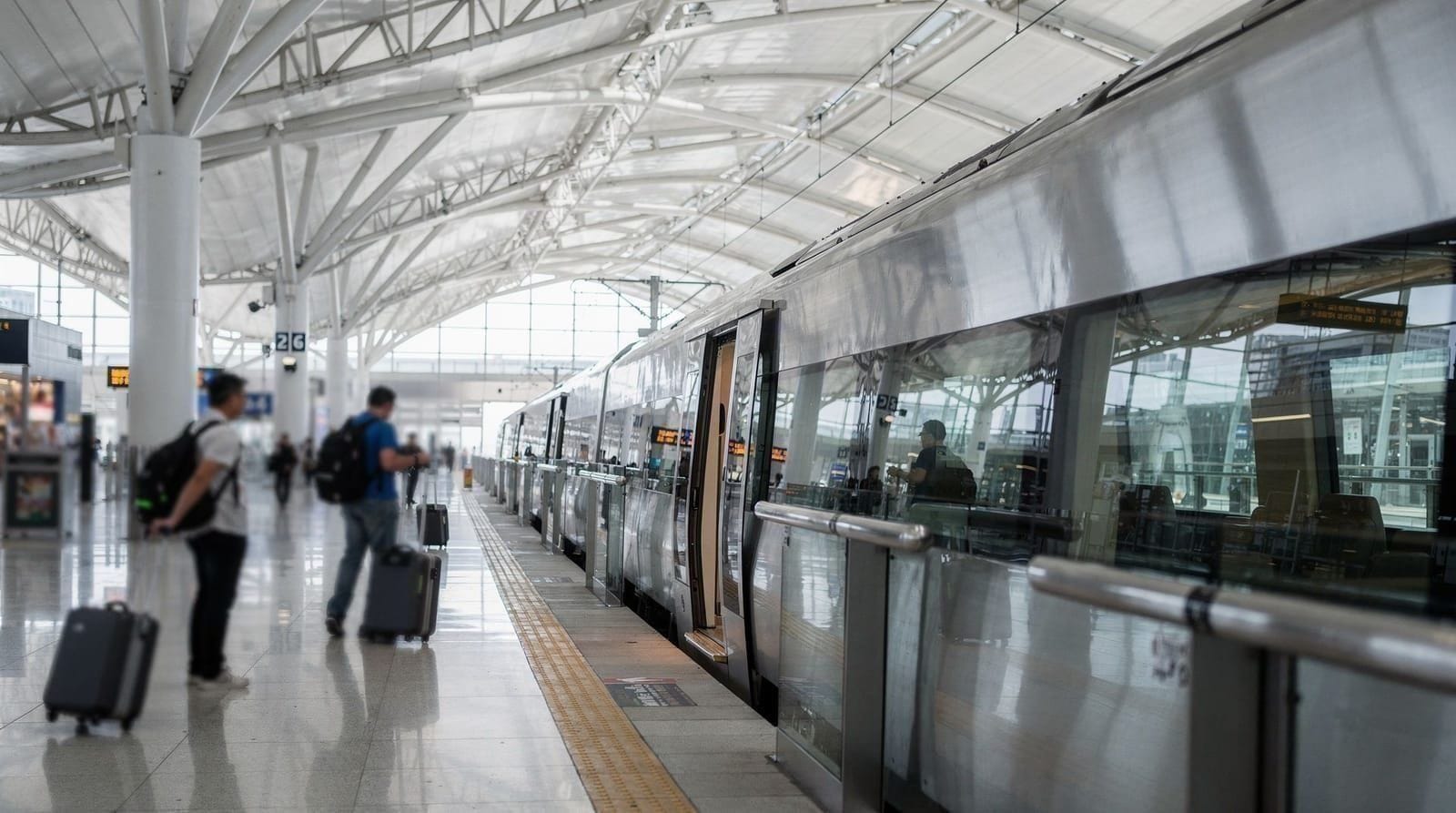
The Airport Express is the fastest and most comfortable way to travel between the city and Hong Kong International Airport. The journey from Hong Kong station (Central, beneath the IFC mall) to the airport takes 24 minutes. From Kowloon station, allow 19 minutes.
Fares from Hong Kong station: HKD 120 with Octopus, HKD 130 for a single ticket; a return ticket is HKD 215 (valid 30 days). For Kowloon station fares, see the official MTR website.
An Airport Express e-ticket can be purchased in advance, letting you board without queuing at the ticket machine on arrival — useful if you are arriving on a busy international flight.Check availabilityIn-town check-in is available at both Hong Kong and Kowloon stations for most airlines — one of the most practical features of the service. You can drop your bags and receive your boarding pass up to 24 hours before departure, then travel to the airport unencumbered.
For the full airport journey comparison including buses and taxis, see the airport to city guide.
How fares work
Octopus card — the right way to pay
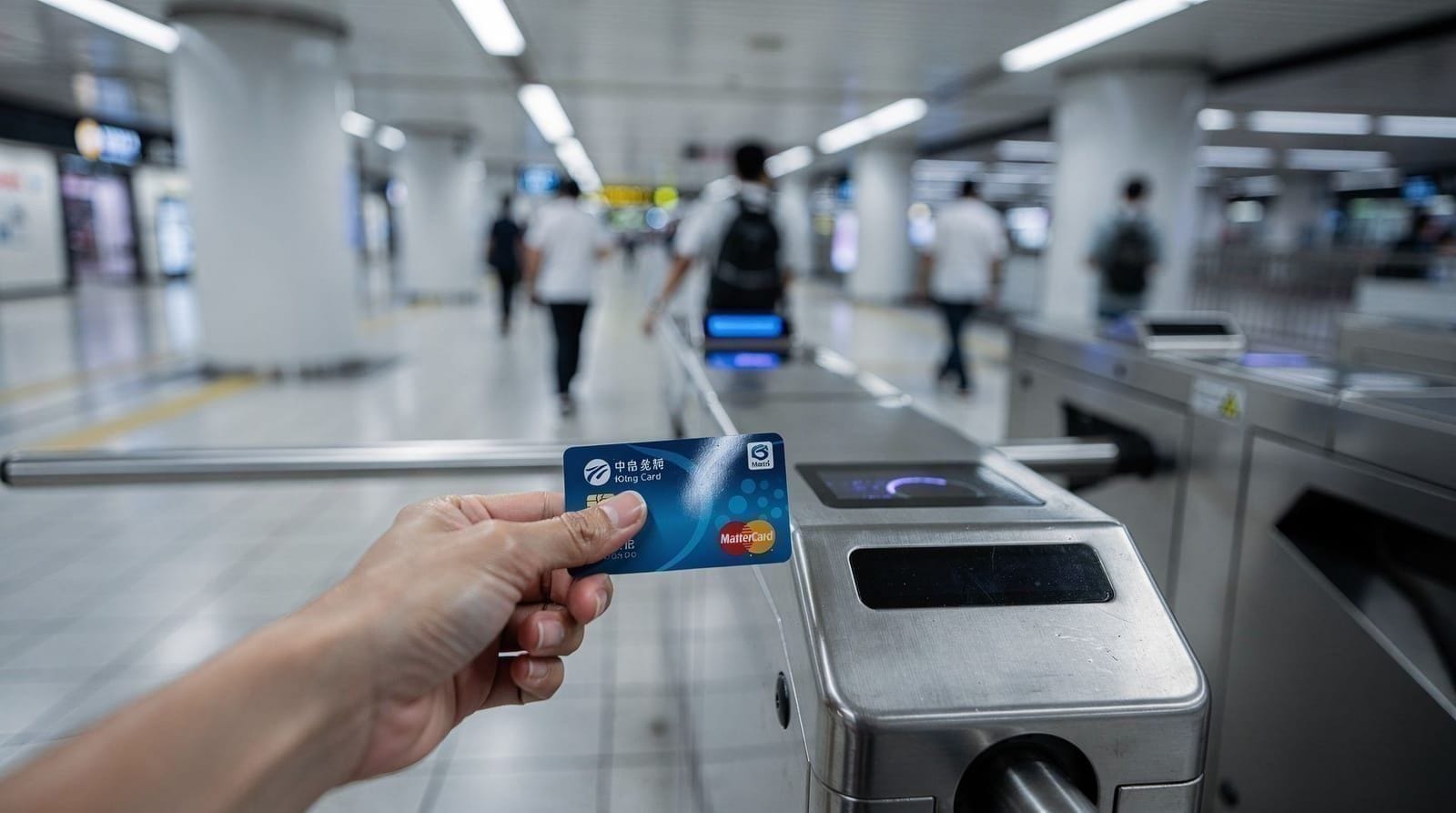
Every tourist should use an Octopus card for MTR journeys. The card works by charging you based on entry and exit stations — tap in at the start of your journey, tap out at the destination, and the correct fare is automatically deducted.
Fares range from HKD 4.0 for adjacent stations up to HKD 60.8 for the longest journeys. Most urban tourist trips cost HKD 8-15. The Octopus fare is slightly lower than the equivalent single-journey token.
Single-journey tokens
Available from ticket machines in every station — bilingual, touchscreen, accept coins and notes up to HKD 100. They cost slightly more than Octopus fares. Get an Octopus card instead for any stay longer than a day.
Tourist Day Pass
The Tourist Day Pass costs HKD 75 for adults (HKD 35 for children aged 3-11) and allows unlimited MTR rides for 24 consecutive hours from your first trip, excluding the Airport Express. Non-residents must show their passport. It is worth buying if you plan five or more MTR trips in a single day — a heavy sightseeing day that covers Tsim Sha Tsui, Mong Kok, Causeway Bay, and Central might easily hit that threshold.
Key tourist stations in detail
Central
The central hub of Hong Kong Island. Exit for the financial district, HK Central Market, Peel Street and SoHo bars, the Mid-Levels escalator, and connections to the Peak Tram lower terminus (a short walk or taxi away). The station connects the Island Line and Tsuen Wan Line. Central is also above Hong Kong station on the Airport Express.
Admiralty
One stop east of Central. Connects the Island Line, Tsuen Wan Line, and South Island Line (Ocean Park, Aberdeen). Pacific Place shopping is directly above. All connections are under cover.
Tsim Sha Tsui
The tourist hub of Kowloon. Exit for the Tsim Sha Tsui waterfront promenade, the Avenue of Stars, the History Museum, the Space Museum, the Peninsula Hotel, and Nathan Road. The Star Ferry pier to Central is a 10-minute walk from the station. Served by both the Tsuen Wan Line (Tsim Sha Tsui station) and the East Rail Line (East Tsim Sha Tsui station, connected by an underground walkway).
For what to do in the area, see the Tsim Sha Tsui destination guide.
Jordan
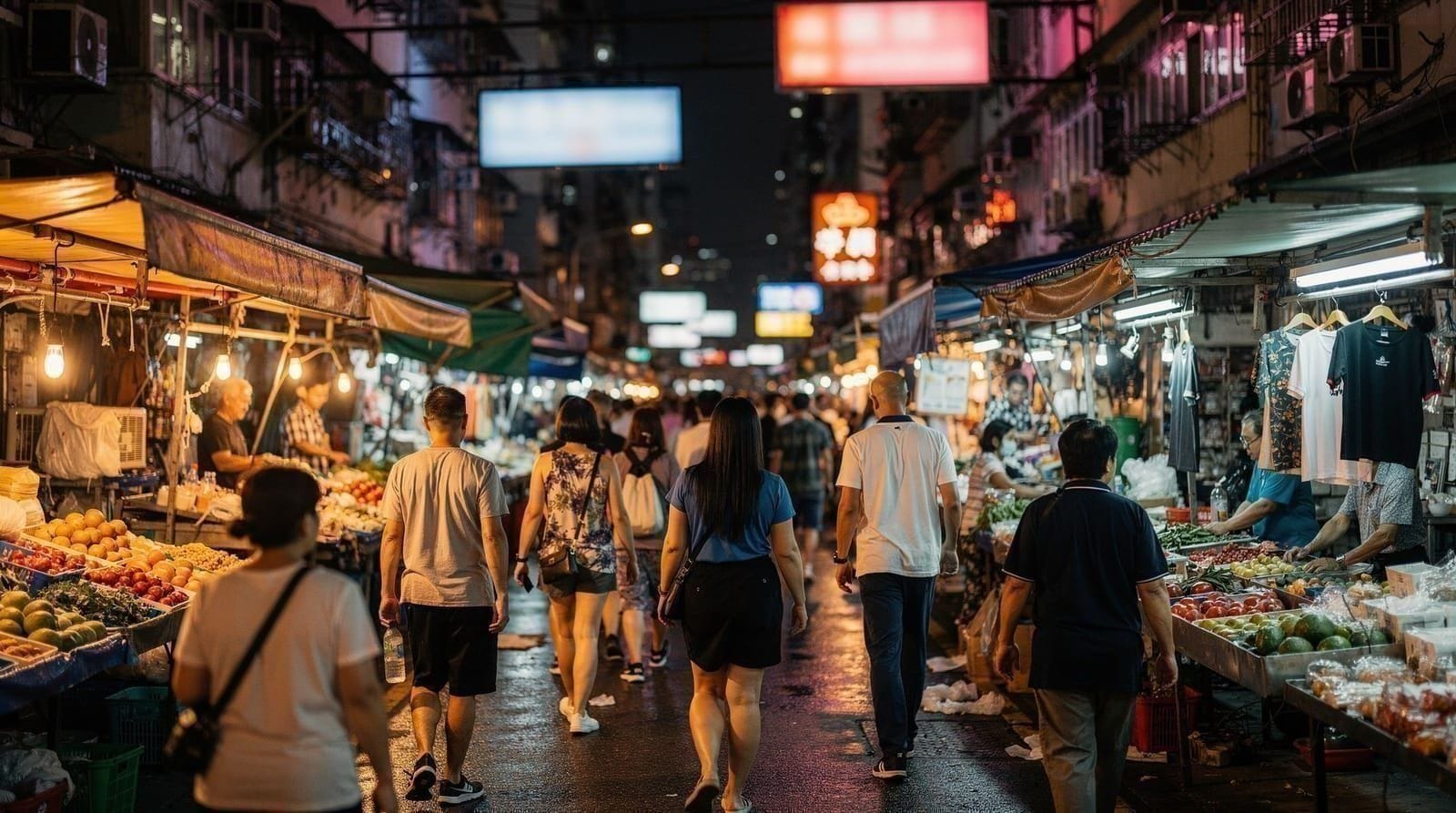
One stop north of Tsim Sha Tsui. Access point for Jade Market, Temple Street Night Market, and dai pai dong street food. Many budget guesthouses are based here.
Mong Kok
One stop north of Jordan. Mong Kok is Hong Kong’s densest, most chaotic, and most energetic neighbourhood — Ladies Market, Flower Market, Bird Garden, Goldfish Market, and excellent street food stalls are all within a short walk. Served by both the Tsuen Wan Line (Mong Kok) and Kwun Tong Line (Mong Kok East). See the Mong Kok area guide for a full breakdown.
Causeway Bay
On Hong Kong Island, east of Central and Admiralty. Causeway Bay is where locals shop — Times Square, SOGO, and dozens of smaller stores are within a few minutes’ walk. Happy Valley Racecourse is nearby. The area is dense, loud, and excellent for food. See the Causeway Bay area guide.
Sheung Wan
One stop west of Central on the Island Line. The ferry terminal for Macau ferries is a 10-minute walk from Sheung Wan station. Sheung Wan is also good for antique shops, dried seafood markets, and the PMQ creative hub. If you are going to Macau, Sheung Wan is your MTR station.
Tung Chung
The end of the Tung Chung Line, not the Airport Express. This is your station for the Ngong Ping 360 cable car and access to Lantau Island. The cable car station is a short walk from Tung Chung MTR station. From here you can also catch buses to Mui Wo ferry pier for ferries back to Central.
Navigating stations — practical tips
Signage: Exit signs use letters (A, B, C, D with sub-numbers) listed on large station maps near the turnstiles. When someone gives you directions by MTR exit, check the map before tapping out.
Interchanges: At Central and Admiralty, transfers between lines are within the same faregated area — no retapping needed. At Mong Kok, the Tsuen Wan Line (Mong Kok station) and Kwun Tong Line (Mong Kok East) are separate stations connected by an above-ground walk — exiting and re-entering means you pay for two journeys.
Lifts: Every station has lifts from street level to the platforms. Follow the wheelchair symbol signs if you have luggage or mobility needs.
Ticket gates: Tap your Octopus card on both entry and exit. If you forget to tap out, you cannot pass through the next gate until you resolve the fare at an Add-Value Machine.
Rush hours — when to avoid the busiest stations
The MTR is comfortable during most of the day. The two windows to avoid at major stations are:
Morning peak: 7:30am to 9:30am, Monday to Friday. Central, Admiralty, Tsim Sha Tsui, Causeway Bay, and Mong Kok stations see very heavy flow. Trains on the Island, Tsuen Wan, and Kwun Tong lines fill to capacity. If you must travel during this window, board from an earlier station to get a seat.
Evening peak: 5:30pm to 7:30pm, Monday to Friday. The reverse commute, with the same stations and lines affected. Friday evenings are the worst of all. If your dinner reservation or sightseeing plan takes you through Central or Tsim Sha Tsui at 6pm on a Friday, add 15-20 extra minutes to your walking time from the station.
Weekends are generally less crowded on business district lines but busier at tourist destinations such as Tung Chung (for Lantau) and Ocean Park.
Free Wi-Fi on every train and station
MTR Free Wi-Fi covers all trains and station concourses. The network is called MTR Free Wi-Fi — no login needed, connect and go. Speed is adequate for maps and messaging. Pair it with the MTR Mobile app (offline journey planning, live arrivals) and you rarely need a data connection while navigating the system.
Combining the MTR with other transport
The MTR does most of the work, but the full Hong Kong transport experience brings in other modes. From key MTR stations:
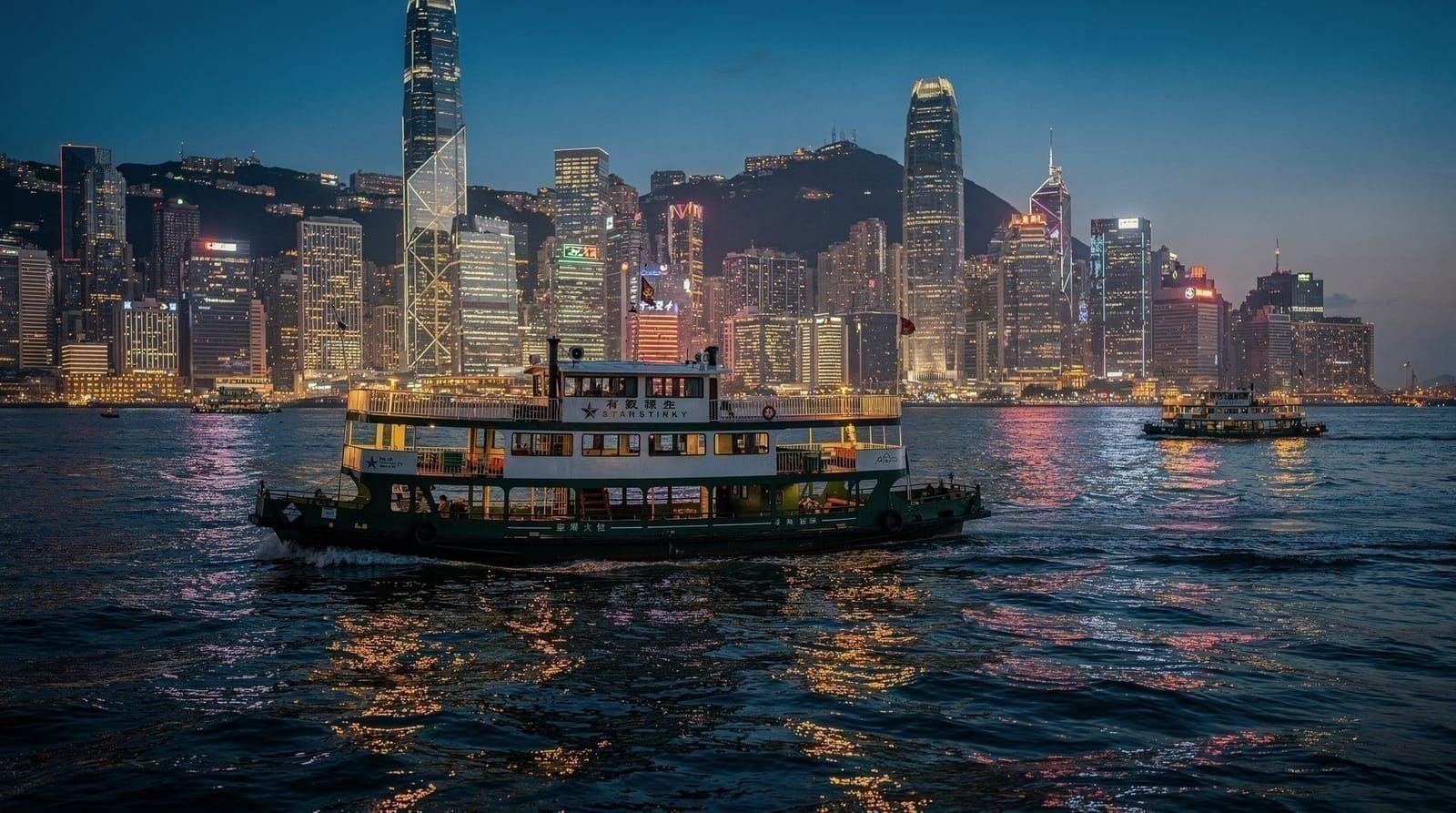
Star Ferry: From Tsim Sha Tsui MTR, walk 10 minutes to the Star Ferry Tsim Sha Tsui pier for the harbour crossing to Central. From Central MTR, the Star Ferry Central pier is a 12-minute walk through the IFC mall and the harbourfront walkway. The crossing is scenic and costs HKD 4.0-6.5 for adults depending on the deck and the day (the higher fares apply at weekends and on public holidays). See the Star Ferry and trams guide.
Trams: From any station along the Island Line, you can walk to the tram stops on the road above. Trams run along Des Voeux Road (Central and Sheung Wan) and Hennessy Road (Wan Chai and Causeway Bay) — look for the double-decker green-and-cream vehicles. HKD 3.30 for adults, flat fare regardless of distance, pay on exit (no change given).
Ferries to islands: From Sheung Wan MTR, it is a 10-minute walk to the Outlying Islands Ferry Pier for services to Cheung Chau, Lamma, and Lantau (Mui Wo). From Central, the Hong Kong-Macau Ferry Terminal is in the same waterfront area. See the Hong Kong island ferries guide.
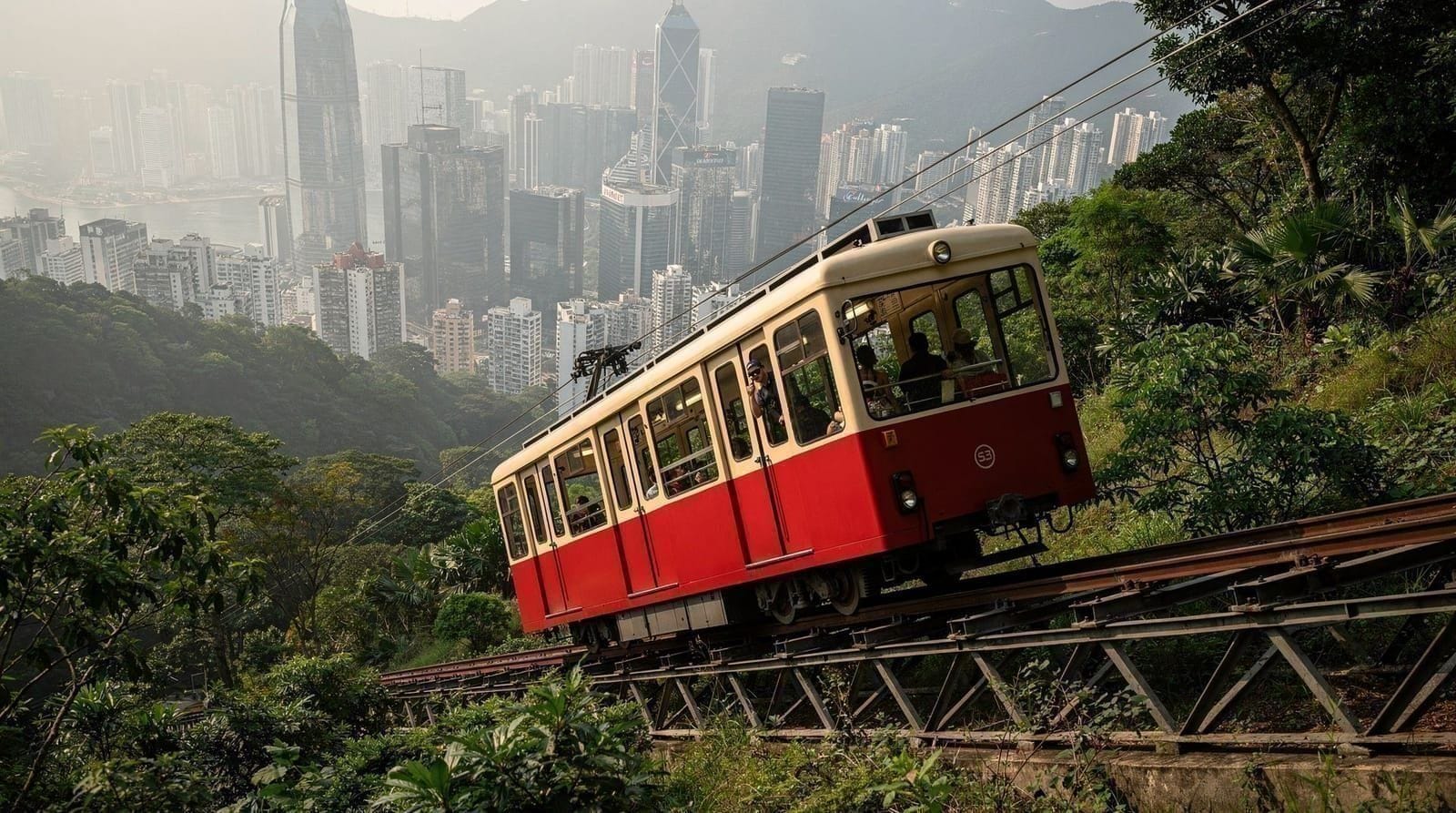
Peak Tram: The Peak Tram lower terminus in Garden Road is not directly on an MTR station but is reachable on foot from Central (about 20 minutes uphill) or by a short taxi ride from Admiralty. The tram runs up to The Peak and the Sky Terrace 428 observation deck. See the Peak Tram guide.
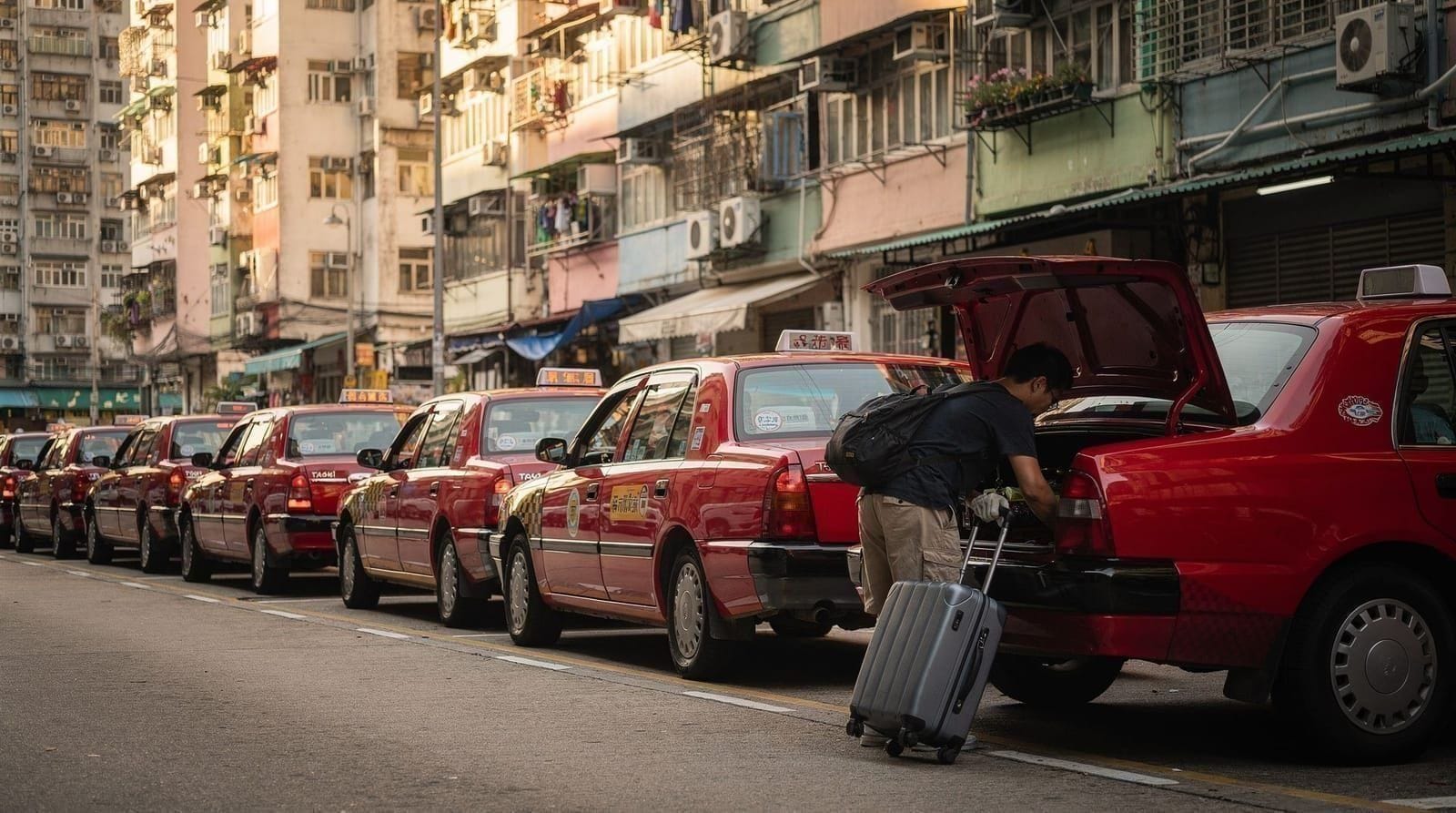
Taxis: Available outside every major MTR station. Red taxis serve the urban area, green taxis serve the New Territories, and blue taxis serve Lantau. The Hong Kong taxis guide covers fares and hailing conventions.
Guided tours that pair well with the MTR
Most Hong Kong city tours are built around the same transport nodes — Star Ferry, Peak Tram, and a couple of key MTR stations. A guided half-day or full-day tour handles the logistics while you focus on the sightseeing. This half-day city highlights tour combines the Peak Tram and Star Ferry into a single guided experience — good for first-time visitors who want the classics covered efficiently.Check availability ---
Getting the most out of the MTR as a tourist
A few habits that make a real difference:
Download the MTR Mobile app. Offline journey planning, live arrival boards, and station maps without a data connection. Find it in the App Store or Google Play.
Read platform direction signs carefully. The direction board names the terminus, not the next station. From Central, you want “Tsuen Wan” direction for Tsim Sha Tsui, not “Chai Wan.”
Stand on the right on escalators. The stand-right, walk-left rule is observed strictly. Ignore it at rush hour at your own risk.
Quiet zones exist. The first two carriages are quiet zones — no calls, no loud music. Enforced by social pressure rather than conductors, but enforced nonetheless.
Check your exit before tapping out. At large stations like Central, the wrong exit adds 10+ minutes of street walking. Scan the exit board in the concourse first.
The MTR is not just transport infrastructure in Hong Kong — it is the circulatory system of the city. Get comfortable with it on day one and the whole of Hong Kong opens up.
For everything about paying your way through it, see the Octopus card guide. For a broader picture of how the MTR fits into a multi-day itinerary, the Hong Kong 1-day itinerary and Hong Kong and Macau 4-day itinerary both plan transport around the MTR network.
First-timer confidence checklist
If it’s your first time using a foreign metro system, a few quick habits make the MTR feel effortless within a day. Load your Octopus card with more value than you think you need — running low mid-journey means a stop at an Add-Value Machine, which is easy but breaks your momentum. Screenshot or bookmark the line map before you leave your hotel’s Wi-Fi, since the MTR Mobile app works fine offline once downloaded but needs an initial connection. And don’t overthink wrong turns — because the system is so dense, a wrong platform or a missed interchange rarely costs more than five minutes of backtracking, which is a low-stakes way to learn the network on day one.
MTR versus other ways to get around
For most journeys within the urban core, the MTR beats taxis and buses on speed and predictability — it doesn’t sit in traffic, and it runs to a schedule you can plan around. Taxis win for late-night trips after the MTR closes, for groups of three or four splitting a fare, or for door-to-door convenience with luggage; see the Hong Kong taxis guide for fares and hailing.
Buses fill gaps the MTR doesn’t reach — parts of Stanley, Repulse Bay, and Sai Kung, for instance — and are worth using for the view, since much of Hong Kong’s bus network runs along scenic coastal roads that the underground MTR simply bypasses. For most first-time visitors, though, defaulting to the MTR and only switching to a taxi or bus for a specific reason is the simplest approach.
Travelling with luggage on the MTR
The MTR is a practical way to reach the airport or move between hotels with bags, but a few details help. Lifts are available at every station, so you’re never forced onto an escalator with a suitcase — look for the wheelchair-access signage, which also marks the lift route.
During rush hour, large luggage in a packed carriage is genuinely awkward for everyone; if you’re arriving or departing during the 7:30–9:30am or 5:30–7:30pm windows, expect a squeeze, or consider timing your journey around them if your flight schedule allows. In-town check-in at Hong Kong and Kowloon stations (paired with the Airport Express) is the single most useful luggage feature in the system — checking bags up to 24 hours before your flight means you travel to the airport with nothing to carry.
Accessibility on the MTR
Every MTR station has step-free access via lifts from street level to the platform, and staff will assist with boarding ramps for wheelchair users on request at the platform gate line. Priority seating is marked near carriage doors, and audio and visual next-station announcements are consistent throughout the system. Larger interchange stations (Central, Admiralty, Mong Kok) can involve long lift-to-lift transfers between lines, so allow extra time if mobility is a factor. Staff at the Customer Service counters, found near the ticket gates in every station, can advise on the most step-free route for a specific journey if you’re unsure.
Frequently asked questions about Hong Kong MTR guide — lines, fares, and tourist tips
How much does the MTR cost in Hong Kong?
What time does the MTR open and close?
Which MTR line goes to the airport?
How do I get to Shenzhen by MTR?
What is the quietest time to use the MTR?
Is there Wi-Fi on the Hong Kong MTR?
Are there quiet zones on MTR trains?
Top experiences
Bookable activities with verified prices and instant confirmation on GetYourGuide.