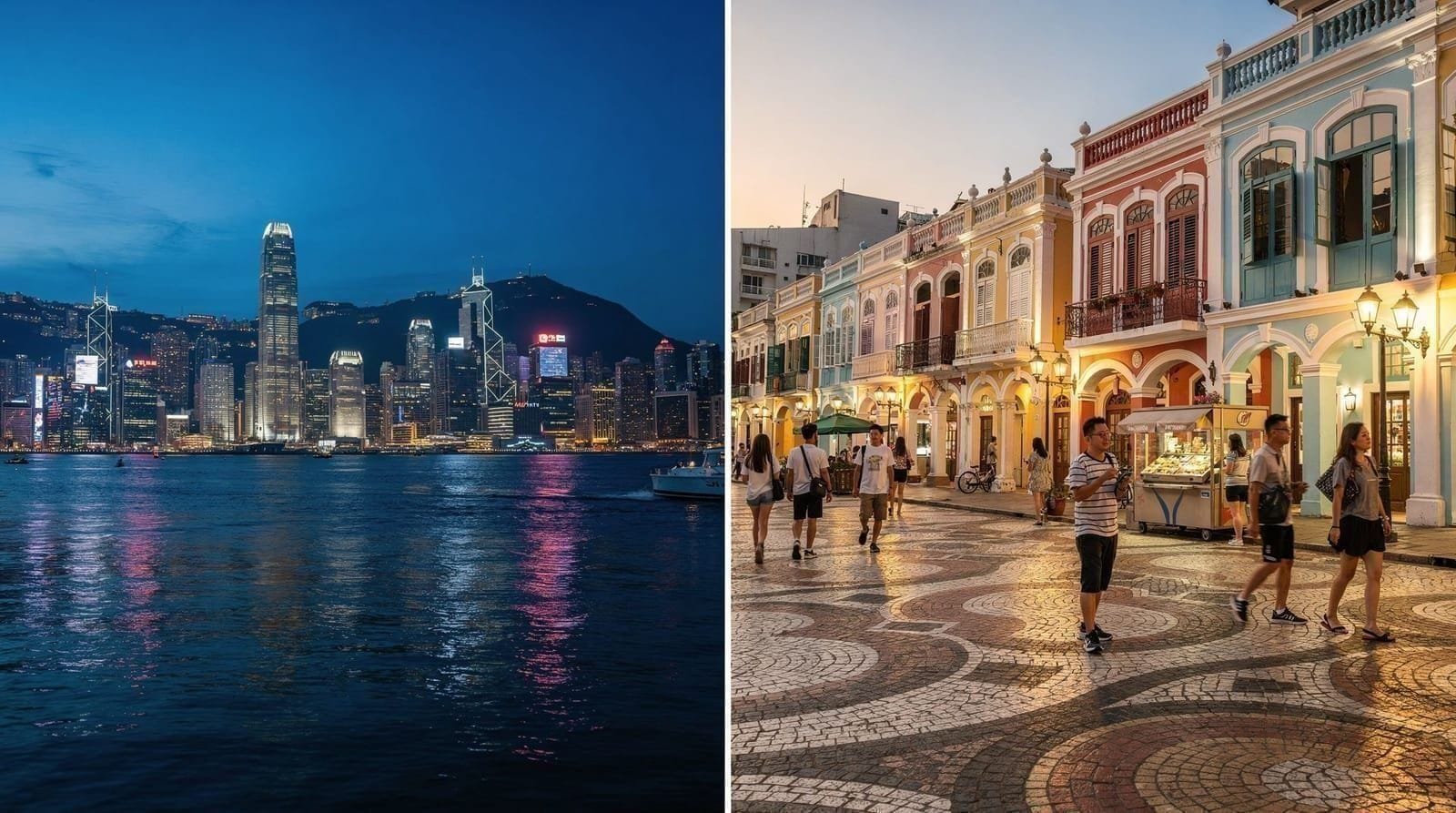
Getting from Hong Kong to Macau — ferry, bridge, and airport connections
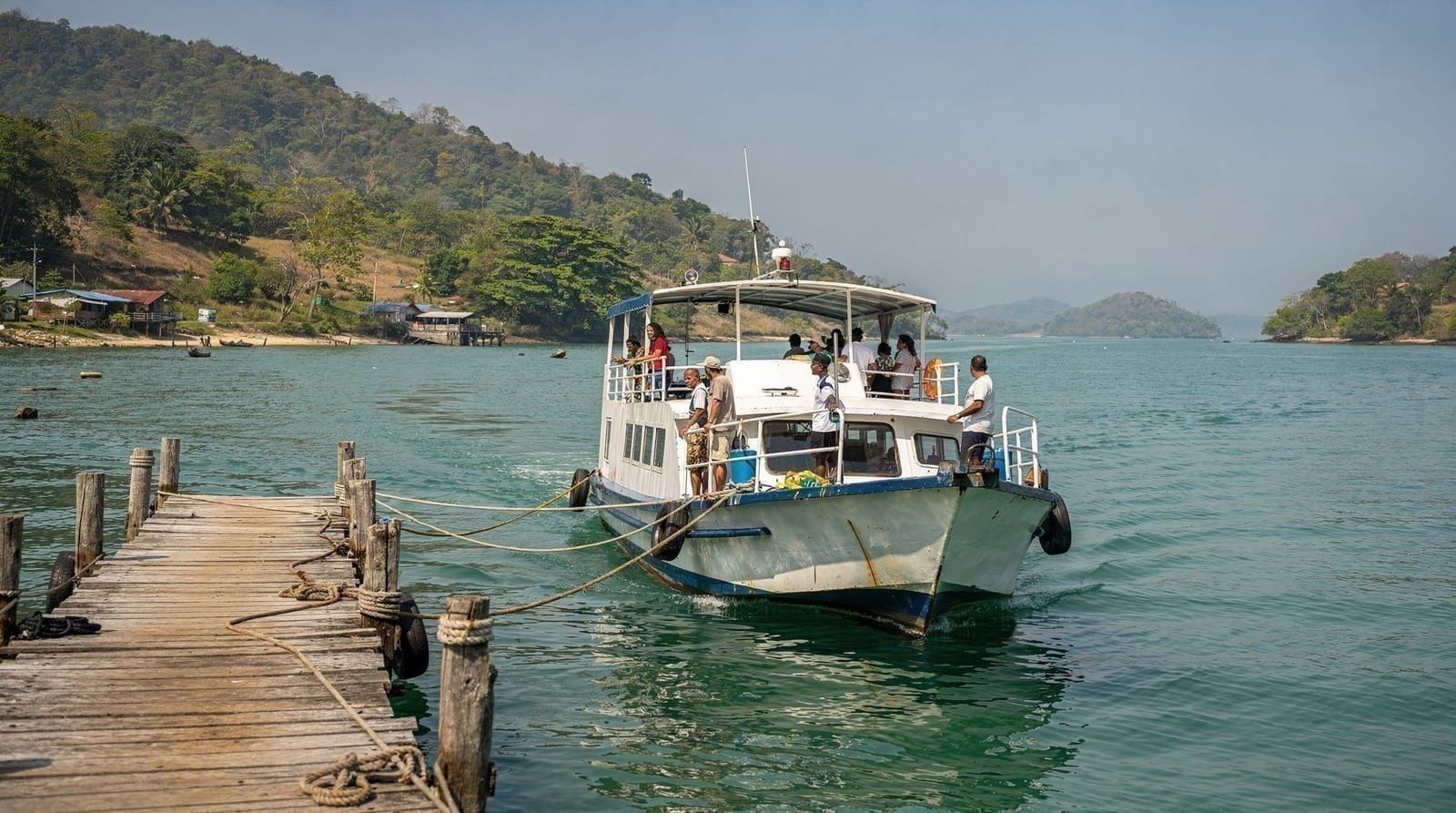
Hong Kong: Ferry journey between Hong Kong Island and Macau
How do you get from Hong Kong to Macau?
Take a TurboJet or Cotai Jet ferry from Sheung Wan or Tsim Sha Tsui — the crossing takes 55-65 minutes and costs HKD 194-212 economy one way. Alternatively, the HZMB bridge bus from the Hong Kong Port takes 40-50 minutes and costs HKD 65-70. Both options run throughout the day and into the night.
Two routes across the Pearl River Estuary
Macau sits 60 kilometres west of Hong Kong across the Pearl River Estuary — close enough for a comfortable day trip, far enough to feel like a genuinely different place. The two territories are connected by two main routes: a fleet of high-speed ferries that have been making the crossing for decades, and the extraordinary Hong Kong-Zhuhai-Macau Bridge (HZMB), which opened in 2018 and now carries bus passengers across in 40-50 minutes.
Most travellers take the ferry. It is fast, convenient, leaves from city-centre terminals, and requires no additional transit. The bridge is cheaper and a good option for those prone to seasickness, but involves an extra step to reach the terminal. A third option — arriving by ferry directly from Hong Kong airport without entering the city — suits travellers connecting from an international flight.
This guide covers all three in detail, with real prices, terminal locations, practical tips for the border crossing, and advice on what to do once you arrive.
| Fastest terminal | Sheung Wan (Hong Kong Island) or Tsim Sha Tsui (Kowloon) |
| Crossing time | 40-65 minutes depending on route |
| Cost | HKD 65-70 (bridge bus) to HKD 194-212 (ferry) |
| Visa | None needed for most Western passports, 30-90 days |
| Currency | HKD accepted almost everywhere in Macau |
| Booking | Walk-up usually fine; book ahead for weekends/Golden Week |
Option 1: Ferry from Hong Kong — the most popular crossing
Journey time: 55-65 minutes
Cost: HKD 194-212 economy one way (day, TurboJet); other classes: see the operator’s website
Frequency: every 15-30 minutes at peak times
Operating hours: roughly 7am to 11pm (some overnight sailings available)
Good for: most travellers, especially those based in Central or Kowloon
The ferry crossing between Hong Kong and Macau is one of the most heavily trafficked sea routes in the world. Two main operators — TurboJet and Cotai Jet — run high-speed hydrofoils and jetcats throughout the day, with departures frequent enough that you rarely need to plan your exact sailing time far in advance (though weekends are the exception — more on that below).
Booking your Hong Kong to Macau ferry ticket in advance confirms your seat and avoids the terminal queue, particularly useful for weekend and holiday crossings.Check availabilitySheung Wan Macau Ferry Terminal (Hong Kong Island)
The Sheung Wan terminal — also called the Macau Ferry Terminal or Shun Tak Centre — is the main departure point for most travellers staying on Hong Kong Island. It is located in Sheung Wan district and sits directly above Sheung Wan MTR station on the Island Line, making it one of the most accessible ferry terminals in Asia. Walk out of the MTR, follow signs through the Shun Tak Centre shopping mall, and you are at the check-in counters within five minutes.
Ferries from here go to Macau Outer Harbour (the terminal on the Macau Peninsula side), which is convenient for reaching the historic centre, Senado Square, and the casino strip on the peninsula. Taxis, buses, and pedicabs are available outside the terminal on arrival.
TurboJet runs most of the sailings from Sheung Wan. TurboJet economy class (day sailings) costs HKD 194 on weekdays and HKD 212 on weekends and public holidays. Night sailings may carry a surcharge, and Super Class seats — which are wider, quieter, and have better service — cost more; see current fares on the operator’s official website.
Tsim Sha Tsui China Ferry Terminal (Kowloon)
The China Ferry Terminal in Tsim Sha Tsui is the better departure point for travellers staying in Kowloon. It is located on Canton Road, a 10-15 minute walk from the Tsim Sha Tsui MTR station or a short taxi ride from most Kowloon hotels. This terminal serves Cotai Jet, which runs to Taipa Ferry Terminal on Cotai Island — the newer reclaimed land area that connects Taipa and Coloane and is home to the Venetian, MGM Cotai, Galaxy, and most of the large integrated resort casinos.
If your main interest in Macau is the Cotai Strip rather than the historic peninsula, departing from Tsim Sha Tsui and arriving at Taipa Terminal puts you within walking distance of the major casino hotels without any additional transit. Shuttle buses run from all the major casino resorts to both Macau ferry terminals — it is one of the better-organised transit systems in the region.
Fares on Cotai Jet are comparable to TurboJet: in the same range for economy, with Cotai Class as their version of premium seating; see current fares on the operator’s official website.
What to expect at the terminal
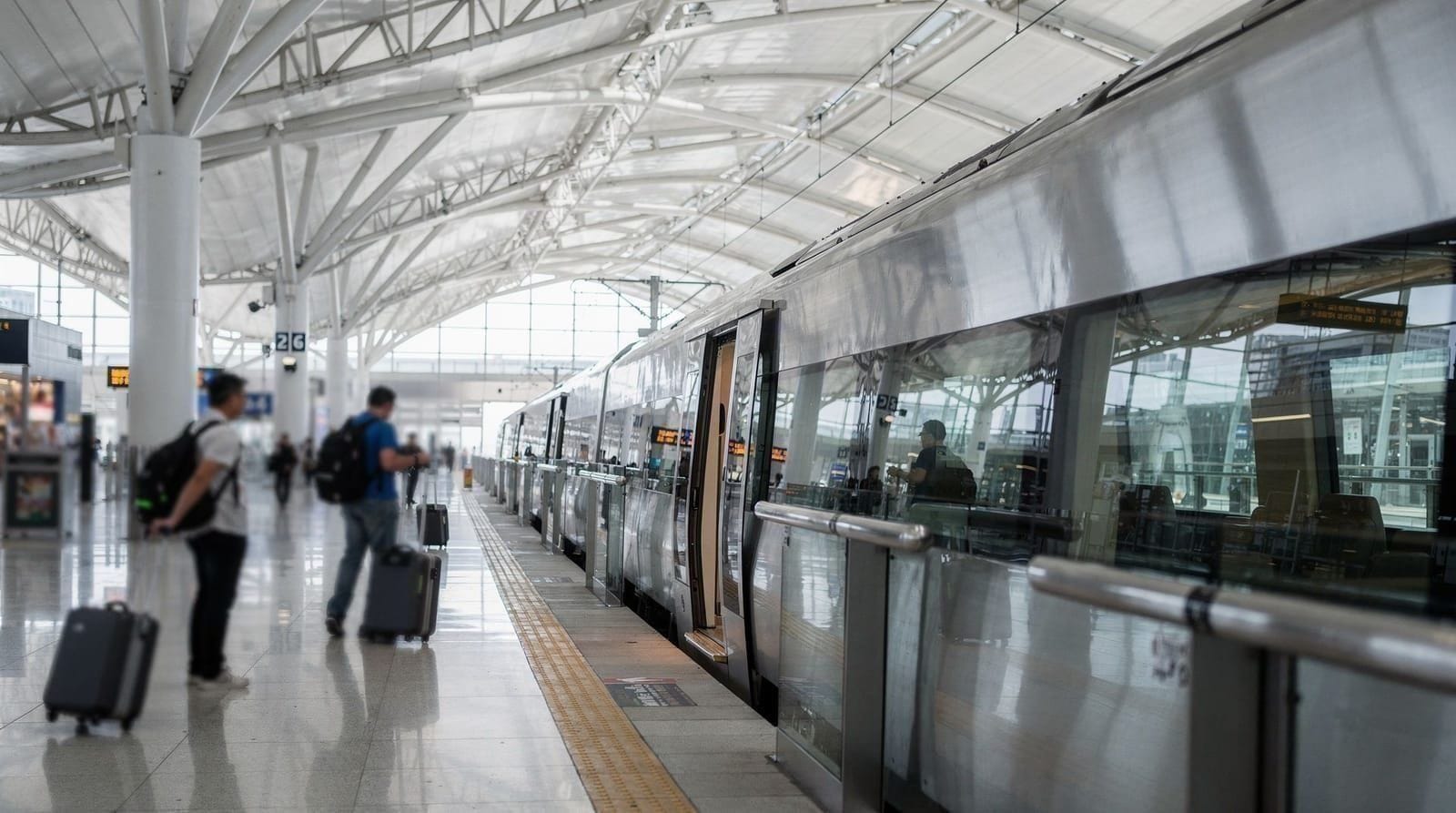
Arrive 30-45 minutes before your intended sailing. The check-in process involves scanning your ticket or booking confirmation, handing over your passport for departure stamp, and waiting in the holding area before boarding. The actual boarding and departure is efficient — Hong Kong runs a very well-organised ferry operation.
On the Macau side, immigration involves your passport being scanned and stamped. It typically takes 10-20 minutes during off-peak times but can stretch to 45 minutes when multiple ferries arrive simultaneously during busy periods such as Golden Week or long weekends.
Seasickness note: The Pearl River Estuary crossing is generally calm, but it can be choppy during typhoon season (May-October) and in winter months when cold fronts move through. If you are prone to seasickness, sit near the middle of the vessel, face forward, and consider taking medication in advance. The crossing rarely rough enough to cause serious discomfort, but sensitive travellers should be prepared.
Payment: Octopus card is not accepted at ferry terminals. Pay with cash (HKD or MOP) or a credit card at the ticket counters or self-service machines. Most operators also sell tickets through their apps and websites, which is the most convenient option for advance booking.
Option 2: HZMB bridge bus — cheaper and no seasickness
Journey time: 40-50 minutes including border crossing
Cost: HKD 65-70 one way (bus fare only)
Access: free shuttle bus from Sunny Bay MTR station to Hong Kong Port
Good for: budget travellers, those prone to seasickness, travellers connecting to Zhuhai
The Hong Kong-Zhuhai-Macau Bridge is an engineering achievement of remarkable scale — a 55-kilometre crossing that links the three territories via a combination of viaduct, artificial islands, and undersea tunnel. Passenger vehicles cross via the bridge, though private cross-boundary vehicles require special permits. The practical option for tourists is the cross-boundary coach bus service.
A private limo transfer via the HZMB takes you door to door between Hong Kong and Macau in comfort, with no bus queues or vehicle changes at the border.Check availabilityGetting to the Hong Kong Port
The bridge departure point is the Hong Kong Port, located on a reclaimed artificial island near Lantau. To reach it from the city:
- Take the MTR to Sunny Bay station on the Tung Chung Line or Disneyland Resort Line
- Board the free shuttle bus from Sunny Bay to the Hong Kong Port (runs frequently, 10-15 minutes)
- Clear Hong Kong exit immigration at the Hong Kong Port
- Board a cross-boundary coach bus to Macau Port
Alternatively, a taxi from Central to Hong Kong Port costs approximately HKD 200-280 and saves the MTR step if you have heavy luggage. Some private transfer operators also include HZMB transit in their packages.
Cross-boundary coaches
Several operators run coach services across the bridge including Golden Dragon, Transmac, and One Bus. Buses depart roughly every 10-20 minutes during operating hours and take 30-40 minutes to reach the Macau Border Gate (Portas do Cerco) on the Macau Peninsula, or continue to the Cotai Lotus Bridge terminal for the Cotai Strip.
The bus fare is around HKD 65-70 one way. At the Macau end, you clear Macau immigration before exiting to taxis and buses. The Macau Border Gate area has bus connections to most parts of Macau, and taxis are readily available.
HZMB: honest assessment
The bridge route costs roughly one-third the price of the ferry. The crossing itself is smooth — no waves, no motion sickness, good views of the Pearl River and the remarkable bridge structure. The main drawback is the additional step required to reach Hong Kong Port, which adds 20-30 minutes compared to the city-centre ferry terminals if you are already near an MTR station. On net, the total door-to-door time from most hotels is roughly similar to the ferry once you account for the shuttle bus.
For travellers staying near Sunny Bay (such as those visiting Disneyland Hong Kong or hotels in that area), the bridge is actually the most convenient option. For those based in Central, Wan Chai, or central Kowloon, the ferry terminal is simpler.
The bridge also connects to Zhuhai, China — a consideration if you are making a multi-destination trip across the Pearl River Delta. Note that entering Zhuhai requires a valid China mainland visa, whereas Macau does not.
Option 3: Airport Skypier — for arrivals from international flights
Journey time: 55-65 minutes ferry crossing
Cost: similar to standard TurboJet fares
Access: within the restricted zone of HKIA; no Hong Kong immigration required
Good for: travellers flying into HKIA whose first stop is Macau
If your international flight lands at Hong Kong International Airport and your first destination is Macau, the Airport Skypier is a remarkable convenience that most travellers do not know exists. Located within the restricted (post-security) area of HKIA, the Skypier operates ferry connections to Macau, Guangzhou, Zhongshan, Zhuhai, and other Pearl River Delta ports.
The process: after landing and collecting your bags, you proceed to the Skypier check-in counter in the arrival area rather than through Hong Kong immigration. You clear Macau immigration at the airport, board the ferry, and arrive in Macau — without ever officially entering Hong Kong.
This is a genuine time-saver if Macau is your first port of call. It eliminates the need to take the Airport Express into the city, find your hotel, and then head back to a ferry terminal the next day. Check Skypier schedules and book in advance, as sailings are less frequent than city-centre ferries and capacity is shared among multiple destinations.
The return journey works in the same way — you can depart Macau by ferry to the Skypier and connect to your outbound flight without passing through Hong Kong city at all, if your itinerary requires it.
For travellers who plan to spend time in both Hong Kong and Macau during the same trip, the airport to city guide covers all the transport options from HKIA to Hong Kong’s city centre in detail.
SIM cards, connectivity, and phone use in Macau
Hong Kong mobile plans generally do not cover Macau automatically — check your specific SIM or eSIM’s roaming terms before you cross, since data charges can be steep if roaming is not included. Many Hong Kong tourist SIM cards and eSIMs now bundle Macau (and sometimes mainland China) coverage; if yours does not, Macau airport, ferry terminals, and convenience stores sell local prepaid SIMs cheaply, and most casino hotels offer free WiFi in public areas. If you only need maps and messaging for a single day trip, downloading offline maps of central Macau before you leave Hong Kong is a reliable backup regardless of connectivity.
If you’d rather sort connectivity before you land, a bundled Hong Kong and Macau eSIM covers both territories on a single plan.
Hong Kong and Macau eSIM data planWhat to know about Macau immigration and entry
Passport and visa requirements
Macau has its own Special Administrative Region status, separate from both Hong Kong and mainland China, with its own immigration authority. Citizens of the EU, UK, USA, Canada, Australia, New Zealand, Japan, South Korea, and most other Western countries can enter Macau visa-free for 30 to 90 days depending on nationality. British nationals receive 90 days; Americans 30 days. Always verify your specific country’s entitlement before you travel, as conditions can change.
Crucially, entering Macau does not require a China mainland visa. The two systems are completely independent.
At the border
Macau immigration at the ferry terminal or bridge port involves scanning your passport and having it stamped with an entry chop. The process is straightforward and generally fast except during peak periods. Both the Outer Harbour terminal and Taipa terminal have immigration counters immediately after disembarking.
If you are crossing on the same day as a major public holiday in China, Hong Kong, or Macau — particularly Golden Week in October, Chinese New Year, or Macau’s own public holidays — expect queues of 30-60 minutes at both the ferry terminal and the bridge border. Plan your return journey with buffer time on these days.
Customs and what you can bring back
Standard duty-free allowances apply when returning to Hong Kong from Macau, covering alcohol and tobacco within normal personal limits — most day-trippers carrying souvenirs, egg tarts, or a bottle of Portuguese wine have nothing to declare. Large cash amounts crossing either border should be declared if above the threshold set by each jurisdiction; this rarely affects typical tourists but is worth knowing if you plan to visit the casinos with significant funds.
Currency
Macau’s official currency is the Macanese Pataca (MOP). However, Hong Kong dollars are accepted almost universally at a roughly 1:1 exchange rate. In practice, most restaurants, shops, taxis, and even casino cage operations accept HKD without hesitation. Change is often given in MOP, which you can spend freely or change back at any bank or at the ferry terminal on your return.
There is no need to change currency specifically for a day trip. Bring HKD and you will be fine for everything except very small local transactions at market stalls, where MOP coins are more useful. Credit cards are accepted at hotels and most tourist-facing restaurants. ATMs are widely available at the ferry terminals and throughout the historic centre and Cotai if you need cash on arrival, and most dispense both HKD and MOP.
Arriving in Macau — getting around
From the Outer Harbour terminal (Sheung Wan ferries)
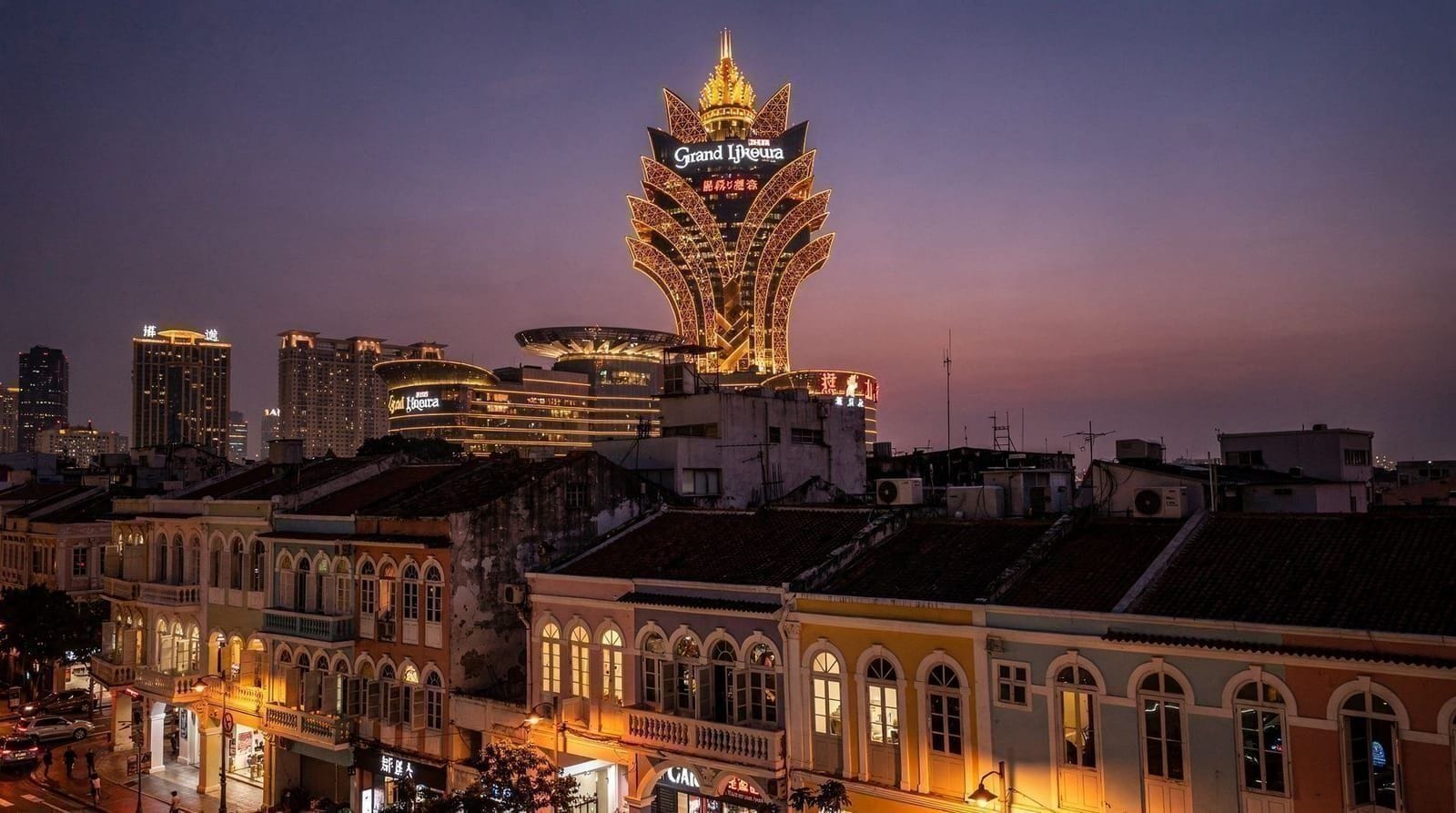
Taxis are available immediately outside the terminal building and cost MOP 20-50 for most destinations on the Macau Peninsula — the historic centre, Senado Square, the Ruins of St Paul, and the casino strip along Avenida da Amizade are all within 10-15 minutes. Free shuttle buses from the major casino hotels (Grand Lisboa, Wynn, MGM) also stop near the terminal.
From Taipa Ferry Terminal (Cotai Jet)
This terminal sits on Cotai, the reclaimed strip between the two southern islands. The Venetian Macau, Galaxy, City of Dreams, and other Cotai Strip resorts are within walking distance or a very short taxi ride. If you plan to spend your day in the historic peninsula area, allow an extra 15-20 minutes by taxi (MOP 50-80) or take a casino shuttle bus to the Lisboa area, from which the historic sites are walkable.
Buses in Macau
Macau operates an inexpensive public bus network for MOP 6 per journey flat fare. Routes 3 and 3A connect the Outer Harbour terminal to Senado Square and the historic centre. Route 26 connects the Taipa terminal towards the Cotai casinos. For a day trip with limited stops, taxis are often more practical given the affordable fares.
Casino shuttles
Every major casino in Macau operates free shuttle buses to and from both ferry terminals, the border gates, and the airport. These are public buses in all but name — you do not need to be a casino guest to board. They are extremely useful for getting between the peninsula and Cotai without paying for taxis. Look for the branded bus shelters outside each terminal and check the schedule board.
Evening and night crossings
Both the ferry and bridge bus operate into the late evening, typically with last departures from Macau at 11pm-midnight, with some overnight sailings by TurboJet on a reduced schedule. If you plan to stay for dinner and the evening atmosphere, check the last ferry departure time when you buy your outbound ticket, and build in at least 30-40 minutes of buffer for immigration queues on the return.
Night sailings may carry a surcharge on the ferry (see the operator’s website). The HZMB Gold Bus shuttle runs 24 hours a day, at HKD 70 at night instead of HKD 65 by day.
If your plan is a late return, double-check the last sailing or coach time on the day itself rather than relying on a schedule you looked up weeks earlier — Macau operators occasionally trim evening frequency outside peak season, and missing the last direct crossing means an unplanned overnight or a much longer route via a different terminal.
For an evening experience that builds in both a dinner and the HZMB crossing, some organised tours combine the two sides of the trip into a single package: This evening Macau tour combines a dinner experience with HZMB bridge transfers, making the most of the dramatic nighttime bridge crossing and Macau’s illuminated skyline.Check availability ---
What to do once you are in Macau
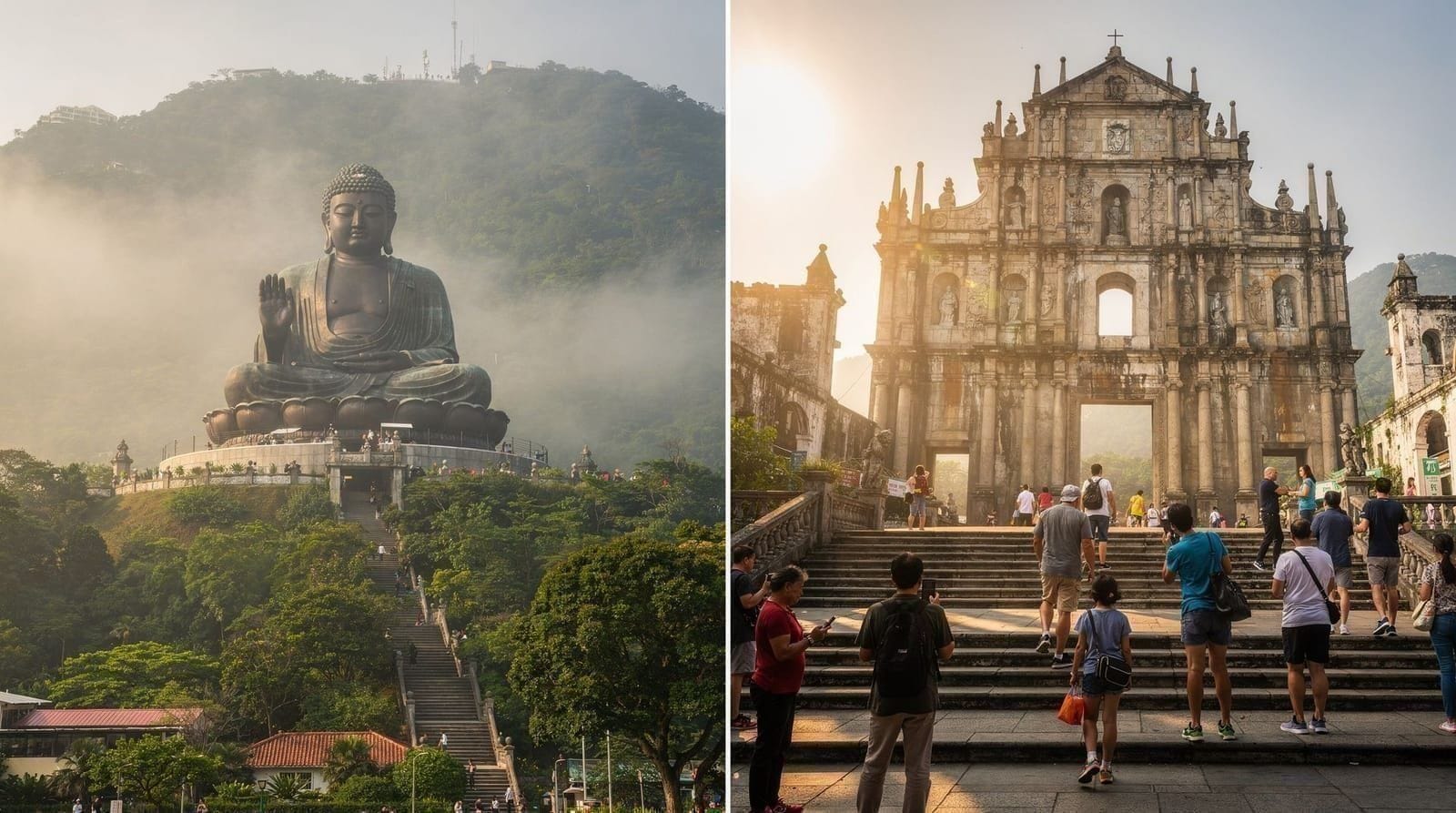
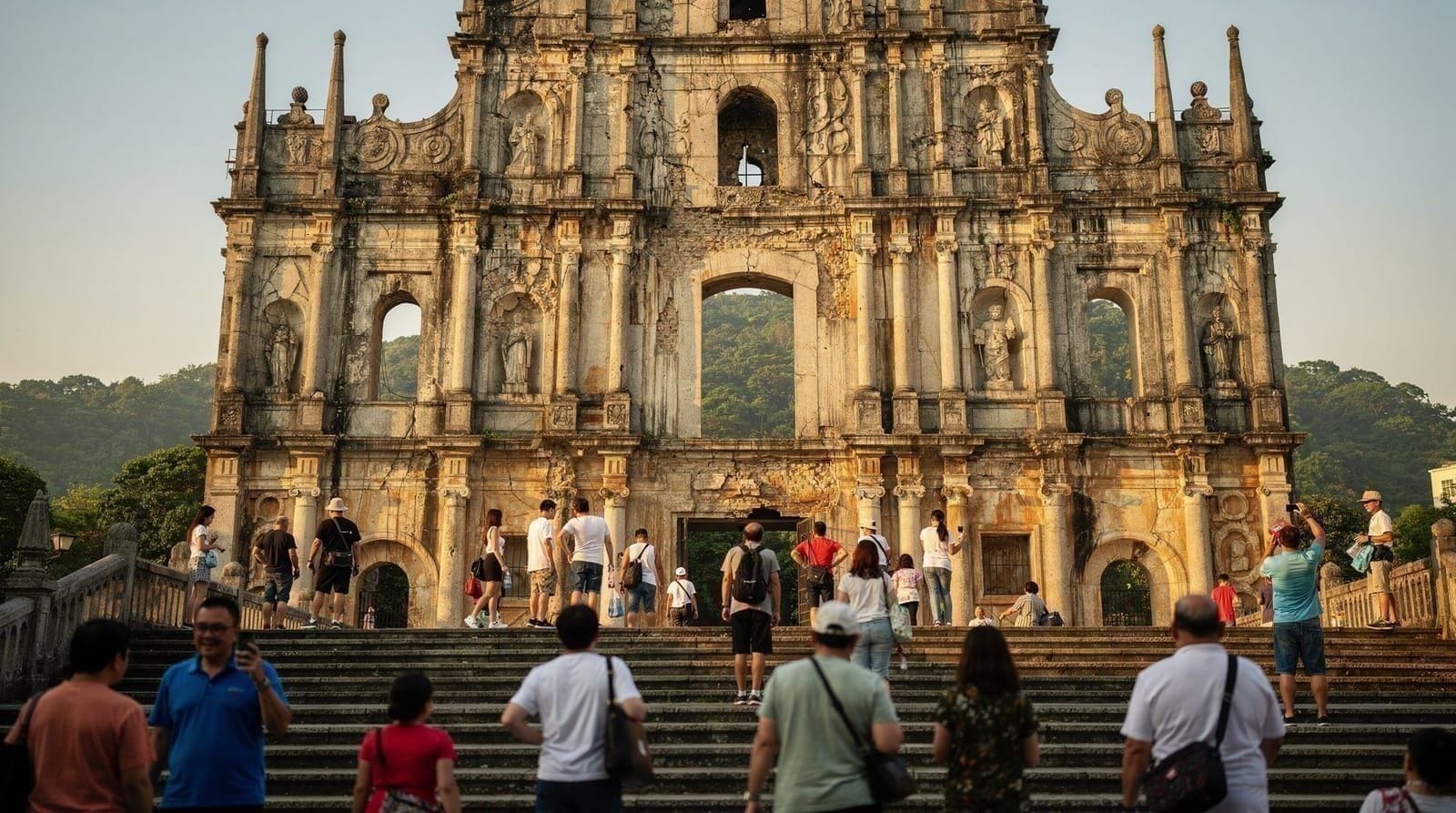
A full day gives you enough time to cover the essential highlights: the Ruins of St Paul — the iconic facade of a 17th-century Jesuit church and the symbolic image of Macau — Senado Square with its distinctive wave-pattern cobblestones and Portuguese-style buildings, the Monte Fortress for panoramic views, and at least an hour wandering the quieter lanes of the historic centre.
Taipa Village, a 15-minute taxi ride from the peninsula, is worth the detour — smaller, quieter, and with some of the best traditional Macanese food available at the small restaurants on Rua do Cunha. Macanese cuisine blends Cantonese and Portuguese influences in a way that is genuinely distinctive: pork chop buns, African chicken, minchi (minced meat with potatoes and soy), and the famous egg tarts are all worth seeking out.
The casinos on both the peninsula and Cotai are an attraction in their own right for the spectacle, even if you have no intention of gambling. The Venetian Macau is one of the largest buildings in the world and is free to walk through, with an indoor canal and gondoliers making for genuinely surreal sightseeing.
For a complete planning guide to the destination, see the Macau day trip guide and the Macau destination overview.
If you are spending multiple days between Hong Kong and Macau, the 4-day Hong Kong and Macau itinerary maps out a complete route that makes the most of both territories.
Day trip vs overnight stay
Macau rewards a longer stay more than almost any day trip from Hong Kong. A single day is enough to form a strong impression and see the main sights, but a night in Macau lets you experience the city after the day-trip crowds thin out, have a proper sit-down dinner at one of the historic restaurants, and explore at a slower pace.
Casino hotels on Cotai frequently offer competitive rates because they want guests in the building. If you are interested in an overnight, compare rates at the integrated resorts — you may find a room at the Venetian or Galaxy costs less than you would expect, with all the spectacle of Cotai included as a bonus.
That said, if you are working through a Hong Kong itinerary and fitting Macau into a single day, the crossing is absolutely worth making. It is one of the most distinctive day trips in Asia and unlike anywhere else on earth.
For the broader picture of what is possible in a day from Hong Kong, the best day trips from Hong Kong guide compares Macau against the outlying islands, Lantau, and Shenzhen so you can plan your time across multiple days.
Travelling with luggage or as a family
If you are crossing to Macau mid-trip with full luggage — for example, flying out of Macau International Airport instead of returning to HKIA — both the ferry and the bridge bus handle bags without issue. Ferries have a dedicated luggage storage area near the seating deck; keep valuables with you rather than in stored bags. The HZMB bridge buses have underseat and overhead space plus a small hold for larger suitcases, though space is tighter than on the ferry, so travellers with several large bags often find the ferry more comfortable.
For families with young children, the ferry’s steadier ride and shorter overall journey (no shuttle-bus transfer to reach the terminal) tends to work better than the HZMB route, particularly with a stroller in tow — lifts and escalators are available at Sheung Wan and Tsim Sha Tsui terminals, but the Sunny Bay shuttle bus adds an extra boarding and disembarking step. If your trip already includes Hong Kong Disneyland, note that Sunny Bay station — the gateway to the HZMB bridge bus — is one stop from the Disneyland Resort Line, so combining a Disneyland day with a bridge crossing the same trip is logistically easy even if not on the same day.
Which route should you choose?
There is no single “best” route — it depends on where you are staying, your budget, and whether seasickness is a concern. Use this comparison to decide quickly:
| Route | Time | Cost (one way) | Best for |
|---|---|---|---|
| Ferry (Sheung Wan) | 55-65 min | HKD 194-212 | Hong Kong Island hotels, historic peninsula |
| Ferry (Tsim Sha Tsui) | 55-65 min | HKD 194-212 | Kowloon hotels, Cotai Strip casinos |
| HZMB bridge bus | 40-50 min | HKD 65-70 | Budget travellers, seasickness-prone, Sunny Bay/Disneyland hotels |
| Airport Skypier | 55-65 min | similar to ferry | Flying into HKIA with Macau as first stop |
If you are also comparing whether Macau deserves the trip at all against Hong Kong’s other excursions, the Hong Kong vs Macau guide lays out the case for each, and the Hong Kong island ferries guide covers the separate (and much shorter) inter-island ferry network within Hong Kong itself, which is sometimes confused with the Macau crossing by first-time visitors.
Combining Macau with other day trips
Travellers building a longer stay sometimes ask whether Macau can be combined with Hong Kong’s outlying islands or Lantau Island in the same trip. It technically can, but the logistics rarely work well in a single day — Macau alone deserves 8-10 hours, and cramming in Lantau or Cheung Chau the same day leaves you rushing both. If you have the time, treat Macau as its own day and save the islands for another.
Frequently asked questions about Getting from Hong Kong to Macau — ferry, bridge, and airport connections
Do I need a visa to visit Macau from Hong Kong?
Can I use an Octopus card on the ferry to Macau?
Should I book the Macau ferry in advance?
Which ferry terminal in Hong Kong should I use?
Is the HZMB bridge bus better than the ferry to Macau?
How do I get from Hong Kong airport to Macau without entering Hong Kong?
Is HKD accepted in Macau?
How long should I spend in Macau as a day trip from Hong Kong?
Top experiences
Bookable activities with verified prices and instant confirmation on GetYourGuide.