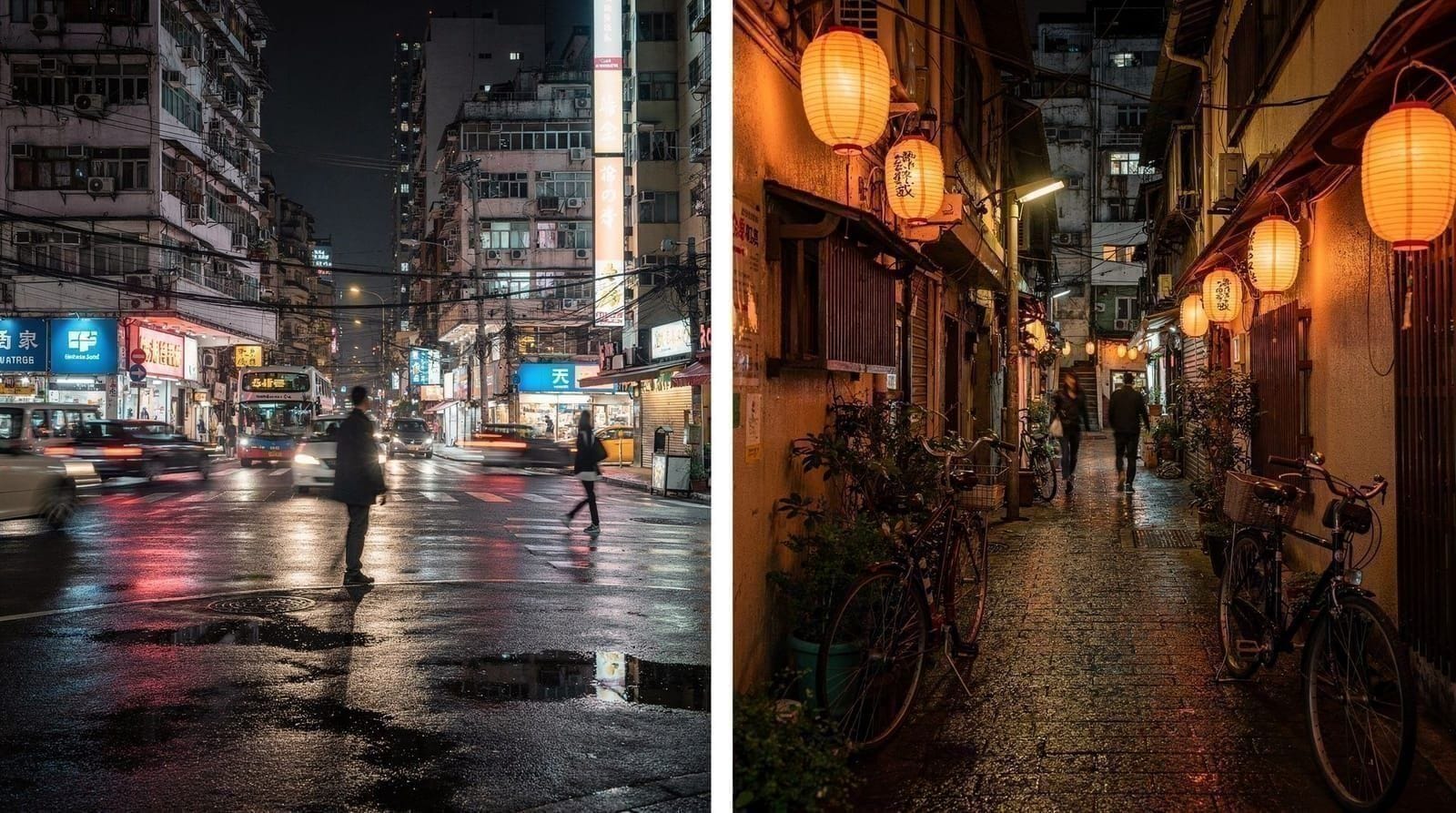
Hong Kong vs Macau — which should you visit, or should you do both?
Hong Kong: Macau day tour with round-trip ferry lunch and pickup
Duration: 10 hours
Should I visit Hong Kong, Macau, or both?
Both, if you have 4 or more days in the region — Macau is 55 minutes by ferry from Hong Kong and the combination is one of the great day-trip pairings in Asia. If you can only choose one: Hong Kong for the overall city experience, urban hiking, and Cantonese food depth. Macau for UNESCO heritage architecture, Portuguese-Chinese cuisine, and the unique casino resort atmosphere of Cotai.
| Distance | 55–65 min by ferry, ~90 min via HZMB bridge bus |
| Cost (return) | HKD 388–424 ferry, HKD 130–140 bridge bus |
| Best for both | 4+ days total in the region |
| Hong Kong strength | Urban scale, hiking, Cantonese food |
| Macau strength | UNESCO heritage, Macanese food, Cotai casinos |
Why this comparison is actually about whether to do both
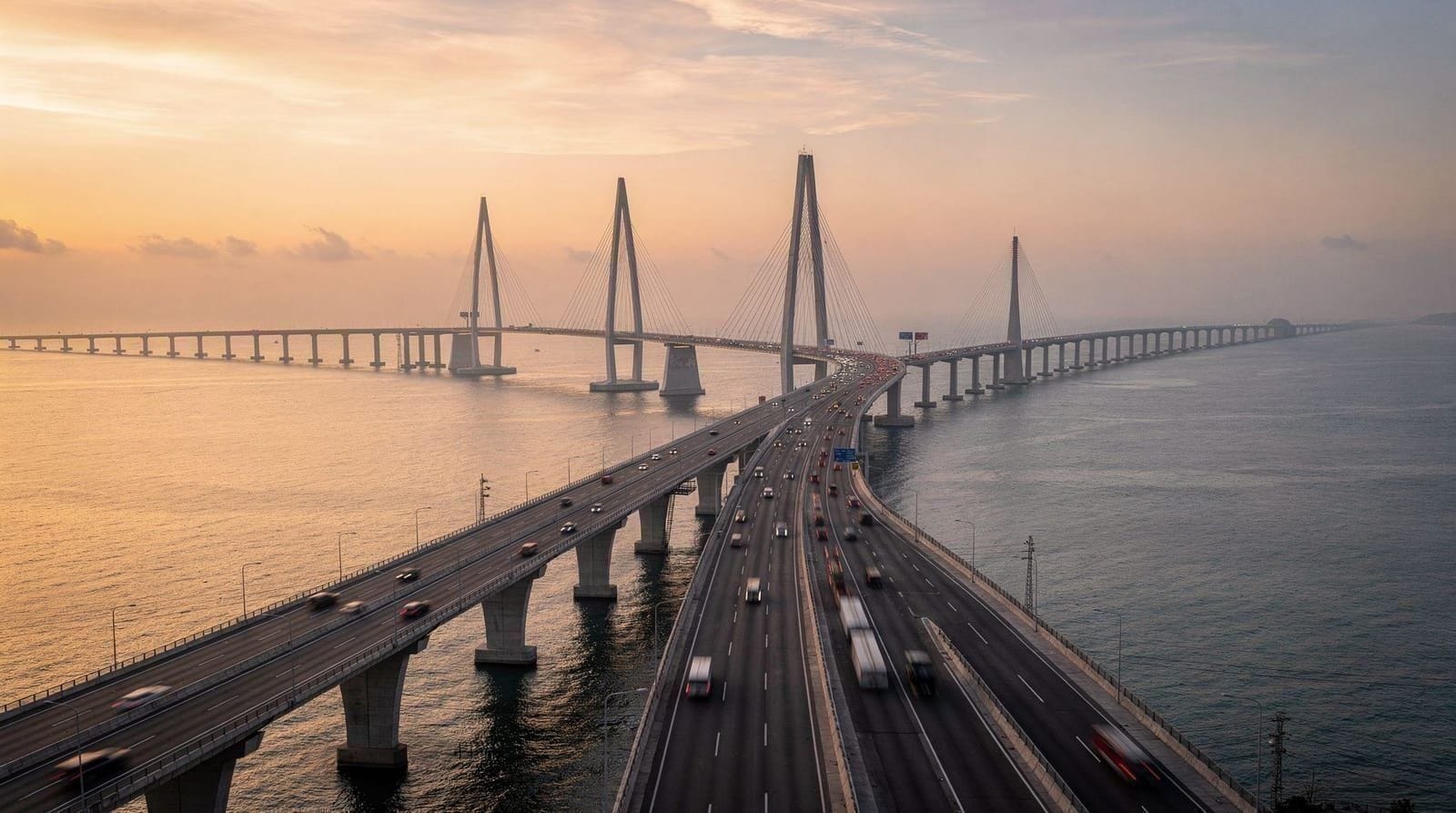
Hong Kong and Macau are not really competing destinations in the way Hong Kong and Singapore or Hong Kong and Tokyo are. They’re 60km apart, connected by high-speed ferry and the world’s longest sea bridge, and can be combined in a single trip without difficulty. The question “Hong Kong or Macau?” is usually asked by travellers who haven’t yet realised that the question is “should I add a Macau day to my Hong Kong trip?”
The answer is almost always yes, if you have 4 or more days total.
What each city does uniquely
What Hong Kong does that Macau can’t
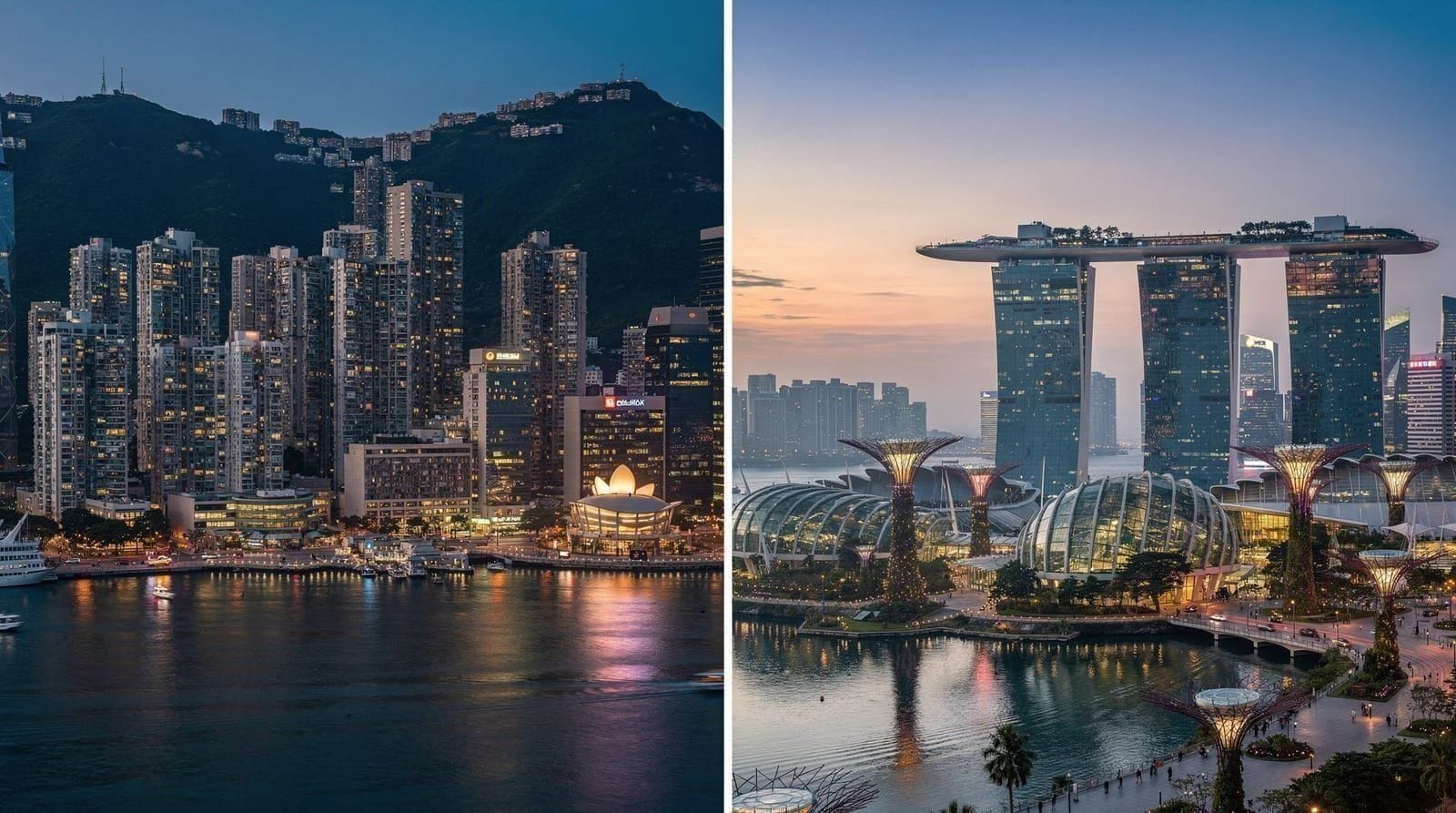
Urban scale and intensity. Hong Kong’s density — the concentration of skyscrapers on both sides of a narrow harbour, the MTR network, the night market intensity, the Kowloon back-streets — is unique in the world. Nothing in Macau provides this kind of urban immersion.
Hiking within a city. Dragon’s Back, Lion Rock, Sai Kung Geopark — all accessible by public transport from central Hong Kong. Macau has some hills and Coloane Country Park, but the scale and accessibility of Hong Kong’s hiking is not matched.
Cantonese food depth. Yum cha, dim sum, dai pai dong, wonton noodle shops, cha chaan teng — the Cantonese food infrastructure is deeper in Hong Kong than anywhere, including Macau (which has its own food culture but at a smaller scale).
Outlying islands. Lamma, Cheung Chau, Lantau, Peng Chau — Hong Kong’s surrounding island network provides extraordinary variety within a ferry ride. Macau has the Taipa and Coloane islands connected by causeway, which are worth visiting but smaller in scope.
What Macau does that Hong Kong can’t
Portuguese-Chinese heritage architecture. The UNESCO Historic Centre of Macau is a genuine architectural achievement — Baroque Portuguese churches alongside traditional Chinese temples, all in a small, walkable historic quarter. There’s nothing like it in Hong Kong or anywhere else in Asia.
Macanese cuisine. The fusion food that emerged from 450 years of Portuguese-Chinese interaction produces dishes — African chicken, minchi (spiced ground pork), Portuguese-style salt cod, Macanese curry, and pastéis de nata (Portuguese egg tarts that differ from the Hong Kong version) — that are only found here.
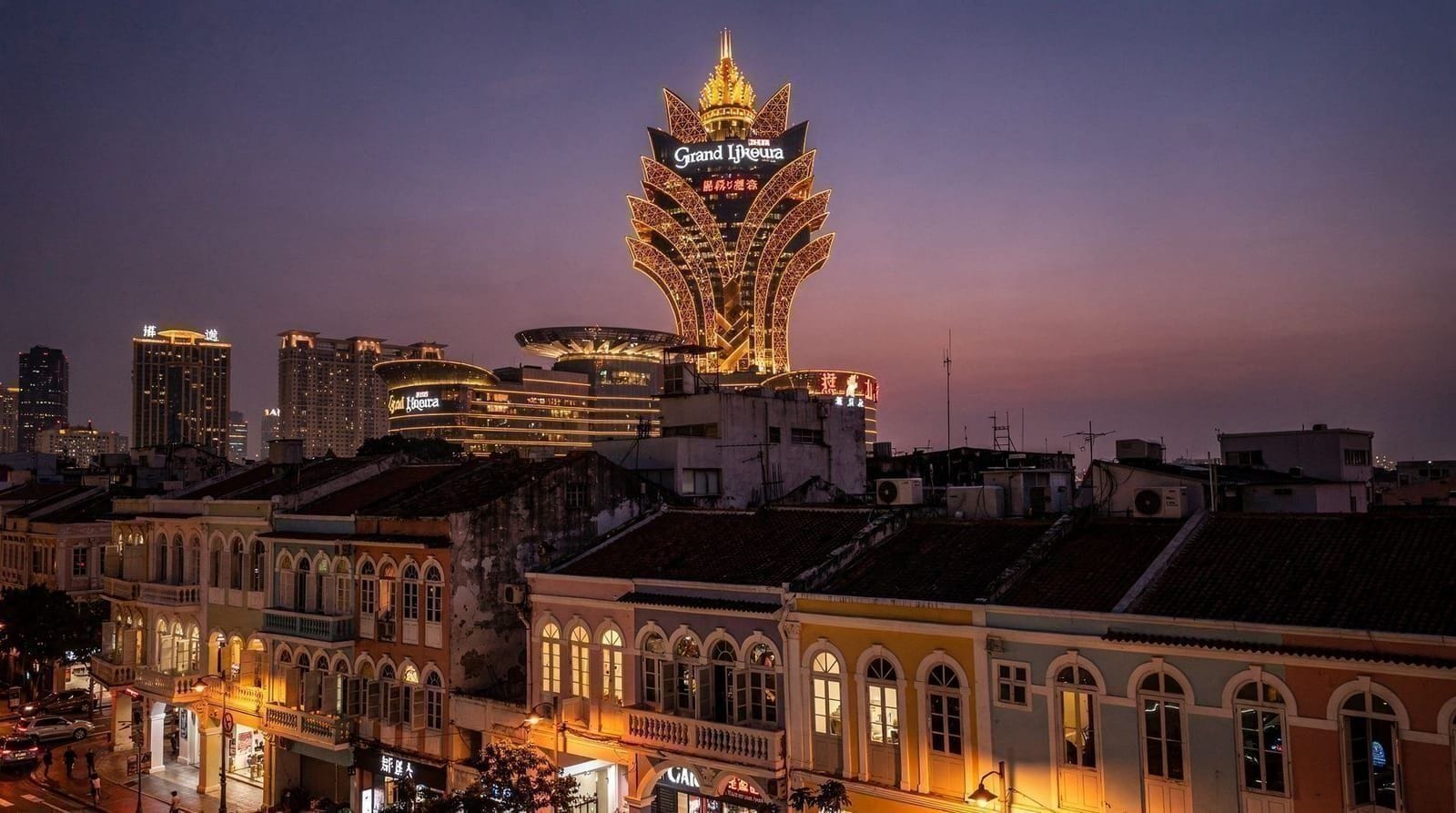
Casino resort scale. The Cotai strip’s mega-resort casinos (The Venetian Macao, with 3,000 rooms and a Venice-replica canal interior; Galaxy Macao; City of Dreams) represent a scale of entertainment complex that doesn’t exist in Hong Kong. Whether this appeals to you is a personal question, but as a spectacle it’s genuinely extraordinary.
Macau Tower experiences. The Macau Tower’s SkyWalk (walk around the exterior at 233m), the world’s highest commercial bungee jump, and the Skyjump (a controlled fall descent) are one-of-a-kind experiences. None of these exist in Hong Kong.
How the two cities feel different on the ground
The easiest way to understand the contrast is to think about pace. Hong Kong is a city that moves quickly: you queue for the MTR, you eat standing up at a counter, and the day fills itself with short hops between neighbourhoods. If you want a feel for that rhythm, the Hong Kong MTR guide and the Octopus card guide explain how people actually move around, and why a day in the city rarely feels slow.
Macau, by contrast, rewards wandering. The historic centre is compact, the streets are narrow and tiled, and the best moments tend to come when you stop following a route and simply walk from one square to the next. Where Hong Kong asks you to keep up, Macau lets you drift. That is why the two work so well together: the second city resets the tempo of the first, and neither feels like a repeat of the other.
There is also a difference in what you take home. Hong Kong leaves you with impressions of scale, light and noise, while Macau leaves you with textures: painted façades, stone pavements, church interiors, the smell of a bakery. Travellers who try to pick a single “winner” usually end up describing the wrong thing, because the cities are answering different questions.
Who should prioritise which city
First-time visitors to Asia. Start with Hong Kong. It is the easier city to navigate in English, the transport is simple, and the first-time Hong Kong guide covers the basics in one place. Add Macau once you have found your feet, ideally in the middle of the trip rather than on arrival day or departure day.
Food-focused travellers. You do not have to choose, but you should plan for both. Hong Kong gives you the breadth of Cantonese cooking, from the dim sum guide to the cha chaan teng guide, while Macau gives you a cuisine that exists nowhere else. A single Macau lunch is often the most memorable meal of a combined trip.
History and architecture fans. Macau earns more of your time than the headline numbers suggest. The Ruins of St. Paul guide is a good starting point for the best-known landmark, and the surrounding streets reward a slow morning. Hong Kong has its own heritage, but it is scattered; Macau’s is concentrated.
Hikers and outdoor travellers. Hong Kong, clearly. The best hikes in Hong Kong are a major reason to base yourself there, and a Macau day should not be traded against a good hiking day.
Families. Hong Kong has more that is built around children and easier logistics, and the Hong Kong with kids guide gives a sense of how much there is to do. A Macau day can still work for families, but the early start and the ferry crossing make it a longer day for small children, so plan for rest and a relaxed lunch.
Planning the Macau day so it does not feel rushed
The most common regret among travellers who add Macau is not the destination but the schedule. A few habits help.
- Decide your focus before you leave. Heritage and food, or Cotai and casinos, or a bit of both. Trying to do everything in one day is what makes the trip feel like a tick-list.
- Walk the historic centre first, and leave Cotai for the afternoon. The old streets are more pleasant before the day gets tired, and the resorts are indoors and air-conditioned, which suits a late-day energy dip.
- Choose one proper sit-down meal. Lunch is the natural slot. The Macau food guide will help you pick something that reflects the local cuisine rather than a generic tourist menu.
- Keep your return buffer generous. Immigration queues and the walk to the terminal both take time, so do not plan your last activity to finish just before the ferry. The getting to Macau guide explains the crossing options in more detail.
If you prefer to hand the logistics to someone else, a guided day is a reasonable choice, particularly on a first visit when you do not yet know the layout. If you would rather go independently, the Macau first-timer guide is a good companion to carry in your head.
When to sleep in Macau instead of returning
Most visitors return to Hong Kong the same evening, and for a first trip that is the right call. But an overnight stay changes the experience. The historic centre is quiet and atmospheric once the day-trippers leave, and you can see the casino resorts lit up at night without worrying about the last sailing. If you are a slow traveller, a foodie who wants more than one Macanese meal, or someone who simply dislikes early starts, sleeping over is worth considering. It does make the trip more expensive and requires an extra hotel booking, so weigh it against what else you would do with that night in Hong Kong.
If you are tempted by a second day, the Taipa and Coloane side of Macau is a natural way to spend it, with a gentler, village-like mood than the main peninsula.
Timing your trip around the weather and crowds
Both cities share a climate, so the seasonal advice is largely the same. The best time to visit Hong Kong guide applies equally to a Macau day, and the typhoon season guide matters here for a specific reason: ferry services can be disrupted in severe weather, which affects your return. If your dates fall in that period, build some slack into the schedule and avoid a tight same-day return when a flight home is waiting the next morning.
Holiday periods bring crowds to both places. The Chinese New Year guide is worth reading if you are travelling then, since transport and attractions are busier and bookings matter more than usual.
Combining the two in a longer itinerary
If you have more than four days, you can give each city room to breathe. The Hong Kong and Macau 4-day itinerary shows one way to fit both in, and the how many days in Hong Kong guide helps you decide how much time the city itself deserves before you add a crossing. A longer stay also opens the door to other excursions, which the best day trips from Hong Kong guide lays out, so Macau becomes one option among several rather than the only one.
The short version
If you are weighing the two purely as separate destinations, Hong Kong is the stronger base: it has the transport, the variety and the food depth. Macau is the stronger specialist: a smaller place with a clear identity that is best experienced with a clear plan. Treat Hong Kong as the trip and Macau as the chapter that makes it more interesting, and you will rarely go wrong.
The logistics of doing both
By ferry
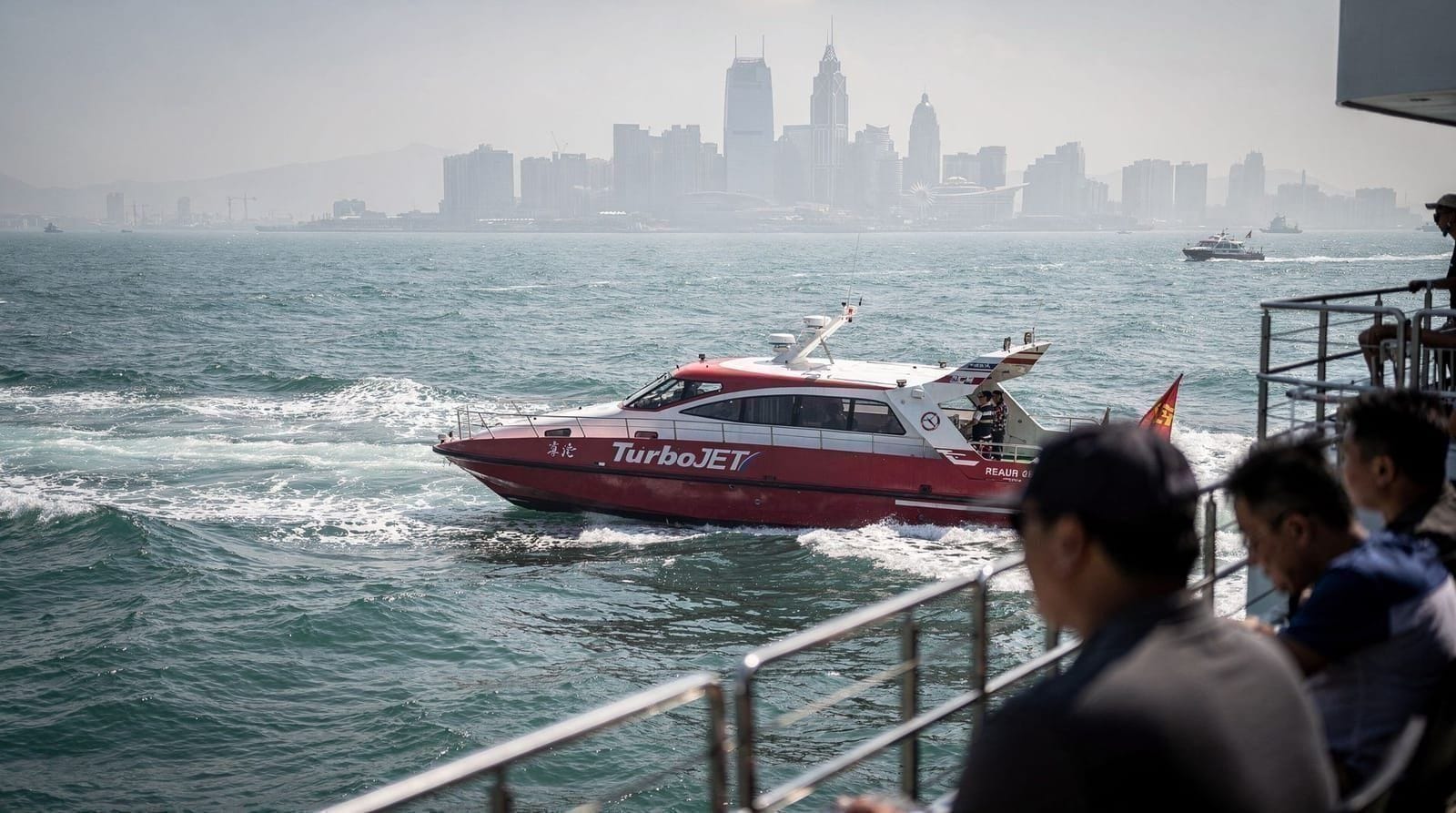
TurboJET and Cotai Water Jet ferries run from Hong Kong’s Sheung Wan (Outer Harbour Terminal), Tsim Sha Tsui, and Hong Kong International Airport to Macau’s Outer Harbour Terminal and Taipa Ferry Terminal (for the Cotai strip). Journey time: 55–65 minutes. Price: HKD 194–212 one way (economy). Ferries run roughly every 30 minutes throughout the day, from approximately 7am to midnight.
Book your return ferry at the same time as your outward journey — weekend sailings and holiday periods sell out. The last thing you want is to be stranded in Macau without a confirmed return.
By HZMB bridge bus
The Hong Kong-Zhuhai-Macau Bridge (the world’s longest sea crossing bridge at 55km) carries bus services from the Hong Kong Port (on Lantau Island, near the airport) to the Macau Border Gate on Hengqin. Journey time: approximately 40 minutes. Price: HKD 65–70 one way. Significantly cheaper than the ferry.
The trade-off: the Hong Kong Port on Lantau is not central — you need to travel to the airport-adjacent terminal by MTR (approximately 35–40 minutes from Kowloon) before boarding the bridge bus. Total journey time from central Hong Kong to central Macau via the bridge is 90–100 minutes, comparable to or slightly longer than the ferry from Sheung Wan.
Book a Macau day tour from Hong Kong including ferry and lunchSee the ferry vs bridge to Macau guide for a detailed comparison of both crossing options.
A 4-day Hong Kong + Macau trip structure
Day 1: Arrive Hong Kong, Tsim Sha Tsui promenade, Symphony of Lights, Temple Street Night Market.
Day 2: Hong Kong core — Victoria Peak (morning), Star Ferry, Central and Sheung Wan. Dim sum breakfast.
Day 3 (Macau day): Take the 9am TurboJET from Sheung Wan. Walk the UNESCO historic centre — Senado Square, Ruins of St. Paul, Monte Fort, St. Dominic’s Church. Lunch at a Macanese restaurant (A Lorcha, Litoral, or similar). Afternoon optional: Cotai strip or Macau Tower. Return ferry by 7–8pm.
Day 4: Lantau — Ngong Ping 360 cable car, Big Buddha, Tai O fishing village.
Book a guided historic centre walking tour in MacauIs Macau just for gamblers?
This is the most common misconception. The casinos occupy a significant portion of Macau’s economy and Cotai’s skyline, but the historic city of Macau is entirely separable. You can spend a full day in Macau without entering a casino once: the heritage trail, the food scene, the Portuguese architecture, the A-Ma Temple, and the Taipa village area are all non-casino.
That said, even non-gamblers often find the Cotai strip worth a look. The Venetian Macao’s interior — with its replica Grand Canal, gondoliers, and hand-painted ceiling — is genuinely unusual. The Galaxy’s resort pool area is absurd and spectacular. Walking through these buildings costs nothing. It’s a spectacle unlike anything else in the region.
Macau-specific costs
Adding a Macau day to a Hong Kong trip costs approximately:
- Ferry: HKD 194–212 one way (× 2 for return: HKD 388–424)
- Or HZMB bridge bus: HKD 65–70 one way (× 2: HKD 130–140)
- Lunch in Macau: HKD 150–300 per person (USD 19–38)
- Attractions (Macau Tower, museum entries, etc.): HKD 0–200 depending on choices
- Currency note: Macau uses the pataca (MOP). HKD is widely accepted at roughly 1:1. Carry HKD and you’ll be fine everywhere.
Side-by-side: Hong Kong vs Macau at a glance
| Category | Hong Kong | Macau |
|---|---|---|
| Signature sight | Victoria Harbour skyline | Ruins of St. Paul’s |
| Food identity | Cantonese (dim sum, roast meats) | Macanese (Portuguese-Chinese fusion) |
| Best for | Urban intensity, hiking | Heritage architecture, casino spectacle |
| Typical day cost | HKD 1,100–1,700 mid-range | HKD 600–1,100 add-on for a day trip |
| Getting there from HK | — | Ferry (55 min) or HZMB bridge (90 min) |
For the areas within Macau itself, the Macau overview, the Cotai casino strip, and Taipa and Coloane village guides break down where to go once you’ve decided to add the day. The Macau day trip guide and Macau historic centre guide cover the on-the-ground logistics in more depth than fits here, and the Macau food guide is worth reading before you pick a lunch spot — Macanese cuisine is genuinely distinct from anything in Hong Kong.
Frequently asked questions about Hong Kong vs Macau — which should you visit, or should you do both?
Is Macau worth visiting just for the day?
Which has better food?
Is Macau only about casinos?
How long should I spend in Macau?
Is Macau safe?
Do I need a separate visa for Macau if I already have one for Hong Kong?
Top experiences
Bookable activities with verified prices and instant confirmation on GetYourGuide.