Hong Kong dim sum guide — what to order, where to eat, how it works
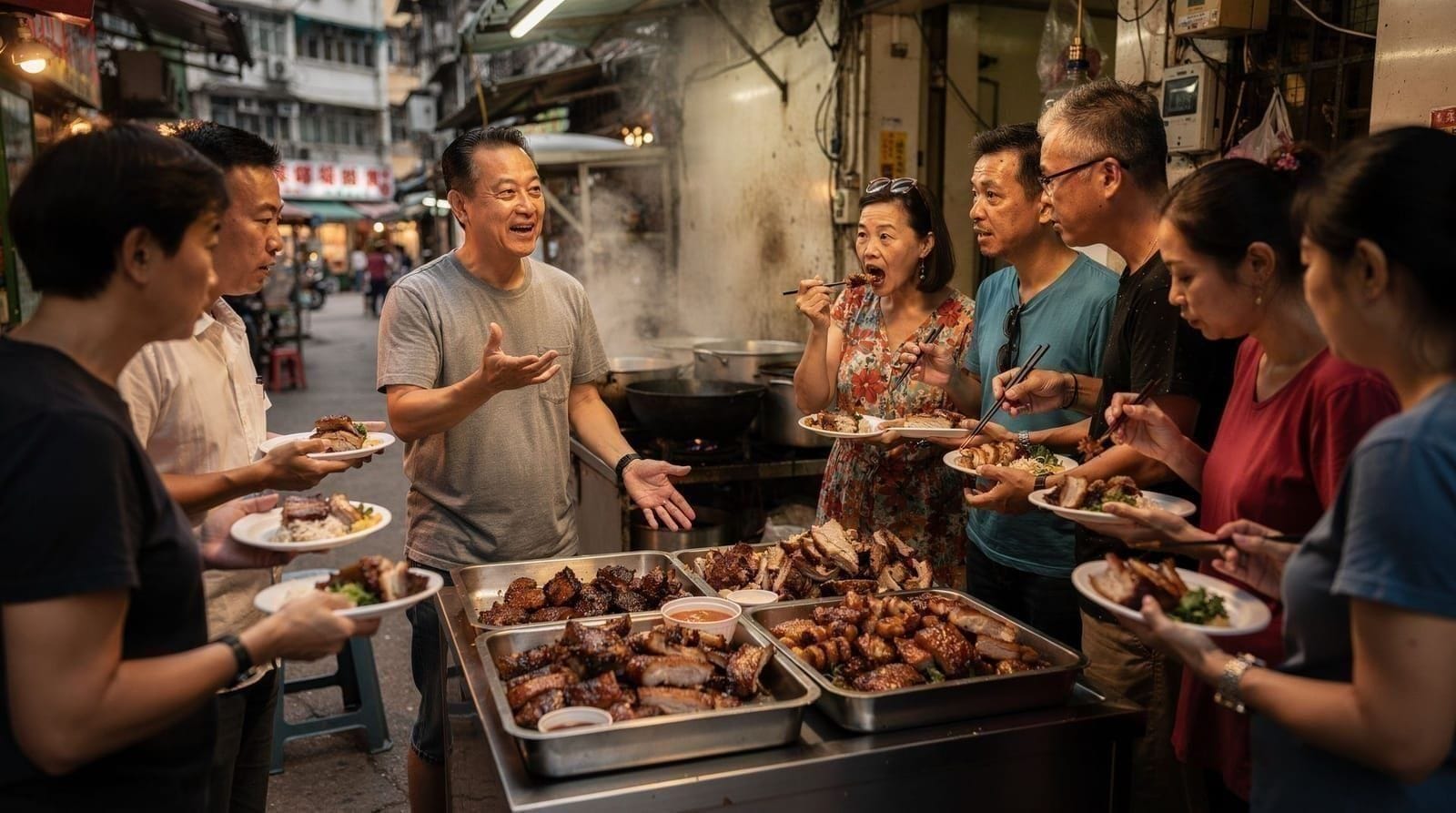
Hong Kong: Street food tour with locals dim sum and wonton
What is dim sum and how does it work in Hong Kong?
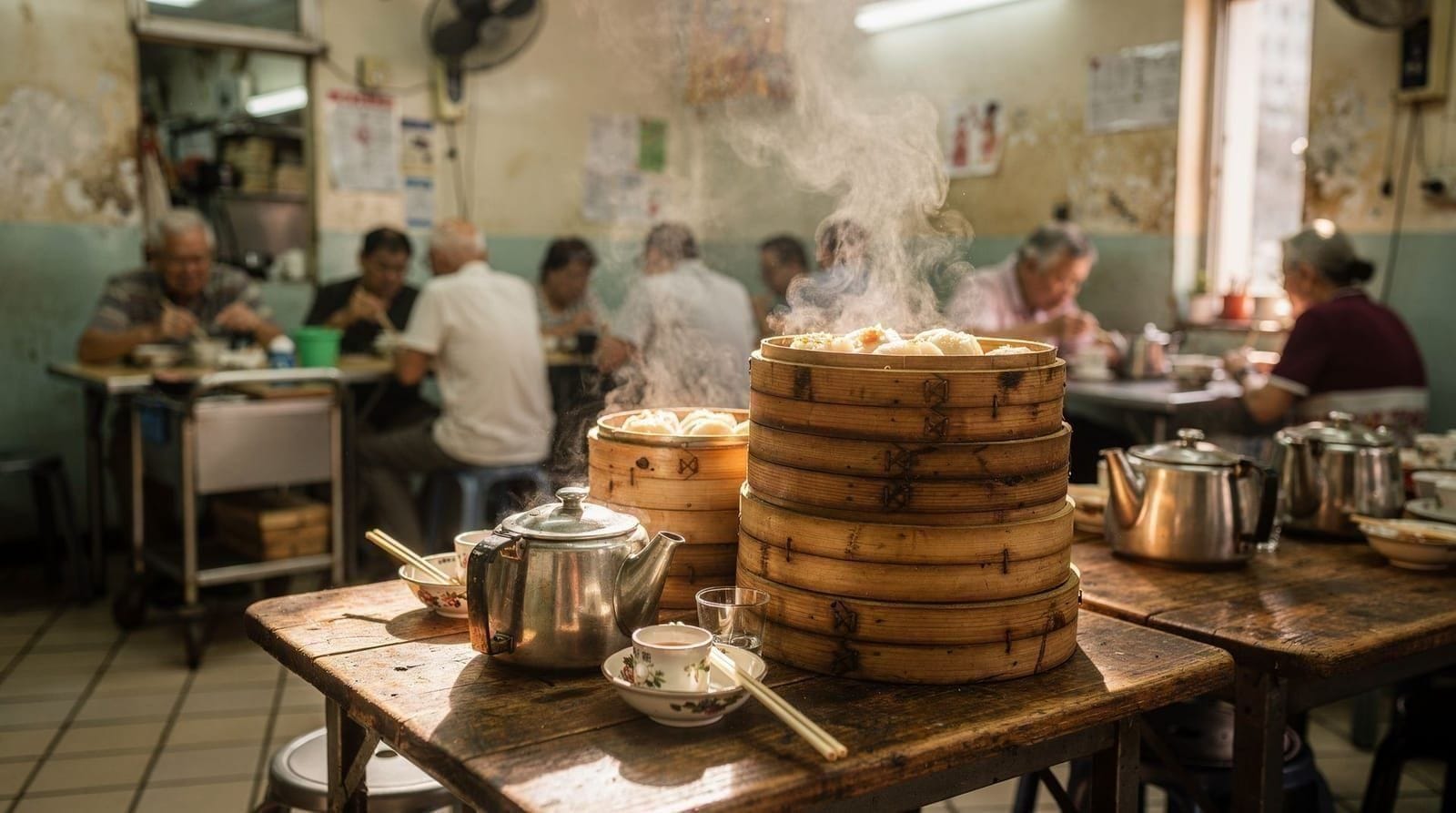
Dim sum (點心) are small Cantonese dishes served at teahouses during yum cha (飲茶, "drink tea") — a mid-morning dining tradition. You order tea first, then select dishes from a trolley (traditional) or paper checklist (modern). Essential dishes are har gow (shrimp dumplings), siu mai (pork and shrimp dumplings), char siu bao (BBQ pork buns), and cheong fun (rice noodle rolls). A full meal for two costs HKD 120–200 at a local teahouse.
Why Hong Kong is the right place to eat dim sum
Dim sum originated in the Cantonese teahouse tradition and Hong Kong remains its most sophisticated expression. The city has more dim sum teahouses per square kilometre than anywhere else, covering a full range from century-old trolley-service institutions to Michelin-starred dining rooms to neighbourhood teahouses that serve HKD 22 har gow to construction workers at 7am.
The skill in ordering dim sum is knowing your dishes and the venue’s strengths. A great teahouse in Yau Ma Tei or Sham Shui Po serves har gow better than a tourist-oriented restaurant in TST that charges twice the price. This guide explains the dishes, the ordering system, and the venues worth knowing.
| When | Traditional yum cha 07:00–14:30, peak 09:30–12:00 |
| Cost | HKD 120–200 for two at a local teahouse |
| Order via | Trolley (point) or paper checklist (tick boxes) |
| Must-order | Har gow, siu mai, char siu bao, cheong fun |
| Payment | Mostly cash at traditional teahouses |
| Reservations | Recommended for popular spots on weekends |
How yum cha works
Yum cha (飲茶) means “drink tea” in Cantonese. The tradition is a mid-morning meal where a group (ideally family or friends) gathers at a teahouse, orders Chinese tea for the table, and then progressively orders small dishes to share. It is intentionally social, unhurried, and accompanied by conversation.
The tea: This comes first. Order a pot for the table — traditionally pu-erh (poh lei), chrysanthemum, jasmine, or iron Buddha. The waiter usually asks 飲咩茶 (what tea?). Price is included in a small per-person “tea charge” (茶位費, HKD 8–15) that covers the tea pot and utensils. This is standard and not a scam.
Ordering: Either the waiter wheels a trolley to your table and you point at what you want from the steam baskets, or you receive a paper checklist with categories (steamed, fried, baked, congee, noodles, dessert). Check boxes and hand the sheet to the staff. Both systems work the same way: dishes arrive progressively as they are cooked.
Pace: Dishes are small — three to four pieces per bamboo steamer or plate. A group of two typically orders 8–10 items and takes 45–75 minutes. A group of four orders 14–18 items over 60–90 minutes. There is no rush to leave; tables are not turned aggressively at local teahouses.
Payment: Most traditional teahouses are cash only. The waiter stamps your paper checklist as each dish arrives; payment is calculated from the stamps at the end. Keep your checklist.
The essential dishes to order
Har gow (蝦餃) — shrimp dumplings
The benchmark dim sum dish. Thin, slightly translucent rice-starch skin, filled with whole or chopped shrimp and a little bamboo shoot. The skin should be smooth and slightly elastic (not thick or gummy); the shrimp inside should be firm and seasoned simply.
A great har gow reveals the teahouse’s standards for both ingredients and dough-work. HKD 28–42 for four pieces.
Siu mai (燒賣) — open-topped pork and shrimp dumpling
A cylindrical dumpling with a yellow wonton wrapper, filled with ground pork and shrimp, topped with a single shrimp or fish roe (tobiko). The filling should be dense, juicy, and mildly flavoured. HKD 28–40 for four pieces.
Char siu bao (叉燒包) — BBQ pork bun
The most recognisable dim sum item. Steamed version: soft white dough, slightly puffy. Baked version: golden-brown pastry exterior. Filling is honey-glazed barbecue pork (char siu) — sweet, fatty, and savoury simultaneously. Tim Ho Wan’s baked version is the benchmark in Hong Kong. HKD 30–42 for three pieces.
Lo mai gai (糯米雞) — lotus leaf parcel
A large parcel of glutinous rice filled with pork, mushroom, Chinese sausage, and sometimes dried shrimp, steamed inside a lotus leaf. Rich and substantial — one parcel is often enough for one person. The lotus leaf imparts a subtle fragrance. HKD 30–48 per piece.
Cheong fun (腸粉) — rice noodle rolls
Thin sheets of steamed rice batter rolled around char siu, shrimp, or beef. Silky and delicate, served with sweet soy sauce. Plain cheong fun (without filling) is also common and excellent. HKD 28–45 per order.
Turnip cake (蘿蔔糕) — lo bak go
Steamed squares of grated turnip (daikon radish) mixed with rice flour and dried shrimp, then pan-fried until crispy outside and soft inside. A Cantonese New Year dish served year-round at teahouses. HKD 22–35 per order.
Spring rolls (春卷)
Crispy fried rolls with vegetable, pork, or shrimp filling. Very different from the limp spring rolls at generic Chinese restaurants elsewhere — a good dim sum version is shatteringly crisp. HKD 30–40 for two pieces.
Wu gok (芋角) — taro dumplings
A lacy fried taro shell filled with pork and shrimp. The shell has a distinctive net-like crispy exterior that shatters on first bite. Not all teahouses make these well; when they do, they are outstanding. HKD 35–48 per order.
Custard bun (奶皇包) — liu sha bao
A steamed bun filled with a molten salted egg yolk custard that oozes out on the first bite — one of the more indulgent items on a checklist menu, and a good middle ground between the savoury dishes and the closing egg tart. Best eaten immediately while the filling is still liquid; it firms up quickly once it cools. HKD 30–42 for three pieces.
Egg tart (蛋撻)
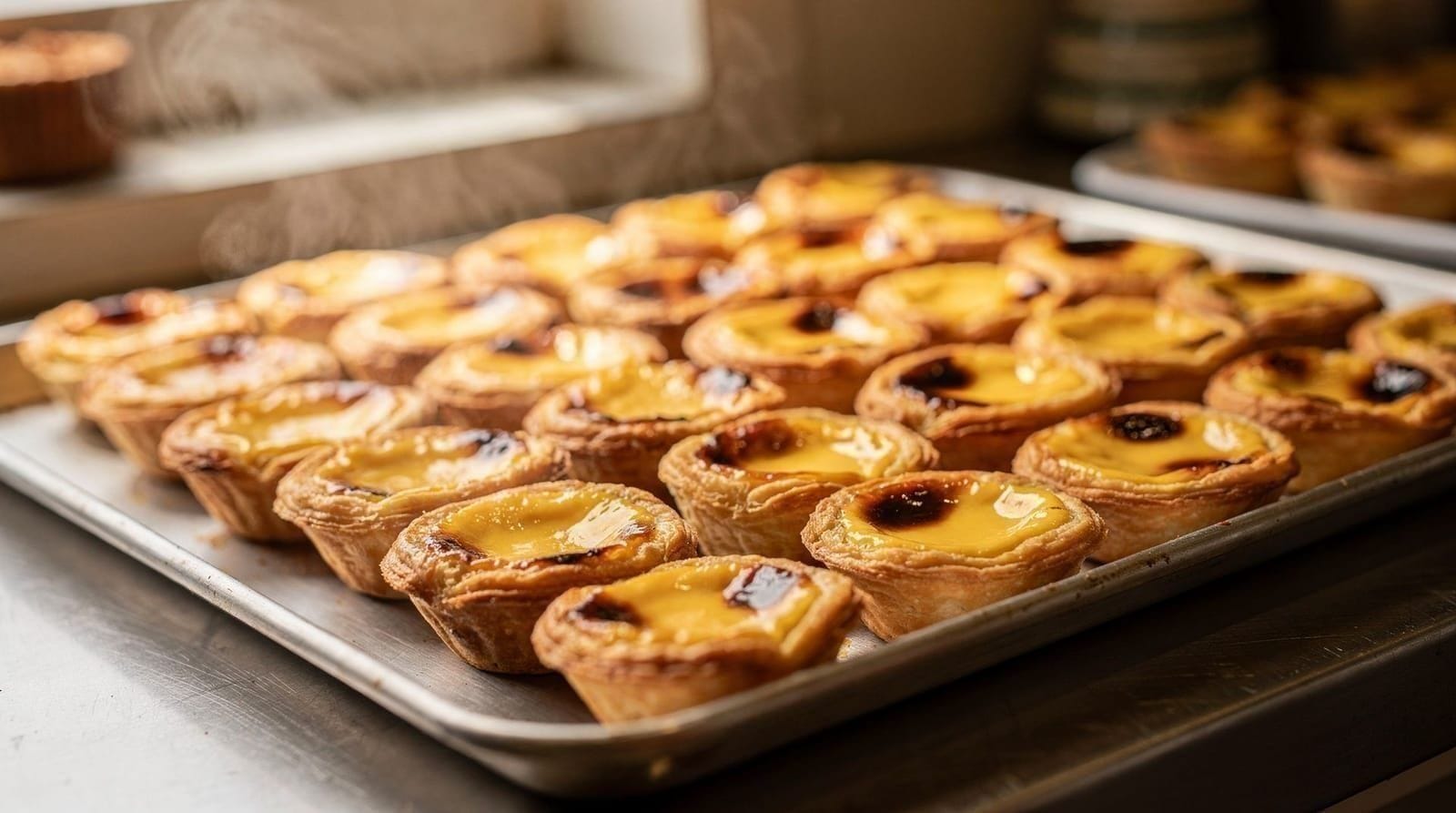
Served at the end of a dim sum meal. Custard tart in a flaky pastry shell — the Hong Kong version has a wobblier, slightly eggy custard versus the firmer Portuguese version. For dedicated egg tart hunting, see the egg tarts guide. HKD 22–35 per piece at a teahouse.
Congee (粥)
Rice porridge available in many variations — plain with preserved egg and pork (皮蛋瘦肉粥), with century egg and salted pork, with seafood. Ordered at the start or for those who want something lighter. HKD 38–65 per bowl.
Dim sum is one strand of Hong Kong’s wider food scene — for the rest, see the best street food guide, the cha chaan teng guide for the city’s other essential breakfast tradition, and the Michelin cheap eats guide for recognised restaurants that won’t break the budget.

Where to eat dim sum in Hong Kong
Tim Ho Wan (添好運) — multiple branches
The most famous and most accessible. Quality has remained consistent across branches despite the expansion. The baked char siu bao is exceptional. Price per person: HKD 120–155. Most branches can now be booked via Klook or their website. If you only do one dim sum in Hong Kong, Tim Ho Wan is the reliable choice.
Branches: Sham Shui Po (the original, least crowded), Mong Kok, Tuen Mun, and several others. Avoid the airport branch if possible — quality is inconsistent.
Lin Heung Tea House (蓮香樓), Sheung Wan
A classic mid-century teahouse on Wellington Street — trolley service, cash only, extremely crowded on weekends, unchanged atmosphere from the 1970s. The food is traditional and very good. Come at 07:30–09:00 to get a table and the best selection; late morning on weekends means fighting for both. HKD 100–140 per person.
The experience is deliberately chaotic — if you want calm, go elsewhere. If you want the most authentic old Hong Kong teahouse atmosphere, this is it.
Dim Sum Square (點心廣場), Tsim Sha Tsui
Well-regarded checklist-style teahouse in TST with strong har gow and siu mai. More modern than Lin Heung but still local-oriented. HKD 120–160 per person. Takes reservations.
Fortune Kitchen (鴻運樓), Yau Ma Tei
Neighbourhood teahouse on Temple Street with minimal tourist awareness. Solid traditional dim sum at lower prices. HKD 90–130 per person.
One Dim Sum (一點心), Prince Edward
Multiple Michelin Bib Gourmand recognitions. Cheap, very good, and popular with locals. Prince Edward MTR is one stop from Mong Kok. Arrive early on weekends; it fills fast. HKD 100–150 per person.
Lung King Heen (龍景軒), Four Seasons Hotel, Central
Three Michelin stars — the highest dim sum recognition in Hong Kong. The har gow here is technically perfect; the setting has harbour views. HKD 400–600 per person. Requires advance booking. Worth it for a special occasion; not the budget option.
Dim sum at hotel restaurants generally
Beyond Lung King Heen, most five-star hotels in Hong Kong run a respected dim sum service — quieter, air-conditioned, and considerably more comfortable than a bustling neighbourhood teahouse, at roughly double the price. This is a reasonable choice if you want to introduce a nervous first-timer to dim sum without the chaos of a trolley-service crowd, or if you’re staying at the hotel anyway and want to combine breakfast with the experience.

Common mistakes at dim sum
Ordering too much: The instinct to tick everything on the checklist leaves you with too much food and a higher bill than expected. For two people, 8–10 dishes is generous. For four, 12–15.
Ordering without a checklist: At trolley-service places, the choice is limited to what the trolley-pusher happens to have at that moment. The most popular items (har gow, siu mai) circulate most frequently; rarer items may come by only once in 30 minutes. Flag the cart immediately and ask for what you want.
Going to the wrong restaurants near tourist areas: The dim sum restaurants immediately adjacent to the TST Star Ferry pier and the harbour waterfront are aimed at tourists. Prices are 50–100% higher and quality is often mediocre. Walk three blocks inland to Mody Road or Austin Road in TST, or take the MTR to Yau Ma Tei or Sham Shui Po, and you will find significantly better food at lower prices.
Rushing: Dim sum is not fast food. At a traditional teahouse, the pace is leisurely by design. If you have only 30 minutes, go somewhere else.
Dietary restrictions and dim sum
Dim sum is not naturally accommodating to vegetarians or those avoiding shellfish — most of the classic dishes contain pork, shrimp, or both. That said, options exist: plain cheong fun (rice noodle roll without filling), vegetable dumplings (菜餃, available at most modern checklist teahouses though not always at traditional ones), stir-fried greens with garlic, and mushroom-based buns at some restaurants.
Ask specifically — 我食素 (ngo sik so) means “I eat vegetarian” in Cantonese, though it’s worth clarifying whether that extends to eggs and dairy since interpretations vary. Gluten-free is genuinely difficult; nearly every dumpling wrapper contains wheat starch or flour, and soy sauce (used widely) typically contains wheat. Travellers with a severe allergy should treat most dim sum as off-limits rather than trying to navigate individual dishes, and consider carrying a translated allergy card if the reaction risk is serious.
Booking ahead vs walking in
Tim Ho Wan, Lung King Heen, and Dim Sum Square all take reservations, and it’s worth using them for weekend visits — walk-in waits of 30-60 minutes are common at the popular branches. Lin Heung Tea House and the smaller neighbourhood teahouses (Fortune Kitchen, and similar) are walk-in only; arriving at opening time (usually 06:30-07:00) is the only reliable way to avoid a queue at these, since these teahouses do not answer phone reservations from overseas numbers in practice.
If your schedule is tight and you only have one dim sum meal in Hong Kong, book the restaurant you most want in advance rather than hoping for a walk-in table — see the first time in Hong Kong guide for how to slot a dim sum meal into a first visit itinerary, or the Hong Kong on a budget guide if cost is the main constraint.
Fitting dim sum into your days
Dim sum is a morning meal, so it slots best at the start of a day that stays in the same part of the city. A teahouse breakfast in Sham Shui Po pairs naturally with the Sham Shui Po area guide, and one in Prince Edward or Mong Kok leads straight into the Mong Kok area guide. A Yau Ma Tei teahouse sits close to the Temple Street night market, so you can return in the evening for a completely different kind of eating.
Getting between teahouses is easy on the metro. The MTR guide explains the lines you will use, and the Octopus card guide covers the card that makes every ride and many small purchases simpler, even though teahouses themselves are often cash only.
If dim sum is the centrepiece of your trip rather than a single meal, the foodie itinerary shows how to spread teahouse mornings, street snacks and evening meals across several days without repeating yourself. Sheung Wan and Central are covered in the Central and Sheung Wan destination page, which helps if you are basing yourself near Lin Heung Tea House.
Etiquette at the table matters as much as the order itself: pouring tea for others first, the habit of tapping the table to say thanks, and how to signal that you want a refill. The blog post on dim sum ordering etiquette goes through these small customs so you feel at ease from the first pot of tea. For the evening side of local eating, the dai pai dong guide describes the open-air stalls that take over once teahouses close.
Food tour option
For visitors who want a guided introduction, a dim sum-focused food tour with a local guide covers the ordering system, the key dishes, and takes you to non-tourist teahouses that are harder to find independently. Expect 3–4 stops, 6–10 tastings, and 2.5–3 hours.
Dim sum through the year: seasonal and festival dishes
Hong Kong’s dim sum teahouses adapt their menus seasonally, and visiting during certain periods adds specific dishes to the standard repertoire:
Chinese New Year (late January to mid-February): The trolleys and checklist menus include nian gao (年糕) — steamed sticky rice cake with a slightly sweet, chewy texture. Also turnip cake variants (radish cake, taro cake) as festival foods. Teahouses are at their most crowded on the days around New Year; queues of 60–90 minutes are normal at popular places.
Dragon Boat Festival (May or June): Rice dumplings (糭, zongzi) — glutinous rice parcels filled with pork, mushroom, and dried shrimp, steamed in bamboo leaves — appear on some teahouse menus as a seasonal option. More commonly sold at dedicated market stalls, but upmarket teahouses sometimes offer a refined version.
Mid-Autumn Festival (September or October): The mooncake (月餅) is technically a bakery item rather than a dim sum dish, but teahouses often serve traditional mooncakes as a dessert option during the festival period. The lotus seed paste with salted egg yolk version is the classic.
Winter months: Turnip cake (lo bak go) becomes more prominent — this dish is associated with cooler weather and appears more frequently on checklist menus from November onward. Some teahouses also offer osmanthus jelly (桂花糕) and sesame paste desserts.
Beyond the standard list: what the regulars order
After you have worked through the standard first-visit dishes, the following are worth seeking on subsequent visits or at teahouses where a guide or local can help navigate the less-labelled sections of the checklist:
Steamed pork ribs with black bean and chilli (豆豉蒸排骨): Chopped pork ribs with fermented black beans and sliced chilli, steamed until the meat is tender and the bones are falling apart. Rich, slightly spicy, often under-ordered by tourists who do not see it labelled clearly.
Honeyed BBQ pork baked tart (蜜糖叉燒撻): A pastry tart filled with the same char siu filling as the bao, but in an egg tart shell format — sweet, complex, and different from either the standard char siu bao or the egg tart.
Braised chicken feet (鳳爪): The dish that most tests Western sensibilities. Chicken feet, deep-fried then braised in black bean sauce until gelatinous and yielding. The goal is the texture (collagen-rich, slightly sticky) and the sauce absorption — the bones are mostly spat out discretely. An acquired taste worth trying once.
Pan-fried radish cake with XO sauce (XO醬蘿蔔糕): The standard turnip cake elevated with XO sauce (a luxury dried seafood condiment from dried shrimp, dried scallop, cured ham, and chilli). Significantly more complex and flavourful than the standard version.
These dishes are available at most traditional teahouses but require a Cantonese-reading checklist or help from staff to locate. A food tour with a guide (see the food tours guide) is one way to navigate them efficiently on a first visit.
Frequently asked questions about Hong Kong dim sum guide — what to order, where to eat, how it works
What are the must-order dim sum dishes?
When should I go for dim sum?
Is Tim Ho Wan worth the queue?
How do I order dim sum?
How much does dim sum cost in Hong Kong?
What tea should I order with dim sum?
What is the difference between steamed and baked char siu bao?
Top experiences
Bookable activities with verified prices and instant confirmation on GetYourGuide.