Temple Street Night Market guide — what to expect and what to skip
Hong Kong: Ladies Market and Temple Street Night Market tour
Is Temple Street Night Market worth visiting?
Yes, for the atmosphere and the street food — not for the shopping. The vendor merchandise (watches, phone cases, souvenirs) is low-quality and aggressively priced. The fortune-teller strip in the middle section is genuinely interesting. The dai pai dong food stalls serve good Cantonese street food. Go for the experience, not for bargains.
Temple Street at night — the honest picture
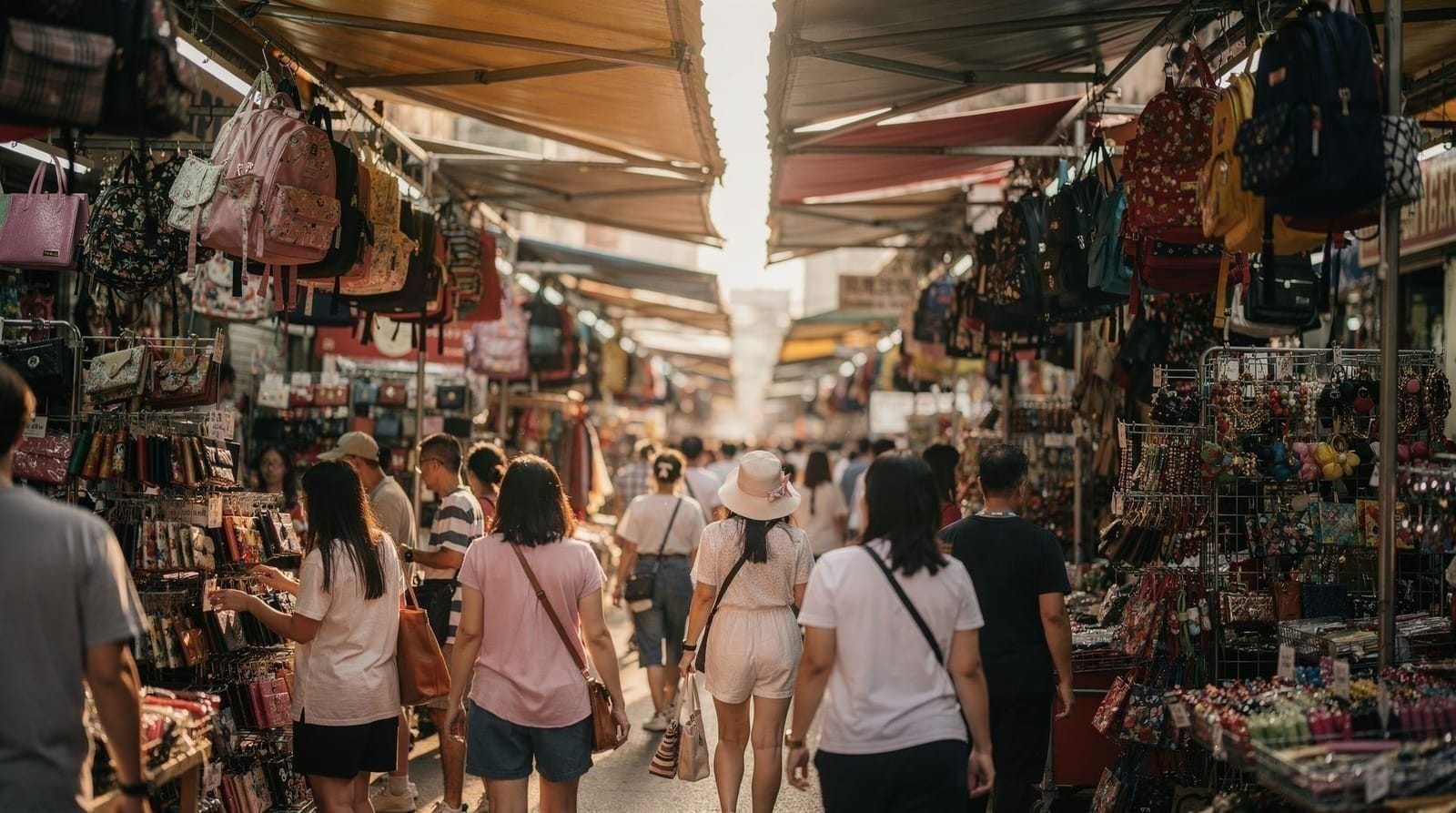
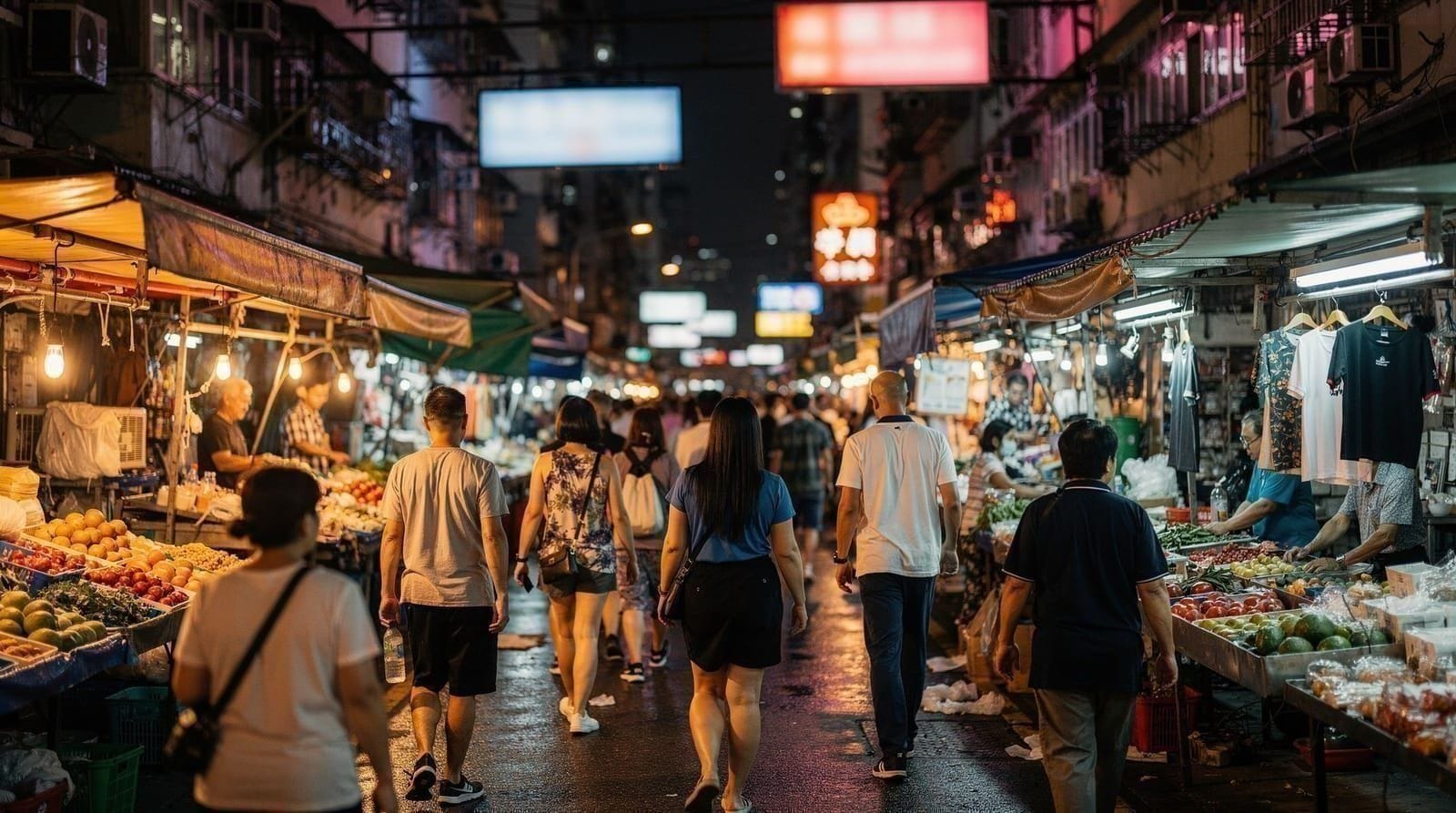
Temple Street Night Market (廟街夜市) is one of Hong Kong’s most famous nocturnal attractions, and it has been curated as such for decades. The street runs south-to-north through Yau Ma Tei, parallel to Nathan Road, and at night it becomes a narrow corridor of vendor stalls, fortune tellers, and open-air restaurants. The atmosphere — neon light diffused through cooking smoke, Cantonese opera from a portable speaker somewhere, the calls of stall holders — is the real attraction.
The merchandise is not. You will find watches that will not last a year, phone cases identical to those in every airport, “jade” that is almost certainly dyed quartzite, and a range of novelty items of no use to anyone. If you come expecting a genuine crafts market or a source of authentic local goods, you will be disappointed. Come for the experience, the food, and the street-level energy of Hong Kong at night.
| Where | Temple Street, Yau Ma Tei (Kansu St to Man Ming Lane) |
| Cost | Free to browse; dinner around HKD 80–200 per person |
| Time needed | 1.5–2 hours |
| Getting there | MTR to Jordan station, exit B, walk north |
| Best time | 7 pm–10 pm |
The market’s geography
Temple Street Night Market occupies the section of Temple Street between Kansu Street (south) and Man Ming Lane (north), with a break in the middle where the Tin Hau Temple occupies a small open square. The temple break is where the fortune-teller stalls concentrate — this midpoint is the most interesting and distinctively Hong Kong section of the entire market.
South section (Kansu Street to the temple): the most concentrated dai pai dong food stalls and a few clothing vendors. This is where to eat.
Middle section (the temple grounds and surrounding streets): fortune tellers, bird-cage sellers, old men playing Chinese chess. This is the most culturally authentic section.
North section (temple to Man Ming Lane): the denser merchandise section — tourist goods, electronics accessories, watches. This is the most generic section.
The dai pai dong food stalls
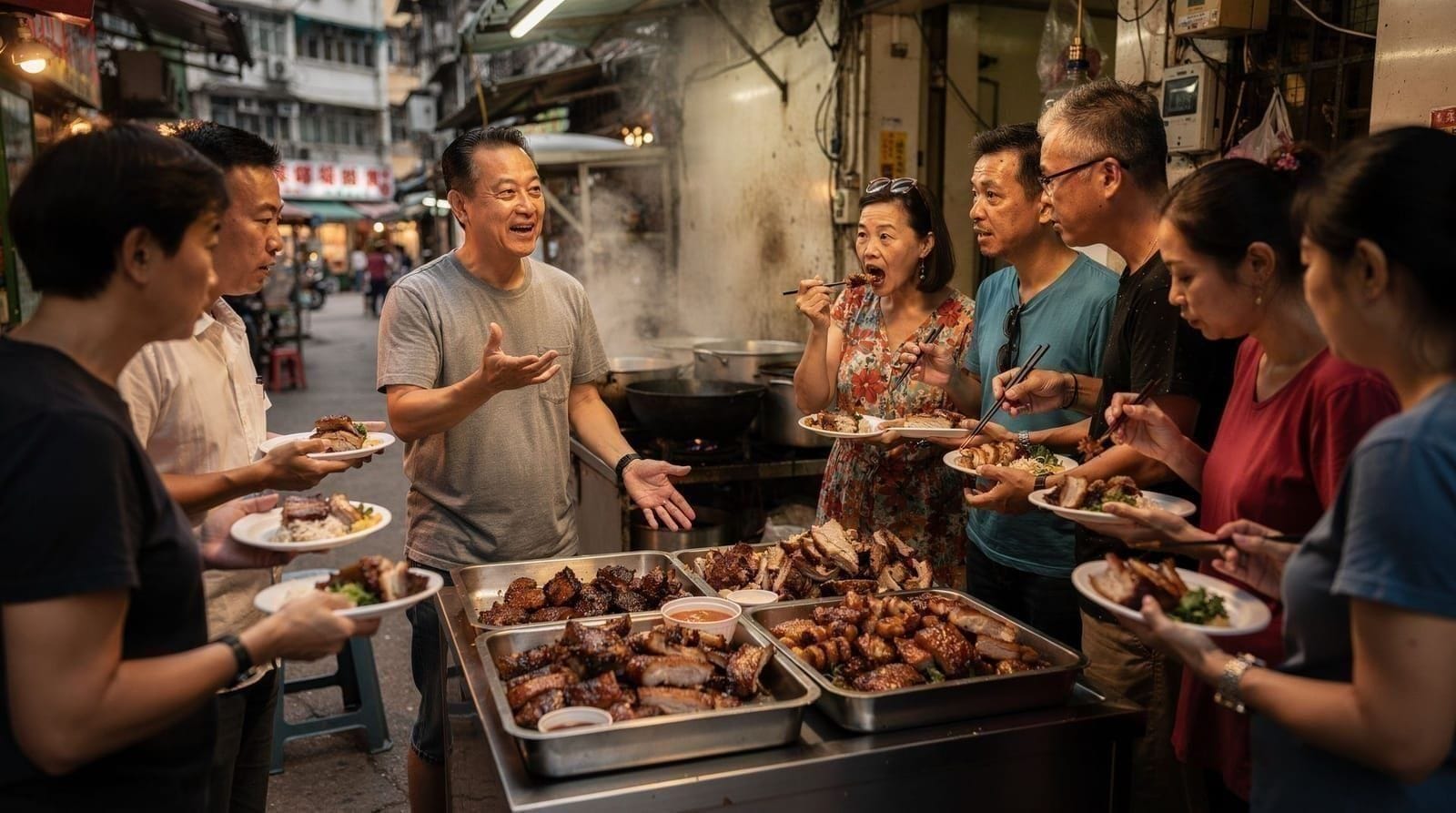
The south end of Temple Street has the best street-food concentration in Kowloon outside of a proper wet market. The stalls operate as full restaurants with folding tables and plastic stools in the open air.
What to order:
-
Typhoon shelter crab (避風塘炒蟹): the regional signature dish — mud crab stir-fried with garlic, chili, black bean, and donut-style fried breadcrumbs. Available at the larger dai pai dong stalls. Market price varies significantly by crab size; expect HKD 200–400 for a crab between two people. Specify your crab and agree the price before ordering.
-
Wonton noodles (雲吞麵): a bowl of egg noodles in a clear chicken-and-shrimp broth with prawn wontons. One of the foundational Hong Kong dishes. At the night market, HKD 45–65 per bowl. Quality varies — the stalls with local clientele are more reliable.
-
Oysters: several stalls specialize in grilled and raw oysters. Price depends on size and origin; expect HKD 80–180 for a half-dozen.
-
Clay pot rice (煲仔飯): rice cooked in a clay pot with various toppings (lap cheong sausage, chicken, salted fish). Requires 20–30 minutes to prepare — order this first if you want it.
-
Tofu fa (豆腐花): silken tofu pudding with ginger syrup. A cooling dessert that rounds off a meal. HKD 15–25.
What to avoid: the handful of fixed restaurants with laminated photograph menus, air conditioning, and tour-group-style table packing. These charge 30–50% more for comparable quality. Eat at the open-air stalls.
The fortune teller strip
The open area around the Tin Hau Temple and the adjacent side streets (particularly Pak Hoi Street) host a permanent concentration of fortune tellers. They operate from small folding tables with minimal props — a pack of cards, perhaps a chart of Chinese astrology.
The main types:
- Face reading (面相): the reader interprets your features — bone structure, eye position, ear shape — to determine character and life trajectory
- Palm reading: the standard offering for tourists; accessible in English
- Mah-jong tiles and four pillars (四柱命理): more complex reading based on birth date and time; requires a competent translator if your Cantonese is limited
Pricing: HKD 100–200 for a basic palm reading; HKD 300–600 for extended sessions. These are professionals with established practice — you are paying for a cultural experience, and most readers have been at this specific location for decades.
The fortune tellers are not scammers in the common sense; they do not manufacture crises to sell you solutions. The experience is genuine to local practice.
The merchandise: expectations and bargaining
The merchandise at Temple Street is aimed at tourists and makes no pretense otherwise. A partial inventory:
-
Watches: replica and low-quality fashion watches. Starting prices of HKD 300–600 should be bargained to HKD 80–150 if you actually want one.
-
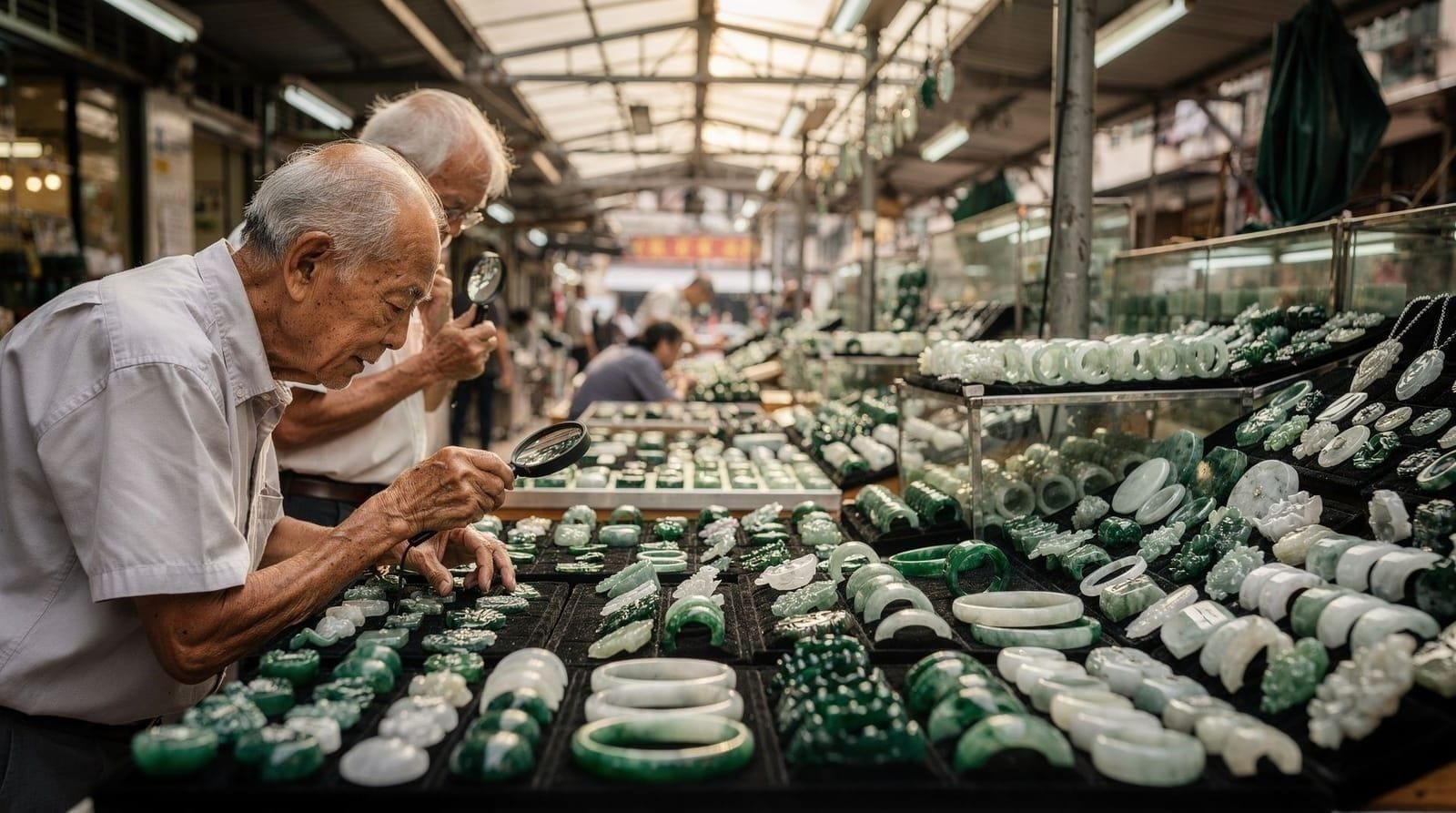
Jade pendants and jewelry: almost certainly dyed stone rather than genuine jade. Treat accordingly — as a souvenir, not an investment.
-
Clothing: generic T-shirts, polo shirts, and novelty items with Hong Kong slogans.
-
Electronics: phone cases, earbuds, adapters. The adapters and cables are often passable; the branded items are counterfeit.
-
Retro collectibles: some stalls stock old Hong Kong film posters, vintage toys, and Maoist kitsch. These are the most interesting items for collectors.
Bargaining norms: stall holders expect negotiation. A reasonable starting counter-offer is 40–50% of the quoted price, settling around 60–70%. Do not take the quoted price seriously; it is always inflated for tourists. Walking away often results in the vendor calling you back with a lower price. Temple Street Night Market and Ladies Market tour ---
The Tin Hau Temple
The Tin Hau Temple (Temple of the Sea Goddess) that gives the street its name sits in the middle of the market area. It is an active place of worship and can be visited during the market — incense burning, worshippers making offerings, and the visual density of a working temple interior. Entry is free. The temple dates back to the 1876 founding of this community; the market that grew around it has been here since the 1970s.
Nearby: the Jade Market
A 5-minute walk north of the main Temple Street market, the Jade Market (玉器市場) under the flyover at Battery Street sells jade items in a permanent daytime market. This is worth visiting in the late afternoon before Temple Street comes to life — see our Jade Market guide for more detail.
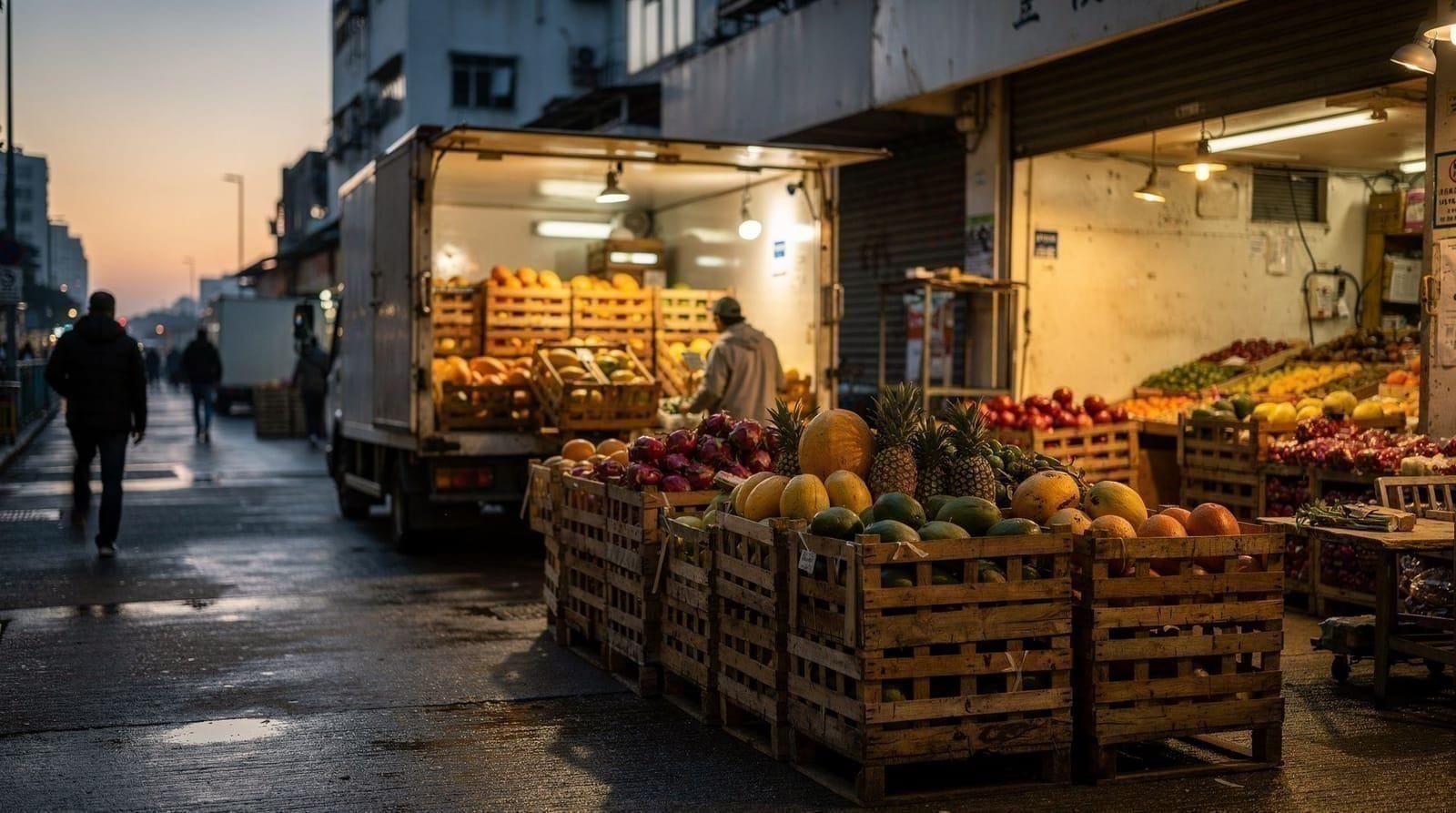
The Yau Ma Tei MTR vicinity also has the Wholesale Fruit Market (open in the early morning hours — 5–9 am) and several old-style pharmacy shops along Temple Street’s northern extension.
Combining Temple Street with other markets
A Kowloon market evening circuit works well:
- 5:00 pm — Ladies Market in Mong Kok (take MTR to Mong Kok station) for the early-setting stalls and less intense crowds
- 6:30 pm — Walk or MTR to Jordan for dinner at the Temple Street dai pai dongs
- 8:00 pm — Fortune teller section, browse stalls
- 9:30 pm — Walk back to Nathan Road for the Yau Ma Tei streetscape
See our Ladies Market guide for Mong Kok timing and bargaining advice.
How Temple Street compares to Hong Kong’s other night markets
Temple Street is not Hong Kong’s only market, and knowing where it sits in the wider shopping landscape helps set expectations. The Ladies Market in Mong Kok is longer, more crowded, and more purely retail-focused — better for actually buying clothing and accessories at volume. Temple Street trades some of that retail density for atmosphere: the fortune tellers, the dai pai dong food, and the Tin Hau Temple give it a cultural layer the Ladies Market doesn’t have. If you only have one night market evening in your itinerary and want the fuller cultural experience, choose Temple Street; if bargain shopping is the priority, Ladies Market wins.
For a more structured introduction to Hong Kong’s street food scene beyond what a single market night offers, the Hong Kong food tours guide and the dai pai dong guide both cover the open-air stall culture that Temple Street’s south end represents in miniature.
How to pace your evening
Temple Street rewards a slow, loosely planned walk more than a checklist. Start at the south end, where the smell of the dai pai dong kitchens tells you where you are, and decide on dinner before you start browsing. Hunger is what makes people accept the first restaurant that calls out to them, and that is how most overpaying happens. Eat first, then wander, and you will bargain with a clearer head and a calmer mood.
Walk the whole street once without buying anything. This gives you a feel for which stalls repeat the same stock, which ones have something unusual, and where the crowd thickens. Then double back to anything that caught your eye. Prices drift between stalls selling near-identical goods, and a second pass makes it easy to spot a vendor who is more flexible than the first one you tried.
Keep your belongings simple. A small bag worn in front, a little cash in modest notes for the food stalls, and a phone you are not waving around is enough. The street is narrow and the foot traffic is constant, so stopping abruptly to take a photo can block a whole lane. Step to the side first, then shoot.
Who will enjoy Temple Street most
First-time visitors who want a sense of Hong Kong after dark tend to get the most from this market, especially if they treat it as an evening out rather than a shopping trip. It slots neatly into a first-time Hong Kong itinerary as the low-effort, high-atmosphere stop after a long day of sightseeing, and it suits travellers who like to graze on street food rather than commit to a sit-down restaurant. If you are planning your food stops more broadly, our best street food in Hong Kong guide shows how this market fits alongside other options around the city.
Families can enjoy it too, though the crowds and narrow lanes call for patience, and younger children may tire quickly. The Hong Kong with kids guide has more on pacing a day so the evening outing stays fun rather than exhausting. Solo travellers will find the food stalls friendly to a single diner, and the open-air tables make it easy to feel part of the scene without any awkwardness.
Photographers should come with modest expectations about gear and big expectations about light. The mix of neon, steam and lamp-lit stalls is at its best once darkness has properly settled. For more ideas on capturing the city after sunset, see our notes on the Hong Kong neon signs story and the best photo spots in Hong Kong.
Reading the street like a local
Look at who is eating where. Stalls with a mix of local regulars, workers on a late meal and families are the safest bets, because locals do not return to places that serve poor food. A short menu, quick turnover and a cook who is visibly busy are all good signs. A stall that is empty while the one next door is full is usually telling you something, even if you cannot see why.
Notice, too, how the street changes as the evening goes on. Early on, the merchandise stalls are still arranging their stock and the food kitchens are firing up. Later, the crowd shifts from browsing to eating, and the tables fill. By the time the night is winding down, the street has a more relaxed feel, and the conversation at the tables gets louder. Each stage gives you a slightly different Temple Street, so there is no single right moment to arrive, only the one that suits your mood.
If you want to understand the neighbourhood beyond the market itself, Yau Ma Tei blends into Mong Kok to the north, and the surrounding streets reward a short daytime wander. Pairing the night market with a separate daytime visit to the Jade Market or a walk through Sham Shui Po gives a fuller picture of Kowloon’s working-class street life, which is far more varied than any single tourist market suggests.
Finally, remember that the market is as much about people-watching as buying. Take a seat, order something modest, and watch the street move around you. The fortune tellers, the stall holders calling out, the cooks working over open flames and the visitors from every corner of the world all make up the show. When you plan your wider stay, our where to stay in Hong Kong guide and the Hong Kong MTR guide help you choose a base that makes late-night trips like this one easy to get home from.
What to skip
Not every part of Temple Street rewards the time. The handful of fixed restaurants along the market’s edges — identifiable by laminated photo menus, air conditioning, and staff actively calling out to passersby — charge 30–50% more for food no better than the open-air stalls a few metres away. Similarly, the electronics stalls selling phone accessories and “branded” earbuds are almost uniformly counterfeit or low-grade; treat anything electronic here as disposable at best. If your time is limited, prioritise the dai pai dong food stalls, the fortune-teller strip around Tin Hau Temple, and a brief walk through the merchandise section rather than trying to see the entire market corridor end to end.
Kowloon private night markets and street food tourFrequently asked questions about Temple Street Night Market guide — what to expect and what to skip
What time does Temple Street Night Market open and close?
What can I buy at Temple Street Night Market?
Is the food at Temple Street good?
Are the fortune tellers at Temple Street legitimate?
Is Temple Street Night Market safe?
How do I get to Temple Street Night Market?
Top experiences
Bookable activities with verified prices and instant confirmation on GetYourGuide.