Best street food in Hong Kong — what to eat and where to find it
Hong Kong: Street food feasting tour
What is the best street food in Hong Kong?
The non-negotiables are curry fish balls (HKD 15–25 per skewer, any street stall), egg waffles (格仔餅, HKD 20–30), wonton noodle soup (HKD 40–55 at a proper noodle shop), roast goose at Yung Kee or Kam's Roastery (HKD 120–180), and pineapple bun with butter at any cha chaan teng (HKD 15–25). Hong Kong street food is consistently good and very cheap if you know where to go.
How Hong Kong street food actually works
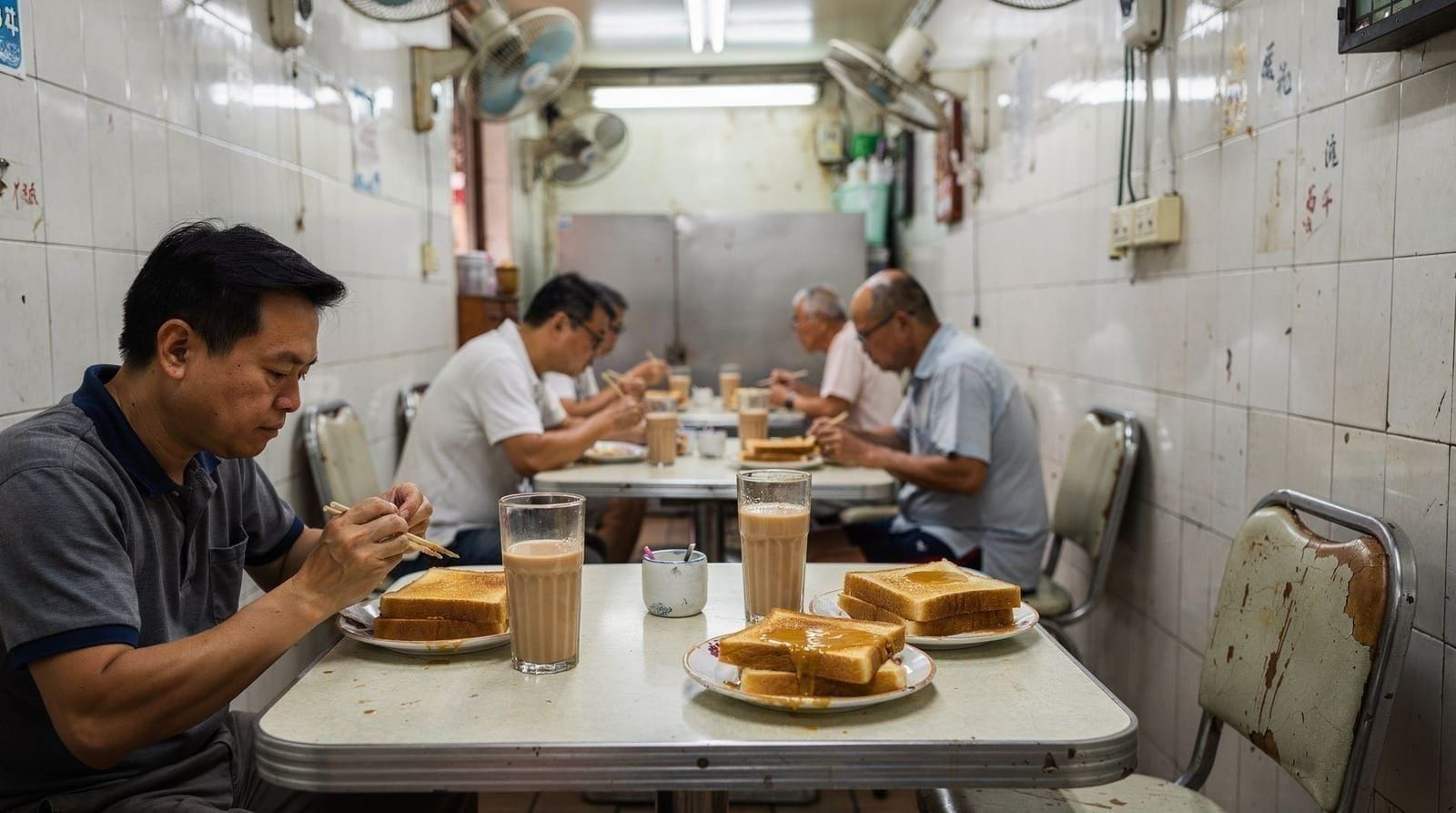
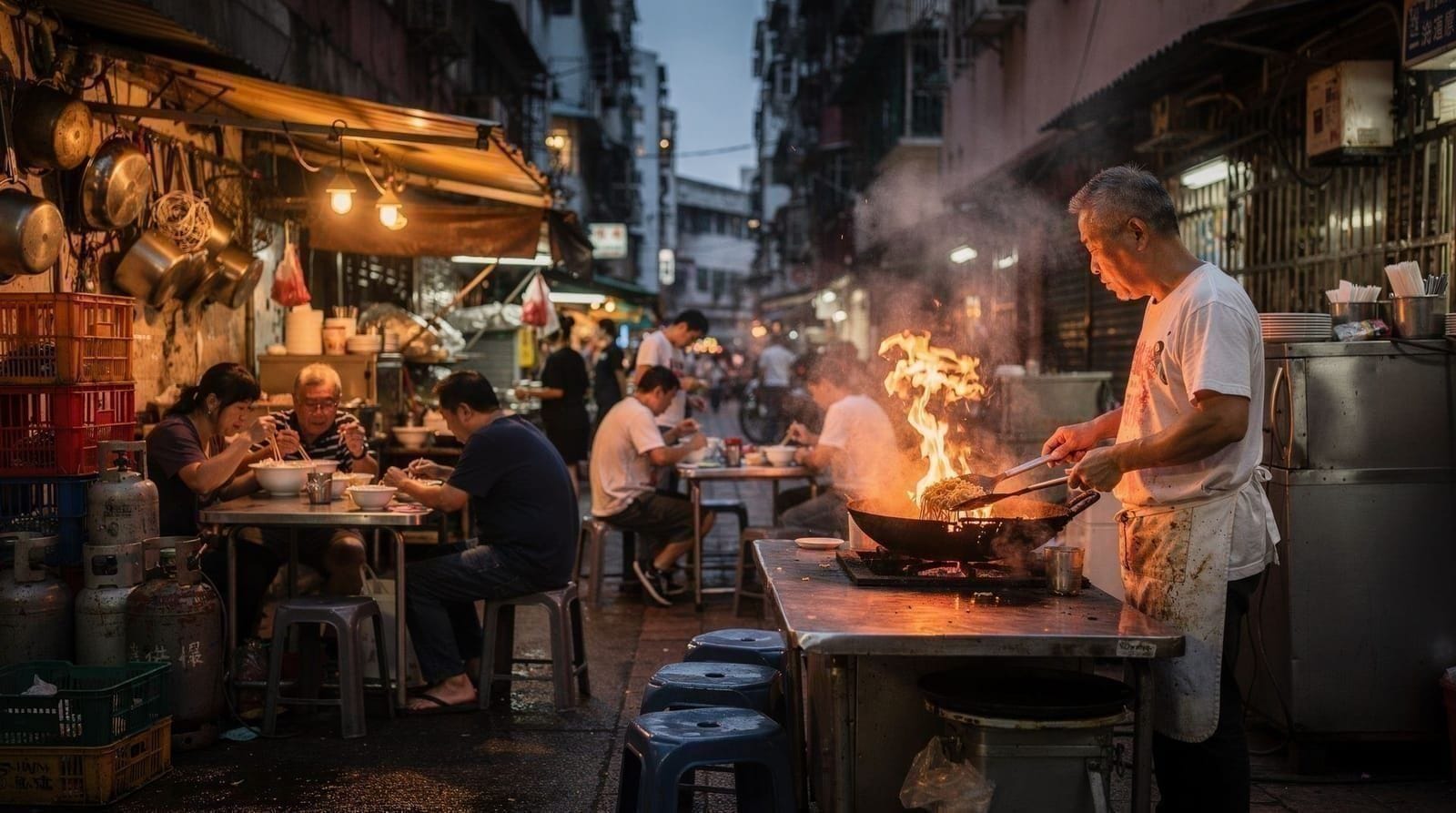
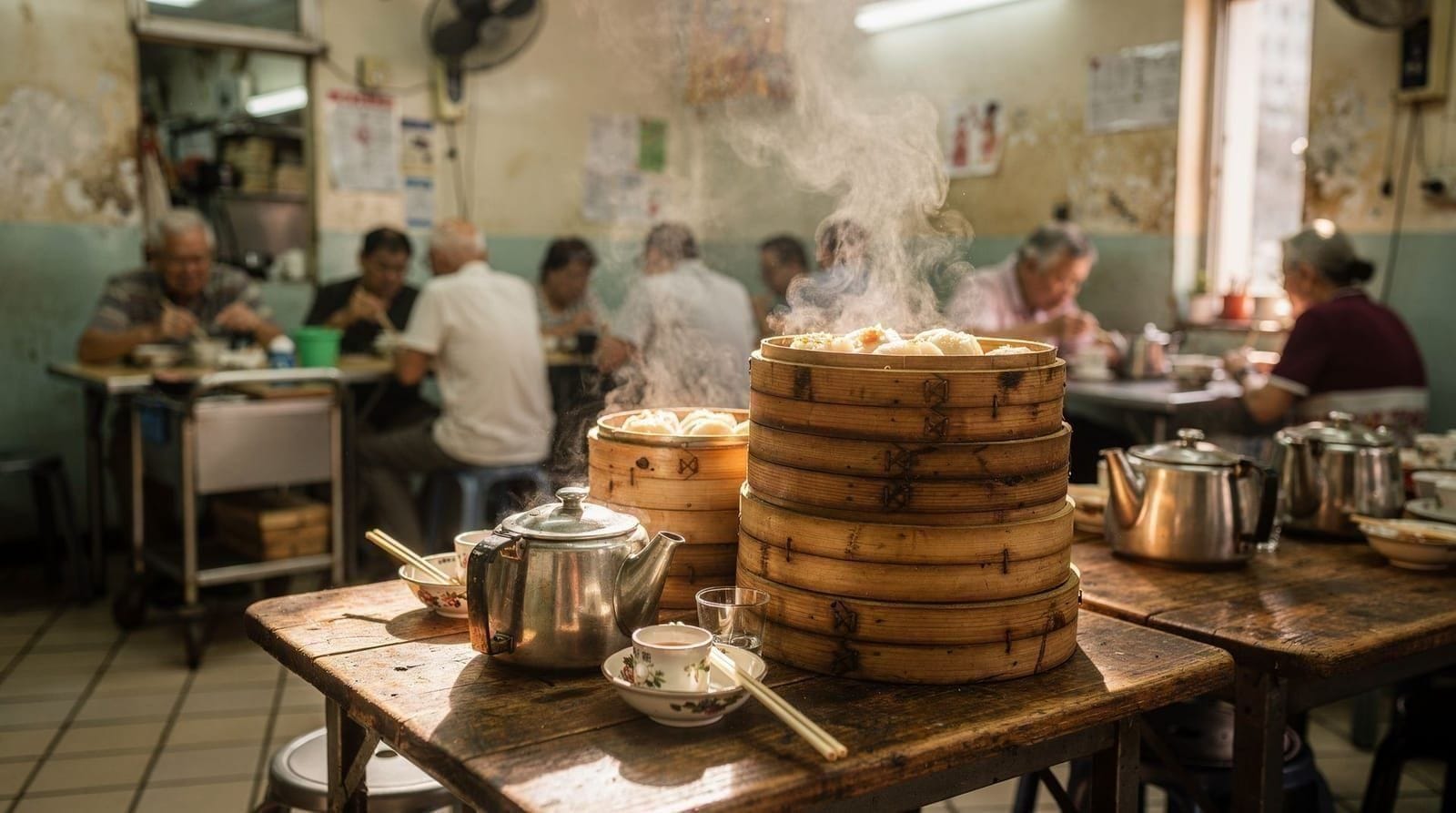
Hong Kong’s street food scene operates differently from Thai or Vietnamese street food cultures — you will not find the same clusters of open-air vendors on every corner. What you will find instead: specialist stalls for single items (egg waffles, fish balls, stinky tofu), dedicated cooked food centres inside housing estates and markets, and cha chaan tengs (Hong Kong-style diners) where the food is fast, cheap, and characteristically local.
The food quality is consistently high. Hong Kong has strict food safety enforcement, and the competition between stalls on the same street is intense. A fish ball stall that has operated for twenty years is still there because its fish balls are better than its competitors, not because it has a lock on the tourist market.
This guide covers the actual Hong Kong street food experience — what to eat, where it is concentrated, and what things cost.
| Where | Mong Kok, Sham Shui Po, Temple Street, Wan Chai |
| Cost per item | HKD 10-35 |
| Full crawl (5-6 items) | HKD 150-250 per person |
| Best time | Evening, roughly 17:00-22:00 |
| Cash or card | Mostly cash; carry small HKD notes |
The essential items
Curry fish balls (咖喱魚蛋)
The most iconic Hong Kong street snack. Bouncy, spiced fish paste balls on bamboo skewers, simmered in a rich, mildly spicy curry sauce and kept hot in a large pot. The sauce is the key — too thin and it is generic; the good versions have depth from dried shrimp, curry powder, and long simmering.
Cost: HKD 10–25 for 5–6 balls on skewers Where to find: Any street food stall in Mong Kok, Sham Shui Po, Wan Chai, and Temple Street Night Market. The stall clusters on Fa Yuen Street in Mong Kok and the outdoor stalls near Yau Ma Tei Market are reliable.
Egg waffles (雞蛋仔, gai dan jai)
A distinctly Hong Kong street food — a bubble-textured waffle cooked in a hinged round mould, creating a grid of small egg-shaped bubbles. The exterior should be slightly crispy; the interior soft and slightly eggy. Best eaten fresh and hot; flavour deteriorates within five minutes.
Traditional flavour (plain, slightly sweet) is the correct choice. The Instagram-version versions with matcha, taro, and chocolate exist in tourist-oriented spots and are generally worse than the original.
Cost: HKD 20–30 per piece Where: Mong Kok (Dundas Street, Fa Yuen Street area), Causeway Bay streets, Temple Street Night Market. Lee Keung Kee North in Causeway Bay is famous; queue at peak times.
Wonton noodle soup (雲吞麵)
Not strictly a street food but served at open-front shops with zero interior ambience that function as street food in practice. The Hong Kong version has small, perfectly wrapped wontons (shrimp and pork filling, no heavy starch) in a clear pork-and-dried-shrimp broth, served over spring-wheat noodles (细蛋麵) that have a specific bouncy bite.
The noodles matter as much as the wontons — they should be al dente, springy, and not starchy. A good wonton noodle shop has been making its own wontons and sourcing its noodles from a specialist supplier for decades.
Cost: HKD 38–60 per bowl Where: Mak’s Noodle in Central (一家麵家, 77 Wellington St) is the most famous; Tsim Chai Kee on Wellington Street is cheaper and equally good. Neighbourhood shops in Sham Shui Po and Yau Ma Tei often have excellent versions at HKD 38–42.
Roast meats (燒味) — goose, duck, pork
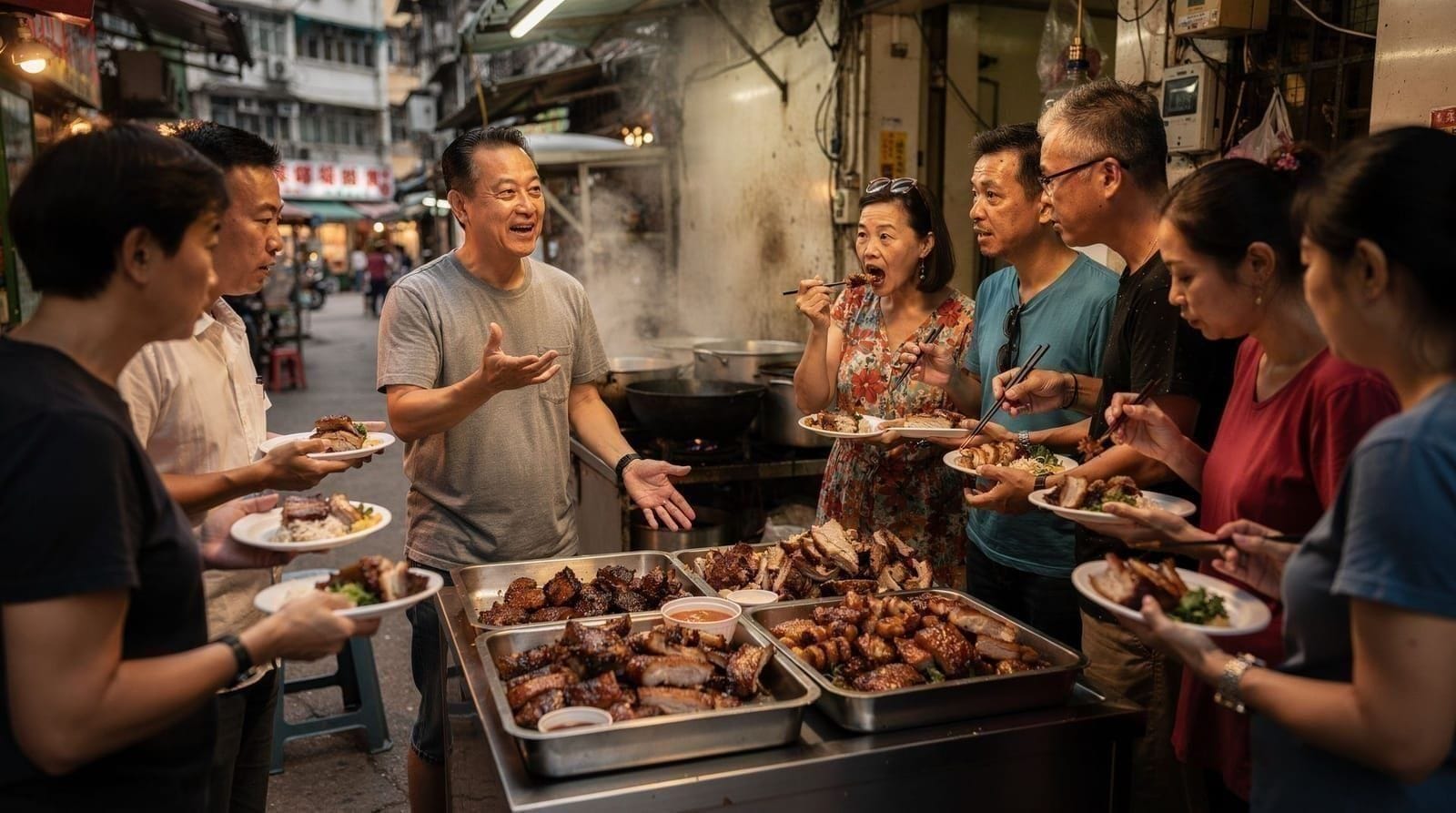
Hong Kong barbecue roast meats are a serious craft. Roast goose (燒鵝, siu ngap) is the signature: the skin lacquered crispy, the meat moist, served over rice with plum sauce. Char siu (叉燒, honey-glazed BBQ pork) hangs in the window of every roastery in the city.
Kam’s Roastery (甘牌燒鵝) in Wan Chai holds a Michelin star. Yung Kee Restaurant (鏞記) in Central is the heritage institution. Both serve roast goose by portion — a half portion is HKD 120–180 with rice.
Cost: HKD 50–80 for a char siu pork rice, HKD 120–180 for roast goose rice with a proper portion Where: Any roastery (with hanging meats in the window) in any neighbourhood. Central, Wan Chai, and Sham Shui Po have the highest concentration.
Pineapple bun with butter (菠蘿油)
The pineapple bun (菠蘿包, bo lo bao) is a soft sweet bread roll with a sugar crust that cracks like a pineapple surface — no actual pineapple inside. Split hot and filled with a thick slab of cold, slightly salted butter, it becomes the pineapple butter bun (菠蘿油), one of Hong Kong’s most satisfying snacks.
Cost: HKD 15–25 at any cha chaan teng or bakery Where: Every cha chaan teng in Hong Kong. Kam Wah Café (金華冰廳) in Mong Kok is considered the benchmark.
Stinky tofu (臭豆腐)
Fermented tofu, fried until crispy outside and custardy inside, served with pickled cabbage and chili sauce. The fermentation smell (very pungent — sulfurous, funky) is the main obstacle. The taste is milder than the smell suggests and wins over many skeptics.
Cost: HKD 20–35 per serving (3–4 pieces) Where: Temple Street Night Market, Sham Shui Po side streets. The smell will locate it before you see the stall.
Egg tarts (蛋撻)
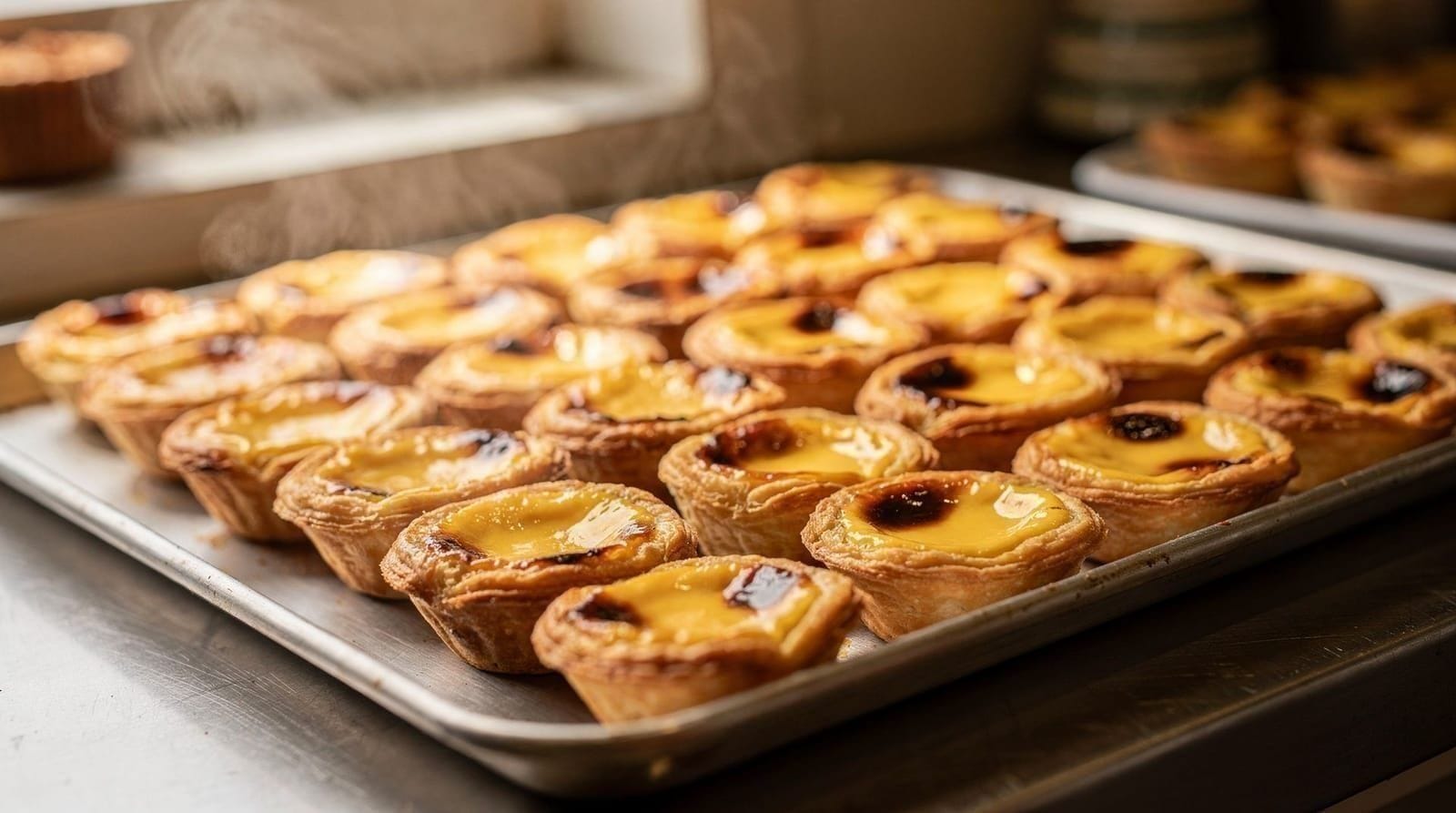
Portuguese-style custard tarts — the Hong Kong version has a particularly light, slightly eggy custard and a short pastry shell. Eaten warm from the oven. HKD 8–15 per tart. See the dedicated egg tarts guide for the city’s best bakeries.
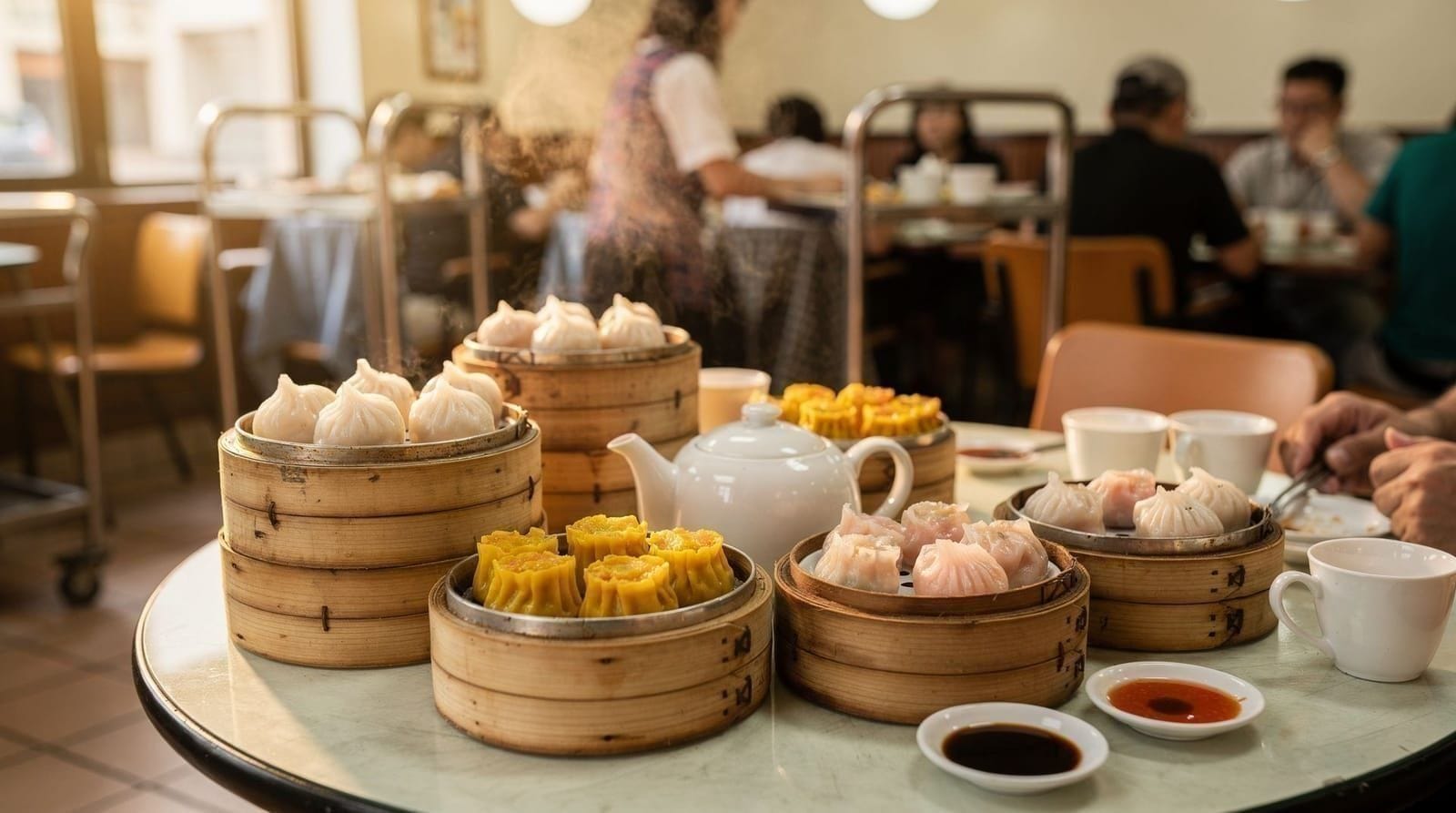
Siu mai at a street stall
Not the dim sum version — this is a smaller, fried/steamed siu mai sold from a bamboo steamer on the street. Sold from covered carts near MTR exits and in market areas, HKD 6–10 per piece. Simpler than the teahouse version, and excellent as a snack.
Clay pot rice (煲仔飯)
A winter street food — rice cooked in a clay pot over charcoal with toppings (cured pork sausage, preserved meat, chicken, salted fish) until the bottom layer caramelises. The burnt rice crust is specifically desirable. Served in the pot with soy sauce and sesame oil.
Cost: HKD 65–95 per pot (a full meal for one) Where: Dai pai dong and cooked food centres in Sham Shui Po and Yau Ma Tei, October–March primarily (it is a cold-weather dish by tradition, though served year-round at specialist shops).
Coconut pudding (椰汁糕) and other dessert stalls
Traditional Cantonese desserts available at small dessert shops (糖水, tong sui shops): mango pudding, herbal jelly (龜苓膏), sesame paste (芝麻糊), tofu fa (豆腐花, silken tofu in syrup), red bean soup. Served warm or chilled depending on the item.
Cost: HKD 20–40 per serving Where: Any tong sui shop. Yat Tung Heen in Kowloon City has several good options; Mong Kok has clusters of dessert shops near the Ladies’ Market.

Where the best street food concentrations are
Mong Kok
The highest-density area for street food browsing in Hong Kong. Fa Yuen Street (Sneaker Street), Dundas Street, and the blocks around Ladies’ Market have permanent stalls and vendors selling fish balls, egg waffles, stinky tofu, and roasted chestnuts in season. The cooked food stalls on Fa Yuen Street are particularly good. Evening is the best time (17:00–22:00).
Sham Shui Po
Increasingly the favourite neighbourhood for food-focused visitors. Apliu Street and Ki Lung Street have authentic local eating that has not been polished for tourists. The cooked food centre near Sham Shui Po MTR has excellent cheap plates. Walking distance from Tim Ho Wan (original branch).
Temple Street Night Market (Yau Ma Tei)
The dedicated street food section mid-market (between Jordan Road and Nanking Street) has outdoor stalls serving seafood, clay pot rice, snake soup (a traditional medicinal dish — genuinely offered), and general Cantonese dishes. Atmospheric and correct for the evening experience. Prices are slightly elevated versus daytime markets but still reasonable. Open from approximately 16:00.
Wan Chai
The area around Johnston Road and the older blocks behind the waterfront has several excellent roastery shops, cha chaan tengs, and noodle shops. The Wan Chai wet market on Cross Street is worth a morning visit. Less tourist-oriented than TST despite being central.
Central Cooked Food Centre (上環熟食中心)
The Sheung Wan Municipal Services Building Cooked Food Centre has been a local institution for decades — a collection of stalls serving roast meats, noodles, wonton soup, and congee at prices well below what you would pay at a restaurant. Industrial atmosphere; excellent food. Located at the top of the Sheung Wan Municipal Services Building on Queen’s Road West.
Food tour versus self-guided
A guided street food tour covers multiple stalls, explains what you are eating, and takes you to spots that are genuinely difficult to find without Cantonese language skills or local knowledge. Worth considering for a first visit when time is limited.
Self-guided works well once you have a list of specific dishes and a rough geography. The food tours guide covers both options.

What street food costs
| Item | Price (HKD) | Approx USD |
|---|---|---|
| Curry fish balls (6 on skewer) | 15–25 | 2–3 |
| Egg waffle | 20–30 | 2.50–4 |
| Pineapple bun with butter | 15–25 | 2–3 |
| Wonton noodle soup | 38–60 | 5–8 |
| Char siu pork rice (roastery) | 50–80 | 6.50–10 |
| Stinky tofu | 20–35 | 2.50–4.50 |
| Egg tart | 8–15 | 1–2 |
| Clay pot rice | 65–95 | 8.50–12 |
| Tong sui dessert | 20–40 | 2.50–5 |
A full street food crawl covering 5–6 items costs HKD 150–250 (USD 19–32) per person.
Frequently asked questions about Hong Kong street food
Is Hong Kong street food safe to eat?
Yes. Food safety standards in Hong Kong are high and enforced. Street stalls are licensed and inspected. The main risk is the same as any city — eat at busy stalls with high turnover (the food is fresh), avoid anything that looks like it has been sitting out in the heat uncovered for hours.
What street food is unique to Hong Kong?
Egg waffles (雞蛋仔) are specifically a Hong Kong invention. Curry fish balls as served in Hong Kong (lighter, spicier, specific curry profile) are distinctly local. The wonton noodle soup in its Hong Kong form (very thin noodle, light broth, small wontons) is distinct from mainland Chinese versions.
Where can I find street food late at night?
Temple Street Night Market operates until around midnight. Mong Kok has stalls running to 23:00. 7-Eleven is 24 hours and serves hot items. Most neighbourhood stalls close by 21:00. The dai pai dong guide covers the traditional outdoor stalls, some of which operate into the night.
Is Mong Kok the best area for street food?
For variety and density, yes. For authenticity and lower prices, Sham Shui Po and Yau Ma Tei are arguably better — less tourist-facing, more neighbourhood-oriented. The Michelin cheap eats guide covers the city’s most acclaimed inexpensive restaurants for more structured eating.
How can I tell if a street food stall is safe to eat at?
Look for a visible queue of local customers, food cooked to order rather than sitting under a heat lamp, and a displayed food hygiene permit near the counter. High turnover is the single best indicator — a busy stall is selling and cooking constantly, which keeps the food fresh.
Is street food in Hong Kong cash-only?
Mostly, yes. Small stalls and market vendors generally expect cash, though Octopus card acceptance has spread to some fixed-location shops. Carry small HKD notes and coins when doing a street food crawl to avoid holding up a queue over change.
Seasonal and festival street food
Hong Kong’s street food landscape changes with festivals and seasons:
Chinese New Year (late January to mid-February): Night market stalls cluster in Victoria Park in Causeway Bay and Flower Market Road in Mong Kok — the latter filled with decorative plants and traditional New Year snacks. Look for nian gao (年糕, sticky glutinous rice cake), pineapple cake (鳳梨酥), and various dried fruits and nuts at festival market prices.
Mid-Autumn Festival (September or October, date varies): Mooncakes (月餅) appear everywhere in the 2–3 weeks before the festival. Traditional mooncakes have a dense lotus paste or red bean filling with salted egg yolk; modern versions include ice cream, snow skin, and various flavoured pastes. Available at bakeries, supermarkets, and dedicated mooncake stalls. Price: HKD 50–200+ per cake depending on brand and quality. The festival itself features lanterns and outdoor gatherings in Victoria Park.
Dragon Boat Festival (May or June, date varies): Rice dumplings (糭, zongzi) appear at wet markets and specialty shops in the weeks before the festival. Large pyramidal bundles of glutinous rice filled with salted pork, preserved egg, and dried shrimp, wrapped in bamboo leaves and steamed for several hours. One of the most distinctly Chinese festival foods and worth eating if your visit coincides.
Winter: Clay pot rice stalls and snake soup shops increase their presence from October. The cooler months (November–February) are also the season for hot pots and hot tong sui dessert soups.
The snack food geography of Hong Kong
Different neighbourhoods have specific street food associations that are worth knowing:
Central/Sheung Wan: Egg tarts at Tai Cheong Bakery, siu mai from the stalls near the Sheung Wan market building, traditional dried goods and herbal medicines along Des Voeux Road West (less for eating, more for observing the preserved seafood and medicine culture).
Mong Kok: The full street food spectrum — egg waffles on Dundas Street, curry fish balls on Fa Yuen Street, Temple Street extension food, pineapple buns at Kam Wah Café on Bute Street. The single densest concentration of street snack options in Hong Kong.
Yau Ma Tei: Temple Street Night Market for outdoor cooked food, the wet market for morning ingredients, and the traditional tong sui dessert shops on various side streets.
Sham Shui Po: Tim Ho Wan for dim sum, Lau Sum Kee for handmade noodles, the Apliu Street flea market with scattered food vendors, and increasingly the area around Ki Lung Street for creative eating that is not yet on the tourist map.
Wan Chai: Roast meat shops on Johnston Road, the Wan Chai Cooked Food Centre for traditional local lunch, and the outdoor remnants of the Graham Street Market on the Hong Kong Island side.
Stanley: Lord Stow’s Bakery for Portuguese egg tarts, the market for casual browsing, and the waterfront restaurants for seafood (at tourist prices — this is not a cheap eating destination).
Roasted chestnuts and seasonal stalls
From October to February, roasted chestnut vendors appear on streets in Mong Kok, TST, and shopping areas throughout the city. Roasted in black sand over a gas burner, sold by weight (HKD 20–35 per small bag). A specific autumn street food that is easy to miss if you visit in summer.
Similarly, sugar cane juice (甘蔗汁) vendors with hand-operated presses appear near wet markets in spring and summer — fresh pressed cane juice for HKD 10–15 per cup. The squeezed cane is fed through large metal rollers; the fresh juice is green-tinted and very sweet.
The street food and dining culture connection
Hong Kong’s street food tradition is not separate from its dining culture — it is part of the same continuum. The wonton in a noodle shop is the same wonton that started as a street hawker item. The dim sum at a Michelin-starred teahouse is a refined version of food that was sold from baskets carried by hawkers through the streets of 1930s Hong Kong. The char siu at a roastery window descends from the street-roasted meats of the colonial-era markets.
Understanding Hong Kong’s street food is understanding how a city with one of the world’s great food cultures maintains quality and accessibility at every price level. The same values — fresh ingredients, skilled technique, competitive quality pressure — apply at the HKD 15 fish ball stall and the HKD 150 dim sum teahouse. This is the city’s most important food characteristic, and it is best understood from the street level.
For the full context of how the street food tradition connects to the cha chaan teng, the dim sum teahouse, and the dai pai dong, see the cha chaan teng guide, dim sum guide, and dai pai dong guide.
Hygiene, safety, and how to choose a good stall
The single most reliable indicator of a good street food stall in Hong Kong is turnover — busy stalls with a visible queue of locals are cooking fresh food constantly, while a quiet stall with food sitting under a heat lamp is the one to skip. Licensed stalls display a food hygiene permit, usually a small laminated card near the counter; it is not something most visitors check, but its presence is a reasonable sign of a legitimate, inspected operation.
Use common sense on cleanliness: a stall with a clean cutting surface, gloved or tong-handled service, and a fast-moving line is a safe bet almost anywhere in the city. Bottled or boiled drinks are the norm; tap water is technically safe in Hong Kong but street vendors do not typically serve it.
A first-timer’s street food route
For a self-guided introduction covering several of the essential dishes in a single afternoon and evening, a workable route starts in Sham Shui Po at lunchtime for the cooked food centre and a bowl of noodles, continues to Mong Kok by mid-afternoon for egg waffles and curry fish balls along Fa Yuen Street, and finishes at Temple Street Night Market in the early evening for clay pot rice or a seafood plate as the market comes alive.
This route follows the MTR’s Tsuen Wan Line closely, keeping transit time low between each stop, and totals roughly HKD 150-220 per person across the full day. Pace yourself — Hong Kong street portions are generous even when individually small, and trying to eat at every stop leaves little room for the evening’s main course.
Fitting street food into the rest of your trip
Street food works best as a thread through your days rather than a separate mission. The areas above are also some of the city’s most rewarding places to walk, so it is easy to combine a snack stop with sightseeing: the Mong Kok area guide and the Temple Street Night Market guide both cover what to see between bites, and the Ladies’ Market guide is a natural companion for an evening in Mong Kok.
If you are planning around a tight budget, the Hong Kong on a budget guide shows how a few street meals a day keep costs down without feeling like a sacrifice. If food is the main reason you are visiting, the Hong Kong foodie itinerary strings the best meals together day by day, and the Sham Shui Po neighbourhood page is a good place to start for the most local-feeling eating.
Top experiences
Bookable activities with verified prices and instant confirmation on GetYourGuide.