Hong Kong foodie itinerary — 3 days of eating
Hong Kong: Street food tour with locals dim sum and wonton
What three days of eating in Hong Kong actually looks like
Three days is enough time to eat your way through the defining food experiences of Hong Kong — Michelin-starred dim sum that costs less than a sandwich back home, roast meats carved at the counter, live seafood pulled from the harbour, and street food consumed standing at a folding table after dark. No course, no itinerary — but a clear plan for each morning, afternoon, and evening.
This itinerary covers Central and Sheung Wan, Wan Chai, Causeway Bay, Sham Shui Po, Aberdeen, and Lamma Island. All travel is by MTR and occasional ferry — no taxis needed. A loaded Octopus card covers every journey. Budget for food: roughly HK$350–500 (USD $45–64) per person per day eating well.
| Where | Sham Shui Po, Central, Wan Chai, Causeway Bay, Aberdeen, Lamma Island |
| Cost | Around HK$350–500/person/day eating well |
| Time needed | 3 full days |
| Getting there | MTR + bus + kaido ferry, all Octopus-payable except the kaido |
| Best time | Any season; book Lamma seafood restaurants ahead on weekends |
Three days, three themes
| Day | Morning | Evening highlight |
|---|---|---|
| Day 1 | Michelin dim sum, Sham Shui Po | Dai pai dong dinner, Wan Chai |
| Day 2 | Central Market food hall | Temple Street claypot rice |
| Day 3 | Aberdeen fish market | Lamma Island seafood lunch |
Day 1 — Dim sum, cha chaan teng, and dai pai dong
Morning: Michelin-starred dim sum in Sham Shui Po
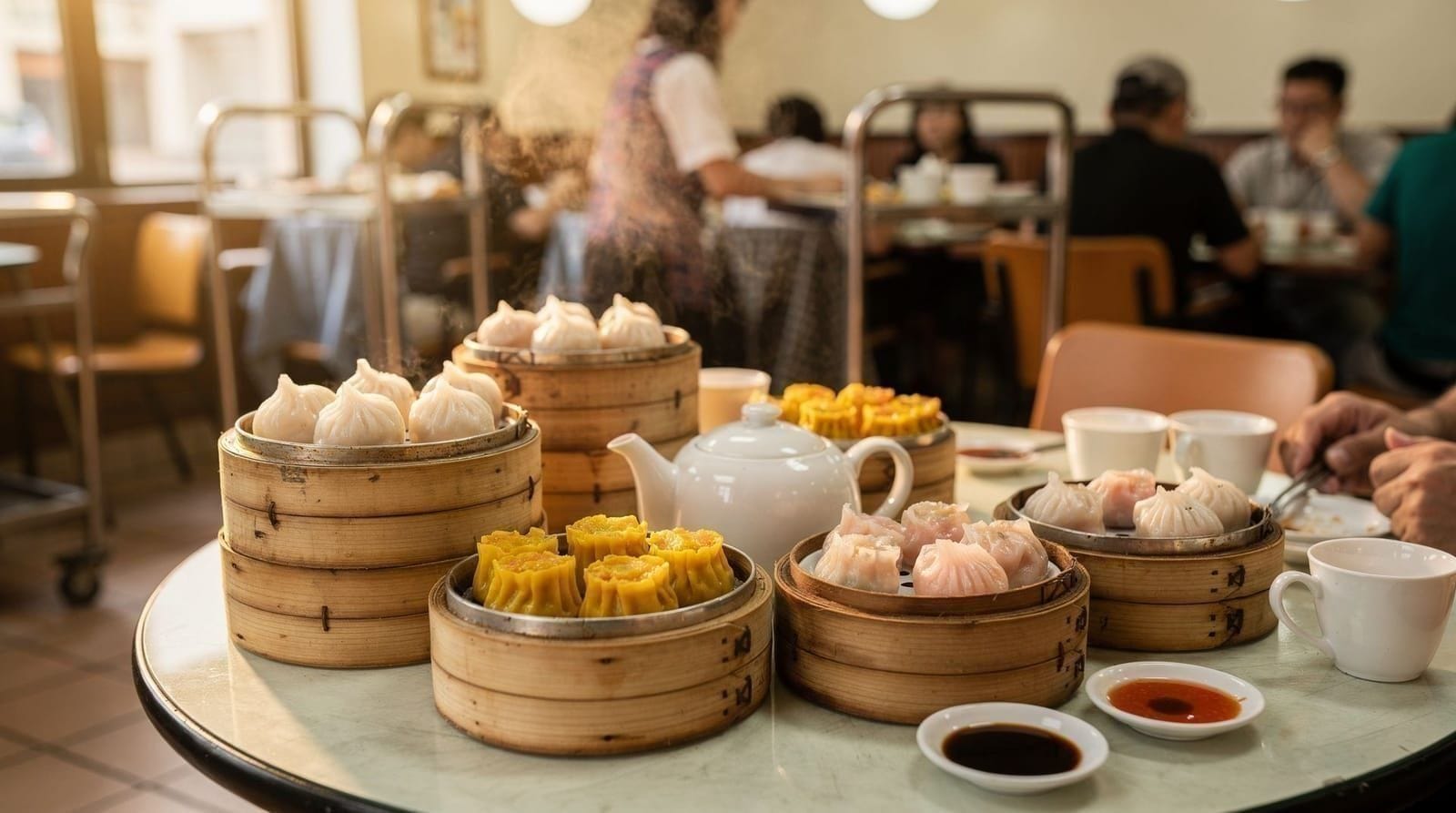
The single best value meal you can eat in Hong Kong is dim sum at Tim Ho Wan. The original branch sits in Sham Shui Po (Kwong Wa Street), a working-class district that bears no resemblance to a tourist destination — which is partly the point. Tim Ho Wan earned a Michelin star for its baked char siu bao (BBQ pork buns) and has held it for years. A full meal runs HK$60–100 per person.
Take the MTR to Sham Shui Po Station (Tsuen Wan Line) and walk three minutes south on Kwong Wa Street. Arrive before 09:00 on weekdays to get a seat without waiting — on weekends, a queue forms before opening. The restaurant does not take advance reservations, so early arrival is the only lever. Order the baked char siu bao, har gow (steamed prawn dumplings), siu mai (pork and shrimp dumplings), and cheung fun (silky rice noodle rolls). Pot of tea costs HK$10–15. Total: HK$60–100.
If you want to understand the wider dim sum landscape before visiting, read the Hong Kong dim sum guide — it covers ordering etiquette, what each basket contains, and which dishes are reliably good across different restaurants.
Join a guided dim sum and wonton tour to learn exactly what you’re eating and why — useful on Day 1 before you go solo.Check availabilityMidday: Cha chaan teng lunch
A cha chaan teng (literally “tea restaurant”) is Hong Kong’s answer to the diner — formica tables, fluorescent lights, laminated menus, and a rotating cast of regulars who have been coming for decades. The food is a hybrid of Cantonese and colonial British influences: condensed milk toast, baked Portuguese egg tarts, macaroni soup, and the drink that defines the genre, silk stocking milk tea (丝袜奶茶), strained through a fine mesh to produce a smooth, intensely dairy-forward cup.
From Sham Shui Po, take the MTR to Wan Chai Station (Island Line, change at Lai King). Any cha chaan teng in Wan Chai will do — look for places with handwritten signs and no English menu out front. Order the lunch set: a pineapple bun with cold butter (HK$18–22), a cup of silk stocking milk tea (HK$22–28), and a plate of scrambled egg on toast (HK$25–30). Ask for the egg tarts fresh from the oven — they come out at irregular intervals and are worth waiting five minutes for. Lunch total: HK$60–80 per person (USD $8–10).
Afternoon: Wan Chai street food walk
Wan Chai’s back streets between Johnston Road and Queen’s Road East are genuinely good for afternoon snacking. The area around Spring Garden Lane and Stone Nullah Lane has vendors selling fish balls on skewers (HK$5–8 for four), curry fish balls (HK$6–10), and stinky tofu (HK$15–20) from small carts. These are not tourist operations — bring small cash and point at what you want.
The covered Wan Chai Wet Market on Tai Yuen Street is worth fifteen minutes even if you buy nothing. The lower floor is fruit and vegetables; the upper floor is live seafood, poultry, and cuts of pork you will not see in a supermarket. It is a functioning market, not a display.
For context on getting around the whole district on foot, the first-time Hong Kong guide has a useful street-level orientation section.
Evening: Dai pai dong dinner
A dai pai dong (大牌檔) is an open-air cooked food stall — a category that barely exists in most cities but is fundamental to Hong Kong’s food identity. Tables spill onto the pavement. Woks run at full heat. The menu is chalked up or laminated and changes with the season. Ordering is fast and loud.
The dai pai dong cluster near Cooked Food Market on Cross Street in Wan Chai opens from around 18:00. Order wonton noodle soup (HK$38–48), typhoon shelter prawns if the season is right (HK$80–120 for a portion), stir-fried beef ho fun noodles (HK$55–70), and a cold Tsingtao. Budget for dinner: HK$150–200 per person including beer.
Day 1 MTR route: Airport/hotel → Sham Shui Po (Tsuen Wan Line) → Wan Chai (Island Line, change at Lai King or Central)
Day 2 — Markets, dried seafood, roast meats, and night market
Morning: Central Market food hall
Central Market, reopened after a full renovation, houses a food hall across its ground and first floors. This is not a tourist trap — the stalls include long-standing operators who moved in when the market was rebuilt, and the quality is consistent. Arrive by 09:00 for fresh tofu pudding (豆腐花, HK$20–25) or a bowl of congee with century egg and pork (HK$38–48). The upper stalls do breakfast sets from HK$45.
From Central and Sheung Wan, walk west along Des Voeux Road West toward the dried seafood district — a stretch of about 400 metres lined with shops selling dried abalone, scallops, sea cucumber, fish maw, and shrimp paste. The smell is strong and not for everyone, but it is one of the most distinctive commercial streetscapes in Hong Kong. You are unlikely to buy anything, but stopping to look at the display trays and price tags (dried abalone starts around HK$500 for a small package and goes to several thousand for premium grade) gives a sense of how seriously Cantonese cooking treats preserved seafood.
Afternoon: Sham Shui Po for roast meats
Return to Sham Shui Po by MTR (Island Line to Lai King, then Tsuen Wan Line one stop). The blocks around Kweilin Street and Fuk Wing Street have multiple roast meat shops (燒臘店) that sell roast goose, soy chicken, char siu pork, and crispy pork belly (燒肉) by weight or as a rice box. A rice box with two meats runs HK$55–75 and is a complete meal.
Look specifically for roast goose — it is less common than chicken and more distinctively Cantonese, with crispy lacquered skin and fat that bastes the meat during roasting. A half portion of roast goose with rice: HK$80–100 (USD $10–13). Eat at the plastic tables out front or take it to a nearby park bench.
A Sham Shui Po food tour with a local guide covers the roast meat shops, bakeries, and dim sum spots that are easy to walk past if you don’t know what to look for.Check availabilityThe Hong Kong on a budget guide explains how to identify the good roast meat shops by the queue outside rather than any external signage.
Evening: Temple Street Night Market
Take the MTR from Sham Shui Po to Jordan Station (Tsuen Wan Line, two stops). Temple Street Night Market begins setting up around 17:00 and reaches full operation by 19:00. The food section, concentrated in the middle of the market near the Tin Hau Temple, offers claypot rice (煲仔飯, HK$65–90 per pot), fresh oyster omelette (HK$55–70), and steamed crab with ginger and spring onion when in season (market price, ask before ordering).
Claypot rice deserves a specific note: the pot arrives still sizzling from the burner, rice crusted at the bottom where it has caught against the clay, topped with Chinese sausage and cured pork. Add a dash of soy and sesame oil from the bottles on the table. The crust is the point. Budget for dinner: HK$100–160 per person.
Day 2 MTR route: Hotel/Central → Central Station (Island Line) → walk to Sheung Wan → MTR back to Sham Shui Po (Tsuen Wan Line) → Jordan (Tsuen Wan Line, two stops north)
For the full budget breakdown including accommodation and transport alongside food, that guide gives realistic daily totals for different travel styles.
Day 3 — Aberdeen, Lamma Island seafood, and Causeway Bay cheap eats
Morning: Aberdeen Harbour fish market
Take the MTR to Aberdeen via bus from Admiralty (Bus 629 or 70 from Admiralty Bus Terminus, approximately 25 minutes; fare on the operator’s official site). Aberdeen Harbour is one of the last functional fishing harbours in Hong Kong — still active with trawlers, live seafood wholesalers, and the sampan operators who ferry passengers around the typhoon shelter.
The wholesale fish market on Aberdeen Main Road opens early and is winding down by 08:30, so arrive by 08:00 if you want to see it at its most animated. Even an hour later, the harbour is worth the trip: the floating restaurants, the houseboats, the stacked crates of mantis shrimp, garoupa, and razor clams being hosed down on the dock. This is the supply chain for the seafood restaurants you will eat at in an hour.
Midday: Sampan to Lamma Island for seafood lunch
From Aberdeen, take the kaido (small ferry, operated by private operators from the public pier, HK$28–35 each way) to Sok Kwu Wan on Lamma Island. The journey takes 25–35 minutes and deposits you at the only street in Sok Kwu Wan — a row of seafood restaurants facing the harbour, each with tanks of live fish at the entrance.
Book the Aberdeen sampan and Lamma seafood lunch tour to combine the harbour ride, market visit, and a set seafood meal with a local guide handling logistics.Check availabilityThe restaurants at Sok Kwu Wan all operate on the same model: choose your fish, crustacean, or shellfish from the tank, agree a price, and they cook it to order. Reliable ordering: steamed garoupa with ginger and spring onion (HK$220–380 depending on weight), garlic steamed prawns (HK$120–180 for a plate), stir-fried clams with black bean sauce (HK$80–110), and a plate of water spinach with garlic (HK$50–70). A full seafood lunch for two including rice and soft drinks: HK$500–700, or HK$250–350 per person (USD $32–45). This is the most expensive meal of the three days and worth it.
The Lamma Island guide has ferry timetable details and a comparison of the main seafood restaurants in Sok Kwu Wan.
Afternoon: Back to Causeway Bay for Michelin cheap eats
Return to Aberdeen by kaido and take the bus back toward Causeway Bay (Bus 77 from Aberdeen to Causeway Bay, approximately 30 minutes; fare on the operator’s official site). Causeway Bay is where several of Hong Kong’s Michelin-listed cheap eats cluster — restaurants that appear in the Michelin Guide not for price but for quality, and happen to cost HK$50–100 per visit.
The blocks around Jardine’s Bazaar and Foo Ming Street have multiple noodle shops, wonton specialists, and roast meat counters. Walk and look for queues rather than signs — a line of locals outside a restaurant with 12 seats at 15:00 is a reliable quality signal. Order wonton noodles (HK$40–55), char siu with noodles (HK$50–65), or a bowl of beef brisket curry (HK$55–75).
If you want guidance on which areas to prioritise for accommodation, the where to stay guide covers Causeway Bay as a base — central, well-served by MTR, and convenient for late-night eating.
Evening: Wonton noodle soup at a dai pai dong
The final meal of the itinerary should be simple and deliberately unhurried. Find a dai pai dong or small noodle shop in Causeway Bay or Wan Chai and order a bowl of wonton noodle soup (鮮蝦雲吞麵, HK$38–55). The wontons should be plump with whole prawns, the noodles thin and springy — cooked in a separate pot and combined to order. Eat it at the counter if there is one. Order a second bowl if the first was good, which it probably will be.
This is not a meal to photograph or analyse. It is the dish that Hong Kong people eat when they want something honest and satisfying at any hour. It costs around HK$40–55 (USD $5–7) and takes ten minutes. End the three days here.
Day 3 route: Hotel → Admiralty (MTR Island Line) → Bus to Aberdeen → Kaido ferry to Lamma Island → Kaido back to Aberdeen → Bus 77 to Causeway Bay
Practical tips for eating in Hong Kong
Dim sum reservations: At Tim Ho Wan and other popular dim sum restaurants, reservations are not accepted — the only strategy is arriving early. On weekends, aim to be in the queue 15–20 minutes before opening. At hotel dim sum restaurants (higher price point), reservations are usually available and advisable for groups of four or more.
Ordering at a cha chaan teng: Most cha chaan teng have a set lunch printed on a small card or chalked on a board near the entrance. Point at what you want or say the number. Do not expect lengthy explanation of dishes — orders come fast and the table turns quickly. Milk tea is ordered hot or cold (凍 means cold). The pineapple bun with butter is always the right choice.
Cash: Most dai pai dong and small street food vendors operate cash-only. The Octopus card works at larger restaurants and convenience stores, but bring HK$200–300 in small bills for street food days. ATMs are everywhere and dispense HKD.
Spice and dietary notes: Most Cantonese cooking is mild by default. If you want chilli or pepper, ask for it separately — it is not assumed. Soy and oyster sauce are standard bases, so soy allergy requires clear communication.
Hygiene and street food safety: Street food safety in Hong Kong is genuinely not a concern — the Food and Environmental Hygiene Department licenses all vendors and carries out regular inspections. The fish ball cart outside the MTR station is as safe as the restaurant around the corner. Eat freely.
If this is your first visit, the top things to do in Hong Kong guide provides broader context beyond food — useful for building out the evenings or planning rest days around this itinerary. For the three-day general itinerary that covers sights alongside food, see the Hong Kong 3-day itinerary. The secret food tour with 6 dim sum tastings is worth booking for Day 2 or 3 — it covers dishes and establishments that are genuinely hard to find without a local contact.Check availability ---
Egg tarts and bakeries worth a detour
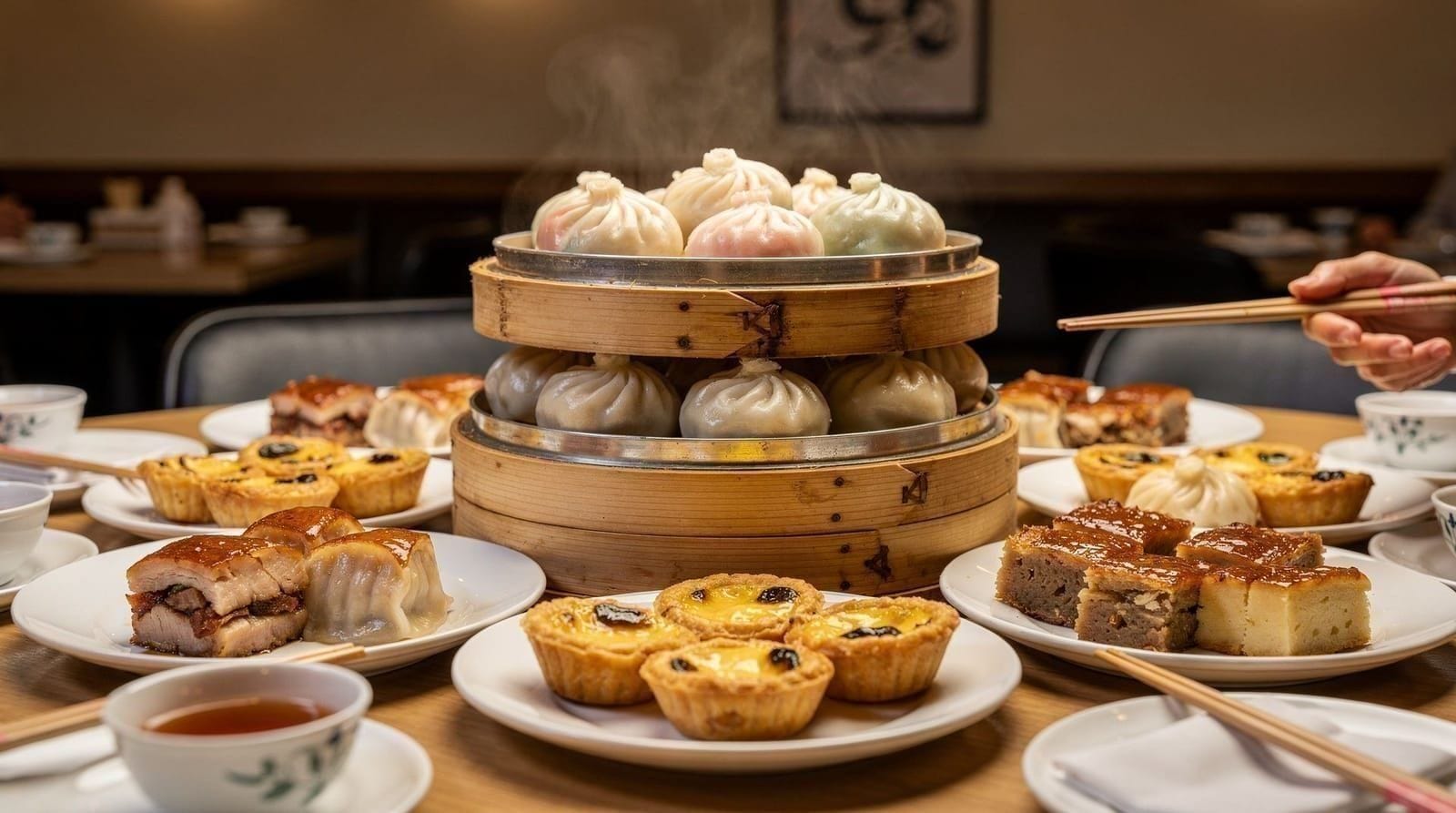
Hong Kong’s egg tart culture deserves its own stop outside the three main meal windows. The Portuguese-style version — flaky, laminated pastry with a wobbly, barely-set custard — differs from the Cantonese baked version, which has a shortcrust base and a firmer, sweeter filling. Both are worth trying, and both cost under HK$15 each. Tai Cheong Bakery, with branches in Central and Causeway Bay, is the best-known name for the Cantonese style and was reportedly a favourite of the last British governor. The best egg tarts in Hong Kong guide ranks the main contenders across the neighbourhoods this itinerary already covers, so a detour costs a five-minute walk rather than a special trip.
Combining this route with a wider food tour
If three self-guided days feels like a lot of independent navigating, a single guided food tour on Day 1 or Day 2 works well as an orientation — it teaches you how to read a cha chaan teng menu, what to point at on a dim sum trolley, and which street-food stalls are worth the calories, all of which makes the rest of the itinerary easier to do solo. The Hong Kong food tours guide compares the main operators and formats (walking vs. tram vs. small-group), and the Michelin cheap eats guide is worth reading before Day 3’s Causeway Bay stretch, since it lists more Michelin Bib Gourmand picks than this itinerary has room to cover.
Adapting the route around dietary needs
This itinerary defaults to a meat- and seafood-heavy Cantonese diet, which is the honest core of Hong Kong’s food identity, but it flexes reasonably well. Swap the Lamma Island seafood lunch for a vegetarian set at a Buddhist restaurant in Causeway Bay if shellfish is off the table, and most cha chaan teng will prepare a vegetable-and-egg version of their noodle dishes on request.
Gluten is harder to avoid — soy sauce, noodles, and battered items are everywhere — so travellers with coeliac disease should expect a more limited version of this route centred on steamed dishes and plain rice. The hong kong safety and etiquette guide has notes on communicating dietary restrictions clearly in Cantonese-first kitchens.
Frequently asked questions about this 3-day Hong Kong itinerary
Is food in Hong Kong expensive?
Hong Kong food is not expensive if you eat where locals eat. A bowl of wonton noodles costs HK$40–55 (USD $5–7). A full dim sum breakfast with multiple baskets runs HK$60–100 per person (USD $8–13). The Lamma Island seafood lunch on Day 3 is the exception — expect HK$250–350 per person (USD $32–45) for a proper sit-down meal with whole fish. Hotel restaurants and international cuisine are priced at international levels. Street food and local restaurants are not.
What is the best dim sum for first-timers?
Tim Ho Wan in Sham Shui Po is the most practical recommendation: it holds a Michelin star, prices are low, the menu has photographs, and the quality of the baked char siu bao is genuinely exceptional. The har gow and siu mai are reliable benchmarks for what good dim sum tastes like. If you want a more relaxed atmosphere and do not mind paying HK$150–200 per person, the dim sum restaurants in the major hotels (such as The Peninsula or Island Shangri-La) offer English menus, more space, and reservation availability.
Are there halal or vegetarian options?
Vegetarian options exist but require effort. Many Buddhist restaurants in Hong Kong serve entirely plant-based menus — Kung Tak Lam in Causeway Bay is the best-known. Standard Cantonese restaurants can often prepare vegetable dishes without meat broth if asked directly, but the default assumption is meat and seafood in most sauces. Halal-certified restaurants exist, primarily in Tsim Sha Tsui and Wan Chai, but are not common in the neighbourhoods covered by this itinerary. The Discover Hong Kong website maintains an updated halal restaurant list.
Is it safe to eat street food in Hong Kong?
Yes. Hong Kong’s food safety inspection system is among the most rigorous in Asia. Licensed hawker stalls and dai pai dong are regularly inspected, and foodborne illness from street food is rare. The fish ball carts, egg waffle vendors, and open-air cooked food stalls are safe to eat from. Use common sense — eat from busy stalls with visible turnover, avoid anything that looks like it has been sitting since morning.
How do you order at a cha chaan teng?
Most cha chaan teng have a simple menu with numbered items or photographs. Point at what you want, or say the number. If there is a set lunch board, those are the best-value options. Drinks are ordered separately — say “cold milk tea” (凍奶茶, dong naai cha) or “hot milk tea” (熱奶茶, yit naai cha). Payment is made at the cashier before leaving. Tipping is not expected, though leaving small coins is not unusual.
What exactly is a dai pai dong?
A dai pai dong (大牌檔) is an open-air licensed cooked food stall — effectively a restaurant that operates on the pavement or in a covered public space. The name refers to the large licence placard (大牌) that operators were historically required to display. They serve full cooked meals: wok dishes, noodle soups, stir-fries, and cold drinks. The atmosphere is informal, tables are shared, and the food arrives fast. Many of the original street-level dai pai dong have been consolidated into indoor cooked food centres, but authentic outdoor examples remain in Wan Chai and around Temple Street.
Which neighbourhood is best for food in Hong Kong?
Sham Shui Po is the most concentrated area for authentic cheap eats — roast meats, dim sum, noodles, and bakeries within a few blocks. Wan Chai is the most varied: street food vendors, cha chaan teng, wet markets, and a range of restaurant price points. Causeway Bay has the highest density of Michelin-listed cheap eats. For seafood specifically, Aberdeen and Lamma Island are the destinations. The first-timer Hong Kong itinerary uses a slightly different neighbourhood structure if you want to compare approaches.
Can I do this itinerary in reverse or spread over more days?
Yes. The three days are grouped by geography rather than a strict narrative order, so Day 3 (Aberdeen and Lamma) can move to Day 1 if you would rather do the ferry trip while you have the most energy, and the Sham Shui Po dim sum morning works equally well at the start or end of the trip. If you have four or five days available, the Hong Kong 5-day itinerary has room to slow this pace down and add a proper cooking class or market tour rather than compressing everything into three back-to-back days.
Do I need to speak Cantonese to order confidently?
No, though a handful of words help. Pointing at photos, trolleys, or the dish someone else is eating works everywhere on this route, and most dim sum order sheets in tourist-accessible areas have English alongside Chinese. Numbers and basic phrases like “m goi” (thank you/excuse me) go a long way with dai pai dong staff who are used to visitors. The Hong Kong dim sum guide has a short glossary of dish names worth memorising before Day 1.
How much should I budget for this itinerary overall?
Excluding accommodation, expect HK$1,050–1,500 (USD $135–192) total across the three days for food alone, weighted heavily by the Lamma Island seafood lunch on Day 3, which can push a single day well past HK$500 per person if you order generously. Trim the budget by skipping the Lamma leg in favour of another Sham Shui Po meal, or by choosing the smaller seafood portions at Sok Kwu Wan rather than a full whole-fish order. Add HK$150–250 per day for transport (MTR, bus, and kaido combined), which the Hong Kong budget breakdown guide covers alongside accommodation costs for a full trip total.
Top experiences
Bookable activities with verified prices and instant confirmation on GetYourGuide.