Hong Kong budget itinerary — 4 days under HKD 400/day
Hong Kong: Dragon's Back hike
What budget travel in Hong Kong actually looks like
Hong Kong has a reputation as an expensive city, and on accommodation that reputation is fully deserved — but activities, transport, and food tell a very different story. Spend four days here following this itinerary and your daily out-of-pocket on everything except a bed will likely land between HKD 250 and HKD 400 (roughly USD 32–51), including three meals and all transport.
The honest caveat: accommodation is the one area where budget travellers will feel squeezed. Decent hostels and guesthouses run HKD 300–600 per night (USD 38–77) for a dorm or basic private room — Chungking Mansions in Tsim Sha Tsui and the guesthouses in Mong Kok are the cheapest concentrated options. Factor that separately. Everything else on this itinerary is genuinely cheap or free, which is what makes Hong Kong worth visiting even on a tight budget.
For a broader cost breakdown before you book, see the Hong Kong budget breakdown guide and Hong Kong on a budget.
| Daily spend (excl. accommodation) | HKD 210–470 (USD $27–60) |
| Route | Central/Sheung Wan → Dragon’s Back → Wong Tai Sin/Lion Rock → Sai Kung |
| Free highlights | Star Ferry, Symphony of Lights, Dragon’s Back, Lion Rock, temples |
| Accommodation (separate) | HKD 300–600/night, dorm to basic private room |
| Best for | Backpackers, solo travellers, budget travellers |
Day 1 — Arrive, get oriented, catch a free light show
Estimated spend: HKD 140–200
Getting from the airport into the city
The Airport Express is fast (24 minutes to Hong Kong Station) but costs HKD 120 one way with Octopus (HKD 130 for a single ticket). For budget travellers, bus route A11 from Airport Bus Terminal 1 covers Hong Kong Island much more cheaply (see the operator’s site for current fares) and takes around 70 minutes depending on traffic — a straightforward trade of time for money if you’re not in a rush. Route A21 goes to Kowloon.
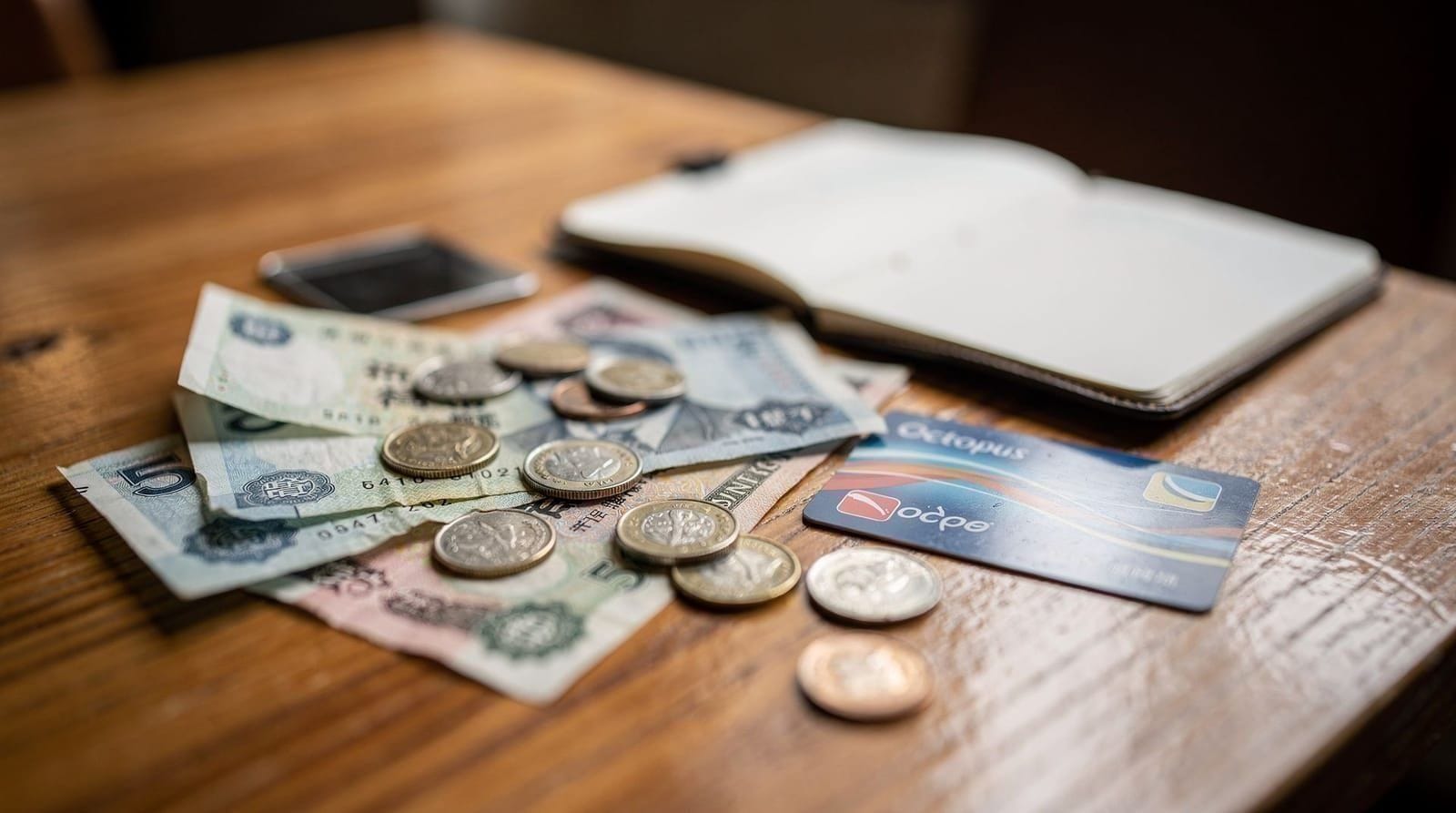
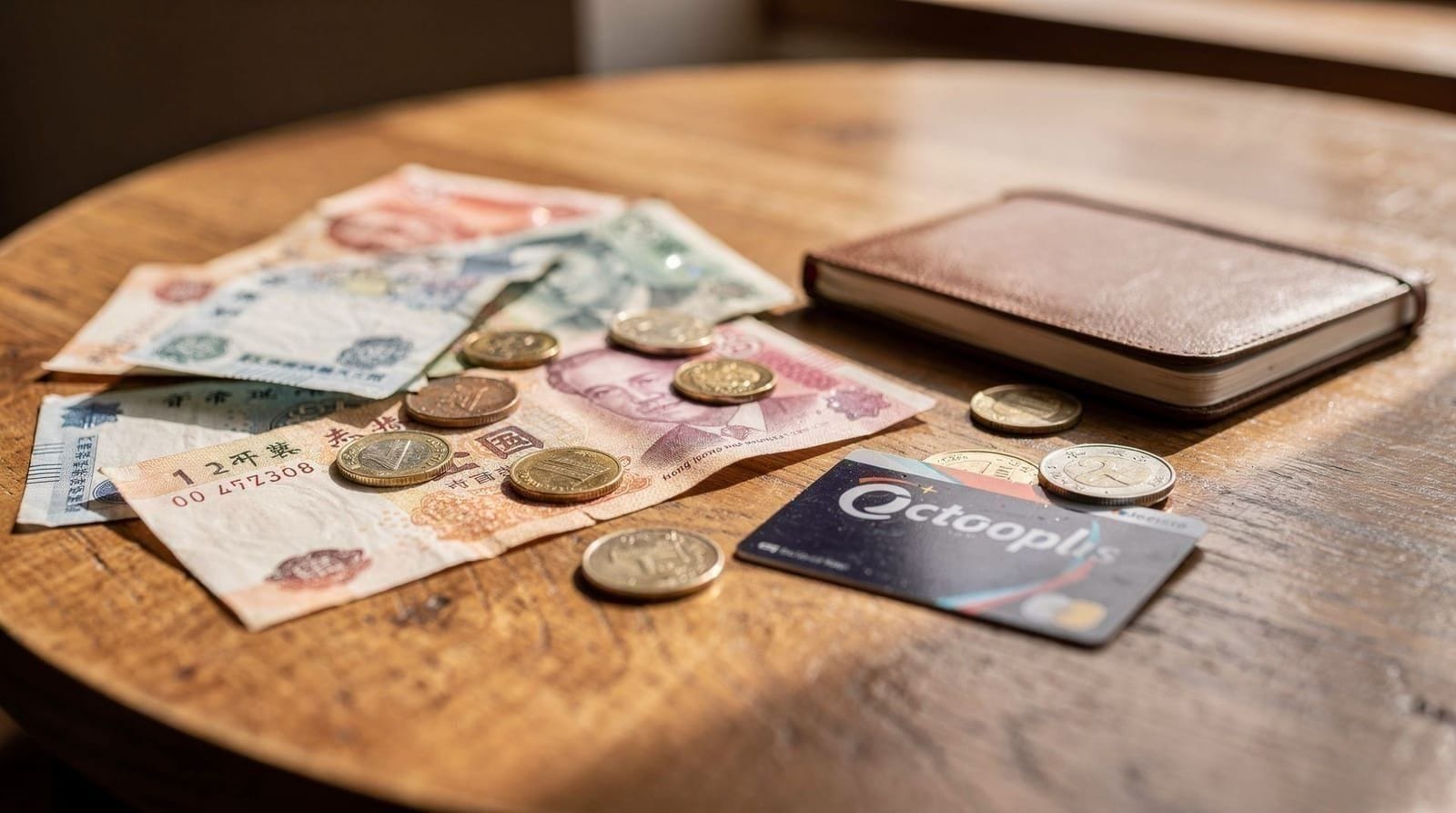
Your first stop at any MTR station or 7-Eleven: buy an Octopus card. The card costs HKD 200 (HKD 50 refundable deposit, HKD 150 stored value) and covers MTR, buses, trams, the Star Ferry, and most convenience store purchases. Without it you pay cash for every journey, which is slower and marginally more expensive. The MTR guide has full fare tables.
Free afternoon in Central and Sheung Wan
Drop your bags and head to Central and Sheung Wan. The Mid-Levels Escalator — the world’s longest outdoor covered escalator system at 800 metres — is free to ride and gives you a painless climb through SoHo into Sheung Wan. Ride it uphill in the afternoon (it switches direction at noon).
PMQ on Aberdeen Street is a former police married quarters converted into an arts and design complex. Entry is free, the architecture is interesting, and browsing the studios and galleries costs nothing. Walk west along Hollywood Road into the antique and dried seafood districts of Sheung Wan — the streets around Bonham Strand smell intensely of dried scallops and abalone, and the shop fronts alone are worth the detour.
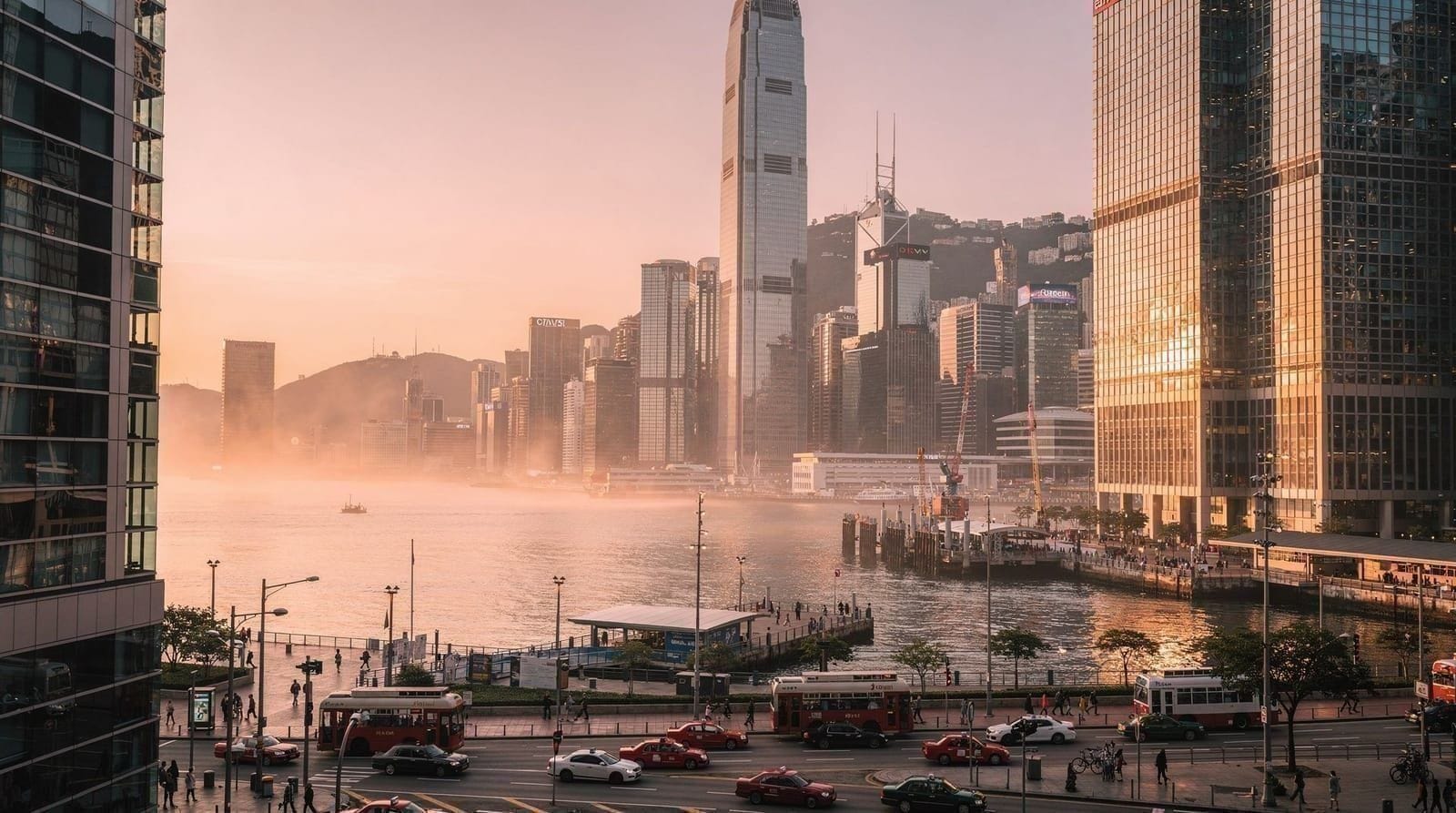
Wan Chai tram runs along the northern shore for HKD 3.30 — the cheapest way to see the waterfront from street level.
Star Ferry and Symphony of Lights (both free or nearly free)
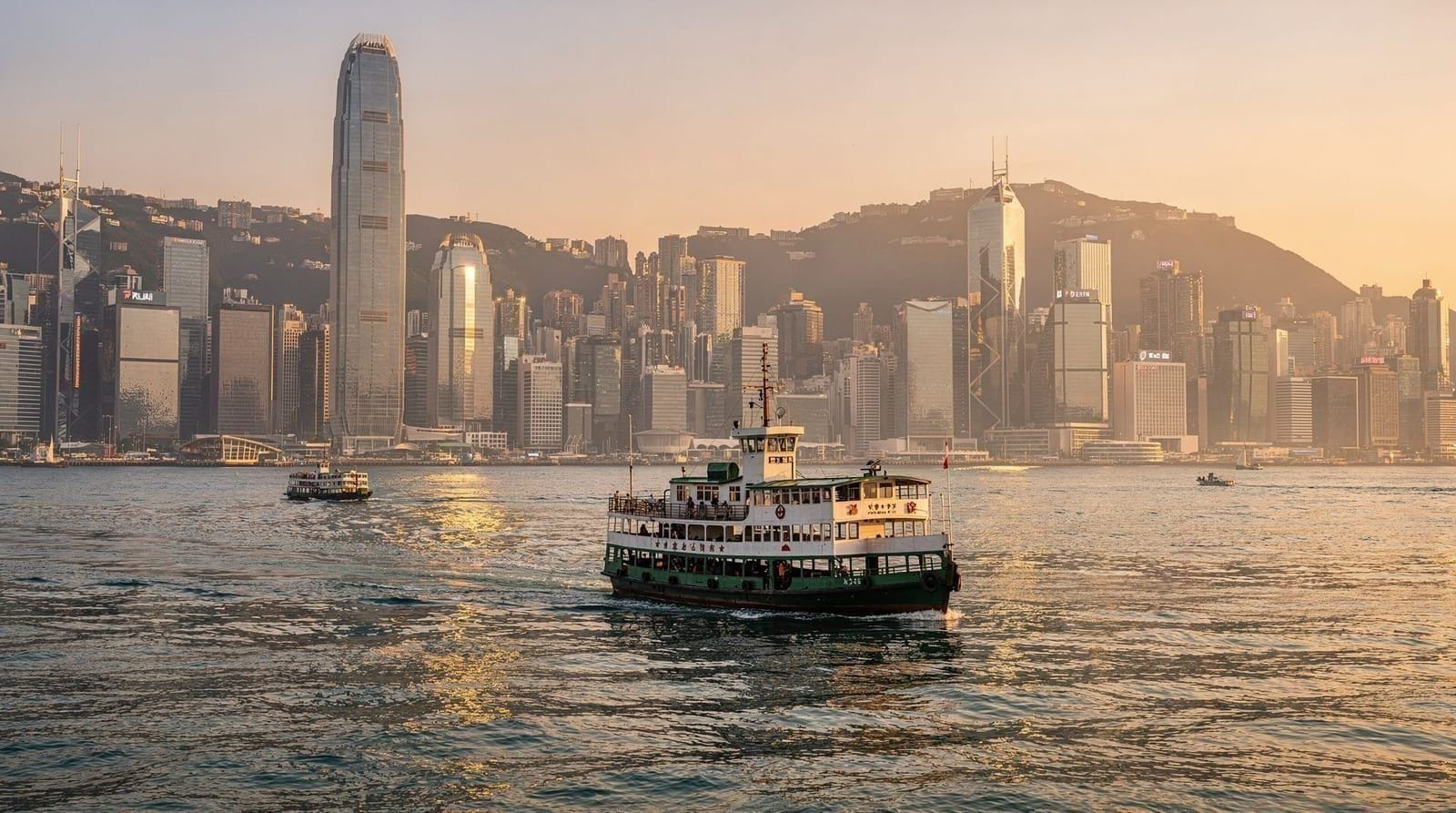
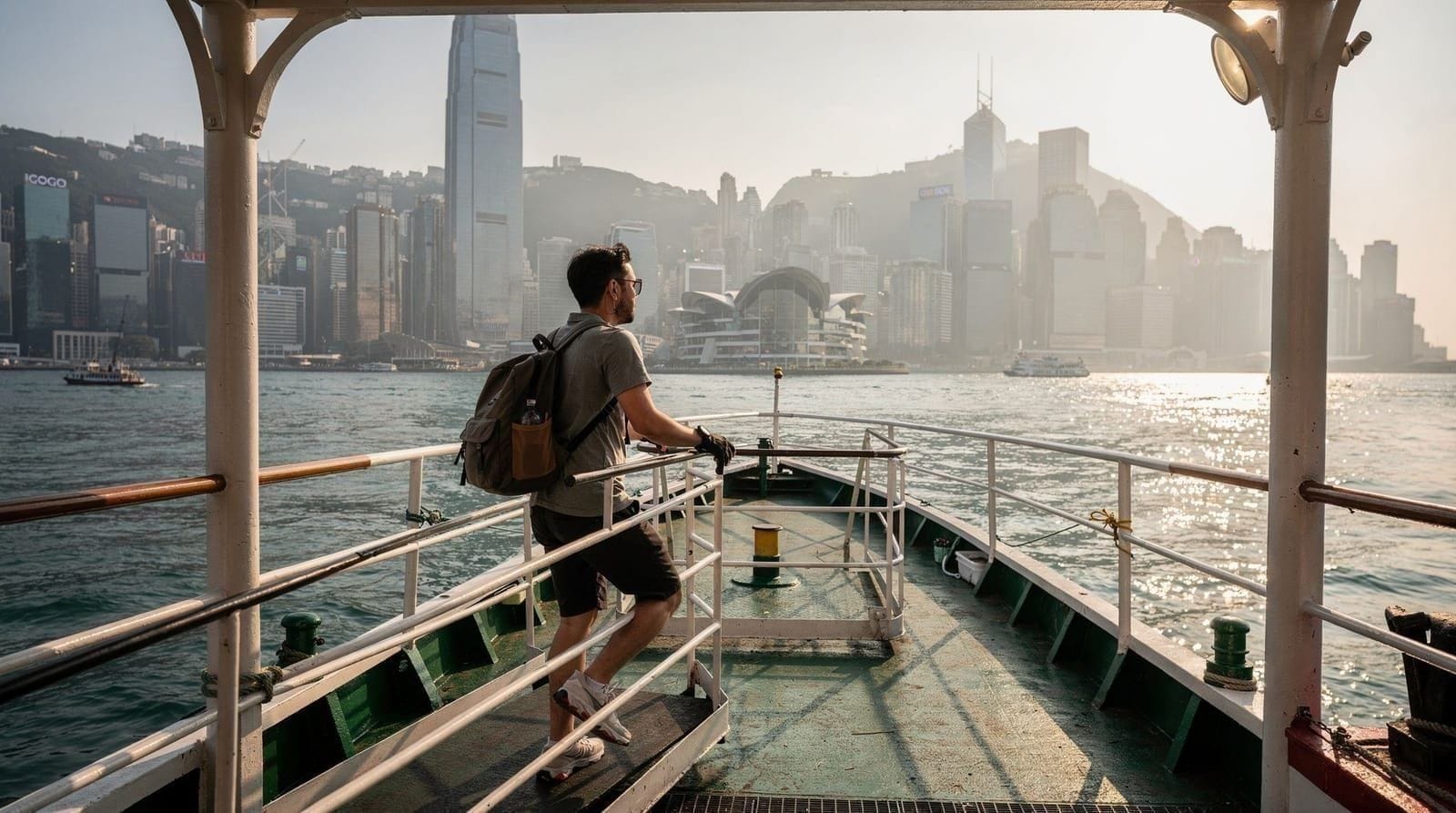
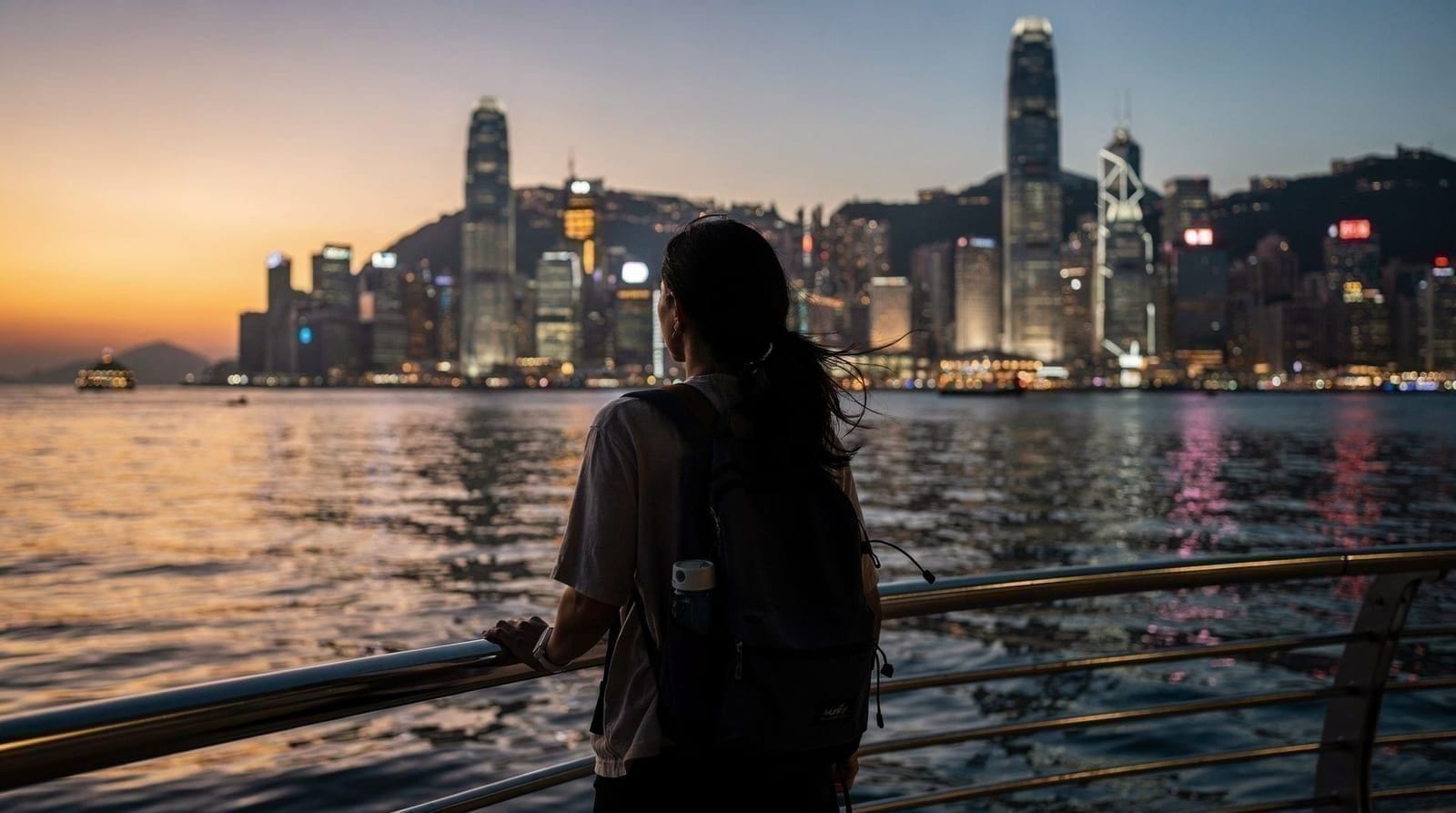
At around 7pm, take the Star Ferry from Central Pier 7 to Tsim Sha Tsui. The lower deck costs HKD 4.0 on weekdays (HKD 5.6 at weekends and public holidays) and the crossing takes eight minutes across Victoria Harbour. This is not a tourist gimmick — it is genuinely one of the most scenic harbour crossings in the world, and the price has barely changed in decades.
At 8pm, the Symphony of Lights runs nightly from the Tsim Sha Tsui waterfront promenade. Over 40 buildings on Hong Kong Island coordinate lights and lasers for about 10 minutes. It is entirely free to watch from the promenade. Arrive by 7:45pm for a good position near the Avenue of Stars.
Return to Kowloon or the Island by ferry (HKD 4.0–5.6, lower deck) or MTR.
Day 1 rough total: Octopus stored value HKD 150 (deposit refundable) + Star Ferry HKD 8.0–11.2 return + dinner HKD 50–70 = HKD 210–230 excluding accommodation and the airport bus fare
Day 2 — Dragon’s Back hike, arts in Central, cheap noodles
Estimated spend: HKD 200–280
Dragon’s Back trail (free)
Dragon’s Back on Hong Kong Island’s southern side consistently ranks as one of Asia’s best urban hikes. The trail is free, clearly waymarked, and takes 2.5–3 hours end to end with sweeping views over the South China Sea and Shek O.
Getting there: MTR to Shau Kei Wan station (Island Line), then bus 9 from Shau Kei Wan Bus Terminus toward Shek O. Alight at To Tei Wan for the start of the trail, or at Shek O for the reverse direction. Check the bus fare on the operator’s site.
The trail runs along a dragon-spine ridge with clear views on both sides. The descent into Shek O village typically takes 45–60 minutes from the main ridge.
If you prefer guidance or want context on the ecology and history of the southern island, Dragon’s Back guided hike with transport included removes the navigation and bus logistics.
Lunch at Shek O village (HKD 80–120)
Shek O village at the trail’s end has several casual seafood and Thai restaurants serving lunch. Prices are honest rather than tourist-inflated: a plate of steamed fish or stir-fried clams with rice runs HKD 80–120. The beach is free and clean if you want to swim before the bus back.
Bus 9 returns to Shau Kei Wan; from there MTR back to Central takes about 20 minutes.
Afternoon: PMQ, Sheung Wan, and cheap dinner
The central district has enough to fill another afternoon without spending money. PMQ arts complex (free entry) is worth a slower look if you rushed past it yesterday. The streets around Tai Ping Shan — one of Hong Kong’s oldest neighbourhoods — have small temples and shophouses that predate the colonial period.
For dinner, find a local noodle shop serving wonton noodles. The benchmark: HKD 40–55 for a small bowl, HKD 55–70 for a large. Avoid any place with an English menu poster in the window and prices starting at HKD 80 — those are tourist-adjusted. A reliable category search is “cha chaan teng” (Hong Kong-style café) or “noodle shop” in any residential neighbourhood.
Day 2 rough total: MTR HKD 20 + lunch HKD 100 + dinner HKD 55 + miscellaneous HKD 20 = HKD 195 excluding accommodation and bus fares
Day 3 — Temples, a city-view hike, and Sham Shui Po
Estimated spend: HKD 150–250
Wong Tai Sin Temple (free entry)
Wong Tai Sin MTR station (Kwun Tong Line) drops you directly at the temple entrance. Entry to the main grounds is free; worshippers burn incense sticks available from vendors outside for around HKD 5–10 if you want to participate respectfully.
The temple complex is active and genuinely busy with locals seeking fortune readings rather than tourists taking photographs. The main hall is dedicated to Wong Tai Sin, a Taoist deity associated with healing. The adjacent Good Wish Garden charges a small fee (HKD 2) to enter.
For a deeper background on the temple’s history and religious significance, the Wong Tai Sin temple guide covers it in full. If you’d prefer a guided visit with a local explaining the fortune-telling traditions, Wong Tai Sin Temple guided tour with fortune-telling explanation is a good option.
Lion Rock Country Park (free)
From Wong Tai Sin, it’s a 20–25 minute walk to the start of hiking trails in Lion Rock Country Park. The ridge trail to the saddle below Lion Rock takes around 90 minutes return and gives an unobstructed view over Kowloon toward the Peak on the Island. The hike is moderately strenuous — there are steep sections on loose soil — but the payoff on a clear day is exceptional.
For a properly guided ascent of the full ridge with geology and history context, Lion Rock ridge guided hike (4 hours) covers the challenging upper sections with a local guide.
The park entry is free. Bring water — there are no vendors on the trail.
Afternoon: Sham Shui Po electronics and street food
Sham Shui Po MTR station (Tsuen Wan Line) puts you in Hong Kong’s main district for cheap electronics, fabric, and second-hand goods. Apliu Street flea market runs most days with stalls selling everything from vintage cameras to surplus phone components. Yen Chow Street and Ki Lung Street have fabric vendors and craft supplies at wholesale prices.
The food in Sham Shui Po is some of the cheapest on the Kowloon side. Tang Lung Chau Cooked Food Centre has stalls serving char siu rice, congee, and noodles for HKD 40–60 a plate.
Temple Street Night Market (browse free, eat HKD 40–80)
Temple Street in Yau Ma Tei is a classic night market running from around 6pm to midnight. The stalls sell clothes, accessories, and tourist goods — browsing is free, buying is optional. The surrounding streets have dai pai dong (open-air cooked food stalls) serving claypot rice, steamed seafood, and cold beer. A full meal at a dai pai dong costs HKD 60–90 per person.
MTR Yau Ma Tei station (Tsuen Wan Line) is the closest stop.
Day 3 rough total: MTR HKD 25 + temple incense HKD 10 + lunch HKD 60 + dinner HKD 70 + miscellaneous HKD 20 = HKD 185 excluding accommodation
Day 4 — Sai Kung: beaches, seafood, and the MacLehose Trail
Estimated spend: HKD 250–350
Getting to Sai Kung
Sai Kung sits on the Sai Kung Peninsula in the New Territories, outside the MTR network’s reach. The standard route: MTR to Diamond Hill station (Kwun Tong Line), then green minibus 1A from the Diamond Hill Minibus Terminus toward Sai Kung Town. The minibus fare is around HKD 10 and the journey takes 30–40 minutes through the hills.
Sai Kung Town’s waterfront is free to walk. The promenade wraps around a working typhoon shelter full of fishing boats and, famously, floating seafood restaurant sampans.
MacLehose Trail Stage 1 partial section (free)
The MacLehose Trail runs 100 km across the New Territories. Stage 1 begins at Pak Tam Chung, accessible by bus 94 from Sai Kung Town. The Pak Tam Chung Visitor Centre is free and has maps of the trail and information on the UNESCO-listed Global Geopark geology in the area.
Walking even the first 4–5 km of Stage 1 toward Long Ke Wan gives you a realistic taste of Hong Kong’s remote coastline — turquoise water, volcanic rock formations, and often very few other people. Return to Pak Tam Chung the same way and catch bus 94 back to Sai Kung Town.
If you want to explore the outer islands by water, Sai Kung sea kayaking half-day adventure is one of the most affordable ways to reach the remote beaches.
Lunch: choose-your-fish seafood (HKD 100–150)
Sai Kung Town’s seafood restaurants let you pick live fish and shellfish from tanks on the pavement outside. The price per catty (600g) depends on what you choose — grouper and garoupa run HKD 100–180 per catty, clams and prawns significantly less. Two people sharing two dishes and rice typically spend HKD 200–280 total, so HKD 100–140 per person. This is not the cheapest meal of the trip but it is one of the most memorable.
Afternoon beaches by kaido sampan (HKD 30–50 return)
From Sai Kung Town pier, kaido (small passenger sampans) run to beaches inaccessible by road: Sharp Island (Kiu Tsui), Hap Mun Bay, and others depending on the day. Return fare is typically HKD 30–50. There are no facilities at these beaches beyond basic shelter, so bring snacks and water. The water is clean and swimming is the main activity.
Return to Kowloon or the Island by minibus 1A to Diamond Hill, then MTR.
Day 4 rough total: MTR HKD 20 + lunch HKD 130 + kaido HKD 40 + snacks and drinks HKD 40 = HKD 230 excluding accommodation and minibus/bus fares
Budget breakdown across 4 days
| Category | Daily range (HKD) | 4-day total (HKD) |
|---|---|---|
| Transport (MTR, buses, ferries) | 40–80 | 160–320 |
| Breakfast | 30–50 | 120–200 |
| Lunch | 70–150 | 280–600 |
| Dinner | 50–90 | 200–360 |
| Paid activities | 0–60 | 0–240 |
| Miscellaneous | 20–40 | 80–160 |
| Total (excl. accommodation) | 210–470 | 840–1,880 |
The lower end of this range is achievable if you eat at cooked food centres and cha chaan tengs, skip all paid tours, and ride buses instead of taxis. The upper end includes one or two paid activities and eating at slightly better local restaurants. Accommodation adds HKD 300–600/night on top.
Currency note: 1 USD = approximately 7.8 HKD (2026 rate). Divide HKD prices by 7.8 for a rough USD equivalent.
How this compares to a mid-range trip: The 3-day itinerary and 4-day itinerary on this site both budget HKD 600–950 per day at mid-range — roughly double or triple what this itinerary spends. The difference is almost entirely in paid attractions (the Peak Tram and Sky Terrace 428 combo alone runs HKD 182 for an adult return) and sit-down restaurant meals rather than street food and cooked food centres. If a specific paid attraction from those itineraries appeals to you, there is no reason not to add one or two to this budget plan — the point is control over spending, not avoiding every cost entirely.
Stretching this itinerary to 5 or 7 days on the same budget
If four days is not enough, the good news is that this itinerary’s daily cost structure holds up well over a longer stay — the free hikes and temples do not run out, and Hong Kong’s country parks alone could fill a week without repeating a trail. The 5-day itinerary and 7-day itinerary are written at mid-range budgets, but the same substitutions used here — buses instead of taxis, cooked food centres instead of sit-down restaurants, free trails instead of paid attractions — apply directly to their Day 4 onward sections covering Sai Kung, Cheung Chau, and the New Territories.
Two extra days on this budget approach would typically add: a full day on the MacLehose Trail rather than the short taste this itinerary gives on Day 4, and a proper visit to one of the outlying islands (Lamma or Cheung Chau) rather than the Sai Kung beaches alone. Both are free or close to it once you have an Octopus card loaded, and neither adds meaningfully to the daily average this itinerary already runs.
Where budget travellers should not cut corners
Not every cost is worth trimming. Skipping the Octopus card to save the HKD 50 deposit costs more in the long run through cash-fare surcharges and slower queues. Skipping the Star Ferry to save HKD 4.0–5.6 in favour of the MTR misses one of the best-value experiences in the city for the price of a coffee. And while dorm beds are the obvious accommodation saving, choosing a guesthouse purely on price without checking recent reviews can mean losing sleep in a genuinely uncomfortable room — the where to stay guide is worth the ten minutes it takes to read before booking blind.
The same logic applies to food: this itinerary deliberately includes one proper choose-your-fish seafood lunch in Sai Kung on Day 4 rather than routing every meal through the absolute cheapest option — a trip that saves money on every single meal tends to miss some of Hong Kong’s best food, which is genuinely one of the reasons to visit in the first place.
A note on hiking gear for budget travellers
Dragon’s Back and Lion Rock are both free, but they are real trails with loose soil sections and no facilities. Budget travellers sometimes attempt them in flip-flops or with no water, which is more of a false economy than it looks — a twisted ankle or a cut-short hike from dehydration costs far more in lost time than a HKD 30–50 bottle of water and appropriate shoes. The best hikes guide has more detail on what each trail actually demands, including which sections are exposed to full sun with no shade — worth knowing before setting out in summer heat.
Free attractions worth your time
- Nan Lian Garden (Diamond Hill, MTR Diamond Hill): Tang dynasty–style classical garden, immaculate (check current entry details on the official site)
- Victoria Park (Causeway Bay, MTR Causeway Bay): Largest park on Hong Kong Island, free
- Sheung Wan Dried Seafood Street: Bonham Strand and surrounding blocks, just browse
- PMQ arts complex (Aberdeen Street, Central): Free entry, arts and design studios
- Star Ferry crossing: Technically HKD 4.0–5.6 (lower deck) but barely counts as a cost
- Symphony of Lights: Every night at 8pm from the Tsim Sha Tsui waterfront, free
- Pak Tam Chung Visitor Centre: Free maps and geopark exhibits before hiking MacLehose Trail
- All country park trails: Dragon’s Back, Lion Rock, MacLehose, Pat Sin Leng — all free, all excellent
- Most temples: Wong Tai Sin (free entry), Man Mo Temple (free), Tin Hau temples across the city
- All promenades: Tsim Sha Tsui waterfront, Kennedy Town promenade, Sai Kung waterfront
For a broader overview of activities including the popular paid ones, see top things to do in Hong Kong.
Cheap eats reference
| Dish / venue type | Where to find them | Typical price |
|---|---|---|
| Wonton noodle soup | Any local noodle shop | HKD 40–65 |
| Cha chaan teng breakfast (toast, eggs, milk tea) | All over Hong Kong | HKD 40–60 |
| Dim sum lunch (Tim Ho Wan or equivalent) | Multiple locations | HKD 60–100 |
| Roast meat rice (char siu, roast duck) | BBQ shops in any neighbourhood | HKD 45–75 |
| Congee | Cooked food centres | HKD 35–55 |
| Dai pai dong dinner | Temple Street, Sham Shui Po | HKD 60–90 |
| Curry fish balls (street snack) | Any street vendor | HKD 15–25 |
| Egg waffle (gai daan zai) | Street stalls across the city | HKD 20–35 |
The dim sum guide covers where to find affordable dim sum beyond the well-known tourist destinations.
For accommodation strategy, the where to stay in Hong Kong guide covers all the budget-friendly neighbourhoods including Chungking Mansions, Mong Kok, and Sham Shui Po. The where to stay by budget guide goes further and breaks down specific price bands rather than just neighbourhoods, which is more directly useful if a fixed nightly ceiling is your main constraint.
Frequently asked questions about this 4-day Hong Kong itinerary
How cheap can Hong Kong really be for travellers?
Genuinely cheap on activities and food — less so on accommodation. Day-to-day spending on transport, food, and free or low-cost sightseeing can realistically come in under HKD 300 (about USD 38) once you know where to eat and move around efficiently. The country park trails are world-class and free. The MTR is efficient and reasonably priced. Street food and cooked food centres serve filling meals for HKD 40–70. The limiting factor is always accommodation: even the cheapest dorm beds in Chungking Mansions run HKD 150–250 per night, and private rooms start at HKD 300–400. Budget your nightly costs separately from everything else.
Is budget accommodation in Hong Kong decent quality?
It varies more than in most cities. Chungking Mansions on Nathan Road is the most famous budget address — prices are genuinely low (HKD 150–280 for a dorm, HKD 300–500 for a basic private room) but rooms are small and the building is crowded. Guesthouses in Mong Kok and Sham Shui Po offer slightly more space at similar prices. Hostels with proper common areas are rarer than in Southeast Asia; most budget options are simple guesthouses in divided flats. Read recent reviews before booking. The where to stay in Hong Kong guide breaks down all the main areas with honest assessments.
Are there free beaches in Hong Kong?
Yes — most beaches in Hong Kong are free and managed by the Leisure and Cultural Services Department. Shek O Beach (reachable by bus 9 from Shau Kei Wan MTR) is one of the best on the Island. In Sai Kung, beaches like Hap Mun Bay and Sharp Island are accessible by kaido sampan for HKD 30–50 return — technically a cost but the beaches themselves are free. Stanley Main Beach and Repulse Bay Beach on the south side of Hong Kong Island are also free and served by public bus.
Is street food safe to eat in Hong Kong?
Hong Kong has strict food hygiene regulations and a functioning inspection system. Cooked food centres (government-licensed indoor markets with individual stalls) are consistently clean and the food is cooked to order. Dai pai dong are similarly well-established. Street stalls selling fish balls, egg waffles, and similar snacks are generally fine. The main risk is the same as anywhere: avoid anything that looks like it has been sitting out for a long time in warm weather. Food poisoning from licensed street food in Hong Kong is uncommon.
Do budget travellers really need an Octopus card?
Yes, without question. The Octopus card saves money on every MTR journey through the automatic fare deduction, works on all buses and the Star Ferry, and is accepted at convenience stores and many restaurants. Without it you pay cash for buses (exact change only, which is inconvenient) and cannot use the Airport Express discount. The HKD 50 deposit is refundable when you return the card (an HKD 11 fee applies within 90 days). Load HKD 150–200 for a four-day trip.
What are the best neighbourhoods for cheap food in Hong Kong?
Sham Shui Po on the Kowloon side is consistently cited as the cheapest neighbourhood for food in Hong Kong — cooked food centres, noodle shops, and street snacks at prices that haven’t tracked tourism inflation. Mong Kok is similarly affordable with a wider range of cuisines. On Hong Kong Island, Sai Wan Ho and Shek Tong Tsui are residential neighbourhoods with local restaurants at local prices. Avoid Lan Kwai Fong, SoHo, and the Tsim Sha Tsui waterfront for meals — these areas price to their tourist and expat audiences.
Are there hidden costs for budget travellers in Hong Kong?
A few worth knowing, beyond the obvious accommodation and food costs already covered above: the Airport Express luggage storage service and left-luggage lockers at major stations are convenient but not free (HKD 40–100 per day depending on locker size). Some viewpoints that appear on tourist maps charge admission — Victoria Peak itself (the hilltop) is free to walk to, but the Peak Tram (HKD 82 one-way for adults) is not. The Victoria Peak guide covers free ways to reach the summit.
Most LCSD museum permanent exhibitions are free, except the Science Museum (HKD 20, free on Wednesdays) and the Space Museum (HKD 10); the History Museum and Heritage Museum are closed on Tuesdays. Mobile data via a local SIM is around HKD 30–50 for a week of data, which is worth having for navigation, particularly on Day 4’s Sai Kung minibus connections where signage is limited. Tipping is not expected at casual restaurants and dai pai dong — only at hotels and full-service Western restaurants, where 10% is standard and often already added to the bill as a service charge.
This itinerary was reviewed in June 2026. MTR fares, bus routes, and restaurant prices are subject to change. All prices are in Hong Kong dollars (HKD) with USD equivalents based on the approximate 2026 rate of 7.8 HKD per USD.
See also: first-timer’s guide to Hong Kong — Hong Kong 4-day itinerary — Hong Kong first-timer itinerary
Top experiences
Bookable activities with verified prices and instant confirmation on GetYourGuide.