Victoria Peak guide — the view, the tram, and what to skip
Hong Kong: Victoria Peak Tram & Sky Terrace 428 ticket
Is Victoria Peak worth visiting and how do I get there?
Yes, the view from Victoria Peak is one of the world's great urban panoramas and worth the trip. Take the historic Peak Tram (book online to avoid 60–90 min queues) for HKD 116 return. Go at sunset or early morning for the clearest views and smallest crowds. The Sky Terrace 428 observation deck (extra charge, see current prices on thepeak.com.hk) gives slightly better sight lines than the free viewing area at the Peak Galleria roof.
What Victoria Peak actually is
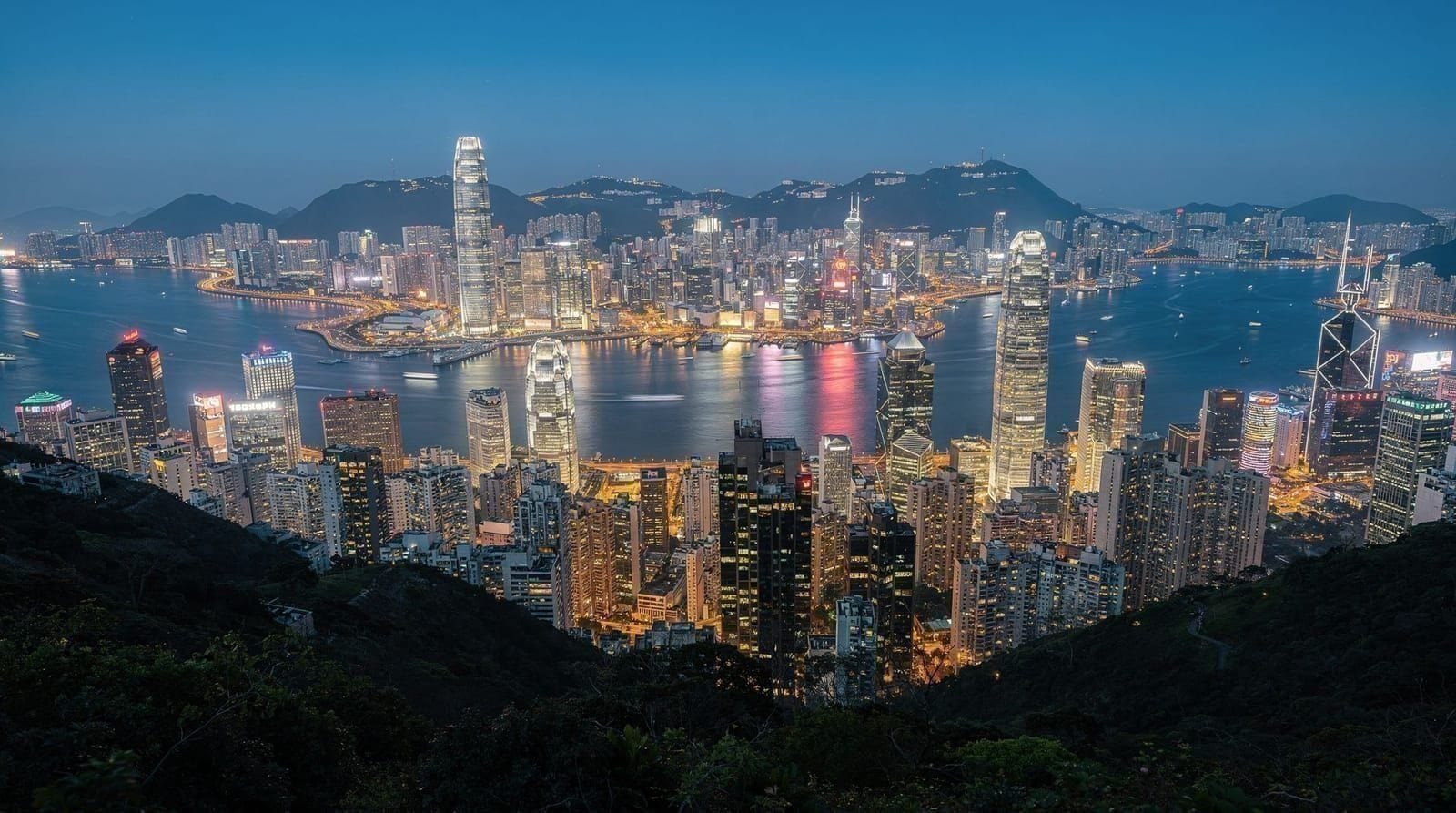
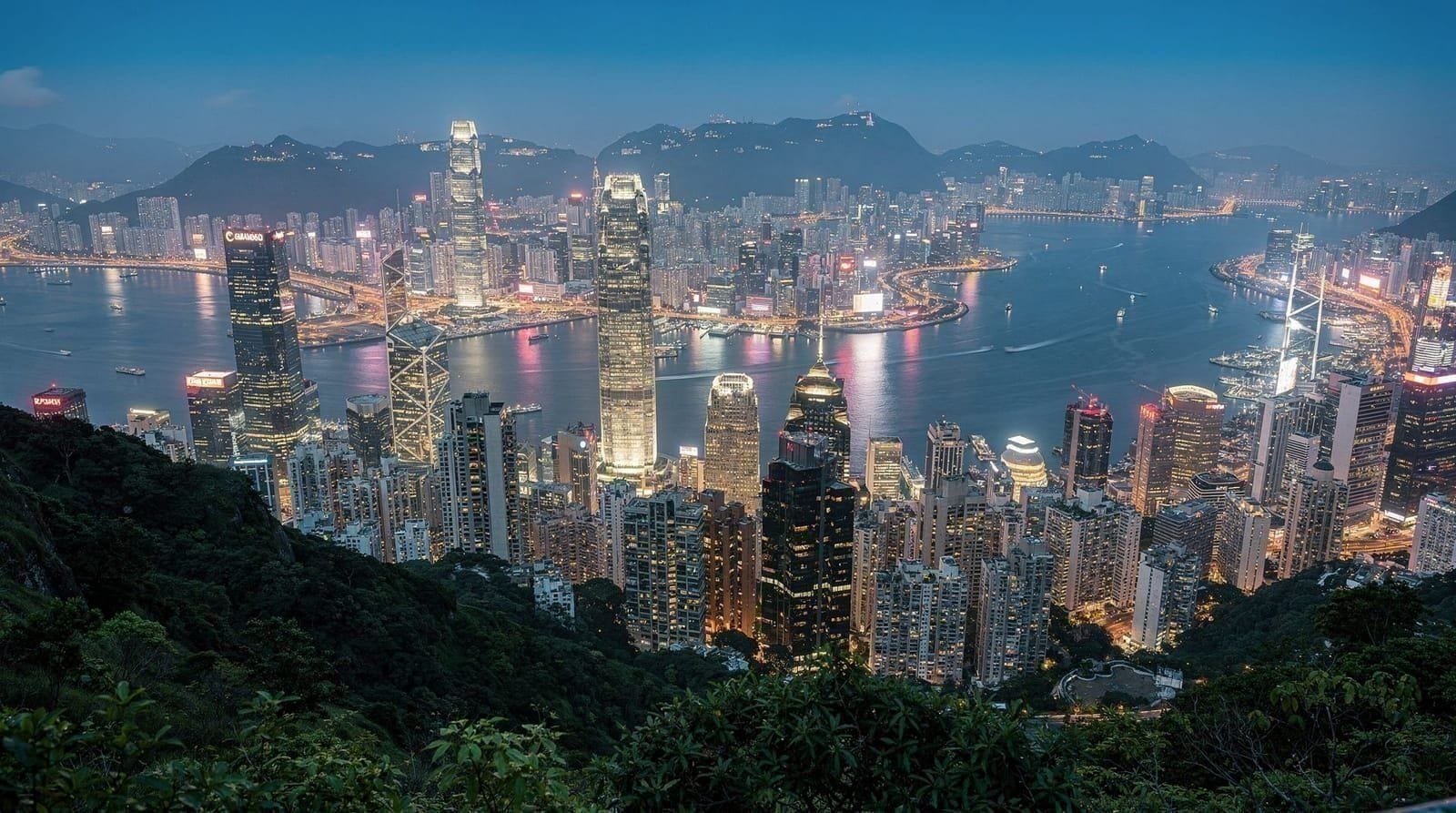
Victoria Peak (太平山, Tai Ping Shan) is the highest point on Hong Kong Island at 552 metres. The view from the upper station — looking north over the entire central district, the harbour, Kowloon, and on clear days the New Territories mountains — is the single most famous image of Hong Kong, and it lives up to it.
The attraction is the view. Everything else up there — the Peak Tower mall, the restaurants, Madame Tussauds — is tourist infrastructure that you can safely ignore. Focus your visit on the view and the free circle walk, and you will have a good time. Spend money on the overpriced restaurants or novelty shops and you will feel like you paid twice to see the same thing.
This guide covers the practical decisions: how to get up, when to go, what costs money, and what you can skip.
| Where | The Peak, Hong Kong Island (552m, above Central) |
| Cost | Peak Tram HKD 116 return (adult); Sky Terrace 428 extra, see thepeak.com.hk |
| Time needed | 2–3 hours for tram, view and circle walk |
| Getting there | Garden Road tram station, 5 min walk from Central MTR Exit J2 |
| Best time | Early morning or sunset, October–December for clearest air |
Getting to Victoria Peak
Peak Tram (recommended)
The Peak Tram is a funicular railway that has operated since 1888. The track rises at up to 27 degrees — the interior is angled so standing passengers appear to lean forward as the car climbs. The journey takes about 8 minutes from the lower terminus at Garden Road (near Central MTR and the Zoological and Botanical Gardens).
The tram is genuinely scenic and part of the cultural experience — ride it at least once. But the queue without advance booking is the main hazard. On weekends and public holidays, gate queues of 60–90 minutes are common. On weekday afternoons during tourist season (October–March), expect 30–45 minutes.
Book online to avoid the queue. Pre-purchased timed tickets let you bypass the standby line entirely. Adult prices: HKD 116 return, HKD 82 one way (children under 11 and seniors 65+: HKD 75 return, HKD 52 one way). A Peak Tram plus Sky Terrace 428 combo costs HKD 182 return for adults (HKD 118 for children and seniors).

Lower terminus: Garden Road. From Central MTR Exit J2 (City Hall), walk 5 minutes up Garden Road. Free shuttle buses run from Edinburgh Place in Central, but they are slow.
Tram operating hours: see the official site (thepeak.com.hk) for current hours and frequency.
Bus 15 (budget option)
Bus 15 from Exchange Square in Central runs to the Peak (see the bus operator’s site for current fares). The bus journey takes 25–40 minutes depending on traffic, winding up through the residential hillside roads. It is slower and less scenic than the tram but avoids the queue entirely. Useful if you arrive at the Peak having walked up or taken the bus and want the tram experience on the way down only.
Taxi
HKD 70–100 from Central; no taxi queue at the top. Quick and practical but misses the tram experience.
Walking up
Old Peak Road from Garden Road takes 45–60 minutes (steep, 10% gradient, no shade). Hatton Road and the Pok Fu Lam trail approaches are longer but more varied. Bring water; the climb is harder than it looks in summer heat and humidity.
The view: what to expect by season
October–December (best): The northeast monsoon brings dry, clear air. Visibility extends 50+ kilometres. This is when the classic blue-sky harbour photographs are possible. Temperatures at the Peak are 2–4°C cooler than downtown — bring a light layer for evenings.
January–March: Generally clear but can have cool foggy periods in February–March. Still good odds of clear views.
April–May: Increasing humidity; some haze. Clear mornings before 10am are still common.
June–September: Haze and cloud are frequent. Typhoons can close the tram entirely. This is the period when visitors are most likely to pay full price and see nothing but cloud — check the weather forecast and consider a contingency.
The view at night is arguably better than daytime — every window and rooftop light across the city creates a spectacle that is impossible to replicate. After the Symphony of Lights at 8pm (visible from the Peak, though better from TST waterfront — see the Symphony of Lights guide), the city continues to sparkle.
What’s at the top
Peak Tower: The tower building houses a retail mall, restaurants, Madame Tussauds, and the upper tram station. The restaurant options are themed tourist chains at high prices — come fed, or eat at the noodle shop in the lower levels rather than the panorama restaurants. Skip Madame Tussauds (see the official site for prices).
Sky Terrace 428: The paid observation deck on the top of the Peak Tower at 428 metres elevation. See thepeak.com.hk for current hours and prices; it is included in the Peak Tram combo ticket (HKD 182 return for adults). The deck is partially open-air with a 360-degree view. Less crowded than the free viewing areas on busy days because of the additional cost.
Peak Galleria: The competing mall opposite the Peak Tower. Its rooftop terrace is free and offers similar views to Sky Terrace at ground level — a railing view north towards Central and the harbour. It is marginally lower and has no shelter from wind, but it is free.
The free viewing zone: The exterior terraces of both buildings offer partial views at no cost. For the full panoramic view without paying the Sky Terrace premium, the Galleria roof is the best free option.
The Peak Circle Walk
The Peak Circle Walk (盧吉道及夏力道) is a 3.5-kilometre loop around the peak plateau through forested hillside, taking 45–60 minutes at a casual pace. The path is mostly flat and paved — comfortable in regular shoes. The north-facing section offers the same harbour views as the observation decks, continuously, while walking through quiet forest.
Access: from the upper tram station, turn left along Lugard Road. The full loop returns via Harlech Road. Signs mark the route clearly.
This is the best free experience at the Peak and one of the best easy walks in Hong Kong. Go early morning for birdsong and morning mist; come at sunset for the changing light on the harbour.
What to skip
Madame Tussauds: Generic tourist attraction (see the official site for prices). Every major city has one; this version has Hong Kong-specific wax figures alongside the standard global celebrities. Not worth it unless you have children who specifically want it.
The Peak Tower restaurants: Overpriced themed dining (the HK$ 220–280 per person set menu restaurants on upper floors). Eat in Central before you come, or grab a cheap bowl of noodles at the lower levels.
Unlimited Peak shuttle buses: Several operators sell bus passes including transport to the Peak, but the bus takes longer and is less interesting than the tram.
“Peak experience” combo packages from hawkers near Central: Various operators sell discounted tram plus experience bundles. Check what is actually included — many add on Madame Tussauds or attractions you do not want. Booking the Peak Tram directly online (with or without the Sky Terrace) is almost always the cleaner choice.
Practical information
Opening hours (tram): see thepeak.com.hk for current hours. Getting there: Exit J2 of Central MTR, walk 5 minutes up Garden Road to Garden Road tram station. Duration: Allow 2–3 hours including the tram ride, views, and circle walk. Accessibility: The tram has steps at both ends and is not wheelchair accessible. Bus 15C from Exchange Square is the accessible alternative. In typhoon season: The tram closes when Typhoon Signal 3 or above is hoisted. Check before travelling.
Neighbourhood context: what’s around the Peak
Victoria Peak sits within a neighbourhood of old colonial-era residential properties and modern apartment complexes on the upper Mid-Levels and Peak hillside. The roads winding up from the Garden Road starting point pass through:
Magazine Gap Road: The original colonial-era route, lined with government housing built for British officers and officials during the colonial period. Several colonial-era buildings survive in modified form.
Barker Road area: The residential properties immediately below the Peak plateau — some of the most expensive residential addresses in Hong Kong, with unobstructed harbour views from every room. An apartment here commands HKD 10,000–15,000+ per square foot — among the highest residential prices on earth.
The Peak plateau itself: At the summit area, the Peak Tower and Peak Galleria are the commercial facilities. The residential buildings visible on the approach are private; access is restricted to residents.
The social history of the Peak is bound up with its altitude. During the colonial era, the Peak was officially reserved for European residents — Chinese residents were legally prohibited from living above a certain altitude on the hill (with exceptions for servants). The regulation was abolished in 1947. The area subsequently became a general high-income residential zone and remains so today.
The Peak Tram: engineering detail
The Peak Tram’s route from Garden Road to the Peak rises 368 metres over 1.4 kilometres — a gradient of approximately 26% (or 27 degrees at the steepest section). This is accomplished by the cable car / funicular hybrid system: a thick steel cable attached to the tram car is wound and unwound by stationary motors at the upper terminus, pulling the ascending car while the descending car on the other track acts as a counterweight.
The tram system was completely rebuilt between 2021 and 2022. The new vehicles are double-decker designs with increased capacity (210 passengers versus the previous 120). The interior is angled so that when passengers stand, they appear to lean forward — the famous optical illusion of the Peak Tram ascent.
The original funicular opened in May 1888 with steam-powered machinery; electric motors replaced the steam system in 1926. The route and the mechanical principle have been unchanged since 1888 despite the equipment upgrades.
Photography from the Peak
The view from Victoria Peak is one of the most photographed urban panoramas in the world. Practical notes for capturing it:
The classic angle: The north-facing view from the Peak Galleria rooftop or Sky Terrace 428 — the full Hong Kong Island and Kowloon skyline across the harbour. At dawn, the buildings emerge from the light slowly. At sunset, the western sky behind Kowloon creates a backdrop for the skyline silhouette. After dark, every window and LED display is active.
The telephoto angle: A 200–400mm lens from the Peak collapses the apparent distance between the buildings and creates the dense, layered skyline look commonly seen in professional Hong Kong photography. This is not achievable with a standard smartphone lens.
The foreground problem: The most common tourist Peak photograph — taken from the lower level near the Peak Tower — shows the roof structure and tourist infrastructure in the foreground. Moving up to the Sky Terrace or the Peak Galleria roof eliminates most of this.
Light conditions: Morning (before 10am) tends to give the clearest air. Midday light is flat. The golden hour before sunset (approximately 17:00–18:00 in winter) creates directional light that separates the skyscrapers from each other visually. Night photography requires a tripod — the HDR mode on modern smartphones can manage, but dedicated night photography requires stability.
The Peak versus the ICC Tower Sky100 (currently closed)
A comparison frequently asked by visitors:
Victoria Peak (552m above sea level): On the Hong Kong Island side. Views facing north across the harbour to Kowloon. The Peak Tram experience is part of the visit. Free viewing area plus paid Sky Terrace 428.
ICC Sky100 (490m above ground, ~500m above sea level): On the Kowloon side in West Kowloon. Views facing south toward Hong Kong Island from the opposite direction. Indoor observation deck. Sky100 has been closed for renovation since 17 May 2025, with no reopening date announced, so it is not currently an option.
The Peak gives a broader perspective and the more classic Hong Kong harbour view from the island side. The ICC offers a different angle — looking directly at the Hong Kong Island skyline from Kowloon — but only once it reopens. For now, the Peak is the right choice.
The Peak on a first day versus a later day
Common advice says “save the Peak for a clear day.” This is correct but requires qualification. Hong Kong’s clearest days are in October–December; in summer, you may wait indefinitely for a truly clear day and miss the Peak entirely.
A practical approach: check the weather forecast. If visibility is 30+ kilometres and the humidity is below 75%, go to the Peak. If it is hazy but the buildings are visible, go — the view is still good, just not postcard-perfect. If cloud is below 300 metres, defer.
The Peak at sunrise (before 08:00, quiet, potentially misty but atmospheric), on a clear winter weekday morning (cold, very clear, almost no tourists before 09:00), or at night in the hour after the Symphony of Lights are the three moments that regularly produce a genuinely outstanding experience. See the first-time Hong Kong guide for how to structure the Peak visit within a broader itinerary.
Eating before or after the Peak
Do not plan to eat at the Peak Tower unless you have to — the panorama restaurants charge tourist prices for average food. The better move is to eat in Central or Soho beforehand and go up on a full stomach. The SoHo and Central guide covers the escalator district’s cha chaan tengs, dim sum spots and wine bars, all a 10–15 minute taxi or bus ride from Garden Road.
If you would rather eat after coming down, Central and Sheung Wan has everything from HKD 40 noodle shops to harbourview fine dining within walking distance of the lower tram terminus. Budget travellers doing the Peak as part of a wider day should also check the Hong Kong on a budget guide — skipping the Peak Tower food entirely is one of the easiest ways to keep costs down without losing the experience.
Visiting the Peak with kids
Families generally do well at the Peak: the tram ride itself is an attraction for children, the circle walk is flat and stroller-manageable for most of its length, and there is space to run around at the Galleria roof. The main risks are the queue (book tickets online in advance so a tired toddler is not standing in a 60-minute line) and the steep drop-offs on parts of Lugard Road, which need supervision.
Madame Tussauds can be worth the ticket if your children specifically want it, but it is skippable for most families. See the Hong Kong with kids guide and the family itinerary for how the Peak fits into a longer family trip, including which days work best for avoiding the worst crowds.
Viewpoints compared: Peak Galleria vs Sky Terrace 428 vs ICC Sky100 (closed)
| Viewpoint | Cost | Elevation | Best for |
|---|---|---|---|
| Peak Galleria roof (free) | Free | ~396m | Budget travellers, first-timers |
| Sky Terrace 428 | Extra charge (HKD 182 return combo with tram, adult) | 428m | Best light, clear-day photography |
| ICC Sky100, Kowloon | Closed for renovation since May 2025 | ~490m | Indoor comfort, opposite-side skyline view |
The free Galleria roof genuinely covers most of what people come for — the harbour, Kowloon and the island skyline in one frame. Sky Terrace 428 earns its extra cost mainly on very clear days when the additional height and open-air setting improve photographs. Sky100, an indoor deck on the Kowloon side looking back at Hong Kong Island, is closed for renovation. First-timers should choose the Peak; Sky100 can be added on a return visit once it reopens.
Frequently asked questions about Victoria Peak guide — the view, the tram, and what to skip
How much does the Peak Tram cost?
What is the best time to visit Victoria Peak?
Can I walk up to Victoria Peak?
Is the Sky Terrace 428 worth paying for?
What else is at Victoria Peak besides the view?
Where should I eat near Victoria Peak?
Is Victoria Peak suitable for young children?
Top experiences
Bookable activities with verified prices and instant confirmation on GetYourGuide.