Hong Kong safety and etiquette guide for visitors
Hong Kong: Victoria Peak Tram & Sky Terrace 428 ticket
Is Hong Kong safe for tourists?
Yes, very. Hong Kong consistently ranks among Asia's safest cities. Street crime is genuinely uncommon; violent crime against tourists is extremely rare. The main practical safety concerns are traffic (drives on the left), summer typhoons (follow signal warnings), and the kind of tourist overcharging that is common to any major Asian city. The etiquette rules that matter most are MTR conduct and queue behaviour.
The honest safety situation in Hong Kong
Hong Kong has one of the lowest violent crime rates of any major city in the world. The Global Crime Index consistently places it in the top tier for tourist safety. The things that require practical attention are not dramatic — they are mundane and manageable.
This guide covers what actually warrants attention, what the local conduct norms are, and what you should know before arriving.
| Overall risk | Low — among Asia’s safest cities for tourists |
| Main real risks | Traffic (drives on left), summer heat, typhoon signals |
| MTR rule to know | No eating or drinking — fine of HKD 2,000, enforced |
| Emergency number | 999 (English-speaking operators) |
| Bargaining | Not the norm, except souvenir-type items at markets |
What is genuinely low-risk
Walking around at night: Very safe throughout tourist areas, in Kowloon, and in most residential neighbourhoods. Even late-night Mong Kok and TST back-streets are busy and well-lit. Night transport (MTR, taxis from ranks) works reliably. Walking home from a restaurant at midnight is normal.
Pickpocketing: Lower than most major European or Asian cities. Not zero — crowded markets (Ladies’ Market, Mong Kok, Wan Chai electronics street) are the areas where bag security is most relevant. Front pocket phones in crowded markets; zip up bags. This is precaution, not high-alert territory.
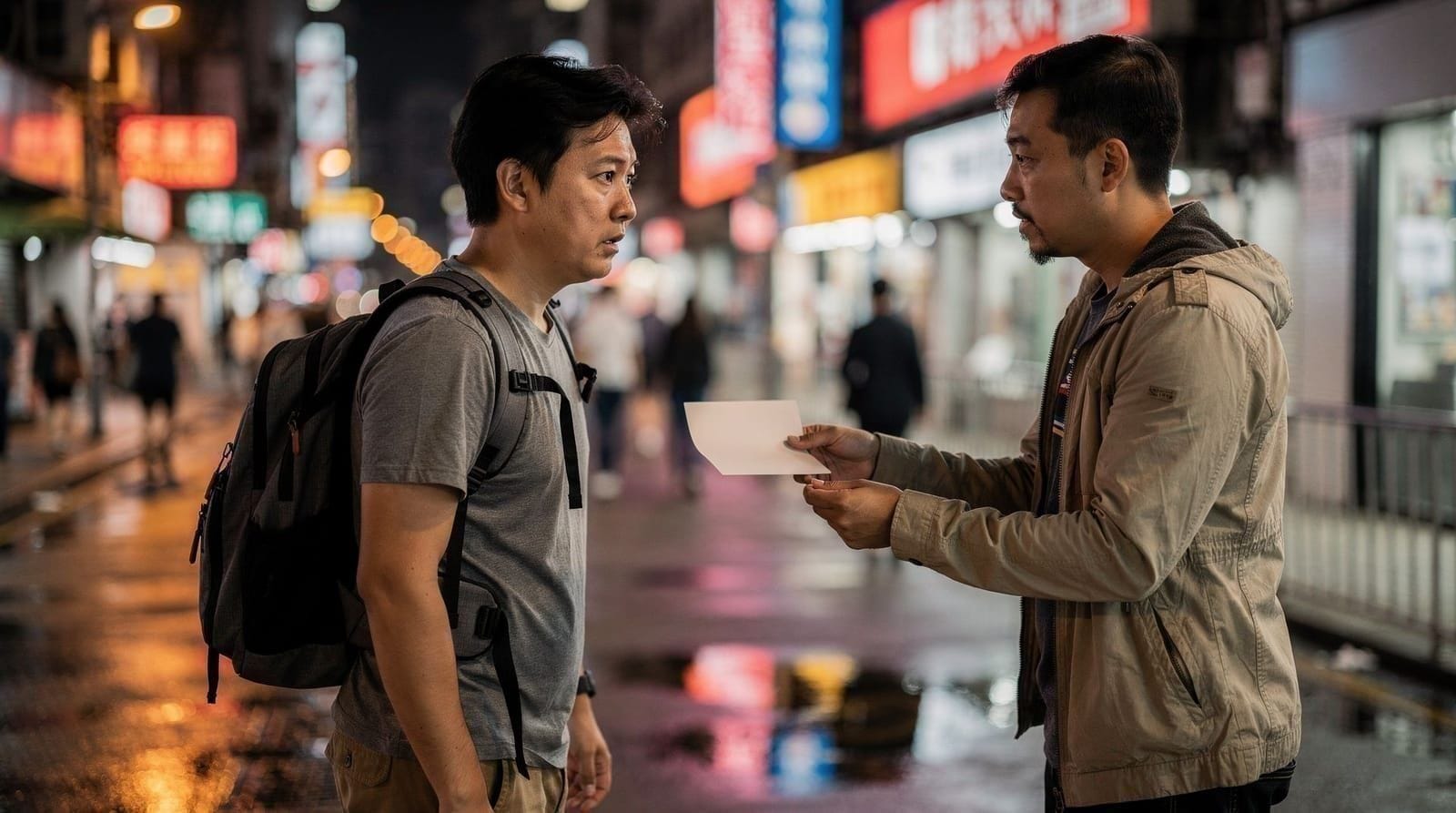
Scams: The most common tourist-facing cons are commercial rather than criminal — see the tourist traps guide and scams guide for specifics. The “jade merchant” approach, the “my cousin has a better restaurant” redirect, and overpriced photography in Temple Street Night Market are the types that occur. None involves physical risk. For a broader sense of how safety compares to other reasons people hesitate about visiting, see the is Hong Kong worth visiting guide.
Food safety: Very high standards. Street food and market stalls are regularly inspected. Foodborne illness from cooked street food is genuinely uncommon. Raw produce in typhoon season (June–September) carries slightly higher risk from potential flooding contamination — stick to cooked food if a typhoon has recently passed.
What requires actual attention
Traffic
Hong Kong drives on the left (British system). UK travellers will be accustomed to this; most of the world will need to actively look right before crossing a road. Pedestrian crossing signals are reliable and followed. The main risk is cyclists and motorcycles in market areas; watch for vehicles emerging from side streets.
Look Right signs are painted on the road at many major pedestrian crossings — take them seriously.
Typhoon signals
Hong Kong uses a numbered typhoon warning system. What each signal means:
- Signal 1: Advisory only. Transportation and most businesses operate normally.
- Signal 3: Conditions worsening. Some outdoor events affected; transport may modify schedules.
- Signal 8: This is the threshold that closes everything. Schools, government offices, most businesses, and most transport services suspend. Do not go out. If you are already out when a Signal 8 is hoisted, get indoors immediately and stay until the signal is lowered.
- Signal 10: Extreme typhoon conditions. Extremely rare.
Check the Hong Kong Observatory app (free, available in English) or the weather.gov.hk website when you see any cloudiness developing between June and October. Signal changes are announced with at least 2 hours notice in practice. See the typhoon season guide for more detail.
Summer heat
June to September: temperatures regularly reach 32–36°C with very high humidity (80–95%). Heat exhaustion is a real risk if you are hiking, walking long distances, or not hydrating. Carry water; there are 7-Eleven convenience stores every few blocks. Plan outdoor activities for early morning (before 10am) or evening (after 5pm). Air-conditioning is pervasive in malls, transport, and most restaurants.
The best time to visit guide covers seasonal specifics in detail.
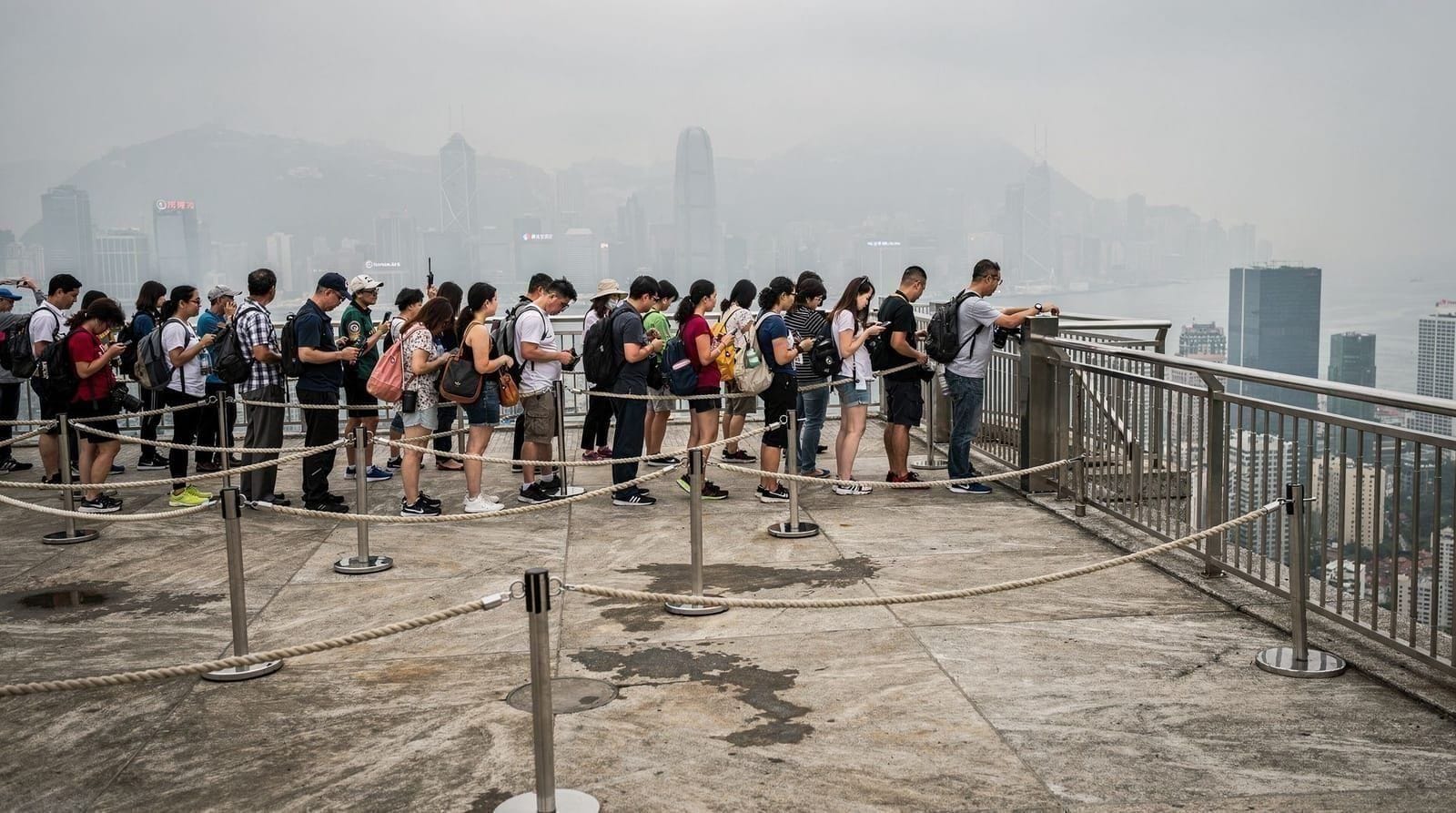
Heat and haze also affect when viewpoints are worth visiting. If you plan to go up the hill, a combined Peak Tram and Sky Terrace ticket lets you choose a clearer, cooler hour; the Peak Tram guide and is the Peak Tram worth it help you decide.
MTR conduct — the rules that matter
The MTR (subway) has enforced conduct rules that apply to all passengers. First-timers are occasionally caught by these.
No eating or drinking on the MTR or at MTR stations. This includes platforms and concourses, not just the trains. The fine is HKD 2,000 (approximately USD 255) and staff do enforce it. Not a guideline — a ticketed infraction. Finish your drink before entering the fare gates.
Queue discipline: Hong Kong has very strong queuing culture. At MTR platforms, yellow boarding markers indicate where to queue. The queue splits to both sides of the door. Let passengers off first; then board. Cutting the queue creates genuine social friction — more so than in many other cities.
Priority seating: Seats marked with the blue priority seats icon near train doors are for elderly passengers, pregnant women, and those with disabilities. Hong Kong people observe this respectfully; visitors should too.
Escalators: Stand right, walk left. This is not a posted rule but a universal social norm. Walking on the right side of an escalator at rush hour creates real problems.
Volume: Phone calls and loud conversations are not explicitly prohibited but are frowned upon. The MTR is notably quiet for a subway system that carries 5 million passengers per day.
If you are still working out how the network fits together, the MTR guide walks through lines, interchanges and the habits that make rides smoother, and the Octopus card guide covers paying at the gates so you are not fumbling at the turnstiles while a queue forms behind you.
Temple and religious site etiquette
Shoes: Most Chinese temples do not require shoe removal (unlike many Thai and Japanese temples). You can enter with shoes. Some smaller shrines have a low step at the entrance — step over rather than on it.
Photography: Generally permitted in temple grounds and exterior areas. In the main hall with worshippers actively praying, be respectful — put the camera down and observe before photographing. Flash photography of altars is not appropriate.
Incense: Incense coils and sticks are lit by worshippers and placed in large bronze urns. The smoke is heavy at busy times (festival days, weekends). If you have respiratory sensitivities, note that Man Mo Temple in Sheung Wan and Wong Tai Sin Temple in Kowloon have particularly intense incense environments.
During ceremonies: If you arrive during an active ceremony or ritual performance, step back and watch from a distance rather than walking through the space. At Wong Tai Sin Temple, fortune-telling and prayer sessions are semi-public but treat them as private while observing.
For fuller background on the places named here, see the Man Mo Temple guide and the Wong Tai Sin Temple guide. Both explain what to expect inside, which helps you judge when to watch quietly and when it is fine to take a photo.
Restaurant and food etiquette
At dim sum: Pouring tea for others before yourself is standard table etiquette. Tapping two fingers on the table (index and middle finger, bent) is a gesture of thanks to someone who pours your tea — a Hong Kong custom derived from an old story about a Qing emperor. You will see locals do this; using it correctly earns appreciation.
Chopsticks: Do not stick chopsticks vertically into rice (funeral connotation) or pass food chopstick-to-chopstick (also funeral ritual). If sharing dishes, use the “clean” end of your chopsticks or the serving spoons provided to take food from communal dishes, not the end you have eaten from.
At cha chaan tengs: These are fast-moving diners with little patience for indecision. Know roughly what you want before sitting; the service is brisk by design, not rude. Cash is standard; credit cards are often not accepted.
Tipping: Service charges of 10% are commonly included in the bill at mid-range and upmarket restaurants. If included, additional tipping is optional. At local dai pai dong, cha chaan tengs, and noodle stalls, tipping is not expected or standard.
The same habits carry over to the other places you will eat. The cha chaan teng guide explains how these diners work and what to order, and the dim sum guide goes deeper on the tea rituals mentioned above, so nothing at the table catches you off guard.
What to wear
Hong Kong is casual in dress code for most of the tourist experience. The exception: upmarket restaurants and clubs may have dress codes (typically smart casual — no shorts or flip-flops). Business hotel bars in TST and Central often apply informal dress standards for the evening.
Practical considerations: comfortable walking shoes (the city involves significant incline walking). Light, breathable clothing in summer (June–September). A light layer for the contrast between outdoor heat and aggressive air-conditioning in malls, MTR, and restaurants. Modest clothing (shoulders covered, no very short shorts) for temple visits — not enforced, but respectful.
Health considerations
No vaccinations are required for Hong Kong, though keeping standard travel vaccinations (hepatitis A, typhoid for food adventurers) up to date is sensible. Hospital care is of very high quality; travellers’ health insurance covering medical evacuation is recommended for longer visits. Public hospitals have English-speaking staff; private hospitals (Adventist, Matilda, Queen Elizabeth) cater well to international patients.
Prescription medications: bring sufficient supply and a doctor’s note for controlled substances — Hong Kong customs is thorough.
In an emergency
Emergency number: 999 for police, fire, and ambulance. English-speaking operators are available.
Police Tourist Liaison Units operate in TST, Wan Chai, Mong Kok, and at the airport — identifiable by English-speaking officers wearing a specific badge. For minor issues (lost property, minor scams), these are the first point of contact.
Frequently asked questions about Hong Kong safety and etiquette
Is it safe for solo female travellers?
Yes. Hong Kong is consistently rated as one of the safest cities in Asia for solo female travellers. Street harassment is very uncommon. Late-night transport (MTR, taxis from ranks) is reliable. The main precautions are the same as for any traveller — awareness in crowded markets, avoid unofficial taxis.
Are there areas of Hong Kong tourists should avoid?
No areas require avoidance on safety grounds. Some areas are less tourist-relevant (industrial Kwun Tong, New Territories satellite towns) but none are unsafe. The caution about overpriced restaurants is commercial, not safety-related.
What happens if my wallet is stolen?
Report to the nearest police station or Tourist Liaison Unit. Hong Kong police take tourist crime seriously. Keep a photocopy of your passport and card numbers separate from originals. Call your card company immediately to freeze cards — most are contactable 24/7.
Can I drink tap water in Hong Kong?
Yes, tap water meets WHO standards and is safe to drink directly. Restaurants typically serve bottled or filtered water; convenience stores sell bottled water for HKD 5–8.
Going with a local guide
If the etiquette side still feels like a lot to absorb, a guided first day is a low-stress way to pick it up by watching. Many visitors find that a private walking tour with a local guide lets them ask the small questions that guidebooks skip: how to behave in a temple, when it is fine to photograph, how to order without holding up a busy diner.
The crowded market districts are where first-timers feel the density most. A guided walk such as a Kowloon markets and food culture walking tour keeps you moving with someone who knows the rhythm of the stalls, which also helps with the bag-security habits described above.
Photography etiquette
Hong Kong is a visually striking city and photography is a central part of the tourist experience. Some practical guidelines:
Street photography: Generally accepted as in most public cities. Photographing people in public spaces (markets, streets, temples) is normal practice; being respectful and not photographing someone in close-up without acknowledgment is standard courtesy. Mong Kok’s market streets, the Sham Shui Po market blocks, and the cooked food stalls at Temple Street are all widely photographed.
Temples and religious sites: Photography is generally permitted in temple grounds. Main altar areas during active prayer — step back and photograph from a respectful distance. The incense burning at Man Mo Temple and Wong Tai Sin creates atmospheric photos but requires patience to find a clear angle.
MTR and transport: Photographing the MTR is technically restricted at station level but this rule is rarely enforced for tourists taking general shots. Photographing specific security infrastructure, police, or emergency services is more sensitive — use judgment.
Private property and malls: Shopping malls in Hong Kong often prohibit commercial photography; casual tourist photography is generally tolerated. At Tai Kwun (the heritage arts centre in Central), photography is explicitly welcomed in most spaces.
Currency, tipping, and payment
Currency: The Hong Kong Dollar (HKD) is pegged to the USD at approximately 7.78 HKD per dollar. This peg has been maintained since 1983 and is stable. Notes are issued by three commercial banks (HSBC, Standard Chartered, and Bank of China) in addition to government coins — all are legal tender and accepted everywhere.
ATMs: Abundant across the city. HSBC and Hang Seng machines are particularly widespread. Your home bank’s international ATM fee applies; Octopus Card is rechargeable at MTR machines with a bank card and generally has lower fees for small amounts.
Tipping conventions: More specific than most guides acknowledge:
- Cha chaan tengs and local noodle shops: No tip expected or given
- Dai pai dong and street stalls: No tip
- Mid-range restaurant with 10% service charge included: No additional tip required; rounding up the service charge is acceptable
- Upmarket restaurants without service charge: 10% is appropriate
- Hotel porters: HKD 10–20 per bag is standard
- Taxis: Round up to the nearest HKD 5 or 10; not obligatory but normal for good service
- Tour guides: HKD 50–100 per person for a half-day tour is appropriate; HKD 100–200 for a full day
Common misunderstandings about Hong Kong conduct
Eating standing up: Perfectly normal. Food courts, convenience stores, and street stalls all have standing or minimal seating. Eating while walking (if you can manage it cleanly) is not considered rude.
Bargaining: Not the norm in Hong Kong as it is in some other Asian cities. Fixed prices are standard at established shops, malls, and restaurants. At traditional markets (Stanley Market, Ladies’ Market, Jade Market), some bargaining is expected for souvenir-type items — vendors typically have two prices in mind. For electronics and other goods with a stated price, fixed pricing applies.
Personal space: Hong Kong is very dense and public spaces are genuinely crowded. The social norm for managing this density is efficiency and queuing discipline rather than the broader personal-space conventions of less-crowded cities. On the MTR during rush hour, you will be very close to other passengers; this is normal and not considered intrusive.
“Excuse me” and social navigation: The concept of audibly saying “excuse me” while moving through crowds is less universal in Hong Kong than in Western contexts. The normal practice is a light tap on the shoulder or a subtle gesture rather than a verbal announcement. If you say “excuse me” in English, most people will understand and move; it is not rude to not respond verbally.
What to do in a medical emergency
Private hospitals in Hong Kong with international patient experience:
- Adventist Hospital, Stubbs Road, Happy Valley: The most foreigner-friendly private hospital on Hong Kong Island, with English-speaking staff and efficient international patient procedures.
- Matilda International Hospital, Mount Kellett Road, The Peak: Long-established private hospital with strong international patient experience.
- Hong Kong Sanatorium and Hospital, Tai Po Road, Happy Valley: Another well-regarded private option.
Public hospitals (Queen Mary, Queen Elizabeth, Pamela Youde Nethersole) have English-speaking doctors but may have longer waits for non-emergency cases. Emergency treatment is provided regardless of nationality.
Travel insurance that covers emergency medical treatment and medical evacuation is strongly recommended for visits of more than a few days. Medical costs in Hong Kong are high at private facilities and moderate at public ones; evacuation to a home country for serious conditions would be extremely expensive uninsured.
Etiquette for solo travellers and families
Solo travellers, particularly women, generally find Hong Kong one of the easiest Asian cities to navigate alone — well-lit streets, reliable late-night transport, and a culture where being out alone (eating, drinking, sightseeing) draws no particular attention, unlike in some other destinations where solo dining is unusual. Restaurants are used to single diners at counters and cha chaan tengs, where communal seating is the norm anyway.
Families travelling with children will find Hong Kong broadly child-friendly but not always child-optimised: pushchairs face real obstacles on some older MTR stations’ stairs (though lifts exist almost everywhere with a bit of extra walking), and the volume and density of markets like Mong Kok can overwhelm younger children by late afternoon. Public toilets in malls and MTR stations are plentiful and generally clean, which takes some of the logistical pressure off a family day.
Priority seating and general public patience with children on transport is good by international standards. Older travellers and those with mobility considerations should note that while every MTR station has lift access, the routing between lifts at large interchange stations can add real walking distance — worth factoring into daily planning rather than assuming step-free automatically means quick.
First-timer nerves versus actual risk
Many first-time visitors arrive with more caution than the city actually warrants, particularly if their mental image of Hong Kong is shaped by its density and neon rather than its crime statistics. The gap between perceived and actual risk is genuinely large: a first-time visitor navigating Mong Kok’s crowded night markets is statistically safer there than in a comparable neighbourhood in most Western cities.
This doesn’t mean zero caution — the usual big-city awareness applies in any crowded market — but it does mean you can relax the hyper-vigilance that guidebooks for less predictable destinations sometimes instil. The first-time Hong Kong guide covers the broader adjustment period for new visitors, of which safety concerns are usually a smaller factor than expected.
Money-related etiquette beyond tipping
A few payment habits smooth things over beyond the tipping conventions above. Handing over cash or a card with both hands (or at least not one careless hand while looking elsewhere) is a small but noticed courtesy at smaller, family-run shops. Counting change openly rather than pocketing it without checking is normal and not seen as distrustful.
And at markets where some bargaining is expected, opening with a genuinely reasonable counter-offer rather than an aggressively low one tends to get a faster, friendlier negotiation — vendors know the real range and an insultingly low opener just slows things down. None of this significantly affects your Hong Kong budget, but it makes transactions noticeably smoother.
Top experiences
Bookable activities with verified prices and instant confirmation on GetYourGuide.