Typhoon season in Hong Kong — what travellers actually need to know
Hong Kong: sky100 observation deck entry ticket only
When is typhoon season in Hong Kong and how bad is it?
The typhoon season runs May to November, with peak risk in June through September. A T8 signal (issued when typhoons are within 800km and wind speeds hit 63–117 km/h) shuts down ferries, cable cars, and many outdoor attractions. Most years, 2–4 T8 or higher signals affect Hong Kong between June and September. A T10 (direct strike, rare) is a serious event requiring shelter.
The Hong Kong typhoon system, explained without hype
Hong Kong’s Tropical Cyclone Warning System is one of the world’s best-documented and most efficiently communicated public warning systems. Signals are issued by the Hong Kong Observatory based on expected wind speeds. The system is graduated and allows reasonable time for preparation. What it doesn’t do is prevent all disruption — a T8 issued at 6am can shut down your ferry to Macau regardless of how well you planned.
Understanding the system before you arrive allows you to respond rather than panic.
| Season | May–November; peak risk June–September |
| What closes at T8 | Ferries, cable car, outdoor markets, many outdoor attractions |
| What stays open | MTR underground, hotels, malls, hospitals |
| Typical duration | 6–18 hours per T8 event |
| Advance warning | Usually 1–2 hours before T8 is hoisted |
The signal levels in plain language
T1 — Standby Signal A tropical cyclone is within 800km. Seas are rough. No closures yet. This is an awareness signal.
T3 — Strong Wind Signal Wind sustained at Beaufort Scale 6–7 (39–61 km/h). Some ferry services may be delayed or cancelled. Outdoor events may be affected. Schools and businesses open.
T8 — Gale or Storm Signal This is the meaningful threshold for travellers. Wind sustained at 63–117 km/h. What happens at T8:
- All ferry services stop — Macau ferries, outlying island ferries, the Star Ferry, and harbour ferries all cease
- The Ngong Ping 360 cable car closes
- Many outdoor markets, open-air attractions, and parks close
- Schools and most businesses are officially closed (employees advised to seek shelter before the signal is issued)
- The MTR continues service on underground sections but may suspend elevated sections
- Restaurants and malls may operate at reduced hours or close
A T8 is typically issued with 1–2 hours of advance warning. It can last from 3 hours to 24+ hours depending on the typhoon’s speed and track.
T10 — Hurricane Signal Wind sustained above 118 km/h. Issued only when a severe typhoon is very close or making landfall on Hong Kong. This is the shelter signal — do not leave your hotel or building. Extremely rare (T10 or Super Typhoon T-grade events occur perhaps once every 3–5 years that directly affect Hong Kong). If issued, treat it seriously.
Super Typhoon T-grade: A designation for particularly powerful typhoons based on satellite intensity — not an additional signal tier. A Super Typhoon can trigger T10 signals if it tracks close enough to Hong Kong.
What actually closes and for how long
At T8:
- TurboJET and Cotai Water Jet (Macau ferries): suspended until signal drops below T3
- Star Ferry: suspended
- Outlying island ferries (Lamma, Cheung Chau, Lantau): suspended
- Ngong Ping 360: closed
- HZMB bridge bus: suspended
- Outdoor markets (Temple Street, Ladies’ Market): closed
- Many restaurants: reduced service or closed
What stays open at T8:
- MTR underground sections (some elevated sections may close)
- Hotels
- Large malls (IFC, Harbour City, Times Square — shopping continues)
- Hotel restaurants and room service
- Hospitals and emergency services
Typical duration of T8 disruption: 6–18 hours for a passing typhoon. A slow-moving storm can keep T8 in effect for 24–48 hours. The signal is lifted progressively as the storm moves away.
Probability of encountering a typhoon signal
Based on historical data from the Hong Kong Observatory:
| Month | Average days with T8 or higher | Risk per 7-day trip |
|---|---|---|
| May | 0.1 | ~1% |
| June | 0.5 | ~7% |
| July | 0.8 | ~11% |
| August | 1.2 | ~17% |
| September | 0.9 | ~13% |
| October | 0.3 | ~4% |
| November | 0.1 | ~1% |
These are averages and vary significantly by year. 2023 was an active year with Typhoon Saola (T10) and Typhoon Haikui causing major disruption in September. 2024 was quieter. There’s no reliable year-ahead forecasting of individual typhoon activity.
Bottom line: A 7-day August trip has roughly a 1 in 6 chance of a T8 day. A 7-day October trip has roughly 1 in 25. The summer risk is real but not certain.
The rainstorm warning system — often overlooked
Independent of typhoon signals, the Hong Kong Observatory issues rainstorm warnings based on hourly rainfall:
- Yellow: 30mm/hour falling or expected. Be careful outdoors.
- Red: 50mm/hour falling or expected. Significant disruption. Seek shelter.
- Black: 70mm/hour or above. Stay indoors. This is the equivalent of T8 for rainfall intensity.
A Black Rainstorm Warning can occur on a completely typhoon-free day if a convective storm cell develops over the city. Schools close, businesses reduce operations, outdoor markets stop, and outdoor activities are dangerous. The MTR usually continues but some surface routes are affected.
For travellers: A Black Rainstorm warning can catch you off guard on a day with no typhoon signal. Check the Hong Kong Observatory app every morning during summer months.
Practical responses by scenario
T3 issued before your Macau ferry: Ferries may still run at T3 but check with the operator (TurboJET or Cotai Water Jet). Many services run until T8 approaches. Rebook for later the same day or next morning if T3 drops quickly.
T8 issued on your Lantau cable car day: The Ngong Ping 360 is closed until the signal drops to T3. If the T8 lasts less than 8 hours, the cable car may reopen in the afternoon. Otherwise, reschedule to the next clear day. Indoor alternatives: M+ Museum, Hong Kong Palace Museum, or the Hong Kong History Museum (all excellent; the History Museum’s permanent exhibitions are free, the Palace Museum charges HKD 70 for galleries 1–7, and M+ prices are on its official site).
T8 issued in the morning of your last full day: If your flight is the following morning, you’re likely fine — T8 signals typically lift within 12–24 hours. Check flight status with your airline; Hong Kong airport typically resumes operations within a few hours of T8 being lifted. If your flight is the same afternoon as a T8 signal, contact the airline — they often allow free rebooking during typhoon conditions.
T10 issued: Stay in your hotel. Order room service. Do not attempt to go outside. Follow Hong Kong Observatory updates. This is not the time for sightseeing.
What to do with a forced indoor day
A T8 day doesn’t have to be wasted if you’re in a central hotel. Hong Kong’s malls provide entertainment:
- IFC Mall (Central/Hong Kong): Large shops, a cinema (Palace IFC), multiple restaurants and cafés
- Harbour City (Tsim Sha Tsui): One of Asia’s largest malls with restaurant streets and extensive shopping
- Elements (Kowloon Station): Above the Airport Express terminus, huge and comfortable
Museum options accessible via underground MTR during T8:
- M+ Museum (West Kowloon — take the MTR, exit underground)
- Hong Kong Palace Museum (adjacent to M+)
- Hong Kong Museum of Art (Tsim Sha Tsui waterfront, but check outdoor access)
Dim sum emergency plan: Many traditional yum cha restaurants in Tsim Sha Tsui, Jordan, and Wan Chai continue service during T8 (they’re often busy, as locals take the opportunity to eat out when stuck). The dim sum guide has specific recommendations that are accessible without outdoor exposure.
The HZMB bridge in typhoon conditions
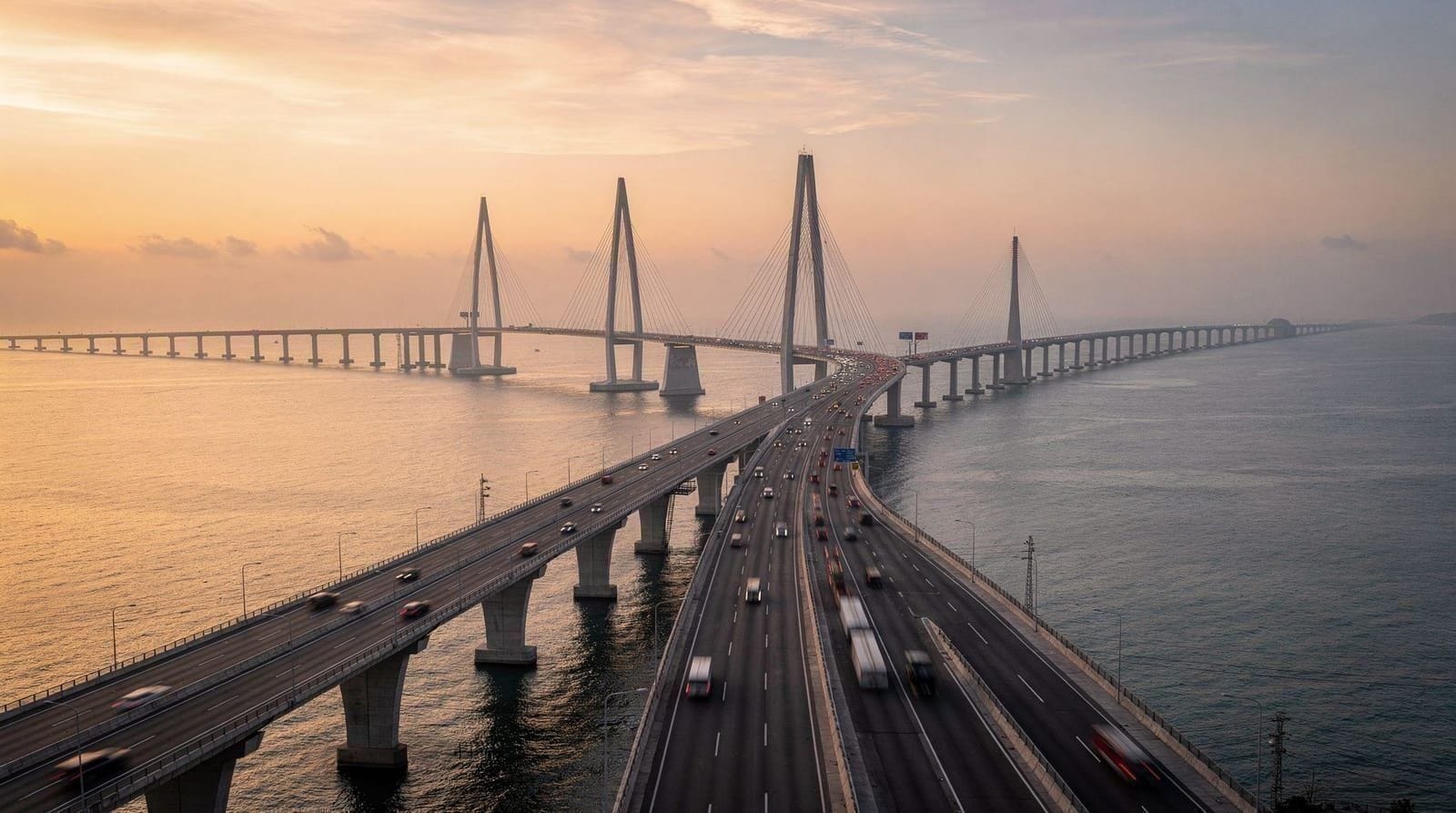
The Hong Kong-Zhuhai-Macau Bridge bus service (a cheaper Macau crossing alternative than the ferry) is also suspended during T8 signals. See the ferry vs bridge to Macau guide for the comparison under normal conditions — during typhoon signals, both routes are suspended and the timing of resumption is similar.
Which attractions are most and least exposed
Some of Hong Kong’s most popular experiences are entirely weather-dependent, while others carry on regardless. The Star Ferry, the Symphony of Lights viewing from the waterfront, the Ngong Ping cable car to the Big Buddha, the outlying island ferries, and outdoor markets like Temple Street all suspend or become unpleasant under T8 or Black Rainstorm conditions.
By contrast, Tai Kwun, the major museums, indoor dim sum restaurants, and the MTR network itself keep running through everything short of T10. If your trip falls in the June–September window, it’s worth deliberately front-loading the weather-exposed items — Star Ferry crossings, the cable car, outdoor markets — earlier in your stay, and keeping the indoor options as a buffer for whichever day turns out to be disrupted.
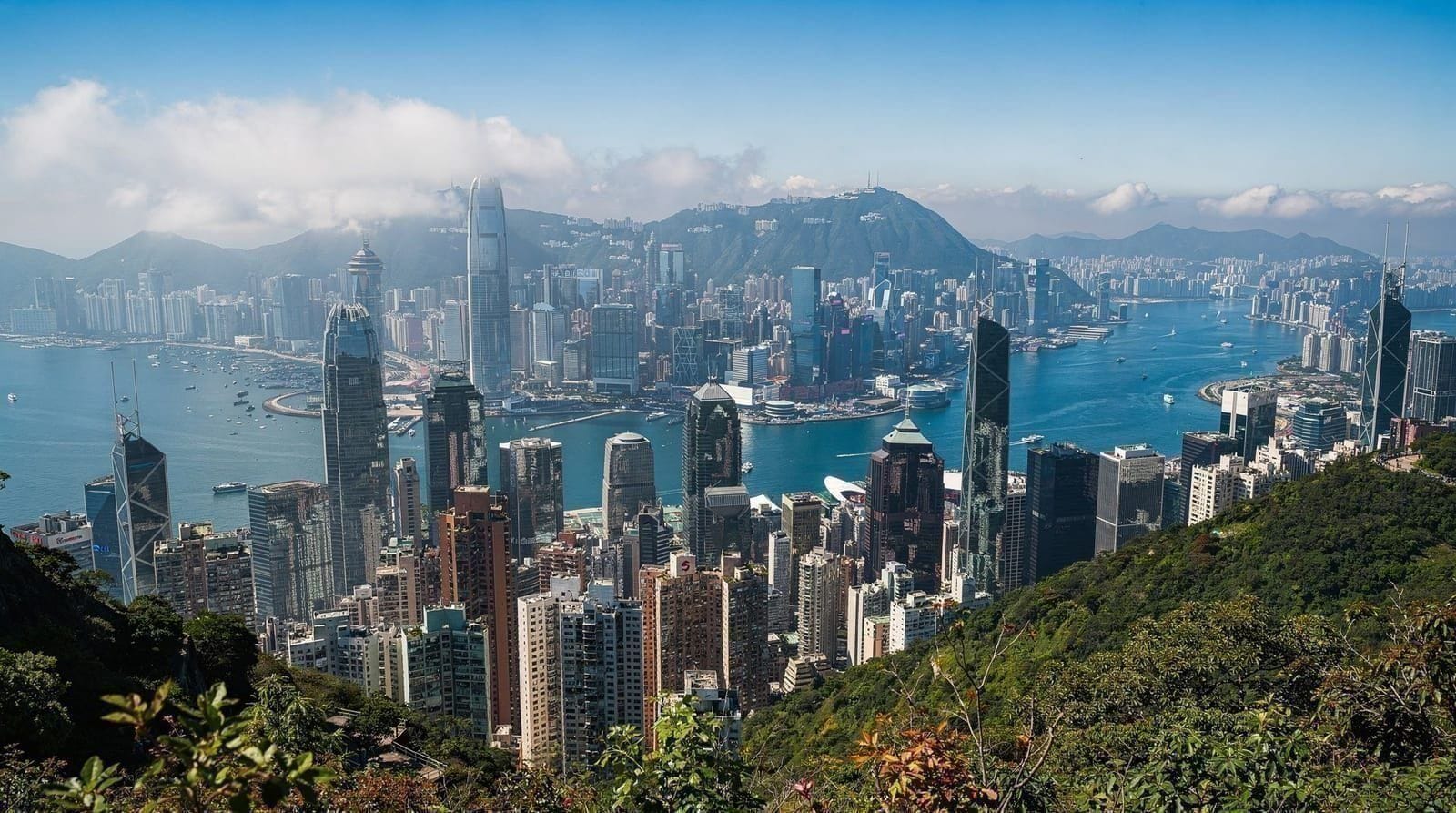
Viewpoints deserve a special mention. A clear day is what makes a skyline view worthwhile, so if you plan to go up to a viewpoint, keep that visit flexible and choose the day after a storm has passed, when the air is often at its clearest. Note that the sky100 observation deck has been closed for renovation since 17 May 2025, with no reopening date announced. A guided option can also help on a day when plans shift: a private walking tour with a local guide lets someone who knows the city adapt the route around whatever the weather is doing.
Checking the forecast like a local
Hong Kong residents check the Hong Kong Observatory website or app daily during typhoon season, not just when a storm is already forming — the nine-day forecast flags developing systems well before a signal is issued, and locals use this to decide whether to book outdoor plans provisionally.
The same habit is worth adopting as a visitor: check each morning during summer, and treat any system tracked within a few days of Hong Kong as a reason to build flexibility into that day’s plan rather than a reason to panic. Airlines and hotels in Hong Kong are generally well-practised at handling typhoon disruption — rebooking flights and extending hotel stays during a T8 is routine rather than exceptional, so the operational risk to your trip is usually lower than first-time visitors expect.
Building a typhoon-proof itinerary
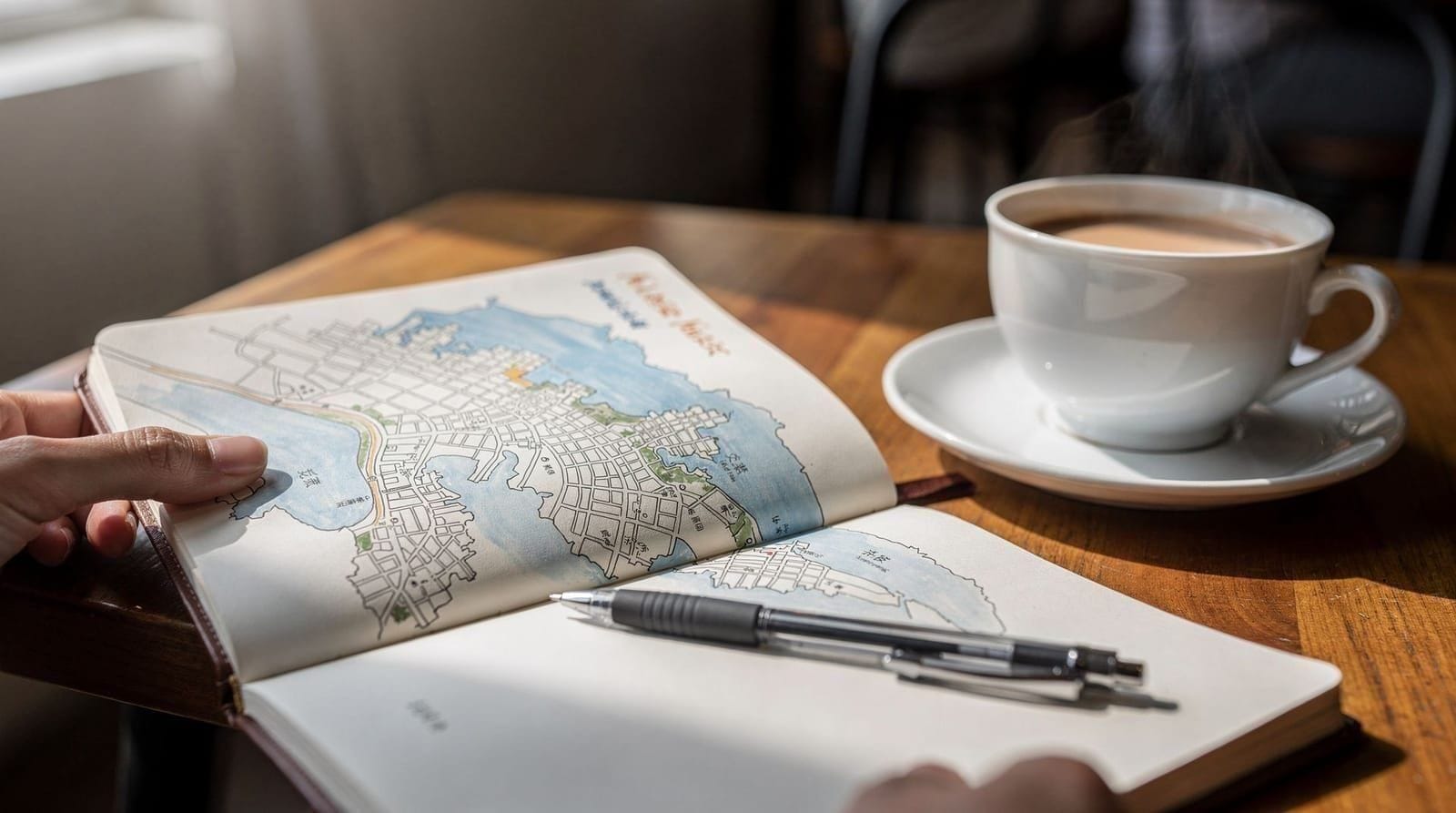
The simplest protection is structure, not luck. Whatever the length of your stay, plan it as a set of blocks: a few weather-exposed days and a few that work in any conditions. The Hong Kong itinerary planning guide explains how to sequence days by neighbourhood, and the same logic applies here. If every day of your trip depends on a ferry or a viewpoint, a single disrupted day knocks the whole plan sideways. If each day has an indoor fallback in the same area, a signal becomes an inconvenience rather than a crisis.
For a short visit, the rainy day itinerary is a useful template to keep in your pocket. It is built around indoor stops, so you can swap it in the moment a signal is hoisted without redesigning anything. Longer stays, such as the 7-day itinerary, have more natural slack, because there is usually a day you can move without losing anything important.
A few habits make a real difference:
- Put the Macau crossing in the middle of your trip rather than on your first or last day, so a suspended ferry does not collide with a flight.
- Keep one flexible day with nothing fixed, which gives you somewhere to move a cancelled activity.
- Avoid pre-paying for several outdoor experiences on the same day.
- Save screenshots of your booking confirmations and contact details, in case Wi-Fi is patchy.
Staying comfortable during a signal
A T8 day is mostly about being in the right place when it begins. Because the signal is usually hoisted with some notice, the sensible move is to head back towards your hotel or a large indoor space as soon as a T3 turns into a warning that T8 is likely. Locals do exactly this, and it is why the streets empty quickly once the signal goes up.
Where you stay matters. A hotel close to an MTR station, with a mall or restaurants within easy reach, makes a forced indoor day pleasant instead of claustrophobic. The where to stay in Hong Kong guide covers the neighbourhoods, and during summer it is worth giving connectivity a little more weight than you otherwise would. Travellers staying on an outlying island should be especially aware that ferries stop at T8, so think about whether you are comfortable being stuck there for a night.
Before the signal arrives, it helps to:
- Charge your phone and any power bank.
- Buy water and some snacks, so you are not relying on a restaurant being open.
- Check your onward transport and let your airline or tour operator know if your plans are affected.
- Keep the Hong Kong Observatory app open for updates.
Staying connected is part of that preparation. Warnings, ferry notices and airline messages all arrive on your phone, so a data connection that does not depend on hotel Wi-Fi is worth having; many visitors simply set up an eSIM data plan for Hong Kong and Macau before landing, so updates keep coming even if you are moving between a mall and the MTR.
Once the signal is lowered, services come back progressively rather than all at once. Do not assume that the moment the number drops, every ferry and attraction is running; give operators time to inspect and reopen.
Typhoon season and the rest of your planning
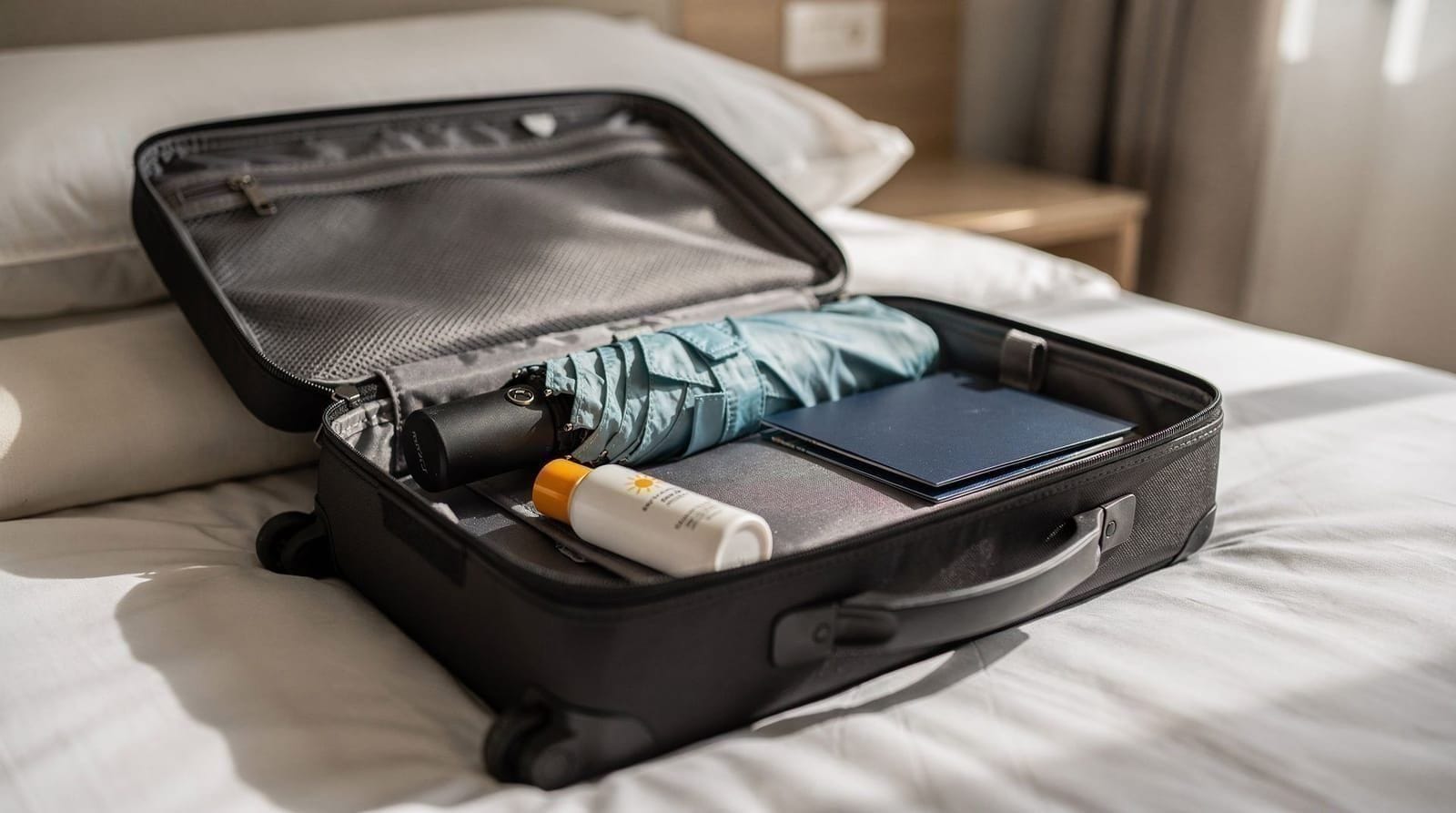
Typhoon risk is one factor among several when choosing dates. The best time to visit guide puts it alongside temperature, humidity, crowds and prices, and the summer guide looks at what the season is like when no storm is in sight. Many visitors find the heat and humidity more of a daily challenge than the signals themselves, so pack with both in mind using the packing guide.
If you are travelling with children, the guide to visiting with kids is worth reading before a summer trip, as a forced indoor day is easier when you have a few ideas ready. For a quieter weather window, the winter guide describes the cooler months.
Finally, the rainy season blog post gives a first-hand feel for how the city carries on in wet weather, which is reassuring if it is your first summer visit.
Frequently asked questions about Typhoon season in Hong Kong — what travellers actually need to know
What does each typhoon signal level mean?
What should I do if a T8 is issued during my trip?
Should I avoid Hong Kong in summer entirely because of typhoons?
Does travel insurance cover typhoon disruption in Hong Kong?
How do rainstorm warnings differ from typhoon signals?
Top experiences
Bookable activities with verified prices and instant confirmation on GetYourGuide.