Ferry vs bridge to Macau from Hong Kong — which is better?
Hong Kong: Ferry journey between Hong Kong Island and Macau
Should I take the ferry or the HZMB bridge bus from Hong Kong to Macau?
Ferry from Sheung Wan if you're based in central Hong Kong — about 60 minutes of sailing, central departure, and a genuine harbour experience. HZMB bridge bus if you're arriving directly from the airport or prioritise cost (HKD 65–70 each way vs HKD 194–212 by ferry). The bridge is cheaper but requires 35–40 minutes to reach the Lantau departure terminal from central Hong Kong, making total journey times comparable.
| Ferry | HKD 194–212, about 60 min crossing, departs Sheung Wan/TST |
| Bridge bus | HKD 65–70, 40 min crossing, departs Lantau (near airport) |
| Cheaper | Bridge bus, by roughly HKD 125–145 each way |
| More central | Ferry — lands near the Macau historic centre |
| Best for airport connections | Bridge bus |
The two ways to cross from Hong Kong to Macau
Until 2018, the only way to cross between Hong Kong and Macau was by sea. The opening of the Hong Kong-Zhuhai-Macau Bridge (HZMB) — at 55km, the world’s longest sea crossing bridge-tunnel system — added a land option. Both crossings remain active, and each has genuine advantages depending on your situation.
The ferry: the traditional route
Routes and terminals
From Hong Kong:
- Sheung Wan Outer Harbour Terminal (Macau Ferry Terminal): The main point for TurboJET and Cotai Water Jet services from Hong Kong Island. Located on Hong Kong Island waterfront in Sheung Wan, a short walk from Sheung Wan MTR station.
- Tsim Sha Tsui China Ferry Terminal: Services to Macau from the Kowloon side, useful if you’re based in TST.
- Hong Kong International Airport Ferry Terminal: Direct ferry from the airport without entering the city.
To Macau:
- Outer Harbour Terminal: The historic Macau ferry terminal, walking distance from the historic centre. Best if you’re heading to the UNESCO heritage zone.
- Taipa Ferry Terminal (Cotai): For the Cotai strip casino resorts. The Venetian, Galaxy, and other Cotai resorts are accessible by hotel shuttle from here.
Journey time and frequency
About 60 minutes. TurboJET runs frequent daytime sailings from Sheung Wan, with late-night sailings too — check the current timetable on the TurboJET website.
Cost
Daytime economy class: HKD 194 one way on weekdays, HKD 212 at weekends and public holidays. Premium classes cost more — see current fares on the TurboJET website.
Book your Hong Kong to Macau ferry journeyThe ferry experience
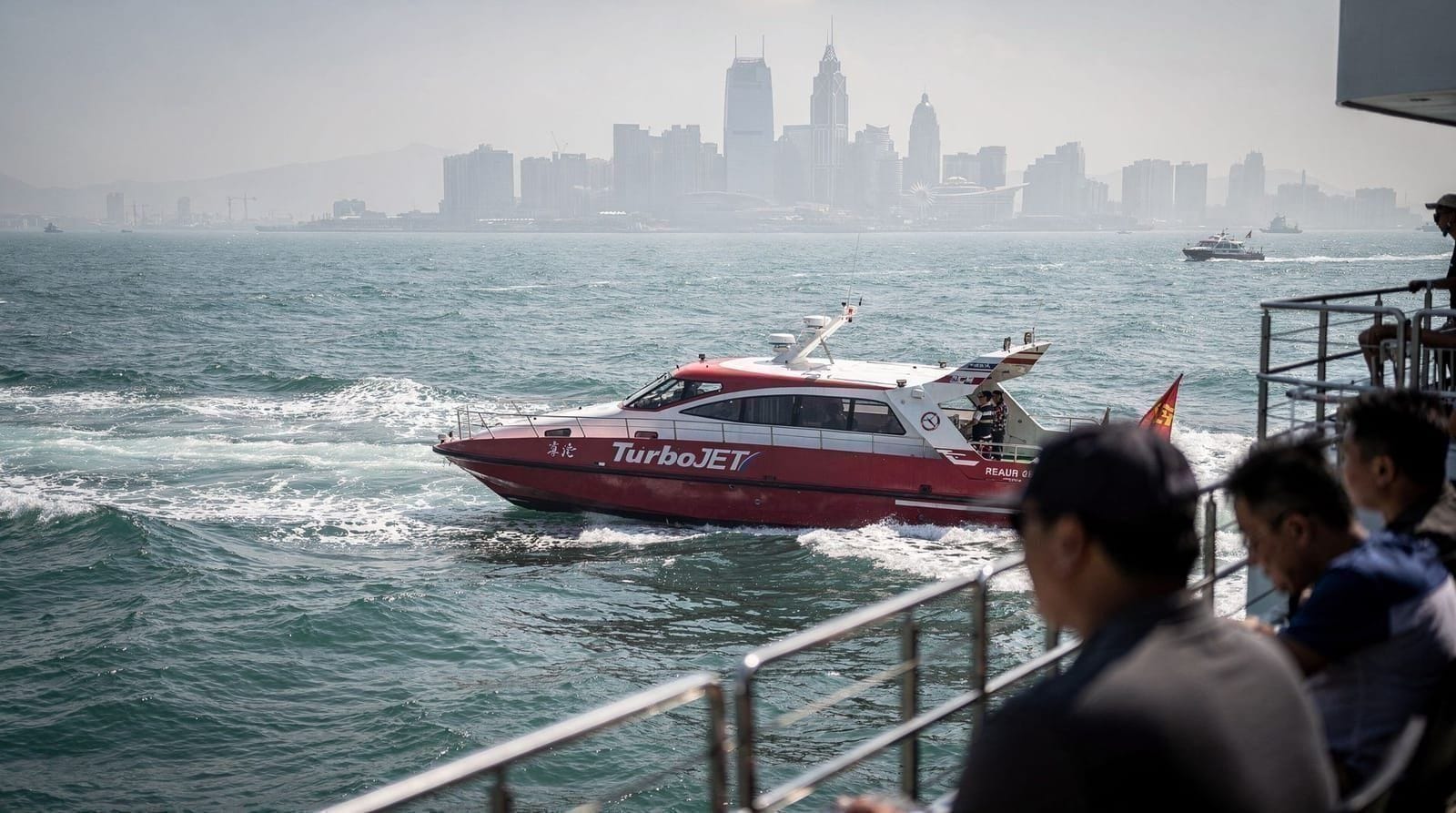
The TurboJET is a wave-piercing high-speed catamaran (up to 45 knots). The journey is functional rather than scenic — you sit in an aircraft-style cabin with windows. The sea can be rough in typhoon season and the crossing is occasionally choppy. Arrival in Macau’s outer harbour gives you a view of the colonnaded façade of the ferry terminal and the old city skyline, which is genuinely atmospheric.
The ferry is the right choice if:
- You’re based in central Hong Kong (Tsim Sha Tsui, Central, Sheung Wan, Wan Chai)
- You want to arrive at the terminal closest to the Macau historic centre
- You prefer the flexibility of frequent sailings throughout the day
The HZMB bridge bus
How it works
The Hong Kong-Zhuhai-Macau Bridge carries dedicated bus services between the Hong Kong Port (on Lantau Island, reclaimed land adjacent to the airport) and the Macau Border Gate/Hengqin Port on the Macau side. Private car use on the bridge requires a special permit that tourists cannot obtain — you must use the designated bus services.
Operators
Multiple licensed bus operators run the route. The two main are:
- HZM Bus Company: Standard coach service, HKD 65 one way by day, HKD 70 at night
- Macau-Zhuhai shuttle bus: Similar pricing, similar service
Getting to the Hong Kong Port
The Hong Kong Port is on Lantau Island, reachable by:
- MTR to Tung Chung station, then dedicated bus to the Hong Kong Port (approximately 40 minutes from Kowloon, bus E11 or similar)
- Taxi from Kowloon or Hong Kong Island (HKD 250–350 + Lantau tunnel toll)
- Direct from Hong Kong International Airport (5–10 minute shuttle bus or short walk)
Bridge crossing time
The bridge crossing takes approximately 40 minutes. The Macau Port is on reclaimed land in Hengqin/Cotai — you then need to take a hotel shuttle or taxi to reach the historic centre (Macau Peninsula) or the Cotai strip.
Cost
HKD 65 one way by day (06:00–23:59), HKD 70 at night, on the Gold Bus shuttle between Hong Kong Port and Macau Port, which runs 24 hours a day. Return: HKD 130–140 total.
Side-by-side comparison
| Ferry (from Sheung Wan) | HZMB Bridge Bus | |
|---|---|---|
| One-way cost (economy) | HKD 194–212 | HKD 65–70 |
| Journey time (crossing only) | About 60 minutes | 40 minutes |
| Getting to departure terminal | 5–15 min walk from MTR | 35–45 min MTR + bus |
| Total time from TST to central Macau | 75–85 minutes | 95–115 minutes |
| Macau arrival point | Outer Harbour (near historic centre) | Hengqin/Cotai (needs shuttle or taxi) |
| Typhoon disruption | Ferry stops at T3+ | Bridge bus stops at T8 |
| Night service | Yes, late-night sailings | Yes, 24 hours a day (HKD 70 at night) |
| Suitable for airport connection | Yes (HKG ferry terminal) | Ideal (HKG Port is adjacent) |
Who should use the bridge
If you’re arriving directly from the airport and going to Macau on the same day: The bridge is the obvious choice. The Hong Kong Port is adjacent to the airport. No need to travel to the city at all.
If you’re returning from Macau on your departure day: Same logic — bridge from Macau to the Hong Kong Port, then 10 minutes to the airport terminal.
If cost is the primary driver: The bridge at HKD 65–70 is significantly cheaper than the ferry at HKD 194–212. For a day trip return, the bridge saves roughly HKD 250–295 per person.
Who should use the ferry
If you’re based in central Kowloon or Hong Kong Island: The Sheung Wan or Tsim Sha Tsui ferry terminal is much closer than the Lantau Hong Kong Port. The total journey time advantage of the bridge is erased by the 35–40 minute journey to get to the Hong Kong Port.
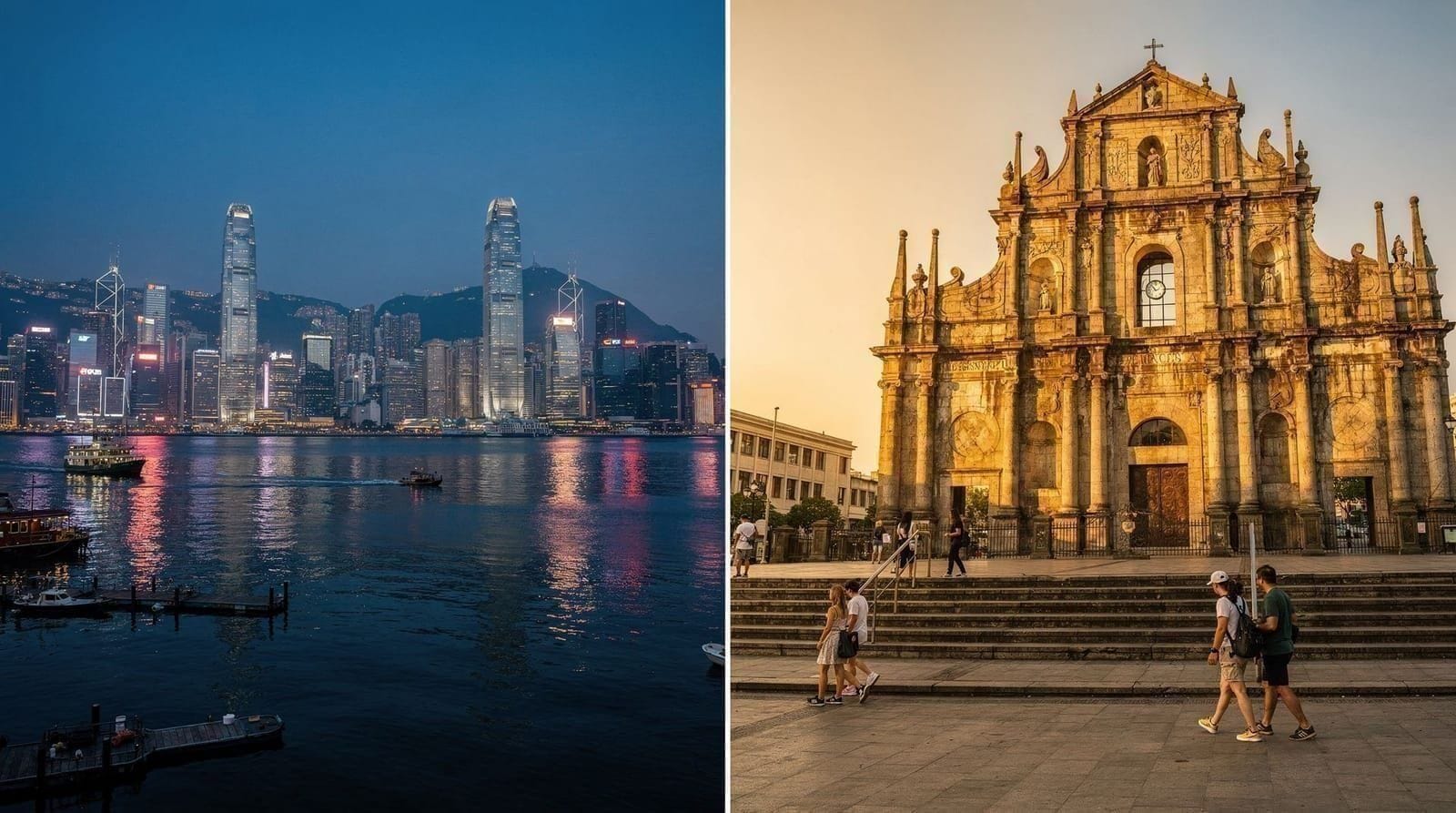
If you want to arrive near the Macau historic centre: The Outer Harbour Terminal is within walking distance of Senado Square and the Ruins of St. Paul. The Macau side of the bridge requires a shuttle or taxi.
If you’re night-tripping (returning after 10pm): The ferry has late-night sailings (check the last departure on the TurboJET website). The Gold Bus bridge shuttle runs 24 hours a day, at HKD 70 at night.
What happens once you arrive in Macau
The choice of crossing shapes the first hour of your day on the other side, so it is worth thinking about where you actually want to be. Arriving by ferry at the Outer Harbour Terminal puts you close to the old peninsula, which is where most first-time visitors head first. From there the Macau historic centre guide and the Ruins of St. Paul guide make a natural opening walk, and you can start sightseeing without a transfer.
If your priority is the resorts rather than the heritage streets, the picture changes. The Taipa terminal and the bridge’s Macau-side port both put you on the Cotai side, which makes more sense if the plan is to see the big casino resorts first. Our Macau casinos guide explains what to expect inside, and the Cotai area page and Taipa and Coloane page cover the surrounding neighbourhoods. Either way, the broader Macau destination page helps you decide how to split your time between peninsula and Cotai.
Food is another reason to think about your arrival point. Many travellers cross specifically to eat, and starting close to the old streets means you can reach the traditional bakeries and small restaurants without a long ride. The Macau food guide lists what is worth seeking out, so you can pick the terminal that leaves you nearest to lunch.
Fitting the crossing into your wider Hong Kong plan
A crossing to Macau rarely sits alone. It usually has to fit around a flight, a hotel check-in, or a few days of sightseeing in Hong Kong, and that is where the ferry-versus-bridge question gets practical. If you are still deciding how long to stay overall, the how many days in Hong Kong guide helps set the frame, and the Hong Kong and Macau 4-day itinerary shows one way to combine both places without rushing either.
Getting to the ferry terminal or to Tung Chung relies on the metro, so it helps to know the system before you go. The Hong Kong MTR guide covers how to move around, and the Octopus card guide explains the easiest way to pay for the rides that connect your hotel to the departure point. If you want a wider view of options beyond Macau, the best day trips from Hong Kong guide puts this crossing alongside the alternatives.
For travellers who are planning the whole trip rather than a single day, the Hong Kong itinerary planning guide is a good companion to this page, since it shows where a Macau day fits best between your other plans.
Practical tips for a smoother crossing
A few habits make either route easier, whichever you pick:
- Carry your travel documents in an easy-to-reach pocket. Macau is a separate entry point, so expect to show your documents on both sides of the crossing. Keep them out of the bottom of your bag.
- Arrive at the terminal with a little margin. Queues at ticket counters and immigration can move slowly at busy times, and a rushed start makes the whole day feel tighter than it needs to be.
- Decide your return in advance. Knowing which crossing you will use to come back, and from which terminal, saves you from making a hurried decision at the end of a long day in Macau.
- Pack for the weather on the water. Air-conditioned cabins and coaches can feel cold, and a light layer is useful. In the wetter months, check the forecast before you commit to a sea crossing.
- Keep your onward plan simple. If you take the bridge, think about the shuttle or taxi you will need on the Macau side before you leave, rather than working it out on arrival.
None of this is complicated, but small decisions made the night before are what separate a relaxed crossing from a stressful one.
Typhoon disruption: an important difference
Both services are suspended in typhoon conditions. However, the threshold differs:
- Ferry: Suspended at T3 (Strong Wind Signal) or above — ferries are sensitive to sea conditions
- Bridge bus: Typically continues service until T8 (Gale Signal), when the bridge itself closes
This means if a T3 signal is issued, the ferry stops but the bridge bus may continue. In practice, typhoon forecasting allows advance planning for most T-grade signals. See the typhoon season guide for the full signal system.
Booking recommendations
Ferry: Book at least the night before for a weekend trip. Sheung Wan terminal has ticket machines and counter booking. Online booking via the TurboJET or Cotai Water Jet websites. Multiple platforms also sell e-tickets.
Bridge bus: Less likely to sell out but book the return journey ahead if going on a public holiday or festival weekend. Online via HZM Bus or through hotel concierge.
Which one for a day trip vs an overnight stay
If you’re doing a Macau day trip, the ferry’s frequency and central arrival point usually make it the more efficient choice unless you’re starting from the airport or Lantau side of Hong Kong — see the Macau day trip guide for a full day-by-day plan built around ferry timings. If you’re staying overnight in Macau, the choice matters less since you have flexibility on both ends; use whichever matches your Hong Kong starting point and budget, referring back to the comparison table above.
First-time visitors juggling this decision alongside everything else on a Macau trip should also check the Macau first-timer guide and, if deciding whether Macau deserves a full day or more at all, the Hong Kong vs Macau guide. For a broader look at all the ways to reach Macau (including from the airport directly), the getting to Macau guide covers routes this comparison doesn’t, and the airport to city guide is useful if you’re weighing a same-day airport-to-Macau connection via the bridge.
If you’d rather skip the planning entirely, a private transfer handles the crossing and onward journey in one booking.
Private limo transfer via HZMB to MacauFrequently asked questions about Ferry vs bridge to Macau from Hong Kong — which is better?
How long does the HZMB bridge bus take?
How much does each option cost?
Do I need to book in advance for either?
Is the bridge bus more or less comfortable than the ferry?
Can I take the bridge from the Hong Kong airport directly to Macau?
Which is better for a Macau day trip from central Hong Kong?
Is there a private transfer option instead of the public ferry or bus?
Top experiences
Bookable activities with verified prices and instant confirmation on GetYourGuide.