Ruins of St Paul's Macau — guide to Macau's most photographed sight
Macau: 1.5 hour Ruins of St. Paul's and historic center tour
Duration: 1.5 hours
Are the Ruins of St Paul's worth visiting?
Yes — the façade is the most architecturally significant single sight in Macau and genuinely interesting up close. The carved iconography blends European baroque, Chinese, and Buddhist imagery in a way unique to 17th-century Macau. Admission is free. Allow 30–45 minutes here, then continue into the surrounding streets for the full historic-centre experience.
The story behind the façade
| Where | Historic centre of Macau, uphill from Senado Square |
| Cost | Free (crypt and museum also free) |
| Time needed | 30–45 minutes, longer with the surrounding streets |
| Getting there | Taxi or shuttle to Senado Square, then an 8-min walk |
| Best time | Before 10am for light and smaller crowds |
For the full logistics of getting from Hong Kong to Macau in the first place, see the getting to Macau guide and the ferry vs bridge comparison — the ruins are easily reached on a single day trip.
The Church of the Mother of God was one of the most ambitious Catholic buildings in Asia when it was completed in the early 17th century. Built on the site of an earlier church established by Francis Xavier’s Jesuits in the 1560s, the church was constructed between 1602 and 1640 using Japanese Christian exiles as labour — refugees from Japan’s bloody suppression of Christianity under the Tokugawa shogunate. Italian Jesuit brother Carlo Spinola oversaw much of the construction before his martyrdom in Japan in 1622.
The church burned three times. The 1835 fire — started in a kitchen during a typhoon — was the final and definitive disaster. The interior, the nave, the wooden roof and most of the church structure were destroyed. The stone façade, solidly built from granite, survived. It has stood alone since then.
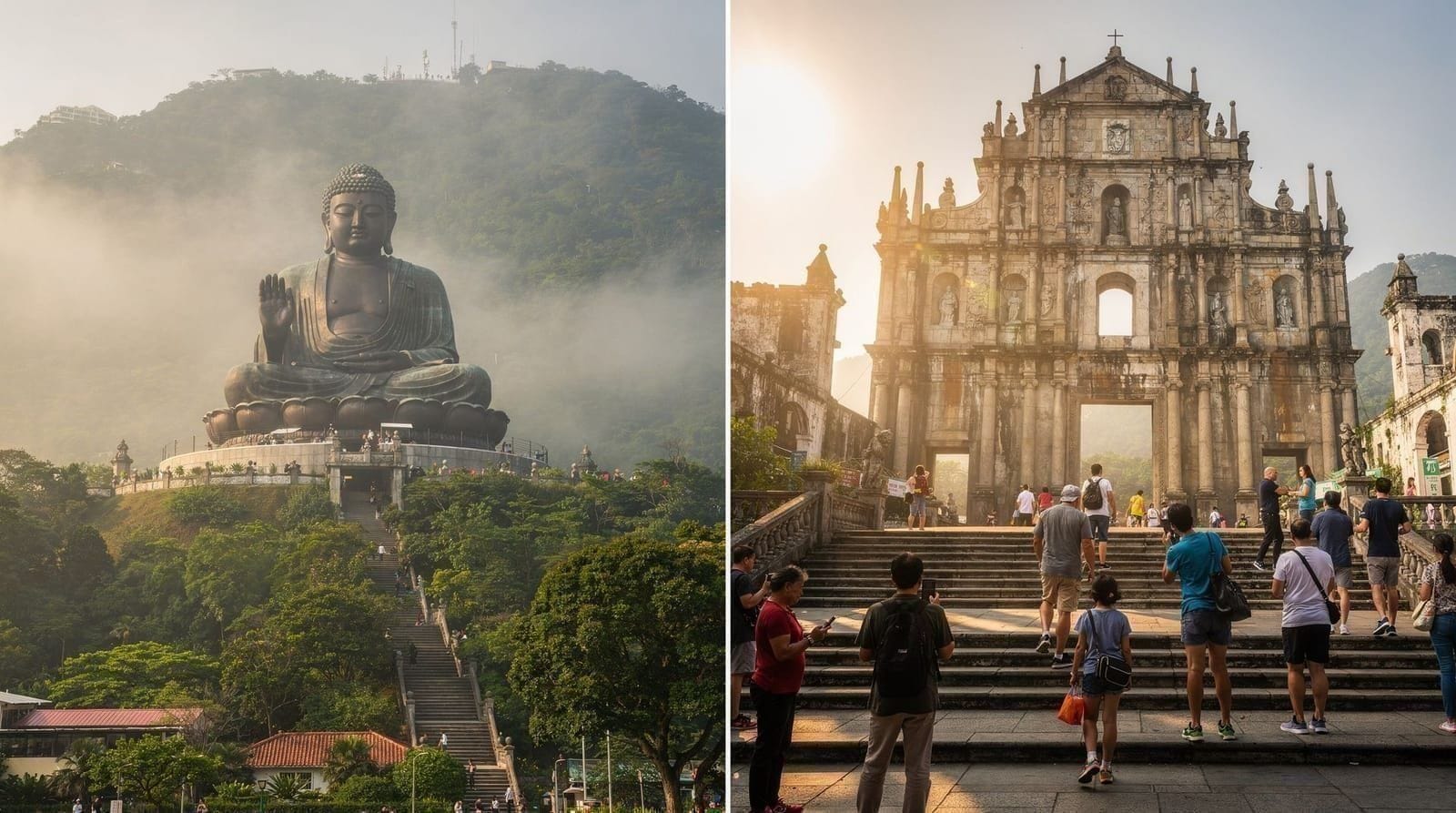
The Macau government preserved the façade as a monument from the colonial period onward, and the entire area was inscribed as part of the UNESCO Historic Centre of Macau in 2005. The Chinese name — 大三巴 (da san ba, literally “three bars”) — refers to the shape of the remains resembling three Chinese characters.
Reading the façade
The façade is not merely decorative — it is a theological and cultural text in stone, and examining it closely reveals the extraordinary synthesis of European and Asian iconography that defines Macanese culture.
The five tiers
The façade is organised into five horizontal registers (tiers) reading from bottom to top:
Tier 1 (ground level): Three arched doorways — the main entrance and two smaller flanking doors. Standard Portuguese baroque portal design.
Tier 2: Twelve relief panels depicting the Companions of Jesus (Jesuits who died as martyrs). The figures are in the European baroque style but flanked by Portuguese and Chinese decorative elements.
Tier 3: The Virgin Mary at the centre, flanked by angels. On the left panel — a Chinese junk being destroyed by waves (representing the failure of Buddhist nations to withstand the sea) beside the Virgin. On the right — a many-headed hydra-like creature (possibly representing heresy). These allegorical panels show a specifically Portuguese-Jesuit interpretation of world geography and religion.
Tier 4: A dove (the Holy Spirit) at the centre, flanked by the sun and moon. The surrounding panels show chrysanthemums (Japanese imperial symbolism, reflecting the Japanese refugee craftsmen who built the church), peonies (Chinese), and ships (Portuguese maritime imagery).
Tier 5 (the pediment): A bronze cruciform with a skull and crossbones below it — representing mortality and resurrection. This is the highest tier and the one that terminates the façade’s theological argument.
The façade is genuinely unusual in the history of Catholic architecture because of this mixture — a European building form carrying Jesuit theological arguments articulated partly through Asian botanical and cultural symbols.
Visiting the surrounding area
Monte Fortress (炮台)
Immediately adjacent to the ruins (reached via a short path along the north side of the façade), the Monte Fortress was built by the Jesuits simultaneously with the church and provided the cannon platform that famously repelled a Dutch naval attack in 1622. The fort now houses the Macau Museum — a well-designed introduction to Macau’s history through the Portuguese colonial period and into the modern SAR era.
Entry: MOP 15 adults, MOP 8 children under 12. Hours: 10 am – 6 pm, closed Monday.
The views from the fort’s ramparts over the Macau Peninsula and toward China and the Pearl River are useful context for understanding Macau’s geographic position.
The streets around the ruins
The streets leading down from the ruins (Rua da Palha, Rua de São Pedro, the alleys behind the façade) are genuinely interesting:
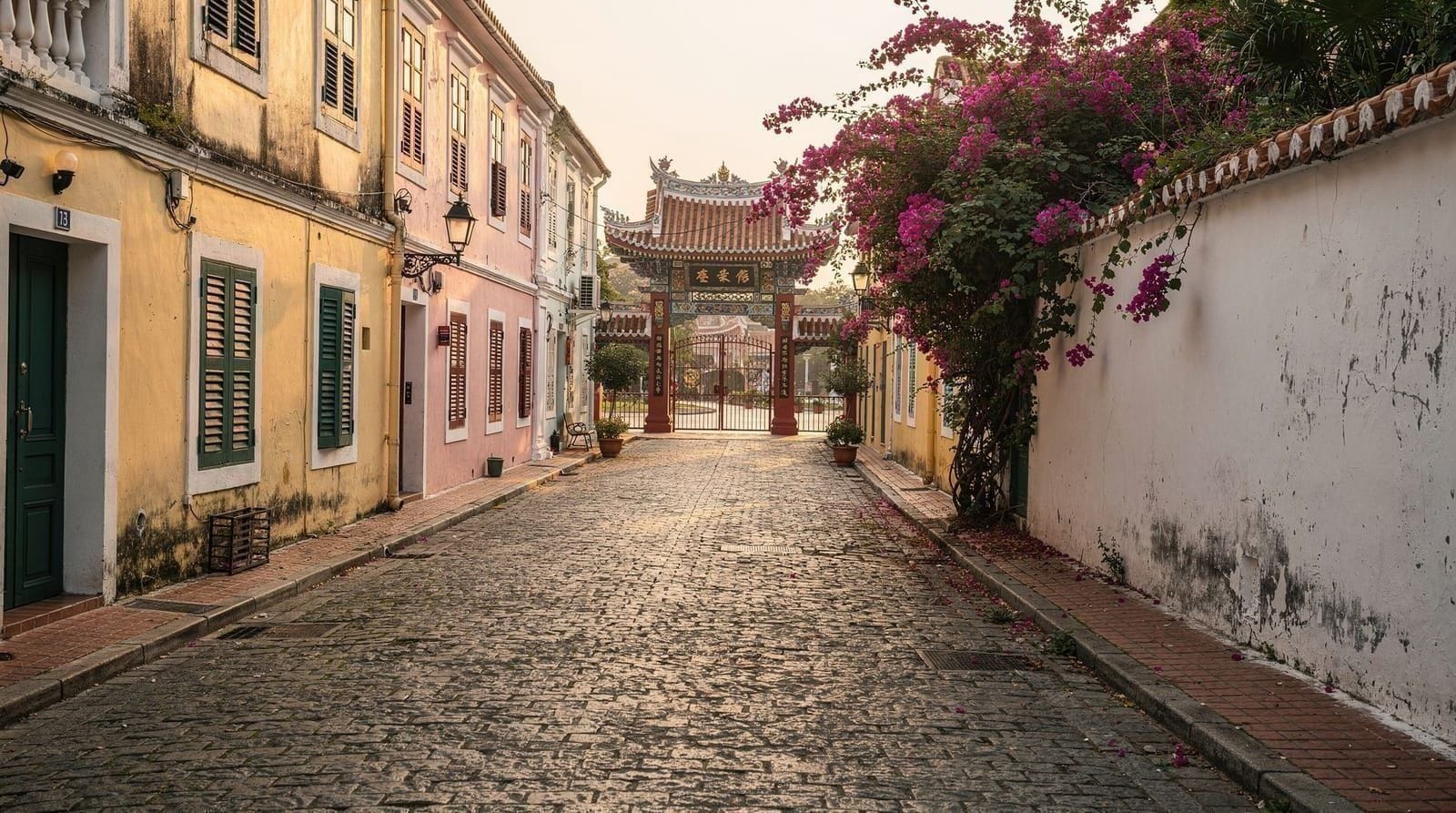
Na Tcha Temple: immediately adjacent to the ruins, a small temple to Na Tcha (a youth deity of Chinese folk religion) sits in direct visual dialogue with the Christian façade — a characteristically Macanese juxtaposition of religious traditions. The temple is tiny and often overlooked by visitors focused on the larger ruins.
The old city walls: a section of 17th-century city walls survives adjacent to the Na Tcha Temple — original Portuguese defensive architecture that predates the British colonial fortifications in Hong Kong by two centuries.
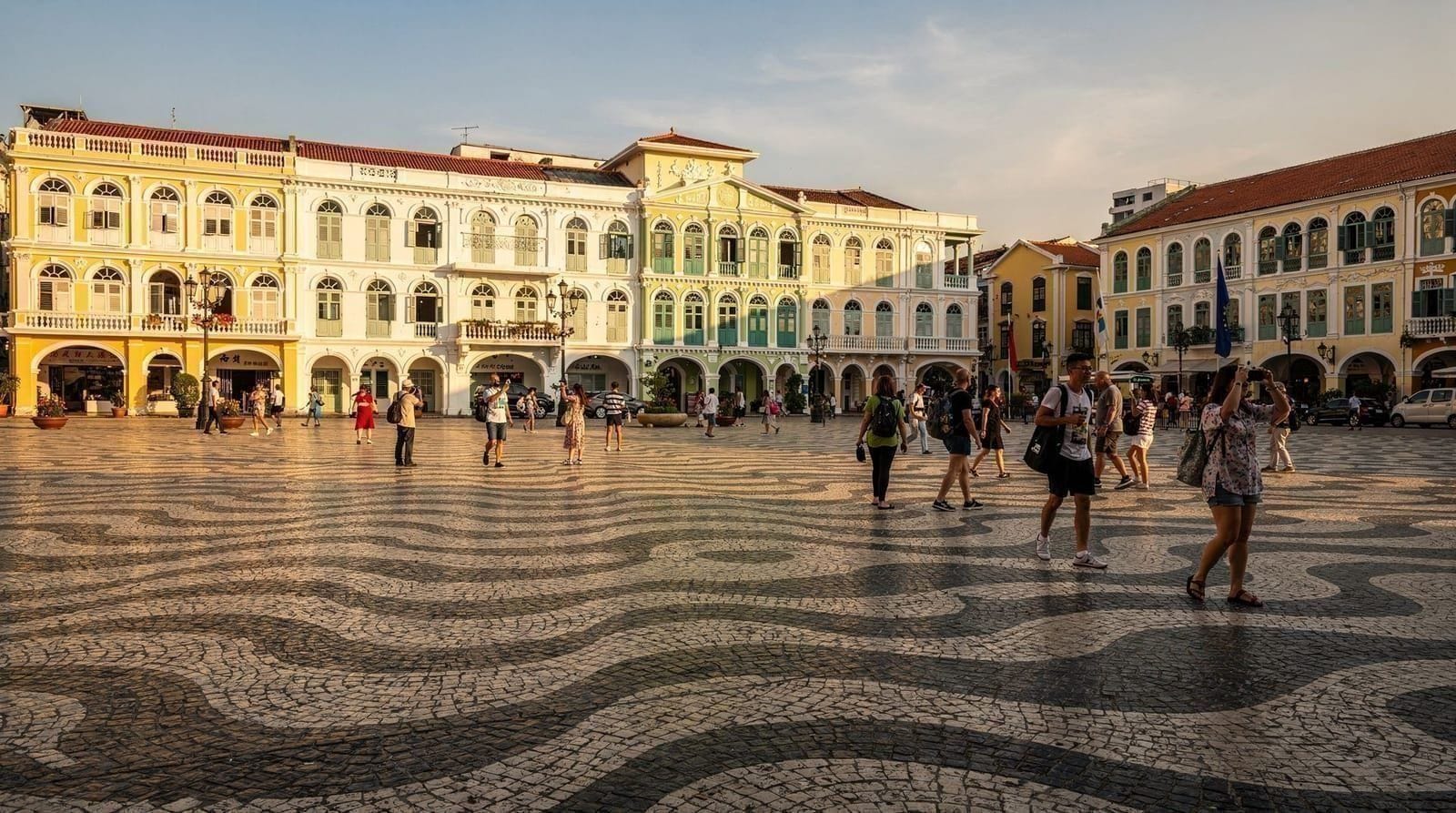
Shopping street Rua de São Paulo: the street leading from Senado Square toward the ruins is lined with shops selling almond cookies, pork jerky, and Macau-branded goods. These are legitimate souvenir purchases — particularly the almond cookies from Koi Kei Bakery — but the restaurants on this street are tourist-oriented and below the quality of the surrounding neighbourhood options.
The Museum of Sacred Art and Crypt
The excavated ruins beneath the façade contain a small museum accessible from the courtyard at the base of the steps. The collection includes:
- Religious paintings and sculptures from the original church, rescued from the 1835 fire or found during excavations
- Japanese Christian martyrs’ relics: the bones of Christians martyred in Japan in the early 17th century were brought to Macau by survivors and are interred in the crypt — a direct physical connection to the Japanese refugee community that built the church
- Bronze tomb plaques and fragments of the original church interior
The crypt itself — the preserved basement of the original church structure — provides physical context for the scale and construction of the building that once stood behind this façade. Free entry; about 20 minutes to walk through. Less crowded than the façade itself. Macau ruins of St Paul’s and historic centre guided tour ---
Practical information
Entry: Free.
Hours: The site is accessible year-round, effectively at all hours (no gates). The Museum of Sacred Art and Crypt operates approximately 9 am to 6 pm daily.
Photography: No restrictions on photographing the exterior. Inside the crypt/museum, photography may be restricted in specific areas — check on entry.
Best viewpoint: The standard photography position is from the base of the steps, centring the façade in frame. For a less standard view, the path alongside the ruins (north side) offers a closer look at the facade’s lateral structure and construction detail.
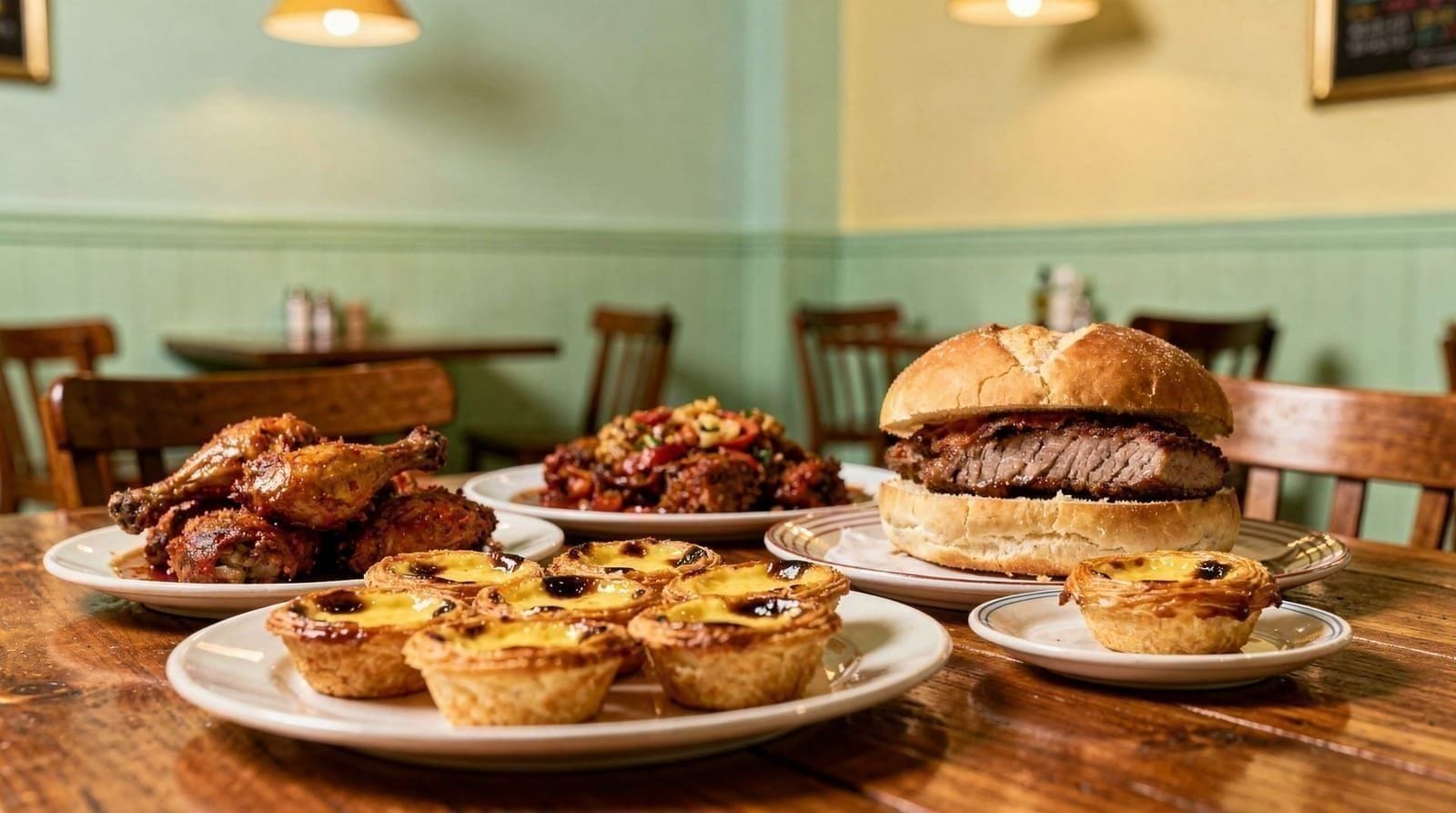
Nearby food: For a post-visit meal, walk back toward Senado Square and then take Rua Central toward Rua da Felicidade — this street has the best concentration of local Macanese restaurants and street food within walking distance of the ruins. For a fuller rundown of what to eat and where, see the Macau food guide.
Making it part of a day trip
The Ruins of St Paul’s is one stop within Macau’s historic centre, not a destination in itself for most visitors, so it’s worth planning it as part of a wider loop rather than a there-and-back trip. A typical sequence: arrive by ferry, walk through Senado Square, climb to the ruins and Monte Fortress, then loop back down through the old streets toward the casinos or the waterfront, depending on your interests. The Macau historic centre guide covers the full UNESCO-listed route in detail, and the Macau first-timer guide is worth reading before you go if this is your first visit to the territory.
If casinos and modern Macau interest you as much as the colonial history, the contrast is part of the appeal — the Macau casinos guide covers the Cotai Strip resorts, a short taxi ride from the historic centre and a completely different register of experience. Comparing the two halves of Macau is, for many visitors, the actual story of the place: a 17th-century Jesuit façade a few kilometres from some of the largest casino resorts in the world.
If you would rather not organise the logistics yourself, a guided option can take care of the sequencing for you. a historic city walk with lunch and port pickup folds the ruins into a wider loop of the old town, which suits visitors who prefer to have the route and the meal decided in advance.
How much time the whole area actually needs
Visitors consistently underestimate how much there is to see around the ruins themselves. Budgeting only the façade and walking straight back down shortchanges Monte Fortress (worth 30–45 minutes for the museum alone), the Na Tcha Temple and old city wall fragment (10 minutes but easy to miss if you don’t know to look), and the surrounding lanes. Realistically, allow 90 minutes to two hours for the ruins plus its immediate surroundings if you want to do the area justice, not the 30–45 minutes the façade alone requires. If you’re deciding between a rushed half-day in Macau and a fuller day, the Macau day trip guide has itinerary options for both.
Before you climb the steps
The approach is part of the experience. Coming up from Senado Square, the street narrows and the crowd thickens, and the façade appears at the top of the incline almost abruptly. If you have read the section above on the five tiers, take a moment at the bottom of the steps to match what you see against it before you start taking photographs. Knowing that the chrysanthemums, peonies and ships are there makes the carving legible rather than merely pretty.
Wear comfortable shoes. The historic centre is paved in the traditional Portuguese style, with patterned stone that looks lovely and can be slippery after rain, and the walk is uphill in places. If you are visiting in the wetter months, the typhoon season guide explains what to expect from the weather, and the Hong Kong in summer guide is useful for planning around the heat and humidity that make an uphill stroll more tiring than it looks on the map.
Bring water and a hat in warm weather. There is little shade directly in front of the façade, and the open square at its base catches the sun for much of the day. Early starts help with this as much as they help with the crowds. Anyone starting from Hong Kong and wanting transport sorted in one go can look at a Macau day tour with the return ferry, lunch and pickup included, which leaves more energy for the uphill walk.
Why the ruins feel different from other sights
Many of Hong Kong’s headline sights are either modern spectacles or working religious sites. The ruins are neither. They are a deliberately preserved fragment, and that is what gives them their character: a facade with nothing behind it, open to the sky, standing in the middle of a busy district. If you have already explored Hong Kong’s colonial and cultural heritage, for example through the Tai Kwun guide or the Hong Kong History Museum guide, the ruins add a different and older layer: the Portuguese-Jesuit chapter that shaped this corner of the Pearl River Delta long before the British arrived.
It also helps to compare how the two territories treat their past. Hong Kong tends to repurpose old buildings into galleries and cultural venues, while Macau often leaves a piece standing as a monument and builds life around it. The Hong Kong vs Macau comparison goes deeper into how the two cities differ, and it is a good read if you are deciding how to split your time between them.
Pairing the ruins with a longer Macau plan
If the ruins are only one part of a longer stay, you have options. The Hong Kong and Macau 4-day itinerary builds the historic centre into a wider trip, which suits anyone who would rather not rush the area in a single morning. For a shorter outing, the best day trips from Hong Kong puts Macau alongside the other easy escapes so you can judge whether the ruins deserve a full day of your itinerary.
Travellers who like to eat as they walk should treat the approach street and the lanes around it as a snack route rather than a restaurant stop. The Macau food guide points toward the places worth a proper sit-down, and it pairs naturally with a morning at the ruins followed by a late lunch.
A slower way to look
Most visitors photograph the façade and leave. A more rewarding approach is to look at it three times: once from the base of the steps for the overall composition, once from the side path for the construction detail, and once from further back, where the whole structure reads against the sky and the empty space behind it becomes part of the picture. Each view tells you something different about what was lost in the fire and what survived.
If you are travelling with a companion who is less interested in history, give them a specific thing to hunt for: the ship, the Chinese junk, the hydra, the skull below the cross. Turning the façade into a small puzzle keeps the visit lively, and it works well for families too. Younger travellers in particular tend to engage more with the carvings when they are treated as a game, and the Hong Kong with kids guide has more ideas for keeping children interested across a trip.
Finally, remember that this is an everyday place for people who live and work nearby, not just a monument. Keep to the sides of the steps when you stop for photos, avoid blocking the main route up and down, and be patient when a tour group moves through. A few minutes of patience nearly always gives you a clear frame.
Frequently asked questions about Ruins of St Paul's Macau — guide to Macau's most photographed sight
What are the Ruins of St Paul's?
Is there a charge to visit the Ruins of St Paul's?
What is the best time to visit the Ruins of St Paul's?
How do I get to the Ruins of St Paul's?
What is the Museum of Sacred Art and Crypt?
Top experiences
Bookable activities with verified prices and instant confirmation on GetYourGuide.