Is the Peak Tram worth it? — an honest verdict for 2026
Hong Kong: Fast track Victoria Peak Tram ticket combos
Is the Peak Tram worth it?
With skip-the-line priority tickets, yes — the tram is a historic funicular with great views and a genuine Hong Kong experience. Without priority tickets, on a busy day, the 60–90-minute queue is not worth it. The 15X bus from Exchange Square gets you to the Peak in 35 minutes with zero queue. If you want the tram specifically, book priority boarding in advance.
The question, precisely stated
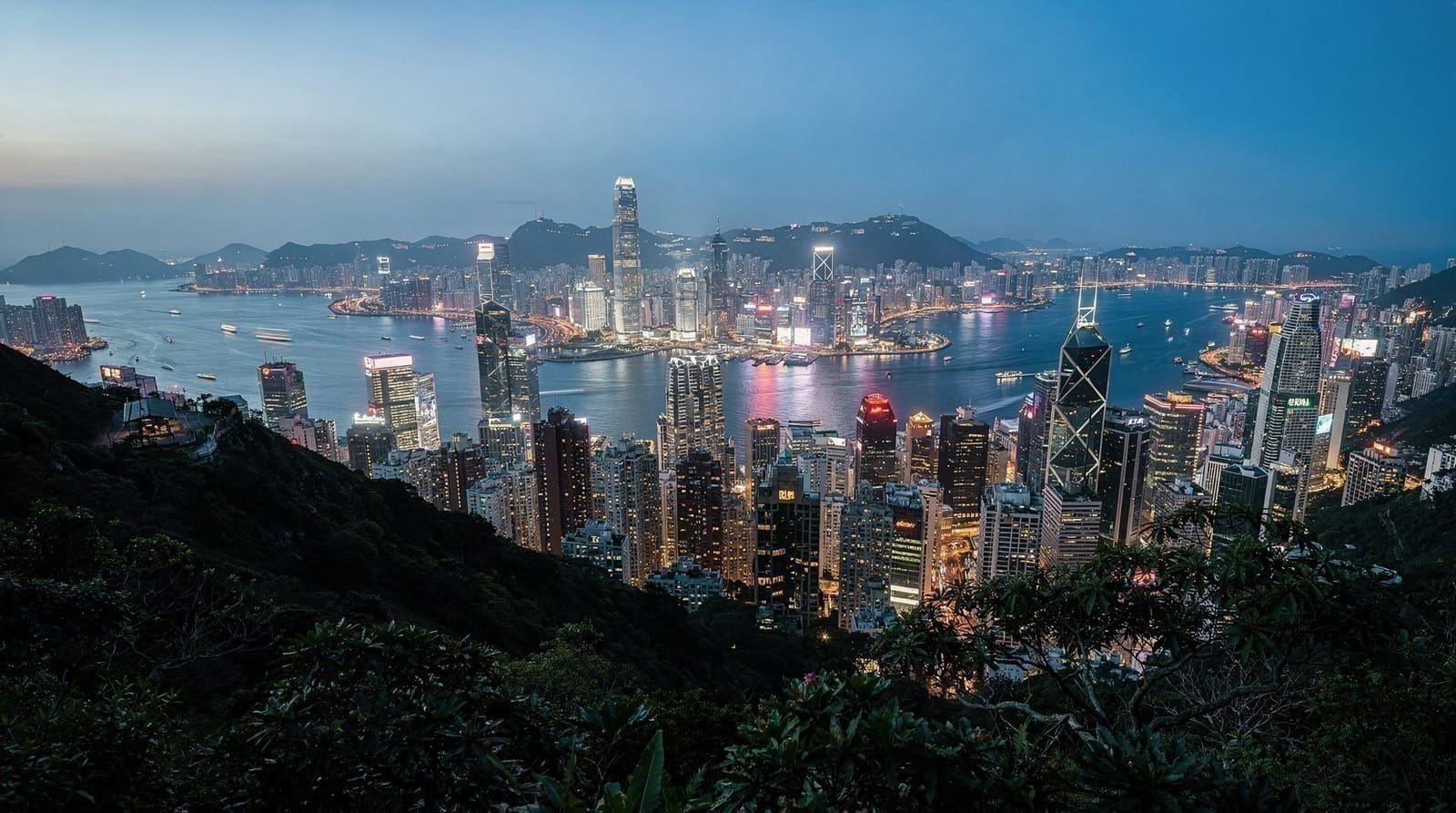
The Peak Tram question is not “should I visit Victoria Peak?” — the Peak is unambiguously worth visiting, and on a clear day the harbour view is one of the best in Asia. The question is: is the specific experience of riding the Peak Tram funicular worth the queue time it currently requires on busy days?
The answer depends on when you go and whether you book in advance.
| Standard queue (weekend) | 60–120 minutes |
| With priority ticket | Near-zero wait |
| Bus 15X alternative | Cheap, no queue |
| Ride time | About 7 minutes, 1.4km |
| Best time to go | Weekday before 10am |
See the full Peak Tram guide for ticket types and station details, or the broader Victoria Peak guide for what to do once you’re up there.
What the Peak Tram actually is
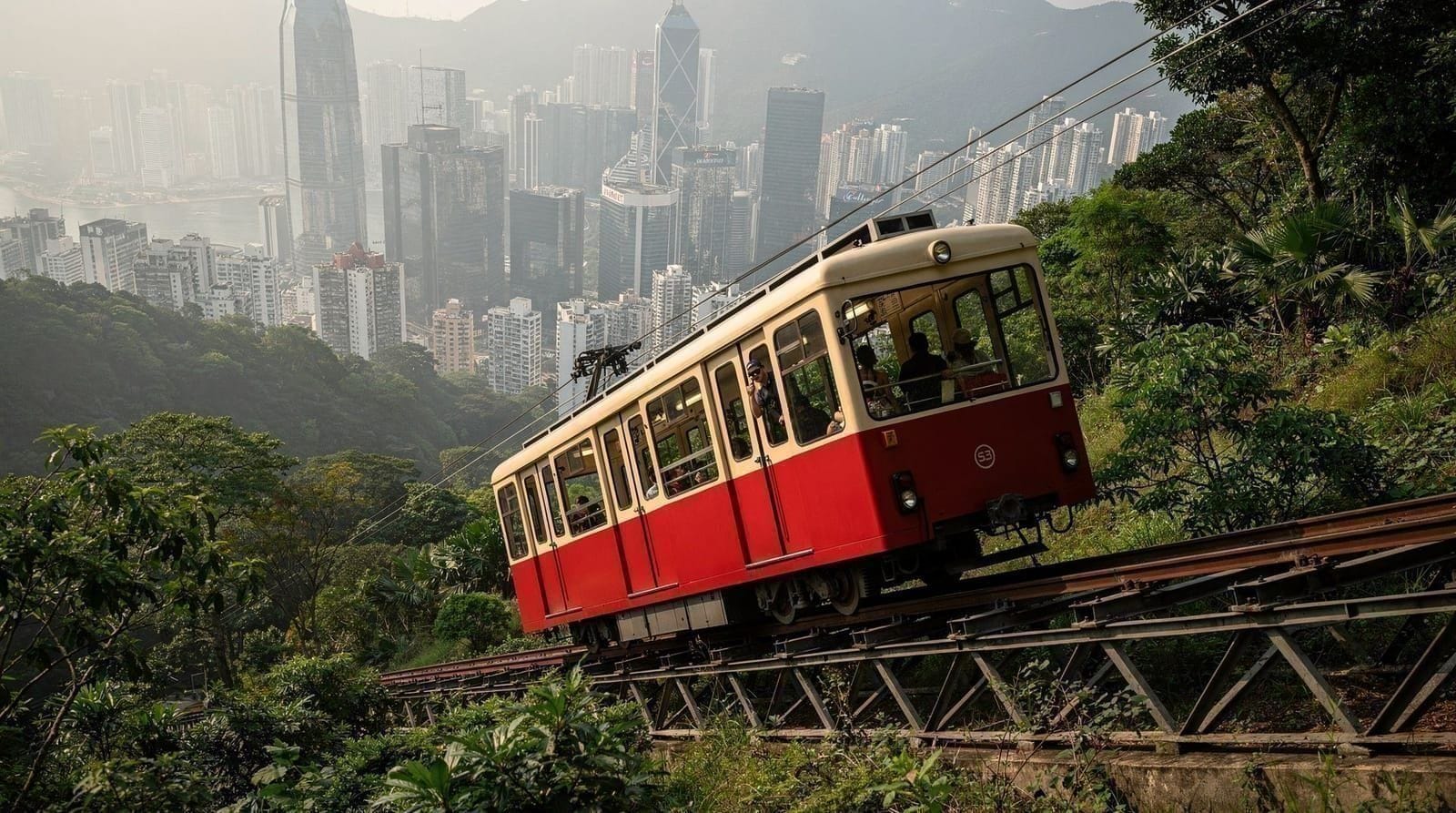
The Peak Tram is Hong Kong’s oldest mechanical transport system, operating since 1888 as a funicular railway from the Lower Terminus at Garden Road (Central, close to Hong Kong Park) up the steep hillside to the Peak Terminal at Victoria Peak. The journey takes approximately 7 minutes, covering 1.4 km with a maximum gradient of 27 degrees — steep enough that the tram carriages are built with angled interiors so passengers sit level while the car climbs.
The current trams are fifth-generation vehicles, upgraded in 2021 with larger carriages (capacity 210 passengers), climate control, and panoramic windows. The route passes through the residential Mid-Levels, offering close views of the apartment blocks clinging to the hillside — a perspective on Hong Kong’s density that is interesting in itself.
As an experience, it is genuinely worth doing. The combination of historical infrastructure, the dramatic gradient, and the views make it one of Hong Kong’s more distinctive transport experiences. The problem is not the tram; it is the queue to board.
The queue problem — specific data
Low season weekdays (January–March, before school holidays): queue at the Lower Terminus 15–30 minutes. Acceptable.
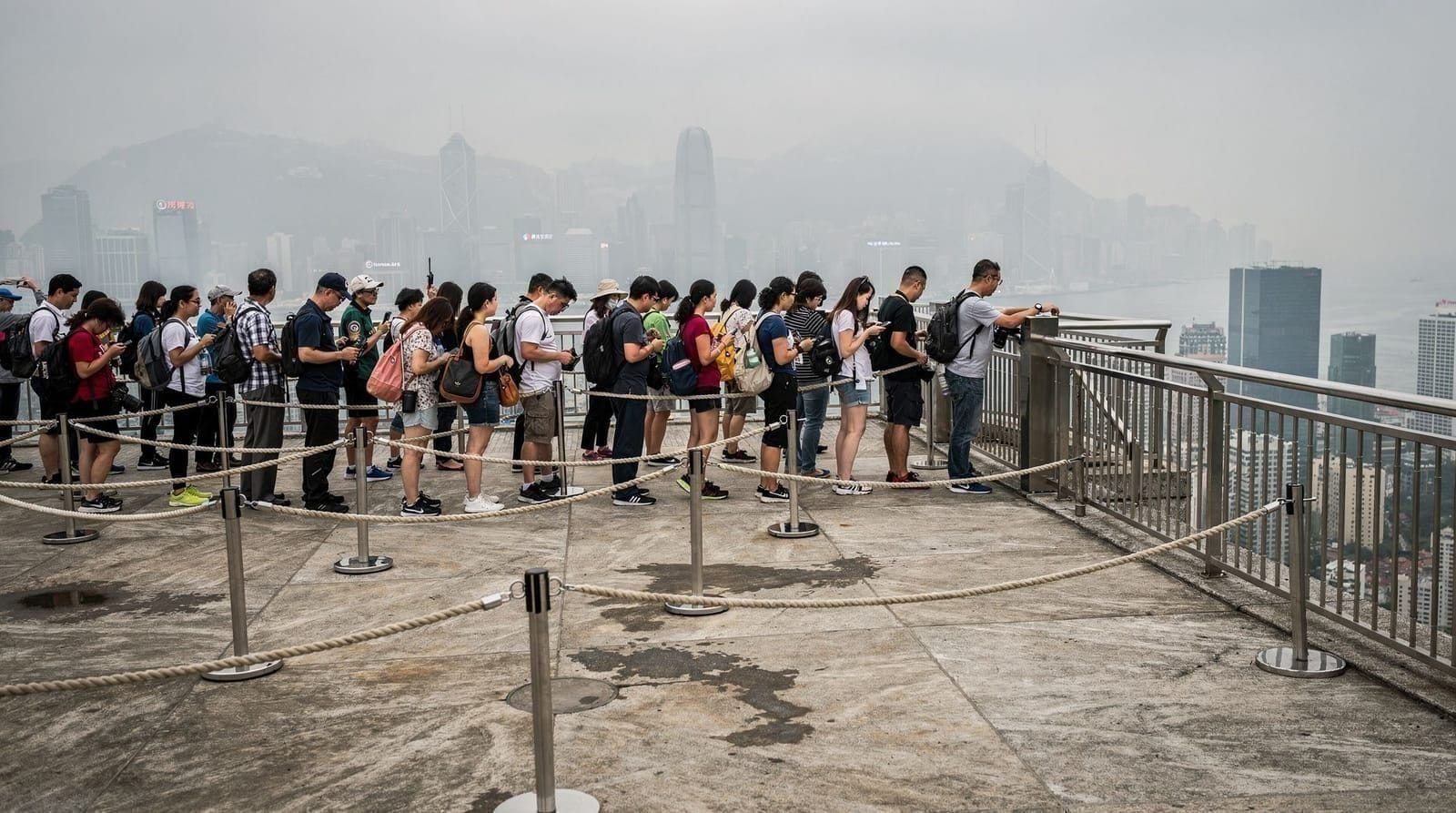
High season weekdays (October–December, weekend periods): queue 45–75 minutes at peak hours (11 am–4 pm). Borderline.
Weekends and public holidays (any season): queue 60–120 minutes at peak times. Not worth it without priority boarding.
Chinese New Year and Golden Week: queues exceeding 2 hours have been reported. Genuinely not worth it under standard tickets.
The Lower Terminus queue area is partially covered but not fully air-conditioned. In summer (June–September), standing in a 90-minute queue in 32°C heat is a genuinely unpleasant experience.
The case for taking the tram (with priority booking)
With skip-the-line priority tickets, the tram is worth taking for the following reasons:
-
The historical experience: riding a funicular that has operated continuously since 1888, on the same route that carried colonial Hong Kong residents up the hill to their houses, is genuinely interesting.
-
The gradient drama: the 27-degree incline, and the visual effect of looking down at Central and the harbour as you rise, is something the bus does not replicate.
-
The panoramic windows: the new 2021 carriages have large windows that give good views throughout the ascent.
-
It is distinctively Hong Kong: the Star Ferry, the ding ding trams, and the Peak Tram are the three transport experiences that are specifically part of Hong Kong’s identity. Doing all three is reasonable on a 4+ day visit.
The case for taking the bus instead
Bus 15X from Exchange Square is the practical argument for the bus:
- Cost: far cheaper than the HKD 116 adult return on the tram (current bus fare on the operator’s website)
- Queue time: none — you board the next bus departure (every 10–15 minutes)
- Journey interest: the bus route through the Mid-Levels gives close views of Hong Kong’s residential hillside — dense apartment blocks with laundry, street-level shops, people going about their day. This is an interesting perspective you do not get on the tram, which runs through a tunnel section for part of its route.
- Flexibility: the bus also runs down to Central at any time; you are not committed to a specific return tram slot.
The bus is the rational choice for any visitor on a budget, with young children (the bus queue is zero versus potentially 90 minutes for the tram), or on a schedule.
The Sky Terrace 428 — worth the extra?
The Sky Terrace 428 is the outdoor observation deck at the top of the Peak Tower, operated separately from the tram. The ticket (see current price on thepeak.com.hk) provides access to the highest outdoor viewing platform in Hong Kong (428 metres above sea level).
Worth it on a clear day: the 360-degree view from 428 metres is genuinely broader than the view from the free public areas at the Peak. Kowloon, the New Territories, and on clear days even the Chinese mainland are visible to the north; the South China Sea islands to the south; the entirety of Hong Kong Island’s urban development below.
Not worth it on a hazy day: Hong Kong’s clear days are October–December and March–April. Summer haze (June–September) significantly reduces visibility from any elevated viewpoint.
The Peak Tower also contains the free public exterior areas (the Peak Galleria’s exterior terraces, the road-level viewing areas) — these give comparable views at roughly 55 metres lower altitude. For most visitors, the difference is not significant enough to warrant the entry fee. Peak Tram and Sky Terrace 428 combo ticket ---
The verdict by visitor type
First-time visitor, 3–4 day trip: take the tram with priority booking. The experience is part of Hong Kong’s identity and worth paying a modest premium for skip-the-line access. Check the current priority premium on the official site and avoid the queue entirely.
Budget traveller: take Bus 15X. Same destination, much cheaper, zero queue.
Family with young children: tram with priority booking (a 90-minute queue with young children in heat is inadvisable) or the bus. The bus is less stressful logistically.
Repeat visitor who has done the tram before: the bus is fine. The tram experience does not change between visits.
Visitor short on time: Bus 15X, unambiguously. No queue, same destination, saves 60–90 minutes.
Practical booking and logistics
Priority tram tickets: available via the official Peak Tram website (thepeak.com.hk) and authorised tour operators. Books a specific time window. Recommended for any visit on a weekend, public holiday, or during October–December.
Bus 15X: departs from Exchange Square Bus Terminus, adjacent to Hong Kong MTR station and IFC Mall (Central). Octopus card accepted. No advance booking required. Journey time 30–40 minutes depending on traffic.
Both options: the two routes arrive at the same terminus at the top of the Peak. The Peak Tower, the Galleria, the Peak Circle Walk, and all the Peak’s attractions are accessible regardless of which transport you used to arrive.
For a direct side-by-side breakdown of cost, time, and comfort, see Peak Tram vs bus to the Peak.
What to do once you’re at the top
However you get up, budget real time at the summit — this is not a quick photo stop. The Victoria Peak Circle Walk is a flat, shaded loop with harbour views on one side and the South China Sea on the other, and takes about an hour at an easy pace. It’s a better use of time than lingering at the crowded Peak Tower viewing deck alone.
Avoiding the worst of the queue
If you can’t avoid a weekend or holiday visit, a few tactics help beyond simply booking priority tickets: arrive at the Lower Terminus right at opening (around 7 am–8 am), or go in the evening after 8:30 pm when day-trip crowds thin out and the night skyline view is arguably better than the daytime one. Avoid the window between 11 am and 5 pm entirely if you’re relying on a standard ticket. The tourist traps guide and first-timer mistakes guide both flag the midday Peak Tram queue as one of the most common planning errors on a first Hong Kong trip.
How this fits your itinerary
The Peak works as a half-day item on its own, or combined with Central and Sheung Wan on the same day. See how many days in Hong Kong for where it fits into a 2, 3, or 5-day plan, and what to skip in Hong Kong for the honest view on which Peak-adjacent extras (helicopter tours, certain paid viewing decks) are usually not worth the money.
Choosing your day and your weather
The tram verdict changes with the sky as much as with the calendar. A clear morning in the cooler months makes the whole ride feel worthwhile: the city drops away behind you and the harbour opens up as you climb. A hazy or rainy day does the opposite, because the views that justify the effort simply are not there. If your schedule is flexible, keep the Peak in reserve until the forecast looks right instead of fixing it to the first day you land. The best time to visit Hong Kong guide explains which months tend to deliver clear skies, and the typhoon season guide covers what to do when weather closes the hill altogether.
If you do end up in the rain, the Peak is a poor use of a precious day. The rainy day itinerary offers indoor plans that make better use of a grey sky, and you can save the Peak for a brighter slot later in your trip.
Getting the most from the ride itself
Many visitors treat the tram as a way of getting from A to B and spend the whole ride looking at their phone. The ride is short, so it rewards a little planning. Decide before you board which side you want to sit on, keep your camera ready, and spend the first minutes simply looking out at the Mid-Levels buildings and the city falling away. The experience is more about atmosphere than spectacle, and it is easy to miss if you are distracted.
On the way down, the mood is different. You are usually tired, the light may have changed, and the carriages are often calmer. If you took the bus up, consider riding the tram down, or the reverse, so that you experience both without queuing twice for the same thing. This mixed approach is a sensible compromise for anyone who wants the funicular without paying for a full return on a busy day.
Making the Peak part of a wider day
The tram is only one piece of a day around Central, and it is worth planning around what sits nearby. The lower terminus is a short distance from the heart of Central and Sheung Wan, so you can pair the ride with a morning walk, a long lunch, or an afternoon of galleries and shops. The Peak destination page describes what to expect at the summit, and the Soho and Central guide is a good source for where to eat before or after you go.
A few ways to structure the day:
- Early start: ride up when the queue is shortest, walk the circuit while the air is cool, then come down for a late breakfast or lunch in Central.
- Late afternoon into evening: go up as the day softens, watch the light change over the harbour, and stay for the skyline after dark. This is the most atmospheric plan, but it asks you to be comfortable travelling down in the dark.
- Combined with the harbour: spend the morning at the Peak and the evening on the waterfront, where the Symphony of Lights guide explains how to catch the nightly show from Kowloon.
Questions of cost and value
It is worth stepping back and asking what you are really paying for. The standard fare is not extreme by international standards, and the priority upgrade is a modest premium. What you are buying with a priority ticket is time, not a better seat. On a short trip, an hour saved in a queue is an hour you can spend eating, walking, or resting, and that is usually worth far more than the extra fare. On a longer trip with a loose schedule, the value of that saved time drops, and the bus or an early-morning visit becomes more attractive.
If you are watching your spending overall, the Hong Kong trip cost guide puts the Peak in context alongside food, transport and accommodation, so you can decide whether the tram deserves a place in your budget or whether the savings are better used elsewhere. Travellers on tighter budgets will also find useful ideas in the Hong Kong on a budget guide.
Who should simply skip the tram
Some visitors will be happier without it. If you dislike crowds, are travelling during a major holiday, or have only a day or two in the city, the queue and the cost can crowd out better uses of your time. In that case the bus gets you to the same summit, and nothing is lost once you are there. Nobody at the Peak Tower will know or care how you arrived. If this describes you, read the Peak Tram vs bus comparison and make the call based on your priorities instead of feeling that the tram is an obligation.
For a wider view of how the Peak sits among Hong Kong’s headline sights, the top things to do in Hong Kong guide ranks the big attractions, while the first-time Hong Kong guide helps you decide how much of the classic checklist is right for you.
Frequently asked questions about Is the Peak Tram worth it? — an honest verdict for 2026
How long is the Peak Tram queue?
What is the skip-the-line Peak Tram ticket and how do I get it?
What does the Peak Tram ticket include?
What is the bus alternative to the Peak Tram?
Is the view from the Peak worth the trip regardless of transport?
Can I walk down from the Peak instead of taking the tram or bus?
Does the Peak Tram combine well with a hop-on hop-off bus ticket?
Top experiences
Bookable activities with verified prices and instant confirmation on GetYourGuide.