Hong Kong trip cost — total budget calculator for real trips
Hong Kong: Street food tour with locals dim sum and wonton
How much does a trip to Hong Kong cost in total?
A 5-day trip on a mid-range budget (including return flights from Europe, decent hotel, meals, and activities) costs roughly USD 1,800–2,500 per person. A budget backpacker trip (hostel, local food, free sights) runs USD 900–1,200 for 5 days including flights. Without flights, mid-range in-destination spending runs USD 120–200 per day.
How to use this guide
This guide builds from the ground up: flights, then accommodation, then daily spending, then activity costs, then total trip samples. Currency: HKD 7.8 ≈ USD 1. Prices are from early 2026 and represent realistic market rates, not best-case-scenario deals.
| Budget 5-day trip (w/ flights) | Around USD 900–1,200 from Europe |
| Mid-range 5-day trip (w/ flights) | Around USD 1,800–2,500 from Europe |
| In-destination daily (mid-range) | Around USD 120–200/day |
| Best-value fix | Cha chaan teng food cuts costs 50–60% |
| Add Macau day | Around HKD 600–1,100 extra/person |
For a breakdown of just the in-destination daily spending, the Hong Kong budget breakdown guide covers food, transport, and activities in detail.
Flight costs to Hong Kong
Hong Kong Chek Lap Kok Airport (HKG) is one of Asia’s major hubs and is served by Cathay Pacific (excellent carrier, based here), Emirates, Qatar Airways, British Airways, Lufthansa, Air France, and multiple budget Asian carriers.
From the UK and Europe:
- Economy return: USD 550–900 (low season: February, high season: October–December booking 10+ weeks ahead)
- Premium economy: USD 1,400–2,200
- Business class: USD 2,800–4,500
- Best booking window: 8–12 weeks ahead for economy; 3–4 months for premium/business
From North America:
- Economy return (West Coast): USD 700–1,100
- Economy return (East Coast): USD 800–1,300
- Direct Cathay Pacific flights from LAX and JFK; other routes via Asian hubs
- Flight time: 14–15 hours from LA, 16–17 from New York
From Australia:
- Economy return from Sydney/Melbourne: USD 400–700
- Flight time: 9–10 hours; Cathay Pacific and Qantas both serve the route
Tips for cheaper flights:
- Fly during the shoulder seasons (February, late May, August) rather than peak October–December or CNY
- Mix airlines — fly Cathay one way, an alternative carrier the other
- Hong Kong airport has exceptional connections; positioning flights via Singapore, Bangkok, or Tokyo can sometimes produce cheaper total routes
Accommodation cost guide
See the where to stay by budget guide for the full breakdown. Summary for total trip budgeting:
| Category | Price/night | 5 nights |
|---|---|---|
| Hostel dorm | HKD 180–280 | HKD 900–1,400 |
| Budget private room | HKD 350–550 | HKD 1,750–2,750 |
| Mid-range hotel | HKD 750–1,200 | HKD 3,750–6,000 |
| Upper mid-range | HKD 1,300–2,000 | HKD 6,500–10,000 |
| Luxury hotel | HKD 2,500+ | HKD 12,500+ |
Peak season (October–November) adds 20–40% to these figures. Book 6–8 weeks ahead minimum for mid-range October options.
Daily in-destination spending by budget level
Budget traveller (HKD 420–600/day, USD 54–77)
This budget is achievable if you use hostels, eat exclusively at cha chaan teng and dai pai dong restaurants, use the MTR and Octopus card for all transport, and stick to free attractions (markets, waterfront, Symphony of Lights, temple visits).
Daily breakdown:
- Hostel dorm bed: HKD 220
- Breakfast (cha chaan teng): HKD 50
- Lunch (noodle shop): HKD 65
- Dinner (local rice shop): HKD 100
- Transport (MTR + ferry): HKD 50
- Water/snacks: HKD 30
- 1 paid activity 1/3 of the time: ~HKD 80 average
Total: ~HKD 595
Mid-range traveller (HKD 1,100–1,700/day, USD 141–218)
Mid-range means a budget hotel (private room), a mix of casual Cantonese restaurants and occasional upscale dim sum lunches, and one paid attraction per day.
Daily breakdown:
- Budget hotel (private room): HKD 750
- Breakfast at hotel or café: HKD 80
- Dim sum lunch: HKD 150
- Dinner (mid-range restaurant): HKD 220
- Transport: HKD 60
- 1 paid attraction (average): HKD 200
- Coffee/snacks: HKD 80
Total: ~HKD 1,540
Comfortable traveller (HKD 2,200–3,500/day, USD 282–449)
Comfortable means a 4-star hotel, the freedom to eat at good restaurants without price-checking, tours or paid activities daily, and occasional taxi use.
Daily breakdown:
- 4-star hotel: HKD 1,500
- Breakfast: HKD 120
- Lunch: HKD 250
- Dinner (good Cantonese restaurant): HKD 400
- Transport (MTR + occasional taxi): HKD 100
- 1–2 tours/activities: HKD 400
- Drinks and incidentals: HKD 200
Total: ~HKD 2,970
Major activity costs (one-off)
| Activity | Adult price (HKD) | Notes |
|---|---|---|
| Airport Express (one way) | HKD 120–130 | From airport to Hong Kong station (Central); HKD 120 with Octopus, 130 single ticket |
| Peak Tram return + Sky Terrace 428 combo | HKD 182 | Pre-book to avoid queues |
| Ngong Ping 360 cable car (return) | HKD 295 | Standard cabin |
| M+ Museum | See official site | Check current ticket prices |
| Hong Kong Disneyland (1 day) | HKD 669+ | Age and season dependent |
| Ocean Park (1 day) | HKD 538 | |
| Macau TurboJET ferry (one way) | HKD 194–212 | Higher on weekends and holidays |
| Macau HZMB bridge bus (one way) | HKD 65–70 | Budget alternative; night rate is higher |
| Star Ferry (return) | HKD 8–13 | Worth it as an experience |
| Dragon’s Back hike | Free | Trail access; guide tours from HKD 300 |
| Sai Kung Geopark kaido boat | HKD 100–200 | Depends on trip length |
Total trip cost samples
Budget solo traveller, 5 days (from UK)
Flights return: USD 620 Hostel (5 nights): HKD 1,200 (USD 154) Food (5 days): HKD 1,500 (USD 192) Transport including Airport Express: HKD 500 (USD 64) Activities (mix of free and some paid): HKD 600 (USD 77) Total: USD 1,107
Couple, mid-range, 5 days (from UK)
Flights return (2 people): USD 1,400 combined Hotel (5 nights, mid-range): HKD 7,500/2 = USD 481 per person Food (mid-range, per person): HKD 4,000 (USD 513) Transport: HKD 800 (USD 103) Activities: HKD 2,500 (USD 321) Total per person: USD 1,418 — combined trip: USD 2,836
Family of 4, comfortable, 7 days (from UK)
Flights (4 people, economy): USD 4,000 Hotel (7 nights, family-friendly 4-star): HKD 18,000 (USD 2,308) total Food: HKD 15,000 (USD 1,923) total Transport: HKD 2,500 (USD 321) total Activities (Disneyland 1 day, Ngong Ping 360, various): HKD 9,000 (USD 1,154) total Total trip: USD 9,706 — USD 2,427 per person
Where the money actually goes in Hong Kong
For most travellers, accommodation absorbs the largest share (35–45% of in-destination budget). Food is the most controllable variable — switching from restaurant meals to local cha chaan teng and noodle shops cuts food costs by 50–60% without giving up quality. Activities are a fixed per-day cost that varies less between budget levels.
The biggest unexpected costs are usually:
The airport taxi mistake. See the airport transport guide — taxis cost HKD 350–450 where the Airport Express costs HKD 120–130 and is faster.
Peak Tram peak pricing. A priority boarding add-on, the Sky Terrace combo ticket, and potential rebooking if clouds obscure the view can push the Peak experience well above the base fare; check current prices on the official Peak site.
Shopping. Not factored into any of the above. Duty-free electronics in Hong Kong can be genuine bargains (cameras, audio equipment, some brand-name goods). Budget separately for any planned shopping.
Timing your trip around the price curve
Dates move the total more than almost any choice you make on the ground. Flights and hotels both follow the weather: the clear, comfortable months are also the most expensive, while the humid summer months are the cheapest and come with their own trade-offs. The best time to visit Hong Kong explains what you get for the money in each season, and the Hong Kong in summer guide is honest about what the heat and humidity do to a sightseeing day. If you are tempted by the lowest fares, read the typhoon season guide first so you know how disruption is handled and whether a flexible booking is worth paying for.
Winter is a different calculation. Cooler weather makes long walking days easier, which means you can fill the day with free things to do rather than paid indoor attractions. The Hong Kong in winter guide shows how that plays out. Festival dates are the exception to any seasonal rule: during the big holidays, rooms and flights tighten and prices follow, which is covered in the Chinese New Year guide and the wider festivals guide.
Getting around: what transport really costs
Transport is the line item travellers most often over- or under-estimate. Within the city it is cheap and fast, so the real risk is not the daily fare but the one-off decisions: the airport transfer, a taxi when the MTR would do, and the cross-border day trips.
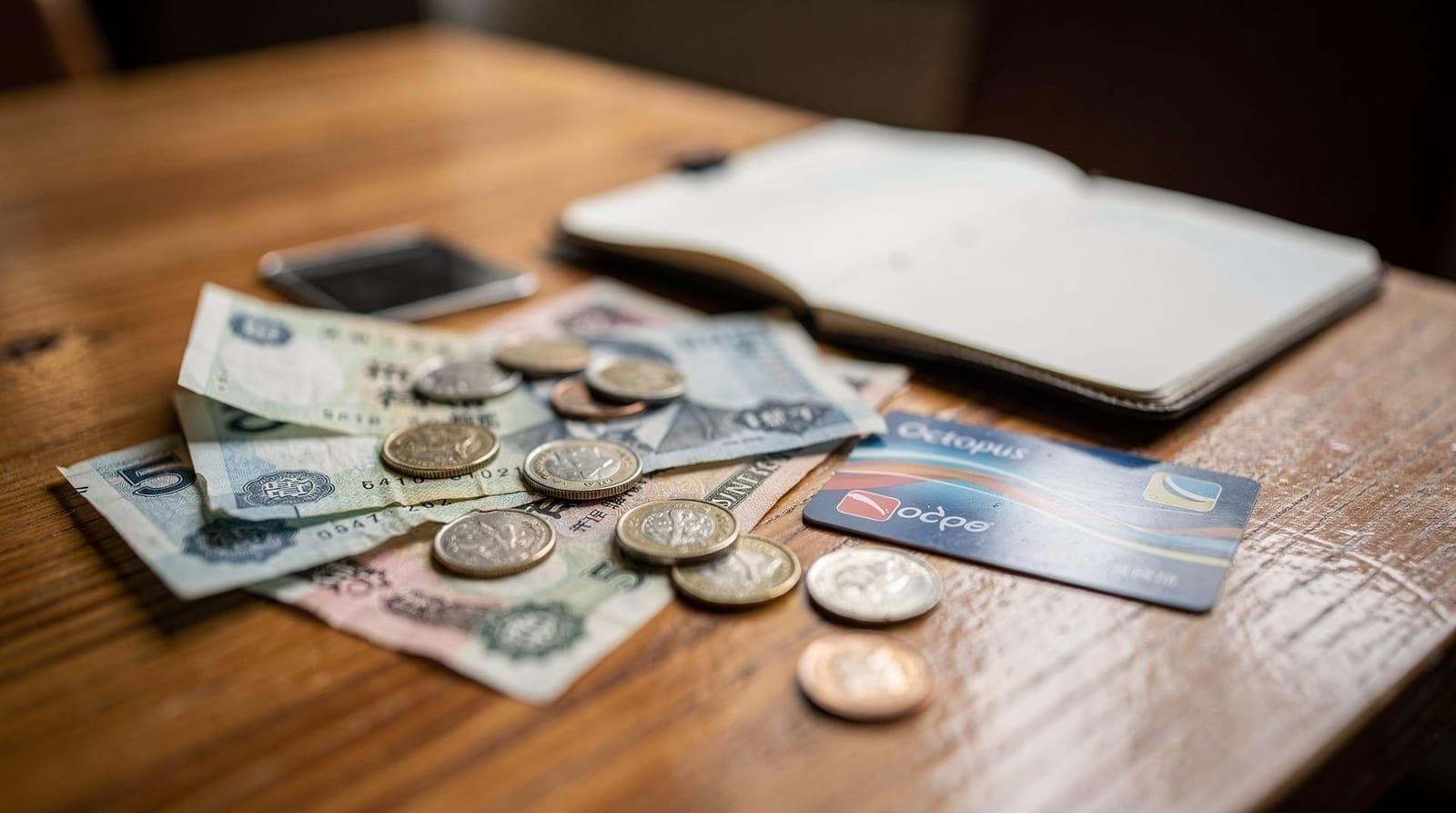
The MTR carries most of your journeys, and an Octopus card removes the friction of buying single tickets. The Octopus card guide explains how to load and use it, and the MTR guide covers routes and etiquette so you do not waste money on wrong turns. For short hops across the harbour, the Star Ferry guide shows why the ferry is both the cheapest crossing and a sightseeing experience in its own right. Taxis have a place, particularly with luggage or small children, and the taxi guide explains how they work so you are not caught out by surcharges you did not expect.
Choosing where to base yourself
The neighbourhood you sleep in changes your spending beyond the room rate. A well-connected base saves you transit time and fares, and puts cheap food within a few minutes’ walk. The where to stay in Hong Kong guide compares the main areas, and the Central vs Tsim Sha Tsui comparison helps you decide between the two most popular bases for first-time visitors. Travellers on a tight budget often find that Mong Kok and Sham Shui Po offer the best mix of local food and easy transport; see the Mong Kok area guide and the Sham Shui Po area guide for what each neighbourhood is like to stay in.
Eating well for less
Food is where you have the most control, and also where Hong Kong gives the most back. A bowl of noodles or a plate of rice at a neighbourhood café can be among the best meals of the trip, so spending less here rarely means eating worse. The cha chaan teng guide explains how to order in these local diners, and the street food guide points to what is worth queuing for. If you want a memorable meal without a fine-dining bill, the Michelin cheap eats guide is the place to start. Dim sum deserves a budget line of its own, and the dim sum guide helps you pick between a quick casual lunch and a more elaborate one. If you would rather not work out where to eat on your own, a guided street food walk with locals covering dim sum and wonton noodlesCheck availability can stand in for several meals at once, which makes it easy to fold into your food budget.
Ways to cut costs without cutting the trip short
The single biggest lever is food, not accommodation — switching from restaurant meals to cha chaan teng and noodle shops cuts food spending by half without a real drop in quality; see the Hong Kong on a budget guide for the full playbook. The second lever is trip length: a well-planned 4-day trip often delivers more per dollar than a rushed 6-day trip with too much transit time, covered in how many days in Hong Kong. For accommodation specifically, the where to stay by budget guide breaks down which neighbourhoods offer the best value without sacrificing MTR access.
If Macau is on your list, the ferry vs bridge to Macau guide shows how choosing the HZMB bridge bus over the ferry alone saves HKD 200–300 per person on the return crossing. For a full pre-built budget framework rather than building your own from these figures, the Hong Kong budget itinerary lays out a day-by-day version of the budget-traveller numbers above.
Booking a bundled tour for one or two of your major activities can also save against buying tickets separately once transport and skip-the-line access are factored in:
Day tour: Peak Tram, city walk, and dim sum includedTurning these numbers into your own budget
Start with the fixed costs: flights and accommodation, which you will know before you leave. Then multiply the daily figure for your chosen budget level by the number of days, add the one-off activities you actually want, and keep a small buffer for the things that always appear, such as an extra coffee, a spontaneous ferry ride, or a souvenir. Treat the three sample trips above as templates rather than targets, and adjust the line that matters most to you. Someone who cares about food can trim the hotel and spend more at the table, while a family may prefer to protect the accommodation and keep meals simple.
When you are ready to plan the days themselves, the Hong Kong itinerary planning guide helps you sequence what you have budgeted for, and the first-timer itinerary is a good starting point if this is your first visit. Families can pair the family figures here with the family itinerary to see how the activity costs fall across a week.