Central vs Tsim Sha Tsui — which side of the harbour should you stay on?
Hong Kong: Heritage highlights tour with Peak Tram and Star Ferry
Should I stay in Central or Tsim Sha Tsui in Hong Kong?
Tsim Sha Tsui suits most first-time visitors — hotels cost less, harbour views are better, and access to Kowloon's markets and museums is immediate. Central is the stronger choice if you arrive via the Airport Express, prioritise nightlife in Lan Kwai Fong, or need fast access to business districts.
Two iconic districts, one decision
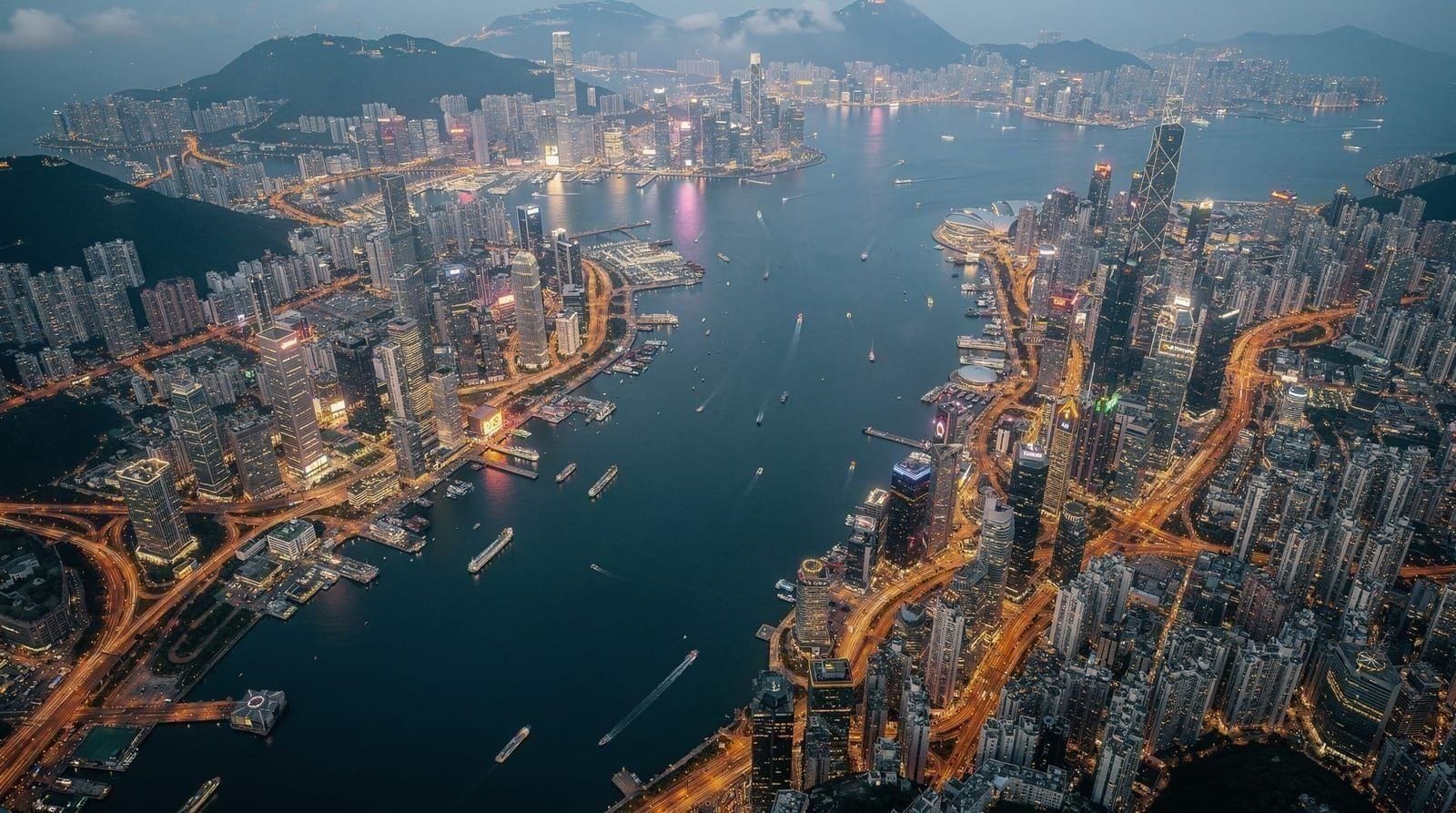
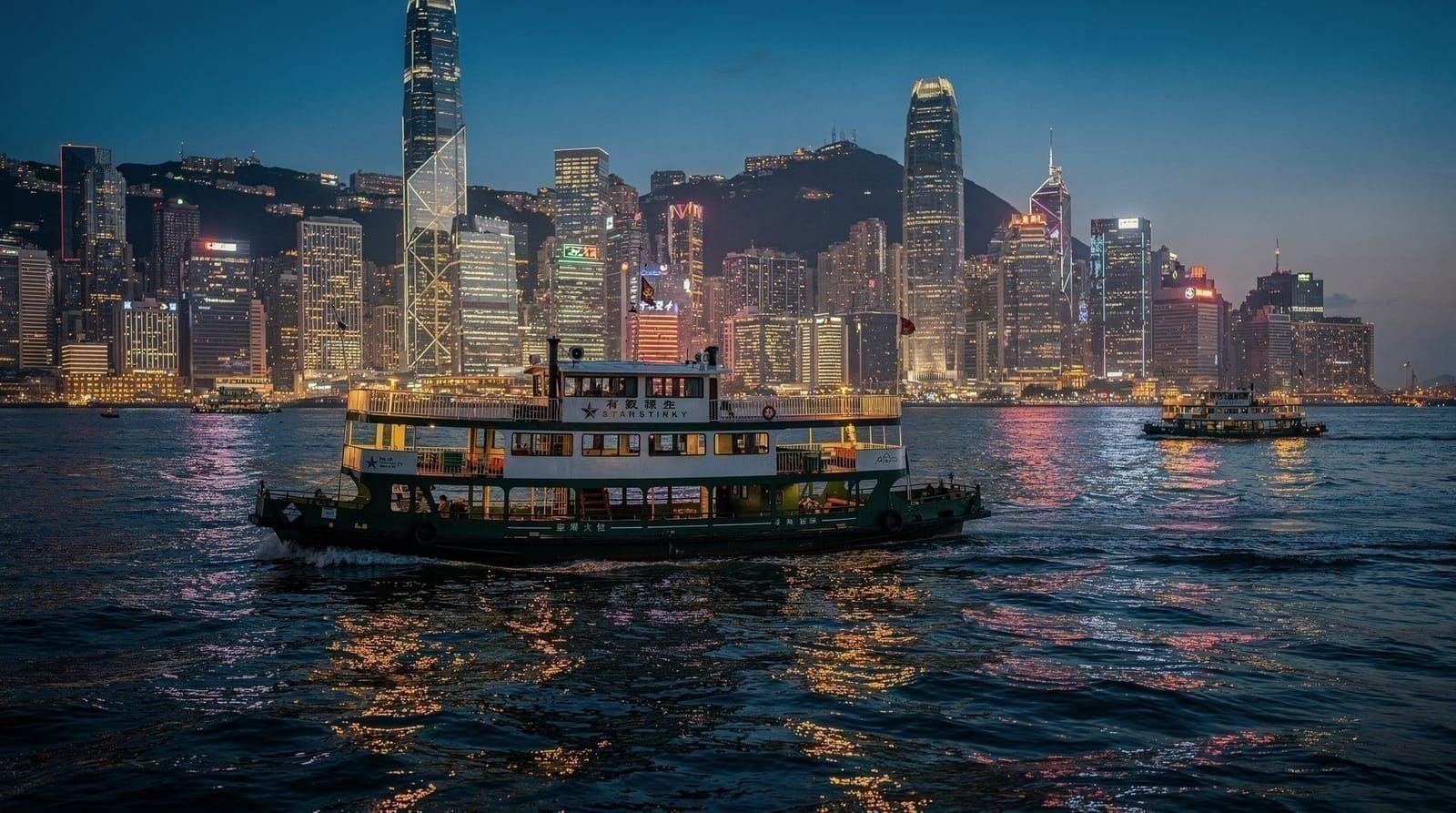
Victoria Harbour splits Hong Kong into two zones that feel genuinely different despite being eight minutes apart by ferry. Central, on Hong Kong Island’s northern shore, is the financial and administrative core of the city — glass towers, colonial facades, and a nightlife strip that runs late into weekday evenings. Tsim Sha Tsui, on the southern tip of Kowloon peninsula, looks back across the water at all of that and offers some of the finest urban views in Asia from a base that is measurably easier on the budget.
This is not a question with a universal answer. Where you should stay depends on why you are visiting, how you are arriving, and what a typical day looks like for you. This guide compares both districts honestly, using real prices and real trade-offs rather than generic “pros and cons” lists.
| Central | Tsim Sha Tsui | |
|---|---|---|
| Hotel prices | HKD 1,200-4,500+/night | HKD 400-3,800+/night |
| Best for | Business, nightlife (LKF) | First-timers, harbour views, museums |
| Airport link | Direct Airport Express (24 min) | 1 MTR stop to Airport Express (21 min) |
| Cross-harbour | Star Ferry or MTR, ~6-8 min | Star Ferry or MTR, ~6-8 min |
| Shopping | Luxury (IFC, Landmark) | Mainstream + electronics (Harbour City) |
Central at a glance
Central and Sheung Wan form the historic commercial heart of Hong Kong Island. The district is served by the MTR Island Line and the Tsuen Wan Line, making it the most connected point on Hong Kong Island. At street level, Central oscillates between two registers: the ultra-polished and the genuinely atmospheric.
The financial core stretches from Exchange Square near the Star Ferry Pier eastward to Admiralty. HSBC’s Headquarters — the iconic Norman Foster building — stands alongside the Bank of China Tower and IFC Two, the second-tallest structure in Hong Kong. IFC Mall sits directly above Hong Kong station and is the kind of shopping centre that airports envy: two floors of international luxury brands, a city check-in counter for most airlines, and direct Airport Express access to Chek Lap Kok in 24 minutes.
Lan Kwai Fong (LKF) occupies a short L-shaped block above D’Aguilar Street and is where Central reveals its other personality entirely. By 7pm on a Thursday, the street fills with after-work professionals from the nearby towers. By 10pm it is packed. Bars, clubs, and restaurants run the full length of the strip and spill into the surrounding lanes. This is the gravitational centre of Hong Kong’s expatriate nightlife, and nothing else in the city quite replicates the density and volume of it.
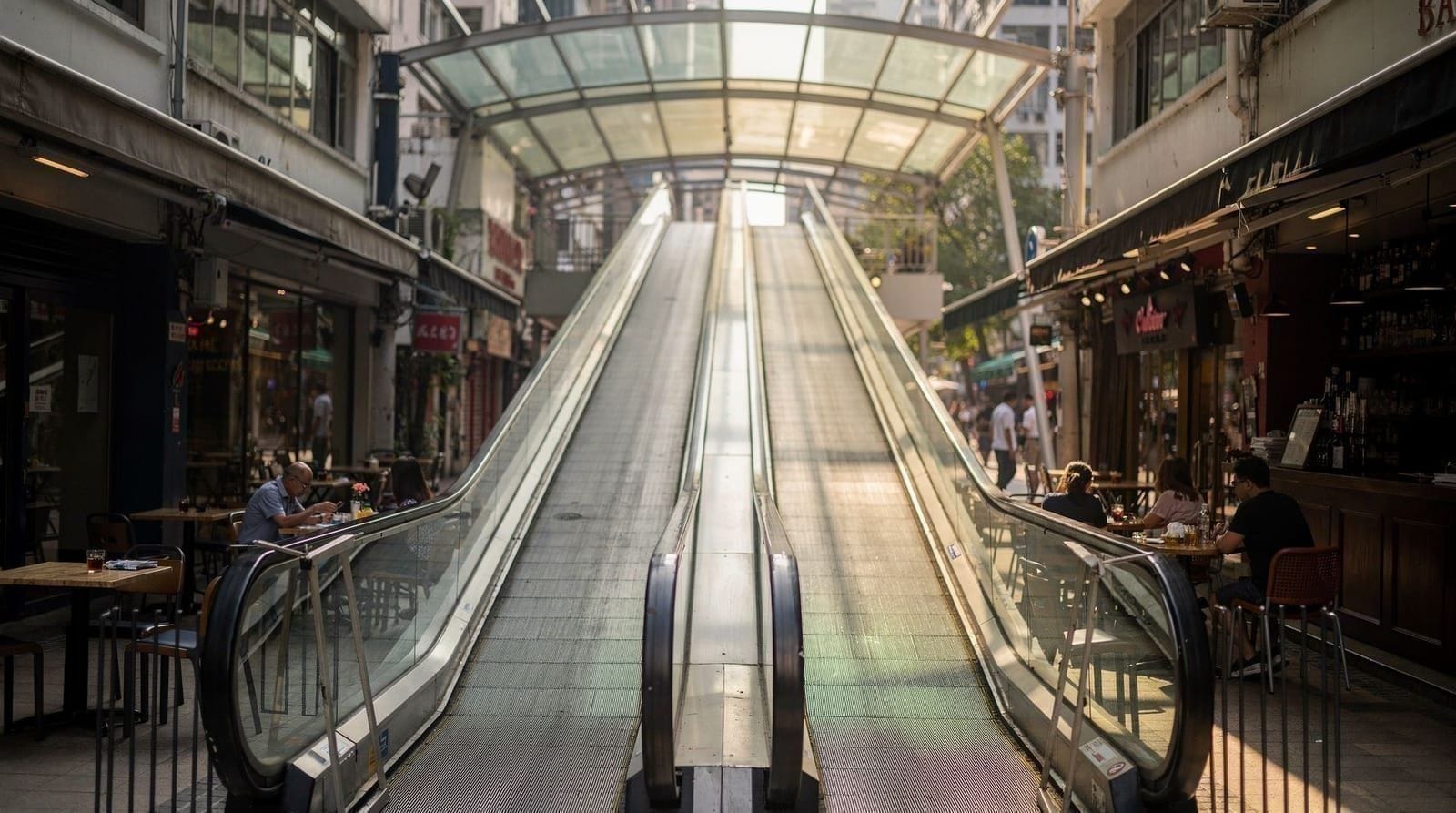
SoHo runs above LKF, connected by the Mid-Levels Escalator — the longest outdoor covered escalator system in the world at 800 metres. The escalator reverses direction at 10am (it runs downhill in the morning for commuters, uphill for the rest of the day) and is worth riding simply as an experience. The streets feeding off it — Elgin Street, Staunton Street, Shelley Street — are lined with independent restaurants covering cuisines from Nepalese to Basque.
Brunch here on a weekend morning, when the sun comes through and the streets are unhurried, is one of the better versions of a Hong Kong morning. For a fuller picture of the area, the SoHo and Central neighbourhood guide covers the escalator route, food streets, and gallery clusters in detail.
Hotels in Central sit at the premium end of the market. The Four Seasons Hotel Hong Kong occupies the upper floors of the IFC complex with unobstructed harbour views. The Mandarin Oriental on Connaught Road Central has been operating since 1963 and remains one of the best-run hotels in Asia. Expect to pay HKD 2,500-4,500 per night at these addresses, with the Ovolo Central and Hotel LKF offering slightly more accessible options from around HKD 1,200. Budget accommodation does not meaningfully exist in Central.
Tsim Sha Tsui at a glance
Tsim Sha Tsui occupies the southern tip of Kowloon and is, by any measure, Hong Kong’s most tourist-oriented district. That description is not a criticism — it reflects the concentration of museums, hotels, shopping centres, and harbour access that makes it the most logical base for first-time visitors.
Nathan Road is the main spine, running north from the Star Ferry terminal through a continuous canyon of signage, shops, and street-level chaos that is less overwhelming than it looks on arrival. The lower section between Salisbury Road and Jordan Road contains most of the mid-range hotels and is walking distance from the ferry and every major attraction in TST. A few blocks east of Nathan Road, the streets quiet down considerably, particularly around the Hong Kong Cultural Centre and the Avenue of Stars.
The Tsim Sha Tsui waterfront is the single most compelling reason to stay on this side of the harbour. The promenade from Salisbury Road around to Hung Hom takes in an unbroken panorama of Hong Kong Island’s skyline: Central’s towers, the Peak rising behind them, and the green slopes of Hong Kong Island framing everything. The Symphony of Lights runs nightly at 8pm from the rooftops and upper floors of dozens of buildings across the harbour — best watched from this promenade with a cold Tsingtao.
Harbour City sits adjacent to the Ocean Terminal cruise pier and is one of Asia’s largest malls by floor area, connecting more than 700 shops across four zones. It is not primarily a luxury mall — the mix runs from H&M and Muji at one end to Cartier and Bottega Veneta at the other, with a practical range of mid-market international brands across the middle floors. For everyday shopping needs — pharmacy, electronics, clothing — Harbour City functions as a convenient indoor city for the length of Nathan Road’s most congested stretch.
Museums and cultural institutions cluster in TST in a way that is genuinely unusual for a single neighbourhood. The Hong Kong Museum of History on Chatham Road South covers 6,000 years of Hong Kong’s past with well-produced bilingual exhibits. The Space Museum’s silver dome on Salisbury Road contains a planetarium and hands-on science exhibits. The Hong Kong Cultural Centre — the wave-shaped building without windows on the waterfront — hosts regular concerts, ballet, and Cantonese opera. Access to all of these from a TST hotel is a 10-15 minute walk at most.
Hotels in Tsim Sha Tsui cover the full price spectrum. The Peninsula Hong Kong on Salisbury Road is one of the great colonial-era hotels of Asia, and the only way to experience its Rolls-Royce fleet and lobby afternoon tea is to stay or visit in person. Prices start at HKD 3,800 and rise steeply. The Sheraton Hong Kong and the Marco Polo Hongkong Hotel sit in the HKD 1,200-2,000 range and offer solid harbour-view options.
Hotel Icon, a design hotel attached to the Hong Kong Polytechnic University on Science Museum Road, consistently offers the best value-to-quality ratio in TST, frequently available from HKD 900-1,300. Budget options exist near Mirador Mansions on Nathan Road, where guesthouses operate from HKD 400-700, though standards vary considerably.
Getting between the two districts
The cross-harbour connection is one of the most enjoyable commutes in any city. Two options exist, and both work well.
The Star Ferry departs from the Central Ferry Piers (Pier 7) to TST every 6-12 minutes, takes 8 minutes crossing, and costs HKD 4.00 (lower deck) or 5.00 (upper deck) on weekdays and HKD 5.60 or 6.50 on weekends and public holidays — still one of Asia’s great bargains. The view from the upper deck at dusk, with the skyline coming into the light and the harbour traffic moving around you, is genuinely memorable. The Star Ferry and trams guide covers the full schedule, pier locations, and the best time of day to make the crossing.
The MTR runs under the harbour on the Tsuen Wan Line, connecting Central station to Tsim Sha Tsui station in roughly 6 minutes. The fare is HKD 10.60 with an Octopus card. This is faster in bad weather, fully air-conditioned, and the sensible choice when you are carrying luggage or running to a meeting. For everything else, take the ferry.
For a thorough understanding of how the MTR network connects both districts to the rest of Hong Kong, the Hong Kong MTR guide explains the line structure, fares, and interchange stations clearly.
Half-day city highlights tour combining the Peak Tram and Star Ferry crossingCheck availabilityFood: Central and SoHo vs Tsim Sha Tsui
Both neighbourhoods eat well, but they serve different appetites.
In Central and SoHo, the concentration of international restaurants is the highest in Hong Kong. Elgin Street alone contains Thai, Italian, Japanese, and modern Cantonese options within a 200-metre stretch. PMQ — the converted police married quarters on Hollywood Road — houses several independent food and design businesses in a pleasant courtyard setting.
For lunch, cha chaan teng (Hong Kong-style tea cafes) on side streets near Cochrane Street serve fast, cheap meals — pineapple buns, milk tea, and set lunches from HKD 55-80 — that are genuinely local despite being minutes from some of the city’s most expensive office towers. The Central Market on Des Voeux Road, recently renovated, adds another cluster of local food vendors and independent stalls. Dinner in SoHo with a bottle of wine will cost HKD 400-700 per person at mid-range restaurants; LKF’s bar tabs add considerably to that.
In Tsim Sha Tsui, the ground floor of every hotel in the area contains at least one Cantonese restaurant competing aggressively for the tourist trade, which has the useful effect of keeping dim sum quality high and portions large. The Spring Moon restaurant at The Peninsula is genuinely one of the better dim sum experiences in Hong Kong, at prices that are expensive but not extortionate by international hotel standards.
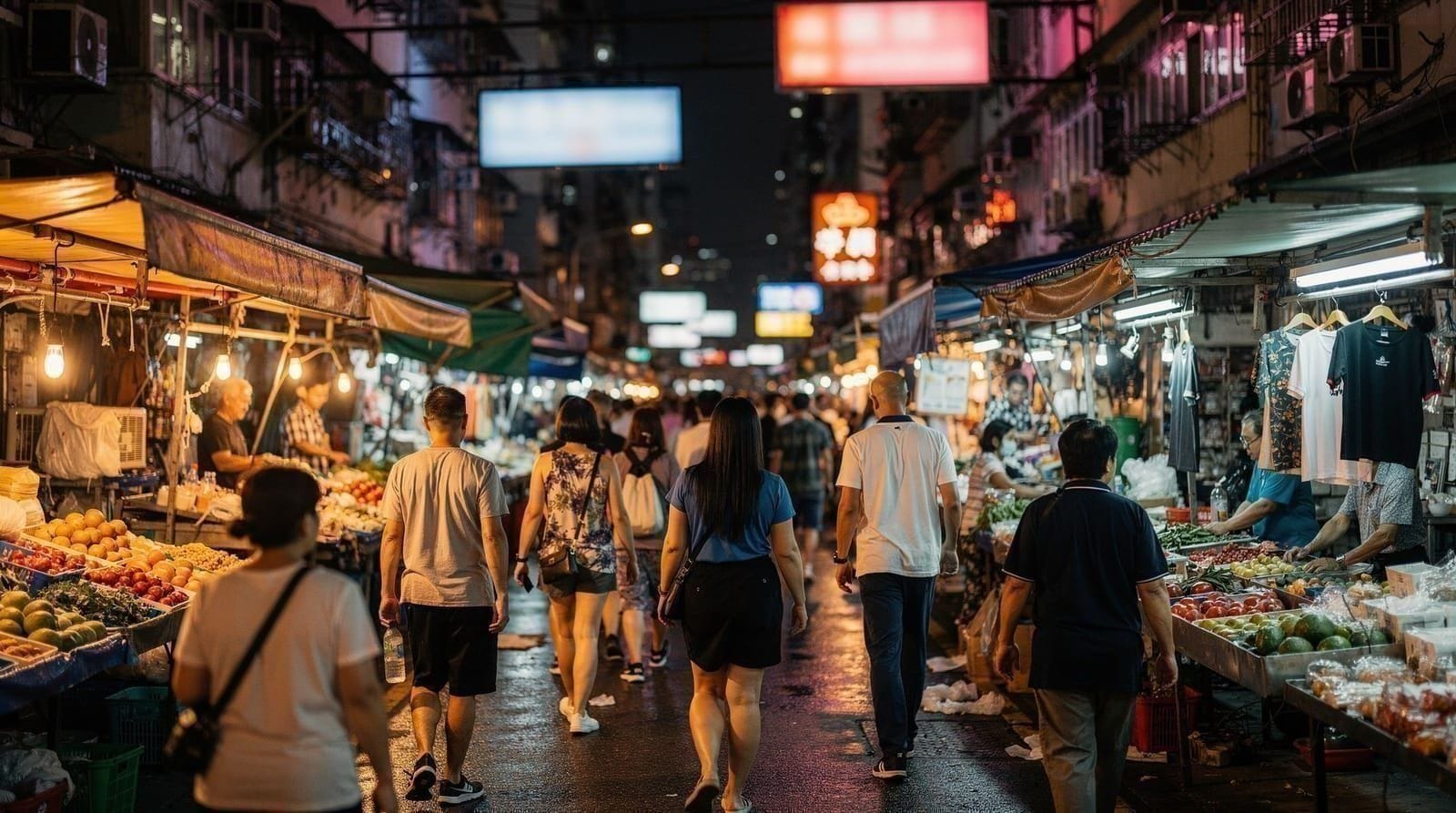
Street-level eating improves substantially as you move one MTR stop north to Mong Kok, where the night market food stalls and noodle shops on Sai Yeung Choi Street represent everything that the phrase “Hong Kong street food” should mean. From TST by MTR this is a 4-minute journey. The Mong Kok area guide covers the food streets and night market stalls in detail.
Shopping comparison
Central caters to the luxury end: the IFC Mall, Lane Crawford’s flagship, and the boutiques on Chater Road target the finance-sector professionals who work in the adjacent towers. Practical retail is less convenient — for everyday items you are better served by Sheung Wan to the west or Causeway Bay to the east, which contains Times Square and a much denser concentration of mid-market retail. The Causeway Bay area guide covers shopping options in that district.
Tsim Sha Tsui offers a broader shopping range within walking distance. Harbour City covers the mainstream international brands. The lanes between Nathan Road and Canton Road contain electronics shops, watch dealers, and tailor workshops. Sham Shui Po, 15 minutes north by MTR, is where Hong Kong’s electronics wholesale market and fabric district operate — genuinely useful if you are looking for tech accessories, sewing supplies, or streetwear at local prices. The Sham Shui Po area guide explains the specific streets and markets worth visiting there.
Daytime and nighttime atmosphere
Central in daylight is one of the most architecturally interesting places to walk in Asia. The contrast between the colonial Legco Building, the HSBC Headquarters, the Edwardian bulk of the General Post Office, and the towers behind them is not accidental — different eras of Hong Kong’s history are visible simultaneously. The elevated walkways connecting Central to Admiralty provide a good vantage point over the street traffic below without the heat of street level.
After dark, Central divides. The streets around IFC and Exchange Square empty rapidly after 8pm as workers leave. LKF and SoHo fill simultaneously, and by 10pm the neighbourhood has entirely different energy. This coexistence of city-at-rest and city-in-party mode is one of Central’s stranger qualities — quiet and loud neighbourhoods within three minutes’ walk of each other.
TST in daylight is best on the waterfront. The afternoon light on the harbour from the promenade is excellent, and the 5-10 minute walk from the Star Ferry terminal to the Avenue of Stars passes some of the better public space in Kowloon. The interior of TST — Nathan Road, the hotel zone around Salisbury Road — is busy all day without particularly rewarding wandering. The museums absorb a half or full day productively.
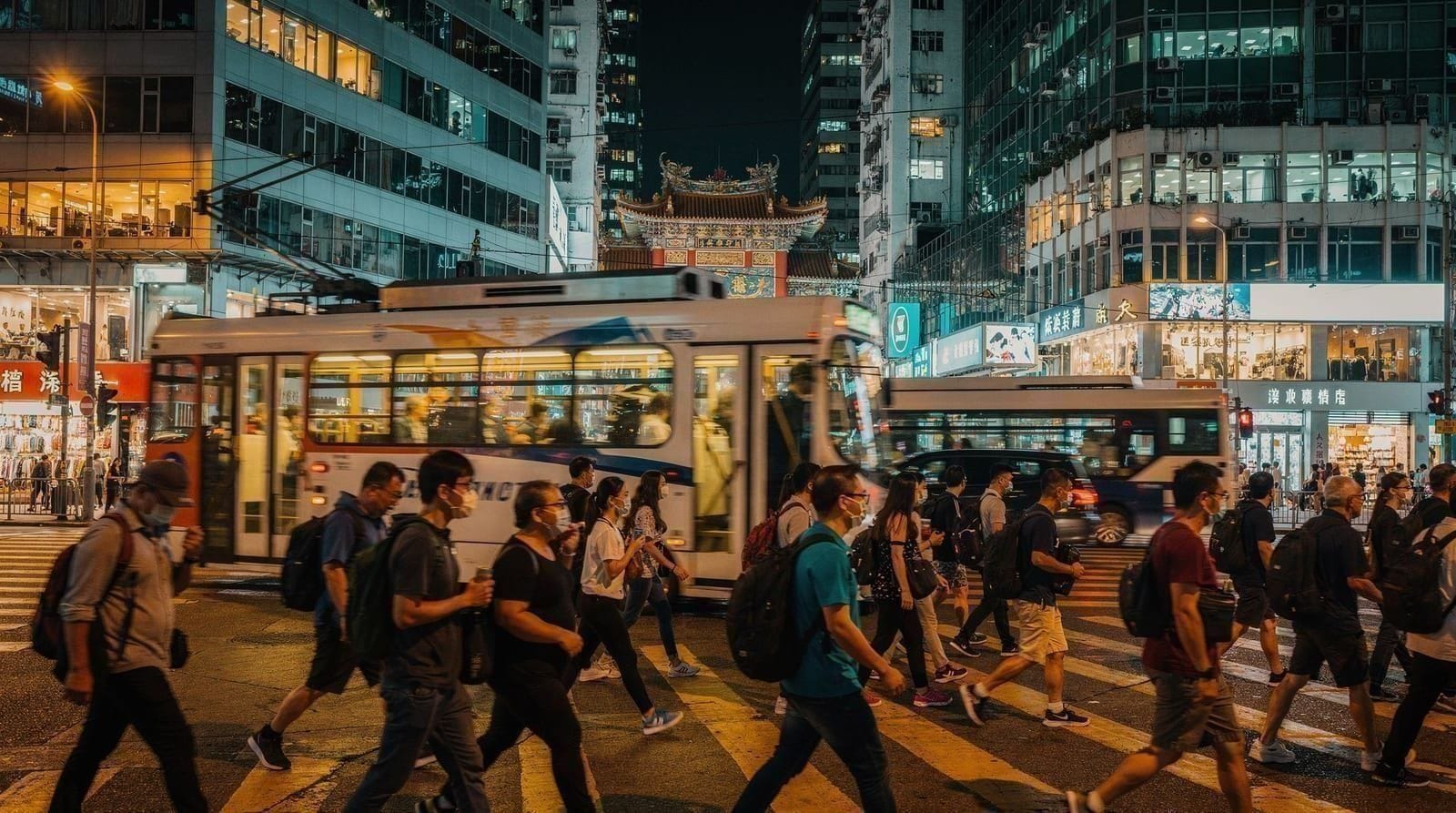
After dark, the TST waterfront is at its best during and just after the Symphony of Lights at 8pm. The promenade fills with families, couples, and tour groups for the show and then stays busy for another hour as people photograph the illuminated skyline. Nathan Road remains active until midnight; the area around Chungking Mansions is the one spot where the ambience turns slightly pressured, with persistent touts operating outside the entrance. This is an annoyance, not a safety issue, but worth knowing.
3-hour Hong Kong Island historical and cultural walking tourVerdict by trip type
This is where most comparison guides hedge into uselessness. The answer here is direct:
Stay in Tsim Sha Tsui if you are a first-time visitor. The harbour views alone justify it, but the concentration of museums, the accessible price range, the Star Ferry connection, and the variety of hotels makes TST the most practically useful base for someone navigating Hong Kong without local knowledge.
Stay in Central if you are travelling for business. The Airport Express link from Hong Kong station is the most efficient connection in the city, allowing in-town check-in up to a day before departure. Proximity to the financial district and the major law and finance firms in Admiralty makes a Central hotel the obvious choice for anyone with meetings in the area.
Stay in Central if nightlife is a priority. Lan Kwai Fong has no real equivalent in Hong Kong for volume and variety of late-night options. TST has bars and hotel lounges, but the scene is nothing comparable.
Stay in Tsim Sha Tsui if harbour views matter. The view of Hong Kong Island from TST is one of the finest urban panoramas in the world. No hotel in Central can replicate it — from Central, you look at Kowloon, which is less dramatic.
Stay in Tsim Sha Tsui for museum access. The Space Museum, Museum of History, Science Museum, and Heritage Museum are all within the TST and adjacent East Tsim Sha Tsui area. Accessing them from Central requires the ferry or MTR plus additional walking.
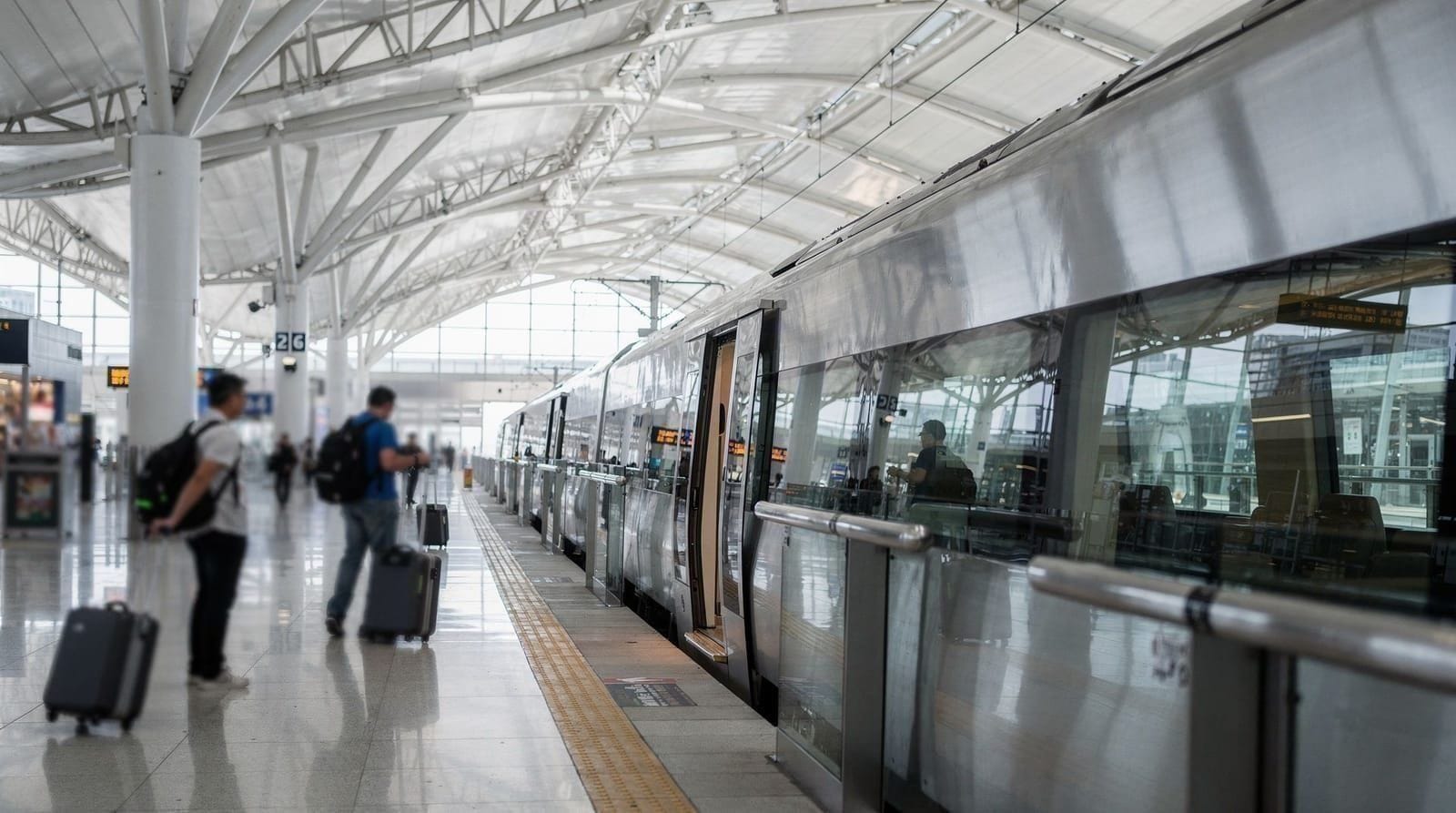
Stay in Central for Airport Express convenience. Hong Kong station on the Airport Express line is directly below IFC Mall. The 24-minute journey to Chek Lap Kok, combined with the ability to check bags and boarding passes at the station the day before, makes early-morning or late-night flights considerably easier from Central. From TST, the equivalent involves taking the MTR one stop to Kowloon station, which also has Airport Express service to the airport in 21 minutes — a minor inconvenience, but worth knowing. The full process is explained in the airport to city Hong Kong guide.
For a structured look at how both districts fit into a full itinerary, the Hong Kong 3-day itinerary includes dedicated time on both sides of the harbour and explains the logistics of moving between them efficiently.
Day trips from both bases
Both districts give equally good access to Hong Kong’s wider geography because the MTR and ferry network is comprehensive from either side.
From Central’s ferry piers, outlying island services depart to Lantau, Cheung Chau, Lamma, and beyond — a significant advantage if island exploration is high on your list. The Hong Kong outlying islands guide covers all the major options. The Lamma Island guide and the Cheung Chau guide both include specific ferry information from Central Pier.
From TST, the Kowloon-Canton Railway (via East Rail Line) gives direct access to Lo Wu and Lok Ma Chau for the Shenzhen border crossing — the most efficient route for a Shenzhen day trip. The KMB bus network from Kowloon also covers much of the New Territories without requiring interchange.
For Macau, high-speed ferries depart from both the Shun Tak Centre in Sheung Wan (adjacent to Hong Kong Island) and from the Kowloon ferry terminal in Tsim Sha Tsui East. The Macau day trip guide includes both departure points and current crossing times.
A practical note on the Octopus card
Wherever you stay, the Octopus card is the only transport payment method you need. It covers the MTR, buses, minibuses, the Star Ferry, all tram routes, and the Airport Express at a lower fare than a single ticket. It also works at 7-Eleven, Circle K, most supermarkets, and many restaurants. The Octopus card guide explains how to top up, where to buy one on arrival, and how to get a refund on departure. Pick one up at any MTR station immediately on arrival — it removes every payment friction from the first journey to the last.
Getting around once you are in either neighbourhood is straightforward enough that the initial district choice matters more than people expect. Both Central and TST are dense, walkable, and connected. The decision you are really making is about which atmosphere you want to return to at the end of each day: the elevated energy of a global financial centre at night, or the quieter satisfaction of a harbourfront room with one of the world’s great skylines across the water.
What if you cannot decide? Splitting your stay
For trips of five nights or more, splitting the stay between both districts is a genuinely reasonable option rather than a compromise. A common pattern is two or three nights in TST first — settling in, covering the museums and the harbourfront, using the accessible hotel prices to offset jet lag days — followed by a switch to Central for the second half, timed to finish with an easy Airport Express departure from Hong Kong station. The main cost is the inconvenience of repacking and moving mid-trip, which matters less if you are travelling light. For shorter trips (under four nights), picking one base and committing to it is the more practical choice, since the time spent relocating cuts meaningfully into a short itinerary.
Neither district working for your budget? The alternatives
If both Central and TST feel expensive for your budget, Causeway Bay and Mong Kok are worth considering as bases. Causeway Bay sits on the Island Line with easy access to Central in under six minutes, at hotel prices generally HKD 200-500 below equivalent Central options. Mong Kok, on the Kowloon side, offers some of the cheapest reputable accommodation in the city, alongside genuinely excellent street food, at the cost of losing the harbourfront views that make TST distinctive. The where to stay in Hong Kong guide compares all the main districts side by side.
Frequently asked questions about Central vs Tsim Sha Tsui — which side of the harbour should you stay on?
Is Central or Tsim Sha Tsui more expensive?
How do I get between Central and Tsim Sha Tsui?
Which area has better food?
Is Tsim Sha Tsui safe at night?
Which area is closer to the airport?
Which neighbourhood is better for families?
Should I split my stay between Central and Tsim Sha Tsui?
What are cheaper alternatives to Central and Tsim Sha Tsui?
Top experiences
Bookable activities with verified prices and instant confirmation on GetYourGuide.