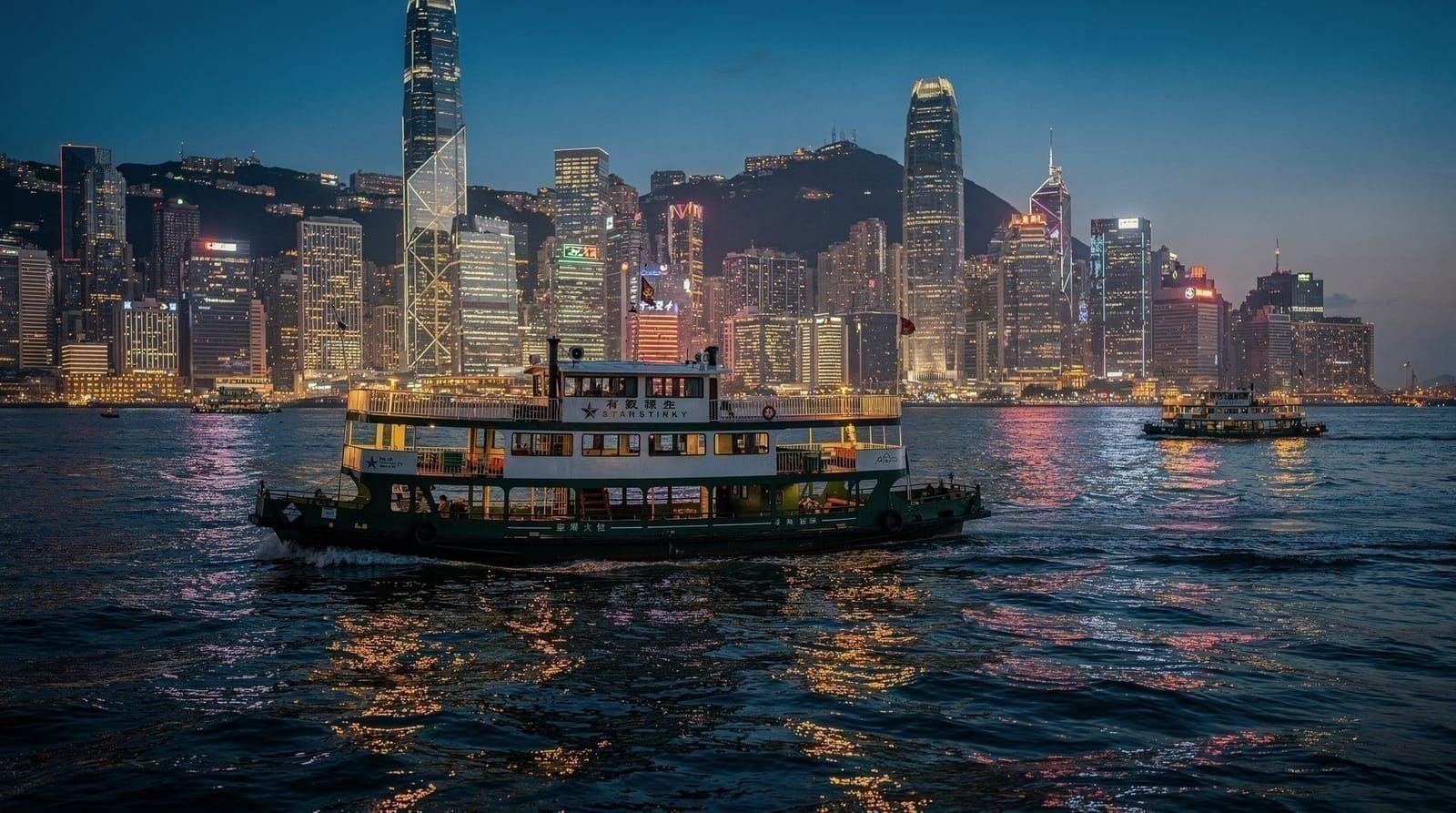
Hong Kong outlying islands guide — ferries, beaches, and car-free escapes
Hong Kong: Lamma Island day tour spectacle
Which are Hong Kong's best outlying islands to visit?
Lamma Island for seafood and hiking, Cheung Chau for beaches and car-free village life, and Lantau for the Big Buddha are the three most popular. Peng Chau is quieter and better for those who want to escape without the tourist crowds. Po Toi at Hong Kong's southern tip requires a Sunday-only ferry but rewards birdwatchers and hikers with dramatic coastline.
Hong Kong’s other side — islands, ferries, and the absence of traffic
When visitors think of Hong Kong they picture the skyscraper canyon of Victoria Harbour, the neon of Mong Kok, the density of Kowloon. What most do not initially picture is the 260 or so islands that make up the rest of the territory — most uninhabited, some of them among the most peaceful places in Asia, all of them reachable by ferry from Central in under an hour.
The outlying islands are where Hong Kong keeps its other identity: seafood restaurants built over the water on stilts, walking paths through mountain scrubland, swimming beaches with no high-rises visible from the sand, and village streets where the rhythm is set by fishing tides rather than MTR trains. They are a legitimate day trip from the city in the same category as Macau — different in mood, more intimate, and sometimes more surprising.
This guide covers every island worth knowing about, with real ferry prices, the best reasons to visit each one, and the practical details for planning a day trip.
| Where | Central Piers 4–6, Hong Kong Island |
| Cost | From about HKD 33 return (Cheung Chau, ordinary, Mon–Sat); fast boats and Sunday fares cost more |
| Time needed | Half-day (Peng Chau) to full day (Cheung Chau, Lantau) |
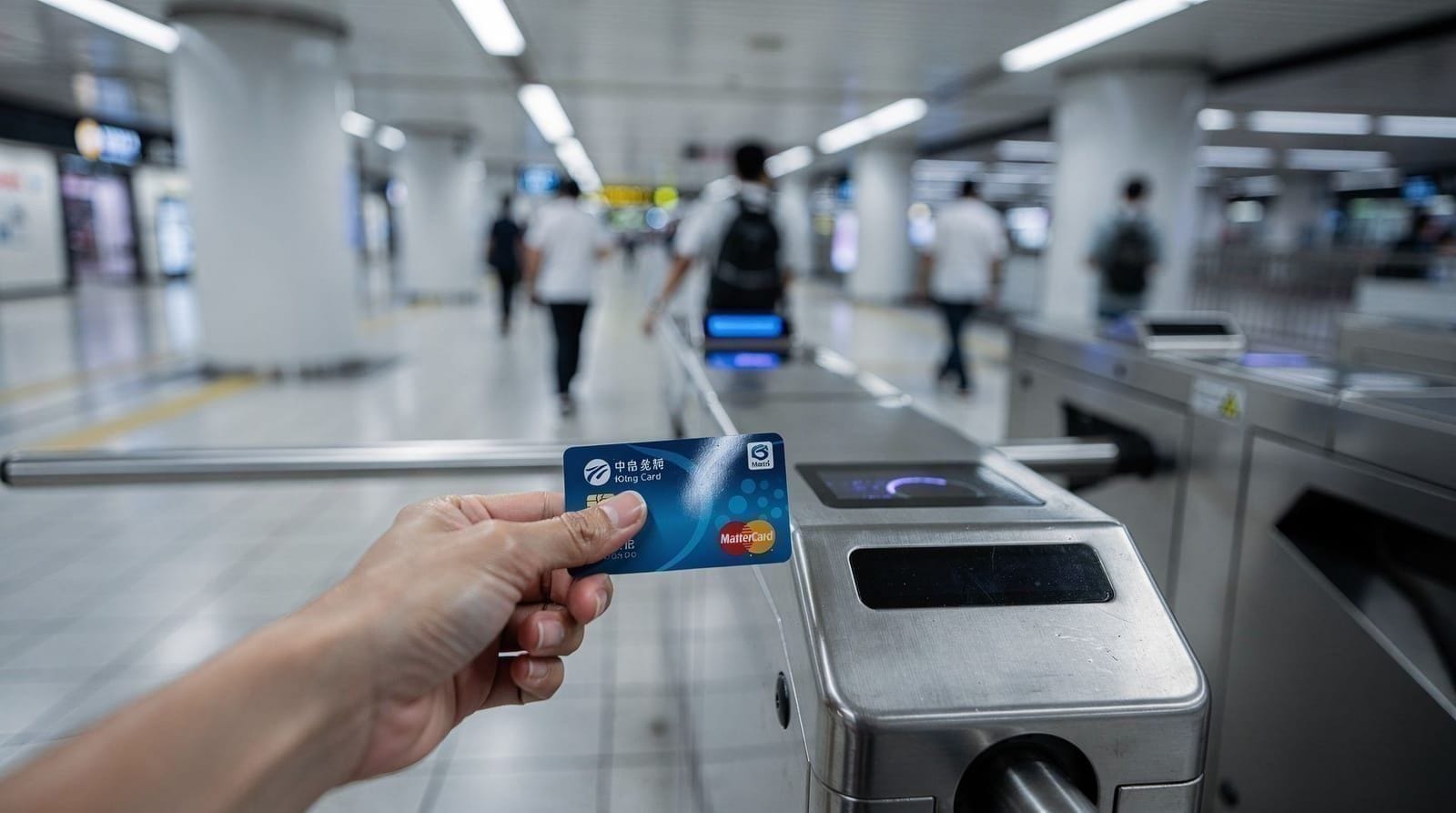
| Getting there | NWFF / Hongkong Ferry, Octopus card accepted on main routes |
| Best time | Weekday mornings; avoid the 10–11am weekend rush |
The Central Ferry Piers
The starting point for almost all outlying island ferries is the Central Ferry Piers on the northern shore of Hong Kong Island, immediately west of the Star Ferry terminus. Piers 4, 5, and 6 handle the outlying islands; pier 7 is Star Ferry to Tsim Sha Tsui.
The piers are open, airy, and well-organised. Each pier has departure screens, ticketing windows, and Octopus turnstiles. Ferries leave on published schedules; the big operators (New World First Ferry, Hongkong Ferry) run services throughout the day, with higher frequency at peak commuter times. Sunday and public holiday fares are higher than Monday-Saturday fares.
Getting to the piers: 10-minute walk from Hong Kong MTR station (take the exit toward the waterfront), or a direct walk from the Star Ferry Pier along the waterfront promenade.
Lamma Island — seafood, hiking, and expat village life
Ferry: Central Pier 4 to Yung Shue Wan, 30-35 minutes, HKD 24.9 Mon–Sat / HKD 34.7 Sun and public holidays
Alternative: Aberdeen to Sok Kwu Wan, 30 minutes (check the operator’s site for the current fare)
Car-free: Yes
Best for: Hiking, seafood lunch, relaxed beach day
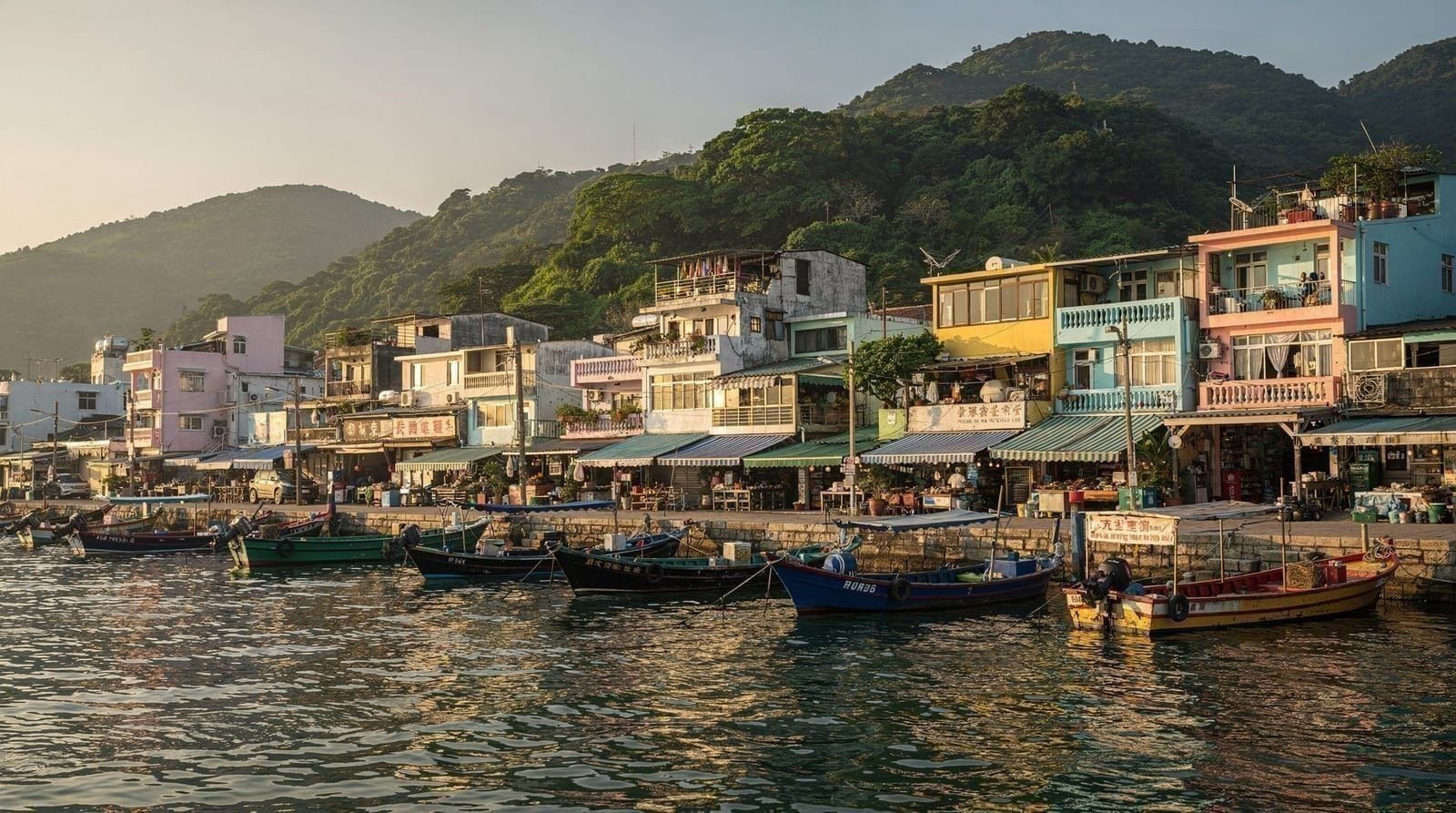
Lamma is the third-largest island in Hong Kong and the one with the most well-developed walking infrastructure. The island’s two main settlements — Yung Shue Wan on the northern tip and Sok Kwu Wan on the eastern coast — are connected by the Family Trail, a 3km path through hills, past Lo So Shing Beach, and through the village of Mo Tat Wan. The walk takes 1-1.5 hours at an easy pace.
The standard Lamma day goes: ferry to Yung Shue Wan, walk the Family Trail south, arrive at Sok Kwu Wan hungry, eat seafood at one of the waterfront restaurants, catch the Aberdeen ferry home. This is an excellent day that costs roughly HKD 56-78 in ferry fares (Central to Yung Shue Wan, then Sok Kwu Wan back to Central) and HKD 300-600 per person for a proper seafood lunch.
What makes Lamma different from the other islands is the genuine community — it has a longstanding expat population, a handful of good coffee shops and pubs in Yung Shue Wan village, and a neighbourhood feel that keeps residents rather than just tourists.
This Lamma Island guided day tour covers both villages with a seafood lunch included, and a boat section that gives you views of the island’s coastline you cannot get from the hiking trail.Check availabilityFor the full guide including the Aberdeen route and the best seafood restaurants, see the Lamma Island guide.
Cheung Chau — the car-free island with beaches, a pirate cave, and the Bun Festival
Ferry: Central Pier 5, ordinary about 55-60 min HKD 16.7 / fast about 35-40 min HKD 32.9 (Mon–Sat; HKD 24.8 / 47.6 on Sun and public holidays)
Car-free: Yes (no private vehicles at all)
Best for: Beaches, street food, cycling, family day trips
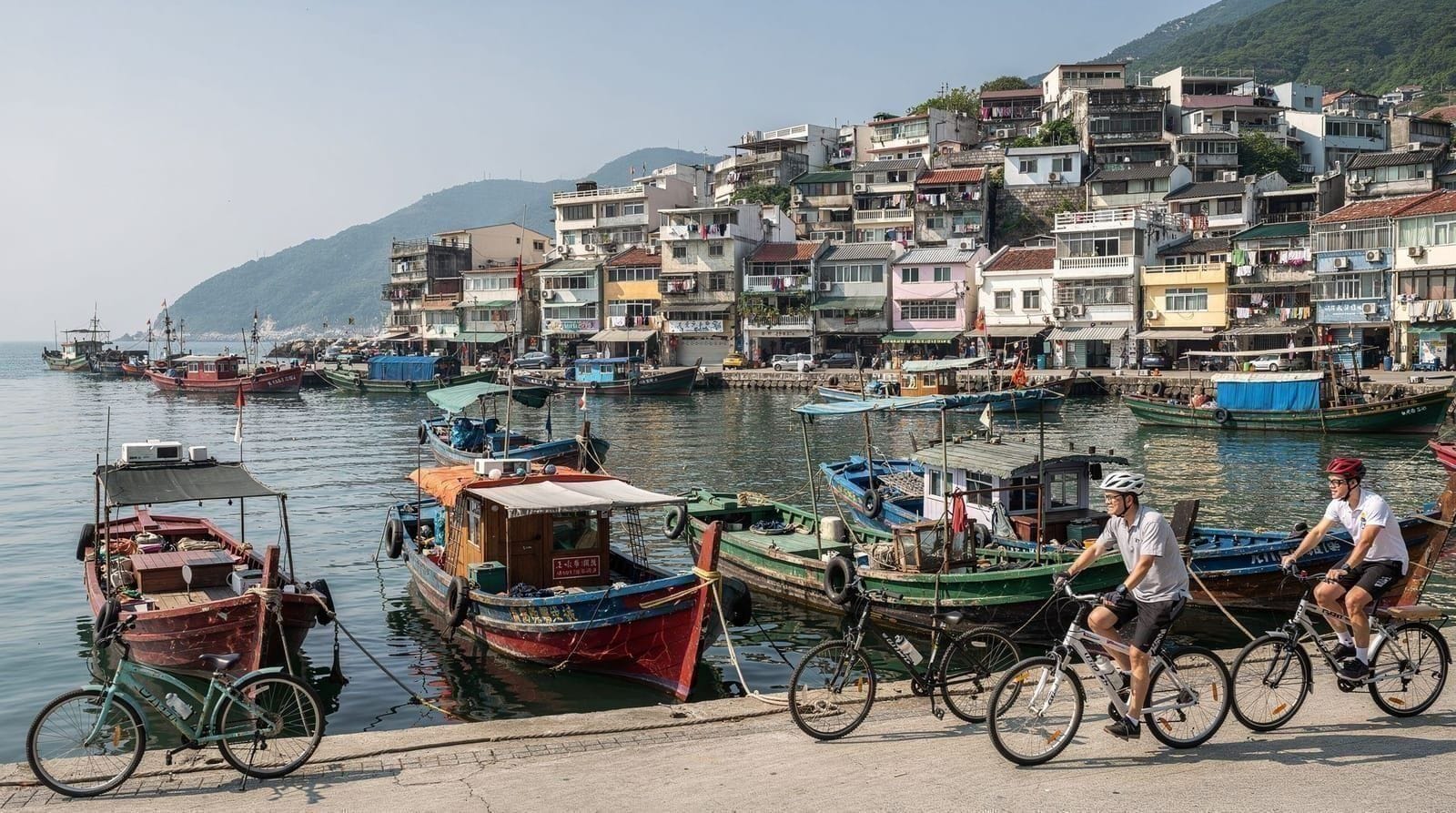
Cheung Chau is shaped like a dumbbell — two hills connected by a narrow strip of reclaimed land where the main village sits. There are no private cars. Getting around means walking, renting a bicycle (HKD 50-80/day from shops near the ferry pier), or letting the village’s hand-pulled delivery trolleys set the pace.
The island’s compact size — roughly 2.5km across — means you can cover the main sights on foot in a few hours. Pak Tai Temple is active and atmospheric. Cheung Po Tsai Cave (named for the 19th-century pirate whose fleet supposedly used it) requires a short scramble through rocks. The windsurf beach where 1996 Olympic gold medallist Lee Lai Shan trained is marked with a small monument near Cheung Chau Windsurfing Centre.
Tung Wan Beach on the eastern side is the main swimming beach — wide, well-maintained, with lifeguards from April to October. Kwun Yam Wan and Italian Beach on the western and southern sides are quieter.
Food is central to the Cheung Chau experience. The street stalls along Tung Wan Road sell fish balls, curry squid, and enormous mango ice desserts for under HKD 50. Kwan Ying Seafood is the main sit-down option near the ferry pier.
The annual Bun Festival (Tai Ping Ching Chiu) is one of Hong Kong’s most spectacular events — occurring in April or May on the eighth day of the fourth lunar month, with bamboo towers covered in lucky buns, Taoist rituals, and a bun-scrambling competition. Cheung Chau is packed beyond capacity during the festival; book ferries well in advance if you want to attend.
This guided walking tour of Cheung Chau covers the pirate cave, Pak Tai Temple, the beaches, and the best street food stops with a local guide.Check availabilityFull details on beaches, ferry times, and the Bun Festival are in the Cheung Chau guide.
Lantau Island — the big one
Ferry: Central Pier 6 to Mui Wo (Silvermine Bay), 35 min fast, HKD 33.5 Mon–Sat / HKD 48.5 Sun and public holidays (slower sailings: see the operator’s site)
Also accessible by: MTR Tung Chung Line (for the Big Buddha and Ngong Ping)
Best for: Big Buddha day trip, Tai O fishing village, Disneyland, hiking
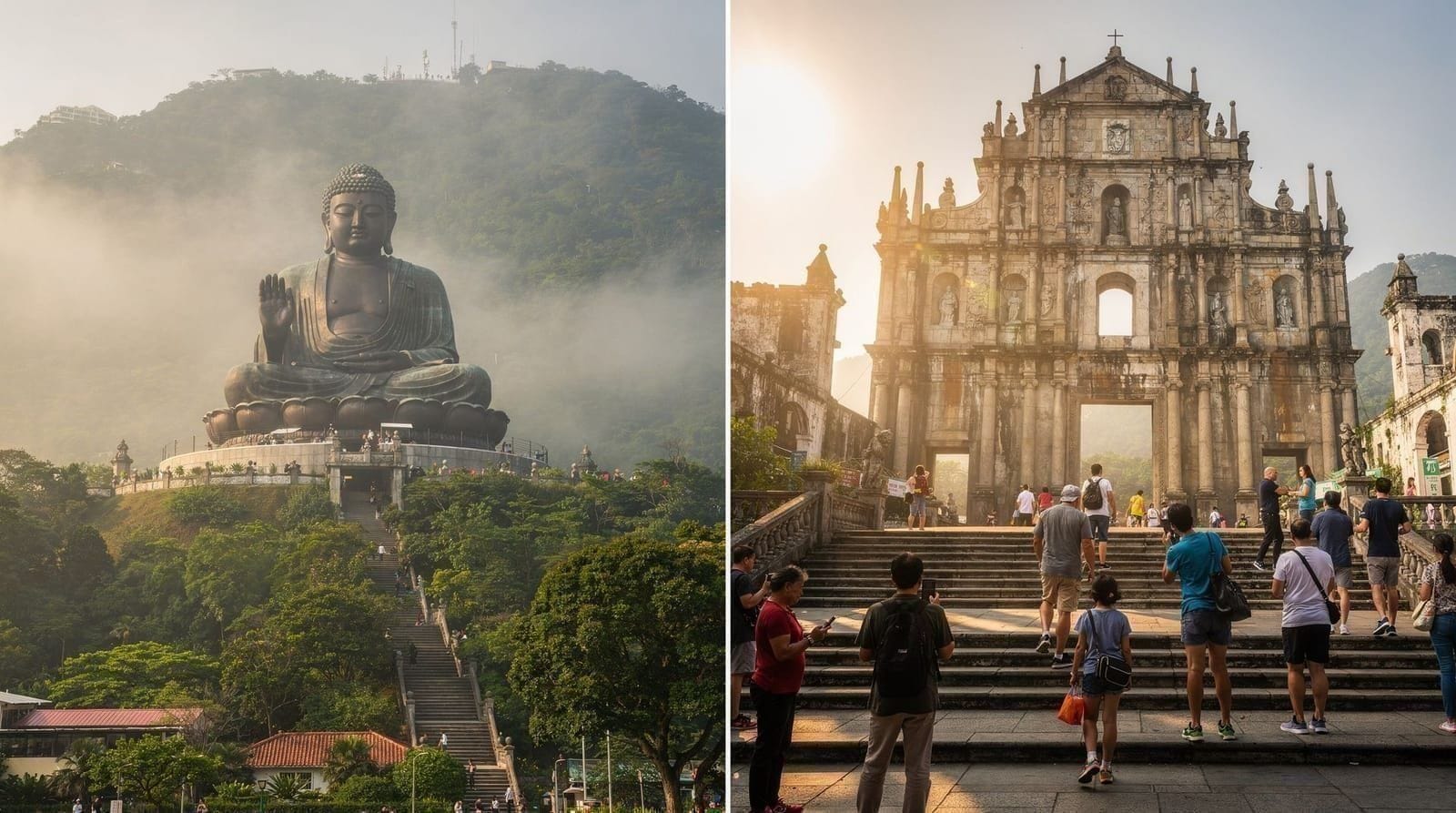
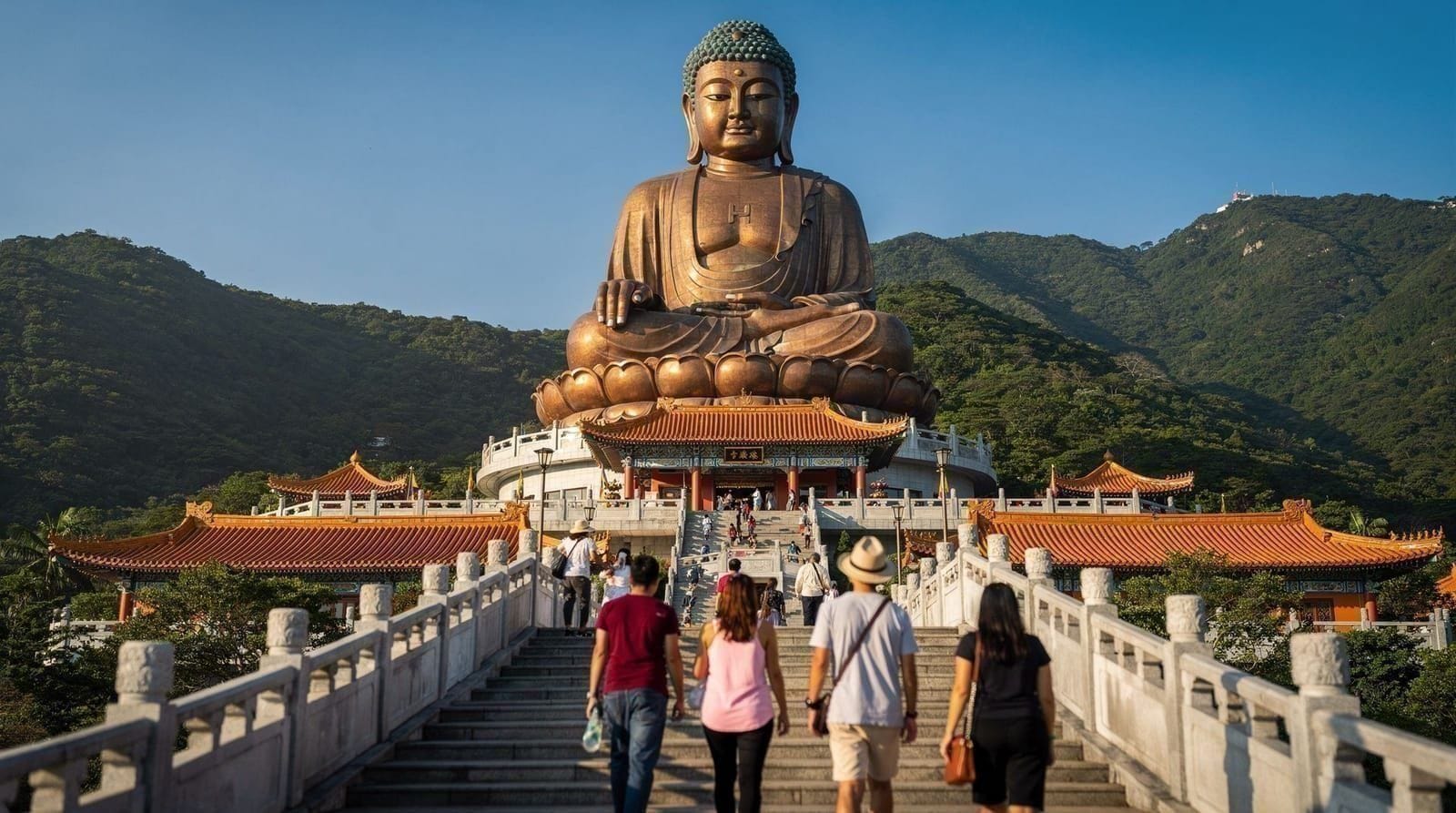
Lantau is Hong Kong’s largest island and the one with the most varied attractions. Most visitors arrive by MTR to Tung Chung for the Ngong Ping cable car and Big Buddha — the route covered in the Lantau Big Buddha day trip guide. The ferry route to Mui Wo on the eastern shore opens up a different side of Lantau: Silvermine Bay Beach (one of the largest sandy beaches in Hong Kong), the eastern Lantau Trail, and the market town of Mui Wo itself.
From Mui Wo you can take bus 1 along the southern Lantau coast to Cheung Sha Beach — 25 minutes (fare on the bus operator’s site), and widely considered Hong Kong’s finest stretch of sand with the Stoep restaurant on the upper beach serving South African-inspired food. Bus 2 from Mui Wo reaches Ngong Ping via the scenic mountain road if the cable car is running and you prefer to avoid it.
Hong Kong Disneyland is on northeastern Lantau, accessible from the dedicated MTR Disneyland Resort Line from Sunny Bay. It is a pleasant park and uncrowded by international Disneyland standards, but it is a separate full-day activity and not easily combined with the Big Buddha.
Peng Chau — the quiet island
Ferry: Central Pier 6, 45-55 minutes, HKD 31.9 Mon–Sat / HKD 46.6 Sun and public holidays
Car-free: Yes
Best for: A genuinely uncrowded day away from tourists
Peng Chau is the smallest of the major outlying islands and the one least visited by tourists. There are no significant tourist attractions — no famous beaches, no temples drawing pilgrimages, no seafood restaurant rows. What Peng Chau has is a genuine old-Hong Kong neighbourhood: narrow lanes with herbalist shops, a small covered market, a working fishing community, and a quiet hilltop walk with views over the surrounding islands.
The island is a 45-minute walk end to end. The highest point (Finger Hill, 95m) has a view platform looking toward Lantau and Cheung Chau. Peng Chau is a genuinely restorative day for anyone who wants space and quiet without going far.
Note: there are no bicycle rentals on Peng Chau, unlike Cheung Chau.
Po Toi Island — southernmost Hong Kong
Ferry: Aberdeen or Stanley (Sunday and public holidays only), approximately 50 minutes
Car-free: Yes
Best for: Birdwatching, dramatic coastal scenery, serious hikers
Po Toi is the southernmost inhabited island in Hong Kong territory, and the most remote. It has a tiny permanent population (under 200 people), no roads, rocky cliffs, and rock carvings dating to the Bronze Age — among the oldest surviving artefacts in Hong Kong. Birdwatchers come in April and September-October during migration season, when Po Toi reliably turns up rare species that stop to rest on the southernmost land before crossing the South China Sea.
The ferry from Aberdeen runs on Sundays and public holidays only. Kaido boats from Stanley operate more regularly but still not daily. Check current schedules with the Aberdeen Typhoon Shelter ferry operators before planning a visit, as the schedule changes seasonally. There is a small restaurant at the main village pier serving noodles and Cantonese food; bring water and snacks.
The coastal path around the island takes about two hours at an easy pace and passes the rock carvings at the southeastern cliff — some of the most atmospheric natural sites in the territory.
Ferry operators and schedules
New World First Ferry operates the main routes to Cheung Chau and Lantau (Mui Wo). The company runs both regular (lower deck) and fast (upper deck on some vessels) sailings. Their website and app list current timetables and allow Octopus-linked purchases.
Hongkong Ferry (also known as HK Ferries) operates the main services to Lamma Island (both Yung Shue Wan and Sok Kwu Wan from Central Pier 4, and Sok Kwu Wan from Aberdeen).
Inter-island ferries run between the islands without returning to Central — particularly useful for the Lamma-Cheung Chau combination or Cheung Chau-Lantau. These run less frequently than the Central routes; check the operators’ websites for current schedules.
All ferry operators accept Octopus card. Sunday and public holiday fares are higher on all routes. For details on the ferry system, see the Hong Kong island ferries guide.
Comparing the islands
| Island | Car-free | Best for | Ferry time | Return fare |
|---|---|---|---|---|
| Lamma | Yes | Seafood, hiking | 30-35 min | HKD 49.8 Mon–Sat / 69.4 Sun |
| Cheung Chau | Yes | Beach, street food, cycling | 35-60 min | HKD 33.4-65.8 Mon–Sat / 49.6-95.2 Sun |
| Lantau (Mui Wo) | Mostly | Beach, hiking | 35-55 min | HKD 67 Mon–Sat / 97 Sun (fast) |
| Lantau (MTR) | Mostly | Big Buddha, Tai O | 35 min MTR | See MTR fares |
| Peng Chau | Yes | Quiet day, authentic village | 45-55 min | HKD 63.8 Mon–Sat / 93.2 Sun |
| Po Toi | Yes | Birdwatching, coast | 50 min | HKD 60-80 |
Practical tips for outlying island day trips
Leave before 10am on weekends. The 10-11am sailings from Central on Saturday and Sunday are packed. Go earlier and you will be on the island before the crowds arrive.
Check the weather. Hong Kong’s summer typhoon season (May-October) can affect ferry sailings and beach conditions. Typhoon signal 3 or above suspends most services. The Hong Kong Observatory’s website and app give 24-hour and 3-day forecasts.
Bring cash. Many island restaurants and market stalls are cash-only, particularly the smaller ones. There are no ATMs on Peng Chau or Po Toi. Cheung Chau and Lamma have a limited number of ATMs near the ferry piers.
Swimwear in summer. June to early October, the water temperature is warm enough for comfortable swimming. The main beaches (Tung Wan on Cheung Chau, Lo So Shing on Lamma, Silvermine Bay on Lantau) have shower facilities. Lifeguards operate at the main beaches from April to October.
Return timing. Plan your last ferry back before the peak 5-7pm crush on weekends. If you miss that window, the 8pm+ sailings are usually much calmer — but check the last sailing time for your route.
What to pack for an island day
An outlying island day has different practical needs than a city sightseeing day. Comfortable walking shoes matter more here than almost anywhere else in Hong Kong — village lanes and hiking trails are uneven, and flip-flops are fine for the beach but not for the Lamma Family Trail or Peng Chau’s hilltop walk. A hat and sunscreen are genuinely necessary; the islands have far less shade than the city’s covered walkways and MTR-linked malls, and you’ll be outdoors for most of the day.
Bring a swimsuit even if swimming isn’t the main plan — Cheung Chau and Lamma both make it easy to change your mind once you see the beaches. And carry more cash than you think you’ll need: several of the best seafood restaurants and village stalls are cash-only, and, as noted above, ATMs are scarce or absent on the quieter islands.
Choosing your first island
If you only have time for one outlying island, the decision usually comes down to what you want the day to feel like. Want a proper hike with a reward at the end? Lamma’s Family Trail from Yung Shue Wan to Sok Kwu Wan, finishing with a seafood lunch, is the classic version of that day. Want beaches and a village to wander without an agenda? Cheung Chau delivers both in a compact, car-free package that works well for families.
Already planning to see the Big Buddha via the MTR and cable car? Skip a separate Lantau ferry trip — you’ll cover Lantau’s headline attraction a different way, so save the ferry route for a second visit focused on Mui Wo’s beaches and the Lantau Trail. Peng Chau and Po Toi are for a second or third Hong Kong trip, or for travellers who’ve already done the popular islands and want something quieter.
Where to read next for each island
Each island has a deeper page on this site. For a walking day with a seafood finish, the Lamma Island destination page gives the village-by-village picture. For beaches, street food and the pirate cave, the Cheung Chau destination page is the companion read. If you are drawn to the quiet option, the Peng Chau destination page covers the old lanes and the hilltop walk in more detail.
On Lantau, the fishing village of Tai O and the Ngong Ping and Big Buddha area sit on the western side, away from the Mui Wo ferry route. Families weighing Lantau against the other islands will find the Tian Tan Big Buddha guide and the Hong Kong Disneyland guide useful for deciding how to spend the day.
Combining islands with the rest of your trip
An outlying island day works best as a clean break from the city rather than squeezed between other sightseeing. Plan it as its own day, ideally not your first or last full day in Hong Kong — the first day is better spent getting oriented in Tsim Sha Tsui or Central, and the last day often needs flexibility for packing and departure logistics. For visitors doing a best day trips from Hong Kong circuit that also includes Macau or Shenzhen, spacing an island day between the more intense mainland-crossing days gives the trip better rhythm — a slower, car-free island day is a good recovery after the queues and paperwork of a border crossing.
If you are still building the overall plan, the Hong Kong islands itinerary shows how an island day slots into a longer stay, and the how many days in Hong Kong guide helps you decide whether you can afford one at all. Since weather decides whether the ferries run and the beaches are pleasant, a look at the typhoon season guide and the best time to visit Hong Kong is worthwhile before you fix the date.
If you’re staying five days or more, two different islands across two separate half- or full-days beats trying to combine them into one rushed circuit. The inter-island ferries exist and do work, but they run infrequently enough that a missed connection can eat an hour or more of your day — better to treat each island as its own trip and return to Central between them unless you’ve specifically checked the inter-island timetable in advance.
Frequently asked questions about Hong Kong outlying islands guide — ferries, beaches, and car-free escapes
Where do I catch the outlying island ferries in Hong Kong?
Do the outlying island ferries accept Octopus card?
How expensive are the outlying island ferries?
Are there cars on Lamma and Cheung Chau?
Which island is best for swimming?
Can I visit more than one island in a day?
What is the Po Toi Island ferry schedule?
Top experiences
Bookable activities with verified prices and instant confirmation on GetYourGuide.