Hong Kong islands itinerary — 3 days on Lantau, Lamma, and Cheung Chau
Hong Kong: Big Buddha tour and skip-the-line NP360 cable car
Three islands, three completely different moods
Three days is the right amount of time to properly experience Hong Kong’s outlying islands without rushing: one day on Lantau for the Big Buddha and old fishing villages, one on Lamma for hiking and seafood, and one on car-free Cheung Chau for beaches and street food. This itinerary works for anyone who wants a break from the urban density of Kowloon and Central — the pace is slower, the air is cleaner, and the food is surprisingly good value.
All three islands are reached by ferry from Central. Get an Octopus card before you start — it covers every ferry and bus on this route and saves time at every turnstile. Load at least HKD 400 to cover three days of transit comfortably.
| Where | Lantau, Lamma, and Cheung Chau, all reached by ferry from Central |
| Cost | HKD 300–600/person/day depending on the island |
| Time needed | 3 full days, one island each |
| Getting there | MTR to Tung Chung for Lantau; ferry from Central Piers 4 (Lamma) and 5 (Cheung Chau) |
| Best time | April–May or October–November for mild, low-typhoon-risk weather |
The three days compared
| Day | Island | Best for | Estimated cost |
|---|---|---|---|
| Day 1 | Lantau | Big Buddha, Tai O village | HKD 390–510 |
| Day 2 | Lamma | Hiking + seafood | HKD 380–600 |
| Day 3 | Cheung Chau | Beaches, cycling, street food | HKD 250–360 |
Day 1 — Lantau Island: Big Buddha, monastery, and Tai O
Lantau is the largest of Hong Kong’s outlying islands and home to two of the territory’s most iconic sights: the Tian Tan Buddha and the fishing village of Tai O. Budget a full day — there is more here than most visitors expect.
Getting to Lantau
Take the MTR Tung Chung Line from Hong Kong Station (Central) to Tung Chung station. The journey takes about 25 minutes (check the current fare on the official MTR site). From Tung Chung station, walk five minutes to the Ngong Ping 360 cable car terminal — it is well signed and impossible to miss.
For a deeper dive on getting around Hong Kong’s transit network, see the MTR guide.
Ngong Ping 360 cable car
The cable car ride to Ngong Ping village takes about 20 minutes each way and crosses the North Lantau Country Park, with views over the mountains and the airport on a clear day. Tickets are HKD 295 for a standard return cabin or HKD 365 for a crystal-floor cabin (both prices are for adults). Book ahead if you are visiting on a weekend or public holiday — queues can stretch to 90 minutes in high season.
Skip the queue with a guided Lantau tour including NP360 cable car accessCheck availabilityIf the cable car is closed due to strong winds (this does happen, especially in summer typhoon season), Bus 23 from Tung Chung goes to Ngong Ping and takes 45 minutes (check the fare on the bus operator’s site) on a winding mountain road.
Tian Tan Buddha and Po Lin Monastery
The Tian Tan Buddha — usually called the Big Buddha — sits at the top of 268 steps and is free to visit at the base. Climbing to the feet and viewing the surrounding mountains costs nothing beyond the effort. If you want to enter the interior of the statue (three floors of exhibition space), tickets are HKD 37 per adult.
Po Lin Monastery, just below the Buddha, is open to visitors for free. The monastery grounds are worth 20 minutes of wandering even if you have no particular interest in Buddhist architecture. Incense smoke, red lanterns, and the relative quiet after the cable car platform give it a different atmosphere entirely.
Lunch at Po Lin Monastery: The monastery vegetarian canteen serves set lunches for around HKD 100–140 per person. The food is simple — rice, tofu, vegetables — but fresh and filling. Arrive before 12:30 if you want a seat without waiting.
Afternoon: Tai O fishing village
After lunch, catch Bus 21 from Ngong Ping to Tai O (approximately 30 minutes). Tai O is a traditional stilt-house fishing village built over tidal channels — the kind of place that makes it hard to believe you are in one of Asia’s most densely populated territories.
Wander the narrow lanes, browse the dried seafood stalls, and take a boat trip along the waterway to see the pink Chinese white dolphins that inhabit the area (HKD 25–35 per person for the 20-minute trip, departures are frequent from the main pier). Entry to the village itself is free.
Return to Tung Chung by Bus 11 or 21 and take the MTR back to your accommodation. Alternatively, if the cable car is still running, ride it back down — the evening light over North Lantau can be striking.
Day 1 estimated costs: HKD 390–510 per person (transport HKD 100, cable car HKD 295, Big Buddha interior HKD 37, lunch HKD 120, boat trip HKD 30) — approximately USD 50–65.
Day 2 — Lamma Island: village life, hiking, and seafood
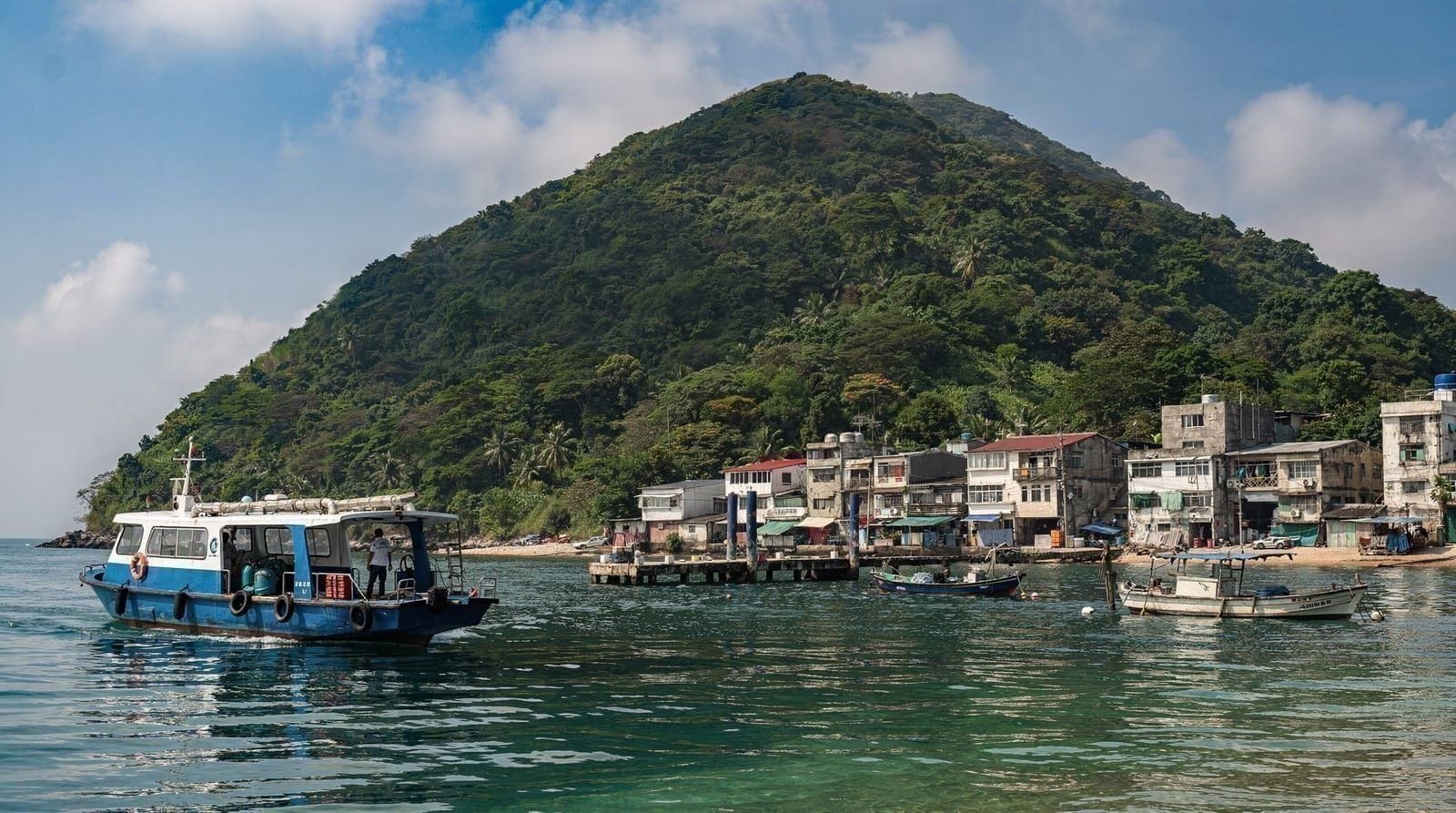
Lamma Island is where Hong Kong people go when they want to slow down. No cars, low-rise buildings, a handful of beaches, and some of the best-value seafood restaurants in the whole territory. The classic route is to arrive at one village, hike across to the other, and eat your way back to the ferry.
Guided Lamma day tour with seafood lunch and village walkingGetting to Lamma
Ferries depart from Central Pier 4 (not Pier 5, which handles Cheung Chau — the two are easy to confuse). The crossing to Yung Shue Wan takes 30 minutes and costs HKD 24.9 (Monday to Saturday) or HKD 34.7 (Sundays and public holidays). The outlying islands ferry guide has full timetable details. Using your Octopus card at the turnstile saves a few dollars over buying a paper ticket.
Ferries run roughly every hour. First departure from Central is around 6:30am; last return from Yung Shue Wan to Central is around 11:30pm — check the current timetable before you go.
Yung Shue Wan village
Yung Shue Wan is the larger of Lamma’s two main settlements. Spend 30–45 minutes walking the main street and the lanes behind it: a mix of small cafes, dive bars, Western-run restaurants, and local grocery shops. It has a resident expat community and a relaxed atmosphere that you notice immediately after the noise of Central.
Lamma Family Trail hike
The Family Trail between Yung Shue Wan and Sok Kwu Wan is 3 km and takes around 1.5 hours at a relaxed pace. The path is well maintained and signed in English. It climbs over a low ridge with views of the Lamma Channel and down to the coastline, then descends to Sok Kwu Wan on the south coast. The route passes Lo So Shing Beach roughly halfway — a small sandy beach that is good for a swim in summer (May to October) with no facilities beyond a basic shower.
Wear proper walking shoes and bring water. The trail is rated easy to moderate: the ascent is not steep, but the path can be muddy after rain.
Seafood lunch in Sok Kwu Wan
Sok Kwu Wan’s waterfront is lined with seafood restaurants with tanks out front displaying live fish, crab, and shellfish. Most restaurants operate on a similar model: choose your fish by weight, choose a cooking style (steamed, fried with garlic, in black bean sauce), and order side dishes of vegetables and fried rice separately.
Reliable choices include garoupa (HKD 180–280 per fish depending on size), tiger prawns (HKD 120–180 per portion), and mantis shrimp (HKD 100–160). Budget HKD 250–450 per person including beer or soft drinks and a few shared dishes. Avoid places that do not display prices clearly.
Aberdeen sampan tour with Lamma seafood lunch includedReturn to Central
Ferries from Sok Kwu Wan go to Central Pier 4 (45 minutes, HKD 30.9 Monday to Saturday or HKD 43.5 Sundays and public holidays) or to Aberdeen on Hong Kong Island (20 minutes, HKD 18). If you have energy, Aberdeen is worth a brief stop for its harbour scene before taking a bus or taxi back to Central.
Day 2 estimated costs: HKD 380–600 per person (ferry HKD 56–78 return, lunch HKD 300–400, beer HKD 60–80) — approximately USD 49–77.
Day 3 — Cheung Chau: pirates, beaches, and street food
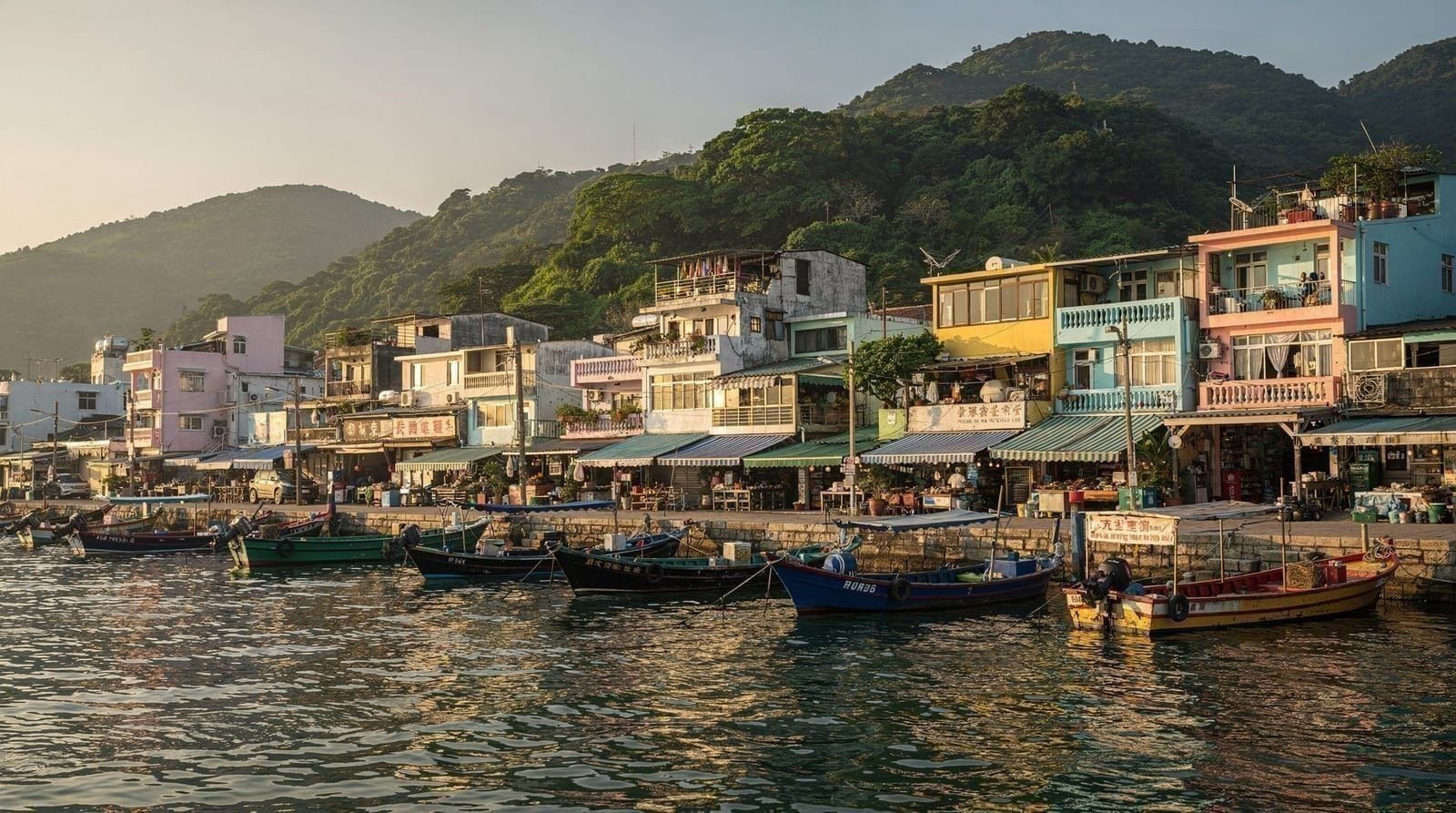
Cheung Chau is the most accessible of Hong Kong’s outlying islands for a day trip and arguably the most immediately enjoyable. It is shaped like a dumbbell — a central isthmus with a beach on each side — and is entirely car-free apart from emergency vehicles. The combination of temples, a pirate cave, a decent beach, cheap street food, and easy cycling makes it the best choice for a relaxed final day.
Getting to Cheung Chau
Ferries depart from Central Pier 5 (one pier over from Lamma). The ordinary ferry takes 55 minutes and costs HKD 16.7 (Monday to Saturday) or HKD 24.8 (Sundays and public holidays); the fast ferry takes 35 minutes and costs HKD 32.9 or HKD 47.6. Both are comfortable — the ordinary ferry has more deck space and is worth the extra 20 minutes. Ferries run roughly every 30–60 minutes throughout the day.
See the full Cheung Chau guide for seasonal tips and timetables.
Pak Tai Temple
From the ferry pier, walk five minutes inland to Pak Tai Temple, one of Hong Kong’s most important Taoist temples dedicated to the God of the Sea. The interior is fragrant with incense and busy with worshippers even on weekday mornings. Entry is free. The temple is particularly famous as the centre of the annual Bun Festival (usually in May), when bamboo towers covered in lucky buns are erected outside.
Cheung Po Tsai Cave
A 20-minute walk from the ferry pier (or 10 minutes by bicycle) brings you to Cheung Po Tsai Cave, named after a 19th-century pirate who allegedly used it as a hideout. The cave is small and requires some scrambling — bring a torch. It is not especially impressive underground, but the walk along the rocky southern shoreline to reach it is excellent, with views across to Lamma and the open South China Sea.
Tung Wan Beach
Tung Wan Beach, on the east side of the isthmus, is Cheung Chau’s main swimming beach. It is clean, has lifeguards in summer (June to October), and is rarely as crowded as beaches on the main island. Water temperature is comfortable for swimming from May through to November. The beach has basic changing facilities and a couple of snack stands.
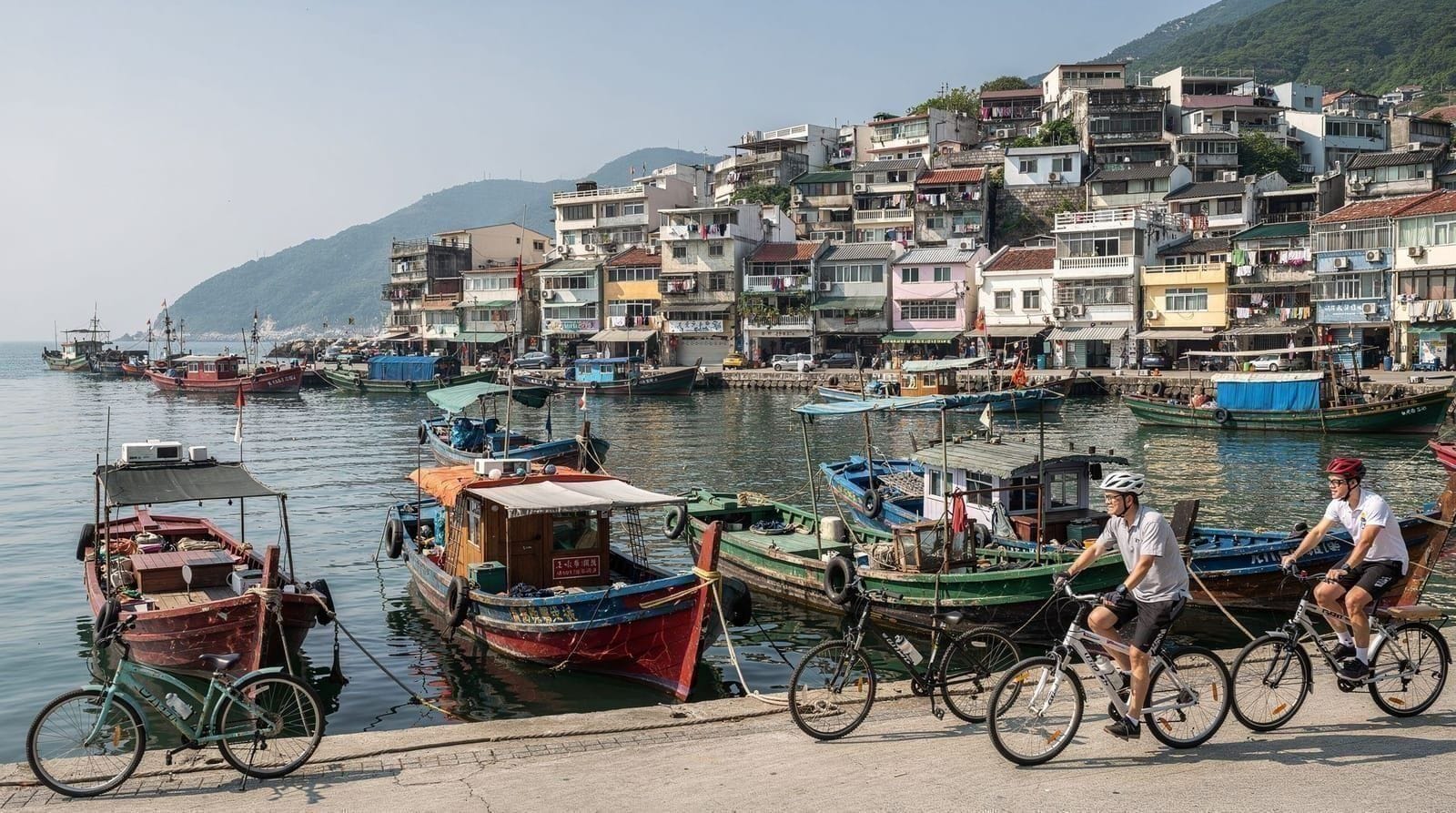
Cycling Cheung Chau
Bicycles are available to rent from several shops near the ferry pier and along the promenade. Rates are HKD 50–80 per hour, or HKD 120–180 for a half day. Cheung Chau is small enough to circle on a bicycle in 45 minutes, and the flat central strip makes it easy even for infrequent cyclists.
Guided Cheung Chau walking tour with local commentaryStreet food on the promenade
The promenade along the western waterfront is the main street food strip. Look for:
- Fish balls: HKD 10–15 for a skewer of four to six, served curry or plain
- Mango ice: shaved ice with fresh mango and condensed milk, HKD 35–50 depending on size
- Cheung Chau-style tofu fa: silken tofu with ginger syrup, HKD 18–25
- Grilled squid: HKD 20–35 per piece, sold from seafront stalls
Most stalls are cash only. A reasonable street food lunch comes to HKD 80–130 per person.
Return to Central
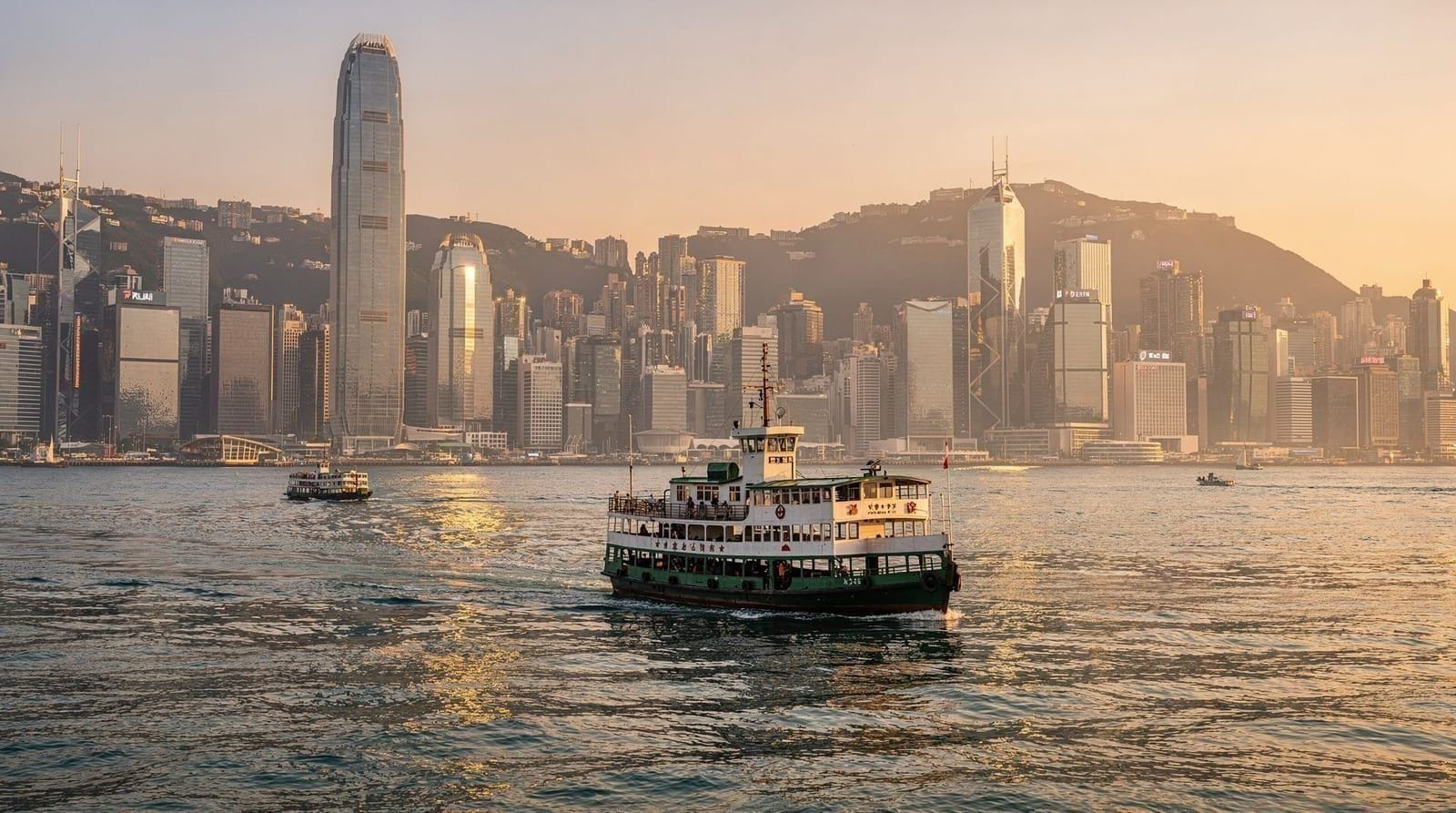
Last fast ferries from Cheung Chau depart around 11:30pm. There is no reason to stay that late — leave by 5pm to avoid the commuter crush on the return crossing, which can see standing room only on ordinary ferries. Back in Central, the Star Ferry across to Tsim Sha Tsui is a fitting end to three days on the water.
Day 3 estimated costs: HKD 250–360 per person (return ferry HKD 35–95 depending on service and day, bicycle HKD 120, food HKD 100–150) — approximately USD 32–46.
Practical information
Ferry terminal logistics
All outlying island ferries depart from the Central Ferry Piers, numbered 2 through 7. The piers are a five-minute walk from Hong Kong Station (Airport Express / Tung Chung Line) or a ten-minute walk from Central MTR station. Pier 4 is Lamma; Pier 5 is Cheung Chau; Ngong Ping 360 for Lantau starts from Tung Chung (via MTR, not ferry). Tap your Octopus card at each turnstile — paper tickets cost slightly more and involve queuing at a machine.
The Octopus card guide explains how to top up, where the card works, and how to get a refund at the end of your trip.
Weather and best time to visit
April and May and October and November are the best months for island hopping: mild temperatures, lower humidity, and reduced typhoon risk. The Cheung Chau Bun Festival (usually May) adds a genuine local spectacle to Day 3.
June to September is hot (32–35°C / 90–95°F) and humid, with afternoon thunderstorms and occasional typhoons. The cable car closes in strong winds. Swimming is excellent in this period, but plan outdoor hiking for mornings and carry significantly more water than you think you need. See the full best time to visit guide for month-by-month detail.
December to February is comfortable for hiking but too cold for swimming. Shorter daylight hours mean you may not complete the full Lamma hike in comfortable light if you take a late ferry.
What to bring
- Sunscreen (essential from April through October — the ferry decks offer no shade)
- Comfortable walking shoes with grip for the Lamma trail and Cheung Po Tsai Cave
- Swimsuit and small towel if visiting June–October
- Cash for street food stalls — most do not accept Octopus or cards
- A small daypack with water (buy on the ferry or at convenience stores near each pier)
Budget summary
This three-day itinerary sits comfortably in the mid-range bracket. Daily spend averages HKD 300–500 per person for transport and food, plus the cable car ticket on Day 1. For a detailed breakdown of costs across the whole trip, see the Hong Kong budget guide.
For context on where to base yourself during this itinerary — Central is the most convenient neighbourhood for early ferry departures — the where to stay guide covers the main options by district and budget.
Frequently asked questions about this 3-day Hong Kong itinerary
Can I do all three islands in one day?
No — not in any meaningful way. Lantau alone takes a full day if you include both Ngong Ping and Tai O. Lamma’s hiking route and seafood lunch require at least five to six hours on the ground. Cheung Chau is the most compact, but even there you want three to four hours to see more than the ferry pier. Attempting all three in one day would mean spending most of it on ferries and arriving at each place too late or leaving too early. Three separate days is the right approach.
What is the best season for island hopping in Hong Kong?
April to May and October to November give the best combination of manageable weather and open conditions. Spring brings clear skies and temperatures in the mid-20s Celsius; autumn is similar with slightly less rainfall. Summer (June–September) offers warm sea temperatures for swimming but comes with typhoon risk, high humidity, and the possibility of the Ngong Ping cable car shutting mid-day. Winter (December–February) is pleasant for hiking but cold for the beach.
Are there ATMs on the outlying islands?
Yes, but fewer than in urban Hong Kong. Yung Shue Wan on Lamma has two ATMs near the ferry pier. Cheung Chau has several ATMs on the main promenade. Tai O on Lantau has limited banking facilities — withdraw cash in Tung Chung before boarding the cable car. Street food stalls and smaller restaurants on all three islands are cash only.
Is the cable car always open?
No. The Ngong Ping 360 cable car closes when wind speeds exceed safety thresholds, which happens most frequently during typhoon season (June–September). It also closes for periodic maintenance. Check the Ngong Ping 360 website on the morning of your visit before heading to Tung Chung. If it is closed, Bus 23 from Tung Chung bus terminus reaches Ngong Ping in around 45 minutes — slower and less scenic, but a perfectly functional alternative.
Is it safe to swim at Lamma Island beaches?
Lo So Shing Beach on the Lamma Family Trail is generally safe for swimming from May to October. It has no lifeguard, so swim with caution if the sea is rough. The beach does not have shark nets, which is standard for most Hong Kong outlying island beaches — shark incidents are extremely rare but the absence of nets is worth noting. Check the Hong Kong government beach advisory for water quality ratings before swimming; Lo So Shing consistently scores in the acceptable to good range.
Do I need to book lunch at Po Lin Monastery in advance?
No. The vegetarian canteen at Po Lin Monastery operates on a walk-in basis. Arrive before 12:30pm for the best chance of a table without waiting. The canteen closes around 1:30–2pm. There is no booking system. If it is full, a few small snack stalls near the cable car terminal sell noodles and drinks as an alternative, though quality is lower.
Which island is best for families with young children?
Cheung Chau is the easiest island for families with young children. It is flat, entirely car-free, has a good sandy beach, and the bicycle hire means no long walks are required. The ferry crossing (35–55 minutes) is manageable even for children prone to seasickness. Lamma’s hiking trail has some uneven terrain that can be difficult with a stroller or very young children. Lantau’s 268 steps to the Buddha base are manageable for most children over five, but the full day — cable car, monastery, Tai O, return — is long for small kids. See the Hong Kong family itinerary for a fully planned route with children in mind.
Can I visit Peng Chau instead of one of these three islands?
Yes, and it makes a reasonable substitute for Cheung Chau if you want something quieter and less developed for tourism. Peng Chau is smaller, car-free, and has a more residential feel with fewer visitors, but it also has less to actually do — no equivalent to the Bun Festival history or Cheung Po Tsai Cave, and a smaller food scene. Ferries run from Central Pier 6, roughly every hour. It suits travellers who have already done Cheung Chau on a previous trip and want a quieter alternative rather than first-timers choosing between the two.
Do I need to book ferry tickets in advance?
No. Outlying island ferries operate on a walk-up basis with an Octopus card or cash at the pier — there is no advance booking system for the regular scheduled services. The only exception is around major holidays (Chinese New Year, the Cheung Chau Bun Festival) when queues can be long enough that arriving 20–30 minutes before departure is worth doing. On a normal day, arriving 5–10 minutes before the scheduled sailing is enough.
What happens if I miss the last ferry back?
It is worth planning around rather than relying on a rescue option. Lamma and Cheung Chau both have accommodation — guesthouses and small hotels — if a missed last ferry becomes an overnight stay, and both islands are pleasant enough that an unplanned night is not a disaster, just an unbudgeted one. Lantau is different: Tung Chung connects back to the MTR network until late, so “missing the last ferry” is not really a risk there, since there is no ferry involved on the standard cable car route. For Lamma and Cheung Chau, build in a 30–45 minute buffer before the last scheduled sailing rather than cutting it close, particularly after a seafood dinner that tends to run long.
How this itinerary connects to the rest of Hong Kong
If you are visiting Hong Kong for more than three days, this island itinerary pairs naturally with a 3-day Hong Kong itinerary covering the urban highlights on Hong Kong Island and Kowloon, giving you a six-day trip with real variety. For a longer stay, the 4-day Hong Kong itinerary integrates one island day into a broader urban programme.
Arriving from the airport? The airport to city guide explains the Airport Express and bus options, and how to get your Octopus card before leaving the terminal. If this is your first visit to Hong Kong, the first-time Hong Kong guide covers the practical basics — transport, money, tipping, and what to expect — before you start planning days.
For context on how many total days to budget, see how many days in Hong Kong — the short answer for an itinerary that includes the outlying islands properly is at least five to six days total.
Which island to prioritise if you only have one day
Not everyone has three full days for islands. If you have to choose one, the decision usually comes down to what you want most. Lantau is the obvious pick for a first-time visitor who wants the single most iconic sight — the Tian Tan Buddha is genuinely worth the cable car queue, and Tai O gives you a fishing village most tourists never see.
Lamma is the better choice if hiking and a proper seafood lunch matter more than a landmark; it is also the least crowded of the three on an average weekday. Cheung Chau wins for families or anyone who wants a beach day with minimal planning — it is the most forgiving island if you arrive without a fixed plan. The Hong Kong outlying islands guide compares all the accessible islands, including a few this itinerary does not cover, like Peng Chau.
Combining an island day with a half-day back in the city
None of these three days need to run a full 12 hours. Lamma and Cheung Chau in particular can be compressed into a half-day if you catch an early ferry and are back in Central by early-to-mid afternoon, leaving time to fold in a couple of hours in Central and Sheung Wan or a Star Ferry crossing to Tsim Sha Tsui before dinner. Lantau is harder to compress — between the cable car queue, the Buddha, the monastery, and Tai O, a rushed version means cutting one of the four, and Tai O is usually the first thing to go if time is tight, even though it is arguably the most memorable part of the day.
Top experiences
Bookable activities with verified prices and instant confirmation on GetYourGuide.