Cheung Chau guide — beaches, pirate caves, and Hong Kong's car-free island
Hong Kong: Cheung Chau Island walking day tour
How do I get to Cheung Chau from Hong Kong?
Catch the ferry from Central Pier 5. The slow ferry takes 55 minutes and costs HKD 16.7 (Sunday and holidays HKD 24.8); the fast ferry takes 35-40 minutes and costs HKD 32.9 (Sunday and holidays HKD 47.6). Fares are one way, adult, Monday-Saturday vs Sunday/holiday. Both accept Octopus card. Ferries run throughout the day. Cheung Chau has no private cars — getting around is by foot, rented bicycle, or the island's hand-pulled delivery trolleys.
| Where | Southwest of Hong Kong Island, 35–55 min by ferry from Central Pier 5 |
| Cost | HKD 16.7–32.9 one-way ferry (Mon–Sat; HKD 24.8–47.6 on Sundays and holidays); food and bicycle rental from HKD 15 |
| Time needed | Full day (6–8 hours including ferry) |
| Getting there | Sun Ferry (HKKF) from Central Pier 5, Octopus accepted |
| Best for | Beaches, street food, families, the Bun Festival (April/May) |
Why Cheung Chau surprises most visitors
Hong Kong is a city defined by density, by motion, by the layering of a hundred things into any available space. Cheung Chau is the opposite of all of that, and reaching it takes 35-55 minutes by ferry from Central.
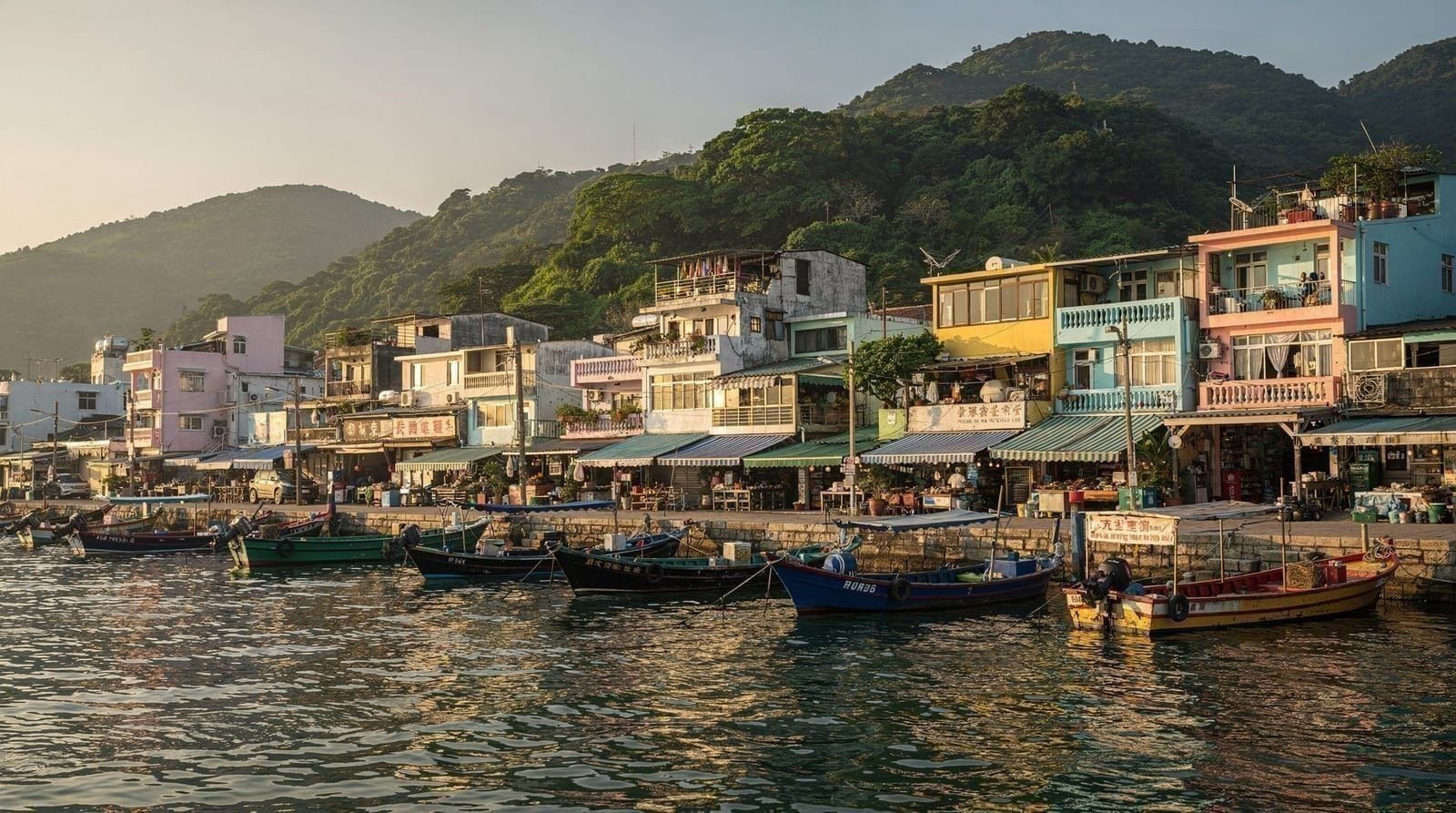
The island is shaped like a cartoon dumbbell: two hilly headlands connected by a narrow strip of reclaimed land where the main village sits, facing a harbour full of fishing boats and small pleasure craft. There are no private cars. The streets of the village are narrow enough that a handcart is the widest practical vehicle. The beach is a short walk from the ferry pier. The street food stalls start at HKD 15 a stick. The pace is set by the tide and the ferry schedule, not by the MTR.
Cheung Chau is popular — it draws Hong Kong families on weekends who come for the beach and the fish balls, and visitors who arrive expecting a tourist attraction and find instead a functioning fishing community with a pleasant beach attached. It is one of the islands that most visitors, once they have been, return to rather than ticking off a list.
Cheung Chau also fits neatly into a wider plan. If you are still deciding how to spread your time, the Hong Kong itinerary planning guide shows where an easy island day sits between the busier city days, and the Hong Kong islands itinerary strings several islands together. The Cheung Chau destination page gives a short overview if you want the essentials before reading on.
Getting there: the ferry from Central Pier 5
All Cheung Chau ferries depart from Central Pier 5, operated by Sun Ferry (HKKF). Two service types:
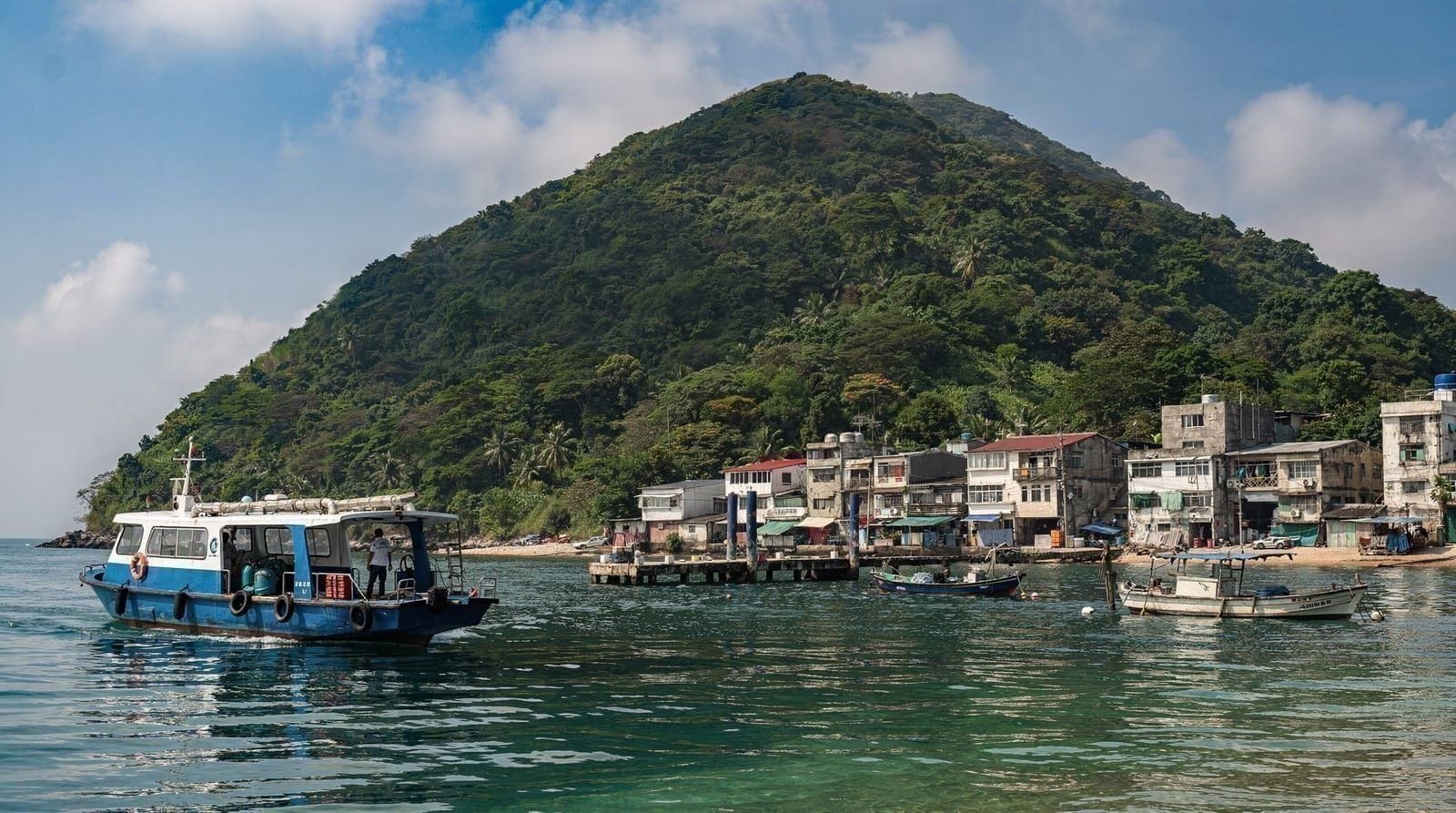
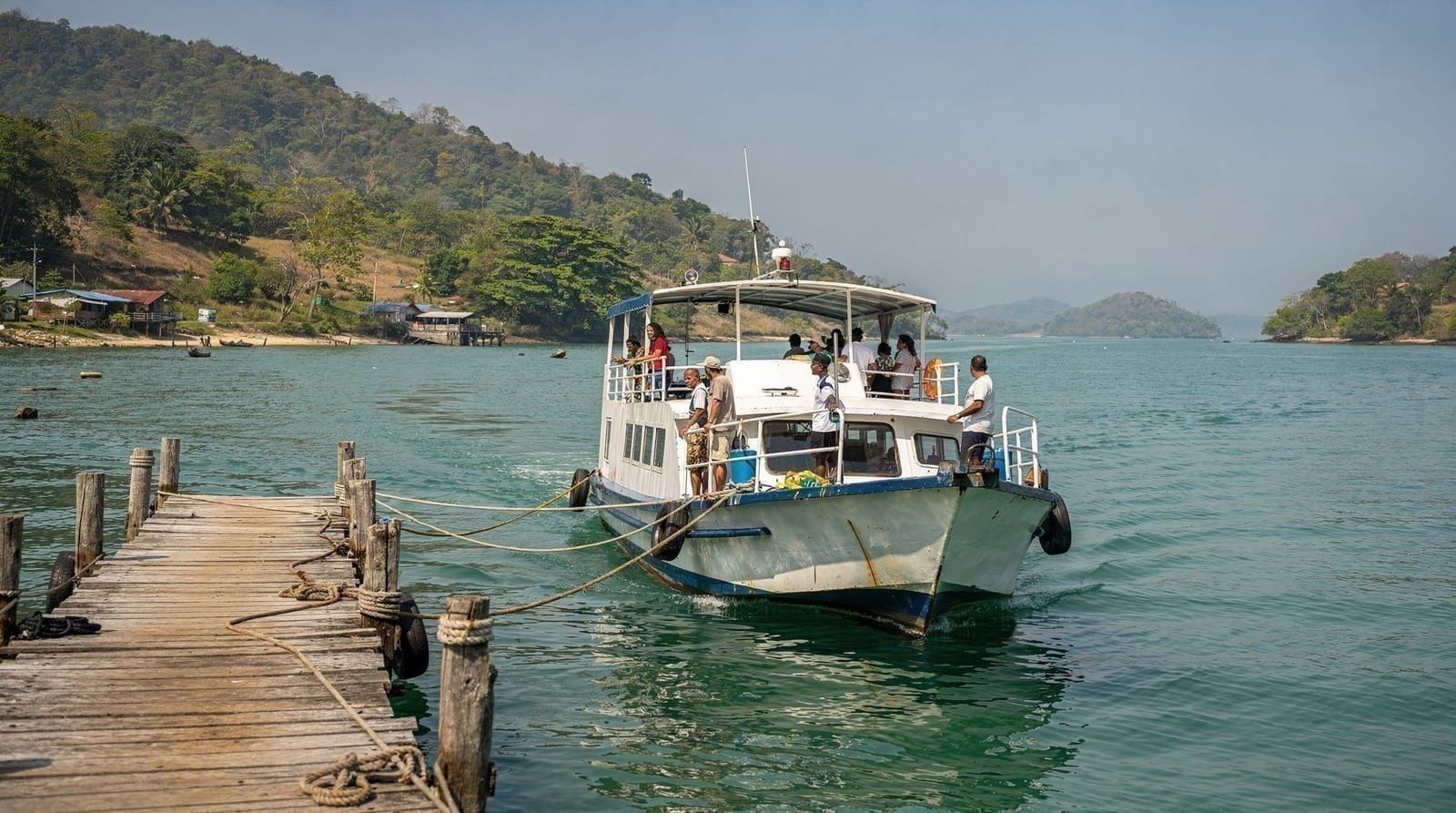
Slow ferry: Approximately 55-60 minutes, HKD 16.7 adult one way Monday to Saturday, HKD 24.8 on Sundays and public holidays (deluxe class HKD 26.1 / 38.0). The slow ferry is a large, comfortable vessel with air-conditioned indoor seating and an outdoor deck. The journey gives good views of the outer harbour and the gradually receding city skyline. The outdoor deck is pleasant in the morning and evening but exposed to sun at midday.
Fast ferry: Approximately 35-40 minutes, HKD 32.9 adult one way Monday to Saturday, HKD 47.6 on Sundays and public holidays. The fast ferry uses smaller, higher-speed vessels with enclosed seating. The time saving is real (20 minutes), but the ride is noisier and less scenic. Worth it if you are travelling in the heat of the day or want to maximise time on the island.
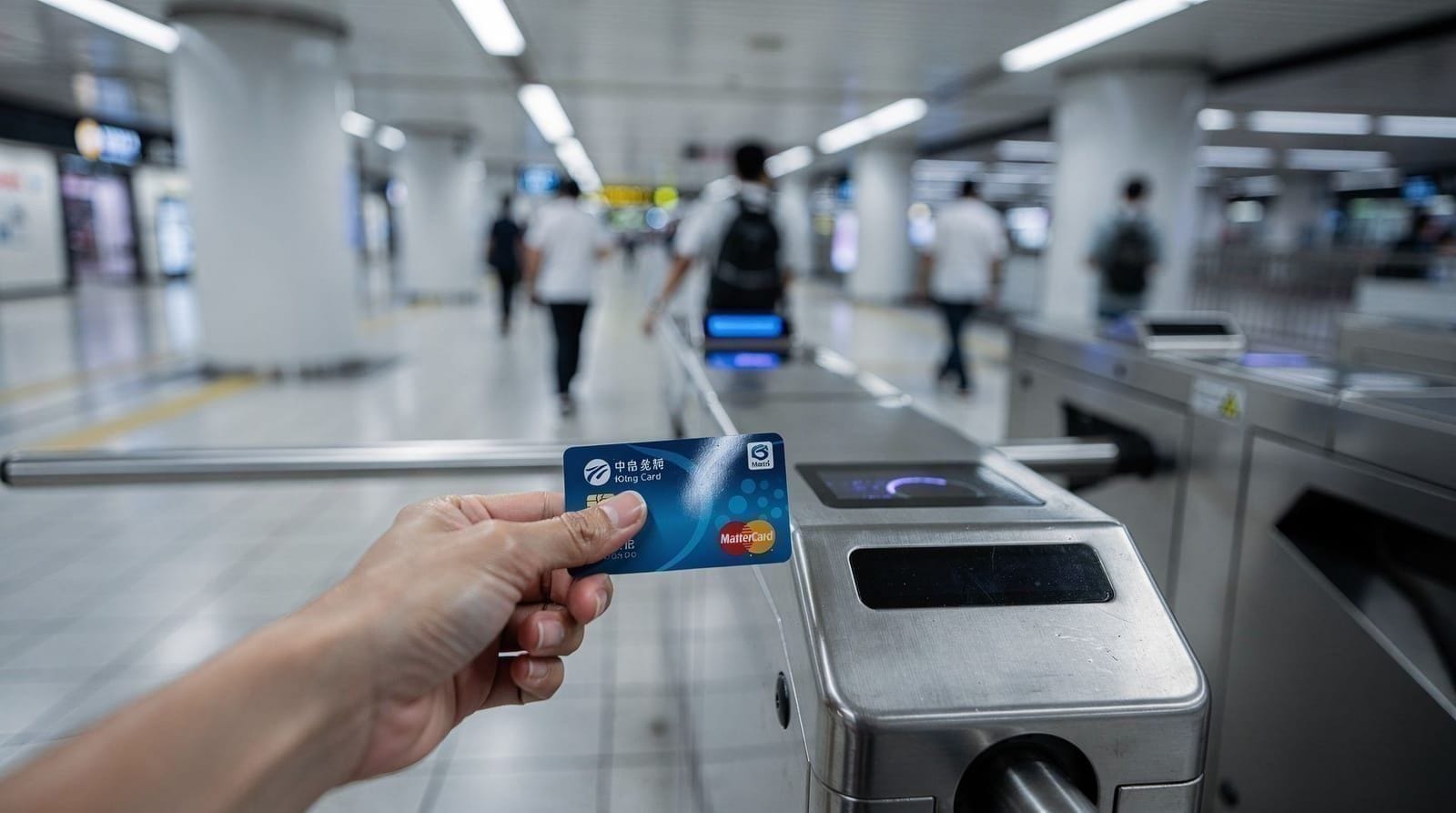
Octopus card is accepted at both the turnstile and the handheld reader for cash top-ups. If you have an Octopus card (which you should — see the Octopus card guide), boarding is seamless.
Frequency: Ferries run throughout the day from approximately 6:30am to 11:30pm (last sailing from Cheung Chau back to Central is usually around 11:30pm on weekdays, with a 12:30am sailing on weekend nights). Check Sun Ferry’s website or the CityMapper app for the current timetable before your visit.
Return timing: The 5-7pm sailings on weekends are the most crowded. If your day allows, aim for an earlier or later return — the 7:30pm and 8pm ferries are often nearly empty.
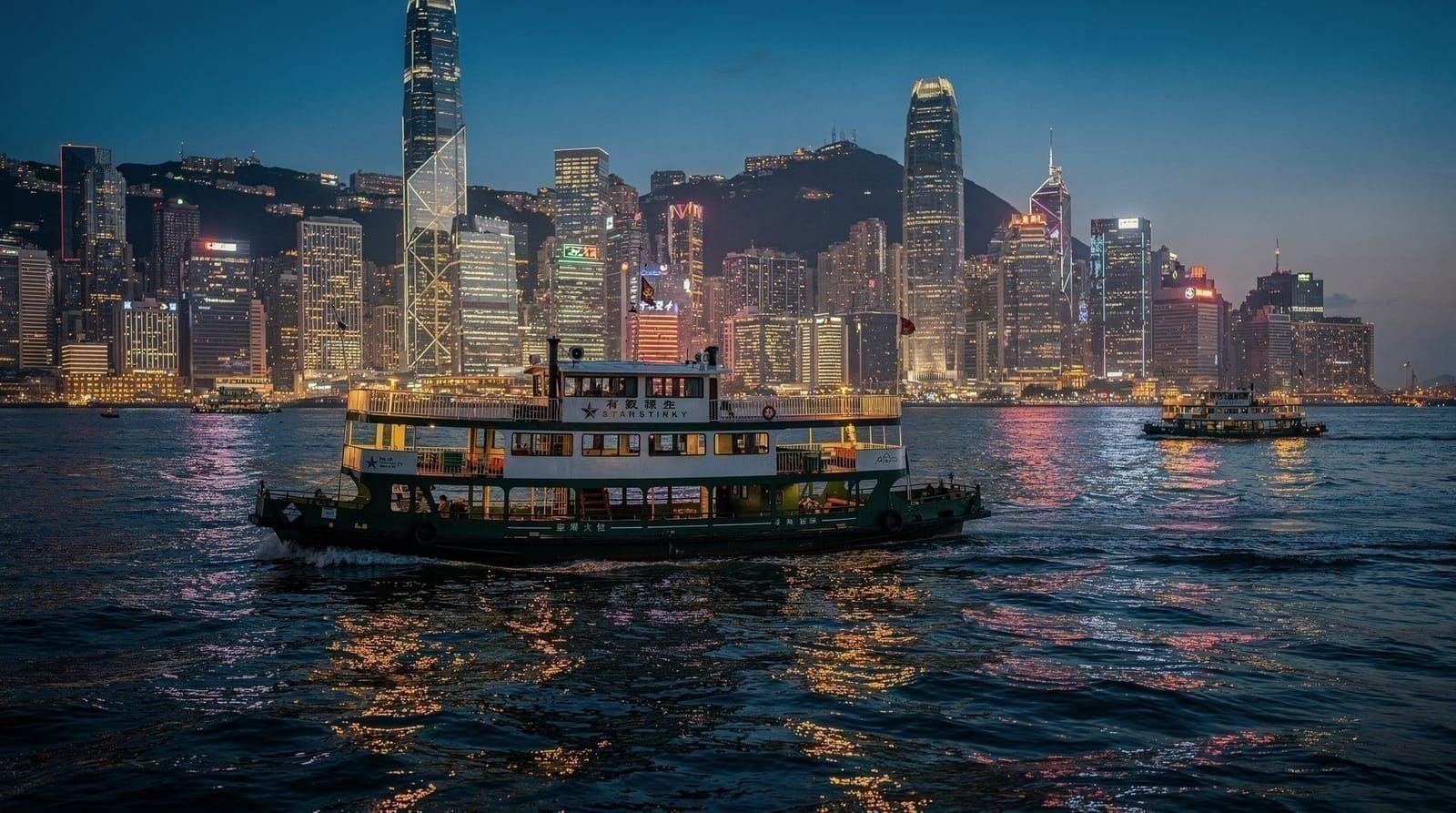
If you get back to Central with energy left, an evening on the water makes a fitting end to an island day, for example a Star Ferry evening cruise across Victoria Harbour to see the skyline lit upCheck availability. The Symphony of Lights guide explains what to expect from the show.
Arriving at Cheung Chau: the first 15 minutes
The ferry docks at the main pier on the western side of the island’s waist. The first thing you notice stepping off is the absence of engine noise — no cars, no motorcycles, just the clatter of handcarts, the sound of the morning market, and whatever music the nearest tea house is playing.
The main promenade runs along the harbour waterfront from the pier northward to the fish market and southward toward the southern residential streets. The village market — covered stalls selling vegetables, fresh fish, and live produce — is immediately behind the waterfront, one block inland.
Bicycle rental shops are clustered near the ferry pier exit, charging HKD 50-80/day for standard bicycles, HKD 80-120 for a tandem. Helmets are not required by law but can be borrowed. Cycling on Cheung Chau is pleasant along the flatter sections of the island; the hills in the north and south headlands make the bicycle less useful for the outlying sights but fast and fun for the waterfront promenade.
Tung Wan Beach
A 10-minute walk east through the village leads to Tung Wan Beach — the main beach, facing the eastern open sea toward the Soko Islands. Tung Wan is wide (about 300 metres), with fairly clean sand and gentle waves that are calm in summer and more energetic in autumn. Lifeguards operate from April 1 to October 31.
Beach facilities include: changing rooms, showers, toilets, and a small refreshment kiosk open in the warmer months. Sun lounger rental is not widely available (unlike Thai or Mediterranean beaches) — bring your own towel and find your spot on the sand.
The beach gets busy on summer weekend afternoons, mostly with Hong Kong families. Arriving before 11am or after 4pm gives you more space. On weekday mornings in July and August, Tung Wan is remarkably uncrowded for a beach this close to a major city.
Kwun Yam Wan and Italian Beach
West of the village, past the Pak Tai Temple, Kwun Yam Wan is a smaller, crescent-shaped bay popular with windsurfers (the Cheung Chau Windsurfing Centre is based here). The beach is rockier than Tung Wan but more sheltered and very quiet on weekdays.
Italian Beach (officially Sai Wan Beach) is the most secluded option — a 20-25 minute walk south from the main village through a residential lane and then a short path. The beach is small, uncrowded, and shaded by trees at the edges. The name apparently comes from the shape of the bay rather than any Italian connection. It is the beach to recommend to travellers who want to escape the small crowd that even the quieter Kwun Yam Wan can attract on weekends.
Pak Tai Temple
The Pak Tai Temple is Cheung Chau’s most significant religious site — a Taoist temple dedicated to the northern deity Pak Tai, who is believed to have saved the island from a plague in the mid-18th century (the origin story of the Bun Festival). The current temple dates to 1783 and is in active use.
Entry is free. The temple is colourful and aromatic with burning incense, and its main hall contains a 1,000-year-old iron statue of Pak Tai that was reportedly found in the sea. On the eighth day of the fourth lunar month (the main festival day), the temple becomes the centre of the island’s most dramatic annual event.
The temple is about a 10-minute walk west of the ferry pier along the waterfront promenade.
If temples are a highlight for you, Pak Tai makes a small, human-scale contrast to the grander city sites described in the Man Mo Temple guide and the Wong Tai Sin Temple guide. Here the setting is a working island community rather than a stop on a tour route, which is much of its charm.
Cheung Po Tsai Cave
On the southwestern headland of the island, a 30-40 minute walk south from the village, Cheung Po Tsai Cave is a narrow rock passage in the cliff face associated with the pirate Cheung Po Tsai (1786-1822). Cheung Po Tsai commanded a confederation of pirate fleets in the South China Sea that at its peak reportedly comprised 1,800 vessels and 80,000 men — one of the largest pirate operations in recorded history. His fleet used Cheung Chau as a base, and the cave is said to have been his personal hiding place for treasure and himself.
The cave entrance is narrow — one person at a time — and requires crouching to enter the first section. A torch or phone flashlight is useful inside. The cave is not long (maybe 20-30 metres) and opens into a small chamber. Entry is free.
Getting there: walk south from the village through the residential streets and follow the signs for “Cheung Po Tsai Cave” — these appear at intervals once you pass the main market area. The walk passes through a pleasant southern residential section of the island with harbour views.
Cheung Chau Windsurfing Centre and Lee Lai Shan
Near Kwun Yam Wan, the Cheung Chau Windsurfing Centre is where Lee Lai Shan trained before winning a gold medal in windsurfing at the 1996 Atlanta Olympics — Hong Kong’s only Olympic gold. A small monument near the water marks the achievement, and the centre still runs windsurfing lessons and rentals for visitors. Equipment hire starts at around HKD 150-200/hour; lessons are available for beginners.
Lee Lai Shan’s win was significant beyond the sport — it came just before the 1997 handover and was widely celebrated as a moment of Hong Kong identity and pride. The windsurfing centre is a modest but meaningful piece of local history.
Street food on Tung Wan Road
The cluster of stalls along Tung Wan Road between the ferry pier and the beach is the primary eating experience on Cheung Chau and one of the most enjoyable street food experiences in Hong Kong.
Fish balls (yu daan): Bouncy, pale spheres of fish paste on bamboo skewers, available boiled (in light broth) or fried. HKD 15-25 for a portion of 4-5.
Curry squid: Tender squid in a fragrant curry sauce, sold in small paper cups. HKD 20-30.
Siu mai: Open-topped steamed dumplings, slightly more rustic than the dim sum versions, sold from steamers on the street. HKD 15-25 for five or six.
Shaved ice with mango: The Cheung Chau version is often described as Hong Kong’s best — a mountain of shaved ice over fresh mango, mango sauce, and coconut milk, for HKD 35-50. Most stalls along the road offer their own version; the lines indicate which are favoured by locals.
If the stalls here whet your appetite, the best street food in Hong Kong guide covers what to look for back in the city, and the Hong Kong food tours guide is useful if you would rather eat with a guide.
Beef rice noodle rolls (cheung fun): Broad rice noodles wrapped around beef and served with soy sauce, available from push-carts near the pier. HKD 20-30.
Back on Hong Kong Island or in Kowloon, you can keep eating in the same spirit on a local-led street food walk through the city’s dim sum and wonton spotsCheck availability, a good follow-up if the island stalls were your favourite part of the day.
The Bun Festival — worth planning a trip around
The Cheung Chau Bun Festival (Tai Ping Ching Chiu) is one of Hong Kong’s most spectacular annual events. It occurs in late April or May on the eighth day of the fourth lunar month — the exact date varies each year and is announced by the Cheung Chau Rural Committee in advance.
The festival runs for five days. The main sights:
Bun towers: Three bamboo towers roughly 14 metres tall, built in front of Pak Tai Temple, covered in thousands of pink-and-white lucky buns made of steamed dough. The towers are installed about a week before the festival and dismantled after.
Parade of floats: Children dressed as deities and historical figures appear to float above the street — they are actually supported by hidden frameworks held by adults, which makes the illusion striking even up close.
Bun scrambling competition: At midnight on the final festival day, competitors race to climb the bun towers and grab as many lucky buns as possible from as high as possible. Higher buns score more points. This part of the festival was revived in 2005 after a tower collapse ended the original competition in 1978.
The island reaches capacity during the Bun Festival. Ferries are packed and ferry operators add special sailings; book early. Arriving before 9am on the parade days gives the best experience with manageable crowds.
Where to stay if you extend past a day trip
Cheung Chau’s guesthouses cluster in the village near the ferry pier and along the waterfront promenade, with a smaller number near Tung Wan Beach. Simple guesthouse rooms run HKD 400-800 per night; a handful of boutique-style options near the beach charge more for a sea view. Booking ahead matters most around the Bun Festival and summer weekends, when the island’s limited rooms sell out well before the day itself. Staying overnight also means you can catch sunrise over Tung Wan or a quiet early walk to the Cheung Po Tsai Cave before the day-trip crowds arrive on the mid-morning ferries.
For travellers weighing whether to base themselves on an outlying island at all rather than in the city, the outlying islands guide covers the trade-offs — generally slower evenings and fewer dining options, in exchange for a genuinely different pace than Central or Tsim Sha Tsui.
Organised day tours of Cheung Chau
This guided walking day tour of Cheung Chau covers the pirate cave, Pak Tai Temple, Tung Wan Beach, and the street food stalls with a local guide who explains the island’s history and culture in context.Check availabilityFull day itinerary
9:00am: Catch fast ferry from Central Pier 5
9:35am: Arrive Cheung Chau, rent bicycle
9:45am: Ride to Kwun Yam Wan and Windsurfing Centre
10:30am: Walk south to Cheung Po Tsai Cave
11:30am: Return north through village, visit Pak Tai Temple
12:00pm: Street food lunch on Tung Wan Road
1:00pm: Beach time at Tung Wan (swim in summer)
2:30pm: Explore village lanes, shop for local goods
3:30pm: Italian Beach walk (optional 50-min round trip)
4:30pm: Return bicycle, wait at pier
5:00pm: Slow ferry back to Central
Practical tips
What to bring: Sunscreen (the beach has limited shade), swimwear and towel in summer, cash for street stalls (most are cash-only), and comfortable walking shoes or sandals. The island is very walkable in trainers.
ATMs: There are ATMs on Cheung Chau near the main ferry pier area — easier to access than on Lamma or the smaller islands. Still, withdrawing in Hong Kong before you go is cleaner.
Children: Cheung Chau is genuinely excellent for families. The beach, bicycles, fish balls, pirate cave, and the novelty of no cars makes it a child-scale adventure. Even the festival is manageable with young children during the daytime events.
Weather: The beach is best June to early October for swimming. November to March is cooler and clear — good for walking the trails, less good for the beach. Typhoon season (May-October) occasionally disrupts ferry services; the typhoon season guide explains what to expect and how to adjust your plans.
Travelling with children: The Hong Kong with kids guide puts a Cheung Chau day in context alongside other family-friendly outings, and the beaches guide compares Tung Wan with the other beaches around the territory.
For the complete island ferry overview including inter-island routes, see the Hong Kong island ferries guide.
Best time to visit, month by month
| Months | Conditions | Notes |
|---|---|---|
| Jun–early Oct | Warm sea, 27–32°C | Best for swimming; busiest on weekends; occasional typhoon disruption |
| Apr–May | Mild, 22–27°C | Bun Festival period — spectacular but very crowded, book ferries early |
| Nov–Mar | Cool, 15–21°C | Best for the pirate cave walk and hiking; too cool for most swimmers |
For a broader comparison of Hong Kong’s outlying islands and which suits your trip, see the outlying islands guide and the best day trips from Hong Kong guide.
Is Cheung Chau worth it?
Frequently asked questions about Cheung Chau guide — beaches, pirate caves, and Hong Kong's car-free island
How far is Cheung Chau from Hong Kong?
Are there really no cars on Cheung Chau?
What is the Cheung Chau Bun Festival?
What beaches does Cheung Chau have?
Where is the Cheung Po Tsai Cave?
What should I eat on Cheung Chau?
Is Cheung Chau good for families with children?
Can I stay overnight on Cheung Chau?
How does Cheung Chau compare to Lamma Island?
Is Cheung Chau busy every day or just on weekends?
Top experiences
Bookable activities with verified prices and instant confirmation on GetYourGuide.