Hong Kong food tours — guided tastings worth booking
Hong Kong: Private food tour 10 tastings with locals
Are food tours in Hong Kong worth it?
For first-timers, a food tour is genuinely useful — guides take you to spots that are hard to find without Cantonese language skills or local knowledge, and the context makes eating more interesting. The best format is a walking tour of 4–6 hours with 8–12 tastings covering both cha chaan teng and street food culture. Budget around HKD 500–900 (USD 65–115) per person for a quality tour.
When a food tour is worth the money
Hong Kong’s food culture is extraordinary but not always easy to navigate independently. The language barrier is real — many of the best local spots have menus only in Chinese. The geography of quality eating is not aligned with tourist zones — the best cheap dim sum is often a 15-minute walk from any hotel. A food tour with a knowledgeable local guide solves both problems.
The argument against food tours: you pay significantly more for the same dishes than you would eating independently. A wonton soup that costs HKD 45 at a noodle shop will be “included” in a food tour that costs HKD 700 per person. The cost is partly for the food and partly for the curation, context, and access.
For most first-time visitors who want to understand what they are eating and where to go back to independently, the cost is justified. For independent travellers who research thoroughly and can read a Chinese menu (or are comfortable pointing at pictures), going solo is more economical.
| Format | Group walking, dim sum experience, private, or cooking class |
| Duration | 2.5–8 hours depending on format |
| Cost | HKD 400–900/person (group); HKD 2,000–5,000 (private, 2-4 people) |
| Best for first-timers | Half-day morning street food + dim sum tour |
| Booking window | 2–7 days ahead (group), 5–14 days (private) |
| Weather risk | Outdoor tours affected June–September (typhoon season) |
What the different tour formats deliver
Street food walking tours (4–6 stops, 2.5–4 hours)
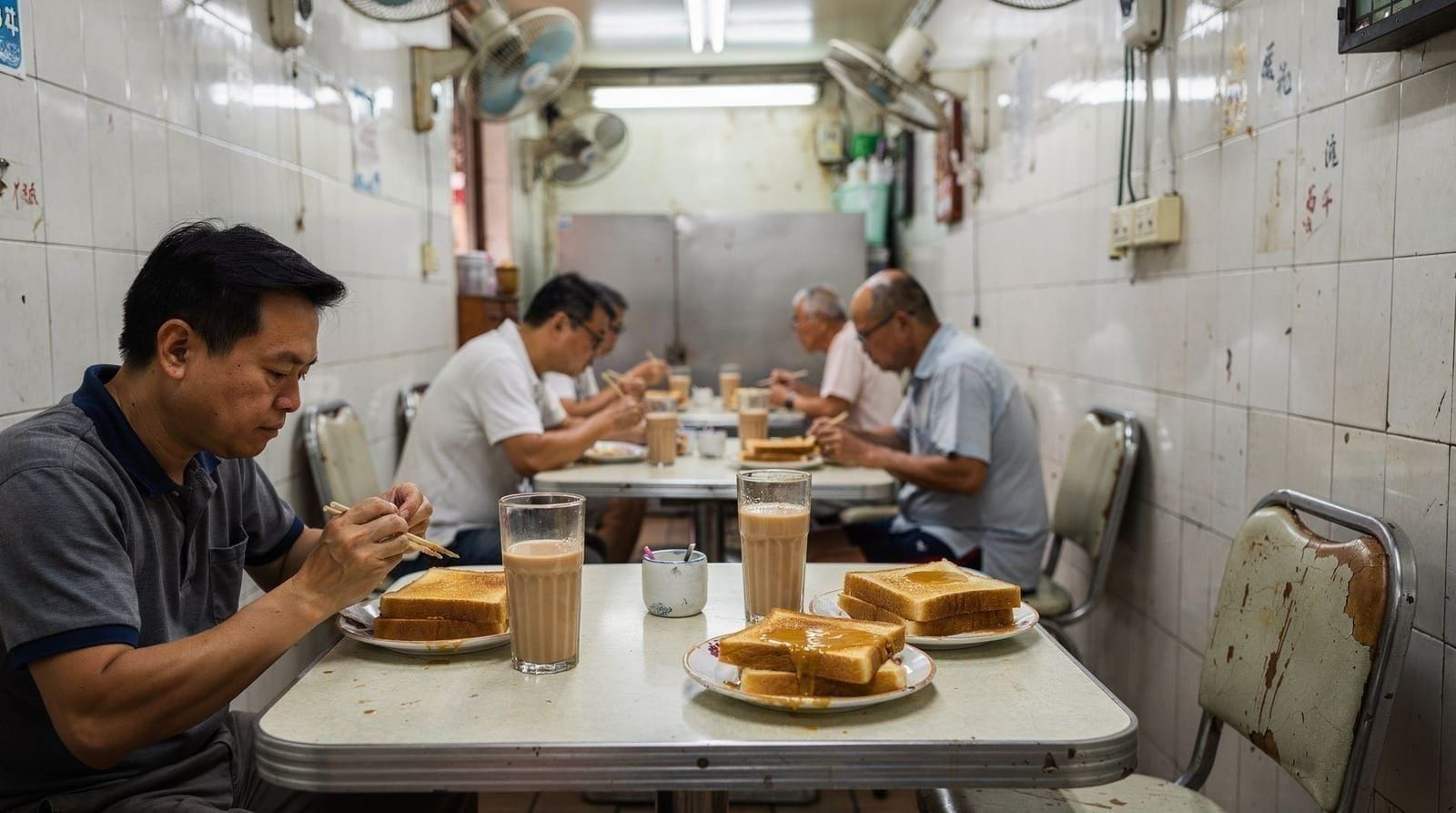
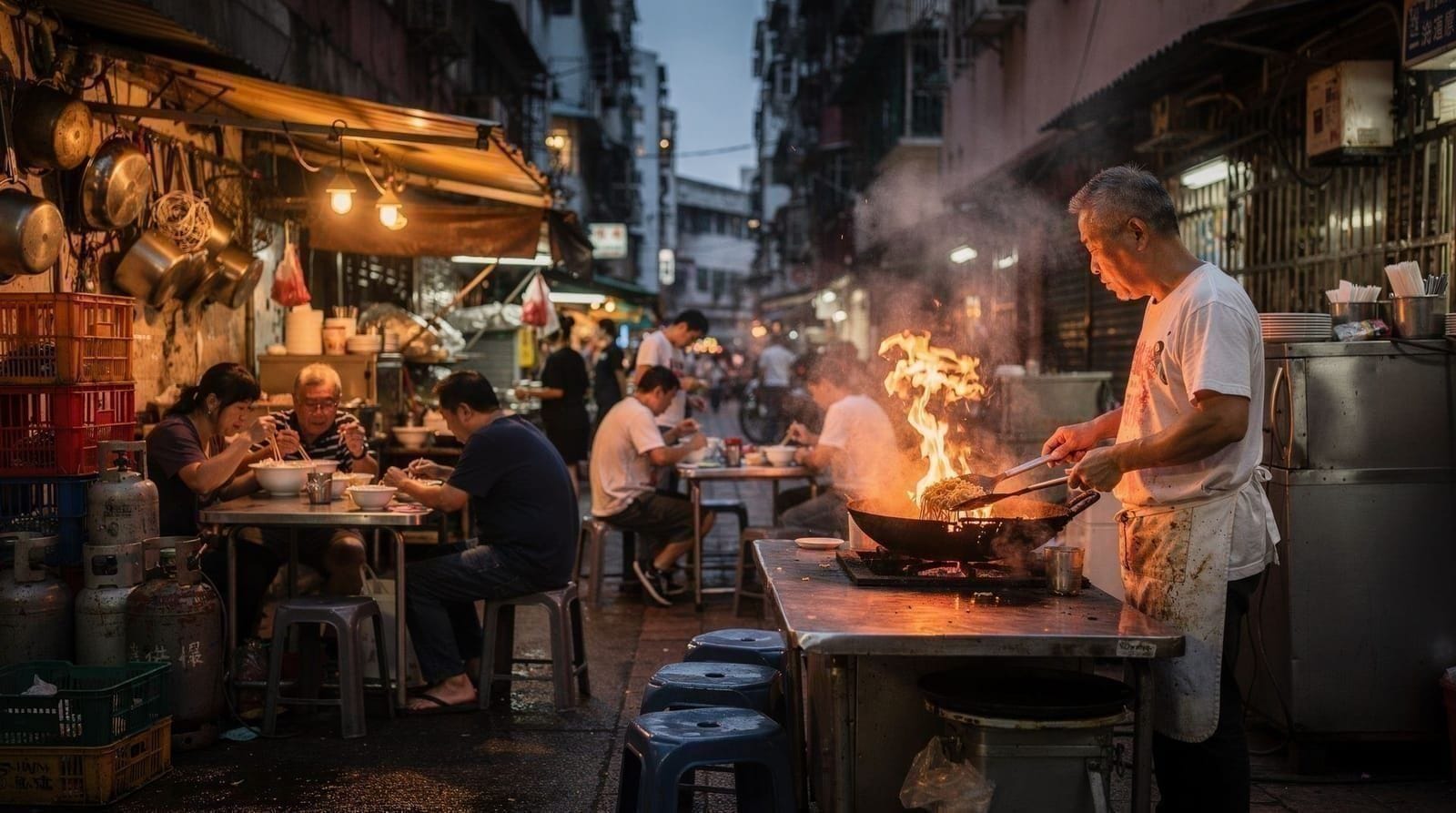
The most accessible format. A guide takes you through a neighbourhood — typically Mong Kok, Sham Shui Po, or Wan Chai — stopping at street stalls, dai pai dong, and neighbourhood bakeries. You eat as you walk. Total food volume is usually a snack-level tasting at each stop, not a full meal at any single location.
What you get: Geographical orientation, language access at Cantonese-only stalls, context about what you are eating and why it is significant, and an itinerary you can replicate later. What you don’t get: A sit-down meal; restaurant-level service; necessarily the absolute best version of each dish. Best for: First-timers who want an introduction to local food culture without the decision paralysis of navigating alone.

Dim sum and tea experience tours (3–4 hours, teahouse-based)
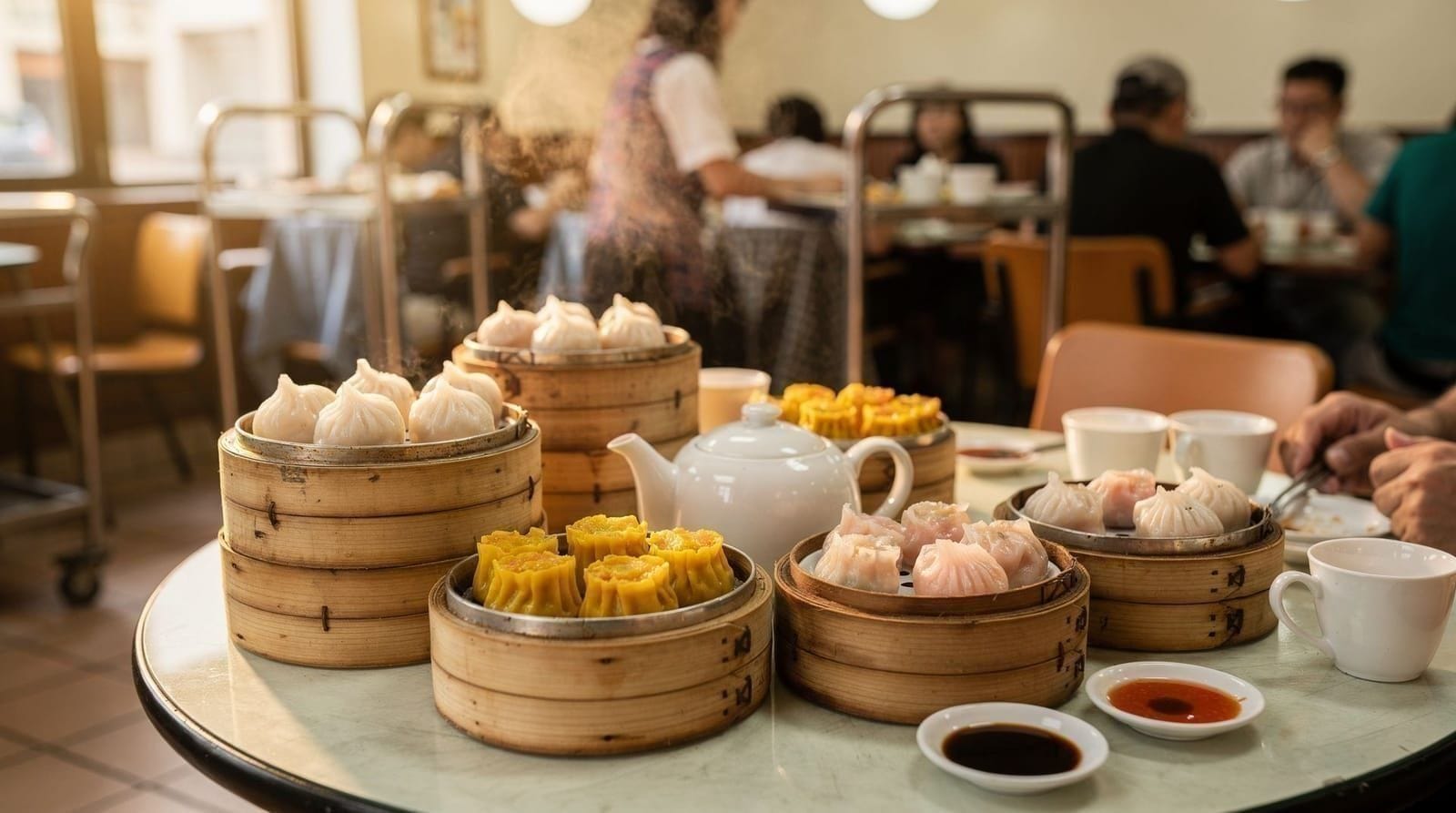
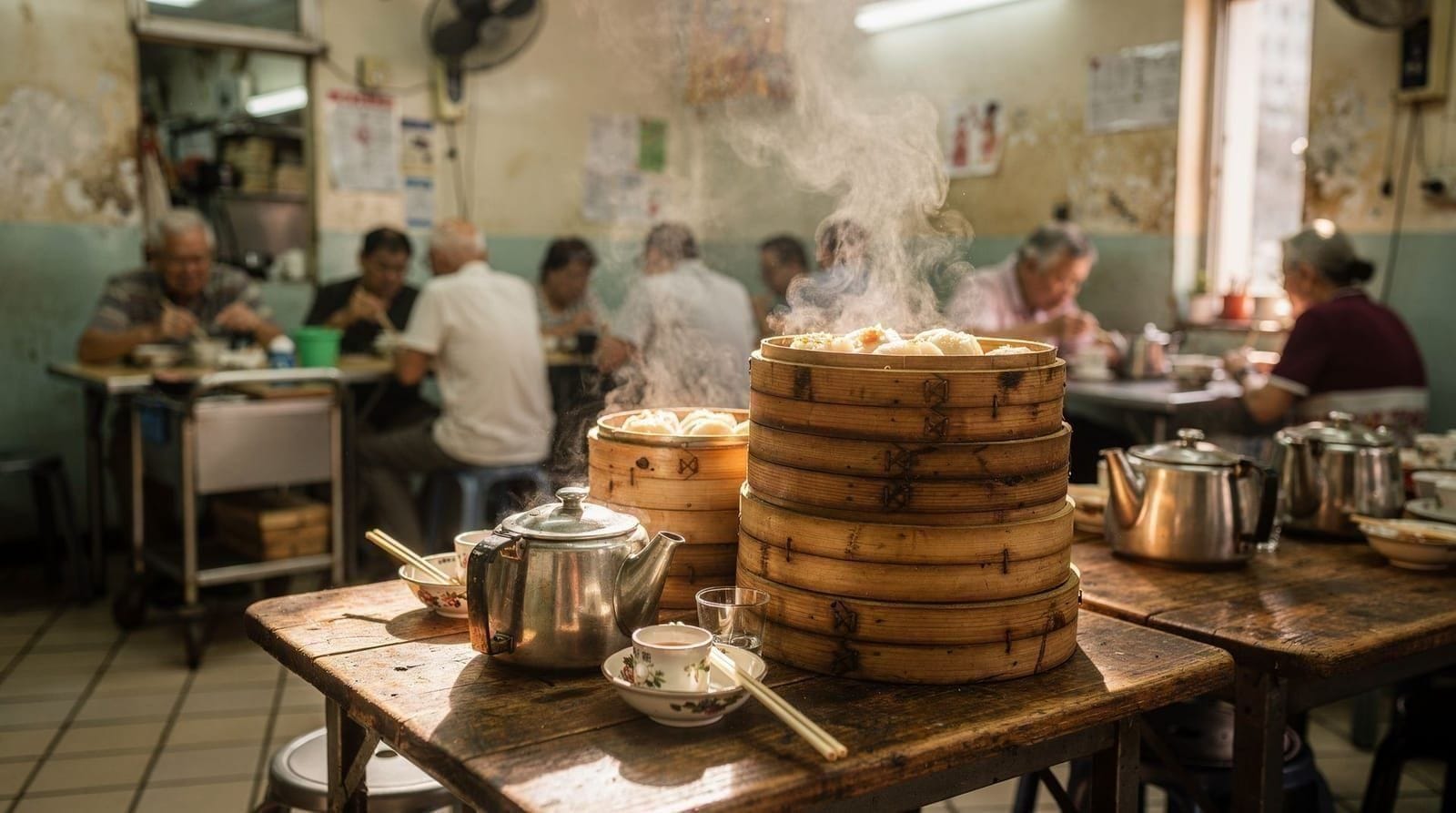
Guided dim sum sessions at a genuine local teahouse — the guide explains the ordering system, teaches you the Cantonese names for dishes, demonstrates pouring tea correctly, and helps you order without the language barrier. Typically includes 10–16 different dishes for a group.
What you get: A structured dim sum education, access to a teahouse that might be hard to navigate independently, and the social dimension of a guided group meal. Best for: People who specifically want to understand dim sum deeply, or who are nervous about navigating a paper-checklist teahouse in Cantonese.

Private food tours with local guides
A guide and driver (or guide on foot) takes you on a private itinerary — customised to your interests, dietary requirements, and pace. Most operators offer 4–8 hour options. You see more, go to less-touristed spots, and can eat at whatever pace suits you.
What you get: Flexibility, personalisation, deeper access to neighbourhoods (drivers can stop anywhere, guides can take you to non-walkable spots). What you pay: Significantly more — private tours typically run HKD 2,000–5,000 for 2–4 people. Best for: Serious food travellers, families with specific requirements, or anyone who wants to cover more than one neighbourhood in a day.

Cooking classes (3–4 hours)
Hands-on cooking classes focusing on dim sum (dim sum making classes are the most common), egg tarts, or Cantonese home cooking. You make the dishes and eat what you cook. Quality varies dramatically by operator.
What you get: A skill you take home; an engaging 3–4 hour activity; food you made yourself. What to check: Venue (a proper kitchen versus a hotel meeting room), class size (small groups of 6–10 versus 20+), and what specifically you cook. The best classes include several dishes rather than just one.

Neighbourhood food walks: what’s available by area
Mong Kok food walk
The most common food tour starting point. Covers the egg waffle stalls on Dundas Street, curry fish balls at the market stalls, pineapple bun at Kam Wah Café, and possibly a stop at Tim Ho Wan in Sham Shui Po if the guide extends into the next district. High energy, densely packed, very visual.
Best for: First-timers who want the maximum density of Hong Kong street food experience in one afternoon.
Sham Shui Po deep dive
More food-focused and less tourist-facing than Mong Kok. Covers Tim Ho Wan (original branch), the dried goods shops, wonton noodles at Lau Sum Kee, and the market stalls on Apliu Street. More insight into working-class neighbourhood food culture.
Best for: Travellers who want to go beyond the obvious and eat where locals eat on a daily basis.
Wan Chai / Sheung Wan food history walk
Combines food with colonial history — Man Mo Temple, the Sheung Wan dried seafood and herbal medicine streets, a traditional teahouse, and the last outdoor dai pai dong clusters in Central. More cultural context, fewer eating stops.
Best for: Travellers interested in the history of Hong Kong food culture alongside the eating.
Temple Street Night Market evening
Evening tours of the Temple Street Night Market cooked food area, typically starting around 18:00 and running 2.5–3 hours. Covers outdoor stalls, seafood, and the fortune-teller and Cantonese opera culture of the market. Less focused on food quality and more on atmosphere.
Best for: People who want the night market experience with guidance on what to eat and what to avoid.
What to look for when booking
Guide language: English-speaking guides vary significantly in their depth of food knowledge. Look for guides who can explain the history and cultural context, not just take you to stalls.
Group size: Street food tours work best in groups of 8 or fewer. Large groups (12–15+) cannot enter small local restaurants and spend a lot of time waiting for each other. Check maximum group size before booking.
Inclusions: Some tours include all food and drink; others charge a guide fee and you pay for food separately. Understand the total cost before booking.
Cancellation policy: Hong Kong weather (particularly June–September) can disrupt outdoor food tours. Check the typhoon season cancellation policy.
Dietary requirements: Most food tours can accommodate common dietary restrictions with advance notice. Vegetarians have fewer options in the dim sum and street food format; dedicated vegetarian routes are limited. Note: most dim sum contains pork or shrimp even in items that sound vegetarian.
Self-guided alternatives
A self-guided food walk covering similar ground to the popular tours is described in the best street food guide — the main difference is language access and curation rather than quality of the spots themselves.
For dim sum specifically, the dim sum guide covers ordering, specific teahouses, and what to look for in each dish in enough detail to navigate independently.
For cooking class alternatives that are less structured, some local markets in Wan Chai and Sheung Wan have hands-on vendors who will show you techniques informally — this requires more initiative but no cost.
Guided vs self-guided: a quick comparison
| Guided food tour | Self-guided | |
|---|---|---|
| Cost | HKD 400–900/person | Cost of food only (HKD 150–300) |
| Language access | Full — guide translates and orders | Limited unless you read Cantonese menus |
| Best spots | Guide’s established relationships | Requires your own research |
| Flexibility | Fixed itinerary and pace | Total flexibility |
| Time investment | 2.5–8 hours, fully planned | Requires upfront planning |
If your budget is tight but your curiosity isn’t, the self-guided route using this site’s dedicated food guides gets you most of the way there — see the Hong Kong on a budget guide for how food fits into a lower-cost trip overall, and the Mong Kok area guide for one of the most food-dense neighbourhoods to explore independently.
Frequently asked questions about Hong Kong food tours
How much do food tours cost in Hong Kong?
Group street food tours: HKD 400–700 per person (USD 51–90). Dim sum experience tours: HKD 500–900 per person. Private half-day food tours: HKD 2,000–4,000 for a group of 2–4. Cooking classes: HKD 600–1,200 per person depending on length and inclusions.
Are food tours better in the morning or evening?
Morning tours (08:00–12:00) cover dim sum and breakfast culture — the most authentic window for yum cha and cha chaan teng food. Evening tours (17:00–21:00) cover street stalls, night markets, and roast meat dinners. Both are valuable; morning tours give more variety of food styles.
Can I do a food tour with dietary restrictions?
Vegetarian options are limited in the mainstream Hong Kong food tour context — most dim sum and street food contains pork, shrimp, or both. Advance notice to the tour operator allows them to substitute or route around the most problematic stops. Halal options in the standard tour format are very limited; dedicated Muslim-friendly food tours exist but are harder to find.
Are children welcome on food tours?
Most tour operators welcome children but note that young children may find 3–4 hours of walking and eating difficult. Tours specifically designed for families with children exist and move at a slower pace with simpler explanations. Check with the operator before booking.
Cooking classes in depth
Hong Kong cooking classes have expanded significantly in the past decade, moving from hotel demonstration sessions to genuine hands-on workshops in proper kitchen settings. What to look for when choosing:
Dim sum making class: The most popular format. You make har gow (shrimp dumplings — the technically demanding one), siu mai, and often char siu bao. Learning to make har gow dough and wrap correctly takes most of the class time; the result is a deeper appreciation for what you eat at teahouses afterward. Classes in Sheung Wan and Wan Chai typically include a meal of what you cooked plus additional teahouse dishes.
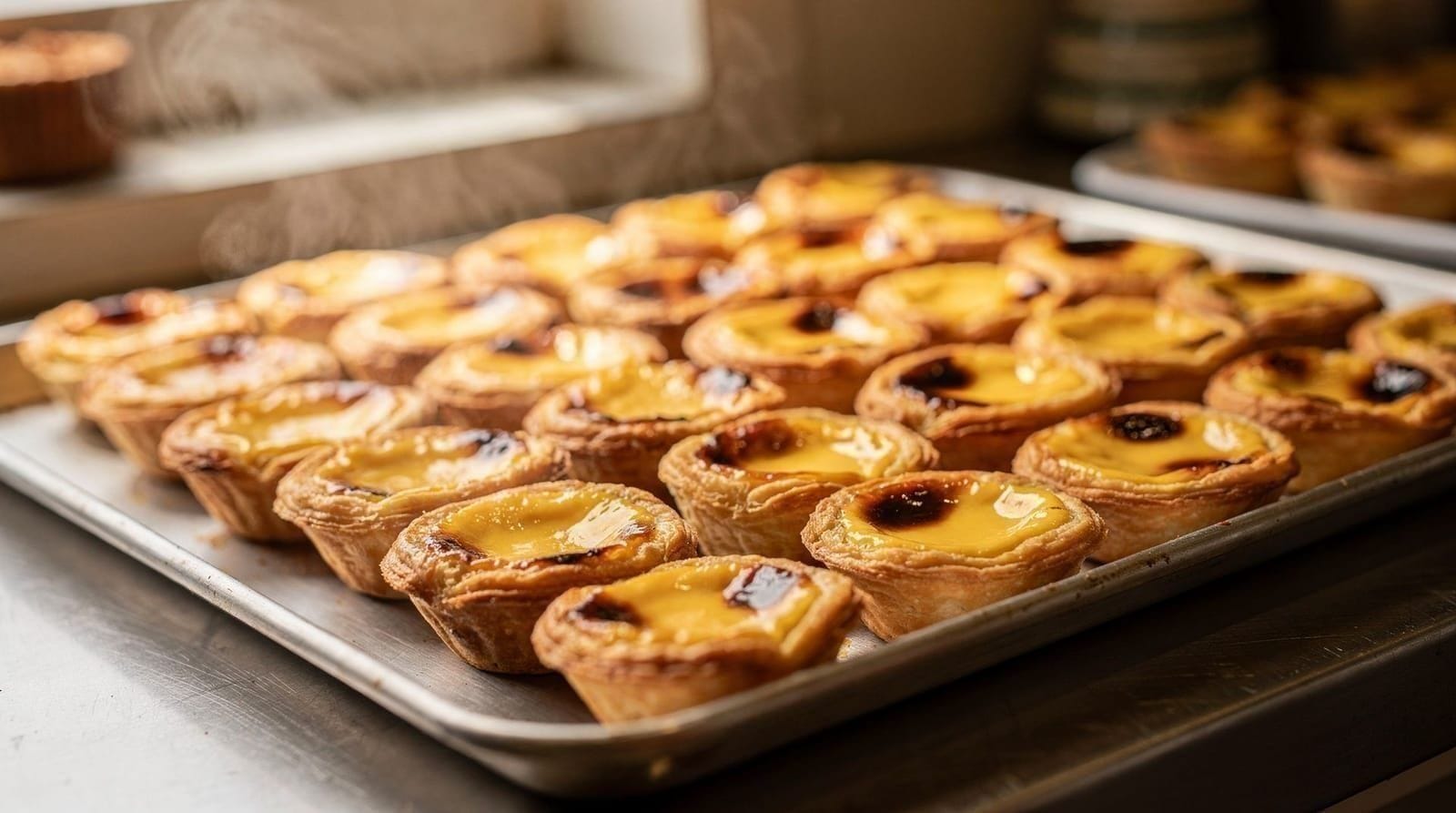
Hong Kong egg tart class: A specialised 2–3 hour session making the shortcrust and flaky pastry versions of the egg tart, then the Portuguese-style variant. Good for anyone who found the egg tart culture compelling. See the egg tarts guide for context on why the tart styles differ.
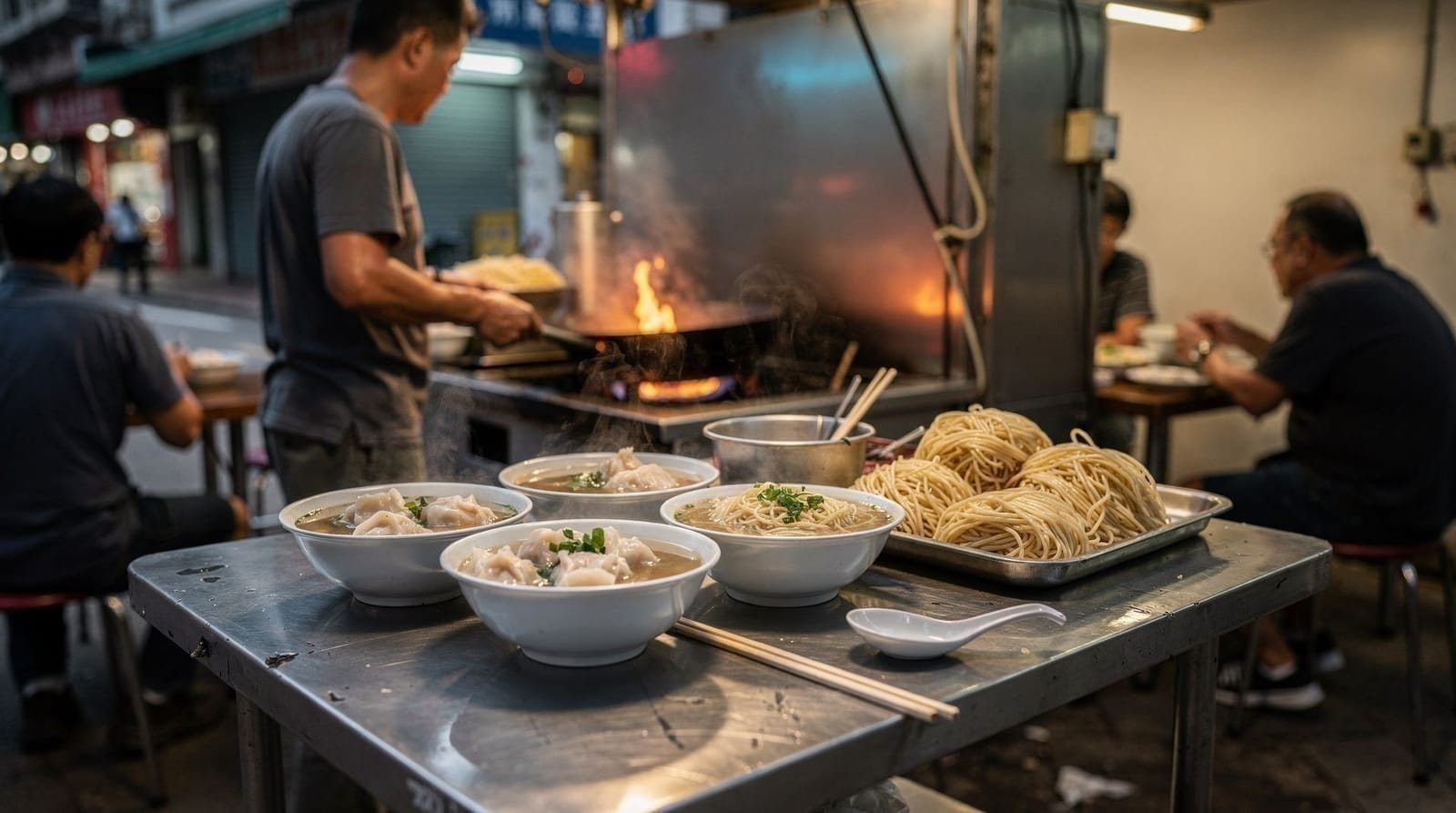
Wonton noodle class: Less common than dim sum classes. You make wonton wrappers, fill them, and learn the specific broth-making technique. The handmade wonton wrapper (made from egg and flour, rolled thin) is the component most home cooks cannot replicate without guidance.
Cantonese home cooking class: Broader in scope — covers 3–4 representative home dishes (a clay pot dish, a steamed fish, a stir-fry, and possibly congee). Good for those who want to understand the everyday cooking tradition rather than the restaurant-specific dim sum format.
Food markets worth visiting independently
Beyond guided tours, Hong Kong’s food markets are worth visiting independently as food and cultural experiences:
Wan Chai Market (灣仔街市): A full wet market on Cross Street in Wan Chai — fresh produce, live seafood, butchers, and cooked food stalls on the upper floors. Active from early morning; best from 07:00–11:00. Free to visit; buy something to eat at the cooked food stalls.
Graham Street Market, Central: One of Hong Kong Island’s last traditional outdoor street markets — vegetable and fruit stalls, dried goods, and a handful of cooked food options. Partly redeveloped; the remaining section on the south end of Graham Street is worth visiting.
Apliu Street Flea Market, Sham Shui Po: Primarily a second-hand electronics flea market but has food vendors scattered through it. Dried goods, preserved meats, and some street snacks.
Yau Ma Tei Market (油麻地街市): A traditional wet market adjacent to the Yau Ma Tei MTR. The ground floor has fresh produce and meat; the upper floor has a cooked food centre with local lunch options for HKD 38–60.
The best food tour for a first visit
For a first-time visitor with 3–5 days in Hong Kong who wants to understand the food culture but has limited time: a half-day morning street food and dim sum tour (4–5 hours, starting at 08:30, covering a teahouse, cha chaan teng, and two or three street stalls) is the most efficient introduction. It covers the full morning food culture cycle, provides context for independent eating for the rest of the trip, and concludes around 13:00, leaving the afternoon free.
For a visitor with more time and deeper food interest: a private full-day food tour with a knowledgeable guide covering Sham Shui Po (local markets, Tim Ho Wan, Lau Sum Kee noodles), Central (cooked food centre, Man Mo Temple, cha chaan teng), and ending at a dai pai dong or Temple Street evening stalls covers the full arc of Hong Kong’s food culture in one day.
The dim sum guide, street food guide, cha chaan teng guide, and dai pai dong guide together provide enough detail to plan this day independently. The guided version adds language access and curation; the self-guided version adds flexibility and lower cost.
What good food tour guides know that you don’t
The practical value of a knowledgeable guide at a Hong Kong food tour goes beyond language:
Batch timing: Expert guides know when the morning batch of egg tarts comes out of the oven at their regular stops, what time the har gow trolley starts circulating at their preferred teahouse, and when the best roast meats arrive in a roastery window. This timing knowledge significantly affects the quality of what you eat.
Off-menu items: Many Hong Kong restaurants have traditional daily specials (日日例湯 — the day’s soup) or seasonal items that are not on the tourist-facing menu. A guide who is a regular customer will know to ask for these.
Table negotiation: At popular local teahouses on weekday mornings, a guide with a relationship with the staff can sometimes seat a small group without the full tourist wait. This is not bribery — it is the regular-customer economy that operates in virtually every local Hong Kong food establishment.
Cultural context: The best food tours function as cultural experiences as well as eating experiences. Understanding why the cha chaan teng exists (colonial history + working-class budget constraints), why wok hei matters in Cantonese cooking (technique + high heat + specific flavour chemistry), and why dim sum is eaten in the morning rather than at dinner (the teahouse tradition of the early Cantonese silk-road merchants) makes each food item more interesting.
How to find legitimate tour operators
The Hong Kong food tour market has a spectrum of quality from professional operators with trained guides to ad hoc operations where the “guide” is essentially reading from the same tourist guides you have already read. How to distinguish:
Good signs: The operator has a physical office or established online presence. The guide is from Hong Kong (or has lived there for many years) rather than being a visiting foreigner who runs tours. The tour includes at least one stop that requires advance relationship with the owner (a private kitchen, a residential estate cooked food centre, a small teahouse that does not normally deal with tour groups).
Warning signs: The tour is entirely in tourist areas (TST, Central) without any Kowloon interior stops. All stops are in English-menu restaurants. The price is conspicuously low (under HKD 250 per person for a 4-hour food tour — this means you are eating tourist-grade food at tourist prices, with no actual guide value).
Booking timing: Book 2–7 days in advance for group tours; 5–14 days for private tours. Good operators fill up in the October–March peak season; last-minute options in peak season are often the operators no one else wanted.
A typical guided morning, hour by hour
To make the abstract format descriptions concrete, here’s roughly how a well-run 4-hour morning food tour actually unfolds. 08:30: meet the guide at a designated MTR exit, brief introduction to the neighbourhood and the day’s plan. 08:45–09:15: first stop, usually a cha chaan teng for milk tea and a pineapple bun, with the guide explaining the colonial history behind the format. 09:20–10:00: a dim sum teahouse — the guide orders a curated selection and explains each dish as it arrives, usually 6–8 items for a small group.
10:15–10:45: a walk through a wet market or street stall cluster, tasting 2–3 additional snacks (curry fish balls, cheong fun, or similar) while the guide points out ingredients and cooking techniques. 11:00–11:30: a final stop, often something sweet (egg tart, tofu pudding) and a wrap-up where the guide gives recommendations for the rest of your stay. 11:30–12:00: buffer time for questions and photos before the group disperses. This structure varies by operator, but the rhythm — eat, walk, explain, repeat — is fairly consistent across the better tours.
Tipping guides and other etiquette
Tipping is not obligatory in Hong Kong’s tour industry the way it is in the US, but it’s increasingly common and appreciated for a guide who goes beyond the basics — HKD 50–100 per person for a half-day group tour, or HKD 100–200 for a private full-day tour, is a reasonable range if the guide provided genuinely good service. It is not expected on top of an already-inclusive tour price, and no reputable operator will pressure you for it. Beyond tipping, basic etiquette matters more at food tours than at typical sightseeing: keep pace with the group so stall owners aren’t left waiting, avoid photographing other diners without asking, and follow the guide’s lead when entering a small, crowded local restaurant where table space is limited.
Combining a food tour with the rest of your day
A morning food tour (roughly 08:30–13:00) leaves the whole afternoon and evening free, which makes it easy to combine with sightseeing rather than treating it as a standalone activity. Popular pairings include a Sham Shui Po food tour followed by an afternoon at the M+ Museum or a Wan Chai food history walk followed by exploring Central and Sheung Wan independently in the afternoon. Evening food tours work the opposite way — pair them with a full day of sightseeing beforehand, since a 17:00–21:00 tour effectively becomes your dinner.
The food tour as cultural education
Hong Kong’s position as one of the world’s great food cities rests on a convergence of factors that a good food tour can make visible: an immigrant population that brought Cantonese, Shanghainese, Chaozhou, Hakka, and various Southeast Asian food traditions; the British colonial influence that created the cha chaan teng and opened Hong Kong to Western ingredients and techniques; and the intense commercial competition of a densely populated city where a mediocre food business has no protected market.
The result is a food culture with unusual depth — not just in the high-end restaurants but at every price level, from the HKD 11 egg tart to the three-Michelin-star dim sum. This depth is what separates Hong Kong’s food scene from most comparable cities and makes it worth spending real time understanding.
A well-designed food tour, whether guided or self-directed, is the most efficient entry point to that depth. The investment in time (4–8 hours) and cost (HKD 400–700 guided, or essentially free self-guided using this site’s resources) returns dividends across every other meal you eat in the city for the rest of your visit.
Top experiences
Bookable activities with verified prices and instant confirmation on GetYourGuide.