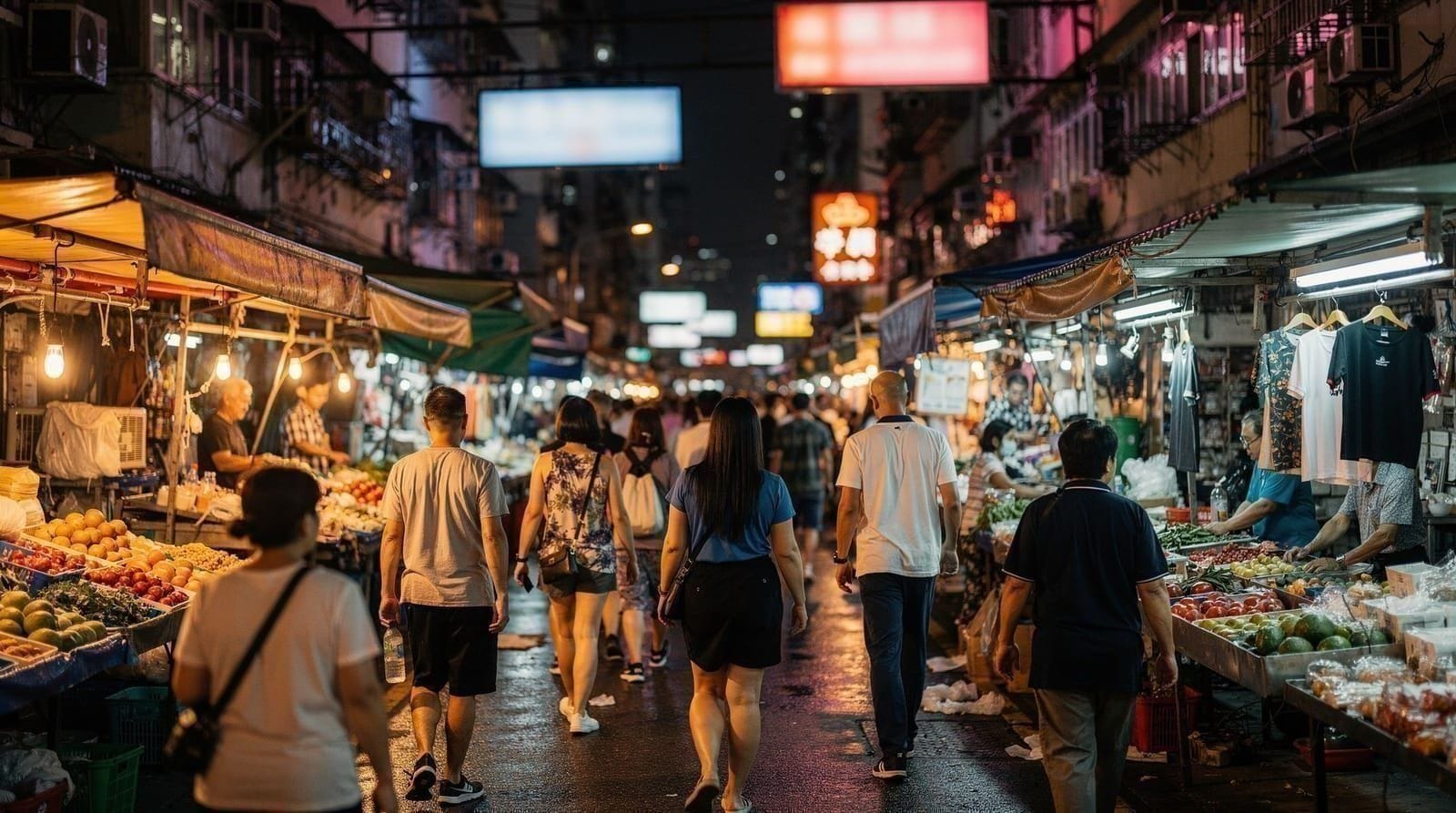
Dai pai dong guide — Hong Kong's surviving outdoor food stalls
Hong Kong: Explore Sham Shui Po food tour
What is a dai pai dong and where can I find one in Hong Kong?
A dai pai dong (大牌檔) is an open-air cooked food stall with a government-issued hawker licence, typically operating from a permanent outdoor structure. They serve wok-fried dishes, seafood, congee, and noodle soups — the most vivid expression of old Hong Kong street food culture. The number has fallen from over 10,000 to fewer than 30 licensed outdoor dai pai dong today. The best-preserved clusters are in Sheung Wan, Wan Chai, and the cooked food centres of Kowloon.
| What | Open-air licensed cooked food stalls, old Hong Kong street food |
| Where | Sheung Wan, Wan Chai, Tsim Sha Tsui, plus indoor cooked food centres |
| Cost | Around HKD 50–150 per dish depending on ingredients |
| Payment | Cash only at almost every stall |
| Best time | Evenings, 17:00–23:00; some open for lunch |
What dai pai dong actually are
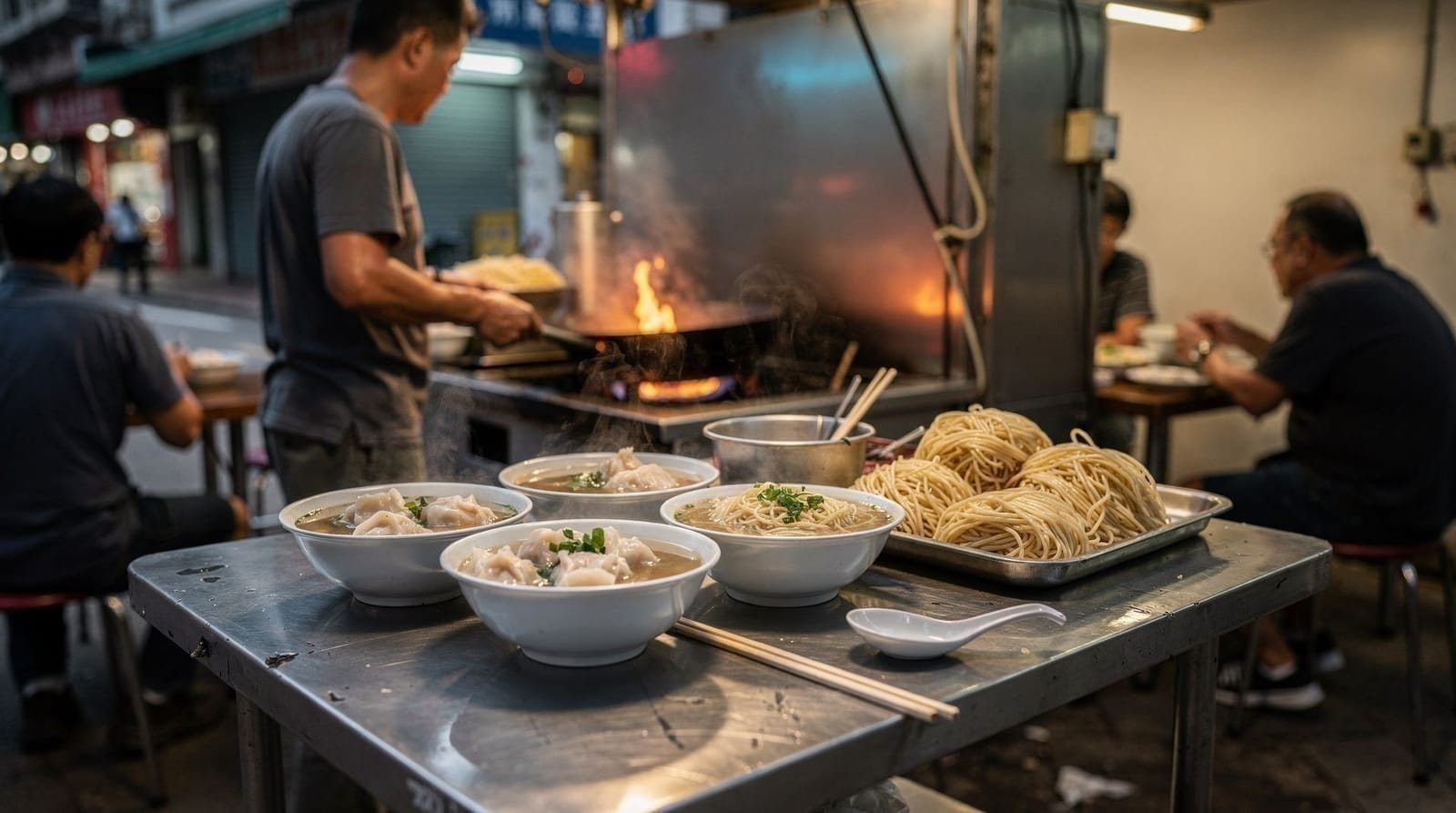
Dai pai dong (大牌檔) translates roughly as “large licence stall” — the “large” refers to the size of the government-issued hawker licence (大牌, big card) these operators display, larger than other hawker licence types. The term now refers to the entire genre: open-air cooked food stalls under a canopy or awning, with wok burners, folding tables, plastic stools, and the smell of wok hei (breath of the wok) as the dominant environment.
They were a fundamental part of Hong Kong’s public food infrastructure from the 1940s through the 1980s — tens of thousands of licensed stalls across the city, serving cheap hot food to working-class Hong Kong residents at any hour. The government stopped issuing new licences in 1956 and has progressively restricted where existing licences can operate. Most were relocated to indoor cooked food centres (熟食中心) inside public buildings. The remaining outdoor dai pai dong are those whose licence holders have continued operating for decades.
The number of licensed outdoor dai pai dong has fallen from over 10,000 in the 1950s to approximately 28 in 2026. These are operated predominantly by families, many in their 60s and 70s, who have been working the same stall for 30–50 years. The licences cannot be sold or transferred — they die with the operator.
What to eat at a dai pai dong
Wok hei dishes
The defining cooking method of the dai pai dong is the wok over a gas burner burning at very high heat. The restaurant term for the result — wok hei (鑊氣, “breath of the wok”) — describes the specific smoky, slightly charred flavour that comes from an intensely hot wok and rapid cooking. This is difficult to replicate at home or in restaurant kitchens that do not use commercial-grade burners.
Beef fried rice (乾炒牛河, gan chao ngau ho): Flat rice noodles stir-fried with tender beef slices, bean sprouts, and spring onion in soy sauce. This is the benchmark dish for judging wok technique — the noodles must be slightly charred, the beef tender, and the whole dish fragrant with wok hei. HKD 50–75.
Stir-fried vegetables (炒時蔬): Seasonal greens (usually Chinese broccoli, water spinach, or pak choi) with garlic in oyster sauce. Cheap, fast, and an excellent side dish. HKD 35–50.
Tomato and egg stir-fry (番茄炒蛋): One of Cantonese home cooking’s most beloved combinations — ripe tomatoes and egg in a light sauce. Simple and good. HKD 40–55.
Seafood
Some dai pai dong, particularly those near harbours and fish markets, specialise in seafood: steamed fish (choose the fish from a tank), stir-fried clams with black bean sauce, fried prawns with salt and pepper. Fresh and priced by market rate — ask the price before ordering. Expect HKD 80–200+ for a seafood dish depending on what you order.
Clay pot dishes
Slow-cooked clay pots — minced pork with preserved vegetables, tofu with salted fish, eggplant with mince — cooked over the wok burner and served in the pot. Rich, warming, and specifically associated with cooler weather. HKD 55–85 per clay pot.
Congee (粥)
Available at many dai pai dong, particularly in early morning: smooth, slow-cooked rice porridge with toppings (century egg and pork, fish fillet, preserved egg). HKD 35–55 per bowl.
Where to find real dai pai dong
Haiphong Road Temporary Cooked Food Hawker Bazaar (海防道臨時熟食小販市場), Tsim Sha Tsui
One of the most intact open-air cooked food hawker areas remaining in Hong Kong — a collection of stalls under canvas awnings on Haiphong Road. The atmosphere is exactly right: plastic tables, local customers, wok burners going at full heat. Open evenings (from around 17:00–00:00). The seafood and stir-fried dishes are generally good.
Getting there: 5–10 minutes walk from TST MTR (exit B1), toward the Haiphong Road end of TST.
Outdoor dai pai dong cluster, Cochrane Street / Graham Street, Central
The blocks of Cochrane Street and Graham Street in Central have a small cluster of permanent outdoor stalls — one of the last on Hong Kong Island. The Graham Street Market has been progressively redeveloped; the remaining stalls are mostly in the Cochrane Street section. Visit before further redevelopment changes the area.
Sing Heung Yuen (勝香園), Gutzlaff Street, Central
Famous dai pai dong on a tiny lane near the Central Market. Known for tomato-based dishes — tomato and egg on toast, tomato soup noodles — that have developed a following that extends beyond the neighbourhood. Very small; arrive early or at an off-peak time. Cash only. Open Monday–Saturday, closed Sunday. Hours: approximately 08:00–17:00.
Luk Yu Tea House (陸羽茶室), Stanley Street, Central
Technically a formal teahouse rather than an outdoor dai pai dong, but included here for context — a 1930s teahouse that maintains the atmosphere and some of the food traditions of an earlier era. More expensive than a street-level dai pai dong (HKD 150–250 per person for dim sum) but architecturally and culturally significant.
Indoor cooked food centres (熟食中ިK)
Most of what was dai pai dong culture has moved indoors to government-built cooked food centres. These are not as atmospheric but serve the same food at similar prices. Worth visiting:
Wan Chai Cooked Food Centre (灣仔熟食中心): On the upper floor of the Wan Chai market building on Queen’s Road East. Multiple stalls serving congee, noodles, and wok-fried dishes. Very local; primarily for residents.
Sheung Wan Municipal Services Building Cooked Food Centre: Top floor of the Sheung Wan Municipal Services Building on Queen’s Road. Similar format — multiple stalls, cheap food, local customers.
Temple Street Cooked Food Area: The middle section of Temple Street Night Market operates outdoor stalls serving Cantonese dishes, seafood, and street food from late afternoon to midnight. The atmosphere is tourist-adjacent but the food quality in the better stalls is genuine.
The dai pai dong in context
The decline of the outdoor dai pai dong is a subject of ongoing discussion in Hong Kong food and cultural circles. The government’s 1956 freeze on new licences and subsequent policies encouraging indoor relocation were driven by concerns about hygiene and urban order. The result is a food culture that was central to working-class Hong Kong life for 40 years, now reduced to a handful of ageing licence holders with no succession.
The indoor cooked food centres preserve the food if not the atmosphere. The few remaining outdoor stalls are now cultural sites as much as restaurants. Visiting one for a meal is both a genuinely good local food experience and one of the ways to observe something that is genuinely becoming rare.
Finding dai pai dong beyond the well-known spots
Sham Shui Po, one of Kowloon’s most traditionally working-class neighbourhoods, has some of the least tourist-adjacent food stalls left in Hong Kong, alongside its famous electronics and fabric markets — see the Mong Kok area guide for the wider northern Kowloon food and market scene, which connects naturally with a dai pai dong evening.
Central and Sheung Wan’s remaining outdoor clusters are covered above; for a food-focused day that also takes in the top things to do on Hong Kong Island, pairing a Central sightseeing afternoon with dinner at the Cochrane Street stalls works well logistically, since both sit within a 10-minute walk of each other and of the SOHO nightlife strip.
If navigating a dai pai dong or cooked food centre with no English menu feels daunting on your own, a guided street food tour takes the guesswork out of ordering and usually includes several stalls in one outing.
Sham Shui Po local food tourPractical information
Payment: All remaining dai pai dong and most cooked food centres are cash only. Bring HKD 200–400 in small bills.
Hours: Outdoor dai pai dong typically operate evenings (17:00–23:00). Some open for lunch. Indoor cooked food centres vary by stall — many open from 07:00 for breakfast through to 21:00.
Language: No English menus at most stalls; some have photo menus. Pointing at dishes from nearby tables works. The standard dishes — gan chao ngau ho (beef fried rice noodles), stir-fried vegetables, clay pot dishes — are recognisable by sight.
Ordering: Sit down, and a staff member will approach. Say what you want or point. Dishes arrive progressively from a shared kitchen or wok station. You pay at the end.
What to bring: An appetite; dai pai dong portions are generous. A willingness to share tables with strangers at busy times. Tolerance for noise and smoke — the wok burners and surrounding activity make these places loud.
Frequently asked questions about dai pai dong in Hong Kong
How many outdoor dai pai dong are left in Hong Kong?
Approximately 25–30 licensed outdoor dai pai dong remain in Hong Kong as of 2026, down from thousands in the 1950s. The number continues to fall as licence holders retire or pass away. The licences cannot be transferred.
Are dai pai dong hygienic?
Yes. Licensed dai pai dong are subject to government health inspections — the same food safety standards that apply to restaurants. The outdoor setting means exposure to urban air, but the cooking is at high heat that eliminates food safety concerns. Foodborne illness from dai pai dong is not a documented problem.
What is the best dish to order at a dai pai dong?
Gan chao ngau ho (乾炒牛河, flat rice noodles stir-fried with beef) is the benchmark dish and the one that best showcases wok technique. Stir-fried vegetables in oyster sauce are an excellent, cheap side. For a full meal, order one wok dish, one vegetable, and a pot of tea.
Is the dai pai dong experience worth seeking out specifically?
Yes, if you are interested in Hong Kong food culture rather than just good food. The food at a surviving outdoor dai pai dong is good, but not necessarily better than the indoor cooked food centres. The experience of eating at an outdoor stall under canvas in a Hong Kong lane, surrounded by local customers and the sound of high-heat wok cooking, is something that is becoming genuinely rare.
Can I find dai pai dong-style food near Mong Kok or Sham Shui Po?
Yes — indoor cooked food centres and street-level stalls in and around Sham Shui Po serve very similar wok-fried, congee, and clay pot food to the classic outdoor dai pai dong, often at slightly lower prices than Central or TST. The Mong Kok area guide covers the wider northern Kowloon food scene, which is less tourist-oriented than TST.
Is it worth booking a guided food tour instead of finding a dai pai dong alone?
For a first visit with no Cantonese and limited time, a guided tour removes the guesswork of language and ordering and typically covers 3–5 stalls in one evening, which is more variety than most visitors would manage solo. If you have more time and enjoy figuring things out yourself, going independently with photos of dish names on your phone works fine too — see the ordering advice above.
The social life of the dai pai dong
The dai pai dong was not merely a food stall — it was a community institution. In the 1950s–1970s, when Hong Kong’s population was rapidly expanding and housing was inadequate, the apartment of a working-class family in Kowloon might be a single room shared by 8–10 people. The dai pai dong was where people congregated: to eat, to talk, to play mahjong over a meal, to gather after work. The plastic tables and folding chairs of the stall became, in practice, the social sitting room that the living quarters could not provide.
This social function has not entirely disappeared from the remaining dai pai dong. At the Haiphong Road cluster in TST and the Cochrane Street outdoor stalls in Central, the late-afternoon and evening tables are occupied by regulars who have been eating at the same stall for decades. The stall operator knows their orders. The conversation is continuous.
For a visitor, this social atmosphere — the buzz of conversation in Cantonese, the sound of chopsticks, the call of orders to the kitchen — is as much the experience as the food itself.
Wok hei: why it cannot be replicated at home
The defining quality of dai pai dong cooking — wok hei (鑊氣, literally “breath of the wok”) — is the result of specific conditions that most cooking environments cannot achieve.
A commercial dai pai dong uses wok burners that output 100,000–250,000 BTU per hour of heat — compared to a home gas stove’s 5,000–15,000 BTU and even a restaurant wok burner’s 60,000–80,000 BTU. This extreme heat vaporises sauces and marinades almost instantaneously, creating a smoky char on the surface of proteins and vegetables that is chemically distinct from the same food cooked at lower temperatures.
The Maillard reaction (the browning of proteins and sugars) occurs much faster and more intensely at these temperatures. At the same time, the cook moves the food constantly — a seasoned dai pai dong cook tosses the wok rhythmically, ensuring even exposure and preventing burning. The result is food that is simultaneously charred and tender, with a flavour profile that is impossible to achieve on a home stove.
When you taste a well-made gan chao ngau ho (beef rice noodles) at a dai pai dong and notice that specific smoky, slightly charred character — that is wok hei. It is not seasoning. It is not sauce. It is the direct product of extreme heat and skilled technique.
What a typical dai pai dong bill looks like
For two people sharing at an outdoor dai pai dong or cooked food centre, a realistic order and cost breakdown:
- One wok-fried noodle or rice dish (gan chao ngau ho or similar): HKD 50–75
- One stir-fried vegetable side: HKD 35–50
- One clay pot dish or bowl of congee: HKD 55–85
- Tea for the table: HKD 10–20
- Total for two: approximately HKD 150–230
This is comparable to or cheaper than a mid-range cha chaan teng meal (see the cha chaan teng guide for that comparison) and considerably cheaper than a sit-down Cantonese restaurant serving the same dishes, which is part of why the budget guide recommends building at least one dai pai dong or cooked food centre dinner into every Hong Kong itinerary.
The dai pai dong versus the restaurant debate
Food critics and Hong Kong locals have debated for decades whether the best wok-fired Cantonese food comes from dai pai dong or from professional Cantonese restaurants. The honest answer is that the best Cantonese restaurants in Hong Kong have access to professional wok burners of comparable power to dai pai dong and employ trained chefs who have worked with the technique for 20–30 years. The difference is less clear-cut than the romantic version of the debate suggests.
What the dai pai dong definitively offers that the restaurant cannot match: immediacy. The cook is one person, often the operator, with one or two woks over open burners. The dish you ordered 3 minutes ago is the dish currently being cooked. The freshness is immediate and non-negotiable. At a large Cantonese restaurant with a kitchen brigade, the dish may sit on the pass for 2–4 minutes before service. In the wok hei economy, 2–4 minutes is the difference between spectacular and good.
How to eat at a cooked food centre
For visitors who want the authentic dai pai dong food experience without the challenge of finding an increasingly rare outdoor stall, the indoor cooked food centres are the practical alternative.
Choose your stall: Walk through the centre first to see what each stall offers. Most cooked food centres have 8–20 stalls serving different specialities — one focuses on congee and noodles, one on wok-fried rice dishes, one on seafood, one on clay pot dishes. Observe which stalls have queues and what the sitting customers are eating.
Order and pay at the stall: Unlike a restaurant, you order and often pay immediately at the stall counter, then take a number or wait at a table until your food arrives. Some centres have a central seating area that serves all stalls; others have dedicated seating adjacent to each stall.
Eat at communal tables: Tables are shared. If the centre is busy (lunch hour), you will sit with strangers. This is normal and there is no awkwardness about it — bring your phone or a book, or simply watch the centre’s activity.
Prices: Expect HKD 35–65 for a rice or noodle plate with toppings, HKD 38–55 for a bowl of noodle soup, HKD 50–80 for a more elaborate wok-fried dish. These are among the cheapest cooked meals available in Hong Kong. The budget guide covers how the cooked food centre system fits into budget travel.
Seasonal dai pai dong food
Some dai pai dong dishes are specifically associated with the cold months (October–March):
Clay pot rice (煲仔飯): Slow-cooked rice in a clay pot with preserved pork sausage (臘腸), preserved liver sausage (潤腸), or other cured meats. The bottom layer of rice chars against the pot surface — this “socarrat” layer is considered the best part. Drizzled with soy sauce and sesame oil before eating. A quintessential winter dish.
Snake soup (蛇羹): A traditional Cantonese medicinal dish believed to generate warmth — a thick, warming broth made from snake meat (often several varieties), with chrysanthemum petals and crispy noodles on top. Specialist snake soup restaurants still operate in Hong Kong; the dish appears at some dai pai dong and cooked food centres in winter months. Genuinely delicious for those willing to try it.
Typhoon shelter crab (避風塘炒蟹): Named for the Aberdeen typhoon shelter where fishermen sheltered during storms and ate similar dishes. Crab stir-fried with enormous quantities of garlic, chilli, and black bean — a dish now served at seafood restaurants year-round but with roots in the original dai pai dong seafood tradition. Not specifically a winter dish, but associated with the typhoon shelter fishing culture that produced the dai pai dong in the first place.
Building a dai pai dong evening into your trip
A dai pai dong dinner works best as the closing act of a day rather than a destination in itself. If you are still shaping your plans, the Hong Kong foodie itinerary shows how wok-fried street food sits alongside other meals, and the best street food guide covers the snacks you can graze on earlier in the day so you arrive hungry for a proper wok dish.
If you are staying on Hong Kong Island, the Central and Sheung Wan guide helps you fit the Cochrane Street stalls around a walking route. On the Kowloon side, Tsim Sha Tsui is the base for the Haiphong Road cluster, and the Sham Shui Po neighbourhood guide is the place to look if you want the less polished, more local end of the same food tradition.
If you would rather graze across several stalls before settling into a wok dish, an evening street food tour with a local guide is an easy way to taste more in one outing. Travellers who like to combine food with neighbourhood walking can also look at a walking tour of Kowloon’s local markets, and the Hong Kong food tours guide compares the options. For more cheap, local meals, the Michelin cheap eats guide and the Mong Kok cheap eats story are good companions.
Pair the meal with a slow walk afterwards. Evening stalls are lively, noisy and informal, so there is no need to rush; linger over tea once the plates are cleared, and let the street do the rest.