Cheap eats in Mong Kok — where locals actually eat
Hong Kong Kowloon: Michelin street food and culture walk
Duration: 4-5 hours
Why Mong Kok for food
Mong Kok has one of the highest population densities on earth, an enormous working-class population, and a commercial culture built around providing food quickly and cheaply to people on tight schedules. These conditions produce excellent, inexpensive food. The restaurants in Mong Kok are not catering to tourists — they’re feeding residents — which means prices are honest and quality is high relative to cost.
This guide covers specific places and dishes with current prices (updated June 2026). Prices in Hong Kong’s neighbourhood restaurants are stable — HKD 10–20 fluctuations year to year are normal, but the cost structure doesn’t change dramatically.
| Where | Sai Yeung Choi Street, Portland Street, Fa Yuen Street |
| Daily food budget | Around HKD 200–285/person |
| Payment | Mostly cash; Octopus at some shops |
| Best hours | 07:00–14:00 breakfast/dim sum window, then all day |
| Pair with | Cheap eats guide + Ladies’ Market for a full afternoon |
Breakfast — cha chaan teng (HKD 30–55)
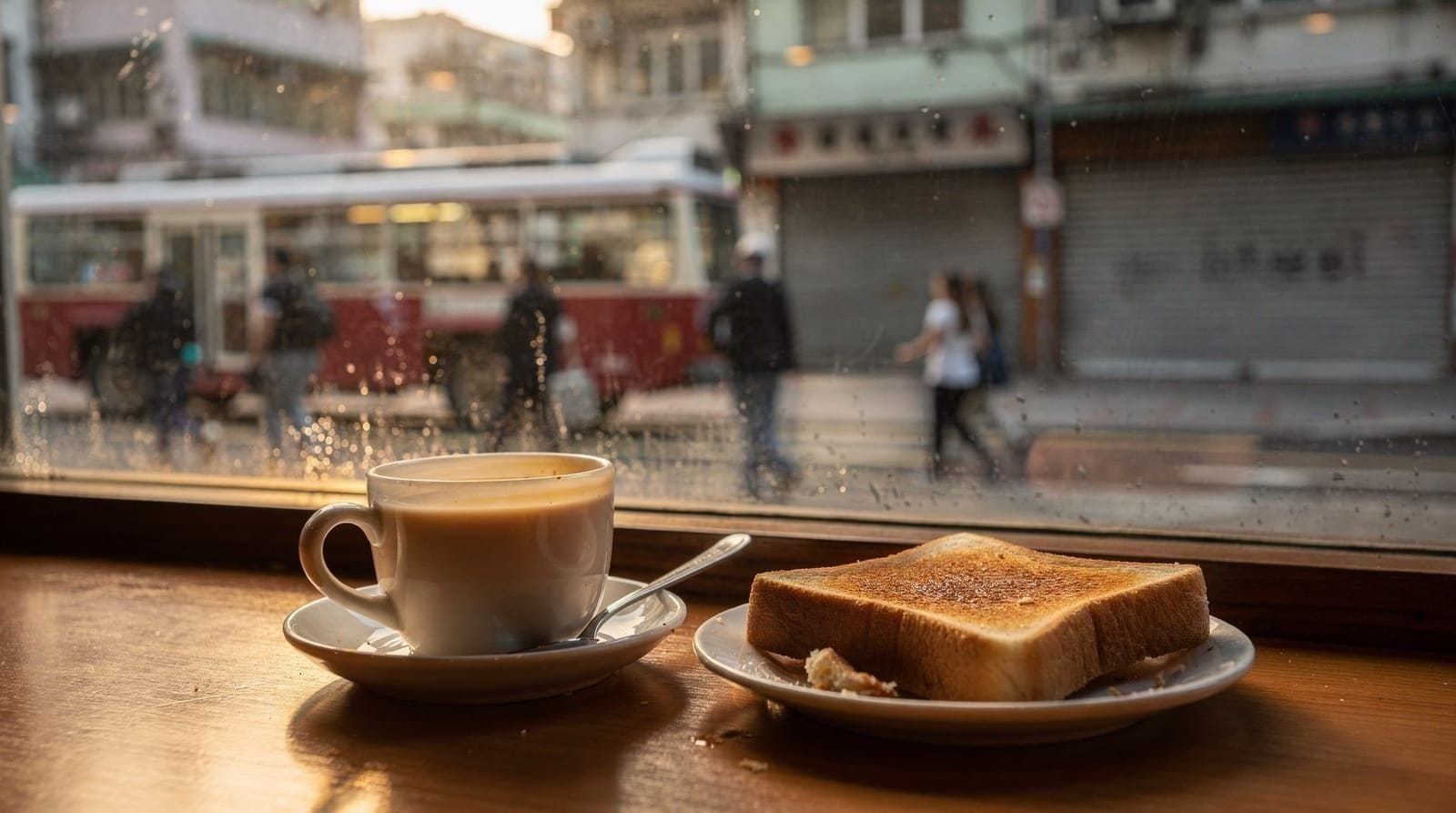
The cha chaan teng (茶餐廳, “Hong Kong-style café”) is the defining institution of Hong Kong food culture (the cha chaan teng guide goes deeper into how they work). They’re noisy, efficient, slightly chaotic, and serve a breakfast set that includes toast or a bun, an egg, and coffee or milk tea (奶茶, naai chah). The milk tea is made from a blend of Ceylon teas brewed strong, then strained through a cloth “silk stocking” filter and mixed with evaporated milk. It’s different from anything you’d call milk tea elsewhere.
Kam Wah Cafe (金華冰廳) on Bute Street, Mong Kok, is one of the more reliable options — a full breakfast set for HKD 38–45. The pineapple buns (菠蘿包, bor lo bao) here are particularly good — the baked sweet crust crumbles slightly and the inside is pillowy.
Melbourne Cafe (美倫餐廳) on Sai Yeung Choi Street is noisier but cheaper — around HKD 32–38 for a breakfast set with coffee. The kind of place where office workers eat quickly before the commute.
What to order: Breakfast set (早餐 combo) with toast and butter + cold milk tea (凍奶茶 if you prefer iced, 熱奶茶 if hot). Add a soft-boiled egg (溫泉蛋) if offered.
Fishballs and street snacks (HKD 10–25)
Mong Kok has several clusters of street food stalls concentrated on the pedestrianised sections of Sai Yeung Choi Street and around the entrances to the Ladies’ Market corridor. The selection depends on the time of day but typically includes:
Curry fishballs (咖喱魚蛋): Springy, spongy fishballs in a mild yellow curry sauce, on bamboo skewers. HKD 15–20 for 5 balls. This is the canonical Hong Kong street food — everyone eats them, no one is embarrassed about it. The ones with the deeper orange colour tend to have more flavour.
Stinky tofu (臭豆腐): Fermented tofu, deep-fried until crispy outside and soft inside. The smell is significant. The taste is far milder than the smell suggests. HKD 20–25 for a small portion. An acquired taste that most people acquire after the first bite. If the street-snack circuit appeals, the best street food in Hong Kong guide covers more stalls and dishes across the city.
Siu mai (燒賣): Steamed open-topped pork dumplings. A standard item at most snack stalls. HKD 5–8 per piece from street vendors (slightly different from restaurant dim sum versions — denser, slightly cheaper ingredients).
Egg waffles (雞蛋仔, gai daan jai): Bubble-shaped egg-based waffles made in a custom iron. Sold by street vendors, usually from a small cart. HKD 15–25. Eat hot; they go stiff when they cool.
Wonton noodles (HKD 45–70)
Wonton noodles (雲吞麵, wan tan min) are Hong Kong’s signature comfort food: thin egg noodles (with a characteristic springy texture from lye water in the dough) in a clean shrimp and pork bone broth, topped with wontons filled with whole prawns.
The quality markers: thin noodles that clump if overcooked, wontons that are translucent enough to see the pink prawn inside, broth that’s clean and slightly sweet.
On Kee (安記) near Shanghai Street — simple, fast, reliable wonton noodles for HKD 48–55. Minimal decor, plastic stools, consistent quality.
Mak Siu Kee (麥兆記) is a bit further from the main commercial area but widely considered one of the better wonton noodle options in the district — HKD 55–65 for a bowl, with excellent prawn wontons.
Order tip: Ask for “wonton noodle” (雲吞麵). Specify whether you want noodles in soup (湯) or dry (撈, mixed with sauce). The dry version comes with a small separate soup — a good way to try both.
Roast meats rice (HKD 50–80)
The siu mei (燒味) shops — roast meat specialists — are ubiquitous in Mong Kok. The window display of hanging roast goose (燒鵝), char siu (叉燒, BBQ pork), and crispy roast pork (燒肉) is one of Hong Kong’s most recognisable streetscapes.
The meal: a plate of rice (HKD 50–80) comes with two or three choices of roast meat cut to order and laid over the rice, with sauce and sometimes a small bowl of broth. It’s filling, fast, and one of the highest-value meals in Hong Kong.
Roast goose vs. char siu: Roast goose has a richer flavour and crispier skin. Char siu is leaner and sweeter. Asking for a combination (半半, bun bun) of both is normal and common.
Where: Look for shops with the roast meats hanging in the window — they’re on almost every block in Mong Kok. For quality: the restaurants on Portland Street and Fa Yuen Street tend to have higher turnover, which means fresher meat.
Congee (HKD 35–55)
Congee (粥, juk) is rice cooked in a large amount of water or stock until the grains break down into a smooth, thick porridge. It’s the default comfort food and a common breakfast and late-night meal.
A typical congee order at a small restaurant in Mong Kok: century egg and pork (皮蛋瘦肉粥) or beef offal (牛雜粥). Comes with a fried dough stick (油條, you tiaw) on the side for dipping. Total: HKD 40–55.
The congee shops on Sai Yeung Choi Street North (north of the shopping area, near the residential blocks) are less tourist-visited and cheaper than those closer to the main commercial zone.
Curry — Indian and Southeast Asian
Mong Kok has a significant South Asian community concentrated around the “Little India” area on Dundas Street and the cross streets. The curry restaurants here serve Indian, Pakistani, and Nepali food at very reasonable prices — a curry with rice or naan runs HKD 65–90. Worth knowing if you need a break from Cantonese food mid-trip. For a wider view of the district beyond its food, the Mong Kok area guide maps out the streets and markets around these restaurants.
The flavours are more closely calibrated to Hong Kong tastes (slightly milder than equivalent restaurants in the UK or US) but the quality is genuine. Look for restaurants where the clientele is predominantly South Asian — that’s the quality signal.
Late night — after midnight
Hong Kong’s late-night food culture is strongest in Mong Kok because the area doesn’t really close. After midnight, the options thin but don’t disappear:
Instant noodles shops (公仔麵, gong jai min): Several small restaurants in Mong Kok specialise in instant noodles with add-ins (spam, luncheon meat, fishballs, egg). It sounds humble, but executed well with good stock — a recognised comfort food. HKD 30–45 after midnight.
Cha chaan tengs that stay open: Some of the 24-hour cha chaan tengs on Nathan Road and in the Jordan area serve their full menu all night. The milk tea at 02:00 is the same as at 08:00. If your hunger is mostly after dark, the Temple Street night market guide is a useful companion for the evening hours.
Convenience stores: 7-Eleven and Circle K are on virtually every block in Mong Kok, open 24 hours. The HK 7-Eleven selection is better than most Western equivalents — hot food counter (steamed bao, sausages), decent instant noodles, cold drinks. HKD 15–35 for a snack. Not a joke option; locals use them constantly.
Dessert and sweet snacks (HKD 15–35)
Mong Kok’s dessert shops (糖水舖, tong sui shops) are worth a stop separate from the savoury circuit. Mango sago with pomelo (楊枝甘露) — chilled mango puree, sago pearls, and pomelo segments — is the modern classic, widely available for HKD 25–35. Black sesame soup (芝麻糊) and walnut soup (合桃糊) are the traditional winter versions, thick and nutty, served hot. Sweet tofu pudding (豆腐花) with ginger or sugar syrup is lighter and cheaper, HKD 15–20. These shops cluster around Sai Yeung Choi Street and Nelson Street and are usually open into the evening, making them a natural stop after dinner.
Ordering without Cantonese
Most of the smaller shops in this guide have limited or no English menus, but ordering is manageable without the language. Pointing at a photo on the wall or at another table’s dish works everywhere — no one will be offended. Learning to say the dish name phonetically (even badly) usually gets a warmer response than English alone. Numbers are the other essential: hold up fingers for quantity, and most vendors will confirm with a nod before charging. If a shop has a paper order sheet, tick boxes rather than trying to explain verbally — it’s faster for everyone. The first-time Hong Kong guide has a broader etiquette section if this is your first Cantonese-speaking city.
Where to eat what — quick reference
| Dish | Price | Where in Mong Kok | Best time |
|---|---|---|---|
| Breakfast set + milk tea | HKD 32–45 | Kam Wah Cafe, Melbourne Cafe | 07:00–10:00 |
| Curry fishballs | HKD 15–20 | Sai Yeung Choi St stalls | All day |
| Wonton noodles | HKD 48–65 | On Kee, Mak Siu Kee | Lunch/dinner |
| Roast meats over rice | HKD 50–80 | Portland St, Fa Yuen St | Lunch/dinner |
| Congee | HKD 40–55 | Sai Yeung Choi St North | Breakfast/late night |
| Mango sago dessert | HKD 25–35 | Sai Yeung Choi St, Nelson St | Afternoon/evening |
For a guided version that covers several of these stops with someone who knows the current best vendors:
Taste of Kowloon Michelin street food and culture walkBudget planning
A full day of eating in Mong Kok at these prices:
- Breakfast: HKD 35–45
- Midday snacks: HKD 30–50
- Lunch (wonton noodles or roast meat rice): HKD 50–70
- Afternoon snack (fishballs or egg waffle): HKD 20–30
- Dinner (roast goose rice or curry): HKD 65–90
Total: HKD 200–285 per person. This is the Hong Kong on a budget food approach — entirely realistic without sacrificing quality. The Hong Kong budget breakdown guide covers accommodation and transport alongside food.
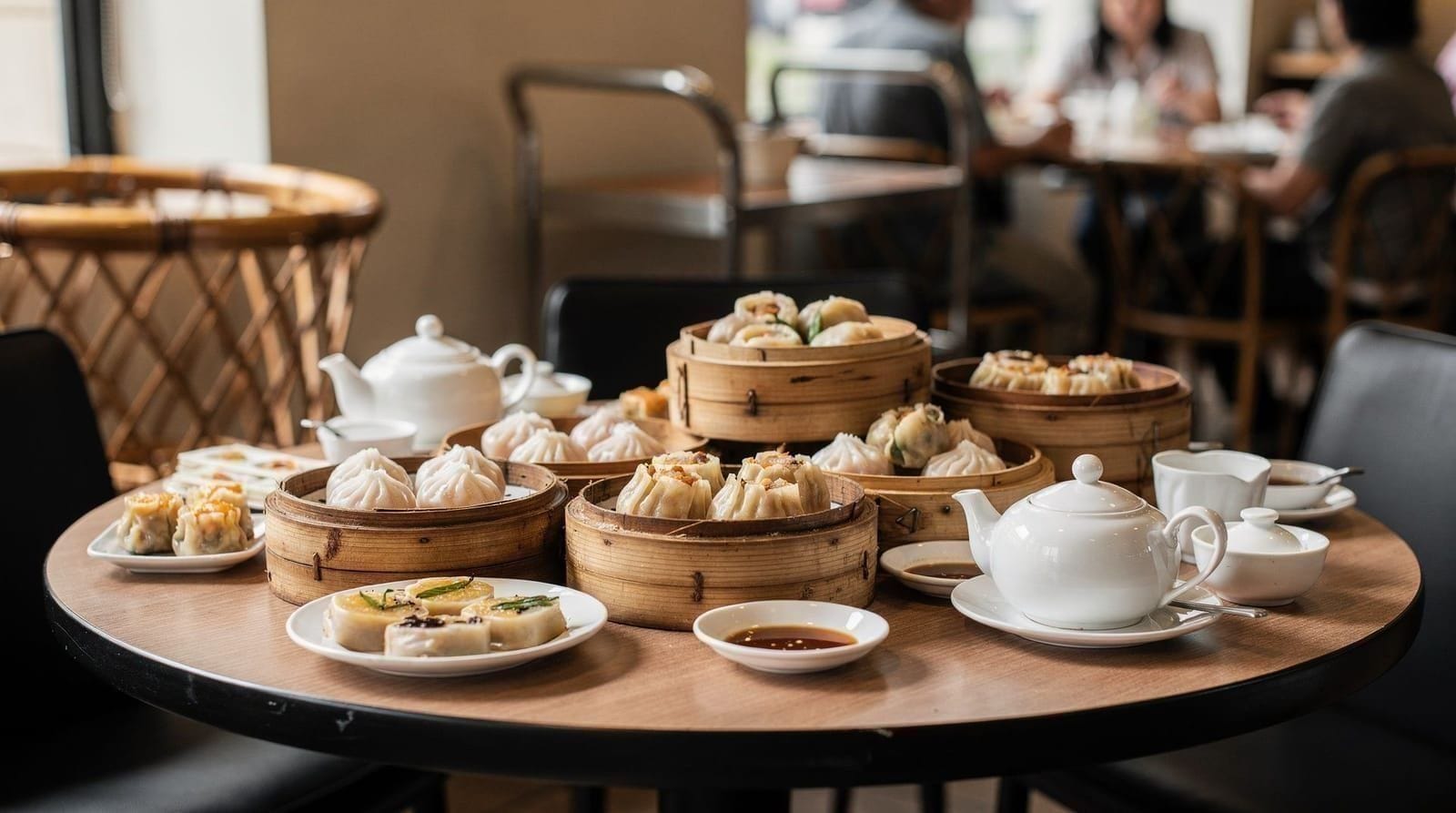
For context on the broader dim sum experience, the dim sum ordering guide explains the full system. The first-time Hong Kong guide has a food section for broader context. If you want to see what a bigger food-focused plan looks like, the Hong Kong foodie itinerary strings meals like these into a full trip, and the Michelin cheap eats guide points to recognised budget spots elsewhere in the city. Paying with an Octopus card works at some of the shops mentioned here.
If you’d rather combine eating with seeing the neighbourhood’s markets in one guided outing:
Mong Kok street markets private walking tour