Hong Kong hidden gems — places most tourists miss entirely
Hong Kong: Lai Chi Wo Village and Hakka culture tour
What tourists miss and why
Hong Kong’s tourism infrastructure is excellent — the major sites are well-signed, the MTR takes you everywhere, and the experience of visiting the Peak or Tsim Sha Tsui is smooth and professionally managed. That infrastructure is also self-reinforcing: the more visitors go to the same six places, the more the tourist economy concentrates around those places, making everything else feel harder to access.
It isn’t harder to access. The places below are all reachable by MTR, bus, or a short walk from somewhere you’d already be going. They’re undervisited not because they’re difficult but because no one pointed at them.
| Cost | Free to low-cost at every site on this list |
| Time needed | 1–3 hours per stop |
| Getting there | MTR + short walk/bus for most; ferry for Po Toi |
| Best for | Repeat visitors, or first-timers wanting to skip the crowds |
| Pair with | Itinerary planning guide to sequence them |
1. Sham Shui Po fabric and electronics district
Sham Shui Po is the most interesting neighbourhood in Kowloon for anyone who wants to understand how the city actually works. The area around Ki Lung Street and Ap Liu Street is a dense commercial zone of fabric wholesalers, electronics recyclers, button and trim shops, and gadget dealers. You can buy a 1TB SSD for less than you’d pay at home, or watch someone repair a vintage sewing machine in a shop that’s been there for 40 years.
The Sham Shui Po area guide covers the specific streets in detail. Budget 2–3 hours and bring cash.
2. Chi Lin Nunnery and Nan Lian Garden
The Chi Lin Nunnery in Diamond Hill is a Tang Dynasty-style wooden temple complex built between 1934 and 2000. The architecture uses traditional wooden joinery — no metal nails — and the complex includes incense halls, lotus ponds, and a functioning convent. Entry is free.
Immediately adjacent is the Nan Lian Garden (南蓮園池), a public park designed in classical Tang garden style, with rockeries, wooden pavilions, and a small restaurant serving Buddhist cuisine. For current entry details, see the official site. The contrast between this serene park and the surrounding public housing towers is genuinely striking.
Getting there: Diamond Hill MTR, Exit C2.
3. Lei Yue Mun fishing village
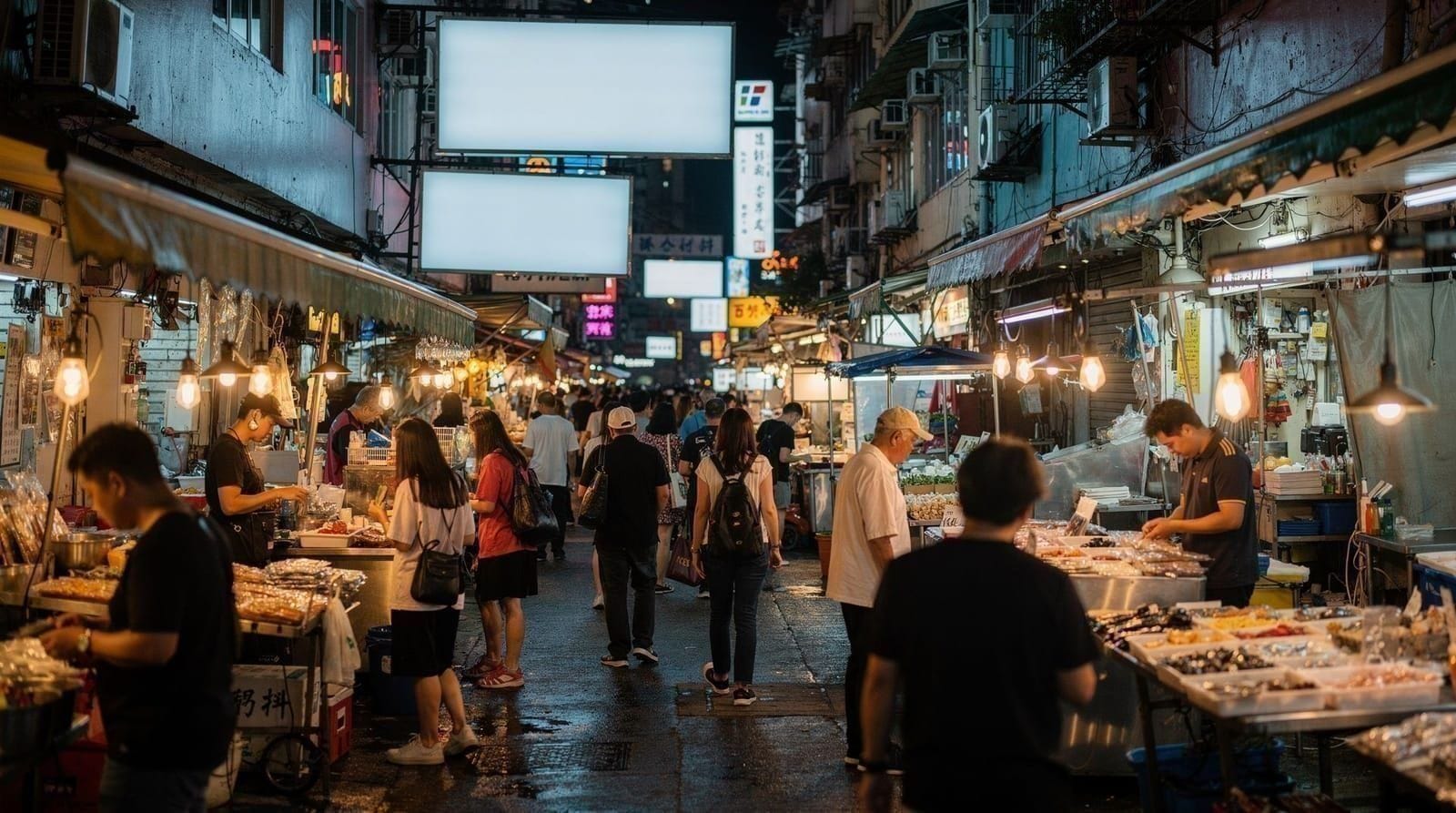
Cross the narrow eastern entrance to Victoria Harbour by sampan (a flat-bottomed boat, HKD 5) from Shau Kei Wan to Lei Yue Mun. The village is one of the last functioning fishing communities accessible from urban Kowloon — narrow alleyways, stacked live seafood tanks, neon signs for restaurant operations that have been running for decades.
Arrive at 18:00 and choose your seafood from the tanks at street level; the restaurants will cook it to order. This is not a tourist performance — the pricing is reasonable and the clientele is local. Budget HKD 200–400 per person for a generous seafood dinner.
Getting there: MTR to Yau Tong Station (Tseung Kwan O Line), then walk to Yau Tong Ferry Pier and take the sampan.
4. Ten Thousand Buddhas Monastery, Sha Tin
The Ten Thousand Buddhas Monastery in Sha Tin requires a 15-minute climb up 431 steps from Sha Tin MTR station. The steps are lined with life-sized gold Buddha statues in different poses. At the top, the main hall contains more than 13,000 miniature Buddha figures. Also on-site: a nine-storey pagoda and a mummified monk in a glass case.
The complex is free, open daily 09:00–17:30, and visited by very few tourists despite being a 30-minute MTR ride from Central. The walk up is genuinely steep — wear appropriate footwear.
5. Tai O fishing village
Tai O on Lantau Island is a working fishing community built partly on stilts over the water. The main attraction is not a specific sight but the overall atmosphere: dried seafood laid out on racks, elderly residents in traditional clothing, and a pace of life that’s completely different from urban Hong Kong.
Getting there requires a bus from Tung Chung (Bus B6) or a ferry, and takes about 45 minutes from the MTR. The trip fits naturally with a visit to Ngong Ping and the Big Buddha — see the Lantau day trip guide for a combined itinerary.
6. Ping Shan Heritage Trail
The Ping Shan Heritage Trail in Tuen Mun is a 1.6km walking trail through one of the oldest surviving villages in the New Territories. It includes a Tang clan ancestral hall (14th century), a three-storey pagoda (the oldest in Hong Kong), and several walled villages. Free and well-signed in English.
Getting there: West Rail Line to Tin Shui Wai Station, then a bus or 20-minute walk. Plan 2 hours minimum.
7. The Lui Seng Chun Building, Mong Kok
This 1931 Tong Lau (shophouse) building in Mong Kok is one of the best-preserved examples of the verandah-style architecture that once characterised Hong Kong’s commercial streets. It was used as a Chinese medicine clinic for decades and is now preserved by the Hong Kong Baptist University as a heritage Chinese medicine clinic and community space. The building itself, with its arched colonnade and decorative tile work, is worth seeing from the outside even if you don’t go in.
Location: 119 Lai Chi Kok Road, Shek Kip Mei MTR.
8. Hac Sa Beach and the wetlands, Macau
If you’re doing a Macau day trip, most visitors spend their time in the historic centre and the Cotai casinos. Hac Sa (Black Sand) Beach on Coloane Island is the opposite of both: a dark-sand beach backed by hills, with almost no tourists. The walk from the beach through the Coloane village takes 20 minutes and passes a small Portuguese chapel and tile-fronted houses.
Getting there: Bus 26A from the Macau ferry terminal. The Macau transport system is cheap and reliable.
9. Kowloon Walled City Park neighbourhood
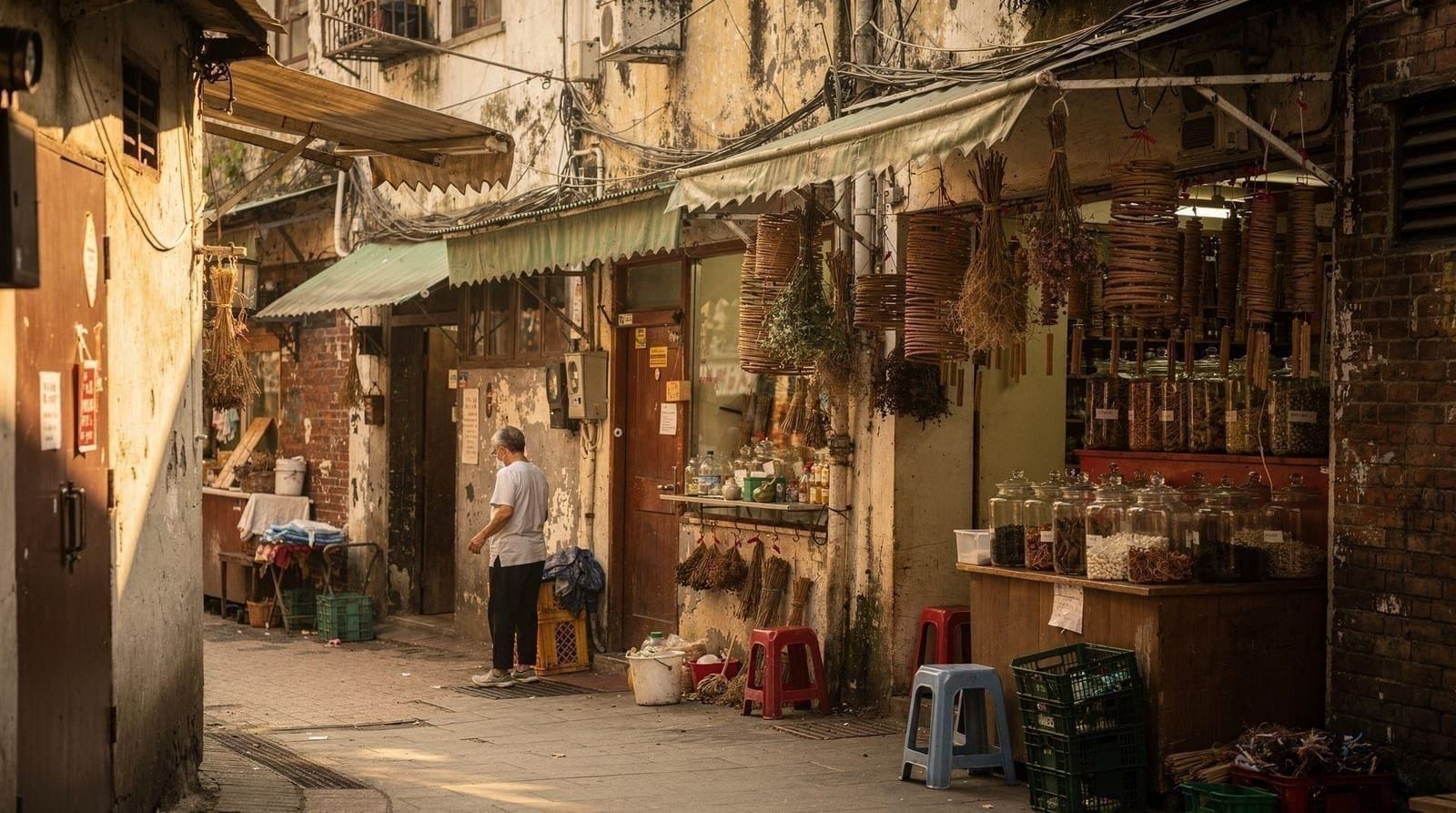
The Walled City itself was demolished in 1994, but the surrounding Kowloon City neighbourhood retains one of the most intact pre-handover streetscapes in Hong Kong. Thai restaurants on Renfrew Road (Kowloon City has the best Thai food in Hong Kong, catering to a significant Thai-descent community), traditional barbers, herb medicine shops, and a general atmosphere of not-having-been-redeveloped.
The park’s Yamen building has historical displays of the original Walled City. The park itself is pleasant if unremarkable. The surrounding streets are the actual point.
Getting there: Bus 1 from Jordan Road, or taxi from Kowloon Tong MTR.
10. Upper Lascar Row — Cat Street market
Upper Lascar Row in Sheung Wan is also called Cat Street, and it’s a long-running antique and curio market of dubious provenance but considerable entertainment. Carved jade pieces, old coins, Mao-era memorabilia, vintage photographs, Chairman Mao alarm clocks, pre-war maps of Hong Kong — the authenticity of most items is questionable, but the browsing is excellent.
Price everything as decorative rather than investment value, and bargain casually. The market runs roughly 10:00–18:00.
Getting there: MTR to Sheung Wan, walk up the hill toward Hollywood Road. The Soho and Central guide covers the surrounding area.
11. Lung Fu Shan Country Park
Between Victoria Peak and the Mid-Levels is a fragment of country park — Lung Fu Shan — that’s less than 10 minutes walk from the MTR (Sai Ying Pun Station, Exit D) and almost never mentioned in tourist guides. Short hiking trails, woodland, and views down into Pok Fu Lam without the Peak crowds. Good for an early morning walk before the city gets loud.
12. The public libraries — Lei Cheng Uk Han Tomb Museum
Attached to the Sham Shui Po district, in a residential area, is the Lei Cheng Uk Han Tomb Museum: a sealed 2000-year-old Eastern Han Dynasty tomb discovered during construction in 1955. The tomb is small — the four vaulted chambers are visible through a glass window — but the context (ancient Chinese tomb sitting under a modern housing estate) is remarkable. Free. Open daily except Tuesday.
13. Po Toi Island
Po Toi is the southernmost island of Hong Kong, with no permanent car traffic and approximately 20 residents. It requires a ferry from Aberdeen or Stanley (weekend and public holiday service only — check current timetables), and rewards visitors with sea stacks, rock carvings (possibly 3000 years old), and a single restaurant serving basic Cantonese seafood. It is genuinely remote by Hong Kong standards.
14. The tram depot, Sai Wan Ho
The Hong Kong Tram Company’s main depot is in Sai Wan Ho, and during certain periods (check the Tram company website) the depot is open for public visits. You can see the full fleet of double-decker trams up close, including vintage models. Even from the street outside, the sight of dozens of trams parked in rows is unusual.
The ding ding tram journey passes near here on the Shau Kei Wan route.
15. Lai Chi Wo, a Hakka village reborn
Lai Chi Wo in the far northeastern New Territories is a 400-year-old Hakka walled village that was almost entirely abandoned by the 1980s as residents emigrated, then partially revived over the last decade through a conservation and eco-farming project. The restored houses, feng shui woodland, and mangrove boardwalk make it one of the most atmospheric — and hardest to reach — entries on this list: a bus to Wu Kau Tang followed by an hour’s hike, or a weekend kaito ferry from Ma Liu Shui. It rewards the effort more than almost anywhere else on this list precisely because so few visitors make it out there.
Lai Chi Wo Hakka village and culture tour16. Kowloon Walled City’s less-known cousin — Kat Hing Wai
While Kowloon Walled City Park explains what was demolished, Kat Hing Wai in Yuen Long shows what a genuine walled village still looks like, inhabited and largely unchanged in layout since the Qing dynasty. It’s a short bus or taxi ride from Kam Sheung Road MTR and pairs naturally with the Ping Shan Heritage Trail above if you’re already out in that part of the New Territories.
How to sequence a hidden-gems day
Trying to combine more than two or three of these in a single day usually backfires — several are in different corners of the territory and the transit time between them can exceed the time spent at the site itself. A sensible Kowloon-side day: Sham Shui Po in the morning, Chi Lin Nunnery and Nan Lian Garden at midday, Lei Yue Mun for a seafood dinner in the evening. A Hong Kong Island day: Lung Fu Shan early, Cat Street and Hollywood Road late morning, finishing with the tram depot in Sai Wan Ho if timing allows. The New Territories sites (Ping Shan, Lai Chi Wo, Kat Hing Wai) are best treated as their own dedicated half- or full-day trip rather than bolted onto an island or Kowloon itinerary.
For a guided version that strings together several undervisited spots with a private driver, which solves the transit-time problem directly: Hong Kong hidden gems hiking tour with private driver ---
Most of these places take between 1 and 3 hours. None requires special access or permissions. For a framework to organise them into your trip, the Hong Kong itinerary planning guide helps sequence them alongside the major sites.