Hong Kong's neon signs — the story behind the glow
Hong Kong: 1 hour night photoshoot cinematic moody personal
Why the neon is almost gone
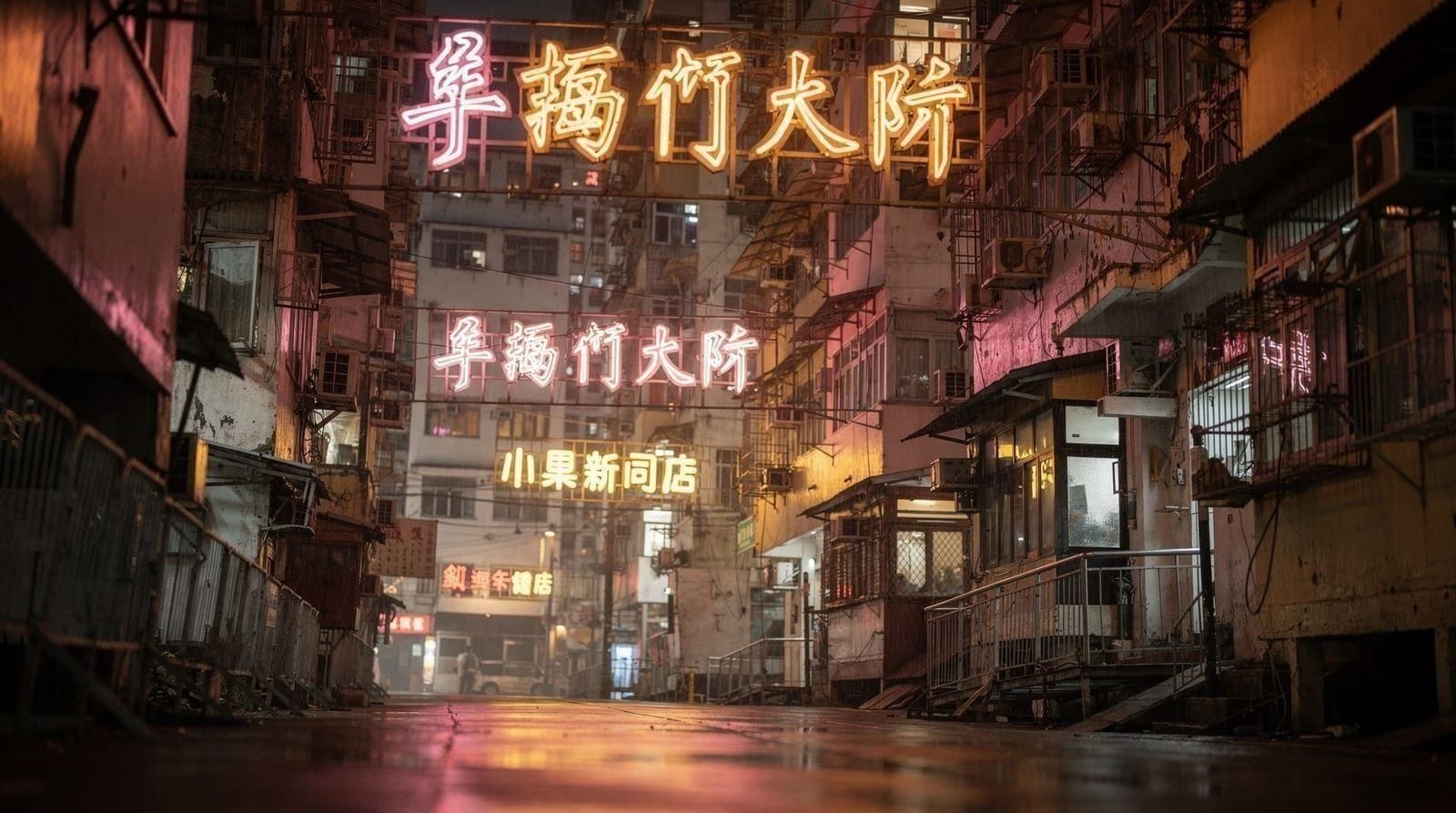
The photographs that defined Hong Kong’s visual identity for decades — dense canyons of glowing Chinese characters, stacked neon tubes in red and green and gold, Nathan Road lit to a perpetual dusk — represent a Hong Kong that is, for the most part, gone. The city’s neon sign industry peaked in the 1970s and 1980s. By the 2020s, roughly 90 percent of it had been removed.
This isn’t a story about decline, exactly. It’s a story about regulation, economics, and urban transformation — and about what happens when a city’s most iconic visual feature becomes incompatible with the safety codes it was always pushing up against.
| Peak era | 1970s–1980s |
| Removed since | Roughly 90% by the 2020s |
| Best surviving areas | Jordan/Yau Ma Tei, Sham Shui Po, Tai O |
| Cost to see them | Free — just walk after dark |
| Best time | Dusk, before full darkness blows out the tubes |
How the signs came to exist
Hong Kong’s neon culture grew from a specific combination of factors. The colony’s rapid industrialisation in the 1950s and 1960s created a commercial economy of small businesses competing for attention on narrow streets. Signage was the primary marketing tool. And neon — which the Cantonese called 霓虹燈 (yàih hùhng dāng, literally “rainbow light”) — was technologically available, visually dramatic, and affordable for small operators.
The signs were not just advertising. They were spatial. In a city of narrow streets and dense low-rise blocks, a sign that projected horizontally over the pavement — sometimes 3 to 4 metres into the street — claimed space that the ground floor of a shophouse didn’t have. You could stack multiple businesses’ signs at different heights: goldsmith on the third floor, restaurant on the second, pharmacy on the ground floor, each marking their presence at a different vertical level.
The result was an accidental but highly functional information system — and one of the most visually complex urban environments in the world.
The craftsmen behind them
Neon sign making was a skilled trade, concentrated in small workshops in Sham Shui Po and Yau Ma Tei. The process of bending glass tubes to form Chinese characters required years of apprenticeship. The strokes of a Chinese character cannot simply be extruded; the tube must be bent to follow each stroke without breaking, and the junctions must hold the gas seal.
At its peak, Hong Kong had hundreds of neon workshops. Craftsmen could produce a full-sized shopfront sign in a week. The major trade was in the Chinese characters, but English letters and pictograms — rotating glasses, animated dragons, flashing crowns — were also common commissions.
By the 1990s, the trade had already begun to decline. LED technology was cheaper to run and didn’t require the skilled glassblowing that neon demanded. Younger craftsmen weren’t entering the trade. The knowledge was held by an aging generation.
What ended the neon era
The legal framework that eventually ended most of Hong Kong’s neon was not designed to target neon specifically. The Buildings Ordinance and subsequent Minor Works Control System regulations, updated and tightened in the 2000s, required that all projecting signs above a certain size be structurally certified and renewed on a regular schedule. The enforcement was sporadic for years, but the Buildings Department increased pressure from around 2010.
The practical economics were brutal: recertifying an old neon sign cost thousands of dollars. For a small shop on a tight margin, especially one renting a space with no guarantee of tenure, it made no sense to spend money on a sign you might have to remove when your lease ended. The signs came down.
The Buildings Department also removed signs deemed structurally dangerous or non-compliant directly, without waiting for owners to act. In a single enforcement sweep in 2019, dozens of iconic signs in Mong Kok were removed.
What remains
The survivals are scattered but real. Some exist because their owners maintained certification or because they’re on owner-occupied buildings. Some survived in areas of the city where enforcement moved more slowly. Some remain because the buildings they’re on are old enough that the signs are structurally integrated into the facade.
Where to look in 2026:
-
Jordan and Yau Ma Tei: The streets between Nathan Road and Reclamation Street still have some neon on restaurant and mahjong parlour frontages. Reclamation Street itself, and the cross streets near the Jade Market, retain the densest concentration of older signage in Kowloon.
-
Sham Shui Po: The commercial streets around Ki Lung Street and Nam Cheong Street have hardware shops and fabric merchants whose signage predates the LED era. Some neon survives.
-
Wan Chai: The older district around Lockhart Road and Jaffe Road has some remnant signs, though many have been replaced as the area gentrified.
-
Tai O, Lantau Island: This fishing village on Lantau Island retained signage longer than urban areas, simply because enforcement attention was lower and the economics of replacement were harder.
The preservation effort
A small number of organisations have been working to document and preserve what remains. The M+ Museum’s collection includes neon signs from demolished buildings — the museum has a rotating display and an archive of photographic documentation. See the M+ Museum guide if you’re interested in the institutional history.
The Hong Kong Neon Heritage project has documented over 150 signs and worked with individual businesses to maintain some of the most significant examples. The goldsmith and pharmacy signs from the 1960s are considered the most historically significant, as they represent the early development of the visual grammar that became iconic.
A few craftsmen still practice the trade, mostly for restorations, commissions from designers and hotels, and art installations. The knowledge hasn’t entirely disappeared, but it exists in the hands of perhaps a dozen working glassblowers.
The irony of the revival
There is a rich irony in what has happened to neon’s cultural status in Hong Kong. At the moment when the actual signs were disappearing from the streets, neon became Hong Kong’s most globally recognised visual symbol — used in tourism marketing, product design, and international media representations of the city.
Virtually every hotel bar that opened in Hong Kong from 2015 to 2025 installed a neon sign as a design feature. Restaurants added neon quotations on their walls. The aesthetic that was being demolished from the streets was being manufactured in new form inside commercial interiors.
This revival is mostly LED neon flex — the flexible plastic tubing that mimics neon light but costs a fraction to produce and run. Real neon is the glass tube with its characteristic flicker and warmth. The distinction matters if you’re looking for the actual thing, not a reproduction.
The exploring old Hong Kong connection
The neon story is inseparable from the broader question of what counts as Hong Kong’s heritage and who decides what gets preserved. The city’s preservation mechanisms have historically prioritised colonial architecture (government buildings, churches) over the commercial vernacular that most Hong Kong people actually inhabited. A Victorian-era government building gets listed; a 1960s goldsmith sign gets removed as a safety hazard.
The Tai Kwun project — the conversion of the former Central Police Station into a cultural centre — represents one model of preservation. The neon archive at M+ represents another. Neither fully addresses the question of the living, working, illuminated streetscape.
Where to see the best survivals
If you have one evening to spend looking for neon, the most rewarding route is:
- Start at Yau Ma Tei MTR station and walk north along Reclamation Street, looking at the cross streets.
- Walk east to Nathan Road and south, observing what survives above shop level.
- Continue to Jordan and the area around Temple Street — the Temple Street Night Market operates from 19:00 and has overhead string lighting that creates some of the best night-market atmosphere in the city.
- End at the Jordan MTR station or continue on foot down to Tsim Sha Tsui for the harbour promenade.
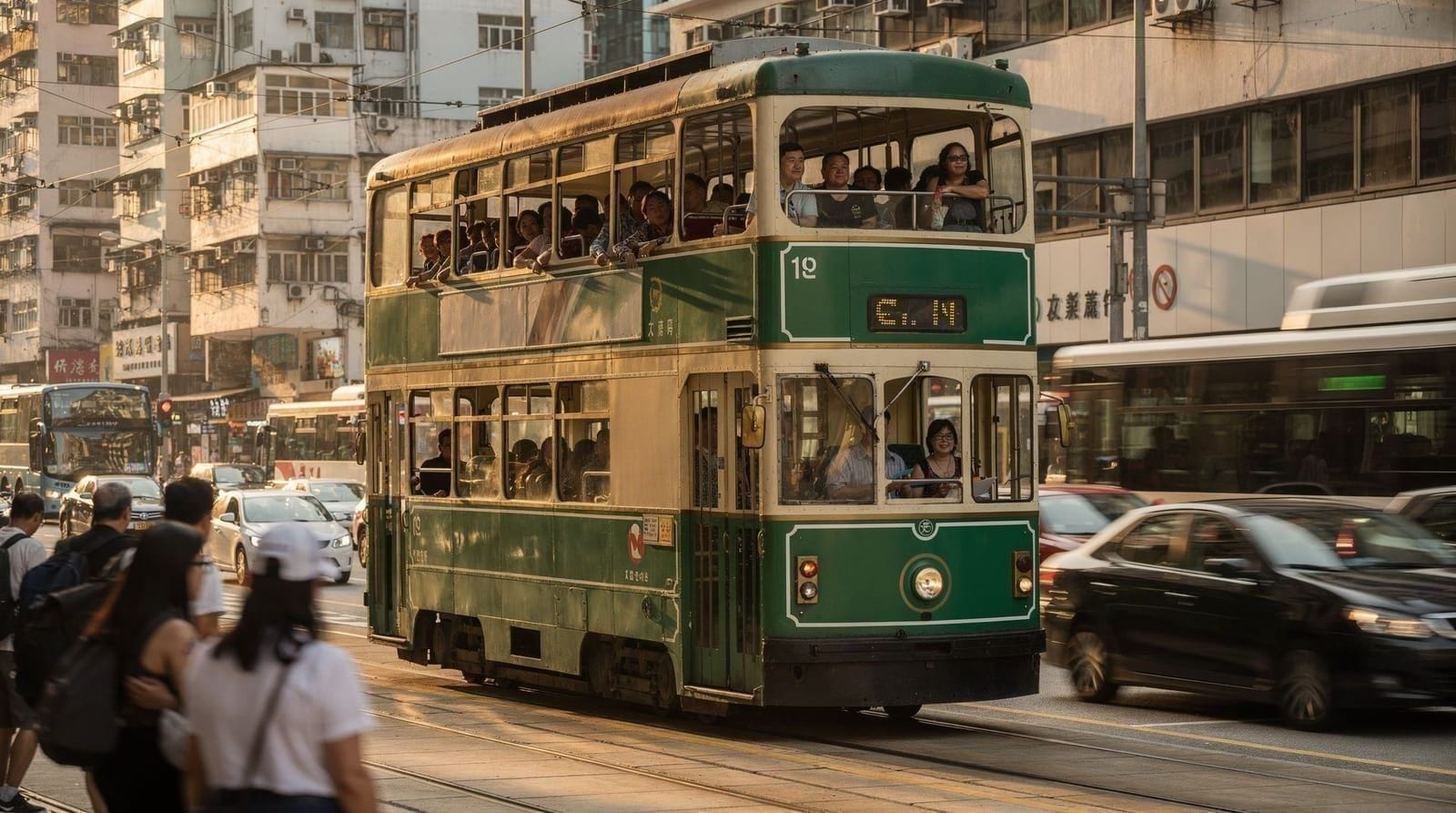
The ding ding tram on Hong Kong Island also passes through areas with surviving commercial signage on its upper deck — a good way to survey at a slow pace.
Photographing what’s left
The surviving signs are best photographed at dusk, when the ambient light is low enough that the neon illuminates but there’s still some sky tone. Full dark tends to blow out the tubes and lose the surrounding context. A tripod helps but isn’t essential at modern camera ISOs.
The best photo spots guide covers specific locations and timing in more detail. For a structured walk with someone who knows which buildings still have the real thing, the night photography tour route covers much of the same ground.
For a guided evening focused specifically on the neon-lit streets and their photography, with someone who tracks which signs are still up month to month:
Hong Kong cinematic night photoshoot with local photographerFitting a neon evening into a longer trip
A neon hunt works best as one evening inside a wider plan rather than the whole day. Kowloon’s older streets pair naturally with the Mong Kok area guide and the Sham Shui Po area guide, so you can wander the daytime markets and stay on for the lights. If you are short on time, the 48 hours in Hong Kong plan or the Hong Kong layover itinerary leave room for an evening walk, and the first-timer itinerary shows where it can slot in.
Getting around is simple: the Hong Kong MTR guide explains the lines that reach Yau Ma Tei, Jordan and Sham Shui Po, and the Octopus card guide covers paying for it. For a cheap bite before the lights come on, the Temple Street Night Market guide and the best street food guide point to good options nearby. Neon also ties in with the city’s character as a whole, so the hidden gems post and the Hong Kong skyline guide make good companions for the same trip.
If you would rather not navigate the side streets alone, you can book a private walking tour with a local guide and ask to spend the late afternoon in the older Kowloon neighbourhoods, so that you reach the surviving signs as the light fades. A guide can also explain the shopfronts and trades behind the signs, which is context a map will not give you.
To see the wider city lit up after your neon walk, a ticket to an indoor observation deck high above the harbour shows the other side of the story: the modern skyline glowing against the low-rise streets you have just explored.
Real neon vs. LED flex — how to tell the difference
At a glance, LED flex tubing and genuine neon can look similar, but a few tells give it away. Real neon has a slightly uneven, flickering glow with visible individual glass segments at joints and bends; LED flex is smoother, more uniformly bright, and often noticeably colder or more saturated in colour. Real neon hums faintly and warms up over a few seconds when switched on; LED is instant and silent. If a sign looks brand new but is styled like a 1960s pharmacy sign, it is almost certainly LED flex made to look vintage — genuine surviving neon is, by definition, decades old and shows it in the slight imperfections of hand-bent glass.
What a surviving sign owner is up against
Understanding the economics helps explain why so few holdouts remain. A structural recertification for a single projecting sign can run into the thousands of Hong Kong dollars, repeated on a multi-year cycle, for a business that may not even own the building it operates from. Compare that to switching to a flat, wall-mounted LED sign, which sidesteps the projecting-sign rules entirely and costs a fraction to install and run. From a purely commercial standpoint, keeping an old neon sign up is close to irrational — which is exactly why the ones that remain tend to belong to businesses with either genuine sentimental attachment, secure ownership of their premises, or both.
The signs will keep coming down. The ones that survive are doing so on borrowed time, economically speaking. It’s worth seeing them before they’re gone entirely.