Hong Kong Instagram spots — the honest photographer's guide
Hong Kong: Victoria Peak Tram & Sky Terrace 428 ticket
The trouble with Instagram spots
Most “Instagram spots” lists are circular: they tell you where other people have already photographed. The spots get crowded because everyone goes there; the photos look the same because everyone is shooting from the same position with the same composition. This list tries to do something slightly different — it tells you which locations are genuinely photogenic, which are mostly popular because of a single viral photo, and which require actual effort to get a shot that looks like yours rather than everyone else’s.
Hong Kong is a legitimately exceptional photography city. The density, the contrast between neon and hills, the visual grammar of the harbour — these aren’t manufactured. The task is finding the angle that isn’t already exhausted.
| Cost | Free at nearly every spot below |
| Best single shot | TST waterfront at sunset — no ticket, no queue |
| Most sensitive spot | Monster Building — residential, be quick |
| Gear | Wide-angle lens; tripod for night shots |
| Worst crowds | Monster Building, Tai O, weekends |
The Monster Building, Quarry Bay
The Montane Mansion (known informally as the Monster Building) in Quarry Bay is a cluster of five residential tower blocks built around a central courtyard, creating a visually overwhelming density of windows, balconies, and air conditioners. The inside of the courtyard, when photographed looking straight up with a wide-angle lens, has become one of Hong Kong’s most reproduced images.
The honest version: This building is a legitimate photograph. The framing-from-below shot is genuinely striking. But you are not the first person with this idea — the central courtyard is visited by dozens of photographers daily, and local residents are understandably weary of the intrusion. Be discreet. Don’t block access, don’t photograph residents, and spend less than 10 minutes in the space.
Getting there: MTR to Tai Koo Station (Island Line), Exit A, short walk to Fook Cheong Street. The five buildings are on Fung Tak Road.
Best time: Overcast midday for the even light; the direct sun creates harsh shadows in the courtyard.
Choi Hung MTR — the basketball courts
The Choi Hung Estate is a 1960s public housing estate with a multicoloured facade — each floor is painted in a different pastel colour, creating a gradient effect that photographs well. The basketball courts on the rooftop car park of the estate, with the coloured facade as a backdrop, have become one of the more photogenic spots in Hong Kong.
Getting there: MTR to Choi Hung Station (Kwun Tong Line), Exit C, then walk through the estate (5–10 minutes).
The honest version: The colours are genuinely good. But the basketball courts are used by residents, and on weekday mornings you’ll find actual basketball happening. This is a public housing estate, not a set — be considerate about timing and don’t obstruct residents.
Blue House cluster, Wan Chai
The Blue House on Stone Nullah Lane in Wan Chai is one of the last intact Tong Lau (Chinese shophouse) buildings in Hong Kong, now painted bright cobalt blue by its heritage designation. The adjacent Yellow House (on King Sing Street) and Orange House complete the cluster.
Best timing: Morning light (08:00–10:00) hits the blue facade directly. The narrow lane fills with delivery vehicles midday.
Combine with: The adjacent Street Art project on Ash Street and the Wan Chai market building on Cross Street, both within a 5-minute walk.
Pottinger Street steps
The cobblestone stairway connecting Queen’s Road Central to Hollywood Road through the heart of Central is one of Hong Kong’s most atmospheric pedestrian streets. The narrow stairs, flanked by shops and old facades, point down toward the glass towers of the CBD — a layering effect that compresses the old and new city into a single frame.
Best timing: 07:00–09:00 before the lunchtime crowd. Late afternoon (16:00–18:00) also works, with long shadows.
Technical note: The stairs are genuinely steep and the cobblestones uneven — mind your footing if you’re shooting while moving.
Kennedy Town swimming shed
The western end of Hong Kong Island has a working-class character that’s been preserved partly because of later MTR access. The Kennedy Town swimming shed — a covered, sea-level bathing area on the waterfront — is visually interesting in the morning when swimmers are using it and the light comes off the water.
Getting there: MTR to Kennedy Town Station (Island Line), walk to the waterfront (5 minutes).
Combine with: The Smithfield farmers’ market area and the old tram terminus (the end of the ding ding line) nearby. See the tram journey post for the full route.
Tai O fishing village — stilt houses
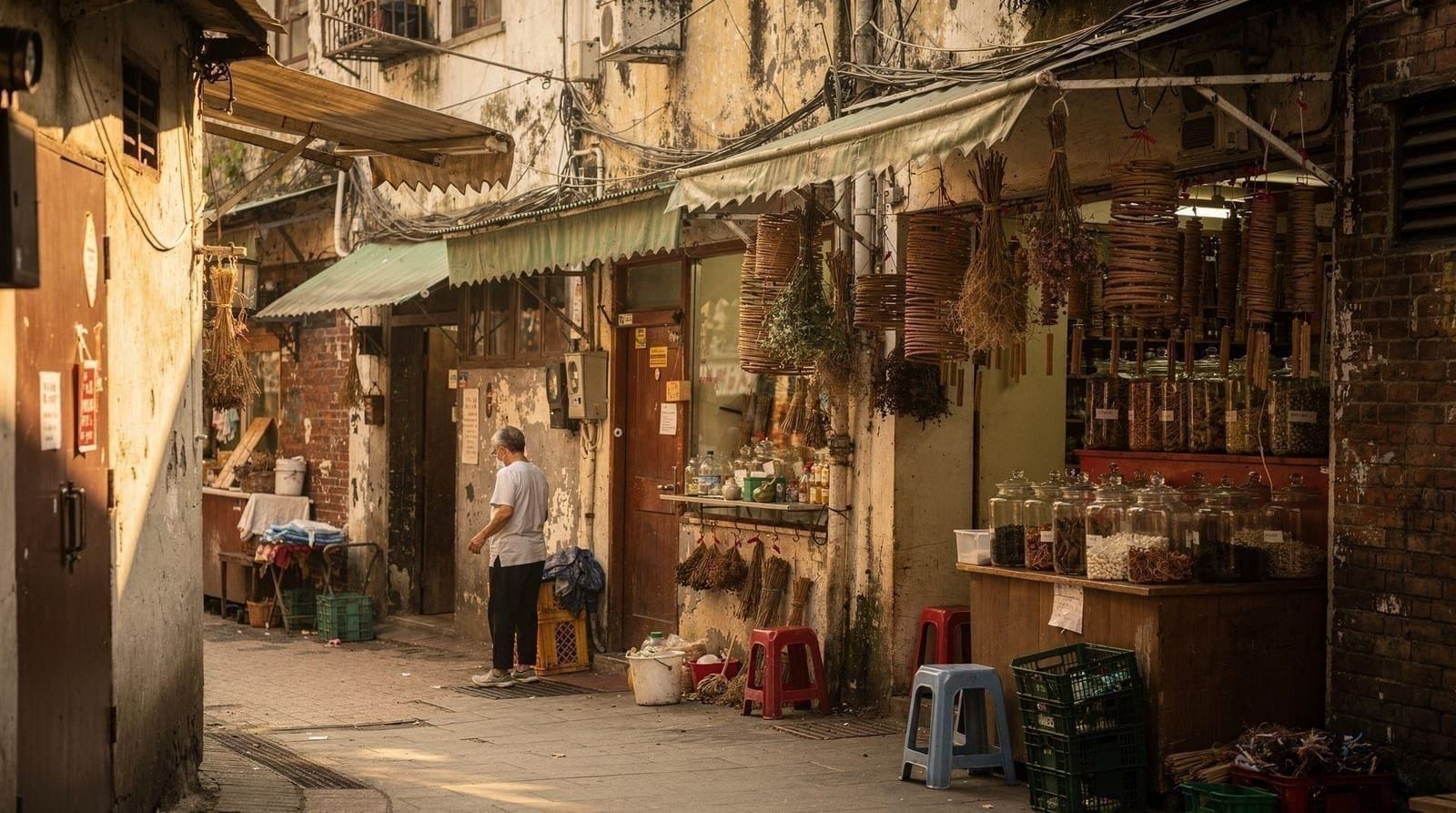
Tai O on Lantau Island is the most frequently photographed traditional village in Hong Kong. The stilt houses over the water channel, the dried seafood, the small boats — it photographs beautifully in morning light. The village is also genuinely functioning, not a heritage reconstruction.
Getting there: Takes about 90 minutes from Central (MTR to Tung Chung, then bus B6). Budget a half-day minimum. The Lantau day trip guide covers combining this with the Big Buddha.
Best timing: Arrive before 10:00. Tour groups start arriving around 11:00 and the village lanes get crowded.
Wong Tai Sin Temple — incense and gold
The Wong Tai Sin Temple complex in Kowloon is one of Hong Kong’s most active places of worship, and the visual elements — golden roofs, red columns, incense smoke, formal offerings — make it one of the best-looking temples in the city.
Best timing: 07:30–08:30 (the temple opens at 07:30). The early morning ritual is active and atmospheric, and the light from the east catches the gold roofs well.
Important: This is a working religious site. Treat it as such. Long lenses let you document without intrusion.
Kowloon Walled City Park archway
The entrance archway to the Kowloon Walled City Park — looking through to the formal gardens with the mountain backdrop — is a cleaner, more composed shot than most people expect from what’s essentially a municipal park. The surrounding blocks of Kowloon City provide urban context when you shoot wide.
The Peak at sunrise — before the crowds
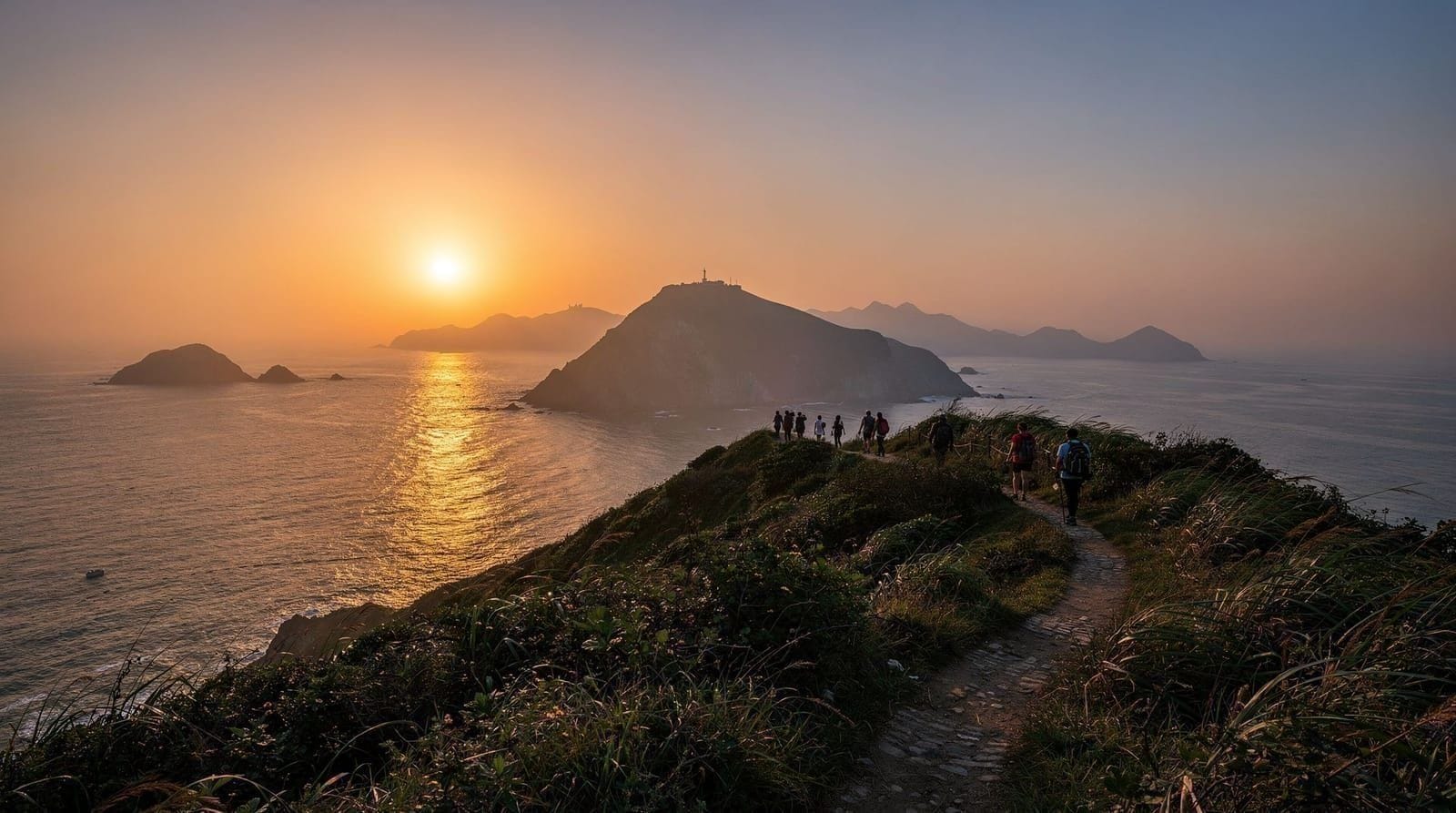
Most visitors go to Victoria Peak at midday or sunset. If you go for sunrise (around 05:30–06:30 in summer), you’ll find the Lion’s Pavilion lookout entirely to yourself, the air clearer than at any other time of day, and the light on the Central towers genuinely exceptional.
The trade-off: the Peak Tram doesn’t run this early. You need to take Bus 15 from Central (from Exchange Square), which runs from approximately 05:30. Or walk — the Morning Trail from Central is about 90 minutes.
If you would rather shoot the classic view with the tram in the plan, the Victoria Peak guide and the Peak Tram guide explain how the different ways up compare, and the Peak circle walk gives you more angles once you are there.
If sunrise is not your style and you prefer the classic daytime view from the top, a combined Peak Tram and Sky Terrace ticket covers the ride up and the viewing deck in one purchase. Whether the queue and the price are worth it is covered honestly in is the Peak Tram worth it, and the Peak page has the wider picture. For the question of tram versus bus, see Peak Tram vs bus to the Peak.
A second skyline from Kowloon’s observation deck
The Peak is not the only elevated viewpoint. An indoor observation deck on the Kowloon side gives you the harbour from above with the island towers across the water, which is useful when the weather turns or when you want to keep your camera out of the rain. Glass reflections are the main enemy, so shoot close to the window and keep your lens hood or a dark jacket against the pane. The Sky100 deck has been closed for renovation since 17 May 2025, with no reopening date announced, so check the status of the entry ticket to the indoor observation deck before planning around it. The skyline guide explains which vantage points give which composition. On a wet day, the surviving the rainy season post and the rainy day itinerary suggest what else to do with your camera.
Nan Lian Garden — the underrated one
The Nan Lian Garden in Diamond Hill (adjacent to Chi Lin Nunnery) is a classical Tang-style garden with wooden pavilions, lotus ponds, and manicured rockeries. The backdrop of public housing towers behind the traditional architecture creates an urban-vs-classical contrast.
Getting there: MTR to Diamond Hill Station, Exit C2. This is the hidden gems territory — most tourists miss it entirely. The Chi Lin Nunnery guide covers the neighbouring complex, which makes a natural pairing in the same visit.
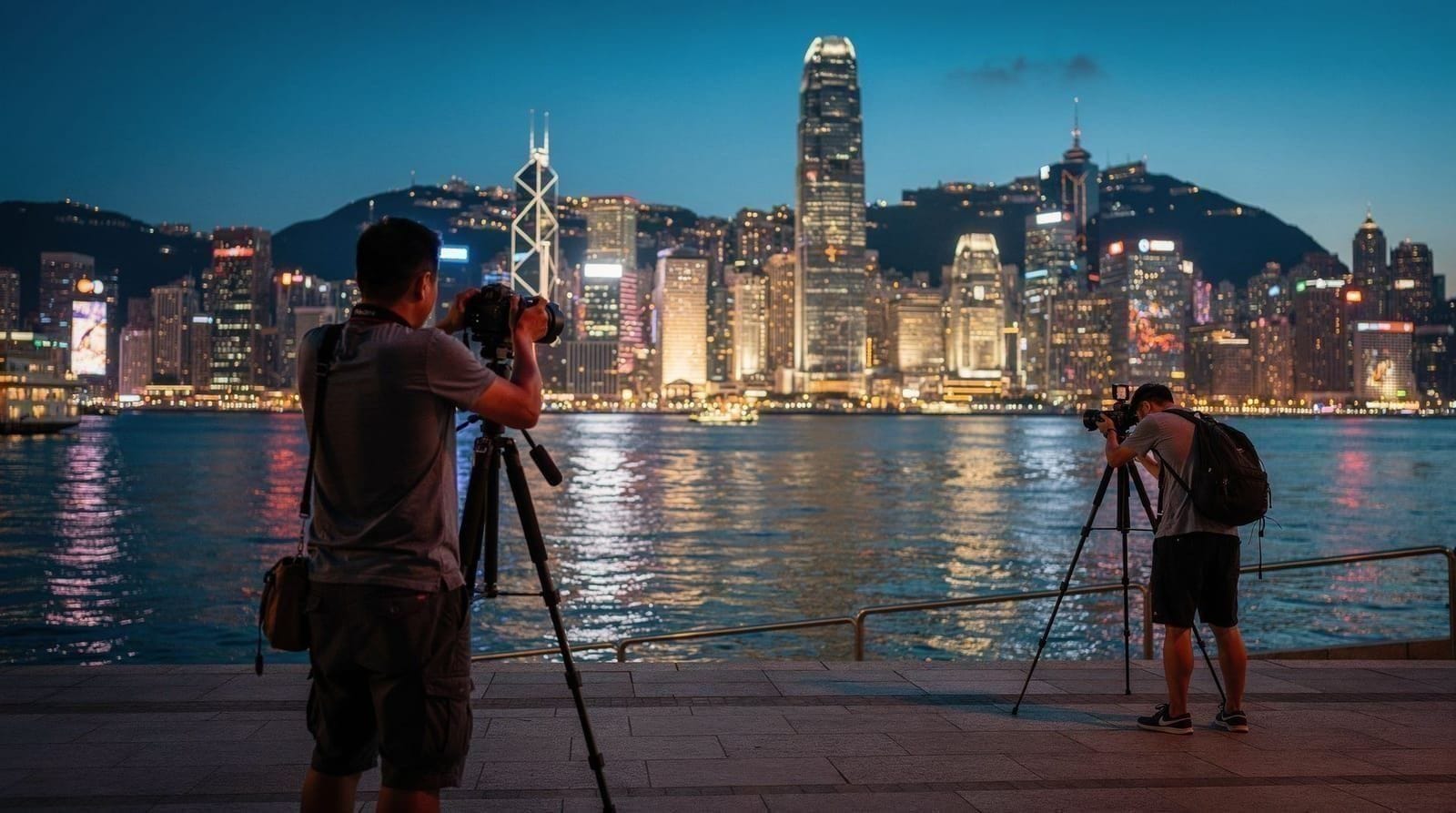
Tsim Sha Tsui clock tower at sunset
The 1915 clock tower at the western end of the TST promenade is one of the few pre-war structures remaining in Kowloon. In the early evening, the light from the west catches its brick facade against the harbour backdrop. It’s five minutes from the Star Ferry terminal and doesn’t require any planning — just good timing. The wider Tsim Sha Tsui area rewards a slow walk, and the Star Ferry guide shows how to turn the crossing itself into a photo opportunity. Staying on after dark lets you pair the skyline with the Symphony of Lights.
Night photography — Yau Ma Tei and Jordan
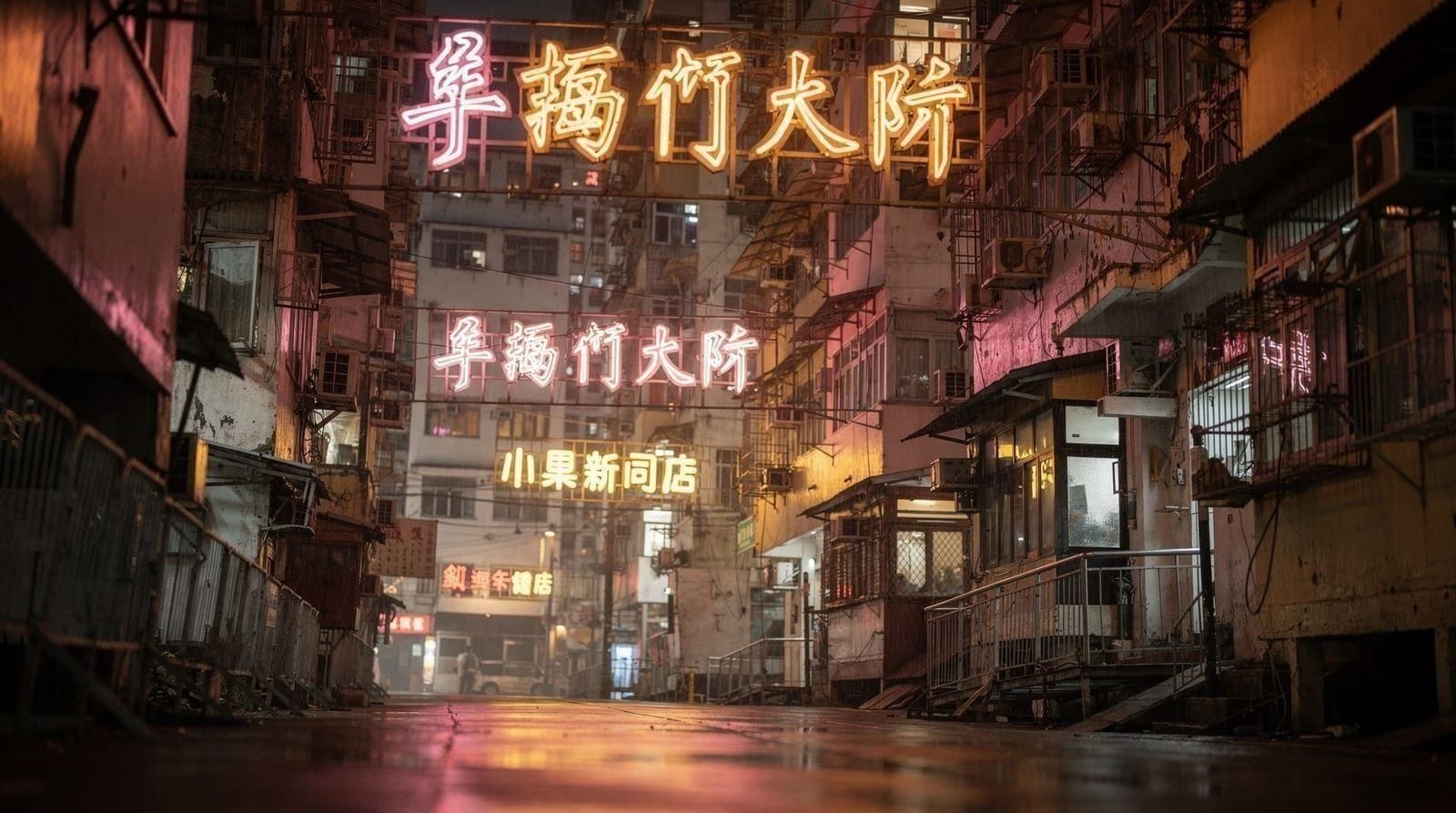
The streets between Jordan and Yau Ma Tei MTR stations retain some of the densest surviving neon signage in Hong Kong — pharmacy signs, pawn shop neon, restaurant lights at various heights. After dark, walking Reclamation Street north from Jordan Road gives you the neon canyon experience that has largely disappeared from Nathan Road itself.
The neon signs story explains why this is disappearing and where to find what remains. Nearby, Mong Kok and the Temple Street night market add more after-dark colour, while Yau Ma Tei itself rewards slow walking with a tripod kept folded in a bag until you find a spot with room. Bring a fast lens rather than a heavy rig; it keeps you mobile and keeps you out of the way.
For sunsets from the water side rather than the street, the best sunset spots post compares the options, and 48 hours in Hong Kong shows how to fit a photo-led day into a short stay. If you are still planning, the first-timer itinerary and the top things to do guide help you place these spots alongside the rest of the trip.
What to skip on the Instagram circuit
The Peak Tram moving shot: The image of a blurred tram against the city is widely attempted and very difficult to execute well — the tram is enclosed, the windows are reflective, and the composition requires being in exactly the right spot. The exterior shot (from the station or the road) is better.
Nathan Road at midday: Crowded, harsh light, everyone has the same shot. Come in the evening.
Photo tours of “hidden” alleys that aren’t hidden: Several commercial photo tour operators now run visitors through the same narrow lanes repeatedly. The “authentic” alleys are not authentic if 50 people were there yesterday.
For a structured photography session with a genuine local expert who knows the timing for each location:
Hong Kong cinematic night photoshoot with local photographerEtiquette that keeps spots open to photographers
Several locations on this list — the Monster Building, Choi Hung’s basketball courts, Wong Tai Sin’s morning ritual — are places where residents or worshippers already tolerate a steady stream of photographers, and that tolerance is not unlimited. A few habits keep it that way: never photograph a specific person’s face without a nod of acknowledgement, keep visits under 10–15 minutes at residential locations, don’t set up tripods or lighting rigs that block a walkway, and don’t return calling out for other people to “get the shot” you got.
Hong Kong has seen access to a handful of photogenic residential buildings tighten in recent years precisely because visitor behaviour got worse, not better, as the locations went viral — treat every spot on this list as something to protect rather than extract from.
Building a route around light, not location
The single biggest improvement most Instagram-focused visitors could make is planning around light rather than location. Golden hour in Hong Kong lasts roughly 30–45 minutes before sunset, and blue hour another 20–30 minutes after — a narrow window that determines whether the TST clock tower, Blue House cluster, or Pottinger Street steps actually deliver the shot you’re picturing.
A workable structure: morning session (07:00–09:00) for Pottinger Street, Kennedy Town, or Wong Tai Sin, when light is soft and crowds are thin; midday for indoor or covered locations like the Monster Building courtyard, where overcast, even light actually helps; and the evening window reserved entirely for the harbour-facing shots. The best photo spots guide breaks down exact timing windows location by location if you want more precision than this overview gives.