Hong Kong skyline guide — every angle, ranked honestly
Hong Kong: Victoria Peak Tram & Sky Terrace 428 ticket
Two skylines, one harbour
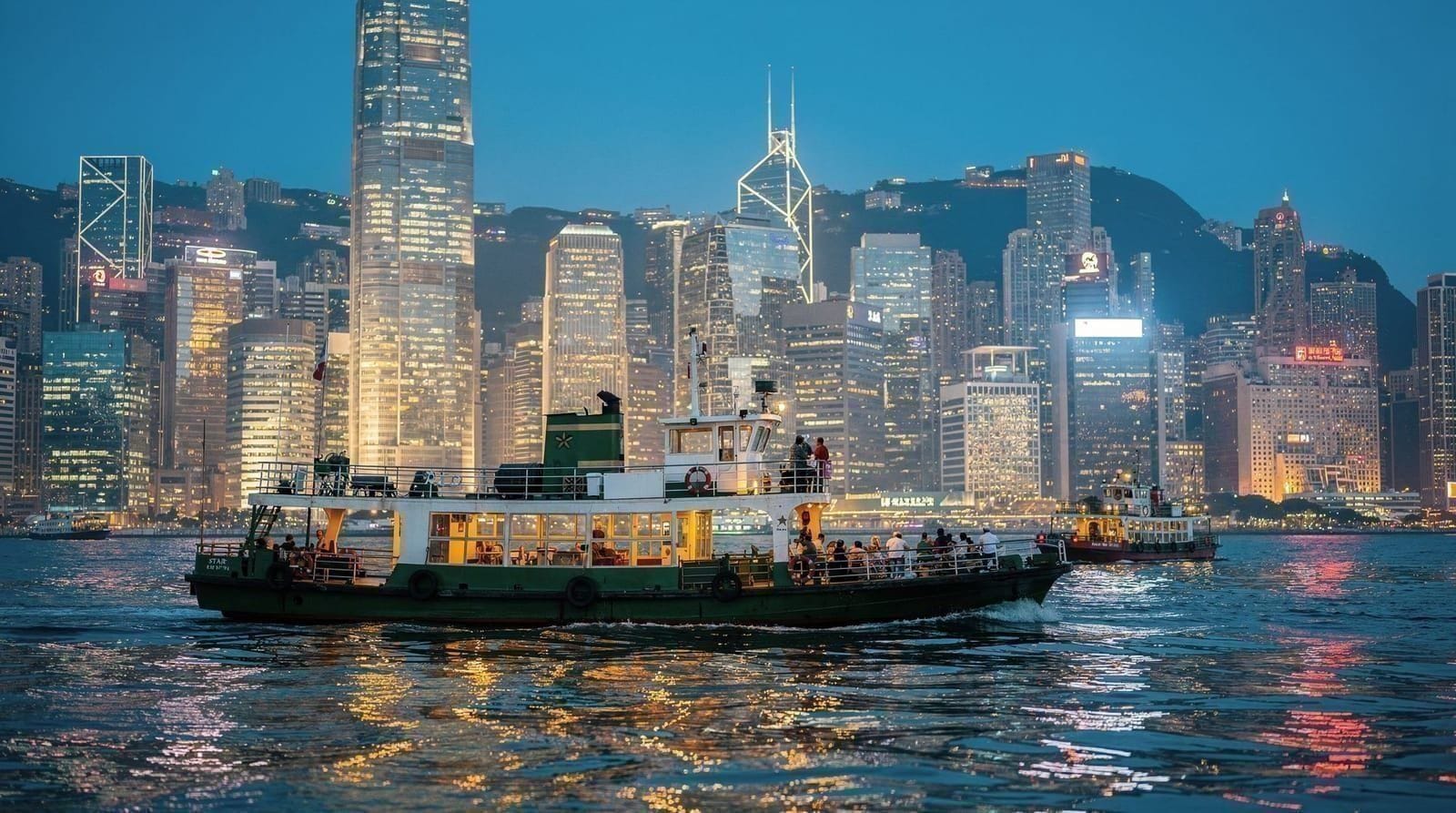
Hong Kong has a competitive advantage over almost every other skyline city: it has two of them, facing each other across a narrow harbour, and you can see both from the water. The Central and Wan Chai skyline on Hong Kong Island, and the West Kowloon skyline with the ICC towers — both are visible from the Star Ferry, from the TST promenade, from Victoria Peak. This is what makes Hong Kong’s urban view genuinely different from, say, Singapore or New York: the topographic drama of a harbour squeezed between skyscrapers and steep hills.
This guide runs through every significant viewpoint, from free to expensive, from obvious to overlooked.
| Best free viewpoint | Lion’s Pavilion, The Peak, or the TST promenade |
| Best paid viewpoint | Sky Terrace 428 (Sky100 is closed for renovation) |
| Best time | 07:00–09:00 or 18:00–20:00, October–December |
| Avoid | Midday June–September (haze + crowds) |
| Time needed | 1–2hrs per viewpoint |
Victoria Peak — the most famous, with caveats
The view from Victoria Peak is objectively extraordinary. On a clear day, you can see the full span of Victoria Harbour, both Kowloon and Central, and on very clear days the hills of the New Territories. It is the postcard view of Hong Kong and it earns that status.
The caveats are real, though:
Visibility is highly variable. Hong Kong’s air quality, particularly in the warm season (April–October), means that the city is often under a layer of haze. The towers might be visible but their detail blurs. The best days for Peak clarity are in late October and November, after the typhoon season clears. Winter and spring are generally better than summer.
The Sky Terrace 428 at the Peak Tower is the premium paid option — see current Sky Terrace prices on thepeak.com.hk, plus the Peak Tram (HKD 116 return for adults), or Bus 15. A combined Peak Tram + Sky Terrace 428 adult return ticket costs HKD 182. The view is 360 degrees and completely unobstructed by glass. Worth it on a clear day, a significant expense for a hazy one.
The Lion’s Pavilion lookout, just past the Peak Tower at the tram terminus, is free. The view faces directly over Central and the harbour. You are behind a low wall rather than on an elevated deck, but for static photography it’s equivalent to the Sky Terrace — and it costs nothing.
Peak Tram + Sky Terrace 428 combined ticketTiming: The view is best between 07:00 and 09:00 (clear light, no crowds) and again at dusk (18:00–20:00 in summer). Midday is the worst combination of haze and crowds.
Sky100 — the tallest indoor observation deck
The Sky100 observation deck is on the 100th floor of the International Commerce Centre (ICC) in West Kowloon — at 484 metres, the highest public viewpoint in Hong Kong. Sky100 has been closed for renovation since 17 May 2025, with no reopening date announced, so check sky100.com.hk before planning around it.
What it gives you: the Central skyline and Victoria Harbour from the Kowloon side, looking south. You’re looking at the same view as the TST promenade, but from 484 metres up. On a clear day, the compressed depth of the skyline is remarkable. The observation deck is fully enclosed and air-conditioned — a significant consideration in Hong Kong summer.
What it doesn’t give you: the 360-degree experience. The most dramatic views are south toward Central; the north view over Kowloon is less interesting unless you specifically want to see the New Territories.
Sky100 Hong Kong observation deck ticketComparison with Victoria Peak: Peak gives you Kowloon and Central from above the island side. Sky100 gives you the reverse — the island from the Kowloon side. Both are worth doing on a multi-day trip; if you only have time for one, the Peak has greater visual drama because the hill itself adds to the experience.
Tsim Sha Tsui waterfront — the ground-level classic
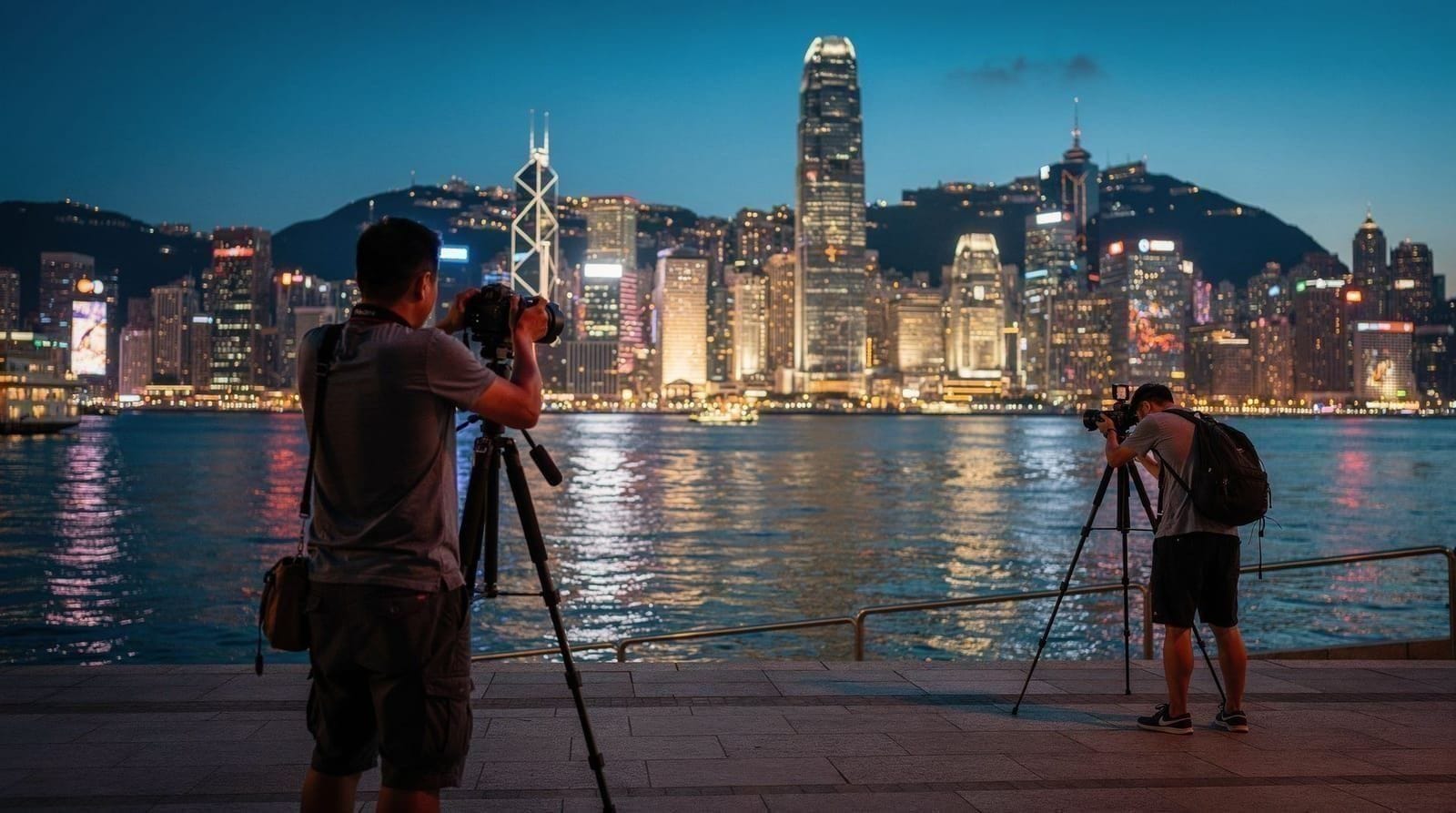
The TST promenade is a free, accessible, and consistently rewarding skyline viewpoint. The Central skyline from water level has a different character to the elevated views — the towers appear to rise from the water rather than being seen from above.
The Star Ferry guide covers the crossing itself. But even without taking the ferry, walking the waterfront from the Star Ferry terminal east along the Avenue of Stars gives you changing angles on the Central skyline. The most compressed, most dramatic shot is from the far east end of the promenade near the InterContinental hotel, where a telephoto lens stacks the buildings.
At night: The Symphony of Lights show at 20:00 runs for about 10 minutes and uses LED and laser systems on the Central and Wan Chai buildings in a coordinated light show. It’s free, it’s visible from the TST promenade, and it adds a genuine spectacle layer to an evening otherwise spent looking at a static skyline.
Mid-levels escalator — the approach from above
The Central–Mid-Levels Escalator is the world’s longest outdoor covered escalator system, running 800 metres from Central to the Mid-Levels residential district. It’s primarily a piece of transport infrastructure, but several points along its route give angle-restricted views down into the Central CBD and toward the harbour.
The view isn’t a wide skyline — you’re looking through a canyon of buildings — but it gives a sense of how the city layers up the hillside and how densely the CBD is packed. Combine it with a walk through Soho and Central for context. Entry is free; the escalator runs downhill 06:00–10:00 and uphill 10:00–midnight.
Kennedy Town — the western harbour angle
The Kennedy Town area at the western end of Hong Kong Island Tram Line gives a view of the harbour mouth and the approach to the western channel. It’s not the classic skyline view, but on a clear day you can see across to Tsing Ma Bridge and the approach to Lantau. This is for visitors who’ve already done the standard viewpoints and want something different.
The tram from Central takes about 20 minutes. Exit at the Kennedy Town terminus and walk to the waterfront promenade.
Rooftop bars — skyline with a drink
Several bars and restaurants in Hong Kong have views that work as skyline experiences alongside being social venues. The quality of the view varies considerably from what’s advertised.
Ozone Bar, Ritz-Carlton (ICC Tower): At 118 floors, technically the world’s highest hotel bar. The views are dramatic but you’re on the Kowloon side looking toward Central — the same angle as Sky100 but you can sit down with a cocktail. Minimum spend applies, and cocktails are HKD 150–220. Book ahead on weekends.
T-Kai, M+: The rooftop café at the M+ Museum in West Kowloon has direct harbour views toward Central. The museum’s architectural position gives a wider angle than most rooftop venues, and it’s less aggressively priced than hotel bars. Open during museum hours.
See the rooftop bars guide for a comprehensive list with current pricing.
What the view actually depends on
Weather and visibility: The single biggest factor in Hong Kong skyline photography is air quality and cloud cover. Check the Hong Kong Observatory’s visibility forecast before committing to paid viewpoints. A visibility of 10km+ means clear sightlines; below 5km and the towers start to disappear into haze.
Time of day: First and last light are the only times worth spending money on for photography. Midday light is flat and harsh. Sunrise (around 05:30–06:30 in summer) is beautiful but requires commitment.
Season: October to December is peak clarity. March to May is variable but generally clear. June to September is typhoon season — humidity is high, haze is frequent, and conditions can change rapidly.
For planning the broader trip around the skyline experience, the best time to visit Hong Kong guide covers seasonal patterns in detail. The 48-hours itinerary includes the most time-efficient route to cover the main viewpoints.
Viewpoint comparison at a glance
Six viewpoints, six trade-offs. This is how they stack up if you’re deciding where to spend your limited time and money.
| Viewpoint | Cost | Best for | Drawback |
|---|---|---|---|
| Victoria Peak / Sky Terrace 428 | HKD 182 (tram + terrace combo, adult return) | 360° elevated drama | Crowded, hazy in summer |
| Lion’s Pavilion (The Peak) | Free | Same view, no cost | No elevated deck, low wall |
| Sky100 | Closed for renovation | Enclosed, air-conditioned | One-directional, no outdoor air |
| TST promenade | Free | Ground-level, water-level angle | No elevation, gets crowded at sunset |
| Rooftop bars (Ozone / T-Kai) | HKD 150–220+ minimum spend | View with a drink, sit-down comfort | Not a dedicated photography stop |
| Mid-Levels escalator | Free | Layered hillside perspective | Not a wide skyline shot |
If you only have one evening in Hong Kong and want maximum visual return for minimum cost, the free Lion’s Pavilion at dusk, followed by the TST promenade for the Symphony of Lights, covers both skylines without spending a dollar on tickets.
The harbour perspective
Every viewpoint above looks at the skyline from land. A Victoria Harbour cruise does something different: it puts you in the middle of it, with both skylines visible simultaneously and moving past you rather than staying fixed. This is the closest thing Hong Kong has to a 360-degree skyline experience, since no single land-based viewpoint sees both sides of the harbour equally well. Evening cruises time their return to coincide with the Symphony of Lights, which is genuinely more effective seen from water level than from the promenade, since the lasers are designed to be visible across the harbour.
For visitors who’ve already done the Peak and Sky100 and want the one perspective neither offers, the harbour crossing itself — even the plain Star Ferry ride rather than a dedicated cruise — delivers most of that effect for a fraction of the price.
Matching the viewpoint to the traveller
First 48 hours, limited time: Do the Peak at dusk and the TST promenade at night for the Symphony of Lights. Two viewpoints, both skylines, no repeats. The 48-hours itinerary sequences this efficiently.
Photography-focused trip: Add Sky100 for the reverse angle and the Kennedy Town waterfront for something genuinely different from the postcard shots everyone else takes. Check the best photo spots guide for exact framing notes.
Budget-conscious visitors: Skip both paid observation decks. The Lion’s Pavilion and the TST promenade are free and give roughly 80 percent of the visual impact of the Sky Terrace or Sky100, especially at dusk when light matters more than elevation.
Visitors with only a few hours (layover or transit): The TST promenade alone, timed for sunset into the 20:00 Symphony of Lights, is the single most efficient use of a short window — see the layover guide for how this fits a tight schedule.
Packing for skyline photography
Hong Kong’s humidity affects camera gear more than most destinations. A lens cloth is essential — condensation forms fast when moving between air-conditioned interiors and the humid outdoors, especially at Sky100 or a rooftop bar. The packing guide covers this along with the rest of what’s worth bringing for a trip built around both indoor comfort and outdoor viewpoints.
Frequently asked questions about Hong Kong skyline guide — every angle, ranked honestly
Is Victoria Peak worth it if it’s hazy? It’s still worth the free Lion’s Pavilion lookout, but think twice about paying for the Sky Terrace 428 on a low-visibility day — check the Hong Kong Observatory’s forecast first, since the towers can blur into haze from April through October.
Do I need to pay for both Sky Terrace 428 and Sky100? No. They show near-mirror views of the same harbour from opposite sides. Most visitors are satisfied with one; choose the Peak for elevated drama with a hill underneath it, or Sky100 for an enclosed, air-conditioned deck on a hot or wet day.