Best photo spots in Hong Kong — where to actually get the shots
Hong Kong: Fast track Victoria Peak Tram ticket combos
Where the real shots are (and where not to bother)
Hong Kong is legitimately one of the world’s most photogenic cities — the density of towers, the layering of neon over mountains, the harbour between two skylines. The problem is that every list of “best photo spots” sends you to the same three places everyone already knows, where you’ll be jostling with tour groups and shooting into strong midday haze. This guide is for people who want to come back with images that look like Hong Kong, not like a travel stock library.
For each location, I’ll give you the exact spot, the optimal light window, and a direct assessment of how difficult access is.
| Best all-round spot | Tsim Sha Tsui waterfront, blue hour |
| Best free viewpoint | Lion’s Pavilion, Victoria Peak |
| Gear | Wide-angle lens, tripod optional |
| Crowds worst at | Sunset weekends, TST + Peak |
| Cost | Mostly free; Peak Tram HKD 116 return if used |
Victoria Peak — the classic, done right
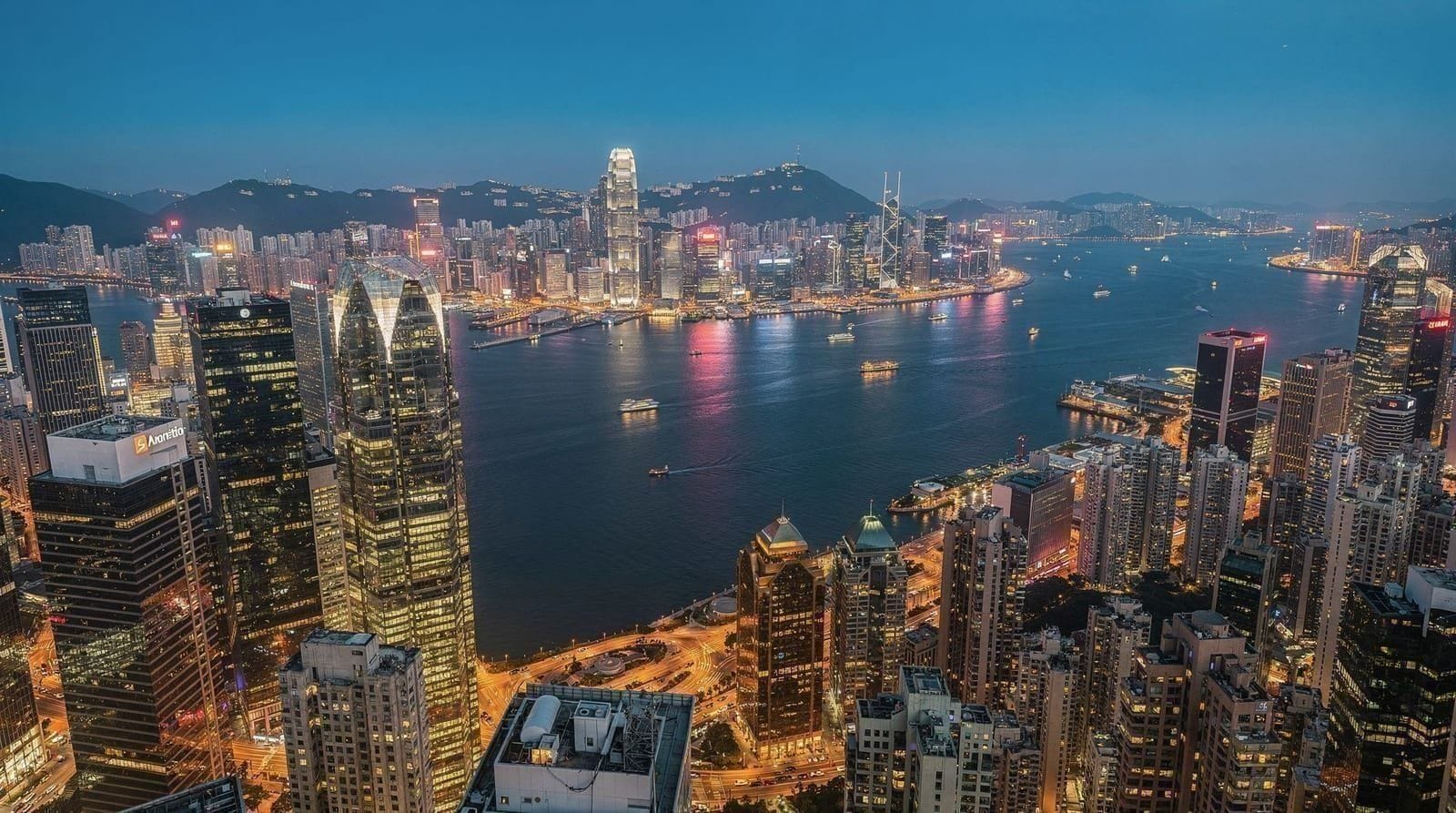
Everyone goes to Victoria Peak. Most people go at the wrong time and from the wrong spot. The view from the Sky Terrace 428 at the Peak Tower is famous for a reason — on a clear day, you can see the full harbour panorama from Tsim Sha Tsui to Cheung Chau. But it’s also completely packed from 11:00 to 18:00 on any weekend.
Best timing: Arrive before 09:00 on a weekday. The morning light from the east catches the glass on the Central towers beautifully, and the crowds are thin. If you want the city lit up, come back at dusk — around 18:30 to 19:30 in summer — and stay for the Symphony of Lights show at 20:00.
Exact spot: From the top of the Peak Tram, walk to the right past the Peak Tower to the Lion’s Pavilion viewing platform. This free lookout is superior to the paid Sky Terrace for pure photography — you’re at ground level rather than behind glass, and you can compose shots without reflections.
Access: Peak Tram (HKD 116 return) or Bus 15 from Central (fare on the operator’s website, more time but more views). The tram queue in peak season can be 45–60 minutes without a timed ticket.
Peak Tram fast track ticket with Sky Terrace 428Tsim Sha Tsui waterfront — the harbour shot
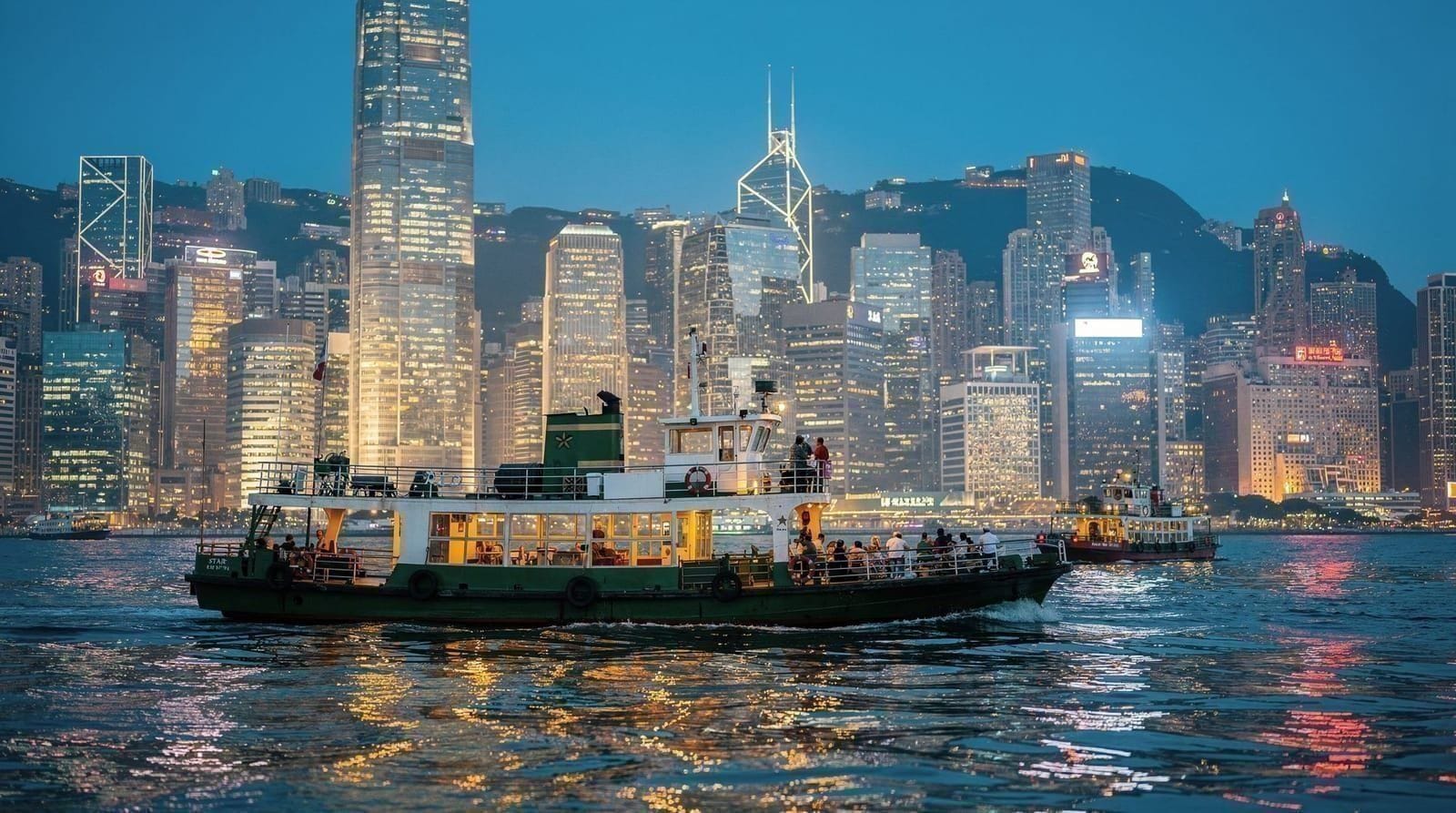
The TST promenade is where you get the Central skyline from the Kowloon side. The shot — all those towers, Victoria Harbour, the Star Ferry — is the image most people associate with Hong Kong. The problem is that it’s the most obvious location in the city, and every tour group knows it.
Best timing: The golden hour before sunset (around 18:00–18:30 in summer) gives the best mix of natural light and lit-up buildings. After dark, the neon and LED displays on the Central towers add colour but the buildings go flat without sunlight modelling them. The absolute best window is about 20 minutes after sunset — the blue hour — when the sky holds enough light to balance the building illumination.
Exact spot: Walk east from the Star Ferry terminal past the Cultural Centre to the Avenue of Stars. The section around the clock tower is the most photographed, but the best angles for compression shots (buildings stacked tight) are from the far east end of the promenade, near the InterContinental hotel.
Chungking Mansions — neon and texture
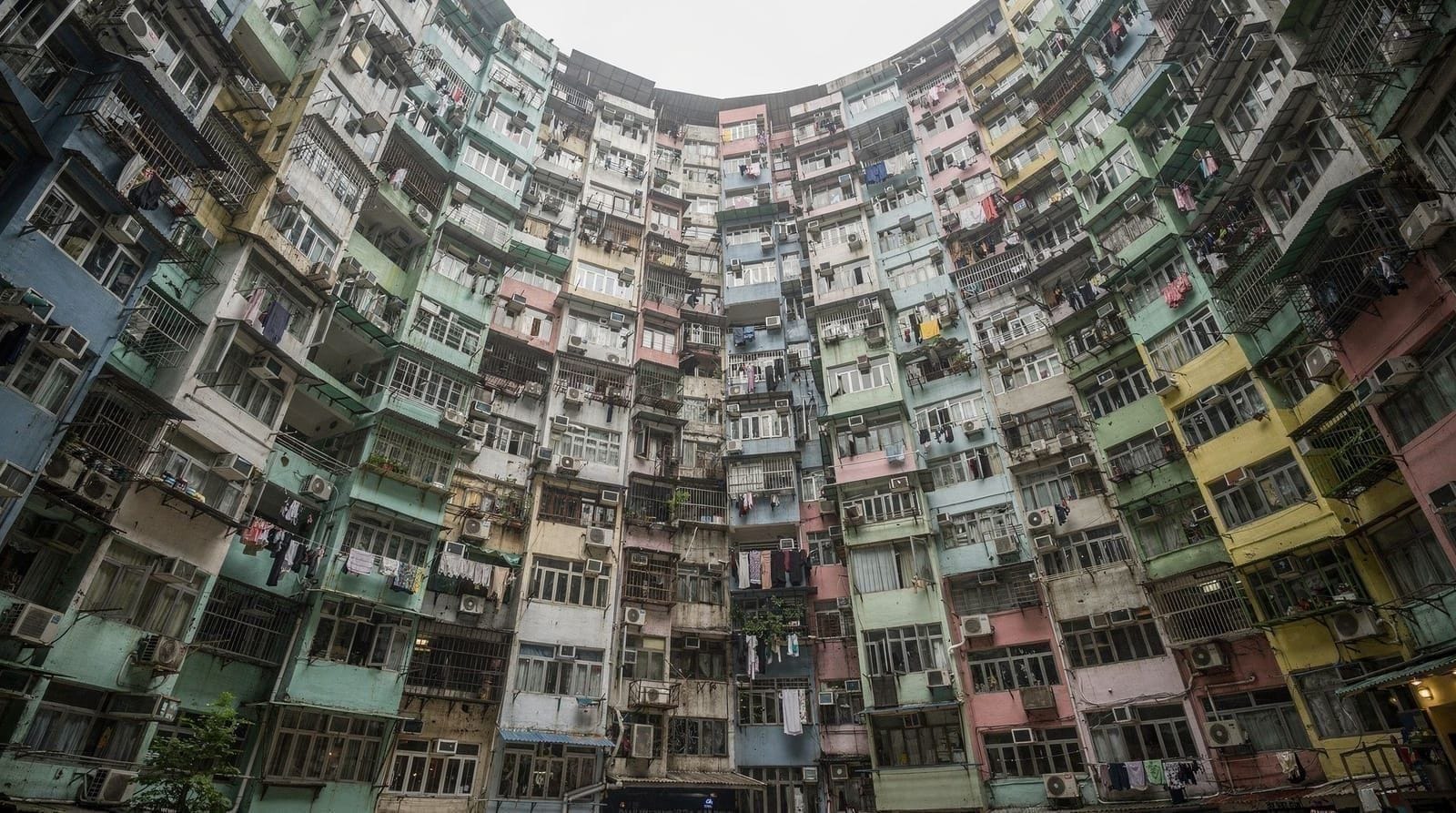
Most visitors walk past Chungking Mansions quickly. If you stop and look up, the entrance corridor — with its neon signs, overlapping cables, and general density of activity — is one of the most atmospheric interiors in Asia. The exterior facade on Nathan Road has the same quality.
Best timing: After dark, from around 20:00, when the neon overhead is fully visible and the street-level activity peaks. Bring a wide-angle lens if you have one; the corridor is narrow.
Honest note: This is a working commercial building, not a tourist attraction. Don’t block the entrance. Street photography norms apply — be discreet.
Mong Kok wet markets — the texture of the city
Mong Kok has several markets that make better photographs than any viewpoint: the Ladies’ Market, the Goldfish Market on Tung Choi Street, and the flower stalls along Flower Market Road. The Ladies’ Market guide covers the layout.
Best timing: Mornings are best for the goldfish stalls (the light catches the water tanks) and the flower market (fresh deliveries, fewer crowds). The pedestrian markets are better in the afternoon when they’re busier, but that means competing with other photographers.
What to shoot: The Flower Market Road goldfish tanks lit from within, with reflections; the packed neon signage on the entrance of the Ladies’ Market corridor; produce vendors at the wet market on Fa Yuen Street.
The MTR — in motion
Hong Kong’s MTR is immaculately designed and its older stations have a colour-coded brutalist aesthetic that photographs well. But the best shot isn’t a static platform photo — it’s the trains in motion at stations where the platforms overlap and you can get a long exposure of the trains moving.
Best spots: Admiralty Station (multiple lines, high volume), and Mong Kok Station from the platform end during peak hours. The Tsuen Wan line’s older rolling stock has a yellower interior that looks good in available light.
Practical note: Flash photography is prohibited. A camera with decent high-ISO performance is helpful. Tripods are not permitted on platforms.
Pottinger Street steps — Central’s steep stairways
Central is built on a slope, and the street layout follows that terrain with steep pedestrian stairs connecting levels. Pottinger Street (石板街) runs from Queen’s Road Central up to Hollywood Road and is one of the most photographed stairways in the city: narrow, flanked by stalls and old shopfronts, and pointed straight at the modern towers of the CBD below.
Best timing: Early morning (07:00–09:00) when shopkeepers are setting up and the light is soft. Midday is harsh in summer and crowded with office workers at lunch.
Combine with: The Man Mo Temple at the top of Hollywood Road, where the smoke from joss sticks creates natural atmospheric haze.
Kowloon Walled City Park — not what you think
The actual Walled City was demolished in 1994. The park that replaced it in Kowloon City is pleasant but ordinary. What’s photographically interesting is the information exhibition inside the Yamen building, and the street context of the surrounding Kowloon City neighbourhood — one of the few areas in Hong Kong where the pre-1997 urban fabric is still intact, with old sign painters, herbal medicine shops, and Thai food restaurants alongside.
What to shoot: The entrance archway of the park with the mountain behind, the Yamen building at dawn before the crowds, the street signs in the surrounding blocks.
Stanley — the bay, boats, and the market
Stanley on the south side of Hong Kong Island is a 45-minute bus ride from Central (Bus 6 or 6A from Exchange Square). The bay with its boats and the backdrop of the hills is attractive, but the more photogenic area is around the Stanley Market and the promenade to the east of the main beach.
Best timing: Arrive early (before 10:00) and the market’s alleyways are empty. The bay light is best in the morning when the sun is behind you if you’re shooting the waterfront from the main road.
Honest note: Stanley is heavily tourist-oriented. The seafood restaurants facing the bay are overpriced compared to what you can get in Aberdeen to the west, and the market is mid-range tourist goods. Come for the photos and the walk, not the shopping.
Sai Kung — the geopark coast
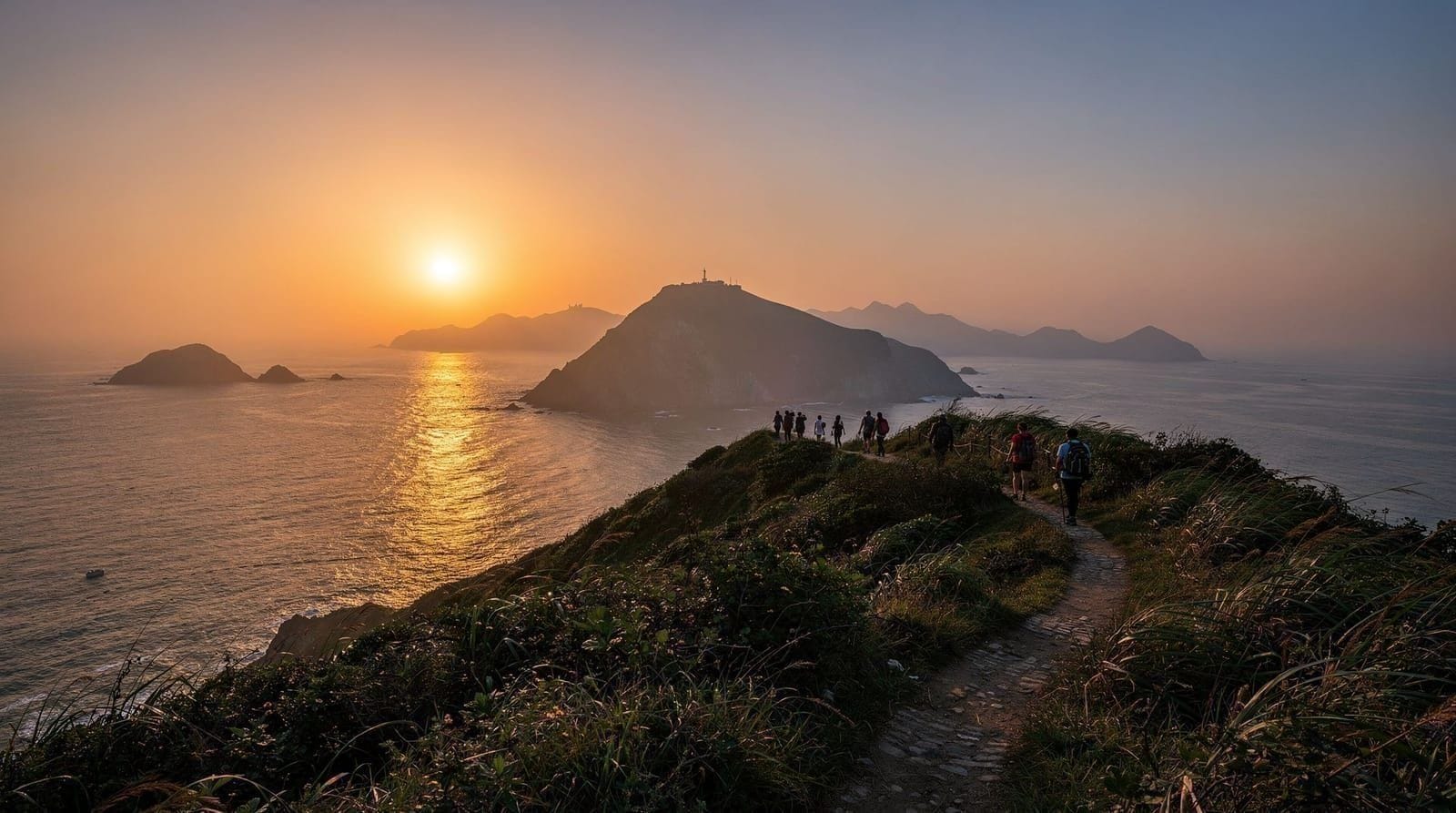
The Sai Kung Geopark is the most visually distinctive landscape in Hong Kong: hexagonal rock columns formed by volcanic activity, coastal arches, and sea stacks. The main formations (Sharp Island, Bluff Head, the Double Haven area) require boat access, but even from the Sai Kung town waterfront you can see interesting geography.
Best timing: For boat tours to the formations, morning departure (09:00–10:00) gives better light on the columns. The columns face various directions, so noon can actually be fine for certain faces.
Sai Kung Geopark sea arches and volcanic rock boat tourLei Yue Mun — the fishing village
Lei Yue Mun is a working fishing village in Kowloon East, accessible by MTR (Yau Tong Station, then a short walk or sampan across the strait). The narrow alleys, stacked seafood tanks, neon signs and harbour access make it one of the most textured neighbourhoods in the city, almost entirely overlooked by tourists.
What to shoot: The alley between the seafood restaurants at dusk, when the tanks are lit and the signs are on; the sampan crossing to the village from the Shau Kei Wan side; the view back toward the narrowest point of Victoria Harbour.
Po Lin Monastery and Ngong Ping village — Lantau Island
The Tian Tan Big Buddha at Ngong Ping is the obvious Lantau photograph. The less obvious one is the Po Lin Monastery courtyard with the Buddha behind it, framing the statue against the sky. And the approach by Ngong Ping 360 cable car gives aerial views of the hills and coastline that are worth the ticket.
Best timing: The Buddha faces north and is best photographed before noon, when the sun is in front of you. Cloud cover can help — the bronze against grey sky looks more imposing than bright blue.
Crowds: This is a major tourist site. Arriving at cable car opening (10:00 on weekdays, 09:00 at weekends) means beating the afternoon rush by an hour or so. See the Ngong Ping guide for timing details.
Temple Street night market
Temple Street Night Market in Yau Ma Tei is a legitimate night photography location: the overhead banners and strings of lights, the fortune tellers, the opera singers, the cramped stalls. The market runs from around 16:00 to 23:00 and is most active from 19:00.
What to shoot: Looking down the main stall corridor with lights receding into the distance, the fortune teller stalls lit by single lamps, any shot that captures the layering of signs overhead.
Wong Tai Sin Temple — gold, smoke, and crowds
Wong Tai Sin Temple is one of Hong Kong’s most visited temples, and it photographs well because of the combination of gold roofs, red columns, smoke from incense coils, and the genuine religiosity of the worshippers. It’s not a performance for tourists — people are actually praying.
Best timing: 07:30–08:30 before the tour buses arrive. The light is good and the crowds are minimal.
Etiquette: Be respectful. Long lenses allow you to photograph from a distance without inserting yourself into religious activity. Don’t photograph people’s faces without acknowledgement.
Rooftop bars — photographs and a drink
Several rooftop bars in Hong Kong offer harbour or skyline views that work as photography locations alongside being pleasant places to have a drink. Ozone Bar at the Ritz-Carlton in ICC (the tallest hotel bar in the world), and the rooftop of the Wooloomooloo restaurant in Wan Chai are both worth considering. Prices are high (HKD 150–200+ per cocktail) but the views are legitimate. See the rooftop bars guide for specifics.
Comparing the top spots at a glance
Not every location suits every photographer’s patience or schedule. Here’s how the headline spots stack up against each other:
| Spot | Crowds | Access effort | Best for |
|---|---|---|---|
| Victoria Peak | Heavy 11:00–18:00 | Tram or bus, 20–30 min | Full harbour panorama |
| TST waterfront | Heavy at sunset weekends | Walk from Star Ferry | Central skyline, blue hour |
| Sai Kung Geopark | Light | Boat tour, half-day | Volcanic rock formations |
| Mong Kok markets | Moderate, worse afternoon | MTR, immediate | Street texture, colour |
| Wong Tai Sin | Light early, heavy midday | MTR, immediate | Temple ritual, gold and red |
| Chungking Mansions | Light | Walk, immediate | Neon and interior texture |
Gear and settings that actually help
You don’t need a professional kit for any of these locations, but a few things make a real difference. A wide-angle lens (roughly 16–24mm full-frame equivalent) covers the harbour panoramas, the market corridors, and the temple courtyards better than a standard zoom. For the blue-hour waterfront shots and the MTR long exposures, a small travel tripod is worth the extra weight in your bag — even a tabletop model braced on a railing works. Flash is banned on MTR platforms and unwelcome at religious sites; leave it off entirely and lean on a camera with reasonable high-ISO performance instead.
Humidity is the other practical issue, especially May to September: condensation forms on a cold lens or sensor the moment you step from an air-conditioned mall or MTR car into the street. Give your gear a few minutes to acclimatise before shooting, or you’ll lose the first several frames to fogged glass.
Seasonal light — when to plan a photography trip
October–December gives the clearest air of the year, with low humidity and the least haze over the harbour — the single best window for the classic TST and Peak panoramas. January–March brings occasional fog and much lower visibility, sometimes ruling out the Peak entirely for days at a time; check the best time to visit guide before planning a trip around viewpoint shots specifically. April–September is warm, humid, and prone to haze by midday, but also brings dramatic storm-light skies before and after summer thunderstorms, which can produce some of the most striking sunset colour of the year if you’re willing to gamble on the weather.
Planning your route
The best approach for a photography-focused day in Hong Kong is to split the day into a morning session (markets, temples, MTR, street texture — active in good morning light) and a sunset/evening session (waterfront, Victoria Peak, night market). Midday in Hong Kong summer is harsh for photography and uncomfortably hot — use it for transport and meals.
The Octopus card guide covers getting around efficiently. For a structured photography tour with a local guide:
Hong Kong photography deep dive tour with local guidePlan the rest of your trip with the first-time Hong Kong guide or the 48-hours itinerary if you’re working with limited time.