Top things to do in Hong Kong — 20 experiences worth your time
Hong Kong: Half day adventure with Peak Tram and Star Ferry
What are the best things to do in Hong Kong?
The genuinely unmissable experiences are: crossing on the Star Ferry at dusk, taking the Peak Tram up Victoria Peak, eating dim sum brunch at a local teahouse, watching the Symphony of Lights from the Tsim Sha Tsui waterfront, and exploring a neighbourhood market like Mong Kok or Sham Shui Po. For day trips, Macau and Sai Kung are the top picks.
What actually makes Hong Kong worth your time
Hong Kong packs an extraordinary range into a small geography. You can eat an authentic dim sum brunch, hike a coastal trail with views of turquoise sea arches, ride a century-old tram, and watch a choreographed light show on one of the world’s most dramatic skylines — all in the same day. This list prioritises experiences that are genuinely distinctive to Hong Kong, not generic Asia-trip checkboxes.
Prices are in HKD with approximate USD equivalents at the HKD 7.8/USD rate.
| Free or near-free | Star Ferry, Symphony of Lights, tram, temples, promenades |
| Biggest single spend | Ngong Ping 360 + Peak Tram + a harbour cruise: HKD 650–1,050/person |
| Best for one evening | Star Ferry at dusk into the 8pm Symphony of Lights |
| Best day trip | Macau (full day) or Sai Kung (half-day) |
| Time needed for the list | 3 days for items 1–5 and 11; a full week for most of it |
1. Take the Star Ferry across Victoria Harbour
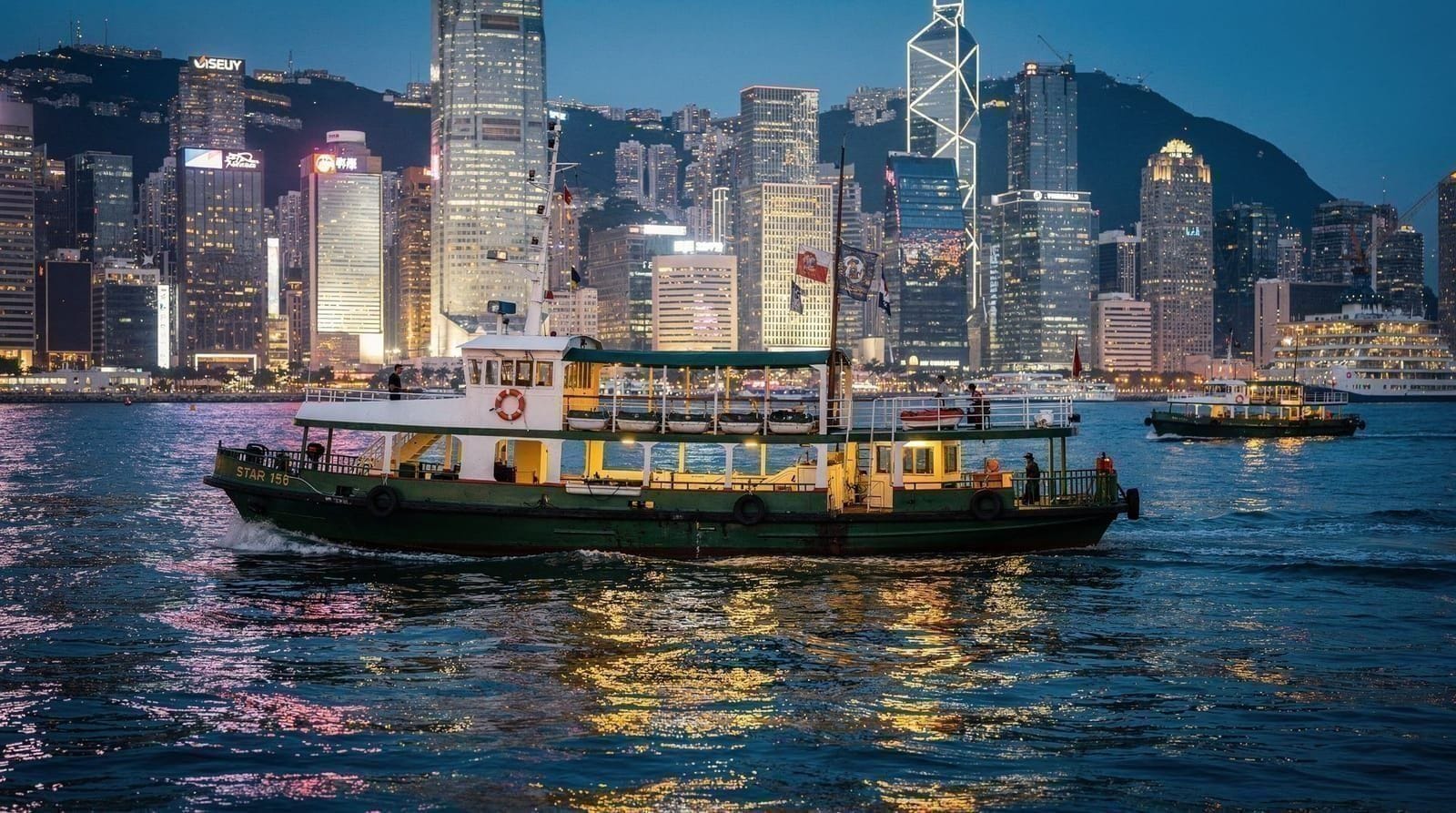
At HKD 4.00–6.50 for a 7-minute harbour crossing, the Star Ferry may be the best value experience in any major city in the world. The upper deck of the green-and-white ferry offers unobstructed views of both the Hong Kong Island skyline and the Kowloon waterfront.
Go at dusk when the buildings begin to light up, or just after 8pm to catch the tail end of the Symphony of Lights. The Central–Tsim Sha Tsui route runs approximately every 6–12 minutes depending on time of day.
Cost: HKD 4.00–6.50 adult, depending on deck and day (weekday lower deck HKD 4.00, weekend upper deck HKD 6.50), about USD 0.50–0.85 How long: Allow 30–45 minutes including waiting and the crossing
2. Ride up to Victoria Peak
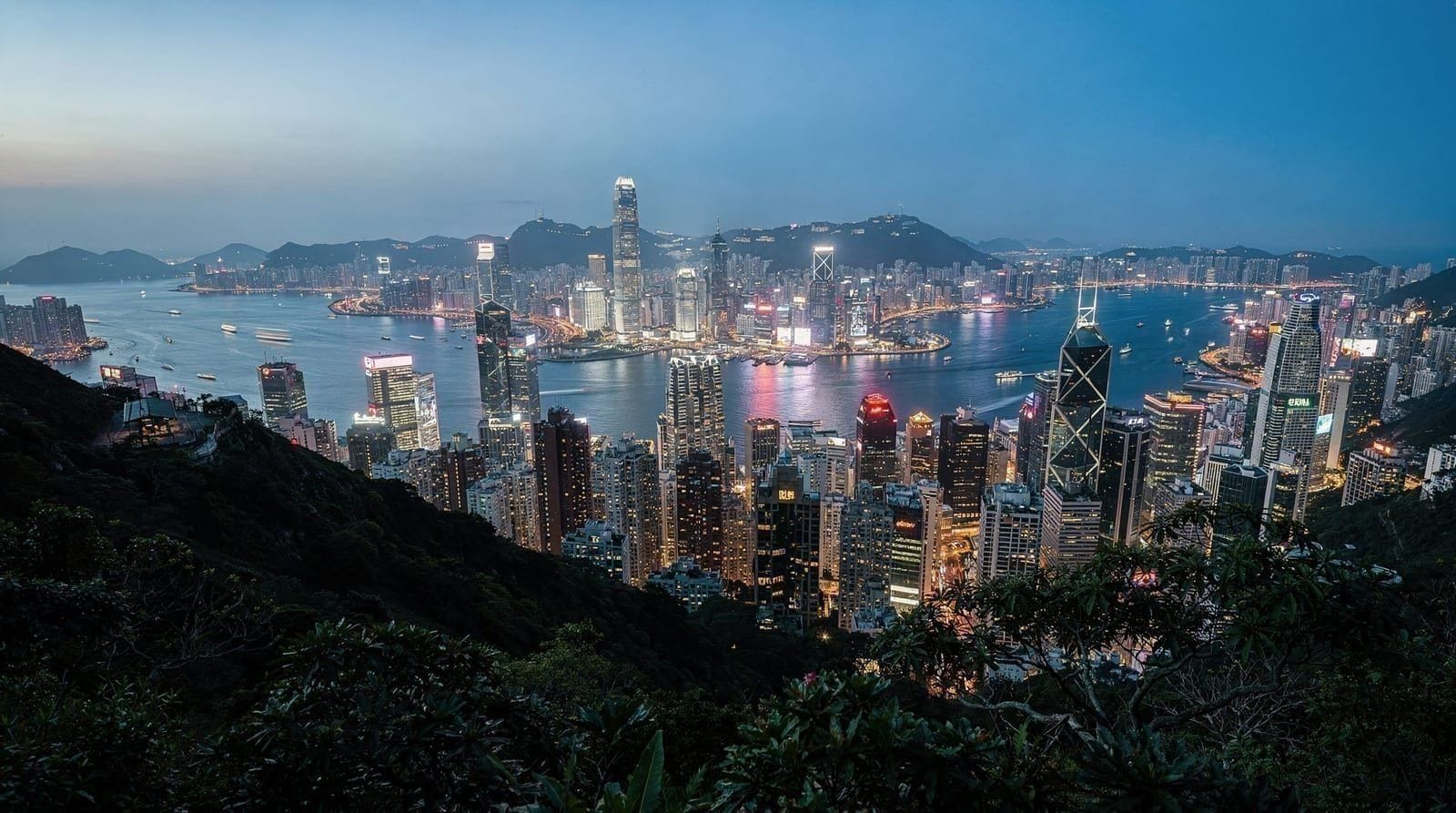
The Peak is Hong Kong Island’s mountain backdrop and the city’s most famous vantage point. The Victoria Peak guide covers all the options — Peak Tram, bus, or taxi — and which observation decks are worth paying for.
The view at night, with the harbour lights below and across to Kowloon’s neon, is genuinely spectacular. Come in early morning for clear skies without the tour group crowds. The Peak Tram itself (HKD 116 return, HKD 82 one way, for adults) is the historic route and part of the experience — the steep incline makes it feel like you are defying gravity.
Cost: Peak Tram HKD 116 return for adults; Sky Terrace 428 observation deck priced separately (see thepeak.com.hk for current prices) Tip: Book the tram online to skip queues that regularly run 60–90 minutes
3. Eat dim sum brunch at a real teahouse
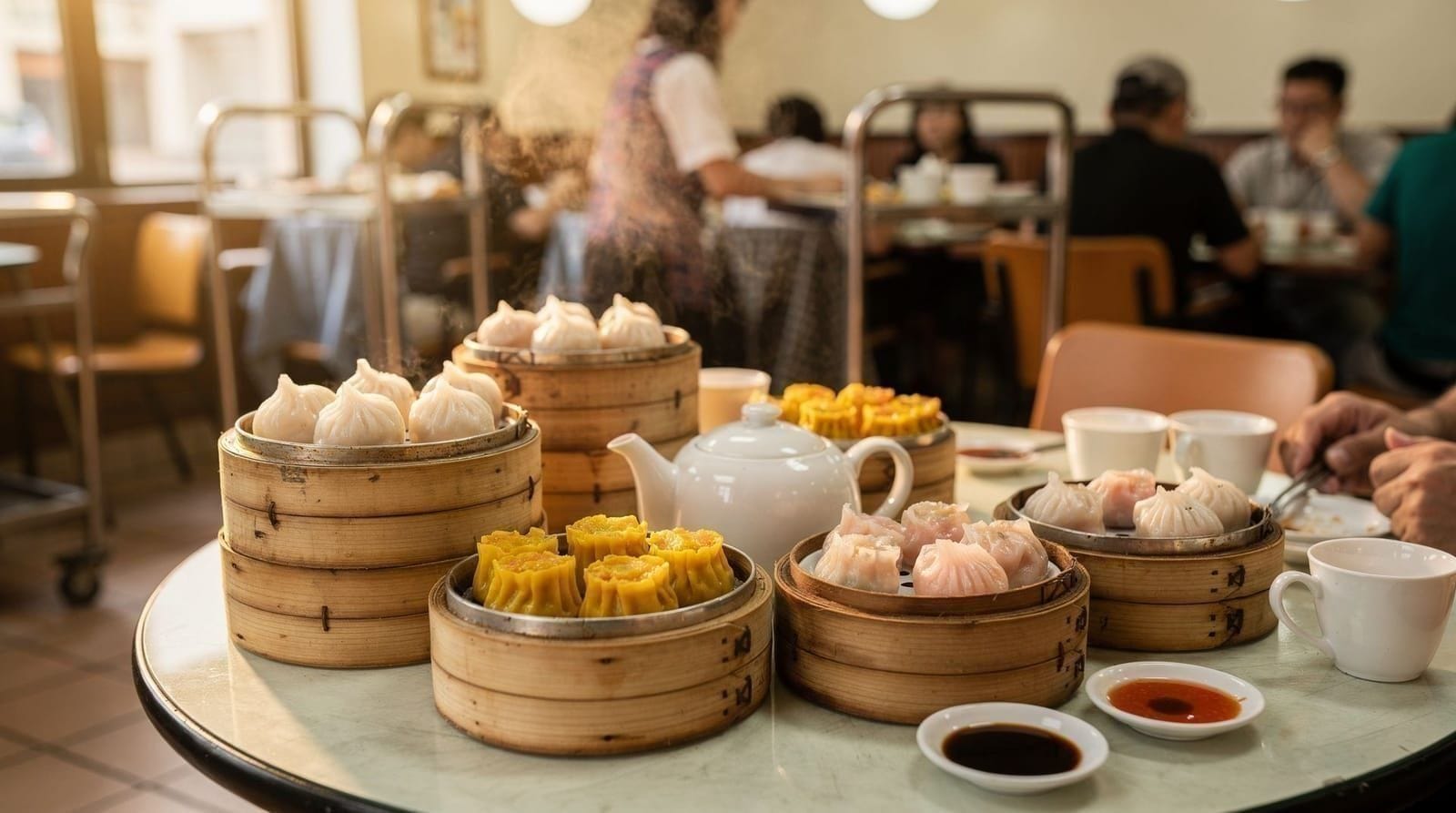
Dim sum — yum cha — is Hong Kong’s signature food experience. Mid-morning, teahouses fill with families, business people, and elderly locals ordering har gow (steamed shrimp dumplings), siu mai (pork and shrimp dumplings), cheong fun (rice noodle rolls), and char siu bao (barbecue pork buns) with pots of Chinese tea.
The distinction that matters: a real local teahouse versus a tourist-oriented dim sum restaurant. Local teahouses are loud, trolley-service or check-sheet ordering, and priced at HKD 40–80 per person for a full meal. Avoid the polished tourist restaurants near the Star Ferry pier that charge HKD 150+ for similar quality.
Lin Heung Tea House in Sheung Wan (mid-century, cash only, arrive early) and Fortune Kitchen in Yau Ma Tei are local institutions. Tim Ho Wan (multiple locations, booking available) is a Michelin star for HKD 120–150 per person.
Cost: HKD 60–150 per person depending on venue and appetite Time: Late morning, 9:30–12:30

4. Watch the Symphony of Lights from the Kowloon waterfront
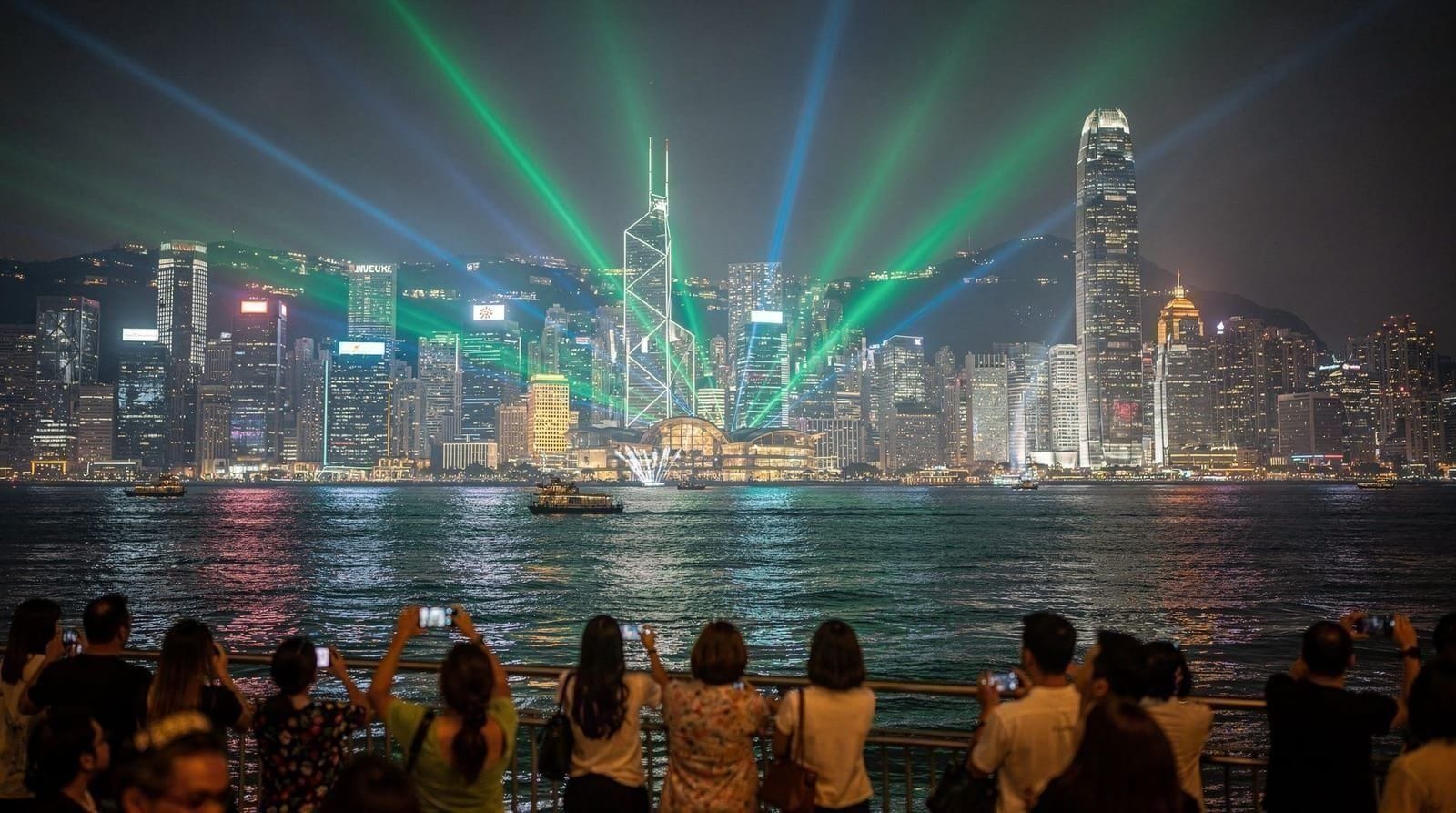
Every night at 8pm, 46 buildings across Hong Kong Island and Kowloon perform a 10-minute coordinated light show with music — the Symphony of Lights. The best free viewing position is the Tsim Sha Tsui waterfront promenade, facing Hong Kong Island.
It is genuinely impressive the first time — towers several hundred metres tall changing colour in sequence across the entire skyline, with lasers sweeping from rooftops. The show is free and needs no booking. Arrive at 7:30pm to get a railing spot; later arrivals will be several people back.
Cost: Free Duration: about 10 minutes, 8pm nightly
5. Explore Mong Kok’s markets
Mong Kok is Hong Kong’s densest neighbourhood and one of the most intense urban market experiences in the world. Multiple overlapping markets cluster within a few blocks: Ladies’ Market (cheap clothing and accessories), the Flower Market (wholesale and retail cut flowers and orchids), the Goldfish Market (hundreds of bags of ornamental fish), Sneaker Street (genuine and grey-market trainers), and the Jade Market nearby.
The crowds are real — this is a working commercial district, not a curated tourist experience. Best visited on a weekday afternoon to avoid weekend press.
Cost: Free to explore; budget HKD 100–300 if you want to buy anything Best time: Weekday afternoons, 2–7pm
6. Visit Ngong Ping and the Tian Tan Big Buddha
Ngong Ping on Lantau Island is home to the Tian Tan Buddha — a 34-metre bronze statue sitting at 500 metres elevation with mountain and sea views. The cable car ride (Ngong Ping 360) covers 5.7 kilometres from Tung Chung and takes about 20 minutes each way — one of the more dramatic approaches to any attraction in Asia, flying over jungle and the airport below.
The 268 steps up to the Buddha’s platform are mandatory; the Buddha itself is genuinely impressive in scale. Allow half a day minimum; combining with the traditional fishing village of Tai O makes it a full day.
Cost: Ngong Ping 360 cable car HKD 295 (standard cabin) to HKD 365 (crystal cabin) return for adults; Buddha platform free; inner chamber priced separately (see the official site) How to book: Buy online in advance to guarantee your time slot, especially on weekends
7. Walk the Tsim Sha Tsui waterfront promenade
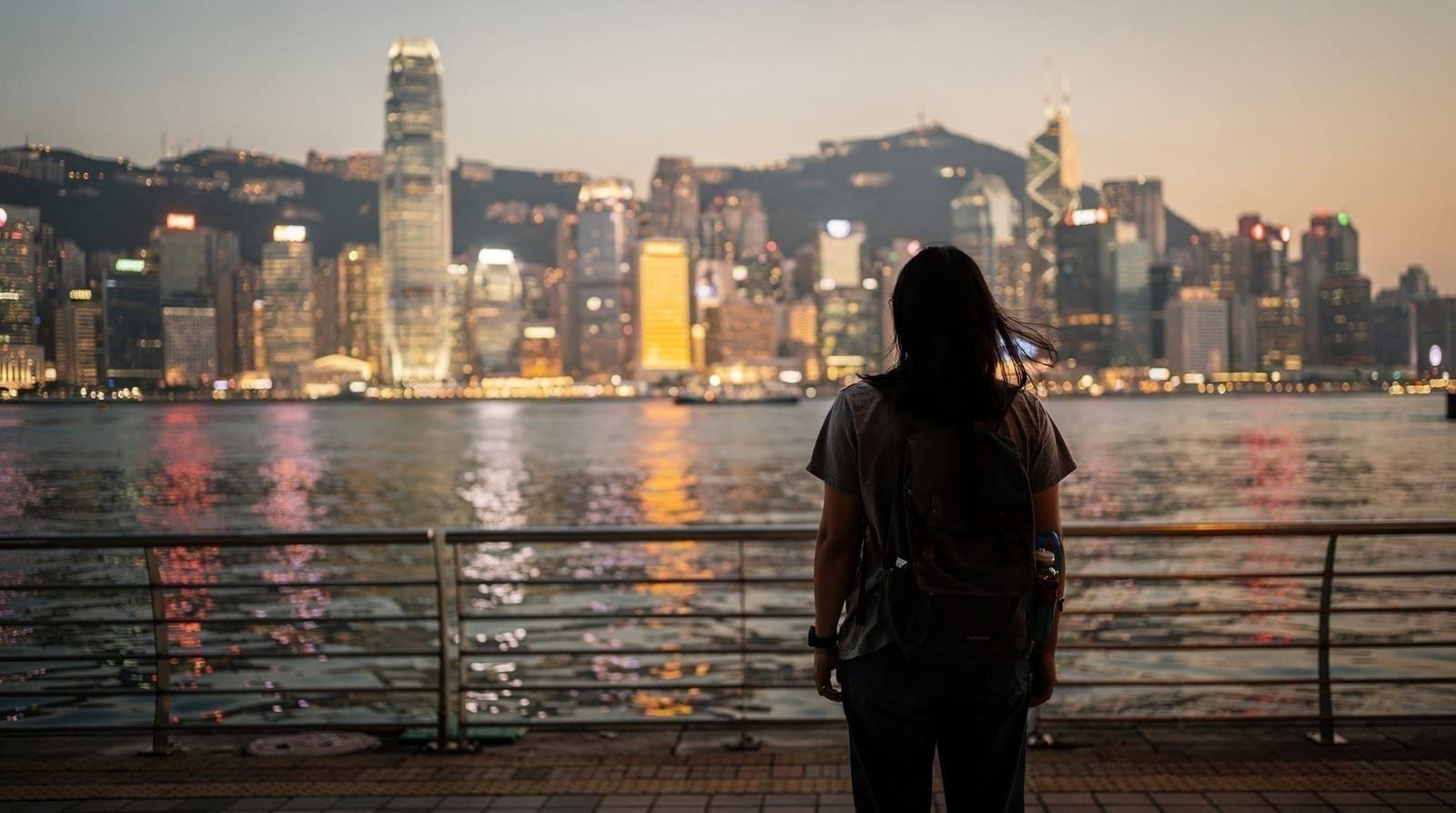
The promenade along Tsim Sha Tsui’s waterfront, from the Clock Tower to the Hung Hom end, offers the best street-level view of the Hong Kong Island skyline. This is the Avenue of Stars (though sections may have temporary works), facing directly across to Central, Wan Chai, and the Peak.
At sunset, this view is extraordinary. After dark, the cityscape lights up fully. The promenade is free, always open, and combines perfectly with the 8pm light show.
Cost: Free Time: Any time of day; sunset and evening are best
8. Day trip to Macau
Macau is 60 kilometres west of Hong Kong — a former Portuguese colony with a UNESCO-listed historic centre, extraordinary food, and the world’s highest concentration of casino revenue per square metre. The historic centre is nothing like you expect from “casino town”: narrow stone streets, Portuguese-era churches, and a mix of Chinese and European architecture.
The TurboJET ferry (economy class from HKD 194 on weekdays, HKD 212 at weekends and holidays, each way) takes about 60 minutes to the Macau Outer Harbour terminal. Book in advance, especially for weekends. See the full Macau day trip guide.
Cost: Ferry HKD 194 (weekday) to HKD 212 (weekend) each way; day budget HKD 300–500 (excluding gambling) Time: Full day minimum; leave by 9am to maximise time

9. Hike Dragon’s Back
The Dragon’s Back trail is regularly ranked among Asia’s best urban hikes — a 8.5-kilometre loop from Shek O Road to Shek O village along a ridge spine with views of both the South China Sea and urban Hong Kong simultaneously. The trail requires moderate fitness; the exposed ridge section offers 360-degree views.
The trailhead at To Tei Wan on Shek O Road is accessible by bus 9 from Shau Kei Wan MTR. Allow 3–4 hours for the full loop including the beach at Shek O at the end.
Cost: Free; bus fare on the operator’s website Best time: October–March for clearest conditions; avoid summer heat and humidity
10. Explore Tai Kwun — the former Central Police Station
Tai Kwun is a 2.6-hectare heritage complex on Hollywood Road in Central — a former police station, magistracy, and prison dating from 1841, now converted into galleries, restaurants, bars, and performance spaces. The JC Contemporary gallery hosts major international exhibitions. The architecture of the parade ground and the old prison wings is genuinely impressive.
Entry to the grounds is free; exhibitions and some events charge separately (HKD 100–200). The restaurants inside are upmarket and expensive; eat before you arrive.
Cost: Free to enter; paid exhibitions separately
11. Take the tram (ding ding) across Hong Kong Island
The double-decker trams running east-west across Hong Kong Island’s northern waterfront have been operating since 1904. A flat fare of HKD 3.30 covers the entire route. The upper deck, front seat, is one of Hong Kong’s best vantage points — narrow streets, market stalls, temples, and apartment towers in close-up succession.
Board at any stop (Octopus card or exact cash at the rear); exit at the front. The full route from Kennedy Town to Shau Kei Wan takes about 90 minutes. A shorter trip (Central to Happy Valley, Causeway Bay to Wan Chai) covers the most interesting sections in 20–30 minutes.
Cost: HKD 3.30 flat fare
12. Visit Wong Tai Sin Temple
Wong Tai Sin Temple is the most actively used major temple in Hong Kong — a large Taoist complex in the New Kowloon that draws thousands of worshippers daily. The main hall, colourful pavilions, and surrounding fortune-telling arcade are all within the complex. The atmosphere — incense smoke, worshippers shaking fortune sticks, elaborate ceremonies — is genuinely engaging.
The MTR drops you directly at Wong Tai Sin station. Entry is free with a small suggested donation for the inner sanctum.
Cost: Free (donation suggested) Getting there: MTR to Wong Tai Sin station, exit B2
13. Eat at a cha chaan teng
Hong Kong’s cha chaan tengs (literally “tea restaurant”) are mid-century diners that serve a hybrid Hong Kong menu — milk tea, coffee mixed with tea (yuenyeung), scrambled eggs and toast, pineapple bun with butter, rice congee with preserved egg, noodle soups. Fast, cheap, and unmistakably local.
A full breakfast costs HKD 40–65. The best cha chaan tengs are not in tourist areas — look for ones with a laminated photo menu, plastic tablecloths, and a queue of locals at 8am.
Cost: HKD 40–80 per person
14. Explore Sai Kung and the UNESCO Geopark coast
Sai Kung on the east coast of the New Territories is Hong Kong’s best coastal escape — small boat trips to hexagonal rock columns (part of the UNESCO Global Geopark), uncrowded beaches, and a seafood town where you can pick your fish live from a tank. The rock formations at High Island Reservoir are among the most striking geological features in East Asia.
From Sai Kung Town, hire a local boat (HKD 80–120 per person) for a 2–3 hour tour of the sea arches and columns.
Cost: Bus from MTR Choi Hung (fare on the operator’s website); boat tours HKD 80–120 per person Best time: April–October for sea access; avoid tropical storm warnings

15. Walk through Sham Shui Po
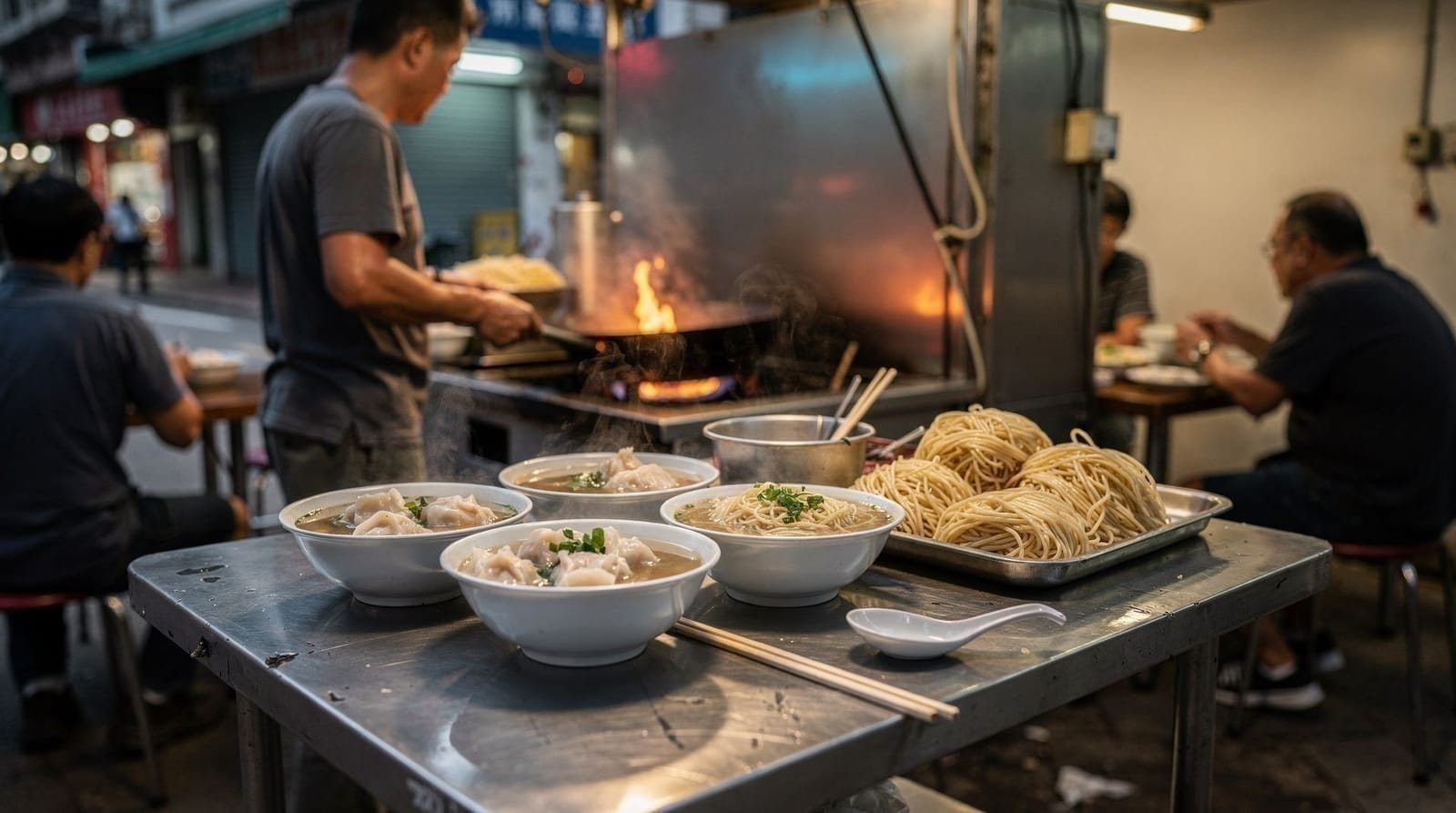
Sham Shui Po is the most historically working-class district in Kowloon — electronics components, fabric and textile markets, dried food shops, cheap noodle stalls, and the Apliu Street flea market. It has changed significantly in the past decade, with independent cafes and creative businesses alongside the traditional trades, but remains fundamentally a local commercial neighbourhood rather than a tourist precinct.
Walk from Sham Shui Po MTR up Apliu Street, then Ki Lung Street, then Cheung Sha Wan Road. Budget HKD 100–200 if you want to browse the electronics or fabric stalls.
Cost: Free to explore; lunch at local shop HKD 40–70
16. See the Symphony of Lights from a harbour cruise
The 8pm light show looks different from the water — you are positioned in the centre of Victoria Harbour with both shorelines lit simultaneously. Several operators run 45–60 minute evening cruises timed around the show, some with dinner or drinks included. The historic Duk Ling junk is the most photographed vessel; the Star Ferry also runs evening cruises.
Cost: HKD 250–550 per person depending on operator and inclusions
17. Visit the Man Mo Temple in Sheung Wan
Man Mo Temple on Hollywood Road in Sheung Wan is one of Hong Kong’s oldest temples (built 1847) and one of the most atmospherically intact. Dedicated to the gods of literature and war, it is notable for the huge spiralling incense coils hanging from the ceiling — some burn for weeks. The antique shops lining Hollywood Road outside are interesting for browsing.
Cost: Free Getting there: 5-minute walk from Sheung Wan MTR (exit A2)
18. Night market at Temple Street
Temple Street Night Market in Yau Ma Tei operates from around 4pm to midnight, with fortune tellers, Cantonese opera performances, and stalls selling cheap goods. More atmosphere than serious shopping — the food stalls (dai pai dong) in the middle section serve good clay-pot rice and seafood. See the Temple Street guide.
Cost: Free to browse; dinner HKD 80–150 per person
19. Take a sampan tour in Aberdeen
Aberdeen on Hong Kong Island’s south side has a working harbour with hundreds of fishing vessels and a cluster of boat people still living on sampans. Small sampan tours (HKD 80–120 per person, or HKD 500–600 for the whole boat) go around the typhoon shelter and past the floating restaurant — an experience that has become rarer as the population has moved ashore.
Cost: HKD 80–120 per person for a shared sampan
20. Shop in Causeway Bay or Tsim Sha Tsui
For high-street shopping, Causeway Bay has the highest pedestrian density in the world during peak hours and a concentration of mid-range shopping malls, independent clothing shops, and the SOGO department store. For a curated mall experience, IFC Mall in Central and Harbour City in TST are the main options. Stanley Market on the south side of Hong Kong Island is the heritage shopping destination — casual clothes, souvenirs, art at reasonable prices.
Cost: Variable; browsing is free
How to combine these into a trip
Three days covers items 1–5 and 11 comfortably, with one neighbourhood walk. Four to five days adds Ngong Ping, Macau or Sai Kung, and a second neighbourhood in depth. Seven days covers most of this list. See the Hong Kong 3-day itinerary and 5-day itinerary for structured planning.
Budget for entrance fees: most of Hong Kong’s genuinely unmissable experiences are either free or very cheap. The total cost of the Peak Tram, Ngong Ping 360, and a harbour cruise is around HKD 650–1,050 per person (USD 85–135). Everything else on this list is free or under HKD 100.
Frequently asked questions about things to do in Hong Kong
What is the single best thing to do in Hong Kong?
If forced to choose one: the Star Ferry crossing at dusk. It costs from HKD 4, takes 7 minutes, and places you in the centre of one of the world’s most dramatic urban waterscapes. It is free of tourist infrastructure and exactly as locals use it.
What can I do in Hong Kong for free?
A remarkable amount. The Symphony of Lights (free), the waterfront promenade in TST (free), Wong Tai Sin Temple (free), Man Mo Temple (free), the tram ride across the island (HKD 3.30 — effectively free), most hiking trails (free), and all neighbourhood markets and streets are free to walk. See the budget guide for a full breakdown.
What is the best area in Hong Kong for tourists?
Tsim Sha Tsui is the most convenient base for first-timers — harbour views, good transport links, and easy access to both Kowloon markets and the Star Ferry to Hong Kong Island. Hong Kong Island hotels around Wan Chai or Causeway Bay put you closer to local restaurants and the tram network.
How the season changes this list
Several items on this list behave differently depending on when you visit. The Peak, Ngong Ping cable car, and the harbour cruises are all weather-dependent — haze reduces visibility June through September, while October to February typically gives the clearest air and the best photography conditions for both the skyline views and the Big Buddha. Dragon’s Back and the Sai Kung boat trips are far more pleasant outside the summer heat and humidity; if you’re visiting July or August, plan these for early morning or accept a genuinely sweaty hike.
The Symphony of Lights, dim sum, the tram, and the indoor markets are essentially season-proof, which makes them a reliable core for a trip during Hong Kong’s hotter or wetter months. If you’re travelling May through November, read the typhoon season guide before finalising an itinerary that leans heavily on the outdoor and ferry-dependent items on this list.
Honourable mentions worth knowing about
A few experiences didn’t make the top 20 but are worth flagging if you have extra time. Tai Kwun, the restored Central Police Station compound, offers free heritage architecture and prison cellblocks a short walk from Central. Ten Thousand Buddhas Monastery in Sha Tin rewards a half-day trip with a genuinely unusual staircase of 12,800+ golden statues. And if your visit falls during typhoon season (May–November), keep the typhoon season guide bookmarked — a T8 signal can rearrange an itinerary with only a few hours’ notice, and knowing the indoor alternatives in advance saves a wasted afternoon.
Budgeting realistically across the whole list
A useful way to think about cost is splitting this list into three tiers. The free tier — Star Ferry (near-free), Symphony of Lights, the tram, Wong Tai Sin, Man Mo Temple, and every neighbourhood walk — costs essentially nothing and could fill three full days on its own. The mid-cost tier — dim sum, cha chaan teng meals, market shopping, sampan tours — runs HKD 40–300 per experience and is where most of a daily food-and-activity budget actually goes.
The high-cost tier — the Peak Tram and Sky Terrace, Ngong Ping 360, Macau, and any harbour cruise — is where a single day can run HKD 300–1,000 per person, and where booking ahead genuinely saves both money and queuing time. Budgeting a trip around one or two high-cost days surrounded by free-and-mid-cost days is the most sustainable way to see most of this list without either overspending or feeling rushed.
How to prioritise if you only have 48 hours
A common question from readers planning a short stopover: if you can only do five things from this list, which five? The honest answer is 1 (Star Ferry), 2 (Victoria Peak), 3 (dim sum brunch), 4 (Symphony of Lights), and 11 (the tram) — together these cost under HKD 400 per person, need no advance booking beyond the Peak Tram, and cover the harbour, the skyline, the food, and the street level of the city in a single 48-hour loop. Everything else on this list — Macau, Ngong Ping, Sai Kung, the markets — is worth returning for on a longer trip, but isn’t essential if your time is genuinely constrained. See the layover itinerary for a timed version of this exact plan.
Half-day adventure: Peak Tram and Star FerryTop experiences
Bookable activities with verified prices and instant confirmation on GetYourGuide.