Exploring old Hong Kong — what survives and where to find it
Hong Kong: Cultural walk local markets gardens and heritage
A city that demolishes quickly
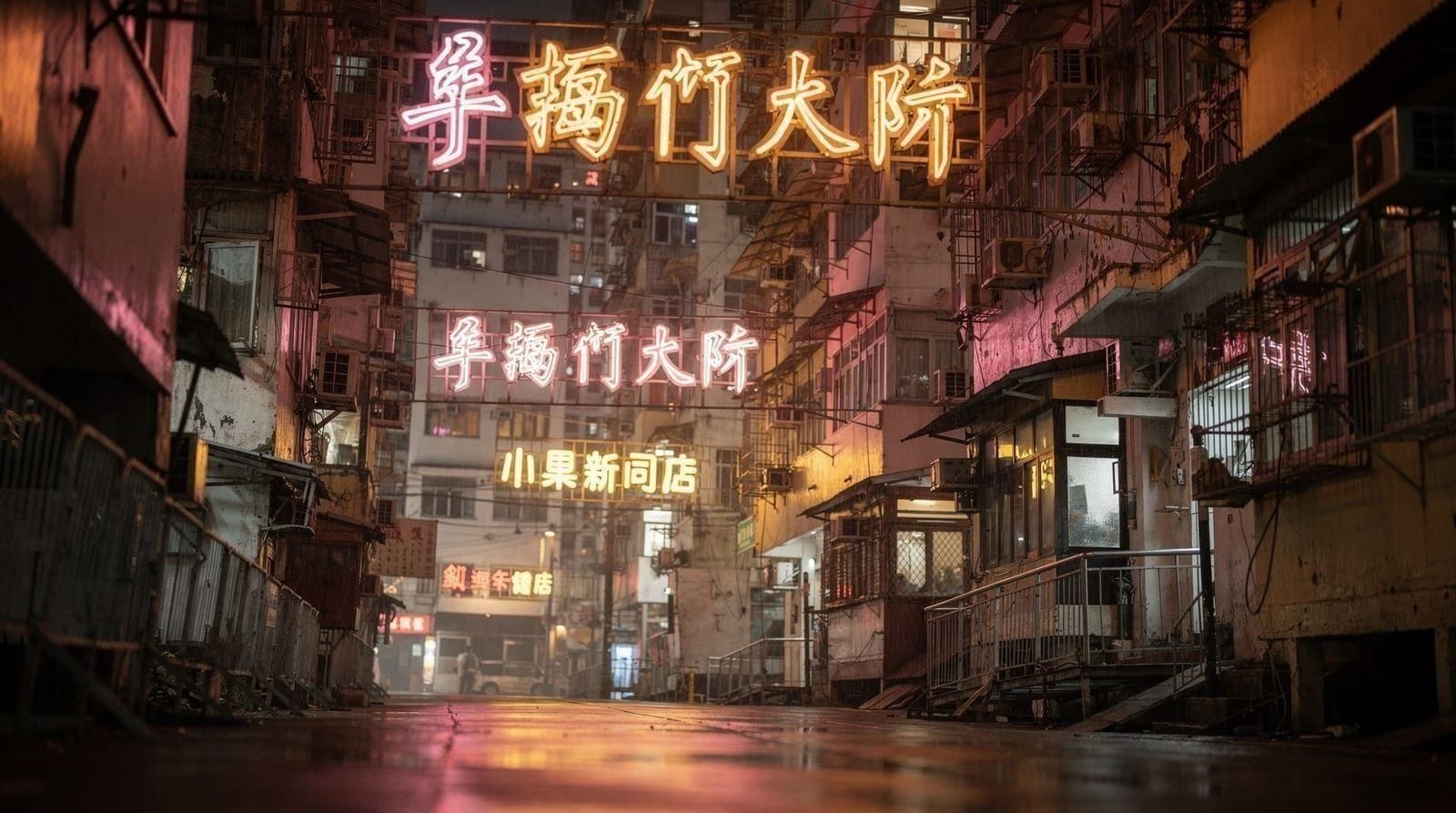
Hong Kong has one of the fastest urban redevelopment cycles in the world. Buildings are demolished and replaced not because they’re derelict but because their sites can be developed more profitably. The economics of land in Hong Kong — where land scarcity is both genuine and manufactured — mean that any building that isn’t generating its theoretical maximum value is a candidate for replacement.
The result is a city where the pre-war built environment has largely been erased, and where what survives does so through a combination of lucky timing, heritage designation (applied unevenly), and the inertia of ownership structures that make demolition complicated. Understanding where to find old Hong Kong requires understanding what shaped the demolition.
| Best district | Sheung Wan (Western Market to Kennedy Town) |
| Cost | Free — all sites below are walkable and unticketed |
| Time needed | Half a day per district, minimum |
| Getting there | MTR + walking; bus for the New Territories villages |
| Pair with | Neon signs story for the visual side of the same erasure |
Sheung Wan — the best-preserved district
Sheung Wan on Hong Kong Island is the most rewarding area for heritage exploration. The western half of the district, between the Western Market and Kennedy Town, retains more of the pre-war Tong Lau (唐樓, Chinese shophouse) fabric than anywhere else on the island.
The Tong Lau is the defining building type of Hong Kong’s Chinese commercial history: a narrow, multi-storey structure with a shop on the ground floor and residential or office space above, characteristically featuring a verandah overhang on the upper floors supported by columns. They were built for a dense, mixed-use urban life where work and home occupied the same building.
Where to see them: Des Voeux Road West (dried seafood district), Possession Street, Jervois Street, and the blocks between Bonham Strand and Queen’s Road West. The preserved row on Sai Street includes 1920s–1930s examples with their original tile facades and arched shopfronts.
The smell of Des Voeux Road West — a concentrated combination of dried seafood, preserved fish, and sea products — is itself a heritage object: this trade district has been here since the 1840s.
Hollywood Road — the antique mile
Hollywood Road is Hong Kong’s longest continuously operating antique trading street, running from Central up through Mid-Levels to Sheung Wan. The trade has changed — there are now galleries and interior design shops alongside the traditional dealers — but Chinese antiques, ceramics, jade, and export porcelain are still the primary commodities.
The quality ranges from genuine (and expensive) early Qing dynasty ceramics to reproduction goods sold at “antique” prices to anyone who doesn’t look carefully. A few dealers are internationally respected; most are somewhere in the middle. The experience of browsing is the point rather than serious acquisition.
Man Mo Temple at No. 126 Hollywood Road is one of the few pre-war religious buildings on Hong Kong Island that has survived more or less intact. Built in 1847, it serves the gods of Literature (Man) and War (Mo). The incense coils hanging from the ceiling and the worn stone forecourt are genuinely evocative of 19th-century Chinese commercial Hong Kong. The Man Mo Temple guide covers the background.
Wan Chai — layers visible and hidden
Wan Chai is a district where the old and new coexist uncomfortably. The postcard version of Wan Chai — Suzie Wong bars, red-light district, old-school Hong Kong nightlife — largely disappeared in the 1980s and 1990s as the district gentrified. What replaced it is a mixture of commercial towers, government offices, and a scattering of heritage buildings that survived by accident rather than design.
Blue House cluster: Stone Nullah Lane has the Blue House (Nos. 72–74A, 1922), Yellow House (8 King Sing Street, 1922), and Orange House (2 King Sing Street, early 1950s) — a preserved cluster of Tong Lau buildings now painted in primary colours and operating as a “living heritage” project with residential tenants. The ground floor has a café and visitor information.
The surrounding blocks of Stone Nullah Lane retain a few traditional businesses: a temple supply shop, a herbal medicine dealer, and the neighbourhood feeling of a working-class residential street before the glass towers close in.
Wan Chai Market Building: The 1937 Wan Chai Market building on Cross Street is one of the few Art Deco market halls remaining in Hong Kong. The building was briefly closed, then partially restored. The market currently operates on the ground floor, though tenancy and function have changed. Worth seeing the exterior facade.
Yau Ma Tei — the jade and temple quarter
Yau Ma Tei in Kowloon has a concentrated area of pre-war and early postwar fabric around Temple Street and the Jade Market. The area was developed from the 1880s as Kowloon’s first major urban district.
Tin Hau Temple precinct: The Tin Hau Temple on Public Square Street is surrounded by a cluster of associated temples — Shea Tin, Fook Tak, and Kwong Kung temples — in a complex that was established in the 1870s. The surrounding gardens and temple square are used as a gathering point by elderly residents who play mahjong, fortune tellers who operate in the shelter of the temple, and Cantonese opera singers who perform informally in the evenings. This is the living heritage version of Hong Kong — not preserved for tourists but continuing because it serves a community function.
Jade Market: The covered market under the flyover at Kansu Street has over 400 stalls selling jade, both genuine and synthetic. The trade in jade has been in this location since the 1970s. The Jade Market guide explains how to distinguish quality — though for most visitors the market is interesting as an atmosphere and trading culture rather than as a place to make purchases.
The New Territories — walled villages
The most intact examples of pre-colonial Hong Kong architecture are in the New Territories, specifically the walled villages of the indigenous Cantonese clans who settled the region from the Song Dynasty onward.
The major walled villages include:
- Kat Hing Wai (錦田吉慶圍) in Yuen Long: A genuine walled village, still inhabited, with the original walls, gate tower, and internal alleyways. Getting there requires a bus or taxi from Kam Sheung Road MTR.
- Sam Tung Uk Museum in Tsuen Wan: A reconstructed Hakka village from 1786, maintained as a free museum by the Antiquities and Monuments Office. An easier visit than the live villages.
- Ping Shan Heritage Trail: Covered earlier in the hidden gems post, this trail is the most accessible version of the New Territories heritage cluster.
What’s been lost
Honesty requires acknowledging how much is gone. The Kowloon City area was once one of the densest urban environments on earth — the Walled City, with its vertical stacking of homes, businesses, and informal services in a legal no-man’s land. Demolished. The fishing villages of Aberdeen and Ap Lei Chau, where floating communities lived on junks, have contracted to near-nothing. The traditional boat people (疍家, daan gaa) culture is effectively ended as a way of life, surviving only in a few elderly residents and in the fishing industry’s commercial form.
The night market at Temple Street is still there, but its character has shifted — what was once a working-class entertainment zone is now more tourist-oriented, and the traditional opera singers and fortune tellers who operated there are a fraction of what they were in the 1970s.
The neon signs story covers one specific aspect of this erasure.
How to approach the exploration
The most effective approach is to walk rather than take the MTR when crossing shorter distances in heritage areas. The street level reveals what the underground does not. Buy an Octopus card for transport flexibility, and use bus rather than MTR when the route allows — the upper deck of a bus gives views comparable to the tram.
The Hong Kong history museum guide provides the scholarly context for what you’re walking through. The museum’s “Story of Hong Kong” permanent exhibition is genuinely excellent and free.
For a structured walking tour of the heritage areas with a guide who can provide context:
Hong Kong cultural heritage walking tour — markets, temples, and old districtsCheck availabilityCentral and Sai Ying Pun — the colonial layer
The colonial-era buildings that survive tend to be government or institutional structures, which historically had more protection than private commercial buildings. Tai Kwun, the converted Central Police Station complex, is the most complete example — a cluster of Victorian and Edwardian buildings now housing galleries, restaurants, and performance spaces, restored rather than demolished because of its scale and symbolic weight. The Tai Kwun guide covers the site in detail.
Nearby, the old Central Market building has been through a similar adaptive-reuse process, its Bauhaus-influenced 1939 structure retained behind a modern retail fit-out. Sai Ying Pun, just west of Sheung Wan, has a lower-key version of the same shophouse fabric without the crowds — Third Street and High Street retain rows of pre-war buildings among newer developments, worth a detour if Sheung Wan feels too busy.
What makes a building survive here
Four factors explain most of what’s still standing: government or institutional ownership (removes the profit incentive to redevelop), heritage grading by the Antiquities Advisory Board (slows but doesn’t stop demolition), fragmented private ownership (makes assembling a redevelopment site legally difficult), and simple economic marginality (a site not yet attractive enough to developers). None of these guarantee permanence — grading can be downgraded, ownership can consolidate, and a marginal site can become valuable overnight when an MTR extension opens nearby. Nothing on this list should be assumed to still exist in ten years.
Practical walking routes
A single afternoon works well for Sheung Wan: start at the Western Market, walk the dried seafood streets, cut up to Hollywood Road for Man Mo Temple and the antique dealers, then finish at Tai Kwun. For Kowloon, pair Yau Ma Tei’s Jade Market and Tin Hau Temple precinct with the Temple Street Night Market later in the day, since the neighbourhood is worth seeing in both daylight and after dark. The New Territories walled villages are a separate half-day trip by bus and don’t combine well with the island or Kowloon routes in a single outing.
If you would rather not navigate the lanes alone, a private walking tour with a local guide can follow the route above at your own pace and explain the trades and buildings as you pass them. Whichever way you go, the Central and Sheung Wan destination page and the Soho and Central guide are useful for choosing where to eat and rest along the way.
Old Hong Kong beyond the main districts
Heritage is not confined to the districts above. Kowloon City is the place to understand the Walled City’s afterlife: the park and its Yamen exhibition are the formal memorial, but the streets around them still feel more local and less polished than the main tourist areas. Sham Shui Po is another working neighbourhood where older shopfronts and trades carry on, and the Sham Shui Po area guide helps you read what you’re seeing.
Food is part of the story too. The cha chaan teng guide and the dai pai dong guide explain two eating traditions that are as much a part of old Hong Kong as any shophouse, and the street food guide points to where those habits continue. A meal in an old-fashioned café is often the easiest way to rest between heritage walks.
Old Hong Kong on the water and the islands
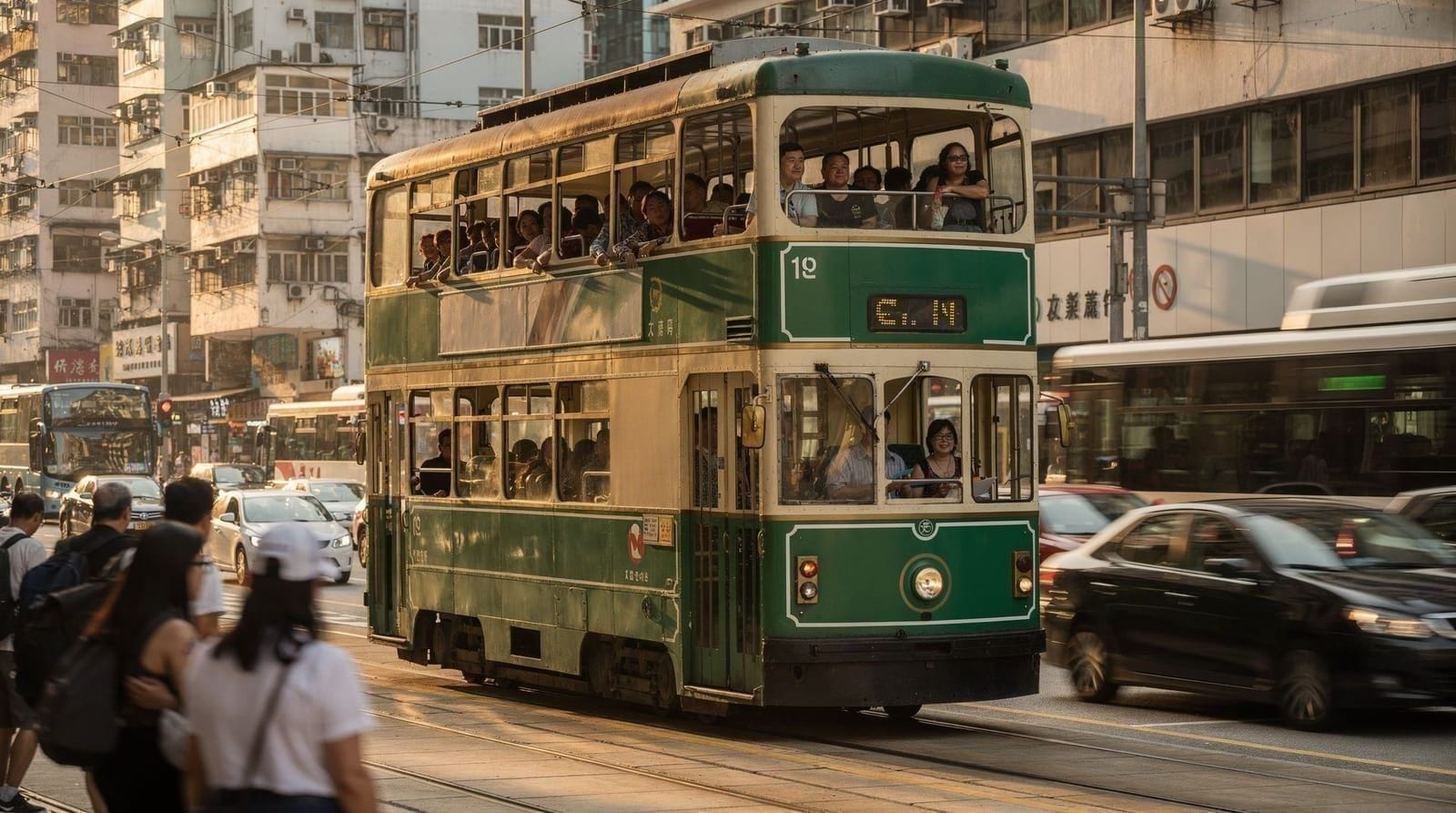
The harbour is its own heritage layer. The Star Ferry guide and the riding the Star Ferry post describe a crossing that has long belonged to daily life, and the ding ding tram journey does the same for the island’s tramway. Both are cheap, slow ways to see the city at street level, and both pair naturally with a walking day in Sheung Wan.
For a slower pace, the outlying islands keep a village rhythm that the main urban areas lost. Tai O on Lantau is known for its stilt houses and fishing-village character, Cheung Chau and Peng Chau offer small-scale island streets and temples, and Lamma Island is the gentlest of the group. The outlying islands guide compares them so you can choose one rather than rushing all four. On Hong Kong Island’s south side, Stanley retains a seaside-town feel that is a useful contrast to the business districts.
Putting a heritage day together
If you only have a day or two for this theme, use the Hong Kong MTR guide to plan the long hops and then walk each district on foot. The first-time Hong Kong guide and the two-day itinerary show how a heritage walk can fit around the headline sights, and the Hong Kong history museum guide works well on a rainy afternoon. Temple lovers can add the Wong Tai Sin Temple guide for a living place of worship that is still very much in daily use.
Travellers with a specific interest, whether tiled shopfronts, temples or the history of a single trade, may prefer a customised private walking tour built around those themes rather than a general overview. For wider planning, the Hong Kong itinerary planning guide and the top things to do in Hong Kong show where a heritage day sits among the headline sights, and the hidden gems post adds quieter stops worth a detour.