Hong Kong first-timer itinerary — 3 days done right
Hong Kong: Heritage highlights tour with Peak Tram and Star Ferry
What to expect from your first three days in Hong Kong
Three days is genuinely enough to see the core of Hong Kong without rushing. You will cross Victoria Harbour by Star Ferry, ride the Peak Tram up to one of Asia’s great urban viewpoints, eat proper dim sum, explore a neighbourhood that feels nothing like the harbour skyline, and end with a temple and a street market that most visitors only read about. This itinerary is built for people who have never been before and want a clear, practical sequence — no wasted mornings, no backtracking, no over-scheduled hours.
This itinerary covers Central and Sheung Wan, The Peak, Wan Chai, and Causeway Bay, and stays on Hong Kong Island and Kowloon throughout. If you want a longer trip that adds Lantau Island, see the Hong Kong 3-day itinerary which includes a day at the Big Buddha.
Daily budget (mid-range): HKD 600–900 per day (roughly USD 77–115) excluding accommodation. All prices are in Hong Kong dollars with USD equivalents at approximately 7.8 HKD per USD.
| Where | Central, Wan Chai, Causeway Bay, and Tsim Sha Tsui across Hong Kong Island and Kowloon |
| Cost | Around HKD 600–900/day mid-range, excluding accommodation |
| Time needed | 3 full days, arrival plus two full days |
| Getting around | MTR + Star Ferry + Octopus card throughout |
| Best time | October–December for cooler, drier weather; avoid peak summer humidity if you can choose |
The three days at a glance
| Day | Focus | Evening highlight |
|---|---|---|
| Day 1 | Arrival, Central district, Star Ferry crossing | Symphony of Lights + TST dinner |
| Day 2 | Dim sum, The Peak, Sheung Wan antiques | Wan Chai backstreets |
| Day 3 | Causeway Bay, Wong Tai Sin Temple | Temple Street Night Market |
Before you land: two things to set up at the airport
Airport Express train to the city
The fastest way from Hong Kong International Airport (HKG) into the city is the Airport Express. Trains take 24 minutes to Hong Kong Station in Central, or 22 minutes to Kowloon Station in Tsim Sha Tsui. The fare to Hong Kong Station is HKD 120 with Octopus or QR code, or HKD 130 for a paper ticket (about USD 15.40–16.70) one way. Tickets can be bought at the station with cash or card. Full details — including the in-town check-in option for your return — are in the airport to city Hong Kong guide.
Get an Octopus card at the airport
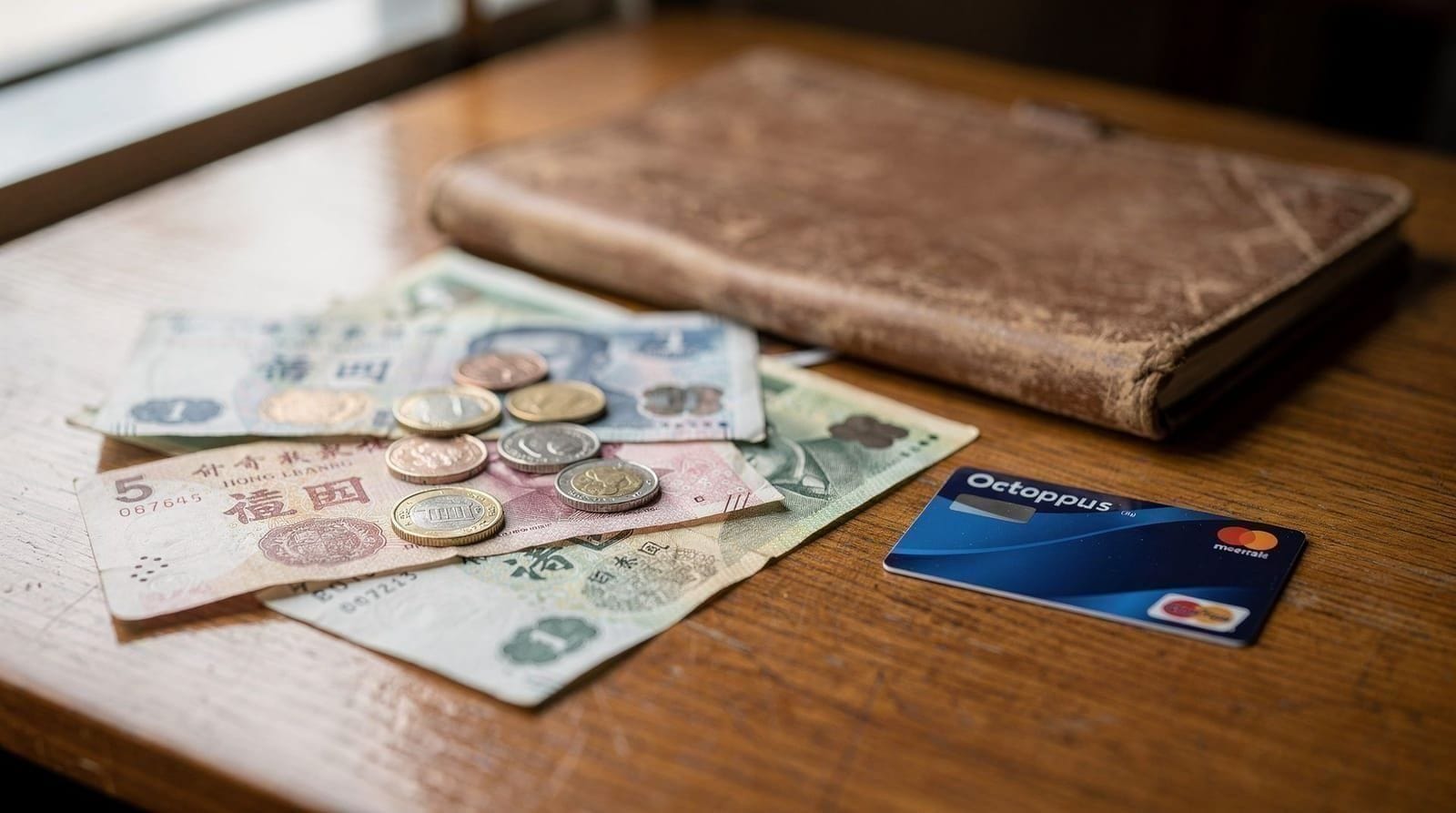
Before boarding the Airport Express, pick up an Octopus card at the Customer Service Centre in the arrivals hall. The card costs HKD 200 total: HKD 50 is a refundable deposit and HKD 150 is loaded travel credit. That HKD 150 will cover your first day’s transport comfortably.
The Octopus card is a contactless stored-value card that works on the MTR (metro), buses, trams, the Star Ferry, minibuses, and even at 7-Eleven, McDonald’s, and many supermarkets. You tap on when you board and tap off when you exit. The system calculates the correct fare automatically. When your balance runs low, top up at any MTR Customer Service Machine or at convenience stores — the machines accept cash and are straightforward to use. There is no need to carry coins for transport once you have an Octopus card.
The Octopus card guide covers topping up, getting the deposit back when you leave, and the tourist vs resident versions in more detail.
Day 1 — Arrival, Central, and the Star Ferry
Getting to your hotel
From Hong Kong Station (Airport Express), the Tsuen Wan Line and Island Line connect to most accommodation areas. If you are staying in Tsim Sha Tsui on the Kowloon side, take the MTR one more stop to Kowloon Station or switch to the East Tsim Sha Tsui exit. The MTR guide explains the colour-coded line system and how to read fare maps — worth a quick read before your first journey so the signs make sense.
Drop your bags and allow an hour to settle in before heading out.
Afternoon — wander Central district
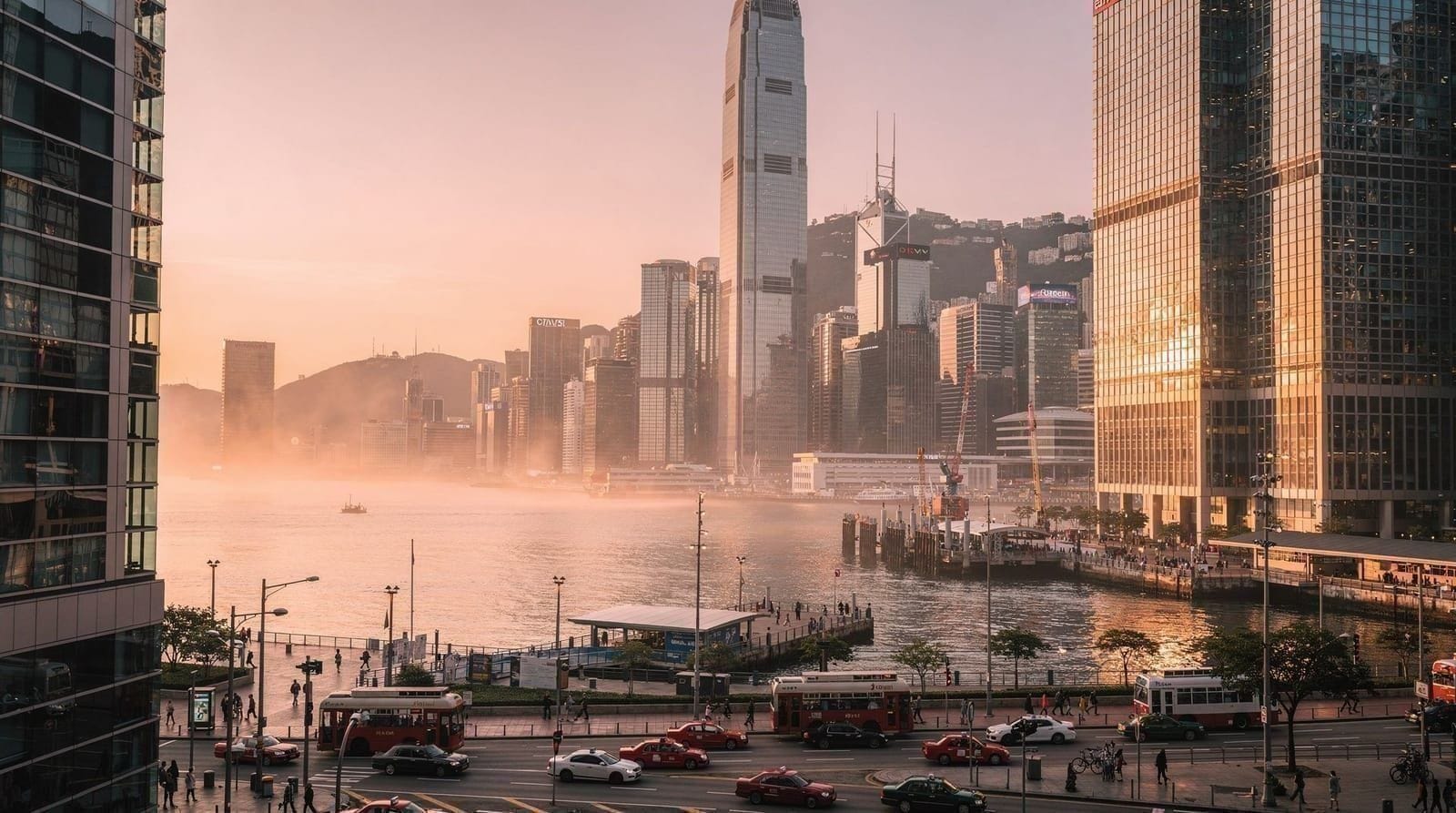
Central is where colonial-era stone buildings sit immediately next to glass towers, and where mid-century street markets spill out below elevated highways. It is the clearest illustration of how Hong Kong layers its history.
Start at the Central Ferry Piers on the waterfront. Walk along the promenade toward the IFC Mall, then turn inland along Des Voeux Road Central. The lanes running perpendicular — like Pottinger Street with its stone steps, or Li Yuen Street East and West with their narrow market stalls — give you a ground-level view of the district that the wide roads do not.
The Central and Sheung Wan area guide covers the neighbourhood street by street if you want more depth.
Early evening — Star Ferry crossing
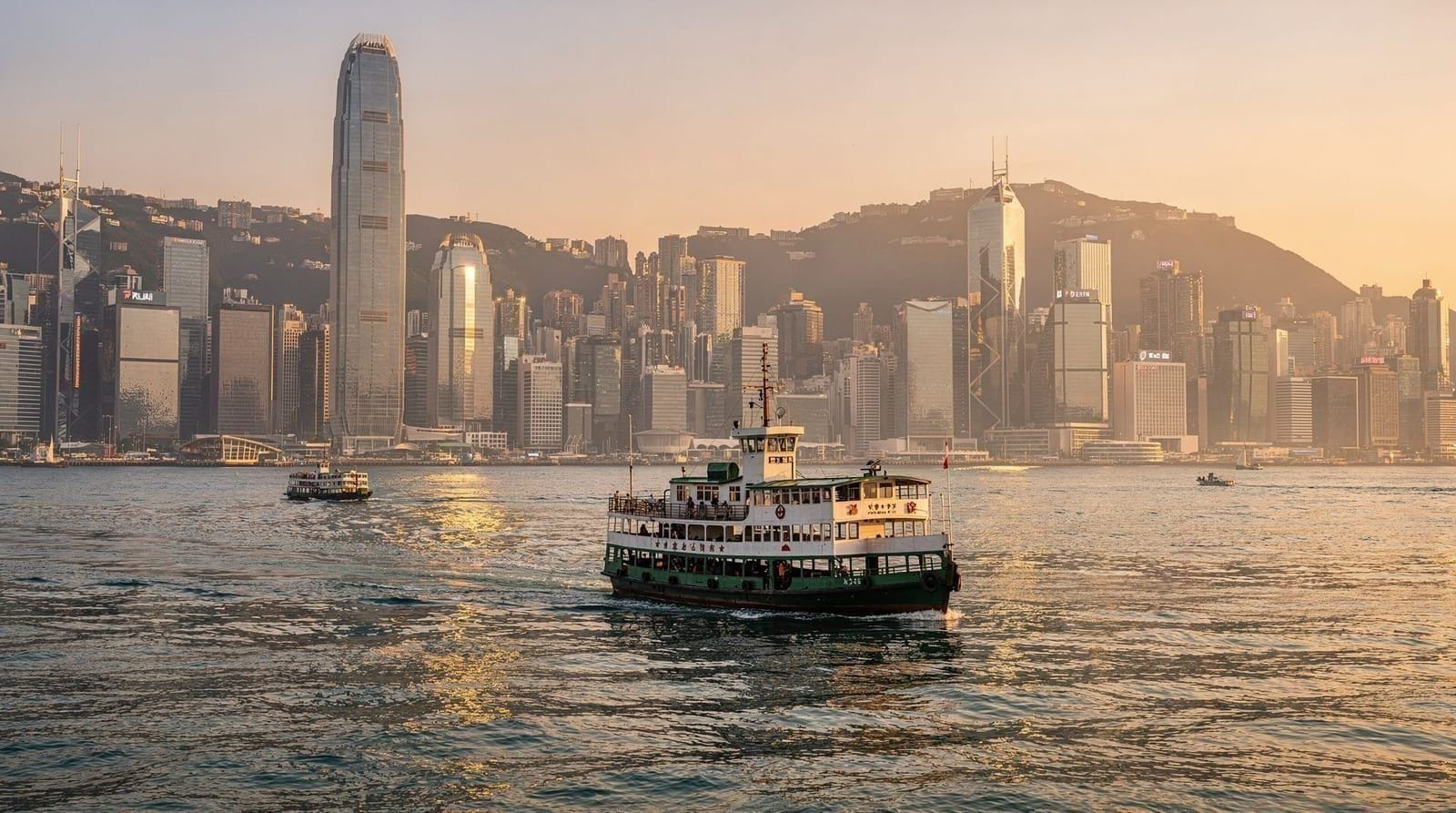
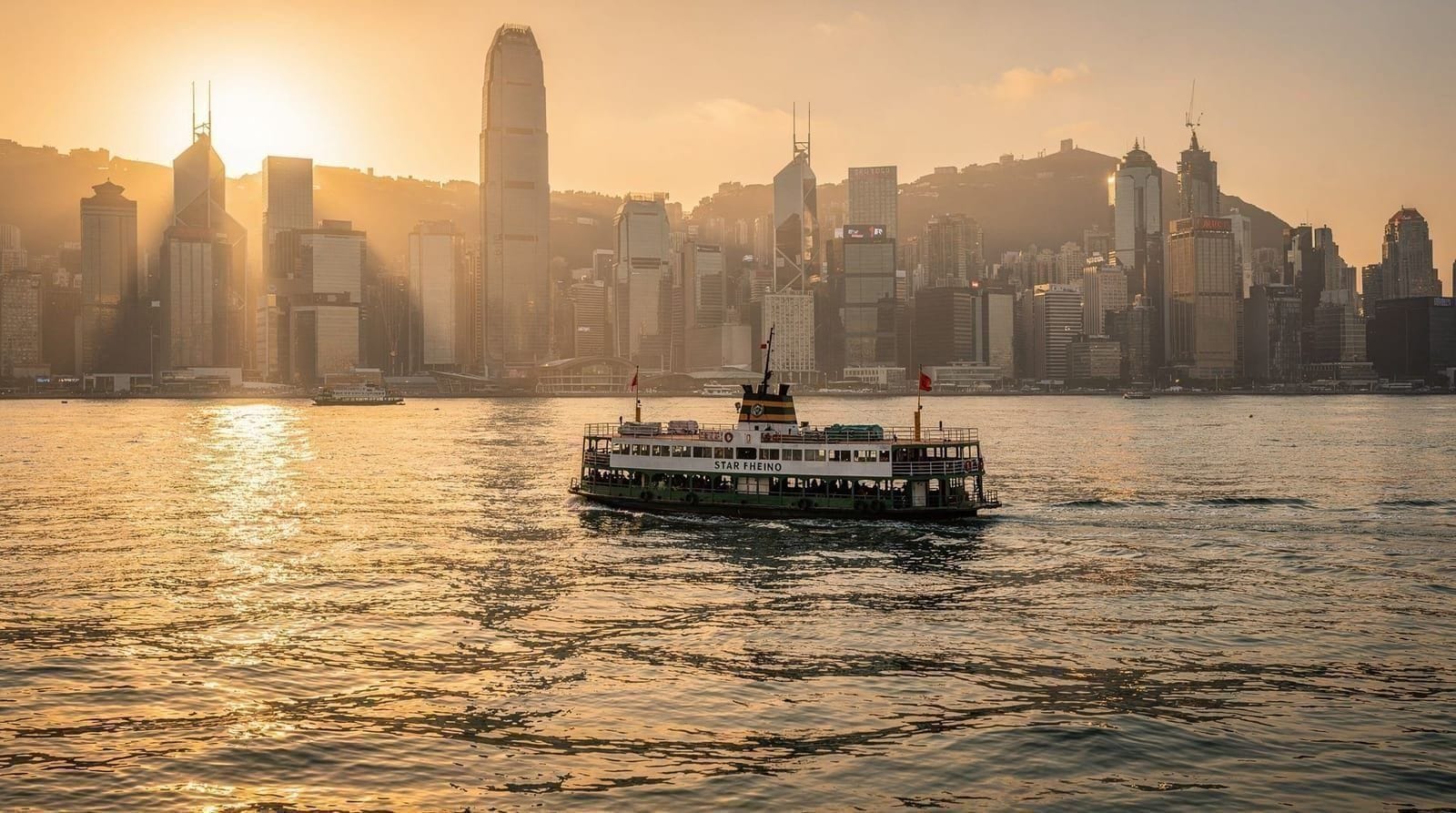
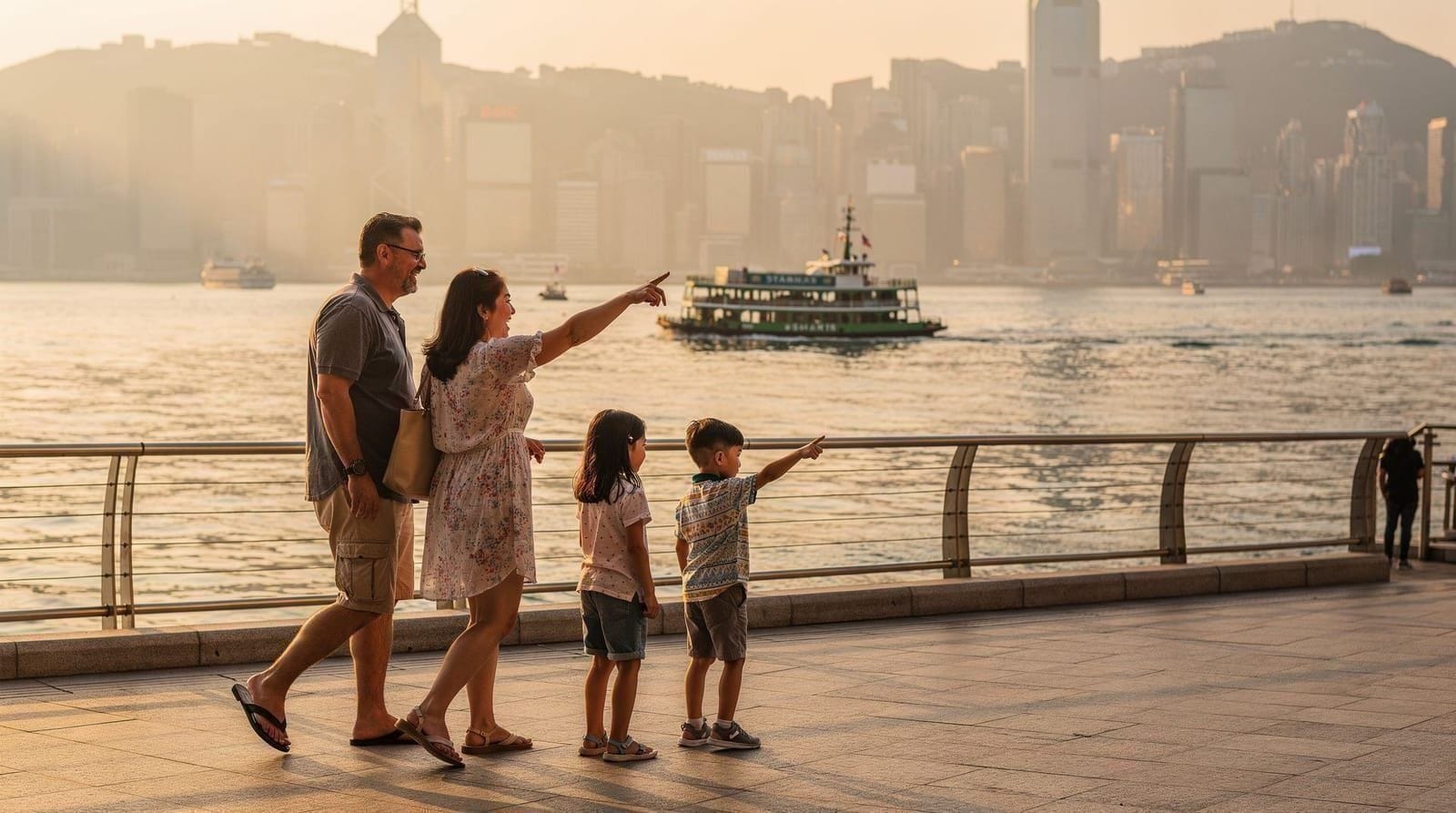
At around 5:30–6pm, join the queue for the Star Ferry at Central Ferry Pier 7. On weekdays the lower deck costs HKD 4.0 and the upper deck HKD 5.0; at weekends and public holidays it is HKD 5.6 and HKD 6.5 (less than USD 1 either way). The 8-minute crossing to Tsim Sha Tsui is one of the best value experiences in any city in the world: you are on the water, looking at the full Hong Kong Island skyline as the light changes in the late afternoon. The upper deck gives you slightly better sightlines over the railings.
The Star Ferry guide has timetables, pier locations on both sides, and notes on the night crossing.
Join a Star Ferry Symphony of Lights cruise for the best harbour view of the nightly light show.Check availabilityEvening — TST waterfront and Symphony of Lights
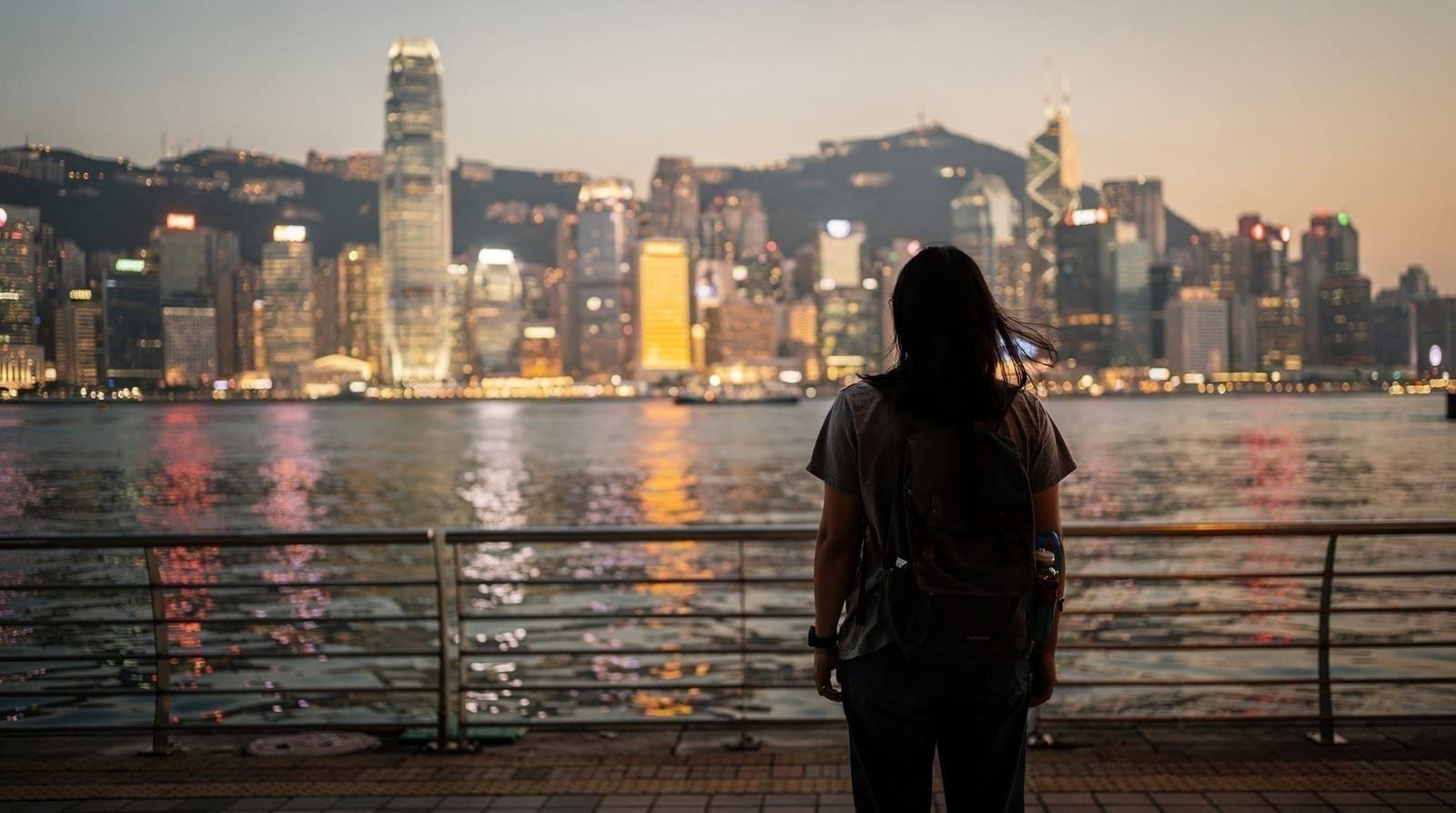
After crossing to Tsim Sha Tsui, walk east along the Tsim Sha Tsui Promenade to the Avenue of Stars. The walkway runs along the Kowloon waterfront directly facing Hong Kong Island, and the view at dusk — particularly once the lights on both banks come on — is the image most people associate with Hong Kong.
At 8pm sharp, the Symphony of Lights show begins. Around 50 buildings on both sides of the harbour light up in a coordinated display of LED colour changes and searchlights, accompanied by music broadcast from speakers along the promenade. It runs for about 10 minutes and it is free. Arrive by 7:45pm to get a good spot on the waterfront railing. The show runs every night, unless a typhoon signal No. 3 or higher or a red/black rainstorm warning is issued at 3pm or later.
Dinner in Tsim Sha Tsui: the streets around Kimberley Road, Carnarvon Road, and Knutsford Terrace have dozens of options across all price points, from wonton noodle soup at HKD 45–60 (USD 6–7.70) to sit-down Cantonese restaurants. The MTR back to Hong Kong Island (Tsuen Wan Line from Tsim Sha Tsui station) takes about 10 minutes depending on your stop.
Day 2 — Dim sum, The Peak, and Sheung Wan
Morning — dim sum breakfast
Plan to arrive at a dim sum restaurant between 9am and 10am. The best traditional dim sum restaurants in Hong Kong fill up fast, especially at weekends, and going early means you avoid the queue and get the best selection of freshly made items.
There are two systems for ordering dim sum, and knowing which one you are in avoids confusion:
Steam trolleys: at older, large-format dim sum restaurants, staff push carts through the dining room. You stop the trolley as it passes and point at what you want. The dishes are stamped on a paper card at your table. You do not need to speak Cantonese — pointing works perfectly.
Paper order forms: many restaurants now use printed tick-sheet menus where you write the quantity next to each item name, then hand the form to the staff. Most forms in tourist-accessible areas have English translations alongside the Chinese names. Common first-timer choices: har gow (steamed shrimp dumplings), siu mai (pork and shrimp dumplings), cheung fun (rice noodle rolls with various fillings), char siu bao (barbecue pork buns — both steamed and baked versions), and egg tarts to finish.
A full dim sum meal for one person runs HKD 80–160 (USD 10–20) including tea. Jasmine or pu-erh tea is ordered separately and usually costs HKD 8–15 per person. The dim sum guide for Hong Kong explains the etiquette, how to pour tea correctly, and which restaurants are worth the queue.
Late morning — The Peak by Peak Tram or bus
From Central, you have two options for reaching The Peak:
Peak Tram: the Lower Peak Tram Terminus is on Garden Road in Central, a 10-minute walk uphill from MTR Central station (Exit J2, Chater Road exit). The tram costs HKD 82 one way or HKD 116 return (USD 10.50–14.90). It is a funicular railway that climbs 27 degrees at its steepest — steep enough that the buildings out the window look tilted at an odd angle. At weekends, the queue for walk-up tickets can run 45–60 minutes. Booking in advance, or going early on a weekday, avoids this entirely.
Bus 15C: runs from the Central Ferry Piers (Pier 5 area) to the Upper Peak Tram Terminus. Check the current fare on the bus operator’s website. It is a double-decker bus on a winding mountain road and takes around 35–40 minutes. The journey is slower but offers good views and is very cheap. Many people take the tram up and the bus down to get both experiences.
Book this half-day Hong Kong highlights tour — Peak Tram and Star Ferry included — to skip the planning.Check availabilityAt the summit (552 metres above sea level), the Sky Terrace 428 observation platform gives you the full 360-degree view. On a clear day you see the skyscrapers of Central directly below, Kowloon across the harbour, and the New Territories extending north toward the mainland. The Victoria Peak guide explains the difference between the Sky Terrace and the free viewpoints, and when cloud cover is most likely.
Allow 1.5–2 hours at the top, including a walk around the Peak Circle Walk (a flat 3.5 km loop through vegetation with occasional filtered harbour views) if the weather is cooperative.
Afternoon — Sheung Wan and Hollywood Road
Descend to Central and walk or take the MTR one stop west to Sheung Wan. Hollywood Road runs east to west through this neighbourhood and is lined with antique shops, art galleries, and curio dealers — Chinese ceramics, antique furniture, vintage maps, jade pieces, and carved wooden items. You are not obligated to buy anything; the shops are open to browsers and the variety is genuinely interesting.
Man Mo Temple sits on Hollywood Road at the corner of Ladder Street (no entry fee is published; open 08:00–18:00). It dates from 1847 and is one of the oldest active temples in Hong Kong. Large spiralling incense coils hang from the ceiling, burning slowly over days or weeks, and the interior has the particular atmosphere that comes from continuous use over nearly two centuries. Photography is allowed.
The Central and Sheung Wan destination guide covers further stops in this area including the wet markets on Sheung Wan Street and the quieter sections of the neighbourhood above Hollywood Road.
Evening — Wan Chai
Take the MTR from Sheung Wan (Island Line, eastbound) two stops to Wan Chai. The neighbourhood has a reputation primarily for nightlife but the area around Johnston Road, Wan Chai Market, and the residential streets behind it is one of the most lived-in and unhurried parts of Hong Kong Island during the early evening hours.
The Wan Chai area guide covers the local eating options and points of interest in more detail. The area around Spring Garden Lane and Queens Road East has solid Cantonese restaurants and noodle shops at everyday prices (HKD 60–120 for a main meal). The Blue House Cluster on Stone Nullah Lane is one of the last remaining examples of tenement architecture in Hong Kong and is illuminated in the evening.
Day 3 — Causeway Bay, Wong Tai Sin, and Temple Street Night Market
Morning — Causeway Bay
Take the MTR (Island Line) to Causeway Bay station. Times Square — a large multi-floor shopping mall on Russell Street — is worth walking through for the sheer scale, but the streets around it are the more interesting draw: Food Street, the market lanes near Jardine’s Crescent, and Victoria Park (free entry, open daily) are all within easy walking distance.
Victoria Park is the largest public park on Hong Kong Island. On weekday mornings it fills with residents doing tai chi, badminton, and walking circuits. It is a good place to sit and watch Hong Kong going about its morning before the tourist sites open up. The park borders the harbour and has a fountain plaza at the Gloucester Road end.
The Causeway Bay area guide covers the shopping districts, the typhoon shelter, and the best local eating options in the neighbourhood.
Afternoon — Wong Tai Sin Temple
From Causeway Bay, take the MTR to Causeway Bay station (Island Line), transfer at Admiralty to the Kwun Tong Line (or take the direct route via Mong Kok), and exit at Diamond Hill station. Wong Tai Sin Temple is a 5-minute walk from Exit B2. The temple complex is free to enter; donations are voluntary.
Wong Tai Sin is one of the busiest and most atmospheric active temples in Hong Kong. It serves Taoism, Buddhism, and Confucianism simultaneously under one complex, which reflects the practical religious pluralism common in Hong Kong. The main hall is dedicated to the deity Wong Tai Sin (Huang Daxian), who is associated with healing and fortune.
Fortune telling and kau cim: the area in front of the main hall is where you will see worshippers kneeling and shaking cylindrical bamboo containers holding numbered sticks. This is kau cim (also called chim sticks or fortune sticks). You hold the container, shake it while thinking of a specific question, and the first stick to fall or lean out is your answer — matched to a numbered fortune slip available from the corresponding booth nearby. Most booths have English translations or will call over someone who speaks English. There is no obligation to participate; watching the ritual is equally worthwhile. The Wong Tai Sin Temple guide explains the process step by step.
Allow 45–60 minutes at the temple complex.
Evening — Temple Street Night Market
From Diamond Hill, take the Kwun Tong Line west to Jordan station (two stops). Temple Street Night Market begins around Jordan MTR station and runs several blocks north. Stalls set up from around 6pm and the market is at its liveliest between 7pm and 10pm.
The market sells clothing, accessories, phone cases, trinkets, watches, and a variety of other goods at prices that assume you will negotiate. The vendor’s first price is usually 40–60% above what they will accept. A polite counter-offer and a willingness to walk away is the standard approach. Even if you buy nothing, walking the length of Temple Street at night is one of the more vivid experiences Hong Kong offers — fortune tellers set up on fold-out tables, dai pai dong stalls serve seafood and clay-pot rice on the pavement, and the noise level is memorable.
Dinner here is cheap and good: clay-pot rice from HKD 55–80 (USD 7–10), steamed seafood plates at the market-side restaurants for HKD 100–180 (USD 13–23), or roasted goose on rice for HKD 65–90 (USD 8–11.50) at the shops on the side streets.
The MTR back to Hong Kong Island from Jordan station (Tsuen Wan Line, southbound, transfer at Central or Admiralty depending on your hotel area) is straightforward. Book a private walking tour with a local guide to get the stories behind the streets you are already walking.Check availability ---
Practical details for first-time visitors
Understanding the MTR
The MTR is clean, fast, air-conditioned, and covers almost everywhere on this itinerary. Lines are colour-coded and station signs are in both English and Chinese. Fare gates accept Octopus cards (tap on entry, tap on exit — the correct fare is deducted automatically) and also accept cash for single-journey tickets purchased at the machines. Single-journey tokens cost slightly more than the equivalent Octopus fare and require exact route selection, so the Octopus card is almost always simpler.
When reading the system map, identify your line colour first, then count stations. Platform screens show the next two or three trains with their terminus name — make sure you are boarding a train whose terminus is in the direction you want to travel, not the opposite end of the line. The MTR guide for Hong Kong visitors covers line transfers and the handful of routes that require switching between lines.
Recommended tours
If you would rather have someone else handle the routing on your first full day, a guided option makes sense — particularly for the Peak and harbour combination, which involves multiple transport changes. This full-day tour covers the Peak Tram, a city walk, and a dim sum lunch — ideal for Day 2 of this itinerary.Check availability ---
Where to base yourself for this route
This itinerary is built assuming a hotel somewhere between Central and Causeway Bay on Hong Kong Island, or in Tsim Sha Tsui on the Kowloon side — both put you within a short MTR ride or Star Ferry crossing of everything above. Hong Kong Island hotels tend to run higher for the same standard of room, but you cut out the harbour crossing for Day 2 and Day 3 activities.
Tsim Sha Tsui hotels are usually better value and put you closer to the Symphony of Lights viewpoint on Day 1, at the cost of a slightly longer commute to the Peak and Sheung Wan on Day 2. Neither choice breaks the itinerary — the MTR and Star Ferry make both sides genuinely close. The where to stay in Hong Kong guide breaks down the two sides in more detail, and central vs Tsim Sha Tsui is a direct head-to-head if you are deciding between the two.
What this itinerary deliberately skips
Three days is not enough time for everything, and trying to force in extra stops usually means rushing the things that matter. This route skips Lantau Island (the Big Buddha, the cable car, Tai O fishing village) entirely — it is a half-day commitment on its own and belongs on a 4-day trip; see the Hong Kong 4-day itinerary if you can extend.
It also skips Mong Kok’s markets beyond a passing mention, Ocean Park, and any of the outlying islands like Cheung Chau or Lamma. None of these are lesser experiences — they simply do not fit without cutting something else short. The what to skip in Hong Kong guide has a broader take on which sights are genuinely worth the detour and which are overrated for the time they cost.
If the weather turns
Hong Kong’s subtropical climate means a shower during any of these three days is a real possibility, especially between April and October. None of the outdoor stretches on this itinerary — the Star Ferry crossing, the Peak, Wan Chai’s backstreets — are ruined by light rain, but a heavier downpour changes the calculus, particularly on Day 2 where cloud at the summit can erase the view entirely.
If you wake up to a washout, swap Day 2’s Peak visit for an indoor-heavy day: the Hong Kong rainy day itinerary has a full backup sequence built around museums, malls, and covered markets, and you can simply slot the Peak into whichever afternoon clears up. Checking the Hong Kong Observatory forecast the night before is worth the two minutes it takes.
Etiquette and small habits that smooth the trip
A few local habits make the three days noticeably easier. Stand on the right on MTR escalators and walk on the left — Hong Kong follows this consistently and blocking the escalator draws impatient looks in a city that moves fast. Tipping is not expected at cha chaan tengs or street stalls, but a 10% service charge is often added automatically at sit-down restaurants — check the bill before adding more.
Queuing is taken seriously everywhere from dim sum restaurants to taxi ranks; join the back of the line rather than hovering near the front. None of this is essential to enjoying the trip, but it removes the small friction points that first-timers sometimes hit on day one. The Hong Kong safety and etiquette guide covers a fuller list, including temple etiquette for the Wong Tai Sin visit on Day 3.
Frequently asked questions about this 3-day Hong Kong itinerary
Is Hong Kong easy to navigate as a first-time visitor?
Yes, straightforwardly so. The MTR has English signage throughout, taxis use meters and most drivers can manage basic English destination names, and the city is generally well organised for independent travel. The biggest adjustment for first-timers is usually the density — everything is close together and the streets are busier than most European or North American cities. Give yourself an extra 10–15 minutes on the first day to find your bearings. After that, the system is logical and reliable.
How much cash should I carry?
Not much. An Octopus card handles almost all transport and many food purchases. For markets (Temple Street, street food stalls, small vendors at traditional shops), cash is expected — carry HKD 300–500 in small notes on market days. ATMs are everywhere: MTR stations, 7-Elevens, and bank branches throughout the tourist areas. Most mid-range restaurants and all major shops accept Visa and Mastercard. See the first-time Hong Kong guide for a fuller breakdown of payment norms.
Is English widely spoken in Hong Kong?
Widely enough that you can navigate the entire itinerary — including ordering food and buying transport tickets — without speaking any Cantonese. English is an official language and is used on all government signage, transport systems, and menus at restaurants that see tourist traffic. In very local settings (some older dai pai dongs, small temples, wet markets) the staff may not speak English well, but pointing, numbers, and patience resolve most situations. Learning a few Cantonese words (m goi — excuse me/thank you; doh jeh — thank you for a gift) is appreciated even if not necessary.
Do I need a local SIM or data plan?
A local SIM or an international roaming package makes the trip significantly easier — offline maps work, but real-time MTR disruption alerts, restaurant lookups, and navigation updates require data. Tourist SIM cards for Hong Kong are sold at the airport on arrival (look for 3HK, SmarTone, and China Mobile booths in the arrivals hall). A 3–5 day tourist SIM with data costs HKD 50–100 (USD 6.50–13) depending on the allowance. Alternatively, if your home carrier offers affordable international roaming, that removes the need to manage a second SIM. Free Wi-Fi is available at all MTR stations.
Is 3 days enough for Hong Kong?
Three days covers the essential experiences — the Peak, Star Ferry, dim sum, at least one Kowloon neighbourhood, and some local colour — without feeling like a checklist sprint. What it does not include is a day trip to Lantau Island (Big Buddha, Tai O village), an in-depth exploration of the New Territories, or a full day dedicated to food. If you have four days or more, see the how many days in Hong Kong guide for advice on extending the itinerary. For those working with a tighter budget, the Hong Kong budget itinerary covers how to do a very similar sequence for significantly less.
What should I wear?
Hong Kong is subtropical. From April through October, expect heat (28–35°C, 82–95°F), high humidity, and the strong possibility of afternoon rain showers. Light, breathable clothing and a compact umbrella or rain jacket are the practical answer. From November through March, temperatures drop to 12–20°C (54–68°F) — comfortable for walking but cool enough that a light layer or jacket is useful, especially in the evenings.
The MTR and shopping malls are heavily air-conditioned year-round, so carrying a light top layer even in summer makes long indoor stretches more comfortable. Smart casual dress is fine for any restaurant on this itinerary. See where to stay in Hong Kong for neighbourhood notes that may affect what you pack (some areas involve more walking on hills than others).
Is Hong Kong safe?
Hong Kong is one of the safer major cities in Asia for visitors. Petty theft can occur in crowded markets and transport — keep your phone in a front pocket and your bag in front of you in busy areas — but violent crime targeting tourists is rare. The city is generally well-lit and active late into the night. Solo travellers, including solo women, navigate it without significant concern. The top things to do in Hong Kong guide and the first-time Hong Kong guide both include current practical safety notes.
Should I book the Peak Tram tickets in advance?
Yes, especially if your visit falls on a weekend or during a public holiday. Walk-up queues for the tram can run 45–60 minutes at busy times, which eats directly into the 1.5–2 hours this itinerary allows at the summit. Advance tickets, sold online or as part of a combined tour, let you skip the ticket-purchase line (though not necessarily the platform queue at peak times). The is the Peak Tram worth it guide and the Peak Tram guide both cover booking windows and how far ahead to plan.
What if I only have two days instead of three?
Drop either the Wong Tai Sin Temple and Temple Street evening (Day 3) and fold Causeway Bay into a shorter Day 2, or skip Sheung Wan’s antique shops and keep the Peak and Wan Chai. The Hong Kong 2-day itinerary is built specifically around this tighter timeframe and prioritises the same core sights — the Peak, the harbour, dim sum — in a more compressed sequence rather than trying to squeeze all of this three-day route into two days.
Top experiences
Bookable activities with verified prices and instant confirmation on GetYourGuide.