Hong Kong 4-day itinerary — add a Macau day trip to the perfect 3-day base
Hong Kong: Macau day tour with round-trip ferry lunch and pickup
Duration: 10 hours
Four days: the version that includes Macau
Three days in Hong Kong covers the essential ground — Hong Kong Island, Kowloon, and Lantau. The fourth day adds something structurally different: a day trip to Macau, the former Portuguese territory 60 km across the Pearl River Delta. Macau is technically a separate Special Administrative Region with its own border crossing, currency (though Hong Kong dollars are accepted everywhere), and distinct colonial-European identity.
This itinerary builds Day 1–3 identically to the 3-day Hong Kong itinerary and adds Macau as Day 4. If you have already read the 3-day plan, jump to the Macau section below.
Who this itinerary suits best: first-time visitors with four clear days who want to see Hong Kong thoroughly and add a genuinely different destination without a complicated overnight. Macau as a day trip from Hong Kong is one of the best-value extensions in the region.
Daily budget (mid-range, excluding accommodation): HK$600–950 per day. Day 4 (Macau) runs slightly higher due to ferry costs.
| Days 1–3 | Hong Kong Island, Kowloon, Lantau (same as the 3-day itinerary) |
| Day 4 | Macau — Ruins of St Paul’s, Historic Centre, Macanese food |
| Passport | Required for Day 4 (international border crossing) |
| Ferry time | about 60 minutes each way from Sheung Wan or TST |
| Daily budget | HK$600–950 (USD $77–122), higher on Day 4 |
| Book ahead | Ferry tickets on weekends, Chinese New Year, Golden Week |
Day 1 — Hong Kong Island
08:30 — Breakfast in Central
Begin at a cha chaan teng in Central — milk tea (HK$22–28), pineapple bun with butter (HK$18–25), or a set breakfast with scrambled eggs on toast (HK$38–50). The diners around Wellington Street and Peel Street are reliable and genuinely local.
09:30 — Victoria Peak
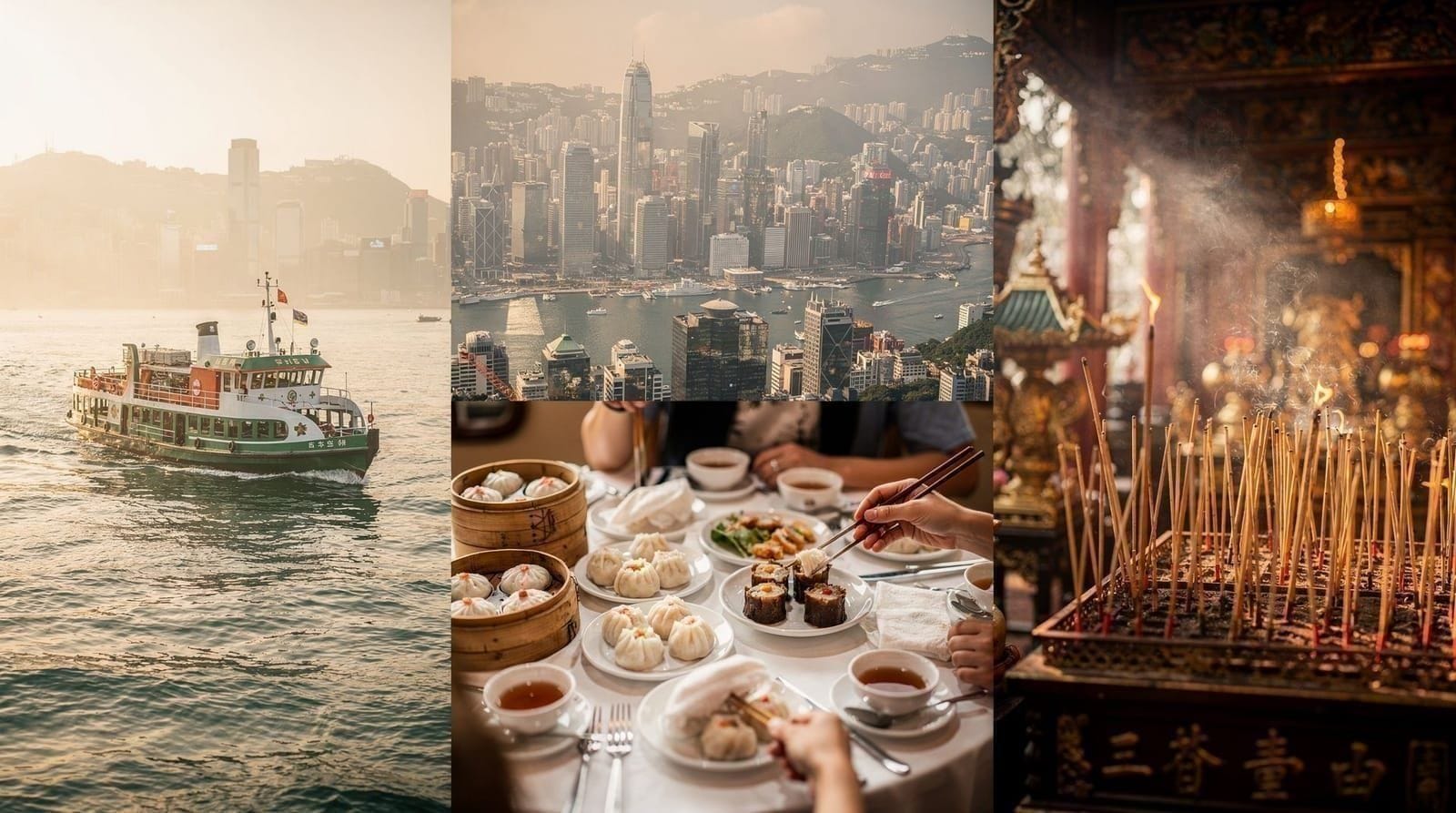
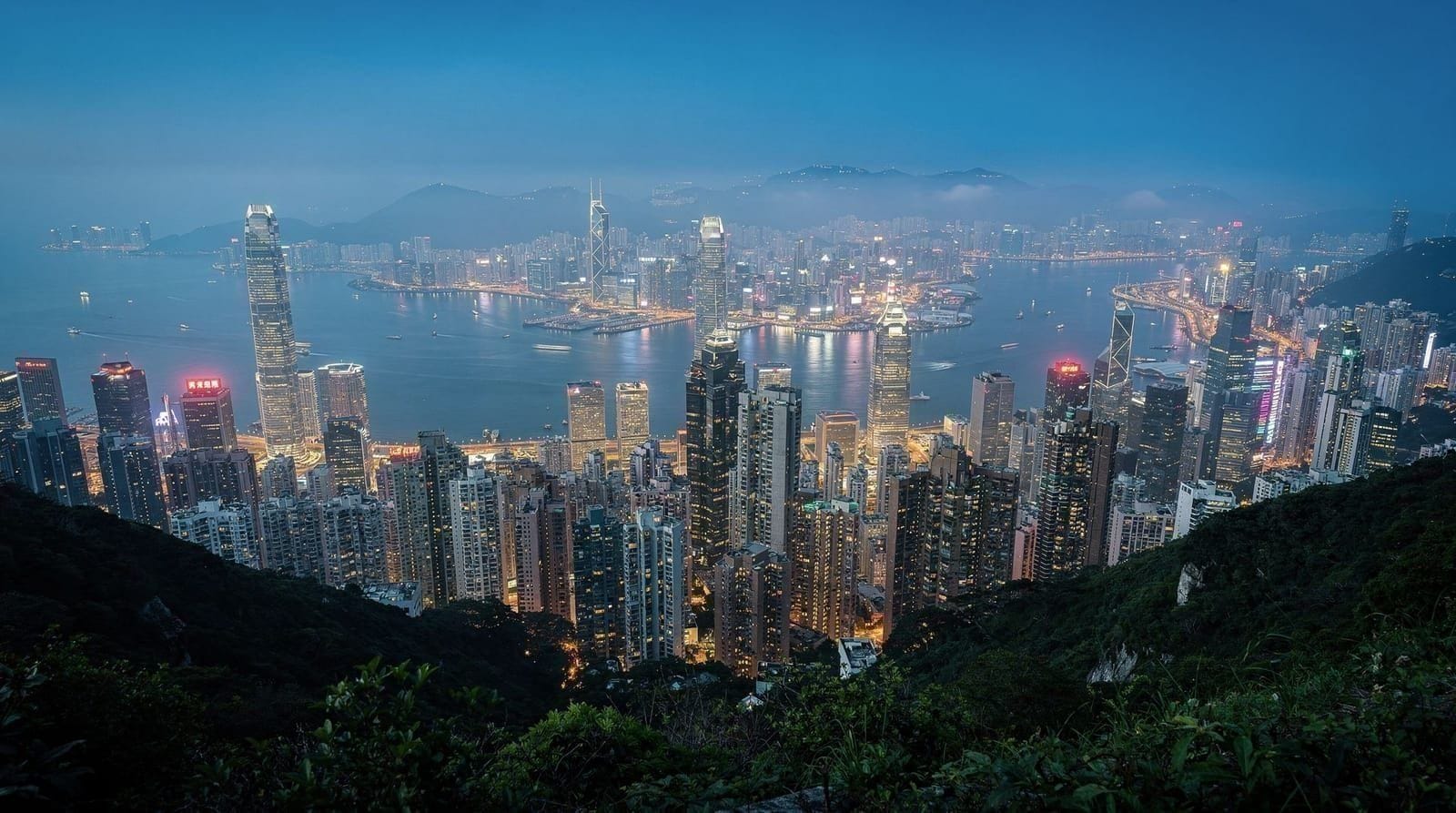
Walk 12 minutes or take Bus 12 to the Lower Peak Tram Terminus on Garden Road. The Peak Tram takes 8 minutes to the summit. Sky Terrace 428 provides the city’s most complete panorama.
Book the Peak Tram and Sky Terrace 428 ticket in advance to avoid weekend queues that regularly exceed one hour.Check availabilityWalk the Peak Circle Walk (3.5 km, 40–50 minutes, free) after the terrace for a quieter perspective. See The Peak guide for navigation tips and the Victoria Peak guide for viewing conditions.
12:00 — Sheung Wan and Man Mo Temple
Take the tram back or walk down (Old Peak Road, 45 minutes). Head to Hollywood Road and Man Mo Temple (1847, free entry) — incense coils hanging from the ceiling, active worshippers. Walk through Central and Sheung Wan for lunch: congee shops and noodle counters along the streets around Sheung Wan MTR (HK$55–90).
14:30 — Wan Chai and Causeway Bay
MTR east to Wan Chai (Island Line, HK$5.8). Blue House cluster on Stone Nullah Lane, Queen’s Road East traditional shops, Convention Centre waterfront. Then one more stop to Causeway Bay (HK$4.3) — Victoria Park for a rest, or the Noon Day Gun on the waterfront.
18:30 — Star Ferry and TST promenade
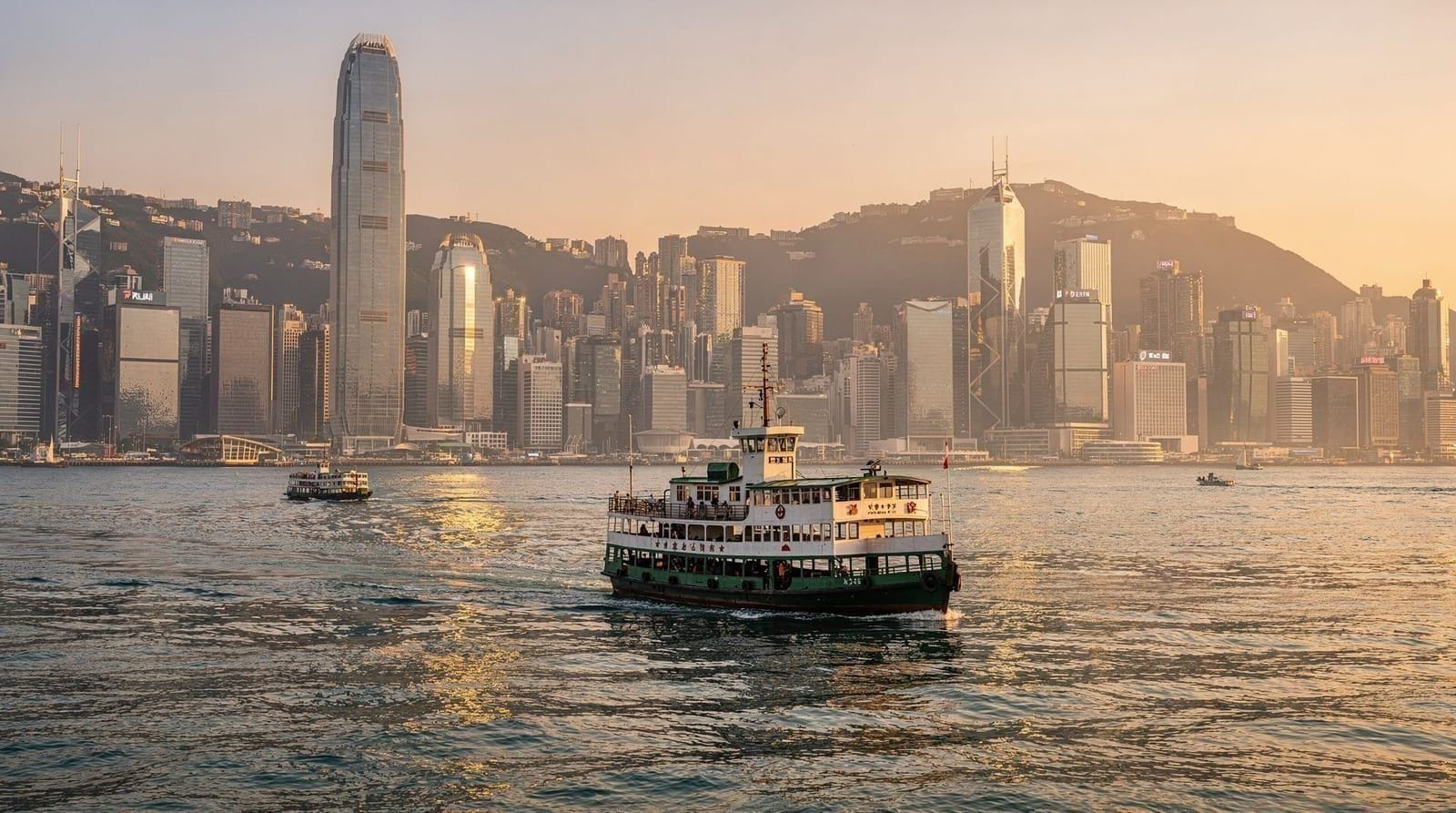
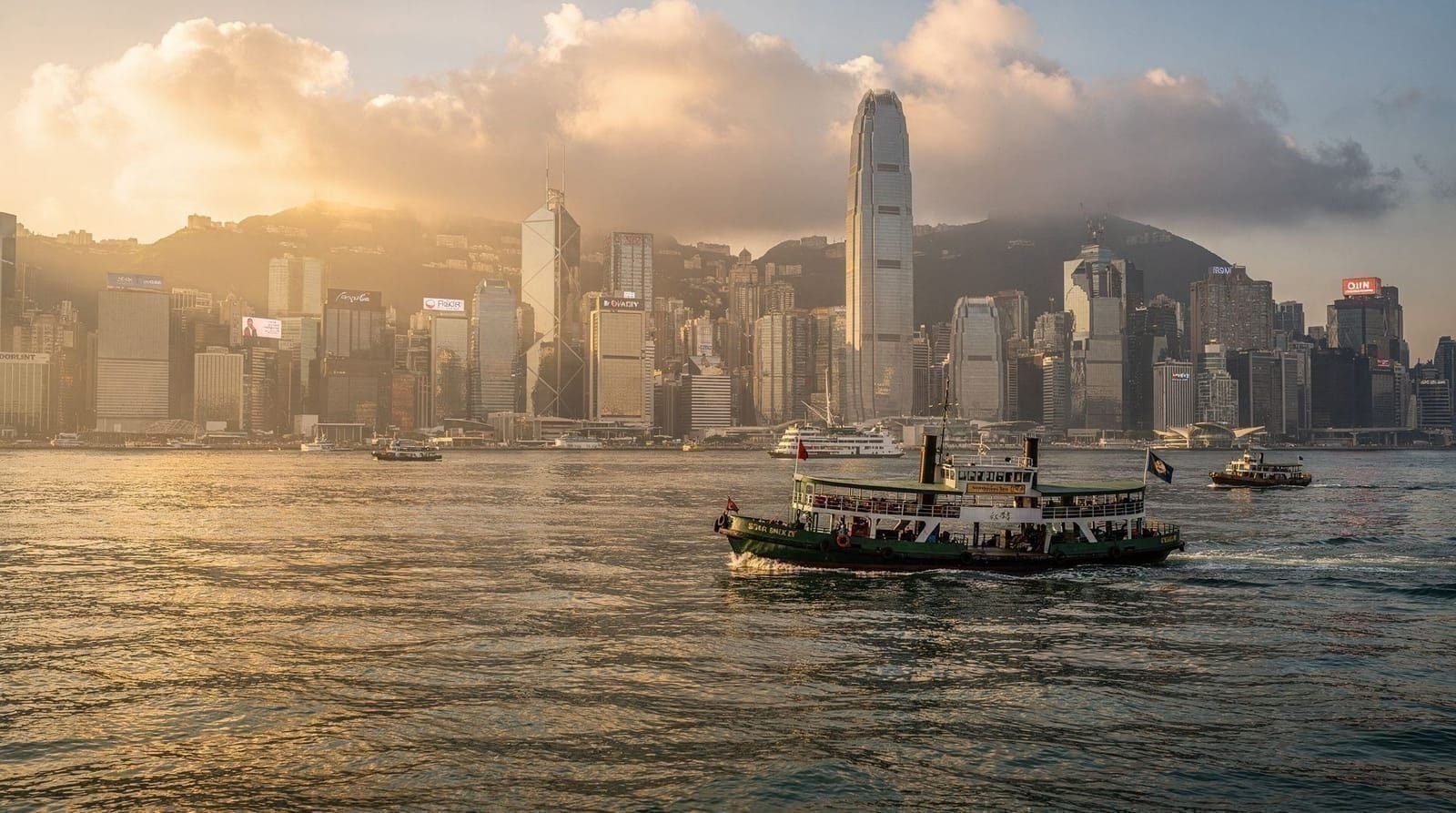
Return to Central by MTR (15 minutes), walk to Pier 7, take the Star Ferry to Tsim Sha Tsui (HK$4.0–6.5 depending on deck and day, 8 minutes). Walk the Avenue of Stars as dusk falls over the skyline.
A 45-minute sunset cruise gives you the harbour crossing as the skyline transitions from day to the illuminated evening — more immersive than the regular ferry.Check availability20:00 — Symphony of Lights and dinner
The Symphony of Lights runs at 20:00 from the TST Promenade. Dinner afterwards in Tsim Sha Tsui — Cantonese restaurants on Knutsford Terrace (HK$150–250 per person).
Day 2 — Kowloon
09:00 — Dim sum breakfast
Dim sum in Jordan or Yau Ma Tei — trolley service is most active before 10:30. Per person: HK$80–130. See Hong Kong dim sum guide for ordering essentials.
10:30 — Jade Market and Yau Ma Tei
Jade Market (Kansu Street, 10:00–17:00, free) has covered stalls selling jade and jewellery. Bargaining is standard. Walk Temple Street by day — quiet, but the surrounding area (Public Square Street, Shanghai Street) has traditional shops worth exploring.
12:00 — Mong Kok markets
MTR to Mong Kok (Tsuen Wan Line, 5 minutes, HK$5.6). Ladies’ Market (Tung Choi Street), Flower Market Road, the Bird Garden (Yuen Po Street), and the Goldfish Market in the upper section of Tung Choi Street. Allow 2 hours.
Lunch near Mong Kok: wonton noodle shops and claypot rice restaurants on the side streets (HK$50–80).
14:30 — Chi Lin Nunnery and Nan Lian Garden
MTR to Diamond Hill (Kwun Tong Line, 15 minutes, HK$9.3). Chi Lin Nunnery (free) is a Tang Dynasty-style wooden Buddhist complex. Adjacent Nan Lian Garden has pavilions, a lotus pond, and is one of the city’s calmer spaces. Allow 1 hour for both.
16:00 — Wong Tai Sin Temple
Walk 10 minutes from Diamond Hill to Wong Tai Sin MTR Station and the adjacent temple. One of Hong Kong’s most active places of worship — fortune-telling courtyard, incense, and a busy commercial fortune-teller arcade. Free entry. See Wong Tai Sin Temple guide.
19:00 — Temple Street Night Market
MTR or taxi to Jordan. Temple Street Night Market peaks 19:00–21:00. Outdoor cooking stalls in the market centre: typhoon shelter crab (seasonal), roasted pigeon, stir-fried clams (HK$100–180 per person for a meal).
Day 3 — Lantau Island: Big Buddha and Tai O
08:30 — MTR to Tung Chung
Take the Tung Chung Line from your hotel station to Tung Chung (approximately 20–35 minutes, HK$15–22 depending on origin). Tung Chung is the base of the Ngong Ping 360 cable car.
09:30 — Ngong Ping 360 cable car and Big Buddha
The cable car takes about 20 minutes over forested Lantau hillsides to the Ngong Ping plateau. Tian Tan Buddha (34 metres, on a lotus throne) is reached by 268 steps from the base. Free to climb; the Stairway to Heaven indoor exhibition costs HK$45–80. Allow 30–40 minutes at the statue.
11:30 — Po Lin Monastery and lunch
Po Lin Monastery is an active institution adjacent to the Buddha’s base. The vegetarian restaurant serves public visitors (check the monastery’s official site for current prices). Alternative: Ngong Ping Village plaza restaurants (HK$80–120).
13:30 — Tai O Fishing Village
Bus 21 from Ngong Ping to Tai O (30 minutes). Tai O is a stilt-house fishing village — traditional architecture over a tidal channel, connected by footbridges, with a working market street selling dried seafood and local snacks. Boat tours of the channel and surrounding mangroves (HK$25–30, 20 minutes). Allow 1.5 hours.
16:00 — Return to Hong Kong
Bus 21 back to Ngong Ping (30 minutes) then cable car to Tung Chung, or bus B6 direct Tai O to Tung Chung (45 minutes). MTR back to your hotel.
Evening is free — dinner in Tsim Sha Tsui or Wan Chai, and an early night before the Macau day.
Day 4 — Macau day trip
Practical Macau logistics
Macau is 60 km from Hong Kong by sea, accessed by high-speed ferry from Hong Kong–Macau Ferry Terminal (Sheung Wan, near Shun Tak Centre) or Kowloon Ferry Terminal (China Ferry Terminal, Tsim Sha Tsui). Journey time is about 60 minutes. Ferries run frequently (every 15–30 minutes during peak hours) from early morning until midnight.
You will cross an international border in both directions — bring your passport. Hong Kong residents and most visitors can enter Macau visa-free for up to 30 days. Immigration queues can be slow on weekday mornings and very slow on Hong Kong public holidays.
Ferry booking: Book in advance during weekends, Chinese New Year, Golden Week, and Hong Kong public holidays — ferries sell out. Weekday morning departures are rarely full. Depart from Hong Kong at 08:30–09:00 to maximize time in Macau.
Ferry tickets (TurboJet economy class, daytime): HK$194 one-way on weekdays, HK$212 on weekends and public holidays; for other classes see the operator’s official site. TurboJet and Cotai Water Jet are the two main operators.
Currency: Macau Pataca (MOP). Hong Kong dollars are accepted at the same rate (1:1) at essentially all venues in Macau. No currency exchange needed.
A guided Macau day tour with ferry tickets, hotel pickup, lunch, and a guide for the historic centre removes the logistics entirely — worth considering if you want to maximize time seeing things rather than navigating ferry terminals and border crossings.Check availability09:30 — Arrive in Macau: the Ruins of St Paul’s and Historic Centre
From the Macau Outer Harbour Ferry Terminal, take a free shuttle bus (most large hotels and casinos run them) or taxi (MOP$30–50) to the Historic Centre. The Ruins of St Paul’s — the carved stone facade of a 17th-century church destroyed by fire in 1835 — is the most photographed structure in Macau and the starting point for most visits. Behind the facade, stairs lead down to the Fortaleza do Monte (free, cannon and city views) and the Macau Museum (MOP$15, Macau history from Portuguese colonial era to handover).
The Senado Square area (free to walk) is the heart of the UNESCO Historic Centre — Portuguese mosaic pavements, pastel-painted colonial buildings, and a main square that looks nothing like any other Chinese city.
11:00 — Exploring the Historic Centre
The walking distance from Ruins of St Paul’s to Senado Square is about 600 metres. Along the way: St Dominic’s Church (free, 1587), St Augustine’s Square, Teatro Dom Pedro V. The whole Historic Centre is compact enough to walk in 2–3 hours.
Macau’s distinctive food is a synthesis of Portuguese and Cantonese cooking: egg tarts (different from Hong Kong — flakier pastry, more custardy filling), African chicken, Portuguese bacalhau, and pork chop buns. The pork chop bun at Tai Lei Loi Kei on Taipa is famous; in the Historic Centre, bakeries on the streets near Ruins of St Paul’s sell egg tarts for MOP$10–12 each.
13:00 — Lunch in the Historic Centre
Sit-down lunch at a Macanese restaurant (Portuguese-Chinese fusion): African chicken with rice and wine is a standard order (MOP$100–150 per person). Alternatively, the streets around Senado Square have noodle shops serving cheap local lunch for MOP$60–80.
14:30 — A Famosa Ruins and Taipa Village (optional extension)
A taxi from the Historic Centre to Taipa Village (MOP$30–40) takes you to a quieter, less visited historic neighbourhood with colonial villas and good restaurants. If you prefer to stay in the Historic Centre, the Lilau Square area (south of Senado Square) and the old Protestant Cemetery (free) are worth the walk.
For those curious about the casino side of Macau, The Venetian Macao on Cotai is a short taxi ride from the ferry terminal and is worth seeing as an architectural spectacle even if gambling is not the goal (free to enter the public areas).
A half-day walking tour of Macau’s Historic Centre with a local guide covers the UNESCO sites, the colonial architecture, and the food scene with context that independent wandering misses.Check availability17:00 — Return ferry to Hong Kong
Allow at least 30–40 minutes to reach the ferry terminal by taxi (MOP$30–50 from the Historic Centre) and clear departure immigration. The return ferry takes about 60 minutes to Hong Kong, arriving in Sheung Wan or Kowloon in time for a late dinner.
19:30 — Final dinner in Hong Kong
After the Macau crossing, dinner somewhere central. If you are back via Sheung Wan, the streets around Central and Sheung Wan have good Cantonese restaurants at all price points. If via Kowloon, Tsim Sha Tsui has the most concentrated restaurant density.
Macau via bridge instead of ferry
The ferry is the standard route, but since 2018 the Hong Kong–Zhuhai–Macau Bridge (HZMB) offers an alternative: shuttle buses cross the 55 km bridge from a terminal near Hong Kong International Airport in about 40–45 minutes. It suits travellers already near the airport (arriving or departing the same day) more than those based in Central or Kowloon, since reaching the HZMB terminal itself takes time from the city centre.
For most itineraries starting from a Hong Kong Island or Kowloon hotel, the ferry from Sheung Wan or Tsim Sha Tsui remains simpler — no extra transfer to the airport area required. The ferry vs bridge to Macau guide breaks down the full comparison, including cost, if you want to weigh both properly before booking.
If Macau isn’t for you: Shenzhen as an alternative Day 4
Not everyone wants a second border crossing on the same trip, or Macau’s casino-heavy image may not appeal. Shenzhen, across the mainland Chinese border, is a genuinely different alternative — modern architecture, theme parks, and some of the best-value shopping in the region.
The Shenzhen day trip guide covers the logistics, which differ meaningfully from Macau (a mainland Chinese visa may be required depending on your passport, whereas Macau is visa-free for most nationalities). If you would rather skip a fourth destination altogether and simply have a more relaxed final day, the family itinerary shows what a lower-key Day 4 in Hong Kong itself could look like instead.
Combining Macau with the wider region
Macau’s Historic Centre only scratches the surface of what the peninsula and Cotai offer. If your Day 4 leaves you wanting more than the walking tour above, the Macau first-timer guide and the Macau food guide go deeper on both the sights and the Macanese-Portuguese food scene than a single day trip can properly cover — useful reading if you decide, once there, that Macau deserves an overnight rather than a same-day return.
For the Cotai side specifically — the Venetian, casinos, and the newer resort strip — the Macau casinos guide is worth a look even for visitors who have no interest in gambling, since the architecture and scale are a spectacle in themselves.
Budget summary (4 days, mid-range, per person)
- Day 1 transport + Peak Tram + Star Ferry: approx HK$150
- Day 2 transport + attractions: approx HK$90
- Day 3 Lantau (cable car + MTR): approx HK$330, plus local bus fares
- Day 4 Macau ferry (round trip): approx HK$388–424
- Meals (3 per day x 4 days): HK$250–420 per day
- Total (excluding accommodation): approximately HK$2,790–3,530 (USD $357–451)
See Hong Kong budget breakdown for cost-saving options at each stage.
Frequently asked questions about this 4-day Hong Kong itinerary
Do I need a visa for Macau?
Most passport holders can enter Macau visa-free for 30 days, including holders of British, EU, US, Canadian, Australian, and New Zealand passports. Check the current requirements against your specific passport before travel — regulations occasionally change.
Should I do Macau on Day 2 or Day 4?
Day 4 is better: by then you have the MTR system mapped, the ferry terminal locations are familiar from your Sheung Wan and Central explorations, and you have cleared all the Hong Kong priorities so the Macau day is a bonus rather than a distraction.
Can I stay overnight in Macau instead of doing a day trip?
Yes, and it allows you to see Macau at night when the casino buildings are illuminated and the Historic Centre is very different. A one-night Macau stay works well within a longer Hong Kong trip. Accommodation in Macau ranges from basic guesthouses to enormous integrated resort hotels (which are often competitive in price with Hong Kong mid-range hotels).
How long do I need in Macau?
A full day (9 hours on the ground) is comfortable for seeing the Historic Centre, having proper meals, and doing a side visit to Taipa or the Cotai Strip. Six hours is tight but workable for the Historic Centre alone. Less than four hours is not worth the ferry travel.
Is Macau very expensive?
The casinos and integrated resorts are designed to extract money. But the Historic Centre, churches, forts, and museums are free or very cheap, and the food is genuinely affordable — egg tarts, pork chop buns, and local restaurants cost less than equivalent quality in Hong Kong.
What is the best time to visit Macau from Hong Kong?
October to December (cooler, clearer skies, lower humidity) is the most comfortable season. July and August bring typhoon risk that can disrupt ferry services. Chinese New Year and Golden Week bring huge crowds and should be avoided unless you book everything months in advance.
Is the Macau–Hong Kong crossing affected by typhoons?
Yes. When Hong Kong raises a Typhoon Signal 3 or higher, ferry services are suspended. The signal system updates in real time on the Hong Kong Observatory website. If a typhoon is forecast, monitor the signal the day before your Macau trip — ferries suspend at Signal 3 with no guarantee of when they resume.
Top experiences
Bookable activities with verified prices and instant confirmation on GetYourGuide.