Michelin cheap eats in Hong Kong — Bib Gourmand and street level finds
Hong Kong Kowloon: Michelin street food and culture walk
Duration: 4-5 hours
What are the best Michelin cheap eats in Hong Kong?
The most accessible Michelin-level cheap eats are Tim Ho Wan (dim sum, HKD 120–155 per person), Mak's Noodle (wonton noodle soup, HKD 45–60 per bowl), Joy Hing Roasted Meat (roast meats over rice, HKD 55–80), and One Dim Sum in Prince Edward (HKD 100–140 per person). They serve complete meals well under HKD 200 per person; check the Michelin Guide for each restaurant's current status.
How Michelin and Hong Kong cheap eats intersect
Hong Kong is one of the few cities where the Michelin Guide’s cheaper recognition categories — the Bib Gourmand award (good food at moderate prices, meals typically under HKD 300 per person) and Street Food listings — cover genuinely local restaurants serving meals for HKD 60–180 per person. The city’s extraordinary food culture means that the Michelin inspectors’ “quality and value” mandate produces a list that overlaps significantly with what locals already consider excellent neighbourhood eating.
This guide focuses on the practically cheap end of this spectrum: places where a complete meal costs under HKD 200 per person, with Michelin recognition as the quality filter. Prices listed are 2025–2026 estimates.
| Where | Central, Wan Chai, Sham Shui Po, Prince Edward, Causeway Bay |
| Cost | HKD 40–200 per person, most meals under HKD 100 |
| Time needed | 30–45 min per stop; a full day for the food crawl below |
| Getting there | MTR — every listed spot is within 10 minutes of a station |
| Best time | Weekday mornings for shorter queues at the famous names |
Tim Ho Wan (添好運) — dim sum
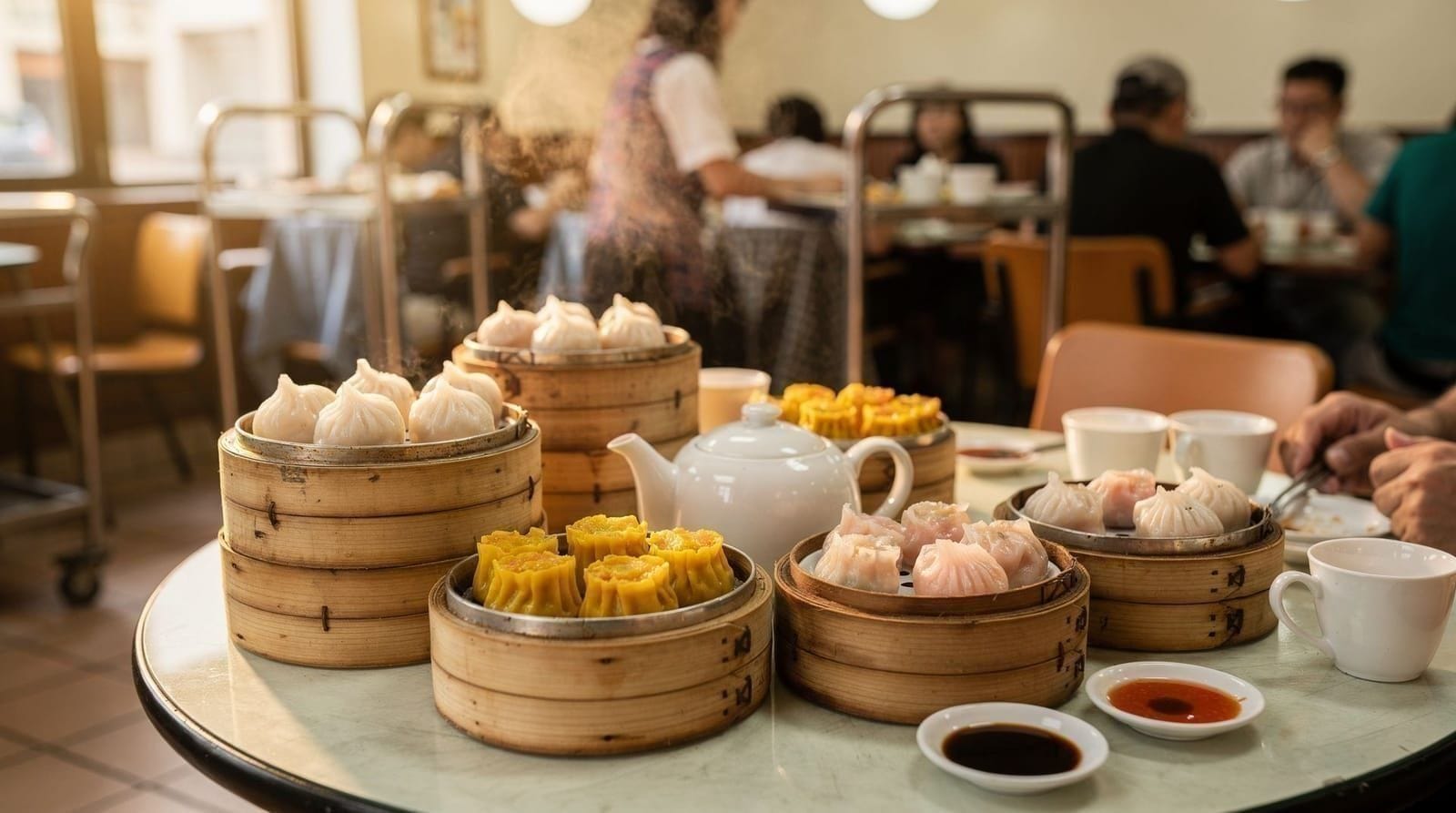
Why it matters: Tim Ho Wan began as a tiny Mong Kok shop that earned a Michelin star when a bowl of dim sum there cost under HKD 20. The star was later removed as the brand expanded, but quality has remained notably high across most branches. The baked char siu bao (BBQ pork pastry bun) and har gow remain benchmarks in Hong Kong.
What to order: Baked char siu bao (HKD 28 for three pieces), har gow (HKD 30 for four), turnip cake (HKD 22 for two), and cheong fun (HKD 30–35).
Price: HKD 120–155 per person for a full meal. Locations: Sham Shui Po (original branch, least queued), Mong Kok, multiple others. Check timhowan.com for current branches. Book via their website or arrive early. Best time: 08:30–10:30 for shorter queues.
See the dim sum guide for what to order more broadly.
Mak’s Noodle (麥奀記) — wonton noodles
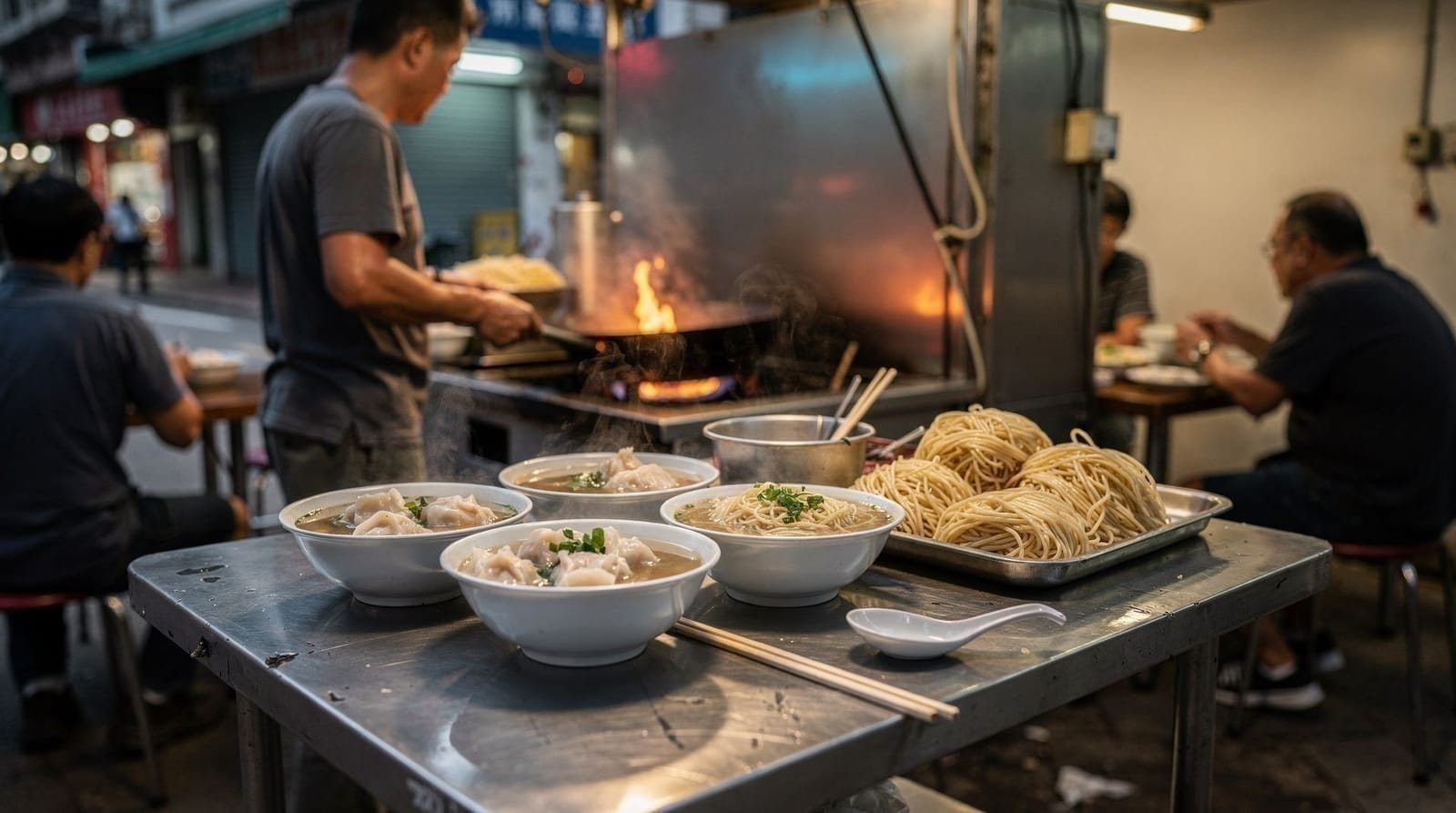
Why it matters: A long-established Central wonton noodle shop. The benchmark for Hong Kong wonton noodle soup — small, perfectly constructed wontons (shrimp and pork, loosely wrapped in thin wonton skin), springy handmade egg noodles, and a clear broth that has reportedly been maintained using the same base for decades. The bowl is small by international standards (this is correct — portion the experience, not the noodles).
What to order: Wonton noodle soup (雲吞麵, HKD 45–55 per bowl). Beef brisket noodles (牛腩麵, HKD 55–65). Congee if available.
Price: HKD 45–70 per bowl; a single bowl plus a side dish is a complete meal. Location: 77 Wellington Street, Central (near Central MTR, exit D2 then Cochrane Street). Often has a short queue; check current opening hours before you go. Note: The serving is intentionally small — order two items per person if you are hungry.
One Dim Sum (一點心) — dim sum in Prince Edward
Why it matters: Consistently praised by local food critics. Less famous than Tim Ho Wan, which means shorter queues at its Prince Edward location.
What to order: Lo mai gai (lotus leaf rice parcel), har gow, char siu bao, and cheong fun. The variety is traditional and well-executed.
Price: HKD 100–150 per person. Location: 15 Playing Field Road, Prince Edward (near Prince Edward MTR, exit B1). Check current opening hours before you go. Note: Arrive by 09:00 on weekends for minimal wait. Cash preferred.
Joy Hing Roasted Meat (再興燒臘飯店) — roast meats
Why it matters: Wan Chai roastery. Specialises in char siu (honey-glazed barbecue pork) and roast goose. The char siu is notably good — caramelised exterior, tender interior, properly fatty in the right proportions.
What to order: Char siu rice (叉燒飯, HKD 55–70), roast pork rice (燒肉飯, HKD 55–70), combination plate if offered.
Price: HKD 50–80 per person. Location: 265-267 Hennessy Road, Wan Chai. Short queue common at lunch; check current opening hours before you go.
Kam’s Roastery (甘牌燒鵝) — roast goose
Why it matters: One Michelin star for roast goose — an extraordinary recognition for a roast meat specialist. Kam’s is the most acclaimed roast goose in Hong Kong, with a family recipe going back three generations. The lacquered crispy skin and juicy meat with plum sauce are definitive.
What to order: Roast goose rice (燒鵝飯, HKD 128–180 for a half portion with rice). The full bird requires advance order.
Price: HKD 120–200 per person — more expensive than the other entries but still reasonable for Michelin-starred food. Location: Multiple branches in Wan Chai and Causeway Bay. Wan Chai is the main branch. Note: Queues at Wan Chai are long on weekends. Causeway Bay branch is slightly less crowded.
Ho Hung Kee (何洪記) — wonton noodles, Causeway Bay
Why it matters: One Michelin star for wonton noodle soup — the first time a noodle soup restaurant received that recognition in Hong Kong. The broth uses dried flounder and shrimp roe (蝦子) for a specific umami depth different from most competitors.
What to order: Shrimp roe noodles (蝦子撈麵, HKD 55–75), wonton noodle soup (HKD 50–65).
Price: HKD 50–80 per bowl. Location: Times Square, Causeway Bay (basement food court area). Also Gloucester Road branch.
Lau Sum Kee Noodle (劉森記麵家) — handmade noodles
Why it matters: One of the last shops in Hong Kong making noodles entirely by hand using the traditional bamboo pole method (師傅 sits on a bamboo pole to compress the dough). The noodles have a distinctly bouncy texture unavailable from machine-made versions.
What to order: Wonton noodles (HKD 40–55), prawn roe noodles, shrimp paste wonton noodles.
Price: HKD 40–65 per bowl. Location: Fuk Wing Street, Sham Shui Po (check current opening hours before you go). Worth a dedicated visit combined with exploring Sham Shui Po’s food culture.
Tasty Congee and Noodle Wantun Shop (正斗粥麵專家)
Why it matters: Reliable for consistently good congee and wonton noodles across multiple locations. More polished atmosphere than the street-level institutions above.
What to order: Pork and century egg congee (皮蛋瘦肉粥, HKD 45–65), wonton noodles (HKD 48–65).
Price: HKD 45–80 per item. Locations: IFC Mall (Central), Ocean Terminal (TST), and others.
Tai Cheong Bakery (泰昌餅家) — egg tarts
Why it matters: Most famous egg tart bakery in Hong Kong — associated with Chris Patten, the last British Governor, who was a devoted customer. Now multiple locations. The egg tart here has an appropriately wobbly custard and a short, buttery pastry shell.
Price: HKD 11–14 per tart. Locations: Main branch 35 Lyndhurst Terrace, Central. Also Central MTR underground, various others. Best eaten immediately from the oven (ask when the next batch comes out).
See the egg tarts guide for the full egg tart landscape in Hong Kong.
Tsui Wah Restaurant (翠華餐廳) — cha chaan teng
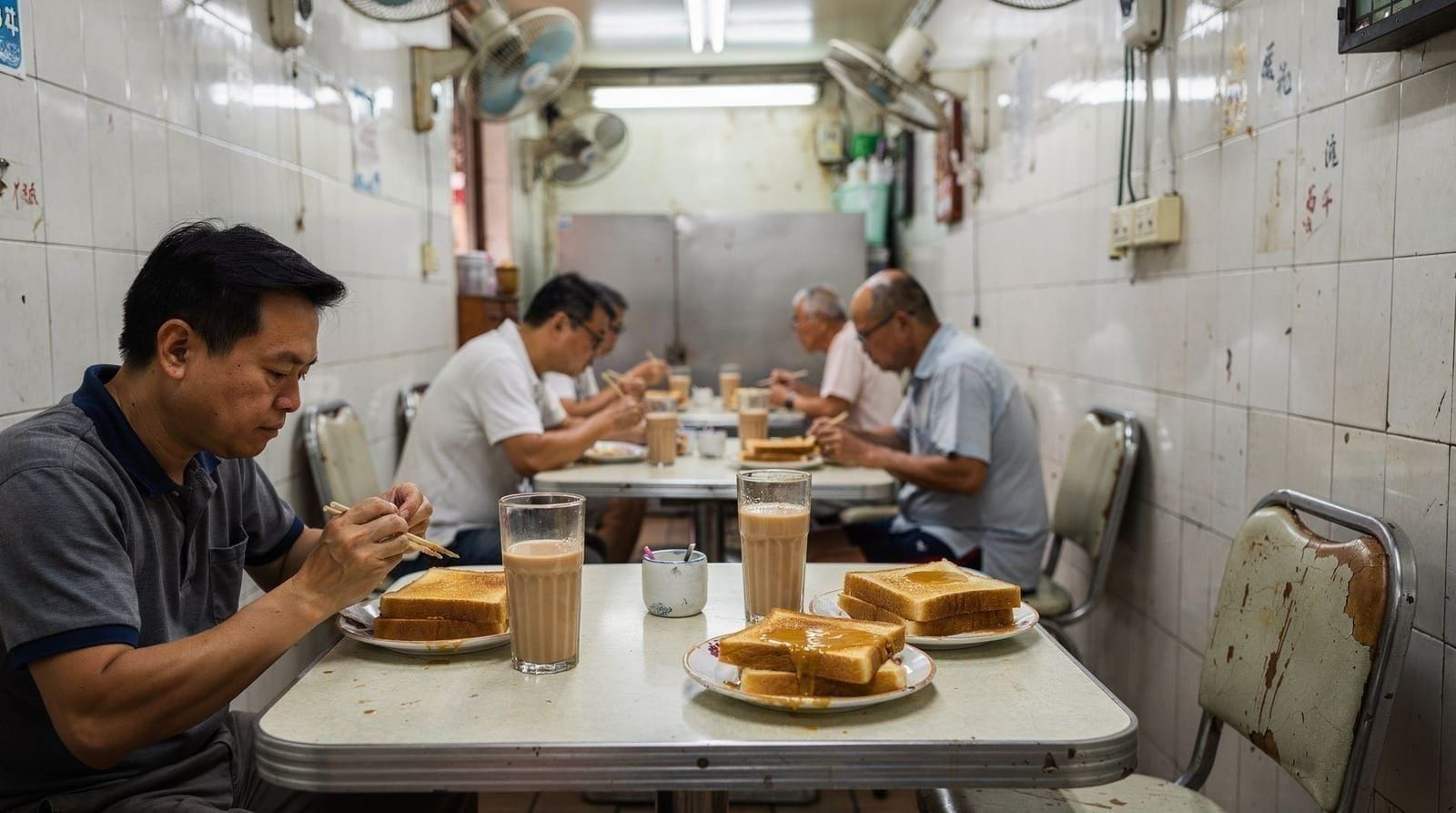
Why it matters: A cha chaan teng — a Hong Kong-style diner serving the classic breakfast and lunch formats at fast food prices. Tsui Wah is the polished, chain version of the cha chaan teng experience; better for travellers who want the food without navigating a cash-only, Cantonese-only neighbourhood diner.
What to order: French toast (厚多士, HKD 38–48), pineapple bun with butter (HKD 22–28), milk tea (HKD 22–28), macaroni soup (HKD 30–42).
Price: HKD 50–80 per person for breakfast; HKD 80–110 for lunch. Locations: Multiple branches across Hong Kong Island and Kowloon. Some branches open late or 24 hours; see the Tsui Wah website for each branch.
See the cha chaan teng guide for the independent, cash-only version of the same experience.
Quick reference: which spot for which craving
| Craving | Go to | Price per person |
|---|---|---|
| Dim sum | Tim Ho Wan or One Dim Sum | HKD 100–155 |
| Wonton noodles | Mak’s Noodle or Ho Hung Kee | HKD 45–80 |
| Roast meats | Joy Hing or Kam’s Roastery | HKD 50–200 |
| Handmade noodles | Lau Sum Kee | HKD 40–65 |
| Egg tarts | Tai Cheong Bakery | HKD 11–14 |
| Cha chaan teng | Tsui Wah | HKD 50–110 |
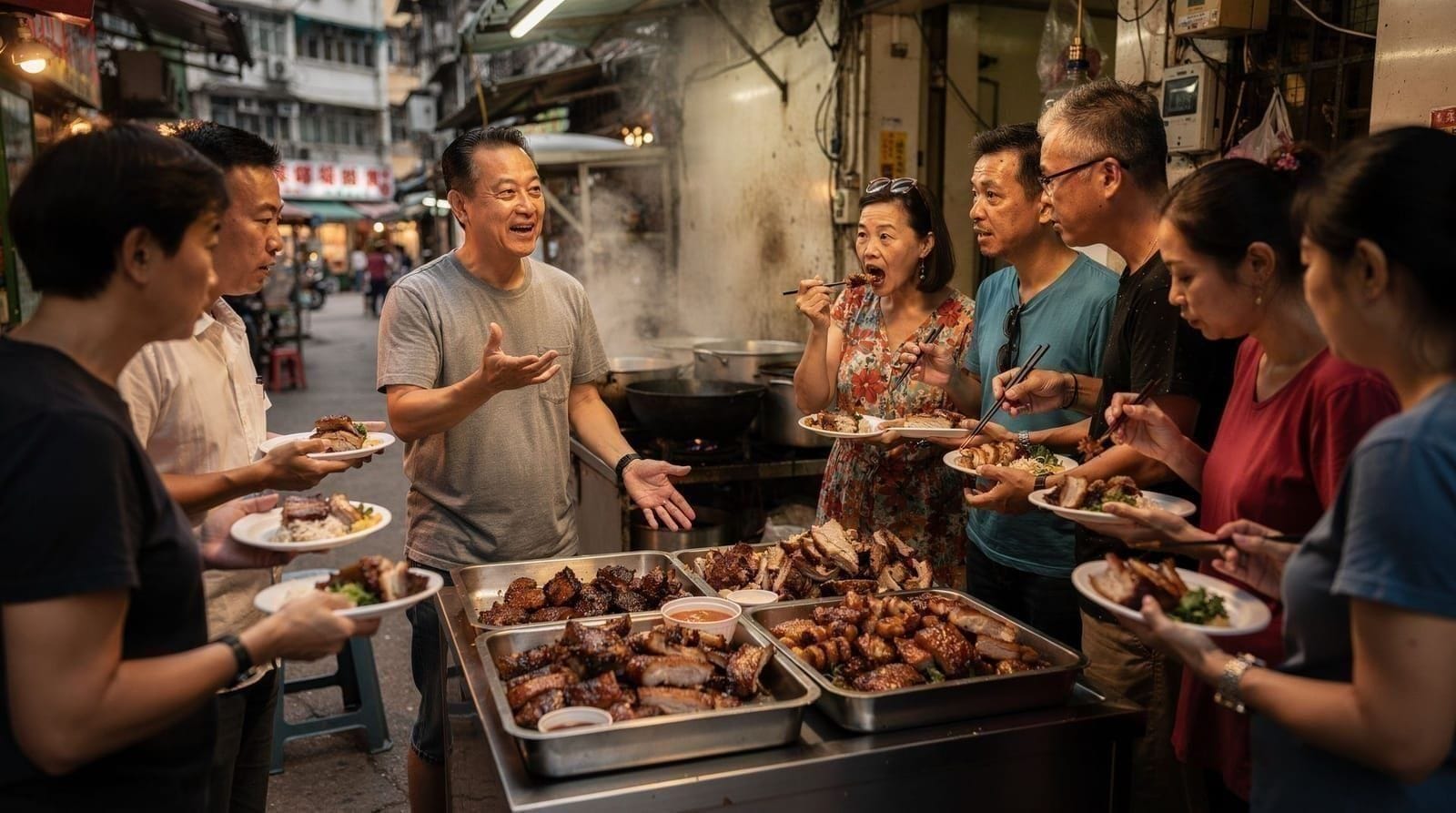
If you want a guided introduction to this scene rather than navigating queues and Cantonese-only menus solo, a street food-focused tour covers several of these categories in one outing.
Taste of Kowloon — Michelin street food and culture walkUnderstanding the Michelin categories for Hong Kong
One Michelin star: “A very good restaurant in its category.” In Hong Kong, this includes noodle soup shops and roast meat specialists — a direct reflection of how seriously Michelin takes the local food culture.
Bib Gourmand: “Good quality, good value cooking.” In Hong Kong, this means complete meals typically available for under HKD 300 per person, often much less.
Michelin Plate: Previously Michelin Selected — good quality restaurants not yet at Bib level. Many reliable neighbourhood restaurants.
The Michelin Hong Kong Macau Guide is updated annually. Individual restaurants gain and lose recognition. Treat Michelin recognition as a quality signal rather than a permanent guarantee.
Practical notes
Most of the restaurants listed here are cash-preferred or cash-only. Bring HKD 200–400 cash for a meal at noodle shops and roasteries; Tim Ho Wan and Tsui Wah accept cards.
Lines at popular spots (Tim Ho Wan, Mak’s Noodle, Kam’s Roastery) are manageable on weekday mornings. Weekend lunchtimes at the most famous spots involve 20–40 minute waits.
For the food tours guide covering guided options that include several of these stops: see that page for organized culinary experiences.
If you would rather have someone else handle the ordering and the queues, a street food tour with a local guide covering dim sum and wonton noodlesCheck availability is a relaxed way to taste the same dishes the list above is built around, and it makes a good first meal before you head out to the shops on your own.
Beyond the list: eating cheap like a Hong Kong local
The Michelin Bib Gourmand list is a useful quality filter, but it represents a small fraction of genuinely excellent cheap eating in Hong Kong. The city’s food system has a deep bench of neighbourhood restaurants, market stalls, and cooked food centres that are not in any guide and are excellent.
The cooked food centre system: Every major housing estate and public market in Hong Kong has a cooked food centre — an indoor collection of hawker stalls serving residents at prices well below restaurant level. These are invisible to most tourists because they are inside public buildings rather than on street-facing commercial frontage. A rice plate with two meat and vegetable toppings at a cooked food centre costs HKD 35–50. The Wan Chai Cooked Food Centre and the Sheung Wan Municipal Services Building Cooked Food Centre are the most accessible from the main tourist areas.
Roast meat shops: Virtually every block in Hong Kong has a roastery with hanging char siu (BBQ pork), roast goose, and roast pork visible in the window. The quality varies but the price structure is consistent — rice plates with roast meat cost HKD 50–75 at a neighbourhood roastery. Look for a clean, busy shop with fresh-looking meat and locals queuing at noon.
Wet market lunch counters: Many Hong Kong wet markets have lunch counters operated by the market vendors — selling cooked versions of what they sell raw. A fish stall vendor whose wife runs a noodle stall in the same building is a Hong Kong institution. These are almost entirely Cantonese-language and have no English menu, but the menu is usually a small whiteboard with photos or pointing is effective.
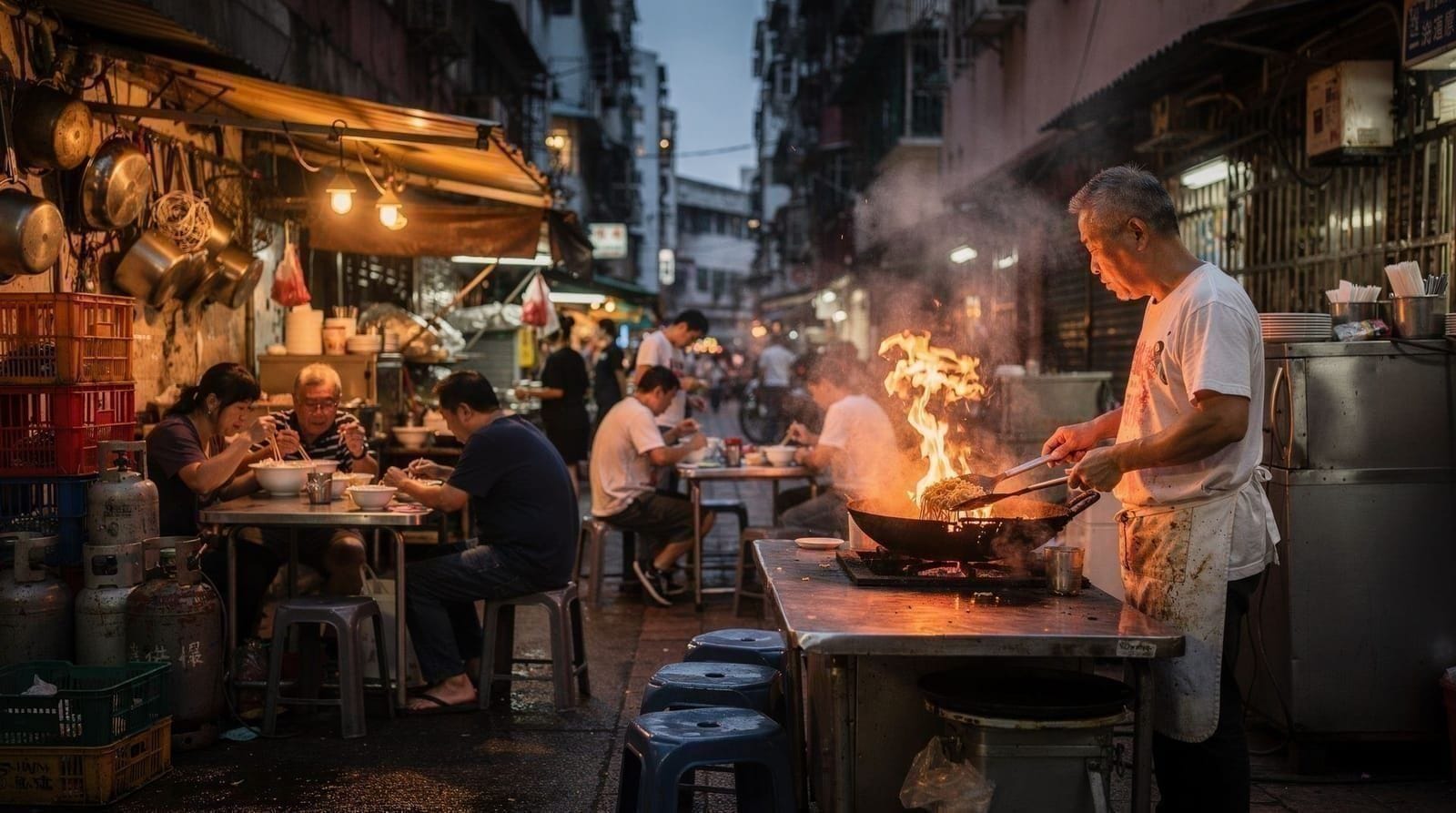
Dai pai dong survivors: Hong Kong’s open-air street kitchens (dai pai dong) have mostly disappeared under licensing restrictions, but a handful of licensed survivors remain, serving wok-fried noodles, congee, and simple stir-fries at plastic tables on the pavement. These are worth seeking out for the atmosphere as much as the food — see the dai pai dong guide for the remaining locations and what makes them different from an ordinary restaurant.
None currently hold Michelin recognition, but several are as good as the listed entries above; Michelin’s inspection process has historically been reluctant to formally recognise unlicensed or semi-licensed street operations, which is a gap worth knowing about rather than treating the Michelin list as exhaustive.
The broader value of Michelin in Hong Kong
Michelin’s Hong Kong recognition is notable for taking local food culture seriously — awarding stars to a roast goose shop, Bib recognition to a noodle stall, and including street-level establishments alongside hotel restaurants. This makes the Hong Kong Michelin Guide more practically useful than the guides for many other cities, where stars tend to cluster at expensive Western fine dining.
The guide is also notable for its stability — many of the Hong Kong Bib Gourmand recognitions have been maintained for 5–10 years, reflecting restaurants that have sustained quality over time rather than novelty year-to-year. When a restaurant loses Michelin recognition in Hong Kong, it is usually because standards have slipped (the restaurant has expanded too rapidly, changed ownership) rather than because the inspectors have moved on to something new.
For Hong Kong first-timers using Michelin as a research tool: the Bib Gourmand list is the most useful category. The Michelin star restaurants, while many are excellent, are generally in the HKD 300–800+ per person range — still relatively affordable by global fine dining standards but not the “cheap Michelin” experience this guide covers.
Planning a Michelin-focused food day
A day structured around the cheap Michelin options might look like:
Morning: Dim sum at Tim Ho Wan — arrive by 08:30 for minimal queue. Order har gow, baked char siu bao, lo mai gai, turnip cake. Budget: HKD 120–150 per person.
Lunch: Walk to Mak’s Noodle in Central for wonton noodle soup. Budget: HKD 50–65 per bowl.
Afternoon snack: Egg tart at Tai Cheong Bakery (2 minutes from Mak’s Noodle on Wellington Street). Budget: HKD 12–14 per tart.
Dinner: Roast goose rice at Kam’s Roastery in Wan Chai (MTR from Central, 2 stops). Budget: HKD 140–180 per person.
Total: HKD 340–430 per person for an entire day of Michelin-recognised food. At the current exchange rate, this is approximately USD 44–55 per person. This is what makes Hong Kong’s food culture remarkable — Michelin-level quality available at near-street food prices.
Variation for Kowloon-based travellers: if you’re staying in Tsim Sha Tsui or Mong Kok, swap the morning and lunch stops for Tim Ho Wan’s Sham Shui Po branch and Lau Sum Kee’s handmade noodles, both a short MTR ride from most Kowloon hotels, then take the MTR across the harbour for Kam’s Roastery in the evening. This keeps the day’s travel time roughly the same while starting from a Kowloon base rather than Hong Kong Island.
Frequently asked questions about Michelin cheap eats in Hong Kong
Is it possible to eat Michelin-quality food in Hong Kong for under HKD 100?
Yes. A bowl of wonton noodles at Mak’s Noodle costs HKD 45–55. An egg tart at Tai Cheong Bakery costs HKD 11–14. A full dim sum breakfast at One Dim Sum costs HKD 100–150 for a full meal. These are among the most affordable well-known dining experiences anywhere in the world.
Do I need to book these restaurants?
Tim Ho Wan accepts reservations via their website. Mak’s Noodle, Joy Hing, and most noodle shops do not take reservations — queue or arrive early. One Dim Sum in Prince Edward does not take reservations; arrive before 09:00 on weekends.
Where should I eat if I am based in Tsim Sha Tsui?
Walk 10–15 minutes to Yau Ma Tei or Mong Kok for better value. Within TST, the best restaurants in Tsim Sha Tsui guide covers the better options, though prices are generally higher than equivalent food in Kowloon’s working-class neighbourhoods.
Is Michelin recognition important in Hong Kong?
More so than in most cities. The Hong Kong Michelin Guide is taken seriously by locals as well as tourists — partly because the inspectors have demonstrated genuine understanding of local food culture by recognising noodle shops and roasteries alongside hotel restaurants. When a Hong Kong restaurant earns or loses Michelin recognition, it makes local news. This genuine local engagement gives the guide more credibility in Hong Kong than in some other Asian cities where the relationship between the guide and local food culture is more awkward.
Can I combine several of these restaurants in one day without wasting time on travel?
Yes, most of the Hong Kong Island entries (Mak’s Noodle, Tai Cheong Bakery) sit within a 10-minute walk of each other in Central, and Kam’s Roastery is two MTR stops away in Wan Chai. The Kowloon entries (Tim Ho Wan Sham Shui Po, Lau Sum Kee, One Dim Sum) cluster around the Sham Shui Po and Prince Edward MTR stations. Plan a Hong Kong Island day or a Kowloon day rather than crossing the harbour repeatedly.
Are these restaurants suitable for a family with children?
Generally yes — none require formal reservations dress codes, and the food (noodles, rice plates, dim sum) is familiar and mild enough for most children. The main challenge is queueing: Tim Ho Wan and Kam’s Roastery can involve 20–40 minute waits on weekends, which is harder with young children. Aim for weekday mornings or early lunch (before 12:00) to minimise the wait.
Fitting these meals into the rest of your trip
A food-led day works best when it sits inside a wider plan. If you only have a short stay, the one-day itinerary and the weekend itinerary leave room for a noodle lunch and a roast meat dinner without rushing. For longer visits, the foodie itinerary is built around eating and pairs naturally with the stops above, while the budget itinerary shows how cheap meals stretch a daily allowance.
Where you sleep shapes which half of this list is easy. Staying in Kowloon puts you close to the Sham Shui Po and Prince Edward entries; staying on the island puts Central and Wan Chai on your doorstep. The where to stay guide and the Central vs Tsim Sha Tsui comparison help you choose a base with this in mind.
Getting between restaurants is straightforward by rail. The MTR guide explains how the lines connect the neighbourhoods above, and the Octopus card guide covers the card that makes every ride, and some small purchases, quicker. Since you will be eating at tourist-light places, it is also worth skimming the tourist traps guide so you know which look-alike restaurants to walk past.
Each neighbourhood has more to offer once you have eaten. Read the Sham Shui Po area guide before a visit to Lau Sum Kee, the Mong Kok area guide if you are heading to the nearby streets, and the Causeway Bay area guide for the Ho Hung Kee end of the island. For Kowloon street-level snacking after your meal, the cheap eats in Mong Kok article adds a few more ideas, and the dim sum ordering etiquette piece is useful before your first steamer basket arrives.
The hong-kong food value proposition
The cumulative picture of these restaurants reveals something specific about Hong Kong: the city has maintained a floor of food quality across all price levels that most comparable cities have not. A HKD 45 bowl of wonton noodles at Mak’s Noodle, a HKD 120 dim sum brunch at Tim Ho Wan and a HKD 160 roast goose rice at Kam’s Roastery are all well-known names in the Michelin conversation.
This floor exists because of several overlapping factors: intense competition between restaurants in a very dense market; a population that eats out frequently and has high standards for everyday food; a culture that treats cooking as skilled craft rather than commodity service; and supply chains (live seafood markets, specialist noodle makers, dedicated ingredient suppliers) that provide access to quality ingredients at commercial scale.
The result is that eating “cheap” in Hong Kong is not a compromise. It is an engagement with one of the world’s great food cultures at the price point where the culture actually lives. The tourist restaurants in TST charge more and deliver less of this authentic food experience. The Michelin cheap eats listed here represent the genuine thing.
For first-timers planning a food-focused visit, the combination of the dim sum guide, the street food guide, and this Michelin cheap eats guide covers the essential landscape. Together they describe a city where exceptional food is available at every price point, and where the HKD 50 meal is sometimes more satisfying than the HKD 500 version. For travellers watching their overall trip budget, this list pairs naturally with the wider Hong Kong on a budget guide, which covers accommodation and transport savings alongside food.