Best restaurants in Tsim Sha Tsui — where to eat in Hong Kong's tourist hub
Hong Kong Kowloon: Michelin street food and culture walk
Duration: 4-5 hours
Where should I eat in Tsim Sha Tsui, Hong Kong?
Walk two blocks from the Nathan Road tourist strip for significantly better and cheaper food. Peking Road and Granville Road have reliable local restaurants. For dim sum, Head to Yau Ma Tei (one MTR stop north) for Tim Ho Wan in Sham Shui Po or One Dim Sum in Prince Edward. Within TST itself, Dim Sum Square on Ashley Road and restaurants on Minden Row offer decent value without tourist markup.
Eating in TST: the honest landscape
Tsim Sha Tsui is the most visited tourist district in Hong Kong and has the food landscape to match — a mix of genuinely good restaurants buried among tourist-trap establishments that charge significantly inflated prices for mediocre versions of local dishes. The waterfront strip (Salisbury Road side, immediately near the Star Ferry pier) is the worst zone for this; Nathan Road’s restaurant-facing frontage is also heavily tourist-marked.
Two or three streets back from either, the picture changes considerably. Peking Road, Ashley Road, and the blocks around Granville Road have legitimate local restaurants at prices closer to what you would pay in Yau Ma Tei or Mong Kok. One MTR stop north (to Jordan or Yau Ma Tei) takes you entirely out of the tourist zone.
This guide covers where to eat if you are based in TST — the better options within walking distance, and when it is worth the short MTR trip to the next neighbourhood.
If you are still deciding where to base yourself, the Central vs Tsim Sha Tsui comparison and the Tsim Sha Tsui destination page set out what the district offers beyond food. For the practical side of getting around, the Hong Kong MTR guide explains the short hops north used throughout this page.
| Avoid | Salisbury Road waterfront, Nathan Road hotel frontage |
| Good value in TST | Dim Sum Square, Mody Road roasteries, Cameron Road noodle shops |
| Best splurge | Spring Deer (Peking duck), Fook Lam Moon |
| Better food, 1 MTR stop away | Jordan and Yau Ma Tei |
| Budget per person | HKD 50-90 casual, HKD 150-250 sit-down, HKD 400+ special occasion |
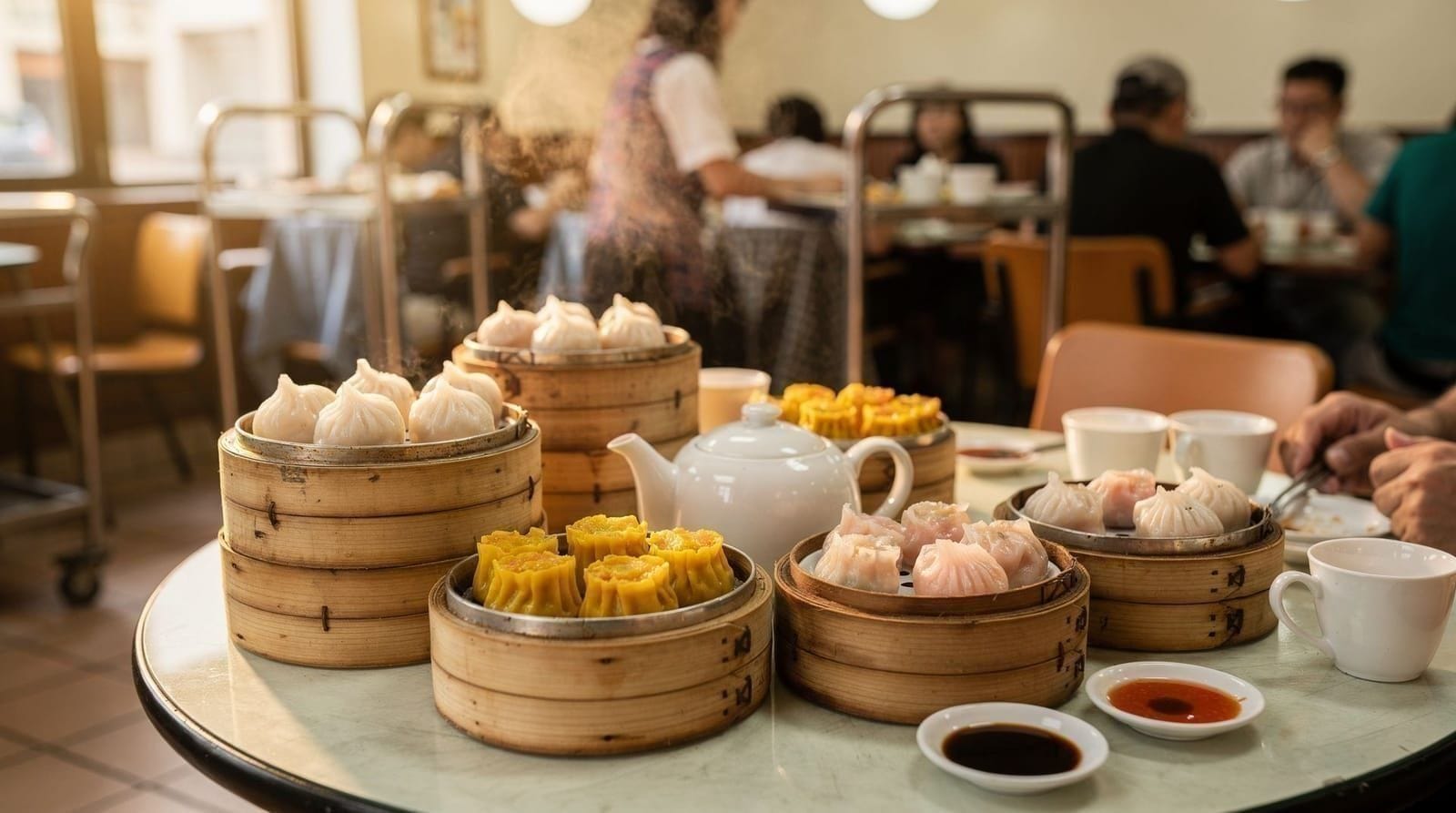
Dim sum in and near TST
Dim Sum Square (點心廣場), Ashley Road, TST
One of the more reliable dim sum options within TST itself — a mid-modern teahouse on Ashley Road with strong har gow, siu mai, and cheong fun. Paper checklist ordering; English menus available. Less authentic atmosphere than a traditional teahouse but significantly better quality and value than the tourist-oriented dim sum near the harbour.
Price: HKD 120–160 per person Address: 8 Ashley Road, TST Hours: 07:00–23:00 approximately Note: Takes reservations; useful on busy weekends.
Jade Garden (翠園), TST
A long-established Cantonese restaurant with Michelin recognition in some years. Solid, reliable dim sum in a formal dining room setting. More expensive than neighbourhood teahouses (HKD 150–220 per person) but consistent quality and good English service.
Address: Star House, 3 Salisbury Road, TST (adjacent to the Star Ferry pier, but the restaurant itself is not a tourist trap despite the location)
The real option: take the MTR to Yau Ma Tei or Sham Shui Po
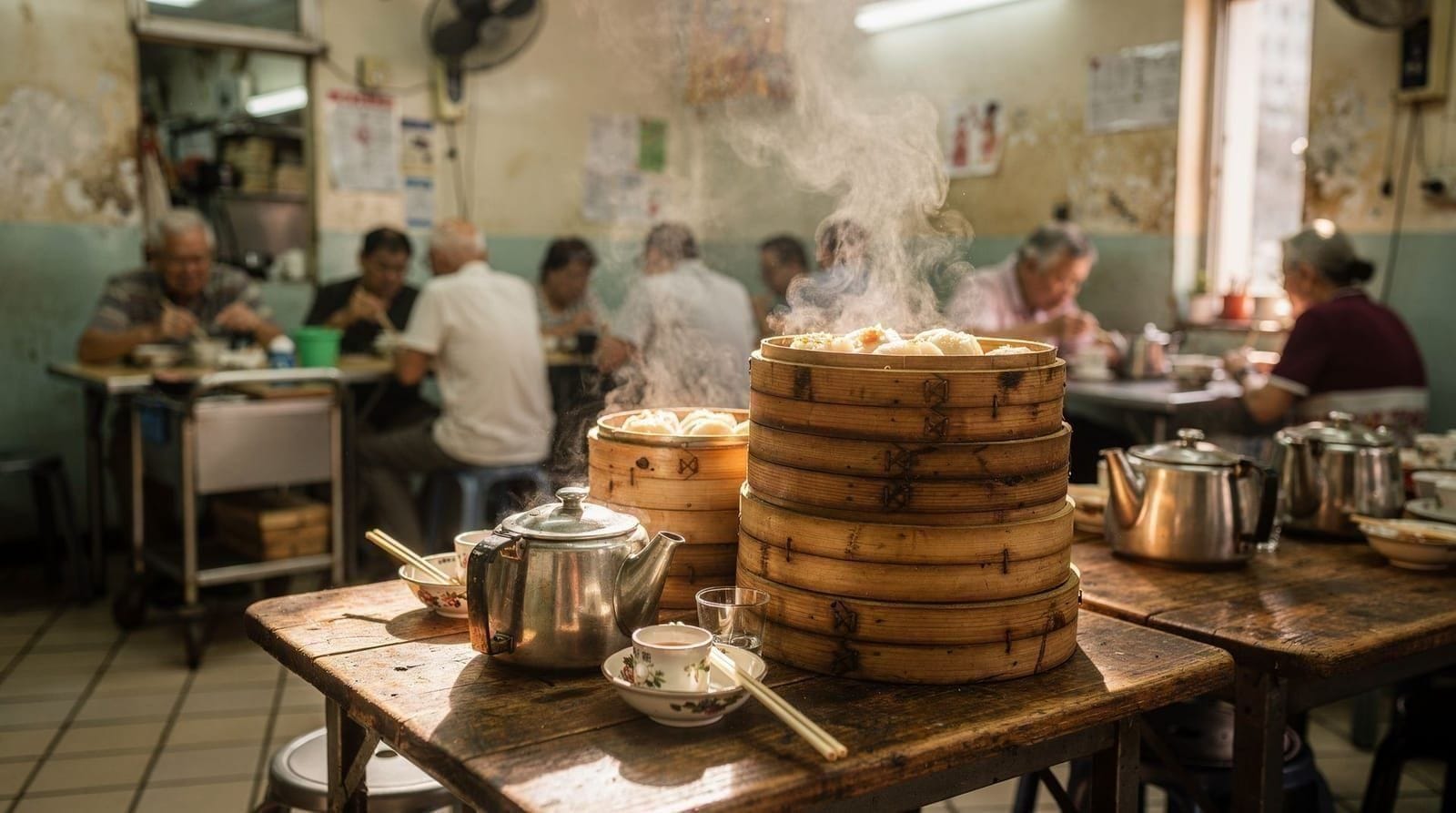
One stop north (Jordan MTR) or two stops (Yau Ma Tei MTR) puts you in neighbourhoods where dim sum teahouses are priced for residents rather than tourists. Fortune Kitchen in Yau Ma Tei and one-stop Mong Kok’s multiple options are significantly better value. The dim sum guide covers the full landscape.
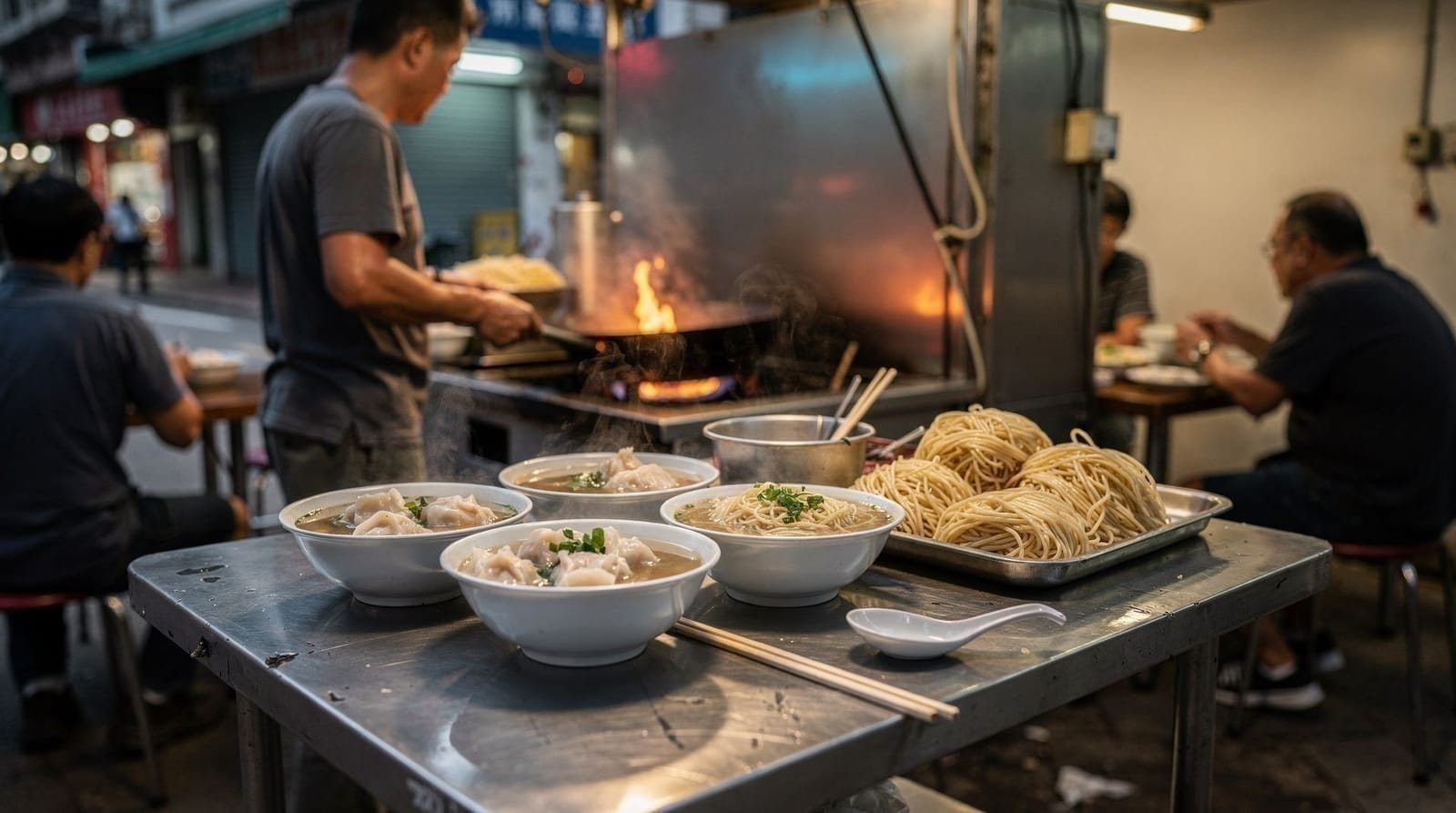
Noodle soups near TST
Mak Man Kee Noodle Shop (麥文記麵家), Parkes Street, Jordan
One stop from TST, Parkes Street in Jordan has a cluster of noodle shops that are legitimate neighbourhood establishments rather than tourist venues. Mak Man Kee specifically is well-regarded for wonton noodles — the broth is clean, the wontons properly wrapped, and the noodles springy. Cash only.
Price: HKD 42–65 per bowl Address: 51 Parkes Street, Jordan Hours: check locally before you go
Various wonton noodle shops on Cameron Road and Carnarvon Road, TST
Both streets are 5–10 minutes walk from the harbour and have legitimate local noodle shops among the tourist restaurants. Look for shops with handwritten menus in Chinese on the wall, queues of office workers at noon, and prices under HKD 55 per bowl.
Roast meats in TST area
Yung Kee at TST branches
The famous Central-based roast goose institution has expanded to Kowloon. The roast goose is the draw — crispy skin, moist meat, plum sauce. HKD 120–180 for a half portion with rice. Busy at lunch and dinner; worth the wait.
Local roasteries on Nathan Road (interior blocks)
Walk two to three minutes off Nathan Road in either direction and you will find local roastery-restaurants (with hanging roast ducks and char siu in the window) serving roast meat over rice for HKD 55–80. These are identical in concept to the tourist-facing restaurants at triple the price difference.
Restaurants on Minden Row and vicinity
Minden Row, Minden Avenue, and the Granville Road area behind the luxury hotel zone in TST have a concentration of local restaurants serving Cantonese food at mid-range prices — not the cheapest in Hong Kong but significantly better value than the waterfront strip.
Spring Deer (鹿鳴春), Mody Road, TST
A Peking duck specialist that has been operating in TST since 1978. One of the more authentic preparations of the dish in Hong Kong — the skin is genuinely lacquered, the service is old-fashioned, and the atmosphere is family-restaurant rather than tourist hotel. Order the duck in advance; they limit the daily number. HKD 380–480 for a whole duck (serves 3–4).
Address: 42 Mody Road, Tsim Sha Tsui East Reservations: Required for the duck; same-day booking usually possible on weekdays.
Japanese and Korean in TST
TST has a high concentration of Japanese and Korean restaurants, particularly around the Ashley Road and Cameron Road area, reflecting the large Japanese and Korean tourist presence in Hong Kong. These are generally reliable and priced below equivalent restaurants in Tokyo or Seoul.
This guide focuses specifically on Hong Kong food, but if you want a break from Chinese cuisine, the TST Japanese restaurant cluster (Flock the Panda, Yakiniku or several ramen shops on Ashley Road area) offers good value compared to the hotel restaurants.
The tourist trap zone and how to avoid it
The restaurants immediately on Salisbury Road (facing the harbour promenade), Haiphong Road (near the Star Ferry area), and the ground floor restaurants of the Peninsula Hotel approach are the highest-risk for tourist-price, mediocre-quality food. Common indicators:
- Photos of every dish on an illuminated signboard facing the pavement
- A staff member standing outside trying to draw customers in
- “Set meal with tea” pricing that includes items you did not specifically want
- No Chinese customers visible inside at lunchtime
None of these restaurants are dangerous or fraudulent — they simply charge 50–150% more than equivalent food two blocks away. See the tourist traps guide for the full picture.

For visitors staying in TST who want to eat well
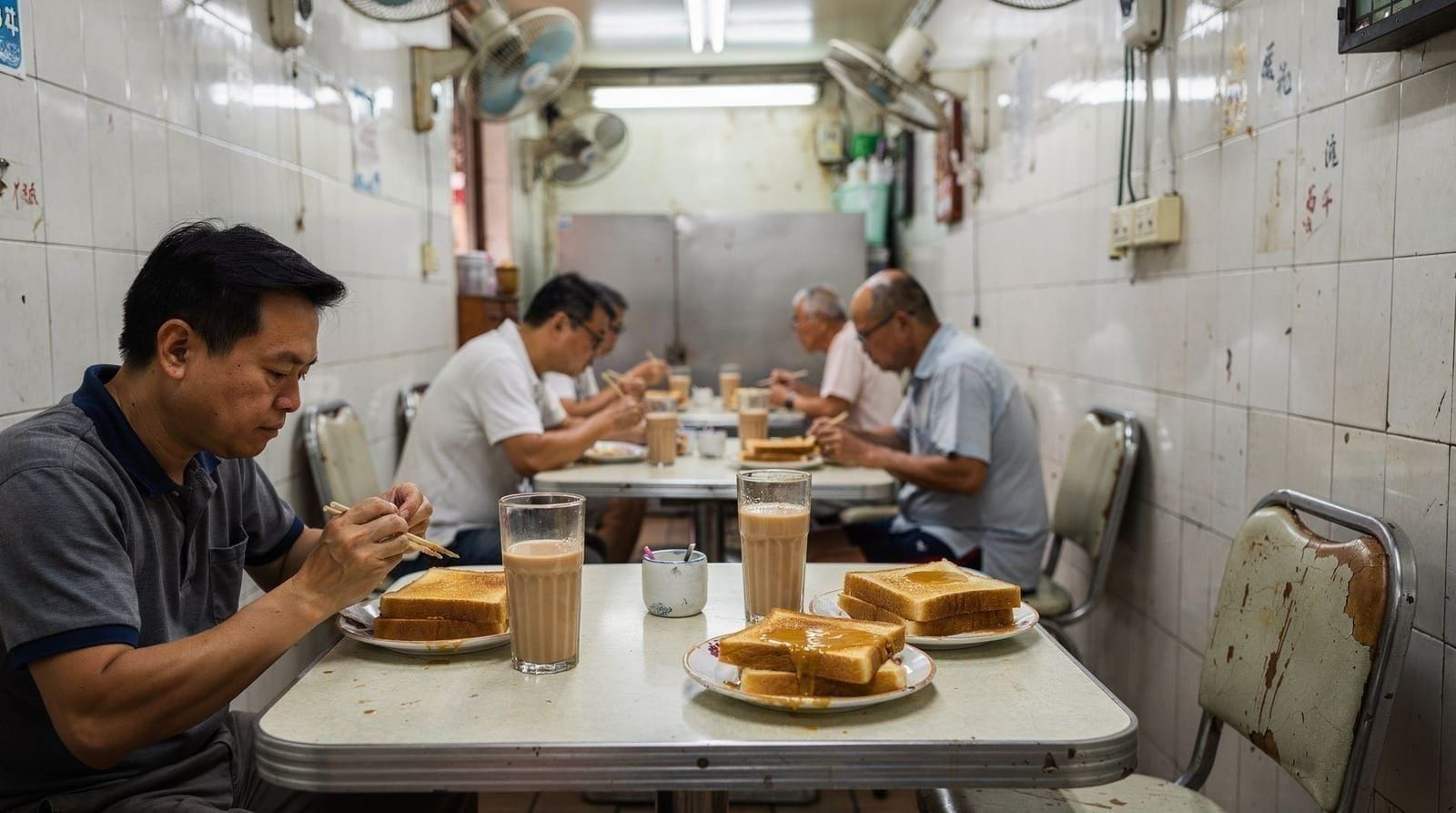
Breakfast: Walk to a cha chaan teng on Carnarvon Road or Ashley Road (not the Nathan Road hotel parade). Budget HKD 45–65. See the cha chaan teng guide for what to order.
Lunch: Take the MTR one stop north to Jordan for better noodle shops, or find a roastery on the interior streets for roast meat over rice.
Dinner: The Minden Row and Granville Road area has a range of Cantonese restaurants at HKD 120–200 per person. For a special dinner, Spring Deer (Peking duck) or a serious Cantonese seafood restaurant in TST East.
Late night: The cha chaan tengs in TST area stay open late; some Tsui Wah branches are open 24 hours (see the Tsui Wah website for the branch).

If the cooked food stalls appeal, the dai pai dong guide explains how the open-air style of eating works and how to order. For more of the same on foot, the street food guide and the Michelin cheap eats guide pair well with a few days based in TST.
Frequently asked questions about eating in Tsim Sha Tsui
Are all restaurants in Tsim Sha Tsui tourist traps?
No. The tourist trap zone is concentrated along the waterfront and Nathan Road frontage. Two to three streets back, the restaurant landscape becomes much more mixed — local Cantonese restaurants, Vietnamese noodle shops, Japanese restaurants, and cha chaan tengs that serve residents rather than tourists.
Is it better to eat in TST or cross to Hong Kong Island?
For food quality and value, Kowloon generally has better cheap Cantonese eating than the equivalent areas on Hong Kong Island (Central, Wan Chai). TST itself is not the best of Kowloon for food — Mong Kok, Yau Ma Tei, and Sham Shui Po are all better. But staying in TST and eating in the district is entirely viable if you use the restaurants further from the tourist waterfront.
What is the cheapest decent meal in TST?
A bowl of wonton noodle soup at a legitimate noodle shop on Cameron Road or an interior block: HKD 38–50. A char siu pork rice at a roastery 3 minutes walk from Nathan Road: HKD 55–70. A cha chaan teng set breakfast (milk tea + toast with eggs): HKD 50–65.
Is there good dim sum in TST?
Passable dim sum is available within TST (Dim Sum Square, Jade Garden). For better dim sum at lower prices, the MTR journey to Yau Ma Tei (1 stop), Mong Kok (2 stops), or Sham Shui Po (3 stops) is worth the 5–10 minutes.
Are there vegetarian or halal restaurants in Tsim Sha Tsui?
Yes. Buddhist vegetarian restaurants serving mock-meat Cantonese dishes operate in and near TST, and the Chungking Mansions area has a cluster of halal-certified South Asian and Middle Eastern restaurants at prices well below the tourist restaurants nearby. Always confirm ingredients directly, since oyster sauce and stock appear in many Cantonese dishes that look vegetarian.
Do I need a reservation for Spring Deer’s Peking duck?
Effectively yes. The restaurant limits how many ducks it prepares daily, and same-day availability is not guaranteed, especially for dinner. Book a day or two ahead if a specific date matters, and confirm the reservation covers the duck course itself.
The TST food landscape by meal time
Understanding what is available at each hour in TST helps avoid the tourist-trap default:
06:00–09:00 (breakfast): The tourist-facing cafes and hotel breakfast rooms are active but overpriced. The cha chaan tengs on Carnarvon Road and Kimberley Road are the right choice — full breakfast for HKD 50–65. Some open from 06:30; look for light-on places with locals queuing.
09:30–12:00 (morning dim sum): Within TST, Dim Sum Square is the most accessible. A better option is the MTR to Yau Ma Tei (4 minutes, HKD 4.50) for Fortune Kitchen or a traditional teahouse on Shanghai Street. See the dim sum guide for specific recommendations.
12:00–14:00 (lunch): The interior blocks of TST (Mody Road, Granville Road, the lanes between) have Cantonese rice-plate restaurants at HKD 60–90 per person. Roastery shops are consistently good for a quick, cheap roast meat rice.
17:00–21:00 (dinner): For a sit-down Cantonese dinner, Spring Deer (Peking duck) and the better restaurants around TST East are the main options. For something cheaper, the Haiphong Road Temporary Cooked Food Hawker Bazaar (outdoor stalls, opens around 17:00) is a legitimate dai pai dong experience within TST itself.
21:00+ (late night): Some Tsui Wah branches are open 24 hours (see the Tsui Wah website for the branch). Cha chaan tengs with late hours are scattered around the district. Convenience stores (7-Eleven, Circle K) on every block have hot snacks.
Special occasion dining in TST
For a higher-budget dinner in TST — hotel anniversary, business dinner, a celebratory meal:
Spoon by Alain Ducasse at the InterContinental: French fine dining with harbour views. The room is dramatic; the food is French haute cuisine at HKD 600–1,200+ per person. The harbour view through full-height windows is part of what you are paying for.
Felix at the Peninsula Hotel: The Philippe Starck-designed restaurant on the 28th floor of the Peninsula — one of the most visually striking dining rooms in Hong Kong, with floor-to-ceiling views toward Hong Kong Island. Contemporary international cuisine at HKD 400–800 per person.
Fook Lam Moon (福臨門), TST branch: One of Hong Kong’s most famous traditional Cantonese restaurants — a business dining institution where large deals have been closed over abalone and roast goose for decades. The menu is broad and deep; the service is formal; the bill is substantial (HKD 400–800+ per person). Reserve in advance.
These are genuinely good restaurants at elevated prices — not tourist traps in the sense of poor quality for high price, but establishments where the price is correctly calibrated to a specific clientele rather than inflated simply because of location.
The neighbourhoods adjacent to TST
Visitors staying in TST have easy MTR access to significantly better food value in adjacent neighbourhoods:
Jordan (1 stop north on Tsuen Wan Line): Nathan Road continues north into Jordan — a dense commercial district with excellent local Cantonese restaurants, noodle shops (Mak Man Kee on Parkes Street), and the beginning of Temple Street Night Market. Walking distance from TST along Nathan Road (15–20 minutes) or one MTR stop.
Yau Ma Tei (2 stops north): Traditional neighbourhood with the Jade Market, the Fruit Market (one of Hong Kong’s most visually distinctive wholesale markets — open from early morning), Temple Street Night Market, and Fortune Kitchen for dim sum. The best balance of authentic local food culture and accessibility from TST.
Mong Kok (3 stops north): The highest-density local food area accessible from TST. Tim Ho Wan (Sham Shui Po is one more stop), Kam Wah Café for pineapple buns, the full range of street food. See the Mong Kok area guide for detail.
The food in these neighbourhoods is not better than the best TST restaurants — it is a different register entirely, aimed at residents rather than visitors. For travellers who want to eat where locals eat, the 5–10 minute MTR journey north is the most effective move they can make.
Tsim Sha Tsui food: the honest ranking
Within TST and immediately adjacent, a rough quality and value ranking of the food options:
Best value: Cha chaan teng breakfast or lunch (HKD 50–80) two to three streets back from Nathan Road. The food is identical to what you eat in any neighbourhood in Hong Kong; the price premium over Mong Kok is minimal.
Best quality for the money: The interior-block Cantonese restaurants around Minden Row and Granville Road (HKD 100–180 per person for dinner). Better than the tourist-adjacent equivalents; not as cheap as Kowloon interior equivalents.
Best experience for the money: The Haiphong Road Temporary Cooked Food Hawker Bazaar for an evening meal — outdoor stalls, authentic atmosphere, food at HKD 60–100 per person.
Best special occasion: Spring Deer (Peking duck) for a booked dinner with a group; Fook Lam Moon or one of the serious Cantonese seafood restaurants in TST East for formal dining.
Worst value: Any restaurant on Salisbury Road facing the waterfront promenade, or restaurants with illuminated menu boards visible from the street — tourist-price, tourist-quality, tourist-experience.
A practical eating guide for a week in TST
For travellers spending a week in TST-area hotels, a rotation that avoids the tourist trap zone:
Breakfast (daily): Cha chaan teng on Carnarvon Road or Kimberley Road. Set menu with milk tea, toast, eggs. HKD 50–65.
Lunch option 1: Roastery two blocks from Nathan Road. Char siu rice or roast duck rice. HKD 55–75.
Lunch option 2: MTR to Yau Ma Tei for Fortune Kitchen dim sum. HKD 100–140.
Dinner option 1: Mong Kok food walk — walk to Nathan Road, north through Jordan, to Mong Kok (30 minutes). Eat at Kam Wah Café (pineapple bun) and a noodle shop. HKD 70–100.
Dinner option 2: Temple Street Night Market cooked food area (20 minutes walk from TST). HKD 80–140 for a full outdoor dinner.
Dinner option 3: Spring Deer, Mody Road, for Peking duck (book ahead). HKD 380–500 for the duck, serves 2–3.
Late night: A Tsui Wah branch (some are open 24 hours; see the Tsui Wah website). HKD 60–90 for a late snack.
How TST compares to other areas for food
Tsim Sha Tsui is the most convenient but not the most rewarding neighbourhood for food in Hong Kong. It wins on accessibility (hotel concentration, MTR connections, Star Ferry for Hong Kong Island access), but loses on food quality and value at every price point except the very top restaurants.
For a dedicated foodie trip, basing in Mong Kok or Yau Ma Tei puts you in the highest-density local food zone in Hong Kong with no additional transportation time required. For a family or first-time visitor who wants harbour views and central location, TST makes strategic sense — just budget the extra 10–15 minutes of travel for better meals.
The Hong Kong food tours guide covers guided options that will take you to the best eating regardless of where you are based.
If food is the organising principle of your trip, the Hong Kong foodie itinerary strings meals together by neighbourhood, and the Hong Kong on a budget guide helps you keep the daily spend in check while still eating well. Visitors weighing where to sleep with meals in mind can also read where to stay in Hong Kong.
Eating alone or on a tight schedule
TST is genuinely easy for solo diners — cha chaan tengs and noodle shops have counter seating and communal tables where eating alone draws no attention, and turnover is fast enough that a solo diner is never made to feel like they are occupying a table meant for a group. For travellers with a tight schedule between sightseeing stops, the roastery shops on the interior blocks off Nathan Road serve a full plate of char siu or roast duck over rice in under 15 minutes, and the convenience stores on every block have hot snacks if even that is too slow. Avoid sit-down restaurants requiring a reservation (Spring Deer, Fook Lam Moon) if your window is under an hour — these are meant to be lingered over.
Vegetarian and dietary considerations in TST
TST’s restaurant density makes it manageable for vegetarian and dietary-restricted travellers, though Cantonese cooking uses oyster sauce, fish sauce, and stock widely — always confirm rather than assume a dish is meat-free. Several Buddhist vegetarian restaurants operate in and near TST serving mock-meat Cantonese dishes; ask your hotel concierge for the nearest one, as locations shift.
Japanese and Korean restaurants clustered around Ashley Road generally have clearer allergen labelling than traditional Cantonese kitchens. For halal options, a number of restaurants near the Chungking Mansions area (which has a long-established South Asian community) serve halal-certified Indian, Pakistani, and Middle Eastern food at prices well below the tourist restaurants nearby.
Top experiences
Bookable activities with verified prices and instant confirmation on GetYourGuide.