Best egg tarts in Hong Kong — bakeries, styles, and where to go
Hong Kong: Egg tart dumpling cooking class and street food
Duration: 2.5 hours
Where can I find the best egg tarts in Hong Kong?
Tai Cheong Bakery in Central (HKD 11–14 per tart) is the most famous, with a wobbly custard and short pastry shell. For the Portuguese-style (pastel de nata) version with a more caramelised surface, Margaret's Café e Nata in Macao or Lord Stow's at Stanley are definitive. The best all-around recommendation for a first visit is Tai Cheong — arrive when a batch is fresh from the oven.
The two Hong Kong egg tart traditions
Hong Kong has two distinct egg tart traditions, both excellent and both worth understanding before you start eating your way through the city’s bakeries.
| Best classic | Tai Cheong Bakery, Central — HKD 11-14 |
| Best Portuguese-style | Lord Stow’s, Stanley — HKD 14-18 |
| Best late-night | Honolulu Coffee Shop, Wan Chai — open past midnight |
| Best local pick | Kam Fung, Wan Chai — HKD 12-16 |
| Eat within | 10-15 minutes of coming out of the oven |
The Hong Kong egg tart (港式蛋撻): A light, smooth custard filling in a flaky or shortcrust pastry shell. The custard is pale yellow, slightly wobbly, and mildly sweet — more delicate than the Portuguese version. The pastry shell is either shortcrust (脆皮, crispy crust — richer, buttery) or flaky/puff pastry (酥皮, xylene pastry — lighter, layered). This style was developed in Hong Kong in the early 20th century and is the standard version served at dim sum teahouses throughout the city.
The Portuguese-style egg tart (葡式蛋撻, pastel de nata): A darker, more caramelised custard in a puff pastry shell, with visible charring on the surface. More complex flavour from the Maillard reaction on the custard; slightly denser. This style came to Hong Kong via Macau and is associated with Lord Stow’s Bakery (founded 1989 in Coloane, Macau) and its franchised derivatives. Served at dedicated Portuguese pastry shops and some Macau-themed bakeries in Hong Kong.
Both are worth eating; they are quite different experiences. This guide covers the best sources for each.
Hong Kong-style egg tarts: the best bakeries
Tai Cheong Bakery (泰昌餅家) — Central
The most famous egg tart bakery in Hong Kong, associated with the last British Governor of Hong Kong, Chris Patten, who reportedly ate several per visit (earning him the nickname “Fat Pang” from tabloids). The Tai Cheong egg tart has a flaky puff pastry shell and a custard that is appropriately wobbly — smooth, not rubbery, with a subtle egginess.
Best time to visit: Ask when the next batch comes out of the oven. Fresh egg tarts (within 10–15 minutes of baking) are noticeably better than ones that have been sitting.
Price: HKD 11–14 per tart Locations: 35 Lyndhurst Terrace, Central (original branch). Also Central MTR underground level, multiple shopping malls. The Lyndhurst Terrace branch has the most nostalgic atmosphere. Hours: 07:30–21:00 approximately.
Honolulu Coffee Shop (檀島咖啡餅店) — Wan Chai
An institution for both its late-night cha chaan teng food and its egg tarts. The Honolulu version uses a flaky thousand-layer pastry shell (千層酥皮) — more elaborate than most bakeries. The custard is smooth and well-seasoned. Open until very late, making it the egg tart option for evening visitors.
Price: HKD 12–16 per tart Address: 176 Hennessy Road, Wan Chai Hours: 06:30–02:00 (sometimes later on weekends)
Sing Heung Yuen (勝香園) — Central
The famous outdoor dai pai dong on Gutzlaff Street also serves a well-regarded egg tart. The combination of having a real outdoor Hong Kong stall experience with a fresh egg tart is worth the detour. See the dai pai dong guide for more on this location.
Price: HKD 10–14 per tart
KFC Hong Kong
A surprising entry but a genuine one: KFC Hong Kong has served egg tarts since the 1990s, and they are considered legitimately good by local standards — a thin, crispy shortcrust pastry shell with a smooth, light custard. Available at breakfast hours. HKD 11–14. This says something specific about Hong Kong food culture: an international fast food chain has adapted its menu to local standards that are considered acceptable by people who eat egg tarts every week.
Kam Fung (金鳳茶餐廳) — Wan Chai
A classic cha chaan teng with an egg tart that is considered by many long-term Hong Kong residents to be the best in the city. Less famous than Tai Cheong but consistently praised in local food media.
Price: HKD 12–16 per tart Address: 41 Spring Garden Lane, Wan Chai Hours: check locally before you go
Portuguese-style egg tarts in Hong Kong
Lord Stow’s Bakery — Stanley
Andrew Stow opened his original bakery in Coloane, Macau in 1989, developing a recipe that adapted the Portuguese pastel de nata for local ingredients and tastes. The Hong Kong branch in Stanley serves the same recipe — deeply caramelised custard in a flaky shell, eaten hot.
Price: HKD 14–18 per tart Address: 21 Stanley Main Street, Stanley Hours: 09:00–21:00 approximately
Stanley is a 40-minute bus ride from Exchange Square in Central (Bus 6 or 6X). The journey through the south side of Hong Kong Island is worth doing for the coastal scenery.
Margaret’s Café e Nata — multiple locations
A Macau-born chain (associated with the split from the original Lord Stow’s recipe) with Hong Kong branches. The tarts are excellent — proper caramelisation, crispy shell, smooth interior.
Price: HKD 12–15 per tart Locations: Several branches in Hong Kong including Tsim Sha Tsui
Koi Thé and other Portuguese bakery cafes
Various Portuguese-style bakery cafes have opened in Hong Kong in recent years, primarily in the wealthier shopping mall corridors. Quality varies. Margaret’s and Lord Stow’s are the reliable benchmarks.
Egg tarts at dim sum teahouses
Most dim sum teahouses serve egg tarts as part of the dessert section of the yum cha experience — typically ordered at the end of a meal. Teahouse egg tarts are generally the Hong Kong style (flaky pastry, smooth custard) and are baked fresh each morning.
Quality varies enormously. At a teahouse with a good reputation (Tim Ho Wan, One Dim Sum, Lin Heung), the egg tart is excellent and costs HKD 22–35 for one piece on a plate. At a mediocre tourist-adjacent teahouse, the egg tart is often the most telling indicator of overall standards.
See the dim sum guide for teahouse recommendations.
What makes a great Hong Kong egg tart
The custard: Should be smooth and silky — not rubbery (overcooked) or watery (undercooked). A slight wobble when the plate is tilted means the custard has the right texture. Pale yellow, mildly sweet, with a clean egg flavour.
The pastry shell: Either shortcrust (dense, buttery, crumbles when you eat it) or flaky/puff (layered, lighter, shatters into flakes). Both are correct — preference is personal. Avoid egg tarts with thick, doughy shells that suggest frozen pastry product.
Freshness: The difference between an egg tart eaten within 10 minutes of coming out of the oven and one that has been sitting for two hours is significant. The pastry softens; the custard changes texture. Ask at any bakery when the next batch is due.
Temperature: Ideally eaten warm. The combination of warm custard and slightly crisp pastry is the ideal state. Cold refrigerated egg tarts are a compromise.
Practical notes
Price range: HKD 10–18 for a standard egg tart at a bakery. At a teahouse, HKD 22–35 as part of dim sum. At Stanley (premium location), HKD 14–18.
Buying in quantity: Most bakeries sell by the piece or in boxes of 4–6. If buying a box to take away, eat them within 2 hours for best quality. Do not refrigerate — the pastry becomes soggy.
Macau connection: The Portuguese egg tart tradition is even more visible in Macau, where Lord Stow’s original bakery in Coloane Village is still operating and where Margaret’s has multiple branches. If doing a Macau day trip, plan to eat egg tarts there as well.
Frequently asked questions about Hong Kong egg tarts
What is the difference between Hong Kong and Macanese egg tarts?
Hong Kong egg tarts have a smooth, pale custard with a subtle sweetness — more delicate and less caramelised than the Macanese/Portuguese version. The Macanese version has a darker custard surface from higher baking temperature, a more complex caramel flavour, and is slightly richer. Both use flaky pastry, though the Hong Kong version sometimes uses shortcrust. Both are excellent.
Are egg tarts eaten as dessert or a standalone snack?
Both. At dim sum, they are eaten at the end of the meal as dessert. At bakeries, they are sold individually as snacks at any time of day. At cha chaan tengs, they appear as a snack or a dessert add-on to a set meal.
Can I bring egg tarts home as a souvenir?
Fresh egg tarts do not travel well — eat within a few hours of purchase. Packaged/baked egg tart mix and some branded egg tart products are available for purchase as gifts, but these are not the same experience as a fresh bakery tart.
What is the best time of day to buy egg tarts?
Mid-morning (around 10:00–11:00) when most bakeries have completed their first or second batch of the day. Many bakeries post batch schedules on the wall or can tell you when the next batch is due. Avoid late afternoon when tarts may have been sitting for hours.
How much should I budget for an egg tart tasting crawl?
A three- or four-bakery crawl comparing the two styles costs surprisingly little — HKD 40–70 in tarts alone if you buy one from each stop, plus tea or milk tea if you sit down. Add bus fare to Stanley (HKD 10–12 each way) if you extend the crawl to Lord Stow’s. Even a generous crawl across five bakeries rarely exceeds HKD 150 per person.
Do egg tart bakeries sell out, and when is the worst time to arrive?
Popular branches of Tai Cheong and Kam Fung can sell out of a batch shortly after it emerges, especially around lunch and again in the late afternoon. Late evening (after 20:00) is the riskiest time to arrive expecting a fresh, hot tart — many bakeries are down to their last tray or closed for the day. Mid-morning restocks are the most reliable window.
The history of Hong Kong egg tarts
The Hong Kong egg tart’s origins are traced to the British custard tart tradition that arrived with the colonial administration — variations of egg custard baked in a pastry shell were common in British cafes and afternoon tea services. Hong Kong bakers in the 1940s adapted the British version using local ingredients and preferences: less sugar, a thinner shell, a more delicate custard texture.
The Portuguese-style variant has a different lineage, coming through Macau where Portuguese missionaries and traders had established the pastel de nata tradition (originating in Lisbon’s Belém pastry shop, Pastéis de Belém, and the Jerónimos Monastery before it) — a more caramelised, darker custard with a more complex flavour from higher baking temperature. The Macanese version came to Hong Kong via Portuguese-speaking workers and was popularised by Lord Stow’s Bakery in Coloane from 1989.
By the 1990s, Hong Kong had a fully developed two-style egg tart culture: the lighter local version at bakeries and cha chaan tengs, the richer Portuguese style at dedicated Portuguese pastry shops and some dim sum restaurants. Both are now firmly established as Hong Kong food culture.
Egg tart making: what to look for in quality
The pastry: Shortcrust (脆皮) should crumble cleanly when bitten — not shatter into dry dust (over-baked) or feel greasy and heavy (too much fat). Flaky pastry (酥皮) should separate into distinct layers, each thin enough to see through. The base should be fully baked — a soggy, pale base means underbaking or too-thick pastry.
The custard: The test for correct texture is the wobble test — tilt the plate gently; the custard should move slightly at the centre while the edges hold. This indicates the protein is just set, not overcooked (rubbery) or undercooked (liquid under the skin). The colour should be a uniform pale yellow, not mottled or with a brown skin on top (which indicates cooling too quickly).
The ratio: A good egg tart has approximately 2:1 custard to pastry by volume. Too much pastry and the filling gets lost; too little and the structural integrity is compromised. The standard Hong Kong bakery egg tart is about 7–8cm in diameter and 3–4cm deep.
Egg tarts by neighbourhood
Different neighbourhoods have their own egg tart cultures:
Central/Sheung Wan: Tai Cheong on Lyndhurst Terrace is the flagship. Several bakeries on Des Voeux Road West also serve excellent versions.
Wan Chai: Honolulu Coffee Shop on Hennessy Road is the late-night option; Kam Fung on Spring Garden Lane is the local’s choice.
Mong Kok: Multiple bakeries on Nelson Street and Fa Yuen Street serve egg tarts at lunch hour. The Mong Kok version is often slightly larger and less refined than the Central versions — more generous, less precious.
Yau Ma Tei: The small bakeries near the Temple Street Night Market entrance serve decent egg tarts from morning through the afternoon.
Stanley/South Island: Lord Stow’s at Stanley is the destination for the Portuguese style on Hong Kong Island’s south side. The bus journey from Central (Bus 6 or 6X, approximately 40 minutes) is a pleasant scenic drive over the island.
Egg tarts at dim sum versus dedicated bakeries
There is a genuine quality difference between egg tarts at a good dim sum teahouse and those at a mediocre bakery — and also a quality difference between a mediocre dim sum teahouse and a good bakery. The best egg tarts in Hong Kong come from dedicated bakeries where the product is the focus and the turnover is high enough that nothing sits for long.
At a well-known dim sum teahouse (Tim Ho Wan, One Dim Sum), the egg tart is an afterthought — good but not the kitchen’s priority. At Tai Cheong or Honolulu, it is the product that everything else is measured against. For a serious egg tart experience, go to a specialist bakery.
See the dim sum guide for the full context of egg tarts within the yum cha experience, and the michelin cheap eats guide for how Tai Cheong fits into the broader Hong Kong cheap food landscape.
Building an egg tart itinerary
For a visitor specifically interested in the egg tart landscape, a half-day itinerary across the two styles:
Morning (Central): Arrive at Tai Cheong Bakery on Lyndhurst Terrace by 09:00. Ask what time the first batch came out; if within 30 minutes, eat one immediately. Buy a second to compare after the walk. Walk 10 minutes to Lin Heung Tea House in Sheung Wan for a dim sum egg tart in context — have a full dim sum session and order the egg tart as dessert.
Afternoon (Wan Chai): Visit Honolulu Coffee Shop on Hennessy Road for their egg tart and milk tea combination in mid-afternoon. Compare the Honolulu thousand-layer pastry version with the Tai Cheong shortcrust version from the morning.
Evening (Stanley, optional extension): Bus 6 or 6X from Exchange Square to Stanley takes 40 minutes. Lord Stow’s Bakery on Stanley Main Street provides the Portuguese-style comparison — a completely different product from the morning’s Hong Kong-style tarts.
Total cost of this itinerary: approximately HKD 150–200 in egg tarts and tea, plus bus fare.
The egg tart and Hong Kong food identity
The egg tart has become a symbol of Hong Kong food culture in a way that goes beyond the tart itself. It represents the broader Hong Kong culinary character: a Western concept adapted by Chinese cooks using local ingredients and techniques, evolving into something entirely distinct from its origin, and then becoming so thoroughly Hong Kong that it is now exported back to the West as a representative Hong Kong food item.
Hong Kong egg tart versions are now made in Chinatowns worldwide, at Chinese bakeries in Canada, Australia, the UK, and across the Chinese diaspora. The Hong Kong version serves as the reference point for the global Chinese bakery egg tart tradition.
This is why the egg tart is worth seeking out specifically when visiting Hong Kong — not because it is the most complex food the city produces, but because it tells the city’s cultural story efficiently. A city at the intersection of Chinese and British culture, adapting both into something new, exporting that new thing back to the world. The egg tart costs HKD 11 at Tai Cheong and contains this entire history in one bite.
Cooking classes: making your own
Several operators in Hong Kong offer egg tart making classes as a 2–3 hour hands-on workshop. You make both the shortcrust and flaky pastry versions from scratch, fill with custard, and bake. The class typically includes a recipe card to take home.
See the food tours guide for operators who include egg tart classes in their cooking workshop programmes. The best street food guide also covers the broader context of bakery culture in Hong Kong’s food landscape.
Egg tart and dumpling hands-on cooking classIf you would rather focus on pastry alone, there is also a hands-on class on Hong Kong Island that covers egg tarts and egg custard mooncakesCheck availability, a good way to learn why the custard and shell behave the way they do after tasting the real thing at the bakeries above.
Ordering etiquette at a busy bakery
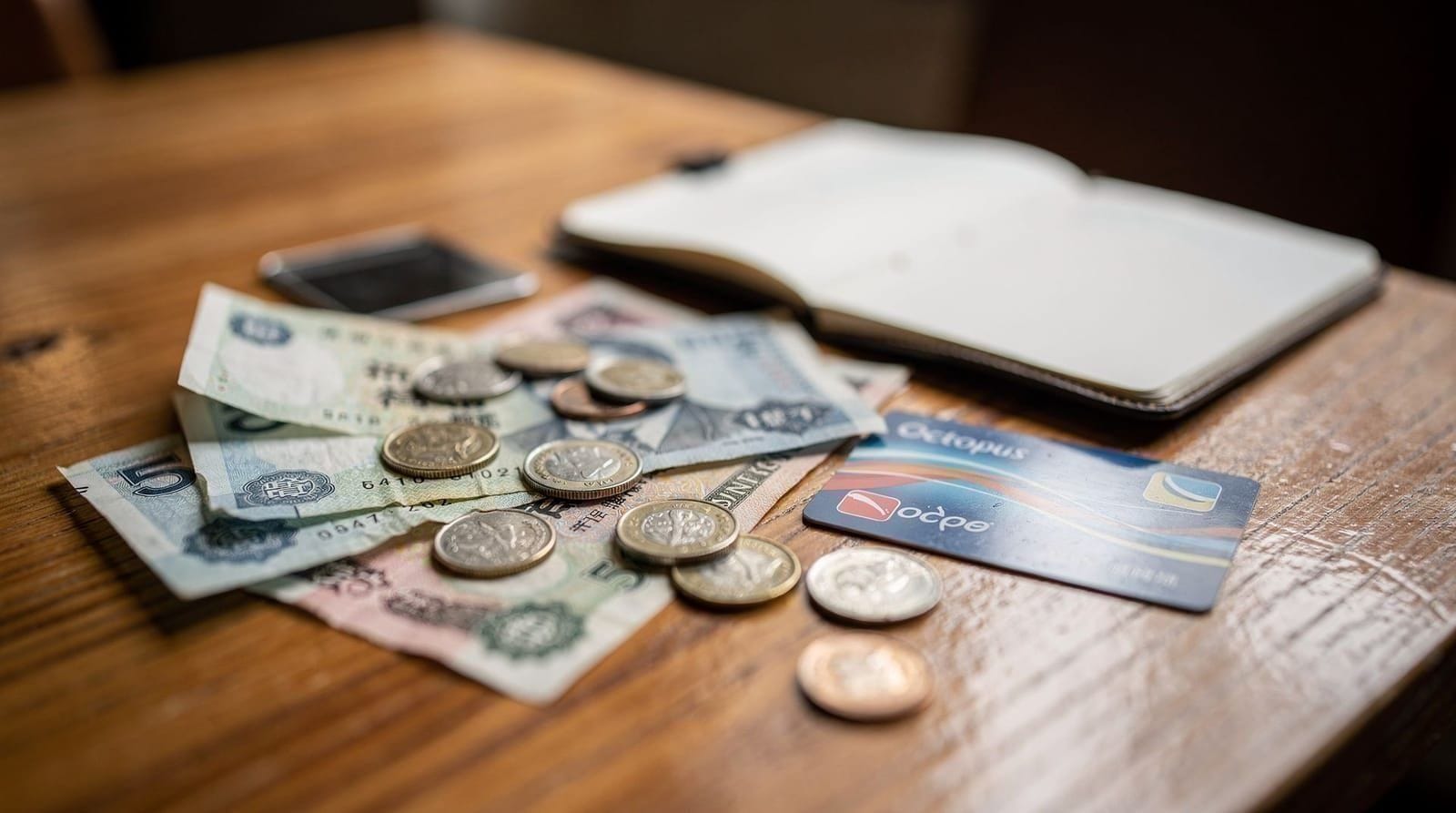
Hong Kong’s most famous egg tart bakeries move fast, and knowing the drill helps. At Tai Cheong’s original Lyndhurst Terrace branch, queue at the counter, state your quantity clearly (staff often just hold up fingers to confirm), and pay before stepping aside — there is no seating, so eat standing or walk while you eat, as locals do. At a cha chaan teng like Kam Fung, egg tarts are usually ordered from a display case near the till rather than from a seated table menu; point or name the item and pay at the counter. Cash remains useful at smaller, older bakeries even though card and Octopus payment has spread widely — carry small HKD notes to avoid holding up a queue.
Egg tarts outside Hong Kong
For visitors who plan to visit Macau as a day trip: the Portuguese egg tart tradition is even more visible in Macau than in Hong Kong. Lord Stow’s original Coloane bakery and the competing Margaret’s Café e Nata branches throughout the city serve the definitive Macanese pastel de nata in its original context. If you are comparing the two traditions, Macau is the natural comparison point for the Portuguese style. If you prefer not to organise the crossing yourself, a guided day tour of Macau’s UNESCO-listed centre keeps the logistics simple, and you can slip away for a tart between stops. The ferry versus bridge guide explains how to get there.
Mainland China has developed its own egg tart variations — the Shanghai version tends toward a sweeter custard; the Cantonese restaurant egg tart in Guangzhou is closer to the Hong Kong style. For travellers combining Hong Kong with mainland China, the regional variation in egg tart styles is a minor but genuine part of the regional food culture comparison.
Conversely, if you eat a Hong Kong-style egg tart outside Hong Kong and find it disappointing — the custard too dense, the pastry too thick, the sweetness too aggressive — this is what motivates the trip to the source. The version at Tai Cheong in Central is the benchmark against which everything else should be measured.
Fitting egg tarts into the rest of your trip
An egg tart stop costs little time, so it slots easily between bigger plans. A bakery visit works well as a break while exploring Central and Sheung Wan or Wan Chai, where several of the bakeries above sit within a short walk of each other. If you are staying across the harbour, the Tsim Sha Tsui restaurant guide helps you pair a tart with a proper meal, and Stanley makes a natural half-day out for the Portuguese style.
Egg tarts also suit travellers on a tight budget, since they are one of the cheapest genuine local foods you can eat. The budget guide covers how a snack-led day fits into a low daily spend, and the cha chaan teng guide explains how to order the milk tea that traditionally goes with a tart.
If food is the main reason for your visit, build the days around it with the foodie itinerary, and use the first-timer guide for the practical basics before you go.