Hong Kong weekend itinerary
Hong Kong: Heritage highlights tour with Peak Tram and Star Ferry
What two days in Hong Kong actually covers
A weekend in Hong Kong is genuinely enough to understand why people keep coming back. Two days, structured well, gets you The Peak and its harbour views, a crossing on the Star Ferry, Central’s colonial lanes and Sheung Wan’s antique streets, the Tsim Sha Tsui waterfront, Mong Kok’s market grid, Wong Tai Sin Temple, and Temple Street Night Market. That is not a highlights reel — it is a real cross-section of the city at several different registers, from the expensive and obvious to the local and unglamorous. Walking totals around 8–10 km per day, all flat or with stairs rather than steep hills (except The Peak itself, where the tram handles the climb).
Before you arrive, pick up an Octopus card at the airport — load HKD 200 to start and top up at any MTR station. It covers all MTR journeys, buses, and the Star Ferry with no additional steps. Read our first-time Hong Kong guide for currency, sim cards, and the basics before you land.
| Where | The Peak, Central, Sheung Wan, Tsim Sha Tsui, Mong Kok, Wong Tai Sin |
| Cost | Around HKD 600–900/person/day excluding accommodation |
| Time needed | 2 full days, Saturday and Sunday |
| Getting there | MTR + Star Ferry, all Octopus-payable |
| Best time | October–December for the clearest Peak views |
The weekend at a glance
| Day | Focus | Evening highlight |
|---|---|---|
| Day 1 (Sat) | The Peak, Central, Sheung Wan, Star Ferry | Symphony of Lights + TST dinner |
| Day 2 (Sun) | Mong Kok markets, Wong Tai Sin Temple | Temple Street Night Market |
Day 1 — Saturday: Hong Kong Island
Morning: The Peak
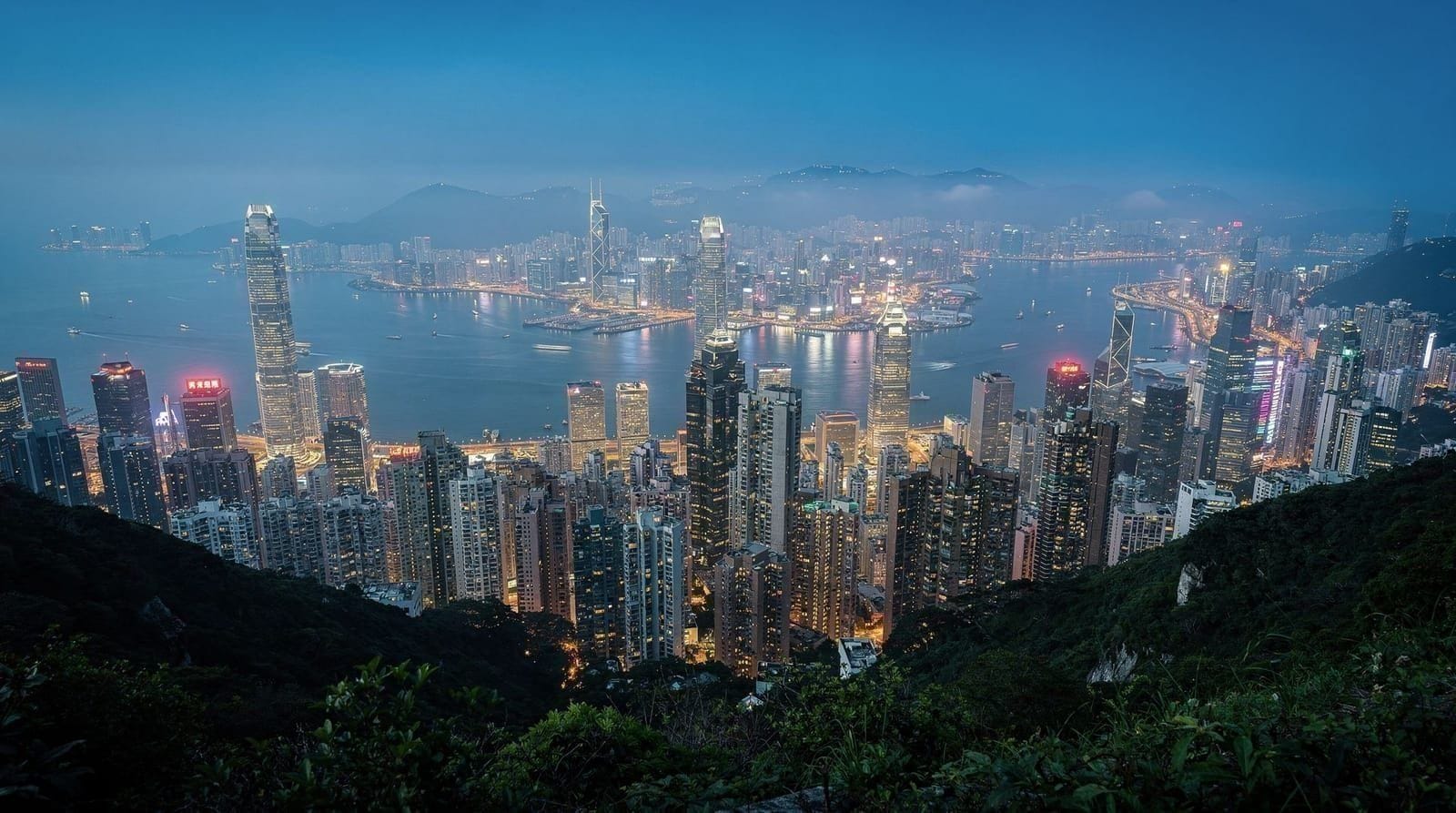
Start at The Peak before 10:00. The Lower Peak Tram Terminus is on Garden Road in Central — walk 12 minutes uphill from Hong Kong Station Exit D, or take Bus 12 from Des Voeux Road Central (approximately 10 minutes; check the operator’s site for the fare). The tram ascends at up to 27 degrees in 8 minutes; the view through the windows as the city tilts below is half the point.
At the summit, the Sky Terrace 428 on top of The Peak Tower gives a 360-degree view at 428 metres elevation. Check thepeak.com.hk for current entry prices. Weekend queues without pre-booked tickets routinely reach 60–90 minutes — book online before you leave the hotel.
Peak Tram return and Sky Terrace 428 entry — skip the tram ticket queue and go straight to the boarding platformCheck availabilityThe free Peak Circle Walk loops 3.5 km around the summit at the same elevation, partially shaded, with filtered views through subtropical forest. It takes 45–50 minutes at a relaxed pace and is a much calmer experience than the Sky Terrace platform when crowds are heavy. Many visitors do both.
Read our Victoria Peak guide for the best times by season and light conditions — morning before noon gives you the clearest views before sea haze builds.
Allow 2–2.5 hours total on The Peak. Return by tram (HKD 82 one-way, USD $10.50) or walk down Old Peak Road (free, 45 minutes, shaded). The walk is pleasant if your knees are happy on downhill gradients.
Midday: Central dim sum and PMQ
Back in Central by 12:00–12:30. This is the right moment for a proper dim sum lunch. Central and Sheung Wan have Cantonese restaurants from budget to premium; the working-lunch spots around Des Voeux Road Central and Wellington Street serve yum cha sets for HKD 90–130 (USD $12–17) per person. Order: har gau (steamed prawn dumplings), siu mai (pork and prawn), cheung fun (rice noodle rolls), and turnip cake — a standard spread for two with tea costs around HKD 200 total.
Our dim sum guide covers which neighbourhoods have the most reliable kitchens and what to avoid on tourist-facing menus.
After lunch, walk to PMQ on Aberdeen Street — a converted police married quarters building now housing design studios, independent boutiques, and food vendors across two blocks. Entry is free; the ground floor courtyard has benches and occasional pop-up markets on weekends. Allow 30–45 minutes.
From PMQ, walk west through Sheung Wan. Hollywood Road is the centre of Hong Kong’s antique trade — dealers sell genuine and reproduction Chinese furniture, ceramics, and jade alongside paintings and curiosities. Cat Street (Upper Lascar Row) one block south runs parallel with cheaper bric-a-brac. Neither requires purchase to be interesting.
Afternoon: Star Ferry to Kowloon
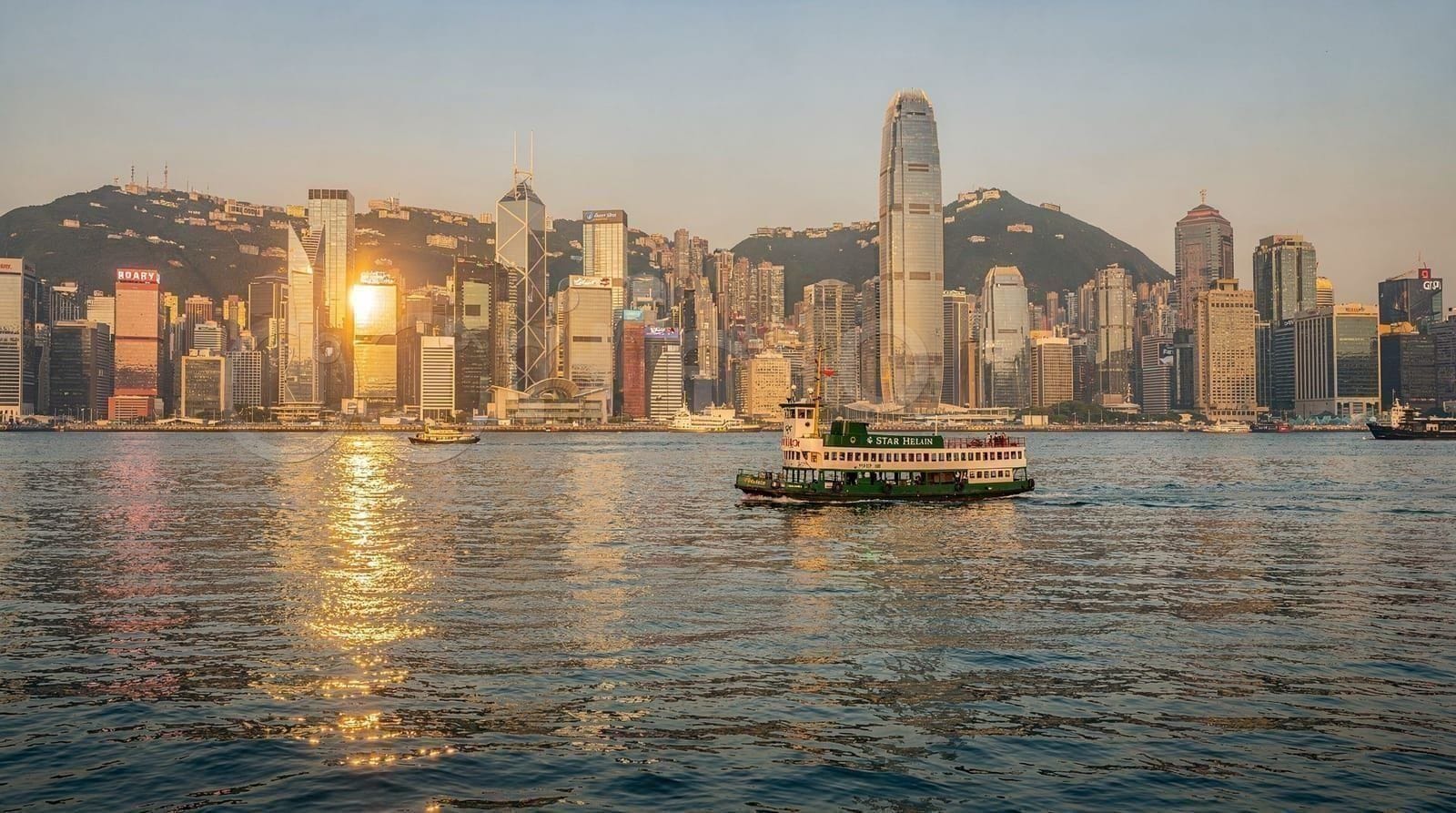
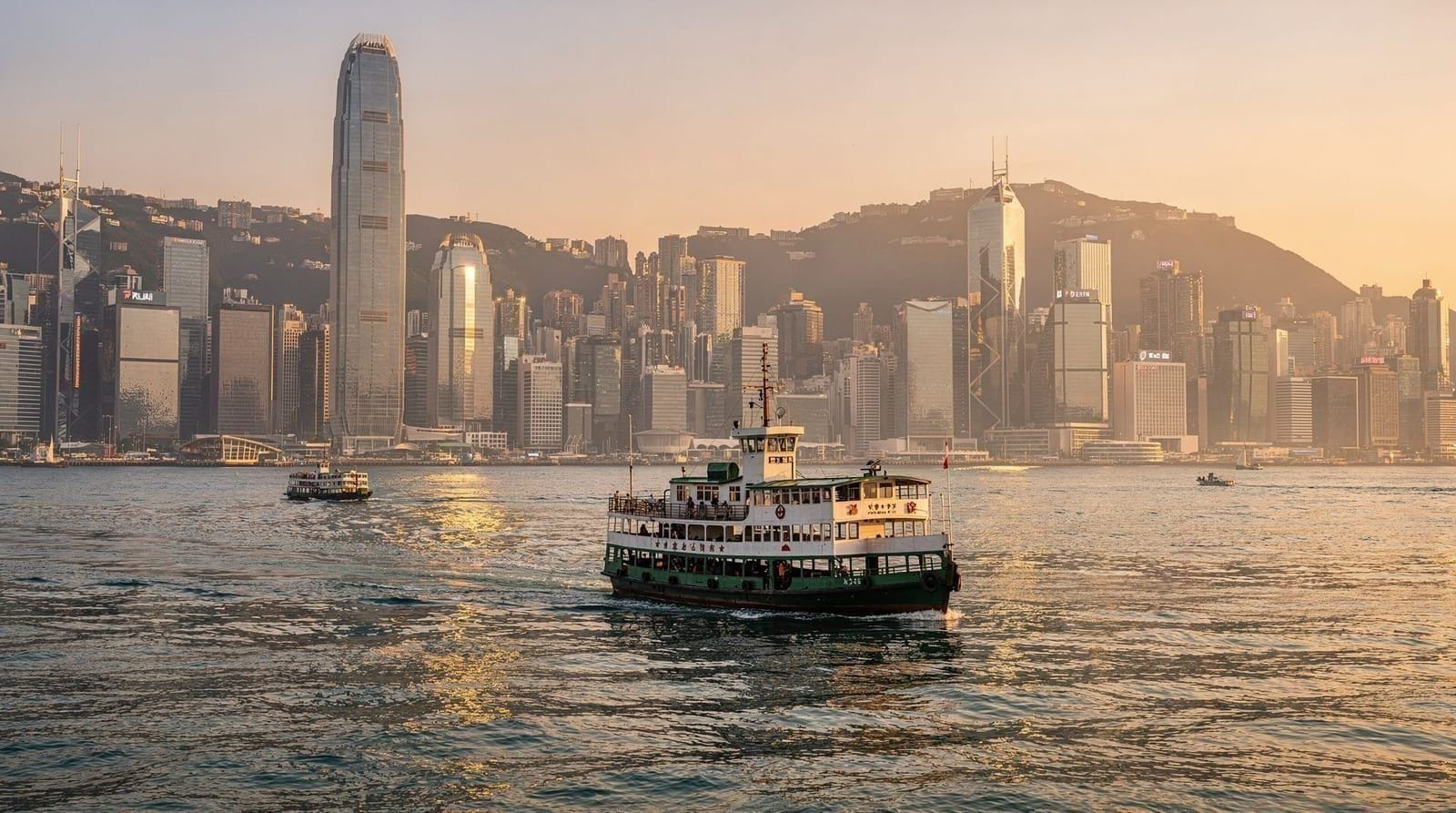
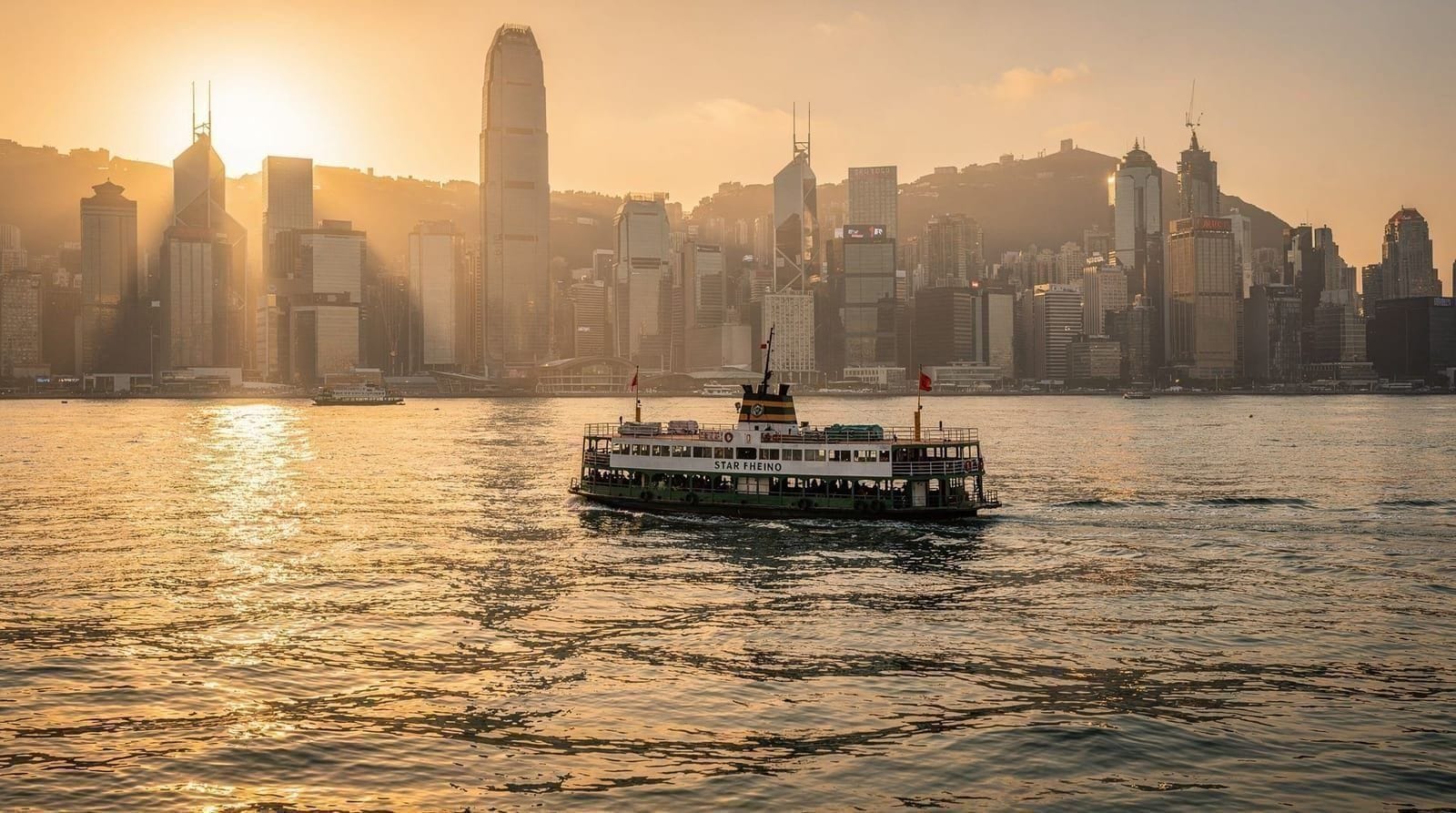
Walk back toward the Central Ferry Piers on Man Kwong Street by 15:00. Pier 7 is the Tsim Sha Tsui crossing: HKD 6.5 (USD $0.83) upper deck on weekends, HKD 5.0 on weekdays. The 8-minute crossing gives you the full Central skyline from the water — this is Hong Kong’s most reproduced view and it looks exactly like the photographs, which is gratifying.
Half-day guided city tour with Peak Tram and Star Ferry included — good value if you want an overview with commentary on the first morningCheck availabilityOn the Kowloon side, exit onto the Tsim Sha Tsui Promenade and walk east. The Avenue of Stars runs 1.7 km along the waterfront with bronze handprints of Hong Kong film figures embedded in the railing, but the real attraction is the unbroken skyline view across the harbour. The late afternoon in October–March gives the best light on the Central skyscrapers. In summer the haze diffuses it but the scale still registers.
Walk as far east as the Hong Kong Cultural Centre and the Space Museum dome, then back. The waterfront is level, shaded in sections, and has no entry fees. Allow 45–60 minutes.
From Tsim Sha Tsui, if you want a tea break before the evening, Nathan Road has chain cafes every 200 metres. For something more local, the cha chaan teng (Hong Kong-style cafes) on the side streets off Carnarvon Road serve milk tea (HKD 22–28 / USD $2.80–3.60) and toast with condensed milk that is far better than it sounds.
Evening: Symphony of Lights and the Tsim Sha Tsui waterfront
The Symphony of Lights runs every night at 20:00 — a coordinated LED and laser show across more than 40 buildings on both sides of Victoria Harbour. From the Tsim Sha Tsui Promenade you watch the Hong Kong Island skyline light up across the water, with music broadcast from speakers along the waterfront. The show lasts about 10 minutes.
Arrive at the waterfront by 19:45 to get a position on the railing. Weekend evenings are busy — the prime spots along the Promenade fill from 19:30.
Star Ferry sunset harbour cruise — 45 minutes on the water between the sunset light and the evening skylineCheck availabilityAfter the show, return to Hong Kong Island via MTR (Tsim Sha Tsui Station to Central, Tsuen Wan Line, HKD 10.6 / USD $1.36, 5 minutes) or the last Star Ferry (runs until 23:30, HKD 6.5 upper deck on weekends). The MTR is faster; the Star Ferry is better.
For dinner, the area around Lan Kwai Fong in Central and SoHo on Elgin Street has restaurants open until late, ranging from cheap Thai and Vietnamese to mid-range Cantonese. Budget HKD 150–300 (USD $19–38) per person for dinner with a drink.
Total Day 1 spending (excluding accommodation): HKD 550–800 (USD $70–103), depending on lunch and dinner choices.
Day 2 — Sunday: Kowloon deep dive
Morning: Mong Kok markets
Start in Mong Kok by 10:30 — early enough to walk the streets before the Sunday crowd builds to its mid-afternoon peak. Take the MTR from wherever you are staying to Mong Kok Station (Tsuen Wan Line) or Prince Edward Station (one stop north, same line). Fare is HKD 5.4–14 depending on origin.
The Flower Market on Flower Market Road (near Prince Edward Station) is at its best on Sunday mornings when deliveries are fresh and the weekend retail trade is starting. Orchids, tropical blooms, and cut flowers fill the stalls from around 10:00. The market runs to Boundary Street and is one of Hong Kong’s more photogenic street-level experiences. Free, 30–40 minutes.
Two minutes’ walk east, the Bird Garden on Yuen Po Street sells songbirds, carved wooden cages, and bird feed. Old men compare their pets in the covered walkways outside. Free, 20 minutes.
Ladies Market on Tung Choi Street opens fully from 11:00. This 600-metre stretch of covered stalls sells clothing, bags, accessories, and tourist goods aimed at a wide spectrum from practical to gaudy. The atmosphere matters more than the shopping — bargaining is expected and prices start at two to three times what vendors will actually accept. HKD 50–150 for most items at a fair price.
For late morning dim sum, the restaurants on Sai Yeung Choi Street South (parallel to Tung Choi, one block west) have large Cantonese restaurants popular with local families. Expect to queue on Sunday morning — arrive by 10:30 or after 12:30 to minimise wait time. Budget HKD 100–150 per person with tea.
Midday: Wong Tai Sin Temple
Take the MTR from Mong Kok Station east to Wong Tai Sin Station (Kwun Tong Line, HKD 6.4 / USD $0.82, 10 minutes). Wong Tai Sin Temple is 3 minutes’ walk from Exit B2.
Wong Tai Sin is Hong Kong’s most famous Taoist temple and one of the few religious sites in the city where local practice rather than tourist performance is front and centre. The complex is large — the main altar facing the temple forecourt, the Three Saints Hall, the Good Wish Garden, and a long covered arcade with fortune-tellers. Entry to the temple grounds is free; the Good Wish Garden charges HKD 2 (USD $0.26). Joss sticks cost HKD 2 at the entrance.
The fortune-telling with kau cim (numbered bamboo sticks shaken in a canister until one falls out, then interpreted by a resident diviner) is a genuine local practice, not a performance. The diviners along the arcade charge HKD 50–150 (USD $6.40–19) for a reading depending on depth and whether translation is needed. Worth doing if you are curious; skip it if you are not — the temple is worthwhile either way.
Allow 45–60 minutes.
Afternoon: Temple Street area and Wan Chai for dinner
Return to Jordan Station (Kwun Tong Line to Mongkok Station, then Tsuen Wan Line south, or direct on Kwun Tong Line to Yau Ma Tei, HKD 4.9–6.4) and walk to the Temple Street area.
Temple Street itself does not fully come alive until 17:00–18:00, but the surrounding streets in Jordan and Yau Ma Tei are worth walking in the mid-afternoon. The streets around the Tin Hau Temple at the north end of Temple Street have a cluster of antique and second-hand shops dealing in old watches, jade, and Mao-era memorabilia. The Jade Market on Kansu Street (open 10:00–17:00) sells jade pieces from inexpensive tourist bangles to collectors’ quality carvings; prices are negotiable and condition ranges widely. Free to browse.
For a guided introduction to the neighbourhood — the context behind what you are seeing rather than just the surface — a walking tour of Kowloon’s local markets adds considerable depth.
Kowloon local markets and culture walking tour — covers the history behind the night market, jade market, and the old Yau Ma Tei neighbourhoodsCheck availabilityBy 17:00, Temple Street Night Market is operational. Stalls extend from Man Ming Lane south toward Jordan Road. The food stalls in the middle section of the market — open-fronted restaurants and dai pai dong cooking at tables on the pavement — serve typhoon shelter prawns, stir-fried crab with black bean, roast pigeon, and congee. This is the most atmospheric cheap dinner in Kowloon: HKD 120–200 (USD $15–26) per person with beer.
Evening: optional Wan Chai or return to Hong Kong Island
If energy holds, take the MTR from Jordan to Wan Chai for a final evening drink (Tsuen Wan Line to Admiralty, change to Island Line east one stop, HKD 10.3 / USD $1.32). Wan Chai’s bar strip along Lockhart Road is unpretentious and mixed — locals, expats, and visitors in roughly equal measure. It winds down later than the tourist circuits in Tsim Sha Tsui and is cheaper. A craft beer costs HKD 55–80 (USD $7–10); a bottle of local Tsing Tao is HKD 35–50 at most bars.
Alternatively, return directly to your hotel — two full days of walking and transport is genuinely tiring and Sunday’s markets run long if you stop for everything.
Practical notes and budget
Getting around: The MTR covers this entire itinerary. The maximum fare for any journey in this itinerary is HKD 14. Use an Octopus card — cash is slower at every turnstile. The Star Ferry runs until 23:30 and costs HKD 4.00–5.60 (lower deck) or HKD 5.00–6.50 (upper deck), the higher fare applying on weekends and public holidays — always upper deck.
When to visit: This itinerary works year-round. October–December is the most reliably clear and comfortable. June–September brings heat, humidity, and typhoon risk but lower accommodation prices. February–March is cool, slightly rainy, and quieter at the main sights. Read our best time to visit Hong Kong guide for season-by-season detail.
Where to stay: Tsim Sha Tsui puts you on the Kowloon side, five minutes from the waterfront, and gives you faster access to Mong Kok and Jordan for Day 2. Central and Wan Chai keep you on Hong Kong Island with better access to The Peak and the Central piers. Both work for this itinerary. Read our where to stay guide for an area-by-area breakdown with accommodation price ranges.
Extending the weekend: If you have a third day available, our 3-day Hong Kong itinerary adds Lantau Island or Sai Kung to the same base structure. If you have four days, the 4-day itinerary adds a Macau day trip or the New Territories. Even one additional day changes the texture of the trip considerably.
Budget breakdown (2 days, mid-range, excluding accommodation):
- Airport Express return: HKD 215 (USD $27.50)
- Peak Tram + Sky Terrace 428 combo: HKD 182 (USD $23)
- MTR (2 days): HKD 60–100 (USD $7.70–13)
- Star Ferry crossings: HKD 20–35 (USD $2.60–4.50)
- Meals (4 meals, mid-range): HKD 500–800 (USD $64–103)
- Temple Street dinner + drinks: HKD 200–300 (USD $26–38)
- Market purchases (optional): HKD 100–300 (USD $13–38)
- Approximate total: HKD 1,250–1,900 (USD $160–244)
For a tighter budget, our Hong Kong on a budget guide shows how to run the same itinerary for significantly less, and the Hong Kong budget breakdown gives a full cost breakdown by category.
For a one-day compressed version if your time shrinks further, see our 1-day Hong Kong itinerary.
Where to base yourself for this weekend
Because this itinerary splits cleanly between Hong Kong Island (Day 1) and Kowloon (Day 2), your hotel location matters more than on a longer trip. Staying in Tsim Sha Tsui puts you a short walk from Mong Kok and Jordan for Day 2, at the cost of a slightly longer commute to The Peak on Day 1. Staying in Central or Wan Chai does the opposite — quick access to the Peak Tram terminus, longer to reach Mong Kok. Neither adds more than 10–15 minutes to any single leg, so this is a minor optimisation rather than a decision that breaks the plan. The central vs Tsim Sha Tsui guide walks through the trade-off in more detail if you have not booked yet.
What this weekend itinerary skips
Two days cannot include everything, and this route deliberately leaves out Lantau Island, the outlying islands, Ocean Park, and a dedicated food-focused day. None of these are lesser experiences — they simply need their own day. If Lantau’s Big Buddha is a priority, the 3-day itinerary is the minimum length that fits it in without cutting something from this weekend short. The what to skip in Hong Kong guide covers which sights are genuinely worth stretching a third day for and which are better left for a return trip.
Frequently asked questions about this 2-day Hong Kong itinerary
Is two days enough to see Hong Kong?
Two days is enough to understand Hong Kong’s character and hit its defining experiences. You will not reach Lantau Island, the New Territories, or the outlying islands on two days — those require at least a third day. But The Peak, the Star Ferry, Central, Kowloon’s markets, and Temple Street Night Market give you a genuine cross-section rather than just a surface view. Most people who visit for a weekend leave wanting more time, which is a good sign.
How far in advance should I book the Peak Tram?
Book at least 24 hours before you want to go, ideally 2–3 days in advance for Saturday visits. Weekend queues at the tram terminus without pre-booked tickets regularly reach 60–90 minutes. The online booking also lets you choose a tram departure window, which means you arrive knowing when you board rather than waiting in an indefinite queue. The Sky Terrace can be added to the tram ticket as a combo.
Should I take the Star Ferry or the MTR to cross the harbour?
Take the Star Ferry. The MTR cross-harbour tunnel takes 5 minutes; the Star Ferry takes 8 minutes. The ferry costs HKD 5.00–6.50 (upper deck, weekday vs weekend); the MTR costs HKD 10.60 for the same crossing. The ferry gives you 8 minutes on the water with Hong Kong’s skyline in front of you. This is not a close comparison. Use the Star Ferry for every harbour crossing during daylight and the evening, and use the MTR when it is raining or you need to be somewhere quickly.
What time does Temple Street Night Market start and finish?
Stalls begin setting up from around 17:00 and the market reaches full density from 18:30 onward. It runs until midnight or later, peaking between 19:00 and 21:30. The food stalls (the cooked-to-order dai pai dong at the centre of the market near the Tin Hau Temple) open from around 17:30. If your primary goal is dinner and atmosphere rather than shopping, arrive between 18:30 and 19:00 to avoid the peak compression while still getting good food service.
Does Wong Tai Sin Temple require a dress code?
No strict dress code, but shoulders and knees covered is respectful at any Taoist or Buddhist temple in Hong Kong. Most visitors wear what they would wear anywhere in the city. The temple is an active place of worship — be quiet near the altar areas and do not photograph worshippers directly without acknowledgement.
How does this weekend itinerary compare to a 1-day Hong Kong visit?
The 1-day Hong Kong itinerary prioritises The Peak, the Star Ferry crossing, and the Tsim Sha Tsui waterfront, then folds in Central for a compressed half-day on each side of the harbour. This weekend version adds Sheung Wan, PMQ, the full Mong Kok market experience, Wong Tai Sin Temple, and Temple Street properly — content that needs breathing room rather than a race against the clock. If you genuinely only have one day, the 1-day version covers the irreducible minimum well. If you have two, use them both.
Can I fit Causeway Bay into this itinerary?
Causeway Bay fits into Day 1 if you skip PMQ and Sheung Wan and head east after lunch instead of west. Causeway Bay is where Hong Kong shops — Times Square, Sogo, and the surrounding lanes are dense with local fashion and food courts, and Victoria Park provides a midday break. The trade-off is losing the Sheung Wan antique streets and Hollywood Road, which have more character. For a first visit, Sheung Wan is more rewarding; if shopping is the priority, Causeway Bay is the better call.
Is this itinerary walkable, or should I budget for taxis?
It is designed to run entirely on the MTR, Star Ferry, and walking — no taxis are required at any point, and the maximum single MTR fare in the whole two days is HKD 14. Total daily walking runs 8–10 km, which is moderate rather than extreme, but comfortable shoes matter more than any other packing decision. If your feet or knees are giving out by Sunday afternoon, it is entirely reasonable to taxi from Wong Tai Sin to Temple Street (around HKD 40–60) rather than push through on foot — this is the one stretch of the weekend where a taxi meaningfully saves energy without saving much time.
What if it rains during my weekend?
Day 1’s Peak, Star Ferry, and PMQ all have some outdoor exposure but are manageable in light rain with an umbrella; heavy rain or low cloud will obscure the Sky Terrace view, in which case the free Peak Circle Walk is not worth doing either — head straight back down and spend the extra time in Sheung Wan’s covered antique shops instead. Day 2’s Mong Kok markets are mostly under awnings and covered stalls, so rain affects them less. If a full washout hits either day, the Hong Kong rainy day itinerary has a dedicated indoor route you can swap in without losing the trip’s momentum.
Should I book any restaurants in advance for this weekend?
Not strictly necessary. Every meal in this itinerary — dim sum in Central, cha chaan teng in Tsim Sha Tsui, Temple Street’s dai pai dong stalls — operates on a walk-in basis, and the busiest of them (Sunday dim sum near Mong Kok) simply means a short queue rather than a lost table. The exception is if you want to add a specific Michelin-listed restaurant to either evening; those do take reservations and fill up on weekends, so book a few days ahead if a particular name matters to you. Otherwise, this itinerary is built to be run entirely on the fly.
Top experiences
Bookable activities with verified prices and instant confirmation on GetYourGuide.