Best shopping in Hong Kong — where to actually buy what you want
Hong Kong: Kowloon local markets food culture walking tour
Where is the best shopping in Hong Kong?
It depends what you want. Electronics and cameras — Mong Kok and Sham Shui Po. Luxury brands — Central, Admiralty, Tsim Sha Tsui harbour-front malls. Markets for novelty goods — Temple Street and Ladies Market. Tailoring — Tsim Sha Tsui. Chinese arts and antiques — Hollywood Road (Central/Sheung Wan). Each district has a distinct retail character; treating them as interchangeable leads to disappointment.
Hong Kong shopping — the landscape in 2026
Hong Kong’s retail landscape has shifted significantly since the 2020–2022 period. The closure of borders during the pandemic, followed by a slower-than-expected return of mainland Chinese luxury shoppers, has left some previously dominant retail categories in flux. Some luxury brands have reduced their Hong Kong presence; others have held firm. The market markets (Temple Street, Ladies Market) continue as before.
What remains true: Hong Kong is genuinely tax-free, which matters for electronics and watches. The tailoring tradition in Tsim Sha Tsui is alive. The specialist retail districts — Sham Shui Po for electronics components, Sheung Wan for antiques and dried goods, the jade and gem dealers in Yau Ma Tei — remain legitimate shopping destinations for those who know what they are looking for.
This guide organises shopping by what you want to buy rather than by district — a more practical framing for visitors with limited time.
| Electronics | Sham Shui Po (grey market) or Broadway/Fortress (warranty) |
| Luxury | IFC Mall or Pacific Place, Central/Admiralty |
| Markets/novelties | Temple Street, Ladies Market |
| Tailoring | Tsim Sha Tsui — allow 3-5 days for a bespoke suit |
| Tax | None — Hong Kong has no VAT or sales tax |
Planning your shopping around the rest of the trip
Shopping works best when it is folded into the days you already have rather than treated as a separate mission. Pair Sham Shui Po with a food stop, since the district is as well known for its everyday eating as for its electronics; our Sham Shui Po guide to the district’s food and streets and the street food guide help you plan a half day there. Tsim Sha Tsui suits a slower afternoon, so it combines naturally with the Tsim Sha Tsui area and the harbour-front views. If the budget is tight, read Hong Kong on a budget before you decide what is worth buying and what is better left on the shelf.
Another practical point: carry a light bag and keep your hands free. Several of the districts below are crowded, and the MTR is the easiest way to move between them. Our MTR guide explains how to get around, and the Octopus card guide covers the card that makes small purchases and train rides painless.
Electronics and technology
Sham Shui Po — the best district
Sham Shui Po (深水埗) is Hong Kong’s most interesting technology district and is overlooked by most tourist itineraries. The Sham Shui Po area has:
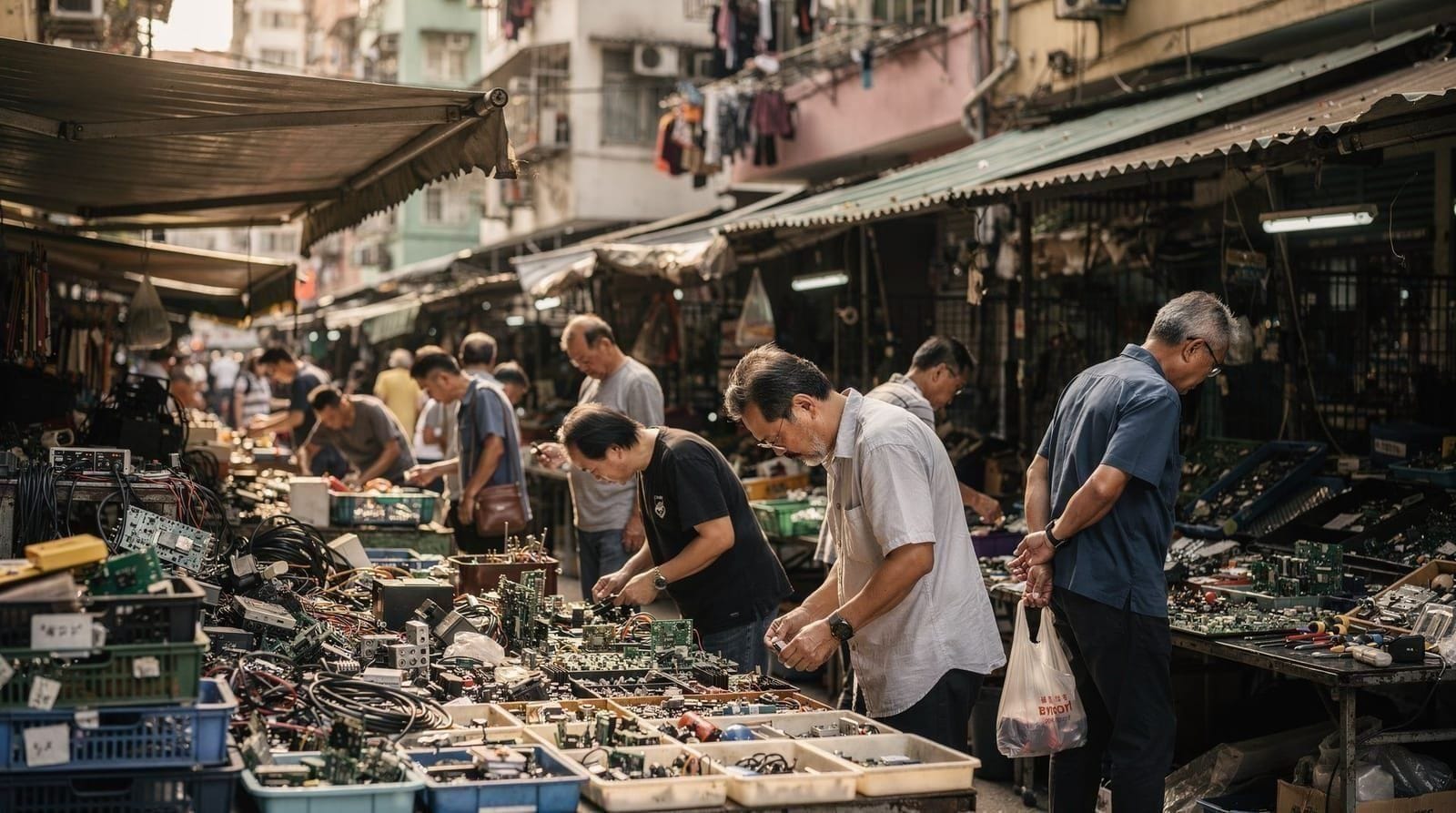
- Golden Shopping Centre (Yen Chow Street): multiple floors of electronics dealers selling new, used, and grey-market goods. Prices are negotiable. The environment is chaotic but the range is impressive — everything from audio cards to vintage game consoles.
- Apliu Street: the outdoor electronics flea market running along the street — second-hand phones, testing equipment, cables, components. A fascinating browse even without buying intent.
- Computer malls (several on Fuk Wing Street and Pei Ho Street): for laptops, monitors, and accessories.
For genuine grey-market savings on electronics, Sham Shui Po is where to go. The caveat: grey-market goods typically carry no manufacturer warranty in your home country, and returns are difficult. Assess risk accordingly.
If you would rather understand the neighbourhood before you start buying, a guided walk through Kowloon’s local markets and street food gives you context on how the area trades, and you can return alone to the shops that caught your eye.
Mong Kok Computer Centre
A more organised alternative for laptops and accessories. Multiple vendors, competitive pricing, and slightly more reliable retail norms than Sham Shui Po’s street market. Good for memory cards, camera accessories, and phone-related purchases.
Authorised retailers
For anything requiring a manufacturer warranty (particularly iPhone, Sony cameras, audio equipment), the Broadway and Fortress electronics chains offer the authorised retail experience with staff who speak English. Prices are fixed and comparable to official brand pricing. Located throughout major MTR mall complexes.
Luxury and fashion
Central and Admiralty
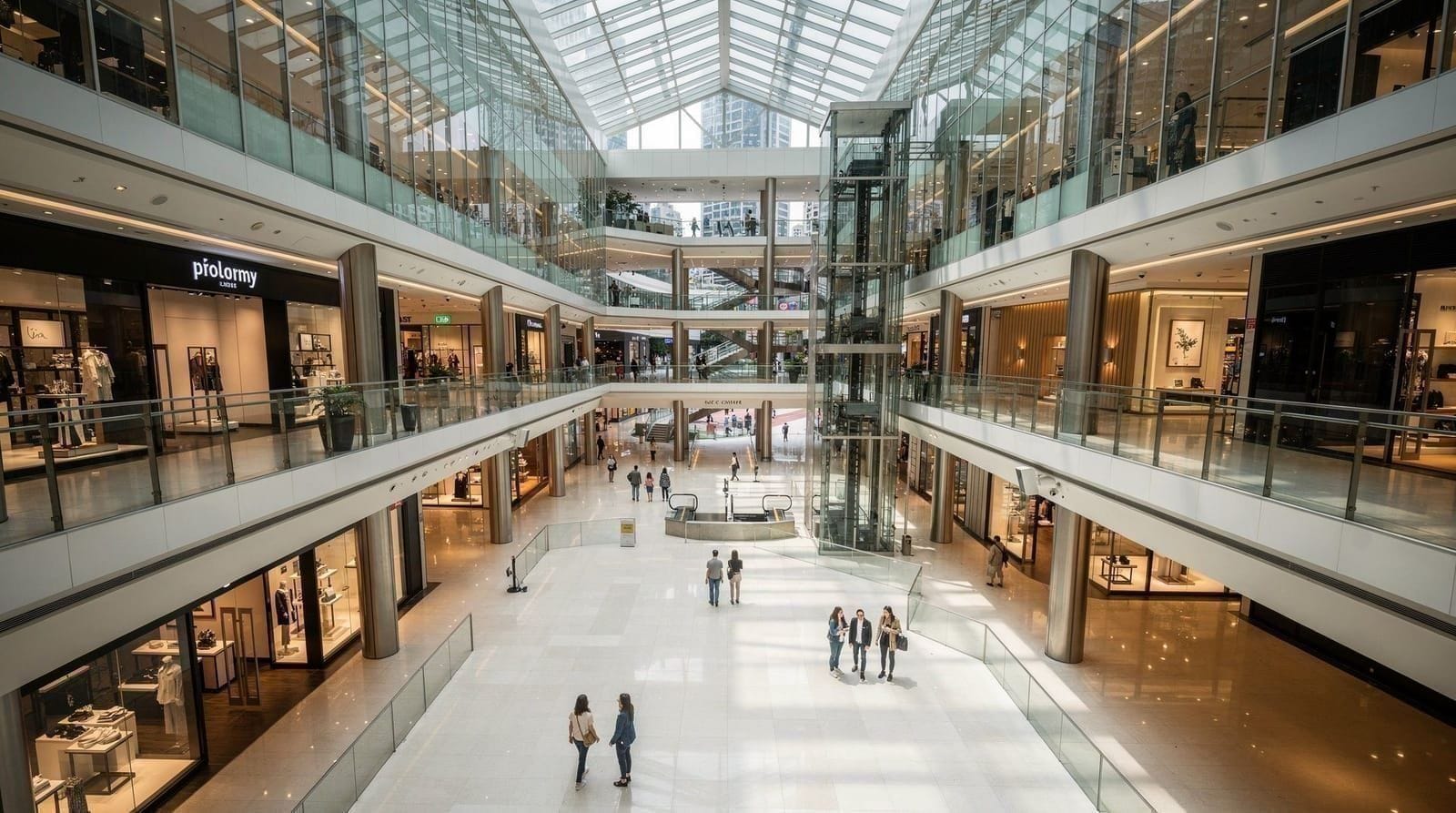
IFC Mall (adjacent to Hong Kong Station, Airport Express): anchored by Cartier, Louis Vuitton, Hermès, and the full roster of European luxury brands. The mall clientele skews toward finance-sector professionals and visiting luxury shoppers. This is the most complete luxury mall in Hong Kong.
Pacific Place (Admiralty): slightly more accessible character, with a mix of European luxury brands, Lane Crawford (Hong Kong’s equivalent of Selfridges or Bergdorf Goodman), and mid-range international fashion.
Landmark (Central): Dior, Bulgari, Chanel, Gucci, and similar. The Landmark Man section is comprehensive for men’s fashion.
Price reality: luxury brand prices in Hong Kong are typically 5–15% lower than EU VAT-inclusive prices for the same items. This is meaningful for expensive watches or fine jewelry but marginal for fashion. Mainland Chinese visitors sometimes find genuine arbitrage; Western visitors usually find modest but real savings.
Tsim Sha Tsui harbourfront
Harbour City (TST, directly on the waterfront) is one of the largest shopping complexes in Asia by floor area. It houses everything from Prada and Rolex to international mid-range brands. Useful when you want comprehensive coverage without moving between malls.
K11 Musea (TST waterfront): a younger-demographic, art-integrated mall with an interesting selection of emerging brands alongside the standard luxury tenants.
For a wider comparison of the big complexes, including which ones suit a rainy afternoon or a family outing, see our Hong Kong malls guide. Malls are also the most comfortable option when the weather turns hot and humid, which is worth remembering if you travel in summer; the Hong Kong in summer guide explains what to expect. Another district with a strong retail pull is Causeway Bay, where department stores and street-level fashion sit side by side, and it is covered in more detail in the Causeway Bay area guide.
The mall experience is deliberately smooth: air conditioning, clear signage, fixed prices and staff who can help in English. That is the trade-off against the markets, where you gain atmosphere and room to negotiate but give up comfort and reliability. Most visitors end up wanting a bit of both, so it makes sense to split your time between a mall and a market rather than committing to one style.
Markets and bargain goods
The market hierarchy
Honest assessment of the major markets:
| Market | Best for | Avoid |
|---|---|---|
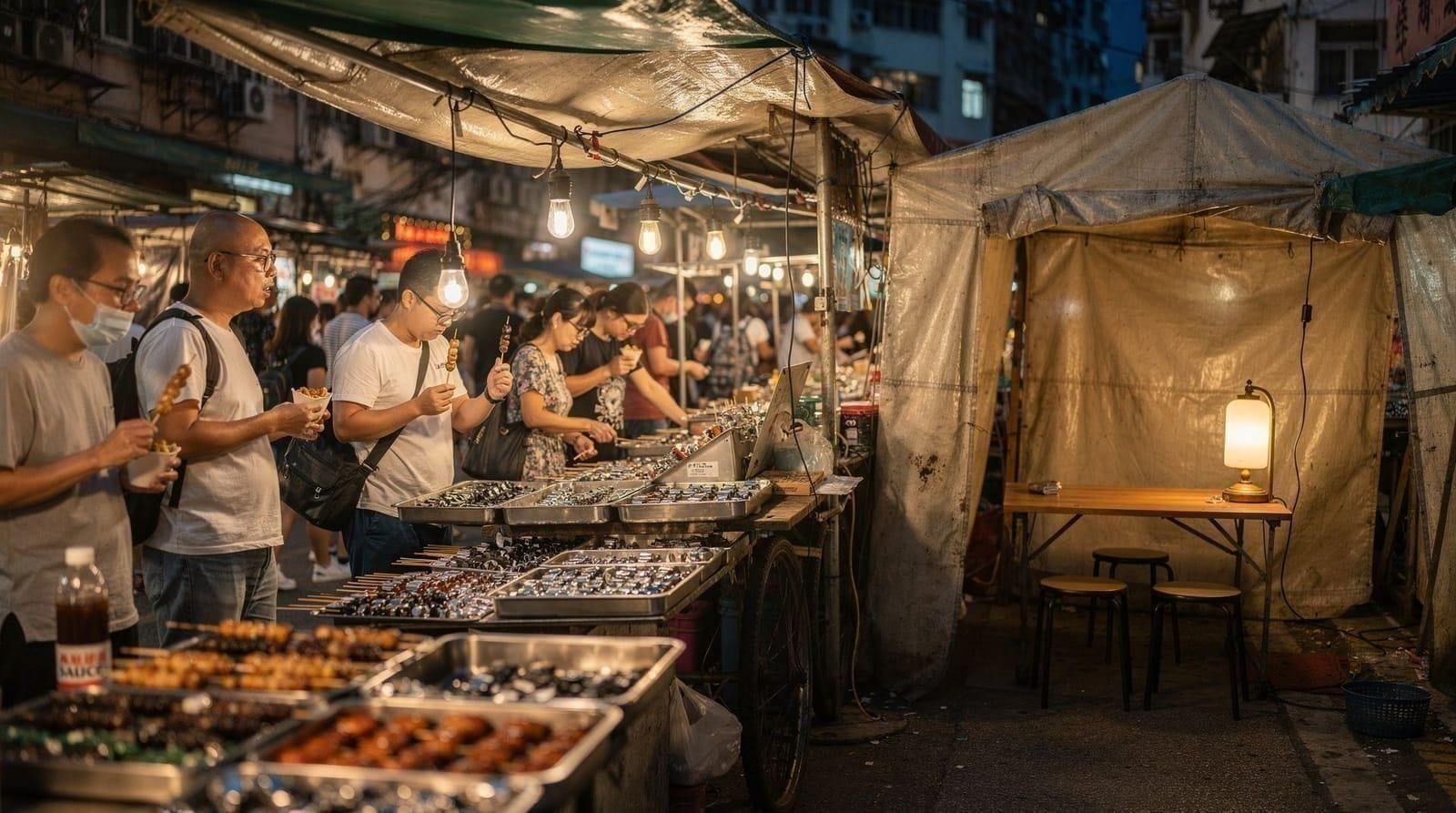
| Temple Street | Atmosphere, street food, fortune tellers | Expensive watches, anything “branded” |
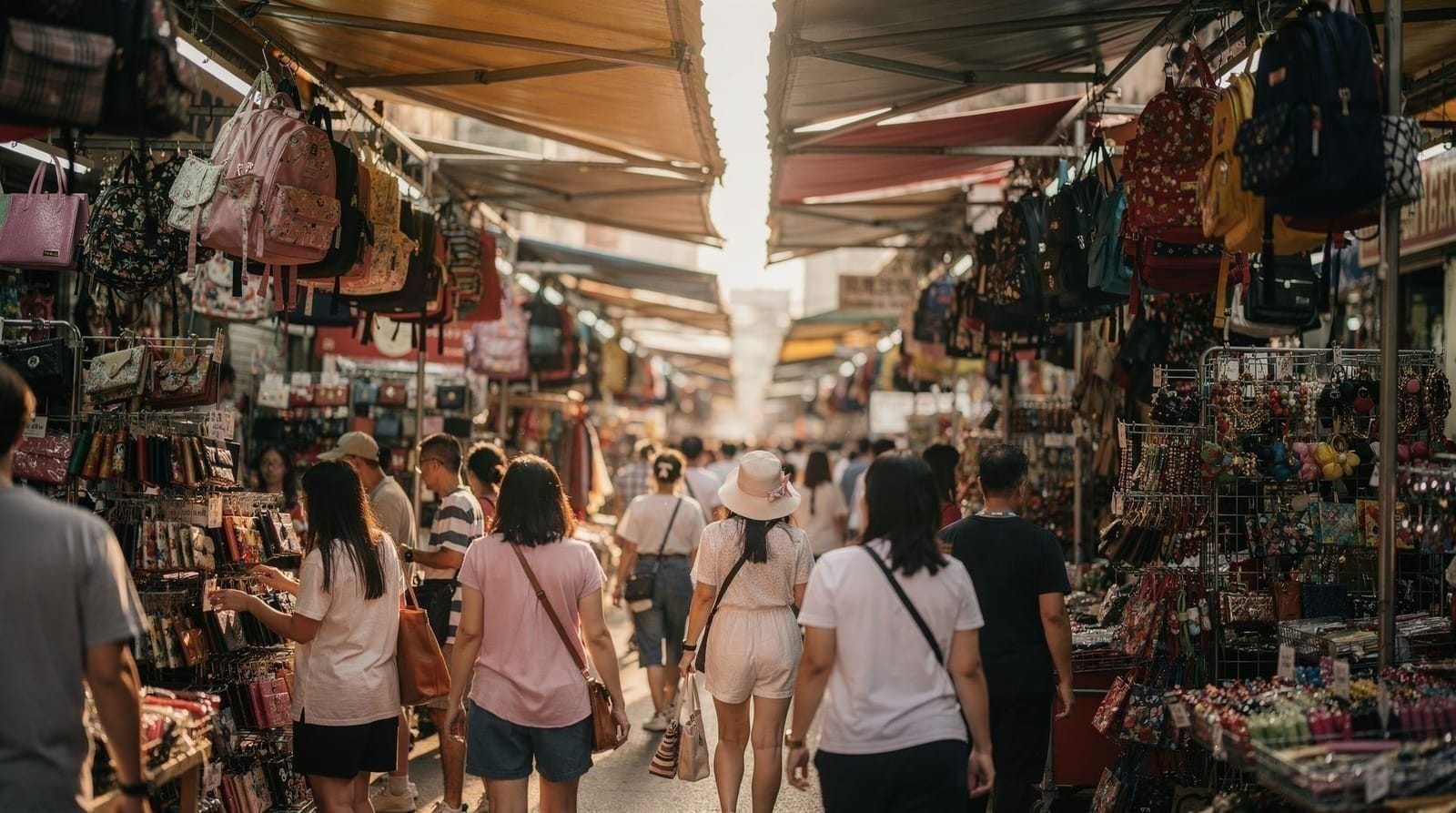
| Ladies Market (Tung Choi St) | Cheap novelties, casual clothes | Quality goods of any kind |
| Stanley Market | Silk scarves, linen clothing, art prints | Generic tourist souvenirs |
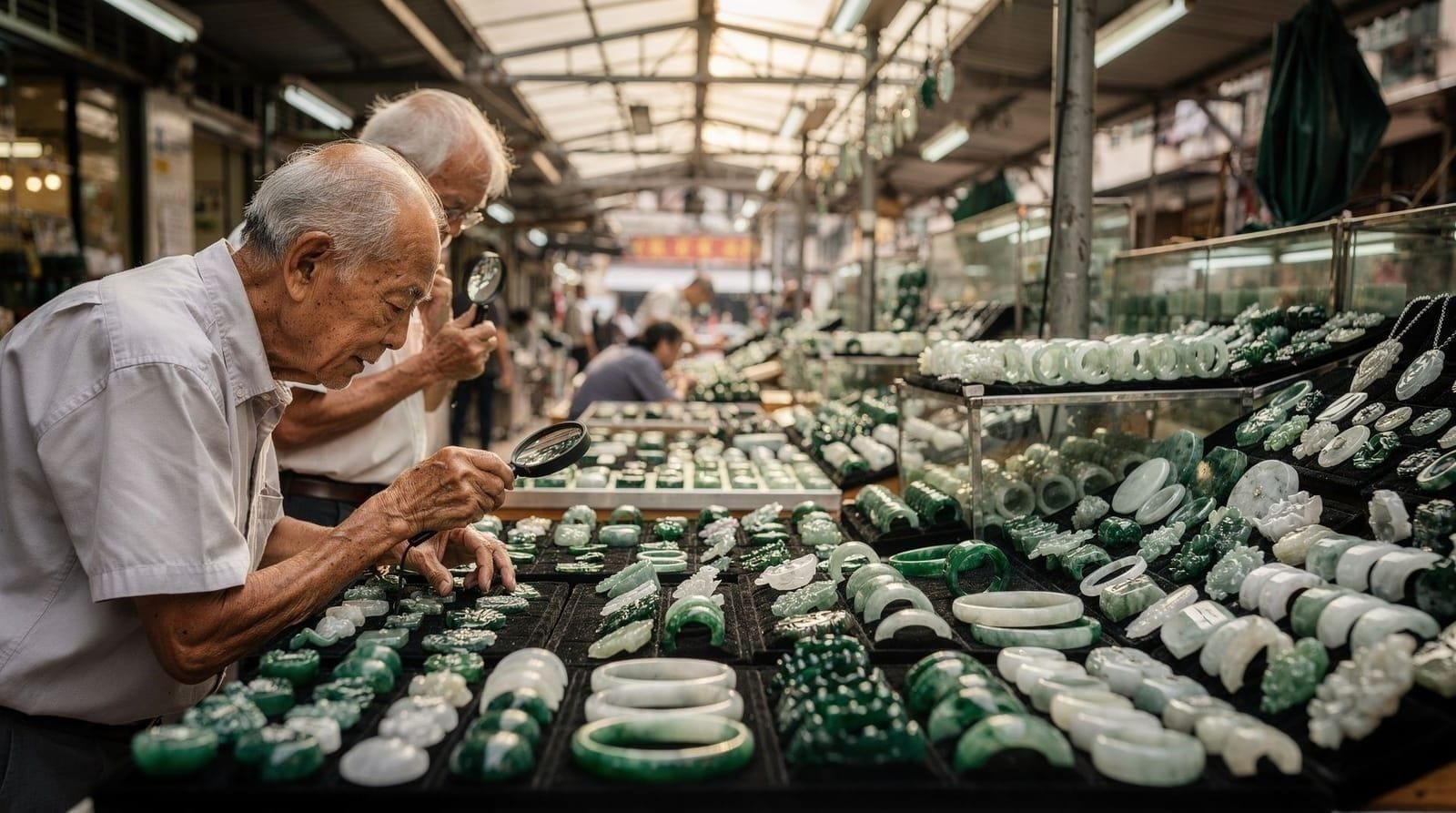
| Jade Market | Jade and gem browsing | Any jade purchase without knowledge |
| Apliu Street | Electronics flea market browsing | Warranty-critical electronics |
For guides to individual markets, see our Temple Street guide, Ladies Market guide, Stanley Market guide, and Jade Market guide.
A guided evening walk through both major night markets is a useful shortcut if you have one evening and want the atmosphere without wasted time working out which stalls are worth stopping at.
Ladies Market and Temple Street night market guided tourHow to bargain without causing offence
Bargaining is expected at Temple Street, Ladies Market, and Apliu Street, but not at malls, department stores, or fixed-price shops like Yue Hwa. A workable approach: ask the price, counter at roughly 40-50% of the first quote, and settle somewhere in the middle with good humour rather than aggression. Walking away calmly is the most effective negotiating tool — vendors frequently call you back with a better offer. Bargaining hard over a HKD 20 item is not worth the friction it creates; save the effort for genuinely pricier pieces.
Chinese goods — the genuine category
Tea and dried goods
Sheung Wan (west of Central) is the genuine Hong Kong district for Chinese dried goods, herbal medicine, and tea. Wing Lok Street (known locally as “Dried Goods Street”) has shops that have been selling dried seafood, mushrooms, and Chinese ingredients for generations. These are not tourist shops — they are wholesale and retail dealers for local restaurants and households.
The streets here can be confusing for a first visit, and shopkeepers rarely explain what they sell. Joining a local-led day that combines food and history across Hong Kong Island and KowloonCheck availability is one way to see this old trading district with someone who can point out what is worth a closer look before you come back to buy.
For tea specifically: Fook Ming Tong (multiple locations) is a legitimate mid-range tea retailer with English-speaking staff who can explain the varieties. For a more local experience, the tea shops on upper Wellington Street (Central) and along Bonham Strand (Sheung Wan) are genuine dealers.
Ceramics and traditional crafts
Yue Hwa Chinese Products Emporium (Jordan, Nathan Road) is Hong Kong’s most comprehensive single-store source for Chinese goods — ceramics, silk, calligraphy supplies, tea sets, fans. The quality is variable but it covers everything in one building. Prices are fixed (not a bargaining environment).
Chinese Arts & Crafts (various locations) and Shanghai Tang (Duddell Street, Central) are the polished, tourist-friendly versions of the same category. Shanghai Tang’s design aesthetic is specifically Hong Kong — a Cantonese interpretation of Chinese fashion and homewares. Expensive but genuinely well-made.
Tailoring
The Tsim Sha Tsui tailor district
The historic centre of Hong Kong tailoring is Tsim Sha Tsui, particularly the streets west of Nathan Road (Hankow Road, Haiphong Road) and the Nathan Road arcade buildings. Quality ranges dramatically.
Established reputable tailors:
- Sam’s Tailor (Burlington Arcade, 92–94 Nathan Road): probably the most internationally famous Hong Kong tailor, known for serving visiting heads of state and celebrities. Prices reflect the reputation (suits from HKD 6,000–15,000); quality is consistently high.
- Blanc de Chine (Pedder Building, Central): contemporary Chinese fashion and tailoring at premium prices; a different aesthetic from classic British-influenced suiting.
Red flags for tailors: “Ready tomorrow,” “50% off for one day only,” touts approaching you on the street. These are indicators of tourist-trap tailors who produce low-quality work quickly.
A legitimate bespoke suit requires at minimum two fittings over 3–5 days. If you do not have that time, buy off-the-rack.
Watches
Hong Kong remains one of the strongest markets for watches globally, both new and second-hand. For authorised new watches, the watch dealers on Queens Road Central and in the Landmark/IFC Mall complex represent major brands. For second-hand watches (Rolex, Patek Philippe, Omega), the dealers in Sham Shui Po and around Wing On Street (Sheung Wan) offer competitive pricing with lower overhead than central Hong Kong.
The caution: the second-hand watch market requires knowledge to navigate. Counterfeit watches are everywhere in tourist markets (Temple Street, Ladies Market) and should be avoided entirely.
Shipping purchases home
For bulkier purchases — tailored suits, ceramics, furniture-scale items from Hollywood Road — most established shops offer international shipping, typically at a cost separate from the item price and worth clarifying before you buy. Sam’s Tailor and other reputable Tsim Sha Tsui tailors routinely ship finished suits worldwide with tracked courier services. For smaller electronics purchases from Sham Shui Po, check the export voltage and plug compatibility for your home country before buying, since grey-market goods are not always sold with universal adapters. Keep receipts for anything of significant value, both for warranty purposes and in case of a customs declaration on arrival home.
Spotting a bad deal before you pay
Most shopping regrets in Hong Kong come from the same few situations: a price that was never really negotiated, a “genuine” label on something that clearly is not, or a purchase made in a hurry because a seller made it feel urgent. Slowing down is the cheapest protection you have. Ask for the price in writing or on a calculator screen, compare it with a second shop, and be willing to leave without buying. In the markets, a calm exit often produces a better offer than any amount of haggling.
For electronics, test the item before you leave the shop, check that all the accessories are in the box, and confirm what the seller will do if it fails. For tailoring, ask to see the fabric and the finished work of other customers, and agree the number of fittings at the start. For antiques and jade, treat a confident sales pitch as a reason to ask more questions, not fewer; the Jade Market guide explains why browsing is safer than buying for most visitors.
Hong Kong is a safe city for shoppers, but it has its share of tourist-targeted tricks. Our guides to scams to avoid and tourist traps describe the common ones, and the safety and etiquette guide covers the everyday manners that make shop and market encounters smoother. A little courtesy goes a long way: a greeting, a smile and a patient tone usually get you better service than impatience.
Where shopping fits in your itinerary
If you have only a day or two, shopping should support your sightseeing rather than replace it. The first-time Hong Kong guide and the Hong Kong itinerary planning guide show how to balance the big sights with free time, and the 3-day itinerary leaves natural gaps for an evening at the night markets or an afternoon in a mall. Travellers who prefer a lighter schedule can use the same gaps for tailoring fittings, which need return visits over several days.
Finally, think about luggage on the way home. Heavy purchases, fragile ceramics and electronics all affect how much you can carry, so decide early what you will ship and what you will take with you. Buying the bulkiest items last, or arranging delivery from the shop, keeps the rest of your trip easy.