Hong Kong with a baby — practical guide for infant travel
Hong Kong: Fast track Victoria Peak Tram ticket combos
Is Hong Kong baby-friendly for travel?
Hong Kong is manageable but not especially easy with an infant. The MTR has lifts at all major stations, changing facilities are available at large malls and some MTR stations, and formula and nappies are widely available. The main challenges are summer heat and humidity (dangerous for young infants), crowded public spaces, and limited pram-friendliness on older streets.
| Best time to visit | October–December (22–28°C, low humidity) |
| Avoid | June–September with a baby under 12 months |
| Changing facilities | Major MTR stations and malls (IFC, Harbour City) |
| Baby supplies | Watsons, Mannings, Wellcome — no need to bring bulk |
| Getting around | MTR (lifts at major stations) outside peak hours |
Is Hong Kong a realistic baby travel destination?
The short answer is yes — with the right timing, the right accommodation, and realistic expectations. Hong Kong is not Singapore or Japan in terms of deliberate baby-friendly infrastructure, but it’s far more manageable than many Asian cities. The key variables are temperature, crowd intensity, and the physical demands of the tourist circuit on the caregiver, not just the baby.
Climate: when not to visit with a baby
The single most important decision you’ll make is when to visit.
Avoid June through September with a baby under 12 months. Summer in Hong Kong means daily temperatures of 29–34°C with humidity above 85%. Heat exhaustion and heat rash are genuine risks for infants, who regulate body temperature less efficiently than adults. Even with a UV-protective pram cover and shade, outdoor time in July and August should be kept to 20–30 minutes maximum before retreating to air conditioning. This significantly restricts what you can see.
October to December is the best window for baby travel. Temperatures of 22–28°C with low humidity are comfortable for outdoor time. Babies can be in the pram or a carrier without overheating. The best time to visit Hong Kong guide covers seasonal details, but for babies specifically, October–November is ideal.
March and April work. Temperatures are moderate (18–25°C), humidity is building but not yet extreme. Spring overcast days mean less direct sun.
If your dates are fixed and fall in the warmer months, the Hong Kong in summer guide explains how to plan around the weather, and the typhoon season guide is worth reading before you commit to non-refundable bookings. With a baby, flexibility matters more than usual: a day lost to a storm or a heat warning is easier to absorb when you have not packed the itinerary.
Accommodation: what matters most with a baby
For travel with an infant, prioritise:
Room size. A travel cot takes floor space. Many Hong Kong hotel rooms are genuinely small — check that the room can accommodate a cot in addition to your luggage. Request cot/crib accommodation at booking rather than on arrival. Most 4-star+ hotels have cots; budget hotels may not.
Lift access. Essential with a pram. Most modern hotels have lifts, but some of Hong Kong’s older budget guesthouses in multi-storey buildings have very small lifts or stairs-only sections.
Proximity to a mall or supermarket. You’ll need to replenish nappies, formula, or wet wipes during the trip. Staying near an IFC, Harbour City, or a Times Square-adjacent hotel in Causeway Bay means baby supplies within 5 minutes.
Ground floor lobby access. Rolling the pram in and out should be seamless. Check that your hotel entrance has no steps.
See the where to stay by budget guide for neighbourhood options — the Tsim Sha Tsui area has the best combination of mall access, flat pavement, and good hotel options for families.
If you are still deciding on a base, the where to stay in Hong Kong guide compares the main areas, and the Tsim Sha Tsui district page shows why its promenade and mall access suit a pram. Causeway Bay is the other practical option when you want supermarkets and shops close at hand.
Transport with a pram
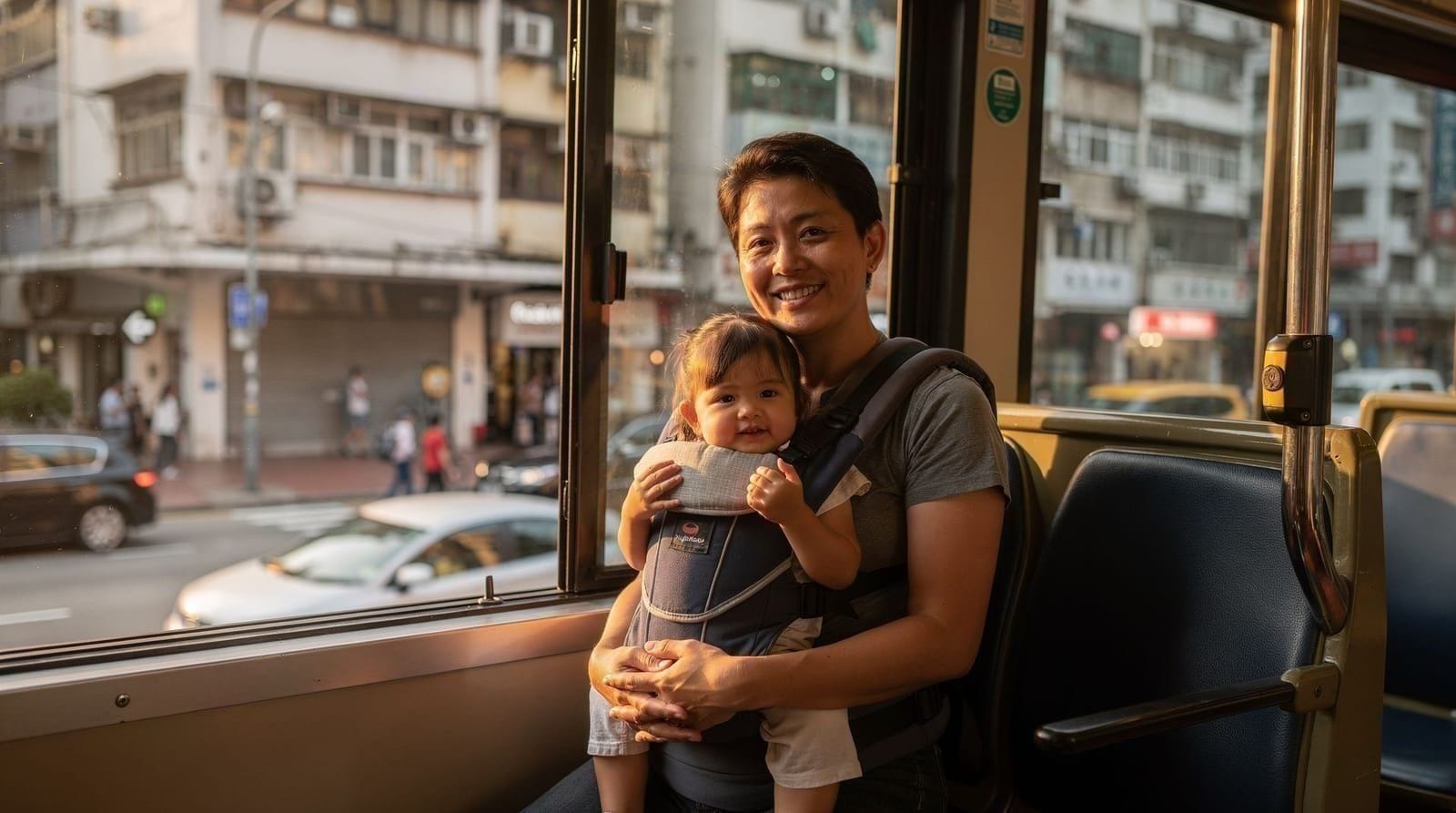
The MTR is the backbone of getting around. Lifts are available at all major stations, but not every station exit — use the MTR Accessibility pages to identify the exit with lift access before you leave.
Tips for pram travel on the MTR:
- Avoid peak hours (7:30–9:30am, 5:30–7:30pm) — the crowds make pram boarding very difficult
- Position yourself at the end of the carriage, where space is larger
- Have the pram ready to collapse if needed on smaller station platforms
- The accessible Octopus card reader is at a lower height near lift exits
Star Ferry: The upper deck has no pram access — the lower deck is pram-accessible and the ride is only 8–10 minutes. Boarding may require help from ferry staff over the gangway lip.
Trams: Not pram-accessible in any meaningful way — narrow aisles, high steps, no lift. Skip the trams with a pram and use the MTR or bus instead.
Taxis: A regular red taxi fits a collapsed pram in the boot. The driver will generally help load it. For a larger pram, request a Toyota Alphard taxi (larger, book via Uber or specific apps — HKD 50–80 surcharge for the van taxi).
For a fuller picture of how the network works, the Hong Kong MTR guide covers lines, stations and etiquette, and the Octopus card guide explains how to pay for transport without fumbling for coins while holding a baby. Having the card ready before you reach the gates saves you from stopping in a stream of commuters. If you want to see the harbour without the stairs of other options, the Star Ferry guide describes the crossing in more detail.
Why a slower pace works better
Trying to see everything is the most common way a trip with an infant goes wrong. A baby does not care about ticking off sights; what they notice is whether they are fed, rested and comfortable. Plan one main outing a day and treat anything else as a bonus. Leave gaps for feeds, nappy changes and unplanned naps, and accept that some mornings will start later than you intended. The reward is a trip where you and your baby are still in good spirits on day four.
It also helps to share the load. If two adults are travelling, take turns carrying the baby, handling the pram and managing the bags, so that neither of you is exhausted by lunchtime. Agree in advance who handles feeds and who handles navigation, and you will argue less on a crowded platform.
Structuring days around a baby’s schedule
The primary planning constraint with an infant is the nap schedule. Most practical approach:
Morning activity block (9–11:30am): Active sightseeing during the baby’s most alert period. Victoria Peak early morning, Tsim Sha Tsui promenade, or a mall visit.
Midday nap block (11:30am–1:30pm): Return to the hotel or find a quiet café. Some parents time the MTR journey to overlap with the midday nap — the motion often helps.
Afternoon activity (2–5pm): A shorter outing — a covered market, a museum (M+ has good air conditioning and wide corridors), or the hotel pool area.
Evening: In-room or an early dinner at a local restaurant where you won’t feel pressured if the baby is restless. Cha chaan teng cafes are generally tolerant of prams and children.
For a sample route once you have settled in, the Hong Kong family itinerary shows how a day can be paced around rest, and the Hong Kong in 3 days plan is a reasonable template if you want to trim it down further.
Views without the effort
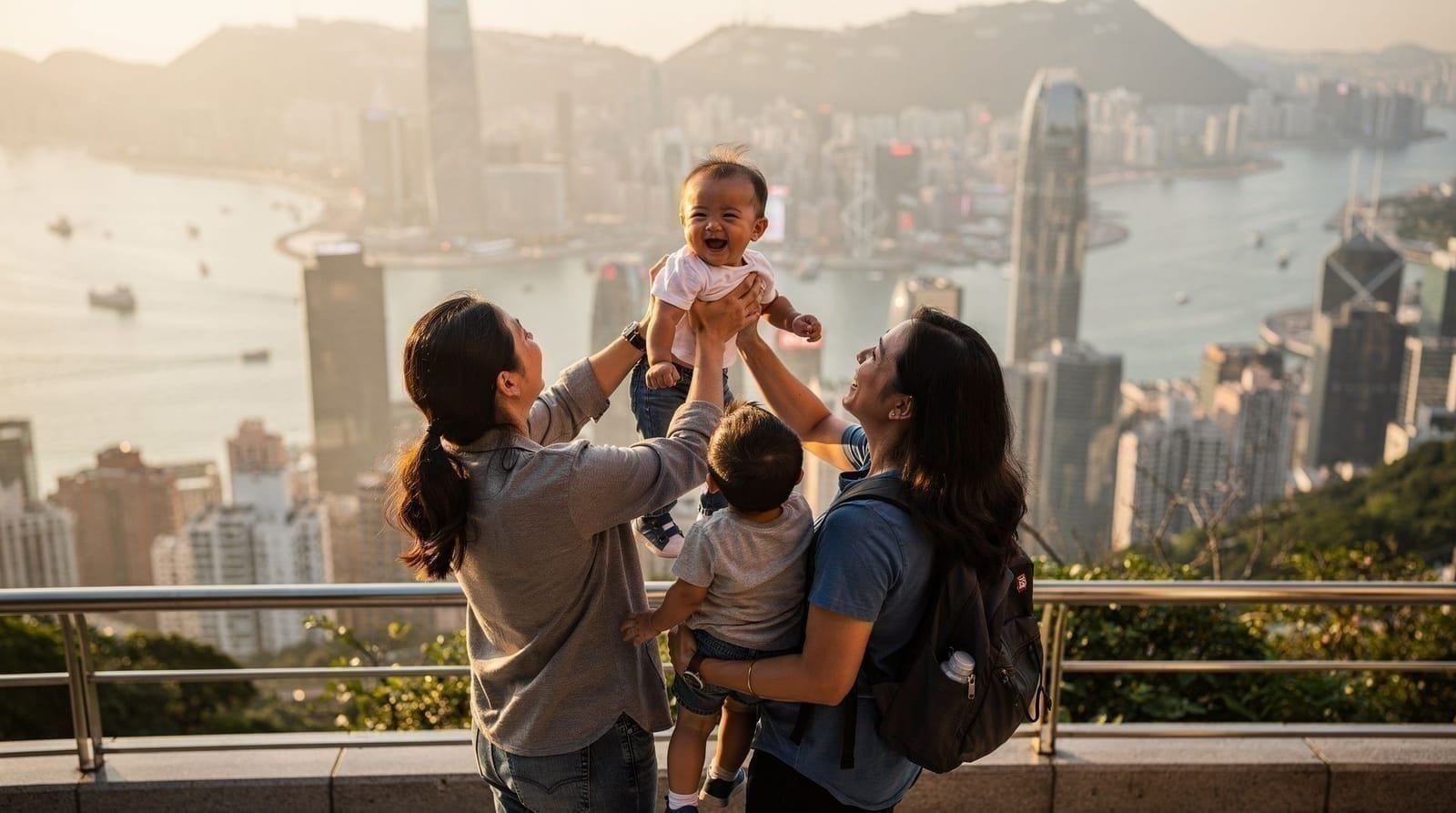
Hong Kong’s skyline is the headline sight, and with a baby you want to see it with as little queuing and carrying as possible. Two options suit a pram-and-carrier routine. The Peak is the classic, and booking a fast-track Peak Tram ticket in advance spares you the longest wait while the baby is at their most alert. The Peak Tram guide explains how the ride works, is the Peak Tram worth it helps you decide whether it earns a place on your list, and the Victoria Peak guide covers what to do once you are at the top.
If you would rather stay at street level, an indoor observation deck in Kowloon gives you the harbour view from an air-conditioned space with lifts, which is easier on a pram and on a baby who dislikes wind. Note that Sky100 has been closed for renovation since 17 May 2025 with no reopening date announced, so check its status before relying on an indoor observation deck ticket in Kowloon. It also fits neatly into the afternoon outing described above. For the evening, the Symphony of Lights guide is worth a read, though a late show is a lot to ask of a baby who is used to an early bedtime.
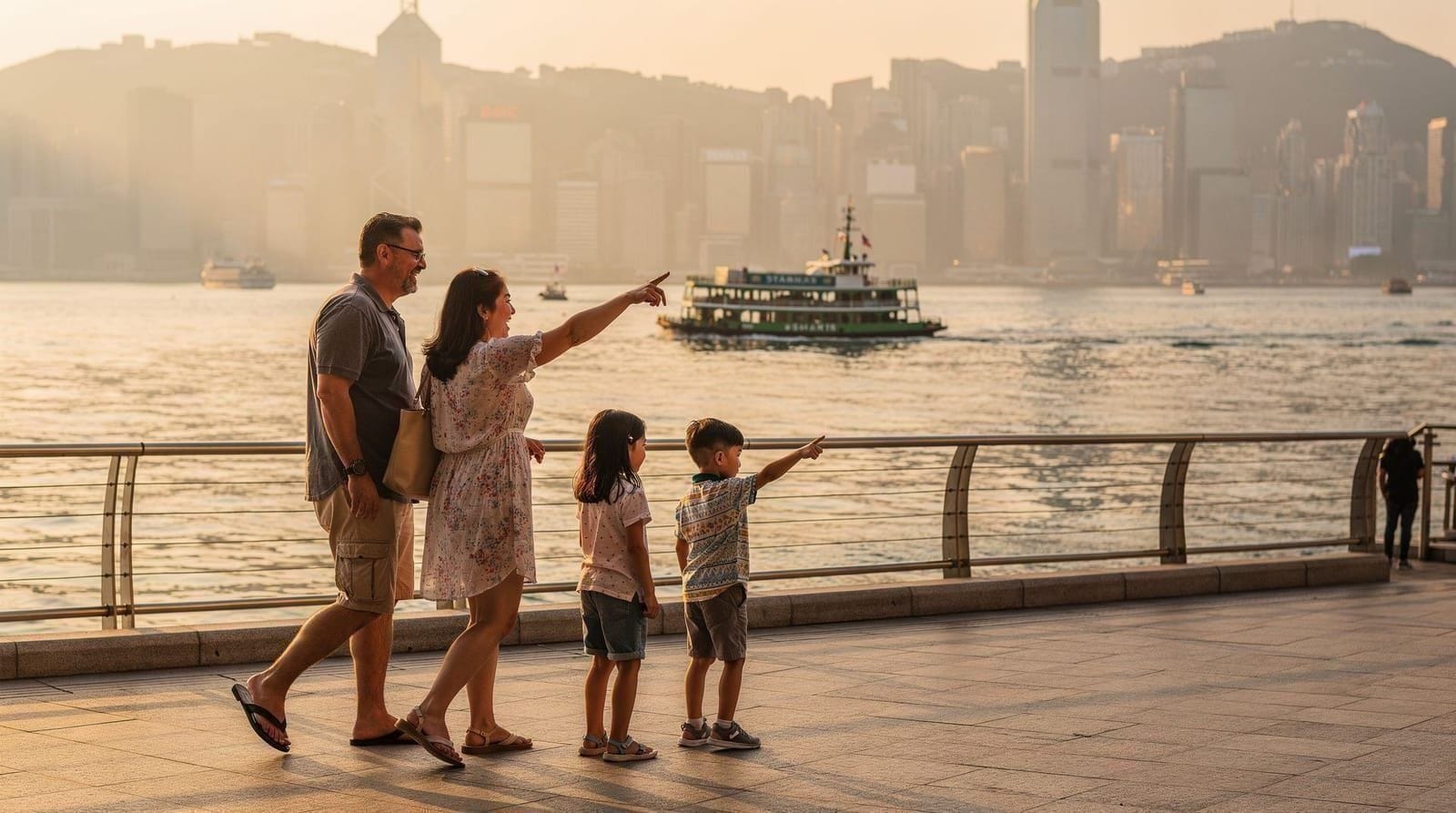
If you want a calmer way to see the city, a slow stroll through Central and Sheung Wan or along the Tsim Sha Tsui waterfront can be shaped entirely around your baby’s rhythm. The top things to do in Hong Kong list and the first-time Hong Kong guide help you pick one or two highlights rather than everything.
Feeding and eating out with a baby
Eating out is easier than many parents expect. Hong Kong restaurants are used to families, and noise from a restless baby rarely draws attention. Choose places where you can park the pram near the table, and be ready to change plans if a spot turns out to be cramped. The cha chaan teng guide explains how these casual cafes work, which is useful when you want something quick and tolerant, while the Hong Kong dim sum guide helps you pick a sitting that will not be rushed. Very busy dim sum halls at peak times can be loud and crowded, so go earlier in the morning when you can.
If your baby has started solids, pouches and simple foods from supermarkets are an easy backup, and a mall food court gives you air conditioning and space when you need to feed in comfort.
Baby-friendly activities in Hong Kong
M+ Museum (West Kowloon): Wide corridors, consistent air conditioning, baby rooms in the facility, and engaging visual art for infants who like colour and light. The ground floor café has space for prams.
Hong Kong Space Museum (Tsim Sha Tsui): Interactive displays and climate-controlled. Good for the 45-minute visit. Adjacent to the Tsim Sha Tsui promenade.
Nan Lian Garden (Diamond Hill): A classical Chinese garden adjacent to Chi Lin Nunnery. Flat, shaded paths, peaceful. Good for a morning pram walk before it gets hot.
Aberdeen Typhoon Shelter and sampan boat tour: A short sampan ride on the harbour at Aberdeen is calm, sheltered from crowds, and interesting for babies who like water and boats. Operators are flexible for infants.
Star Ferry crossing (lower deck): 8 minutes on the water. Many babies sleep through it; others are fascinated by the water and the opposite skyline.
Ocean Park: Has extensive baby/family facilities including nursing rooms, baby care areas, and pram hire. Better for toddlers and older children, but manageable with an infant if you focus on the less intense areas (the panda section, the aquarium) and avoid the rides area.
More ideas on the museum side are in the M+ Museum guide and the Hong Kong Science Museum guide, both useful when the weather turns or the baby needs a cool, calm space. For a longer look at the garden next to the nunnery, see the Chi Lin Nunnery guide.
What to pack that Hong Kong doesn’t provide
Most baby essentials are available locally. What to bring from home:
- Your baby’s specific formula brand if it’s unusual (common brands like Aptamil, Enfamil, and Similac are available)
- Your specific nappy brand if you’re loyal to one (most brands are available but not every size of every variant)
- A high-quality baby carrier for pram-free moments — some areas (old Sheung Wan stairways, Tai O fishing village paths) are not pram-friendly
- A portable fan clip-on for the pram if visiting April–October
- UV-protective pram cover for outdoor exposure
- Your baby’s usual sleep environment items (white noise app, blackout blind for daytime naps in the hotel)
What doesn’t work well with a baby
The Ngong Ping 360 cable car to the Big Buddha: The roughly 20-minute (each way) high cable car ride is not suitable for very young infants — the height, wind, and enclosed glass cabin make some adults uncomfortable, and managing a baby in a cable car gondola is genuinely awkward. Save Lantau for when the child is old enough to sit independently.
Dragon’s Back hike and other trails: Carrier hiking is possible with an older baby (6–12 months with good head control), but the summer heat makes it dangerous. The trails are also not pram-accessible. Save hikes for when you can visit in cooler months with a proper hiking carrier.
Stanley Market and the Repulse Bay area: Getting here by bus from Central takes 30–40 minutes on winding roads. Motion sickness risk, and the destination isn’t particularly baby-specific. Not worth the journey with an infant.
Best months for baby travel: a seasonal snapshot
| Months | Temperature | Humidity | Verdict for babies |
|---|---|---|---|
| Oct–Dec | 18–26°C | Low | Best window — comfortable outdoor time |
| Mar–Apr | 18–25°C | Building | Good — more overcast, less direct sun |
| May | 24–28°C | Rising | Workable with shade breaks |
| Jun–Sep | 29–34°C | Very high (85%+) | Avoid with infants under 12 months |
Arriving with a baby: airport logistics
Hong Kong International Airport itself is well-equipped for infants — nursing rooms and baby-change facilities are available past security in most terminal areas. The bigger challenge is the onward journey into the city with luggage, a car seat, and a baby who has just come off a long flight. The Airport Express is fast (about 24 minutes from Hong Kong station) but involves lifts and platform gaps to manage alone; many parents with infants find a pre-booked private transfer removes this friction entirely, with the driver waiting in arrivals and handling luggage directly to the car.
Private MPV airport transfer — extra space for prams and luggageFor the wider family context beyond infants specifically, see Hong Kong with kids and Hong Kong with toddlers, and for planning the right trip length with a baby, family itinerary Hong Kong and how many days in Hong Kong both help set realistic daily pacing.