Hong Kong with toddlers — practical guide for ages 1–4
Hong Kong Disneyland: Park tickets
Duration: 1 day
Is Hong Kong manageable with toddlers under age 4?
Yes, with realistic expectations. Hong Kong is safe, English-speaking in tourist areas, and has world-class medical care. The MTR is mostly stroller-accessible. The main challenges are summer heat (June–September), crowd density in market areas, and the fact that most major tourist attractions assume walking ability. Plan around air-conditioned spaces and aim for October–April visits.
Travelling to Hong Kong with a toddler — what actually matters
The first thing to understand about Hong Kong with a toddler is that the city does not particularly design itself for young children — it designs itself for efficiency, density, and commerce. That said, the basics are excellent: safety is high, medical care is world-class, clean water from the tap is fine, and locals are generally warm toward young children.
The second thing to understand is that heat in summer (June–September) is a serious planning consideration for families with toddlers. Children between ages 1 and 4 cannot manage extended outdoor time at 33°C with high humidity. The October–December period is dramatically better: mild temperatures (20–26°C), low humidity, clear skies.
With that context set, this guide focuses on what genuinely works for the 1–4 age group.
| Best months | October–April (mild, low humidity) |
| Toughest months | June–September (heat, humidity above 80%) |
| Best base | Tsim Sha Tsui or Causeway Bay (flat, mall-dense) |
| MTR | Mostly stroller-accessible; under-1m children ride free |
| Top toddler stop | Kowloon Park (free) or Disneyland (ages 2–4) |
For a wider view of family logistics beyond the toddler years, see the Hong Kong with kids guide and the dedicated family itinerary.
Getting around with a toddler
MTR
The MTR is the backbone of family transport and works well with toddlers. Children under 1 metre tall travel free. The system is clean, cool, and efficient. Elevator access is available at most (not all) stations — the MTR app shows accessible routes.
Practical MTR tips for toddlers:
- Avoid peak hours (8–9 am, 5:30–7:30 pm) when carriages are too crowded for strollers
- Platform edges: stations have safety barriers at most modern platforms, but keep toddlers close
- Noise: some older train lines (East Rail, West Rail) are louder — have ear defenders if your child is sound-sensitive
Strollers vs carriers
The practical division: stroller for MTR journeys and quiet residential streets; carrier for markets, Star Ferry, trams, and anywhere with steps. The terrain around Peak area, Tai O, and most temple sites involves stairs that make strollers impractical.
A compact umbrella stroller that folds to single-arm width is significantly better than a full travel system in this city.
Taxis
Red urban taxis are metered, plentiful, and air-conditioned. Drivers do not carry car seats — bring your own portable model (CARES harness-style works for toddlers on aircraft and in taxis). By law you should use appropriate child restraints, though enforcement in taxis is inconsistent. Budget HKD 30–80 for most short cross-town journeys.
The Octopus card for families
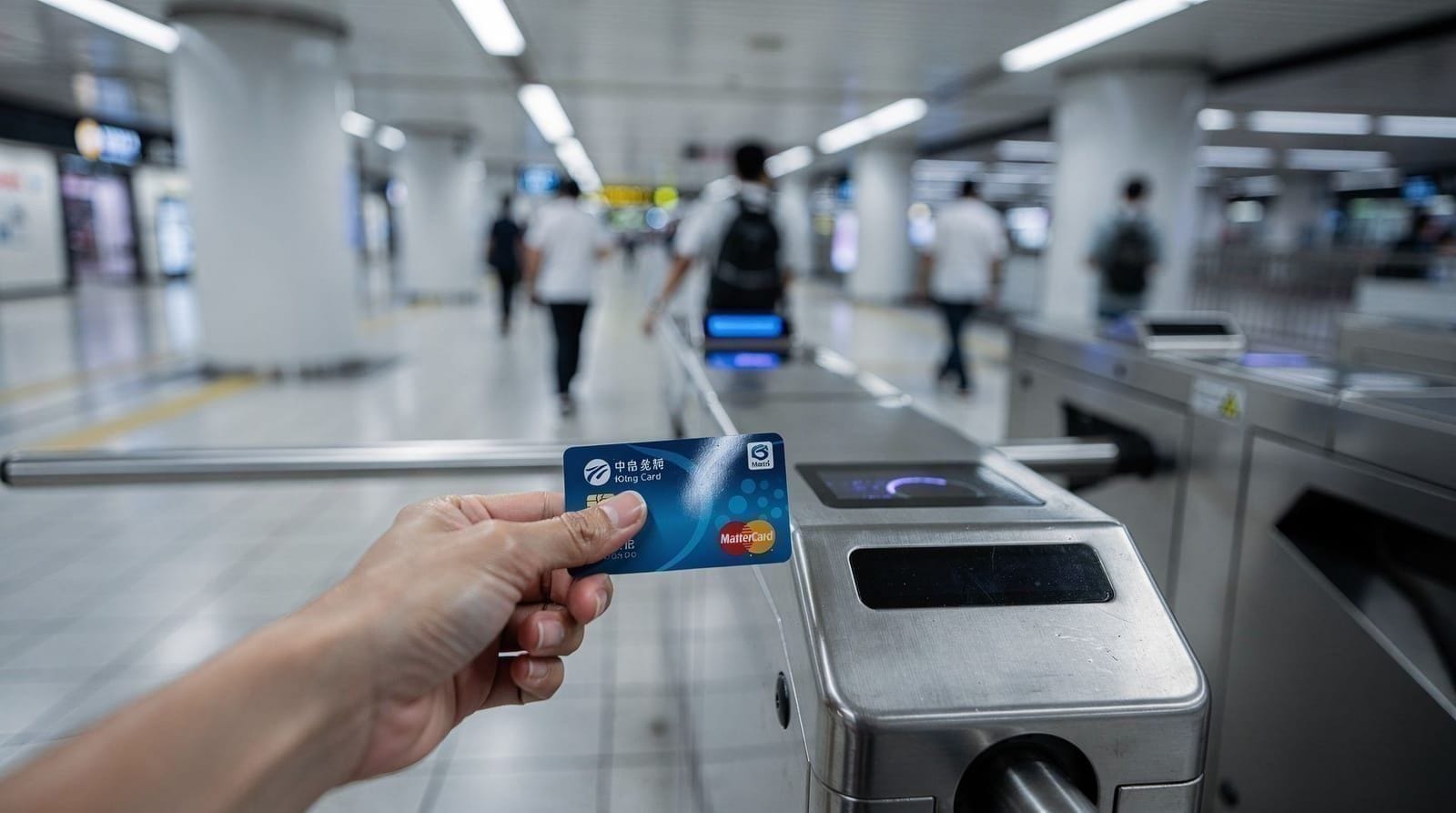
Every family member should carry an Octopus card — it works on the MTR, buses, trams, and the Star Ferry, and avoids fumbling for coins with a toddler on your hip. Children under 1 metre travel free and don’t need their own card; older siblings can use a discounted child Octopus card.
Best toddler-appropriate activities
Disneyland — the right age range
Disneyland is genuinely excellent for toddlers aged 2–4. The specific attractions that work without height restrictions:
- Dumbo the Flying Elephant: a slow aerial ride that most toddlers love
- it’s a small world: a gentle boat ride through colourful scenes — ideal
- Many Adventures of Winnie the Pooh: slow dark ride, no height minimum, universally enjoyed
- Mickey’s PhilharMagic: 4D film show — moderate sensory stimulation; some toddlers find the 3D effects startling, others love it
The park’s character meet-and-greet sessions (Mickey, Minnie, Disney princesses) are usually the highlight for this age group. Check the app on arrival for the day’s schedule and position yourselves 15 minutes early.
Ocean Park — limited but worthwhile
For toddlers, Ocean Park is partially relevant. The Grand Aquarium’s jellyfish exhibit is mesmerising for this age group. The Giant Panda Adventure works well. The gentler Waterfront rides (Ocean Park Train, Flying Swing) suit 3–4-year-olds. Most of the thrill rides have 107–122 cm minimums and are not accessible to toddlers.
Ocean Park Hong Kong entry ticketKowloon Park
Kowloon Park (free) is the most underrated family space in Hong Kong. The flamingo pond holds young children’s attention reliably. The aviary has walk-through sections. The playground near the outdoor swimming complex is large and well-equipped. Being free and central (Tsim Sha Tsui MTR) makes it an excellent half-day filler on any itinerary.
Victoria Park, Causeway Bay
A green park with a playground, open space, and a fish pond. Less interesting than Kowloon Park for variety, but useful for Causeway Bay-based families. Toddlers can run freely without traffic concerns.
Star Ferry
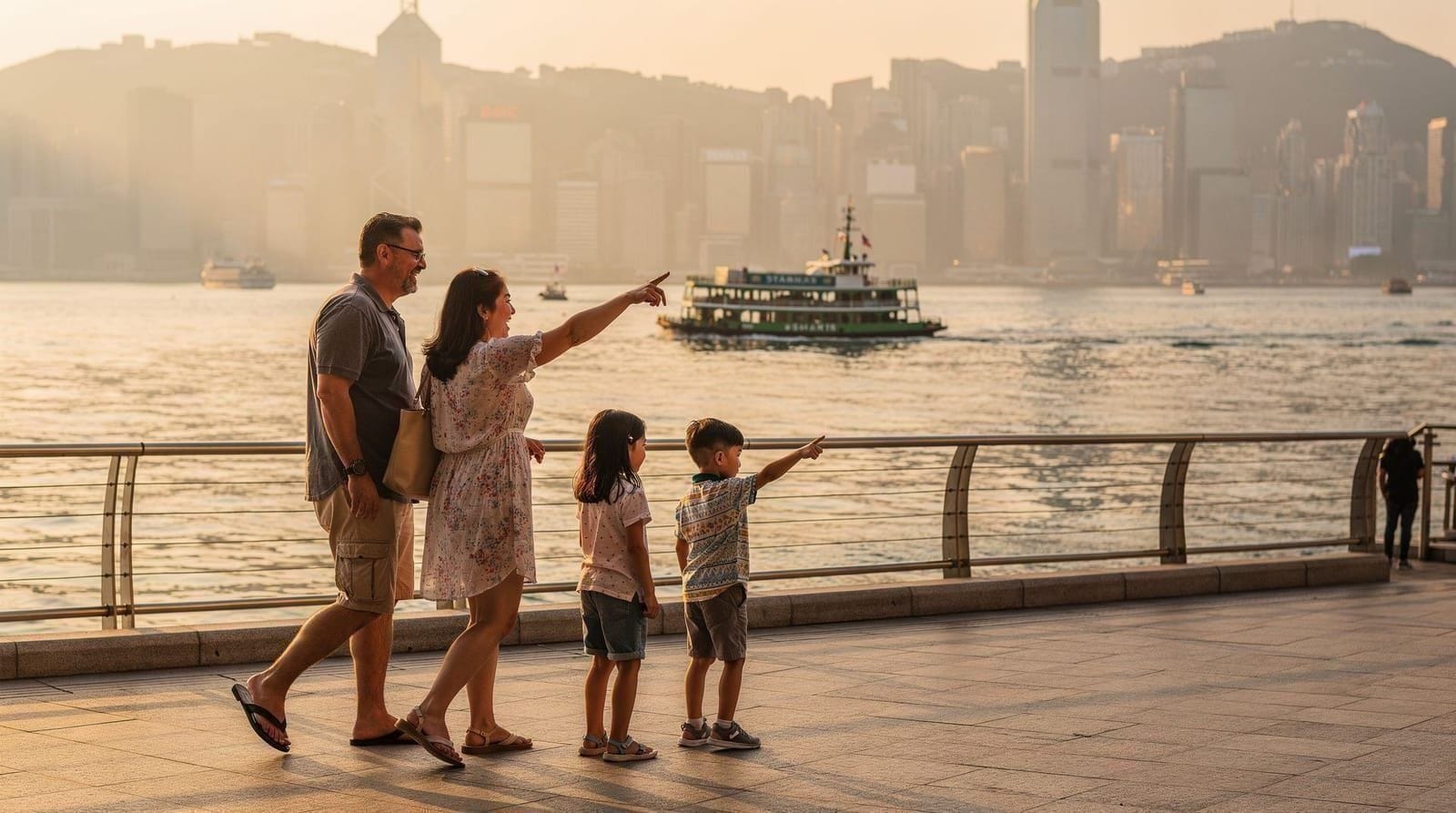
The Star Ferry crossing (adult one-way HKD 4.0–6.5 depending on deck and day, children under 3 free) is worth doing specifically for the experience. Toddlers respond well to the movement of the water, the ferries themselves, and watching the harbour. It is a short, contained experience that works for short attention spans. Keep a hand on the railings around the deck.
Air-conditioned mall circuit
In summer, shopping mall circuits are a legitimate strategy. The malls along the Kowloon side — Harbour City (Tsim Sha Tsui), Elements (above Kowloon MTR station) — are vast, cool, clean, and have designated family rooms. K11 Musea has some genuinely interesting installations. This is not a compromise — it is a rational use of the climate.
What to skip with a toddler
Some of Hong Kong’s headline sights simply don’t work for this age group. The Peak Tram involves queueing and a steep, jolting ride that unsettles many toddlers — if you go, aim for off-peak hours and be ready to carry rather than push a stroller at the top. Dragon’s Back and other hikes are not toddler-appropriate. Crowded night markets like Temple Street are manageable in a carrier but exhausting with a stroller — go early evening rather than at peak crowd time.
Managing sleep and naps
The biggest toddler travel challenge in Hong Kong is nap management. The city runs late: dinner rarely starts before 7 pm, and attractions are busy until evening. Build at least one in-hotel nap per day into your itinerary if your toddler still naps reliably.
Practical nap strategies:
- Carrier naps work well — a toddler in a carrier can nap through MTR journeys, ferry crossings, and museum walkabouts
- Taxi naps: a 20-minute taxi ride between afternoon and evening activities can serve as a reset
- Plan the day in two halves: morning outing, return for nap/rest, afternoon or early evening outing. This matches well with Hong Kong’s restaurant culture (lunch 12–2 pm, dinner 7–9 pm)
Food for toddlers
Dim sum
Dim sum restaurants are ideal for toddlers. The portions are small, dishes arrive continuously, and there is something appropriate for almost any child: har gow (steamed prawn dumplings, plain and mild), char siu bao (slightly sweet steamed barbecue pork buns), congee (rice porridge — excellent for very young eaters). Most restaurants provide high chairs if requested.
Cha chaan tengs
Hong Kong-style cafes serve toast with butter and condensed milk, macaroni soup, and plain egg dishes — all manageable for toddlers and very fast. The pace of cha chaan tengs suits the short attention spans of young children.
Fruit stalls
Hong Kong has plentiful fruit stalls in market areas (Mong Kok, Wan Chai, Sham Shui Po) where you can buy cut fresh fruit — mango, papaya, dragon fruit — in cups for HKD 15–30. Excellent toddler food.
Water and drinks
Tap water in Hong Kong is technically potable from the source, but aged building pipes mean most residents filter or boil it. Buy bottled water for drinking (available everywhere, HKD 5–12 per litre). Toddler milk is available in supermarkets.
Medical and emergency resources
Hong Kong has excellent healthcare. For tourist families:
- Queen Mary Hospital (Pok Fu Lam, HK Island): public hospital with English service
- Matilda International Hospital (The Peak): private hospital with English-speaking paediatric staff
- Private clinics (HKMA clinics, private GP chains like Quality HealthCare): accessible without appointment for minor issues; HKD 250–500 per consultation
- Emergency: 999 (same number as UK)
- Travel insurance: essential — private hospital fees for a toddler’s infection or fracture can reach HKD 10,000–50,000 without insurance
Shaping a toddler-sized day
The most reliable way to enjoy Hong Kong at this age is to stop thinking in terms of sights and start thinking in terms of windows: a good morning window, a rest window, and a gentler late-afternoon window. One main outing per window is plenty. A morning at Hong Kong Disneyland or Ocean Park will often be the whole day’s agenda, with the hotel nap doing the rest of the work.
A simple pattern that suits most families:
- Morning: the outing that needs the most energy, while your toddler is fresh and the weather is at its kindest.
- Midday: lunch somewhere with a high chair, then back to the hotel for a proper rest. If you are travelling with a younger sibling, the notes in the Hong Kong with a baby guide cover the logistics of two small travellers at once.
- Late afternoon: something low-effort, such as a park, a harbour crossing, or a slow wander through a mall.
If you would rather have the days sketched out for you, the family itinerary gives a more structured plan, and you can scale it down by dropping an item or two from each day.
Timing your trip around the weather
Season shapes nearly every decision with a toddler. The best time to visit Hong Kong guide lays out the calendar, and the short version for small children is that the cooler months give you far more freedom to be outside. If summer is your only option, read the Hong Kong in summer guide before booking, and be aware that typhoon season can disrupt ferries and outdoor plans at short notice. Keep an indoor fallback in your back pocket for every day, whatever the month.
Small outings that work well
Not every good toddler moment needs a ticket. Some of the best are the simplest:
- A slow ride on the Star Ferry, where the movement and the view keep small children engaged without any effort from you. For other water crossings, the Hong Kong Island ferries guide shows what else is on offer.
- A wander through a big mall, which doubles as a cool, clean place to reset. The Hong Kong malls guide helps you pick one near wherever you are staying.
- A sand-and-paddle session on one of the city’s beaches, covered in the Hong Kong beaches guide, if the weather and your toddler’s mood agree.
Whatever you choose, leave slack in the schedule. A toddler who wants to watch the same boat for ten minutes is having exactly the experience you came for, and it is worth letting that happen rather than hurrying on to the next stop.
Eating out without the stress
Hong Kong’s restaurant pace is a gift to parents of small children, since food tends to arrive quickly. For a first meal, the dim sum guide explains how ordering works so you can pick the gentlest dishes without fuss, and the cha chaan teng guide covers the casual cafes where simple dishes land on the table fast. Go a little before the busiest mealtime if you can: tables are easier to find, staff have more time to bring a high chair, and a hungry toddler waits less.
Carry a small cup, a spare bib, and a few wet wipes. Spills are normal and nobody minds, but being prepared keeps the meal calm.
Getting the most from public transport
Confidence on the MTR comes from a little preparation. The Hong Kong MTR guide explains how the system is laid out, which helps you choose exits with lifts and avoid unnecessary stairs. Before a longer journey, check your route, pick the station exit closest to your destination, and give yourself extra time. A toddler who needs a mid-journey cuddle or snack is much easier to handle when you are not racing a connection.
If your itinerary includes the cable car to the Big Buddha, the Ngong Ping 360 with kids guide walks through what to expect with small children before you commit to the day.
Packing checklist for toddlers
Beyond the usual Hong Kong packing list, toddler-specific essentials worth prioritising: a compact umbrella stroller, a soft carrier for market and hiking-adjacent areas, a wide-brim hat and high-SPF sunscreen for summer visits, a portable changing mat, and a handful of familiar snacks for the flight and quiet moments. Pack lighter on toys — hotel pools, the Star Ferry, and mall play areas do most of the entertaining.
Where to stay with a toddler
Base location matters more with a toddler than with older kids, since you’ll be returning for naps. Where to stay in Hong Kong covers the full picture, but for toddlers specifically: Tsim Sha Tsui and Causeway Bay are flattest and best-served by lifts and family-friendly malls, while hillier areas like the Peak or parts of Central mean more stairs and more carrying.
Frequently asked questions about Hong Kong with toddlers — practical guide for ages 1–4
Can I use a full-size stroller on the MTR?
Are there baby food and formula options in Hong Kong?
Where are the best nappy-changing facilities?
What is the heat like for toddlers in summer?
Are there playgrounds in Hong Kong?
Where is the best area to base yourself with a toddler?
Do I need to book Disneyland or Ocean Park tickets in advance?
Top experiences
Bookable activities with verified prices and instant confirmation on GetYourGuide.