Ngong Ping 360 with kids — cable car, Big Buddha and Tai O
Ngong Ping 360: Cable car return tickets and combos
Is Ngong Ping 360 suitable for children?
Yes — there is no height or age minimum for the cable car. The 20-minute aerial journey over Lantau's mountains is one of the most visually striking experiences in Hong Kong and works well for children aged 2 and above. The Big Buddha and Ngong Ping plateau are accessible on foot or by lift. Combine with Tai O for a full day.
Why the Ngong Ping trip works for families
The Ngong Ping 360 day trip is probably the best single family outing in Hong Kong that is not a theme park — see our wider Hong Kong with kids guide for how it compares to other family options. The cable car itself is an experience rather than merely transport. The Big Buddha is architecturally remarkable in a way children can process immediately — it is simply enormous. And Tai O, the traditional fishing village on the western end of Lantau Island, provides a completely different visual and cultural experience from the rest of Hong Kong.
The full circuit — MTR to Tung Chung, cable car to Ngong Ping, Big Buddha, village, bus to Tai O, boat tour, bus back to Tung Chung — takes a full day but moves through distinct scenes that hold children’s attention at each stage.
| Where | Tung Chung to Ngong Ping, Lantau Island |
| Cost | Cable car from HKD 295 adult / HKD 150 child (return, standard cabin) |
| Time needed | A full day (8:30am–5pm) with Tai O included |
| Getting there | MTR to Tung Chung, then Ngong Ping 360 cable car |
| Best time | Early morning departure for shorter cable car queues |
Before you commit to the day, it helps to know who it suits best. Families with a toddler in a stroller, a curious six-year-old and a reluctant teenager can all find something to enjoy here, because the day is made of short, varied chapters rather than one long activity. If your children are very small, our Hong Kong with toddlers guide and the Hong Kong with a baby guide cover the practical side of getting around with the youngest travellers. If you have older children who want something more active, the Hong Kong with teens itinerary offers a different rhythm.
Getting there: MTR to Tung Chung
From anywhere on the Kowloon side (Tsim Sha Tsui, Mong Kok, Jordan), take the MTR Tung Chung line westward to Tung Chung terminal station. Journey time from Tsim Sha Tsui: approximately 30–35 minutes. From Hong Kong Station (Central): about 22 minutes.
At Tung Chung, exit and follow the signs to the Ngong Ping 360 cable car terminal — it is about a 5-minute walk from the MTR exit. The terminal building has ticketing, seating, toilets, and a café.
If you are new to the city’s trains, the Hong Kong MTR guide explains how the system works, and an Octopus card saves you fumbling for coins with children in tow. Arriving at the terminal calmly, with everyone fed, toileted and wearing a hat, sets the tone for the rest of the day. It is worth using the terminal facilities before boarding, since the ride itself has no stops.
The cable car journey
Choosing a cabin
Standard cabin: seats 10 passengers. Fully enclosed, large windows on all sides. Comfortable for families. The standard option.
Crystal cabin: same gondola but with a glass floor panel in addition to the standard windows. Children aged 4+ generally love this; some younger children and height-averse adults find it unsettling. Worth booking if your children have no fear of heights.
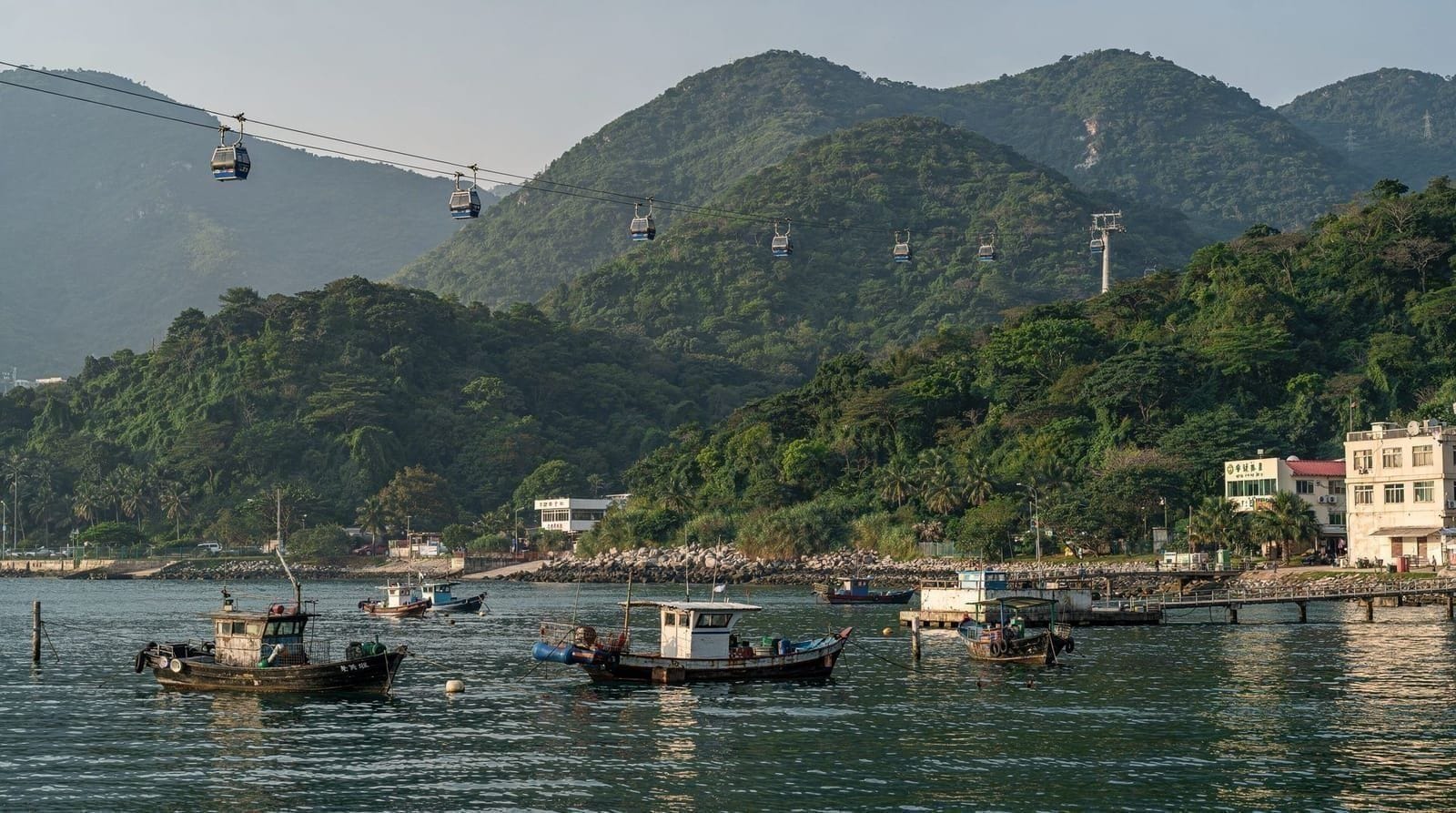
The journey climbs from sea level at Tung Chung up over the North Lantau hills, passing over water and mountain at various points. Highlights:
- Over Tung Chung Bay: views of the airport and the Pearl River Delta on clear days
- The high point: the terrain below becomes remote and green — no roads, no buildings
- The descent toward Ngong Ping: the Big Buddha appears on the hillside ahead
Managing children on the cable car
Most children between ages 3 and 12 respond positively to the journey — the novelty of being suspended high above the landscape holds attention throughout the 20-minute ride. A few practical points:
- Motion sickness: the gondola is stable under normal conditions, but children prone to motion sickness should take precautions
- Wind sway: in moderate winds, the gondola sways gently — this is normal and not dangerous, but can startle young children who are not expecting it
- Snacks: bringing snacks for the journey is fine and helps pass the time with young children
At Ngong Ping: the Big Buddha and the village
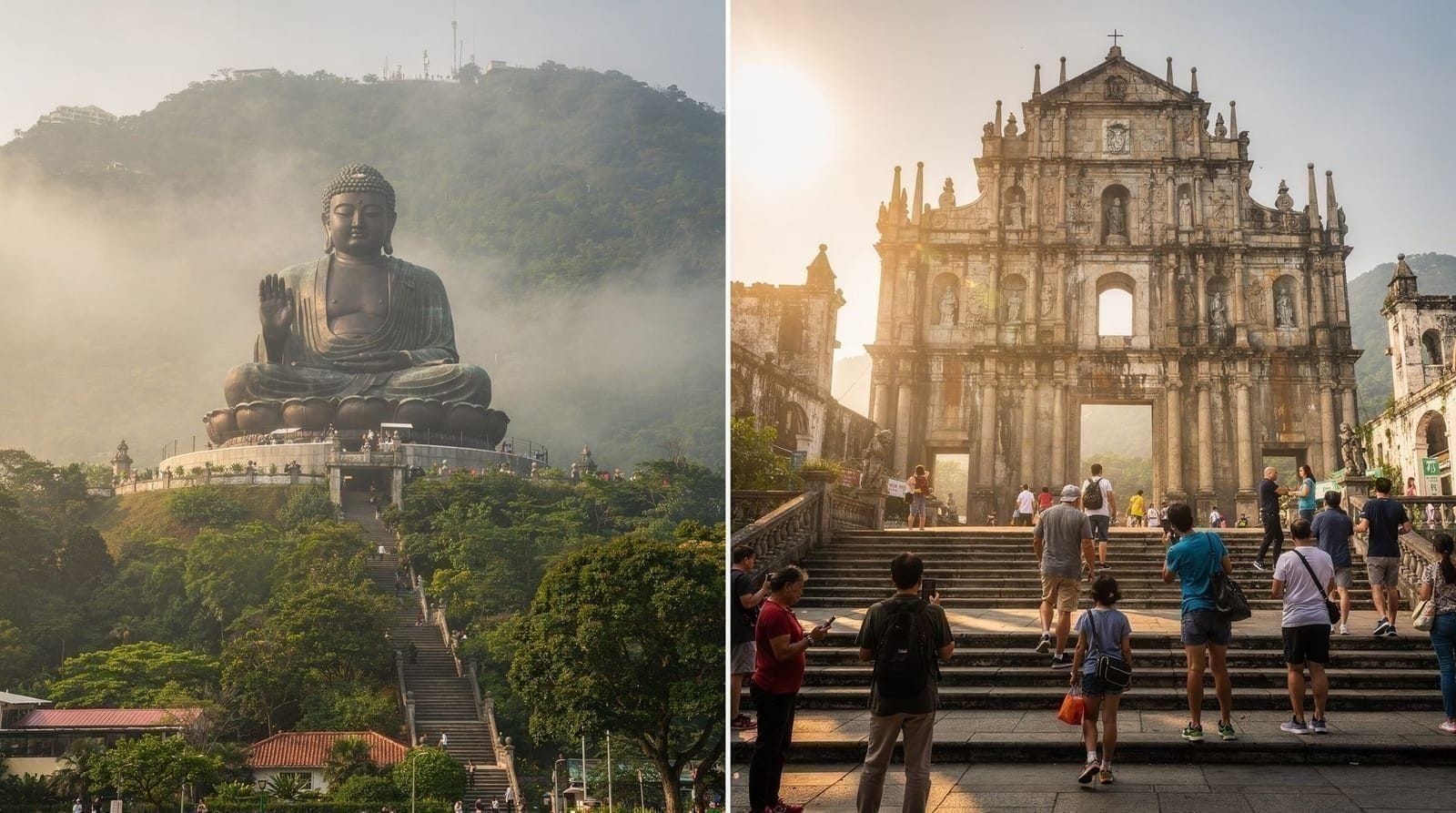
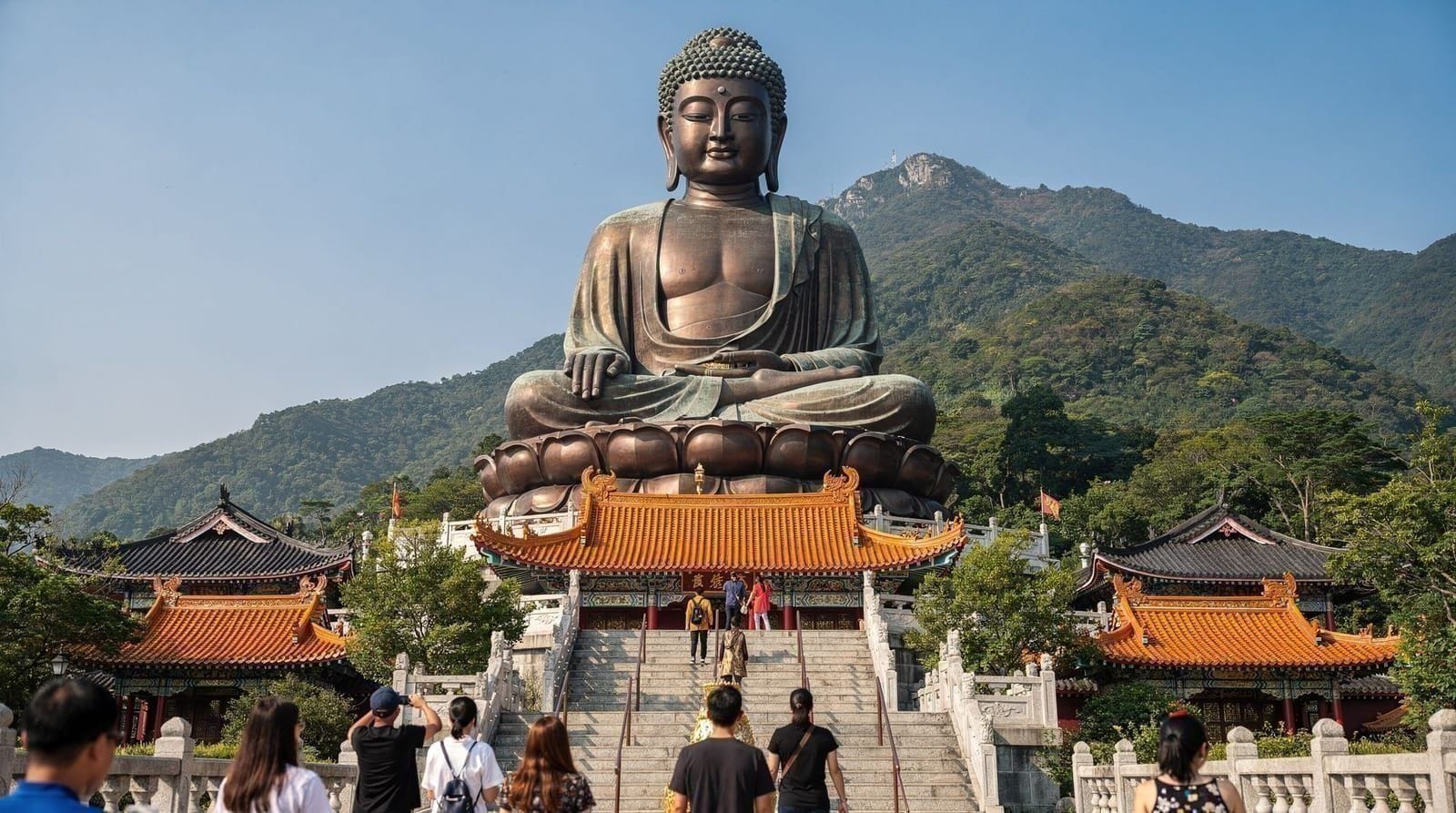
Tian Tan Big Buddha
The walk from the cable car terminus to the base of the statue takes about 8–10 minutes along a paved path through Ngong Ping village. The Buddha is visible from this distance — and its scale becomes increasingly apparent as you approach.
At the base, 268 steps lead up to the statue. Children aged 5 and above can typically manage this climb with encouragement. A lift is available inside the podium building for families with young children or those who prefer not to climb. There is no additional charge for the lift.
At the top of the steps, the Buddha’s scale is fully apparent. Children often ask the same question: “how did they build it?” The statue was constructed off-site in sections and airlifted to the peak by helicopter — a genuine engineering story that resonates with children interested in how things work.
The Wisdom Path — a spiral path through the hillside planted with wooden pillars inscribed with the Heart Sutra — is a 15-minute walk from the Buddha plateau. It is quieter and more contemplative; families with young children often skip it. Po Lin Monastery, immediately beside the Buddha, is worth a brief look even with children in tow — the incense-filled main hall and the vegetarian dining hall (if you want a meat-free lunch option) add a different texture to the visit. For the fuller history and iconography of the statue, our dedicated Tian Tan Big Buddha guide goes deeper than this family-focused overview.
Ngong Ping village
The commercial village at the cable car terminus has a tourist orientation — gift shops, restaurants, and a small cultural exhibition. The Walking with Buddha experience (a walkthrough exhibit) takes about 30–40 minutes and is appropriate for children with some context about Buddhism or Chinese culture.
Eating options in the village:
- The Teahouse: traditional dim sum and Chinese dishes; HKD 80–150 per person
- Various quick-service stalls: noodles, rice dishes, drinks
Tai O fishing village — the afternoon extension
Tai O is approximately 20 minutes from Ngong Ping by bus 11 (departs from in front of the cable car terminus; see the operator’s website for current fares). For most families, it is the most unexpected and memorable part of the day.
What Tai O is
Tai O is a traditional fishing community that has existed on Lantau’s western shore for centuries. Much of the older part of the village is built on stilts over tidal waterways — a construction style uncommon anywhere else in Hong Kong. The main street has dried seafood shops (shrimp paste, dried fish, fish balls), traditional temples, and small cafés.
Pink dolphin boat tours
From the main pier near the bus stop, small boat operators offer Chinese white dolphin tours (the dolphins appear pink). Tours last approximately 20–45 minutes and cost HKD 50–80 per adult (children are sometimes free or discounted — negotiate at the pier). Dolphin sightings are not guaranteed but are reasonably frequent during morning trips.
Children reliably find this exciting — the boats are small and open, the water close, and the sight of a dolphin surfacing is genuinely thrilling even for brief encounters. This is the most wildlife-oriented experience available on a day trip from Hong Kong.
If you would rather not arrange each leg yourself, some families book a guided day that links the cable car, the Big Buddha and the village in one go, such as a guided Lantau day combining the cable car, Tai O and the Big Buddha. It removes the bus timetable juggling, which many parents with tired children appreciate.
Walking Tai O
The stilt-house district (Tai O Market and the streets east of the main bridge) is best explored on foot. Allow 60–90 minutes to walk through the village, cross the pedestrian bridges, and watch the fishermen at work. The pace is slow and the setting genuinely different from urban Hong Kong.
Suggested timing for the day
| Time | Activity |
|---|---|
| 8:30 am | MTR from Tsim Sha Tsui to Tung Chung |
| 9:00 am | Cable car to Ngong Ping (book early slot; opens 9:00 am at weekends, 10:00 am on weekdays) |
| 9:30 am | Arrive Ngong Ping — walk to Big Buddha |
| 10:00–11:30 am | Big Buddha, Wisdom Path (optional) |
| 11:30 am | Lunch in Ngong Ping village |
| 12:30 pm | Bus 11 to Tai O |
| 1:00–3:30 pm | Tai O: pink dolphin tour, walking village |
| 3:30 pm | Bus 11 back to Tung Chung |
| 4:15 pm | Cable car return to Tung Chung |
| 5:00 pm | MTR back to hotel |
Adjust for your children’s stamina — families with toddlers may skip the Wisdom Path and spend more time in the village; families with older children may add a longer walk around the Tai O waterways. If this is one stop within a longer trip, our family itinerary for Hong Kong shows how to slot a Ngong Ping and Tai O day alongside the rest of a multi-day family visit, and the best day trips from Hong Kong guide covers how it compares to alternatives like Macau or the outlying islands.
For families who want the dolphin-watching element built into the plan rather than negotiated at the pier, a tour that pairs a dolphin cruise with the Big Buddha and the rest of LantauCheck availability is another way to structure the same day.
Keeping children happy through the day
A day with several transport changes can wear children down if nothing is planned for the gaps. A few habits make it smoother:
- Give children a job. Let an older child be the “navigator” who watches for the Big Buddha from the gondola, or who counts the stops on the MTR. Small responsibilities keep children engaged during the waiting moments.
- Break the day into chapters. Tell children in advance that there are four scenes: the cable car, the Buddha, the village and the boats. Knowing what comes next reduces the “are we there yet” questions.
- Eat when you can, not when you must. Lunch in Ngong Ping village before the bus to Tai O avoids a hungry-child crisis on the road.
- Protect the energy of the youngest. If a toddler falls asleep on the bus, that is a good moment for the adults to sit quietly rather than push on to the next stop.
- Expect an uneven pace. Some children rush through the Buddha plateau and then linger at the boats; others do the opposite. Follow their interest rather than your schedule.
Rain, heat and crowds
Weather changes how the day feels. In the hotter months, the shade at Ngong Ping and a steady supply of water matter more than any single attraction; see our Hong Kong in summer guide for how to cope with the heat and humidity. In the cooler months, a light jacket is useful on the plateau, and our Hong Kong in winter guide explains what to expect. If a storm is forecast, read the typhoon season guide and keep the day flexible, because the cable car can be suspended.
Crowds are the other variable. Weekends and public holidays are busier at the terminals and on the Buddha steps, so a weekday morning is gentler on small children. If you can only go at a weekend, arrive early and treat the cable car queue as part of the adventure rather than a failure of planning.
Making it a longer Lantau trip
Some families prefer to spend longer on Lantau rather than rush the circuit. The Lantau Big Buddha day trip guide and the Ngong Ping destination page give more context on the plateau, while the Tai O destination page goes deeper on the fishing village. If your family enjoys boats and quiet islands, the outlying islands guide suggests other gentle escapes from the city.
Ngong Ping vs the alternatives for a family day out
| Option | Pace | Best for | Cable car included |
|---|---|---|---|
| Ngong Ping 360 + Tai O | Relaxed, scenic | Most families, all ages | Yes |
| Hong Kong Disneyland | Full-on, active | Theme park fans | No |
| Lantau hiking trails | Active, physical | Older children, keen hikers | No |
For a first Hong Kong family trip, Ngong Ping generally wins on ease — no queuing for rides, no walking marathons, and a natural narrative arc from cable car to statue to fishing village that keeps younger children oriented and engaged throughout the day.
If you are still deciding how to fill the rest of your stay, the Hong Kong family itinerary shows where this day fits, and the top things to do in Hong Kong is a useful companion for planning the days either side of it.
Frequently asked questions about Ngong Ping 360 with kids — cable car, Big Buddha and Tai O
Is the cable car safe for young children and toddlers?
How long is the cable car journey?
How do I book Ngong Ping 360 tickets?
What happens if it is foggy or rainy?
Can I take a stroller on the cable car?
Is Ngong Ping 360 better than other Lantau day trips for families with very young children?
What should we pack for a family day at Ngong Ping and Tai O?
Top experiences
Bookable activities with verified prices and instant confirmation on GetYourGuide.