Macau day tour from Hong Kong — honest review and booking guide
Hong Kong: Macau day tour with round-trip ferry lunch and pickup
Duration: 10 hours
Macau as a day trip: the honest case for and against
Macau sits 65 km southwest of Hong Kong and qualifies as genuinely one of the world’s more distinctive day trips from a major city. It has 30 UNESCO World Heritage Sites within a walkable historic centre, some of the best Portuguese-Chinese fusion food on the planet, and the surreal contrast of 16th-century fortresses next to casino hotels that dwarf the Las Vegas Strip in total gaming revenue. The Macau destination guide has the full neighbourhood breakdown if you want more than a single day.
The case against going: the casino strip itself (Cotai) is aesthetically brutal and aimed at a gambling audience; the ferry queues can be miserable on weekends; and the historic centre can feel overwhelmed by mainland Chinese tour groups. A bad day in Macau — hot, crowded, rushed — is genuinely unpleasant.
This review helps you structure a good day. For a fuller trip plan, see the Macau day trip guide and Macau first-timer guide.
| Where | 65 km southwest of Hong Kong, via ferry or HZMB bridge |
| Cost | Around HKD 460-600 independent, HKD 1,200-1,750 guided |
| Time needed | Full day (8-10 hours door to door) |
| Getting there | Ferry (55-70 min) or HZMB bridge (50-70 min) |
| Best time | Weekday, early morning departure |
Getting there: ferry vs HZMB bridge
Ferry (the traditional route):
- Departs from Sheung Wan Macau Ferry Terminal (HK Island) or China Ferry Terminal (Tsim Sha Tsui)
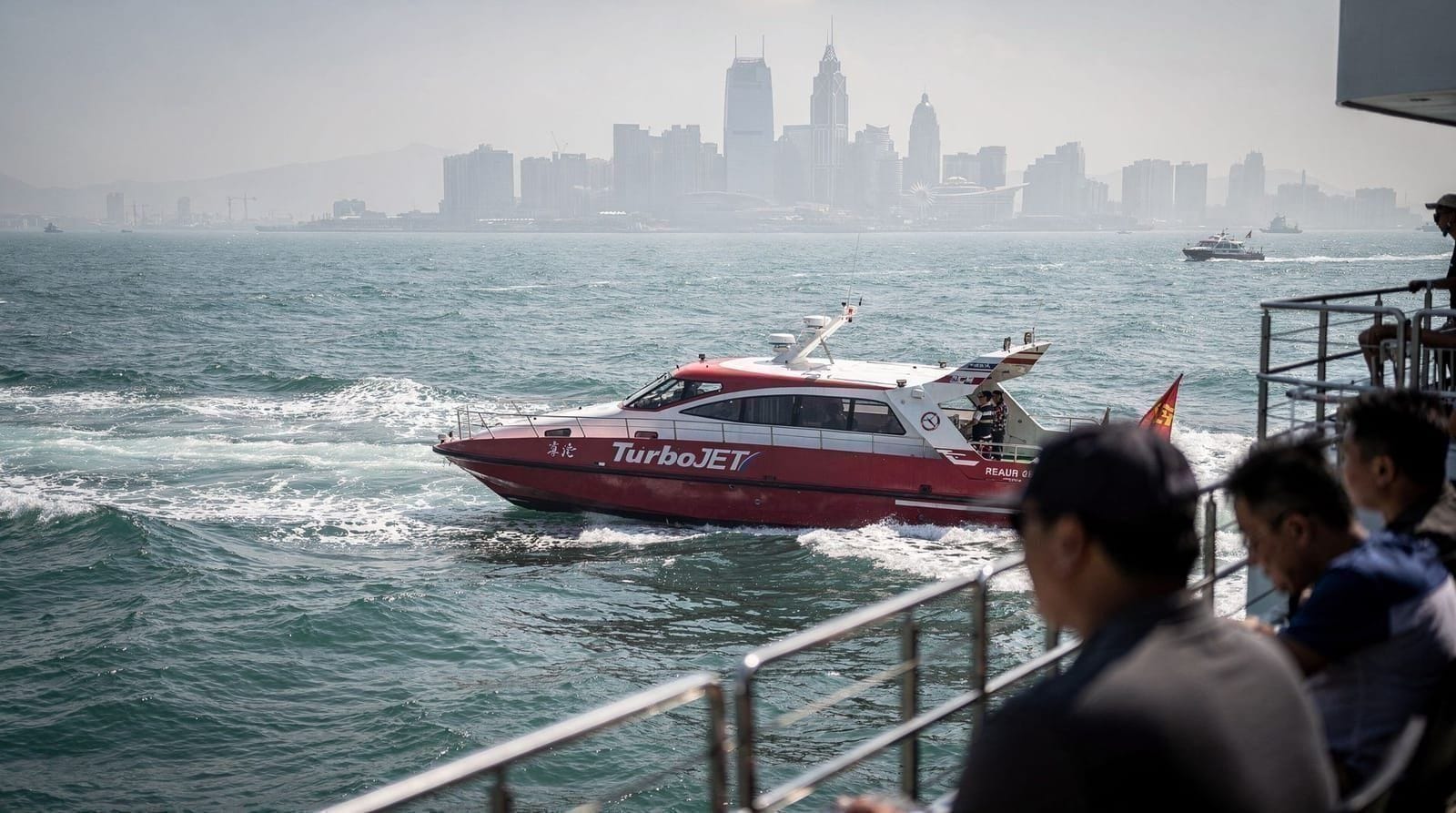
- Journey: 55-70 minutes depending on sea conditions
- Fares (TurboJET, economy class, daytime): HKD 194 on weekdays, HKD 212 at weekends and public holidays
- Multiple operators (TurboJET, Cotai Water Jet) with departures roughly every 30 minutes
- Arrives at Macau Outer Harbour or Taipa Ferry Terminal (Taipa is more convenient for Cotai casinos; Outer Harbour is more convenient for the historic centre)
HZMB (Hong Kong-Zhuhai-Macau Bridge route):
- Take the MTR to Tung Chung, then connect to the HZMB Hong Kong Boundary Crossing Facility (either by taxi HKD 200-250 or shuttle bus)
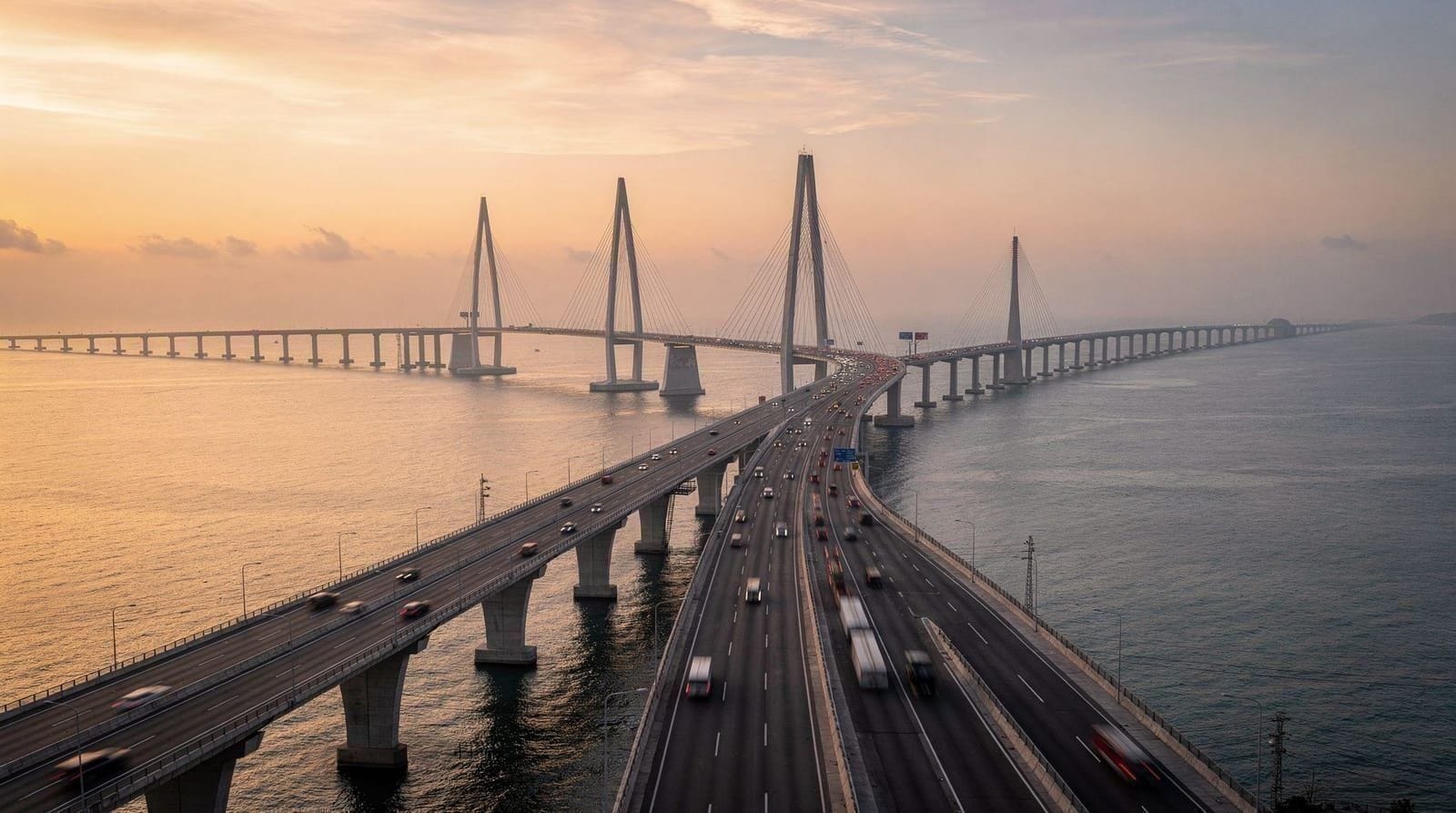
- Cross the 55 km bridge on the Gold Bus shuttle (HKD 65 by day, HKD 70 at night; runs 24 hours) — the bridge itself is a significant engineering spectacle
- Journey from central HK to Macau border: 50-70 minutes plus transfers
- Arrives at Hengqin / Cotai — good if your priority is the casino strip
- Faster and often more comfortable than ferry in rough weather
For the historic centre, the ferry to Outer Harbour terminal is the most convenient arrival. For Cotai and the casinos, either the Taipa ferry or the HZMB is more logical. The ferry vs bridge to Macau guide covers both routes in full detail, and getting to Macau is the broader logistics overview.
| Ferry | HZMB bridge | |
|---|---|---|
| Journey time | 55-70 minutes | 50-70 minutes incl. transfers |
| Fare | Around HKD 194-212 (economy, daytime) | HKD 65 (Gold Bus, daytime) + transfer |
| Best arrival for | Historic centre (Outer Harbour) | Cotai casino strip |
| Weather resilience | Can be rough in bad seas | More stable |
Guided day tour options: what each covers
The most popular guided Macau day tour from Hong Kong includes round-trip ferry, hotel pickup, a full-day guided itinerary covering Senado Square, Ruins of St. Paul’s, A-Ma Temple, and Macau Tower, plus lunch at a Portuguese-Chinese restaurant. Prices around HKD 1,400-1,750 per adult. The hotel pickup is the genuine convenience — no waiting for a meet-up point, the guide handles your day from the moment you’re collected.Check availability The HZMB bridge route day tour crosses the world’s longest sea bridge (55 km) and includes a stop to photograph the bridge itself — a genuinely impressive piece of infrastructure. The guide handles the border crossing paperwork and shuttle bus coordination, which saves genuine hassle. Lunch and full-day coverage of the historic sites is included. Roughly HKD 1,200-1,550 per adult.Check availabilityWhat to see in Macau’s historic centre
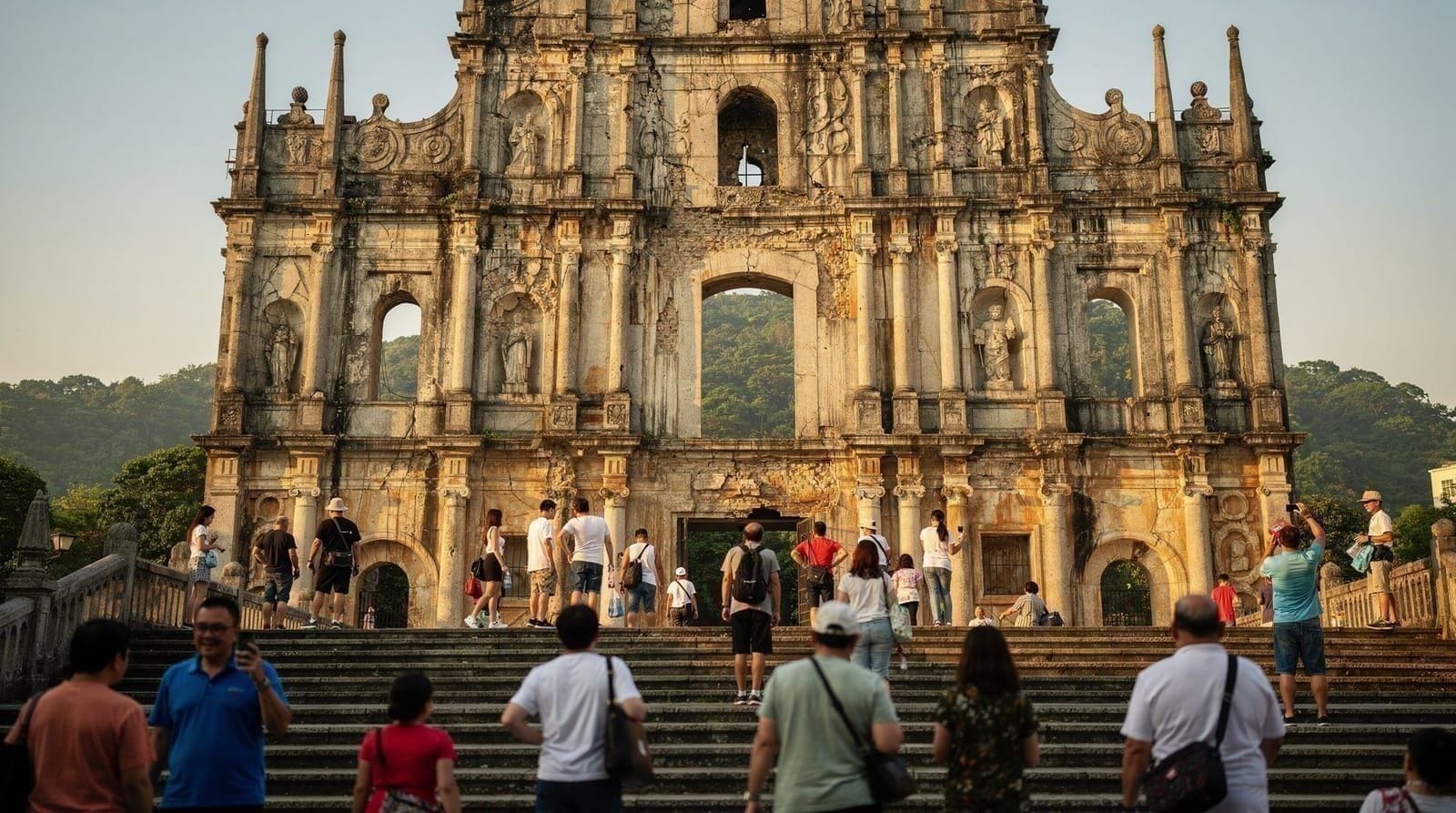
Ruins of St. Paul’s (free): The ornate baroque facade of a 17th-century church destroyed by fire in 1835. Only the front wall remains, standing dramatically against the sky. The Museum of Sacred Art beneath has fascinating religious history. This is Macau’s most photographed image — genuinely beautiful and historically substantial. Go early morning to beat the crowd.
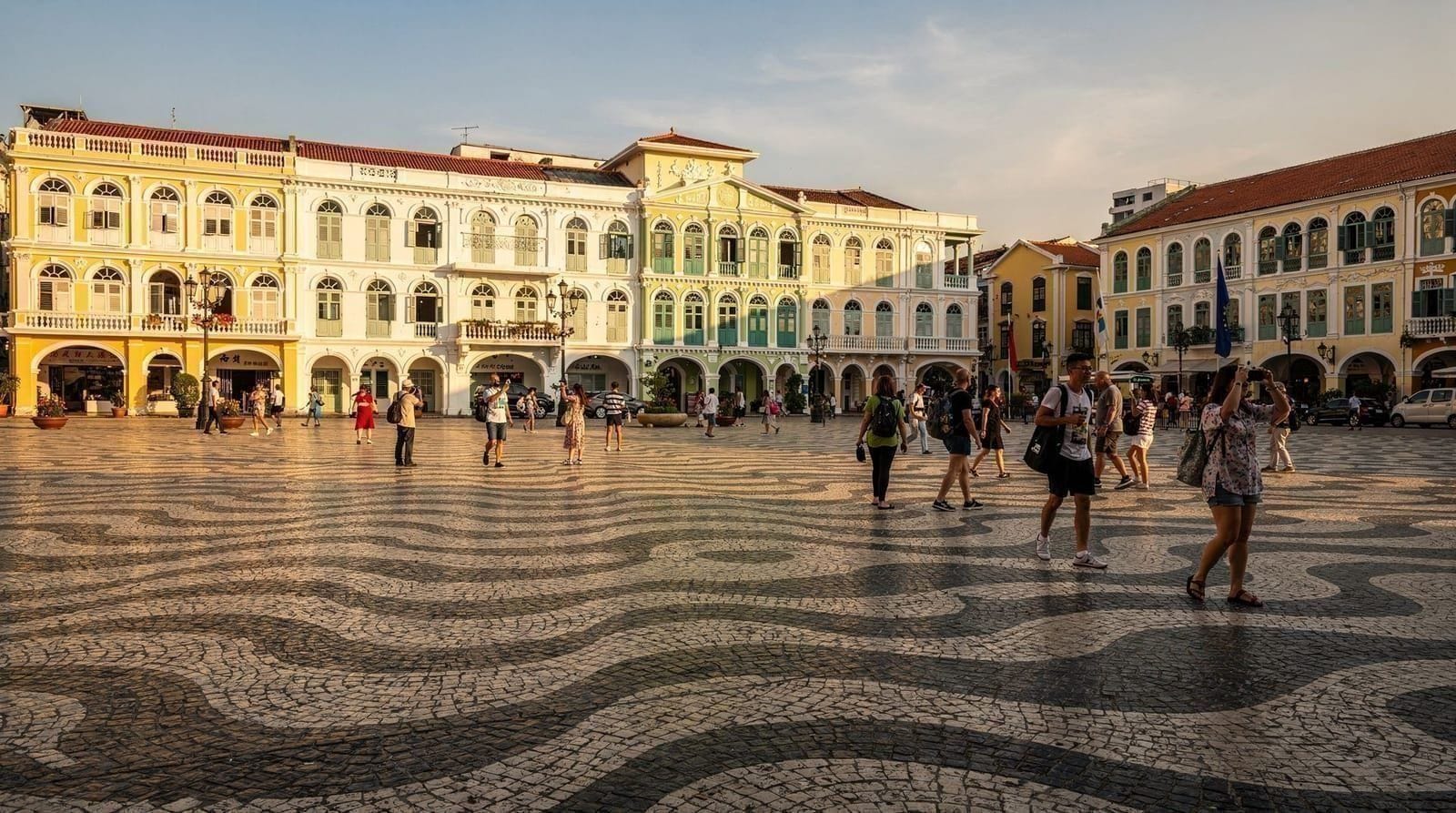
Senado Square: The Portuguese tile-paved central square surrounded by colonial-era government buildings in pastel colours. The square connects via pedestrian lanes to the Ruins of St. Paul’s. Excellent morning coffee at a traditional Hong Kong-style café near the square.
A-Ma Temple (free): Macau’s oldest temple, dating to 1488, dedicated to the sea goddess A-Ma (who gave Macau its name). Active worship site — incense smoke, red lanterns, genuine devotional atmosphere distinct from the tourist areas.
Macau Tower: The 338-metre observation tower at the waterfront. The bungee jump from the top is a genuine bucket-list item (see the official Macau Tower site for current prices). Observation deck entry is MOP 208 for adults (MOP 138 for children 3-11 and seniors 65+); open 10:00-20:00. The 360-degree café at the top is overpriced but the views are real.
Taipa Village: The older residential part of Taipa island, connected to Cotai by land reclamation. Traditional Macanese houses, excellent local restaurants, the Taipa Houses Museum. The Ruins of St. Paul’s guide and Macau historic centre guide go deeper on the heritage-site route if that’s your focus.
Where to eat: the actual reason to go to Macau
Macanese food is one of the world’s truly distinctive cuisines — a 400-year-old fusion of Portuguese cooking techniques with Chinese, African, Indian, and Southeast Asian ingredients brought through Lisbon’s colonial trade routes.
Lord Stow’s Bakery (Coloane Village): The original creator of the Macanese egg tart — a distinct style with flaky pastry and a caramelised top, adapted from the Portuguese pastel de nata but made distinctively Macanese. Worth the trip to Coloane village if your schedule allows. Queues are consistent, move fast.
Lung Wah Tea House (Outer Harbour area): Dim sum served in an old-school Cantonese tea house setting, extremely popular with locals. The har gow and siu mai here are as good as in Hong Kong at significantly lower prices.
Fernando’s Restaurant (Hac Sa Beach, Coloane): A genuine Portuguese restaurant in a rural beach setting — piri-piri chicken, grilled fish, African chicken. A 25-minute taxi ride from the historic centre but one of Macau’s genuinely special meals. Cash only.
What the casino strip offers (and what it doesn’t)
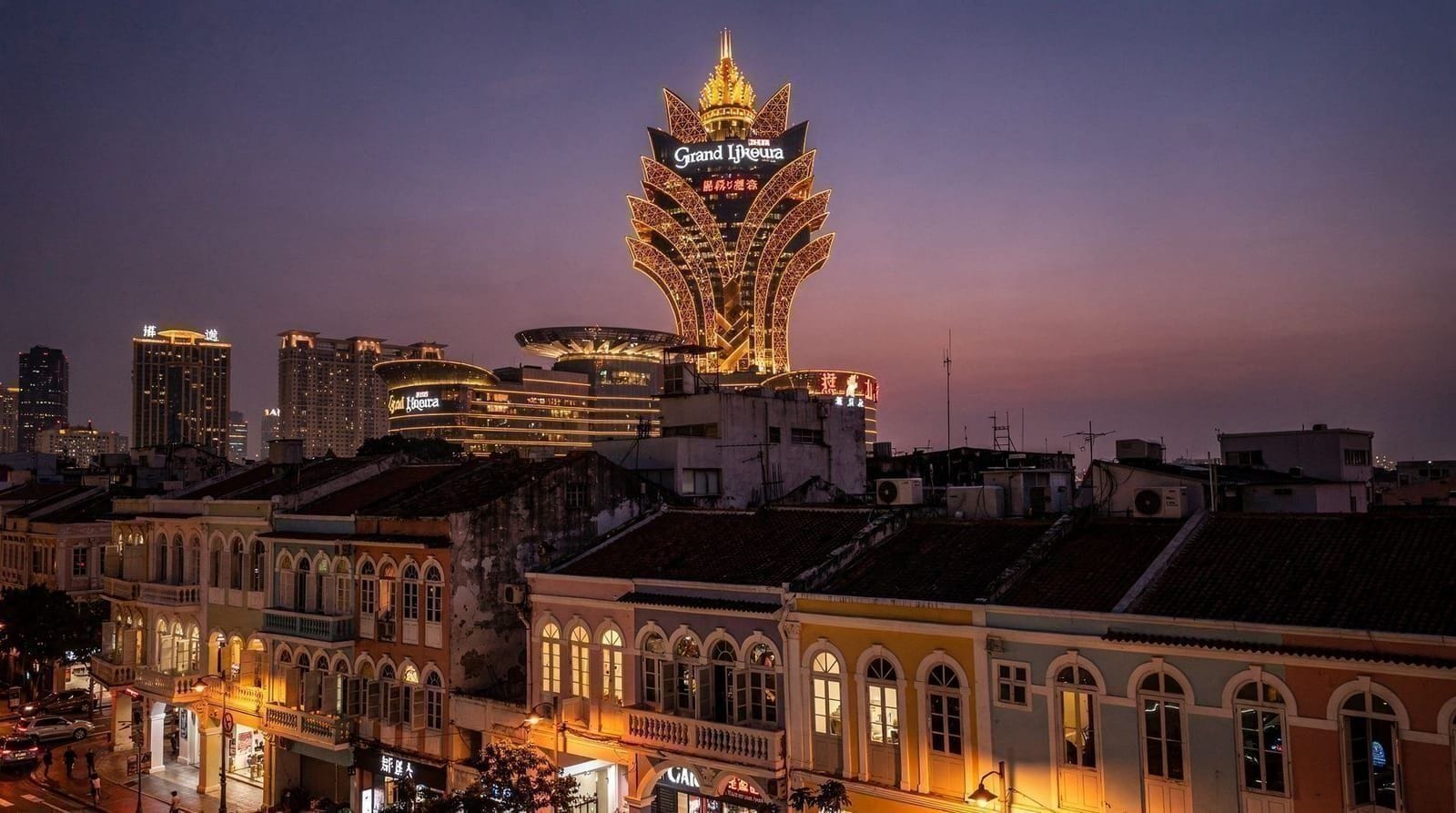
The Cotai Strip (reclaimed land between Taipa and Coloane) is home to enormous casino hotels: the Venetian Macao, Galaxy, MGM Cotai, and others. The buildings are impressive in scale. The interior malls are air-conditioned and free to walk through. The casino floor gaming is legal and regulated.
What it doesn’t offer as a day-trip destination: genuine Macanese culture, local food, historical context, or a reason to be in Macau rather than Las Vegas. The casino hotel malls are essentially identical to those in Singapore or Vegas. If gambling is your goal, the day trip makes sense; if not, the Cotai Strip is an optional 30-minute detour, not a reason to visit.
The macau casinos guide covers the casino logistics honestly — entrance requirements, table minimums, what non-gamblers can do inside the hotels.
Independent vs guided: the practical decision
Go independently if: You’re comfortable with the ferry booking process, happy to navigate Macau via bus/taxi, interested in self-directing your time between the historic sites and eating where you choose, and want to keep costs below HKD 600 per person.
Use a guided tour if: You’re visiting for the first time and want historical context on the UNESCO sites, you’re travelling with elderly family members or young children for whom the logistics would be stressful, or you have only one shot at Macau and want to ensure you don’t miss anything significant. The UNESCO day bus tour with a casino visit and buffet lunch covers the main heritage sites with an English-speaking guide plus a structured casino visit — useful if you want to see a Macanese casino floor without the anxiety of navigating it alone. The buffet lunch in a casino hotel is adequate though not representative of Macanese cuisine’s best.Check availability ---
Food beyond the day-trip classics
The Macau food guide has the full list, but a few dishes worth prioritising if your day-trip time is short: minchi (minced meat with potatoes and rice, Macau’s unofficial national dish), African chicken (piri-piri marinated grilled chicken, at its best at Fernando’s), and pork chop bun from a street stall near Senado Square — simple, cheap, and genuinely excellent. If your trip allows a longer stay, an itinerary combining Hong Kong and Macau over 4 days gives Macau proper breathing room instead of a single rushed day.